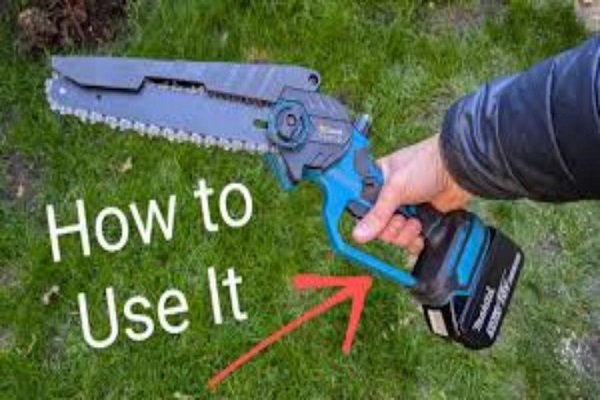
Battery Vs Gas Chainsaw: Which To Choose In 2026
A storm passes, branches come down, and suddenly a chainsaw moves to the top of your shopping list. In 2026, the old answer — “just buy gas” — no longer holds up. Battery saws have improved to the point where they comfortably handle most residential cutting, while gas remains indispensable for heavy, all-day work. The right choice comes down to your yard, your noise tolerance, and how often you actually cut.
The 30-Second Answer
If you maintain a typical home yard, buy a battery chainsaw. It starts instantly, runs quietly, and doesn’t force you to deal with fuel mixtures or carburetor problems. It will prune trees, clean up storm debris, and cut moderate firewood. You can also read our guide on how to use a chainsaw for beginners.
Buy gas if you regularly fell trees, cut dense hardwood for hours, or work somewhere without access to charging. Gas still delivers the sustained torque and endless runtime that battery packs cannot yet match.
Many serious users own both: battery for everyday jobs, gas for the days when a tree has to come down. If you can afford only one, start with battery and add gas only when you find yourself hitting its limits. You can also read our guide on best gas chainsaw for cutting trees.
How Battery Chainsaws Have Changed By 2026
Power That Rivals Entry-Level Gas
The biggest change is the brushless motor. It replaces carbon brushes with electronic commutation, which reduces friction and heat while improving efficiency. Combined with 40V, 42V, and higher voltage platforms, a modern battery saw feels far stronger than the cordless models from a decade ago.
A common mistake is comparing peak power specs on paper. In practice, a sharp chain and a decent 40V brushless saw will cut through 8–10 inch softwood quickly, and handle smaller hardwoods without stalling. It won’t out-pull a 58cc gas saw, but it doesn’t need to for most jobs. You can also read our guide on best cordless leaf blowers for home use.
Runtime Has Become Practical
Runtime is now measured in real work, not minutes of idling. A 4.0Ah or 5.0Ah battery typically provides 30–60 minutes of mixed cutting. With two batteries, you can swap packs and keep working for one to two hours. Fast chargers bring most packs back in 45–90 minutes.
If you plan to do more than light pruning, a second battery is worth it. It effectively doubles your session and removes the anxiety of running out of power at the worst moment. You can also read our guide on how long do chainsaw chains last.
One Battery Platform Advantage
If you already own cordless tools from a major battery platform, check whether that brand makes a chainsaw. Buying a tool-only saw is cheaper than a full kit, and you won’t need to maintain a second charging system.
Look at the whole battery family before you buy: if the brand also makes a string trimmer, blower, and hedge trimmer, one platform can handle the entire yard. That’s how many homeowners end up with the same charger powering their chainsaw and their battery-powered blowers. You can also read our guide on best sharpener for garden tools.
Where Gas Still Has A Clear Edge
Gas still wins on raw torque. A 50cc–60cc engine can pull a long bar through large hardwood and keep cutting for hours. Battery saws are catching up, but they still lose steam in thick wood and charge much slower than a fuel refill.
Gas also offers bigger bar options, easier full-day operation, and no reliance on charging. If your property is completely off-grid, or your saw sits unused for months, gas can be simpler—provided you manage the fuel properly. You can also read our guide on trufuel for lawn mower.
Battery Vs Gas: The Full Comparison
| Factor | Battery Chainsaw | Gas Chainsaw |
|---|---|---|
| Starting | Push-button, instant | Pull cord, can be tough |
| Noise level | 85–95 dB | 105–115 dB |
| Emissions | Zero at point of use | Exhaust fumes |
| Maintenance | Chain, bar oil, battery care | Fuel mix, air filter, spark plug, carburetor |
| Runtime | 20–60 minutes per battery | Hours with refueling |
| Power | Good for most home tasks | Superior for heavy hardwoods |
| Weight | 8–12 lbs | 12–20 lbs |
| Upfront cost | Varies widely | Often lower for similar size |
| Long-term cost | Battery replacement eventually | Fuel, oil, ongoing parts |
| Storage | Keep batteries charged | Drain fuel or add stabilizer |
| Best for | Homeowners, pruning, cleanup | Pros, large timber, all-day work |
Power And Performance
Gas still leads on sustained power. But the gap is smaller than it looks on paper. Battery saws deliver their torque instantly, which makes them feel surprisingly strong in short cuts. For the majority of homeowner tasks, that instant response is more valuable than maximum horsepower.
Runtime And Charging Reality
The number people overlook is recharge time. A gas saw refuels in under a minute; a battery saw needs 30–90 minutes on a charger. The practical fix is simple: buy at least two batteries and keep one charging while you cut with the other. That gives you one to two hours of real work before you need a longer break. You can also read our guide on what gas is best for lawn mower.
Maintenance And Upkeep
Battery chainsaws have essentially three maintenance items:
- Chain tensioning after every few cuts
- Bar oil refills when the reservoir runs low
- Chain sharpening when cutting speed drops
Gas chainsaws add more:
- Mixing fuel, or buying premixed fuel
- Cleaning the air filter every few tanks
- Inspecting the spark plug seasonally
- Adjusting the carburetor if performance changes
- Adding stabilizer before storage
Gas engines also depend on fuel quality. Using fuel without ethanol reduces the varnish and deposits that clog tiny carburetor passages. Even then, a saw that sits for months may need cleaning a gummed carburetor before it runs right. If you catch it early, a fuel-system treatment can clear the residue before it becomes a problem.
Environmental And Noise Considerations
Battery saws produce zero emissions at the point of use and run at roughly 85–95 dB, compared to 105–115 dB for most gas saws. That makes a real difference in suburban neighborhoods, early-morning work sessions, and anywhere noise restrictions apply. Gas engines also release unburned hydrocarbons and carbon monoxide. The EPA’s outdoor equipment work continues to highlight the shift toward cleaner yard care tools. You can also read our guide on how to mix oil and gas for leaf blower.
How To Choose: A Decision Framework
Start with your most common task.
| Your Primary Work | Recommended Type |
|---|---|
| Pruning trees and shrubs | Battery, 10–16 inch bar |
| Storm cleanup, fallen limbs | Battery, 16 inch bar |
| Firewood processing, light to moderate | Battery, 16 inch bar, or gas 18–20 inch |
| Regular large tree felling | Gas, 18 inch or larger |
| Mixed work, varied tasks | Consider owning both |
| Professional or contractor use | Gas, or high-end 80V battery |
Run This Simple Calculation
Estimate how many hours you will realistically cut in a typical month.
Under 2 hours: Battery is the obvious choice. Any decent 40V model will cover your needs with room to spare, and the convenience of push-button starting is unmatched.
2–5 hours: Battery still works, but plan for two batteries. A 16-inch brushless model handles this workload comfortably if you rotate packs. You can also read our guide on battery chainsaw vs gas.
5+ hours or all-day jobs: Gas pays off. The maintenance overhead becomes worthwhile when you are cutting continuously at high load. If you fell trees or mill lumber, gas is the realistic answer.
Also consider charging access. If you work on remote property with no power, gas is simpler. If you are always within reach of an outlet, battery makes the daily experience far more pleasant.
The Best Battery Chainsaw Options For 2026
These picks cover different niches: all-around cutting, pruning, storm cleanup, budget kits, and battery-platform compatibility. No single saw works for everyone, so match the saw to the work you do most.
40V 16-Inch Brushless Chainsaw

A 16-inch bar and two 4.0Ah batteries make it a practical do-it-all home saw.
This is the best overall pick for most homeowners. The 16-inch bar is long enough for storm debris but still nimble enough for regular pruning. It ships with two 4.0Ah batteries, so you can swap and keep cutting, and the brushless motor delivers efficient, smooth power. Tool-free chain tensioning makes field adjustments quick, and the instant-stop brake adds peace of mind.
Best for: Medium logs, frequent pruning, and storm cleanup.
Trade-off: Heavier than smaller 12-inch saws, and not designed for all-day felling.
12-Inch 20V Cordless Chainsaw

A short bar keeps the package light enough for overhead cutting.
This compact saw is a nimble choice for pruning, branch trimming, and light wood cutting. The 20V platform keeps weight down, which matters when you’re working overhead or in tight spaces. Two 4.0Ah batteries are included, and the short bar gives you precision that a longer bar simply can’t offer.
Best for: Gardeners who prioritize ease, safety, and frequent light-duty yard care.
Trade-off: Not built for large logs or dense hardwood.
Greenworks 40V 16-Inch Brushless Chainsaw

A 40V platform that shares batteries across trimmers, blowers, and other yard tools.
Greenworks helped set the standard for 40V performance, and this 16-inch brushless saw shows why. It cuts fast, holds speed well, and includes a 4.0Ah battery and charger to get you running immediately. Auto-oiling keeps the chain lubricated, and easy tensioning keeps downtime low.
Best for: Weekend warriors who want proven 40V performance and long-term platform flexibility.
Trade-off: You will need battery swaps for larger jobs.
42V 16-Inch Brushless Chainsaw

Two included packs reduce downtime when you’re cutting through a pile of branches.
This 42V brushless saw is built for quiet strength. It has a full 16-inch bar, two batteries in the box, and a comfortable ergonomic layout for longer sessions. The brushless motor runs efficiently and generates less heat buildup, and auto-lubrication helps the chain glide and last longer.
Best for: Homeowners who value quiet operation and comfort during longer cutting sessions.
Trade-off: Battery recharges still limit all-day jobs.
SEESII 40V 16-Inch Brushless Chainsaw
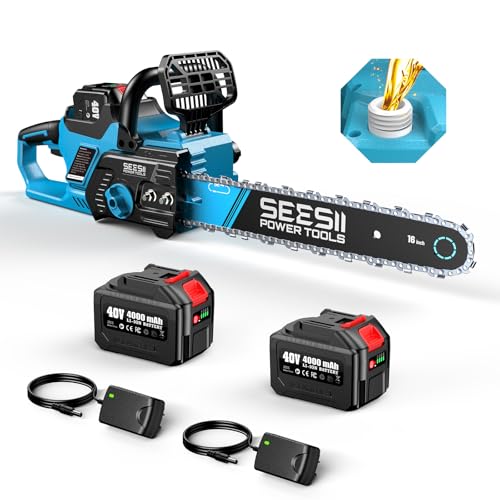
A complete kit with two batteries and a charger gives you everything at once.
This value-focused kit includes a 40V brushless motor, a 16-inch bar, tool-free chain tensioning, auto-oiling, two 4.0Ah batteries, and a charger. The balance feels right for fallen limbs and firewood prep, and the trigger is smooth and predictable.
Best for: Homeowners with mature trees who want a complete 40V kit at a reasonable price.
Trade-off: Not ideal for daily professional felling.
M18 Compact Brushless Chainsaw
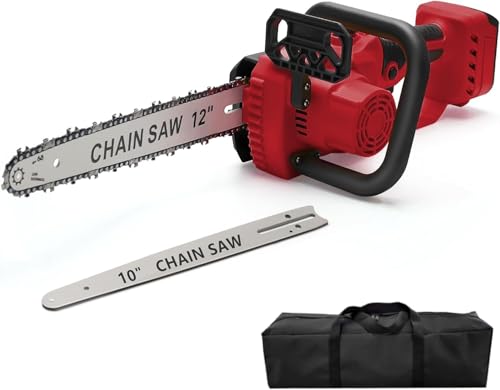
A tool-only saw is a cost-effective add-on when you already own the batteries.
If you already own M18 batteries, this compact saw is a smart, low-cost addition. It runs on the batteries you already have, works with 10-inch or 12-inch bar configurations, and includes an auto oiler and security lock for safe handling. It covers trimming, pruning, and jobsite cleanup without adding a second battery system.
Best for: Current M18 platform owners who want a compact, portable cutter.
Trade-off: Batteries and charger are not included.
6-Inch Cordless Mini Chainsaw
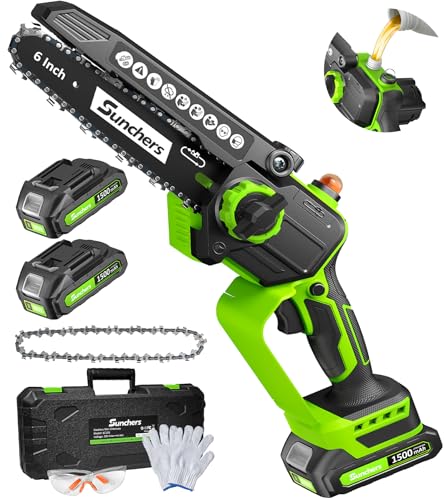
A mini saw earns its place as a finesse tool for tight spots and light pruning.
This 6-inch mini saw is a pruning wizard. It weighs little, starts fast, and gets into tight spots that larger saws cannot reach. Two batteries keep it ready for long yard sessions, and the auto oiler is a bonus many mini saws skip. If you are deciding between a 4-inch and 6-inch model, the compact saw sizing differences matter more than most people expect.
Best for: Vines, small limbs, and delicate work near fences.
Trade-off: Not for large branches or logs.
When Gas Still Makes Sense: The 58cc Heavy-Duty Option

A 58cc gas saw still pulls a long bar through big hardwood without slowing down.
This is the tool for farms, ranches, and serious firewood stacks. A 58cc gas engine provides consistent torque all day, and the included 20-inch and 18-inch bars handle large logs that battery saws would struggle with. Anti-vibration design helps reduce fatigue during long sessions, and refueling takes seconds.
The downsides are real: pull-starting, fuel mixing, noise, vibration, and routine maintenance. But if you need sustained heavy cutting, no battery saw in this category matches it yet.
Best for: Large trees, thick hardwood, and full-day cutting on remote property.
Trade-off: Louder, heavier, and more maintenance than any cordless option.
Hidden Costs Nobody Tells You About
The Real Cost Of Batteries
Batteries are not cheap. A replacement 4.0Ah 40V pack can cost $100–200, and a 5.0Ah pack often runs $150–250. With regular use and proper storage, plan on replacing packs every 3–5 years. The saw itself might outlast two sets of batteries, so factor that into the long-term cost.
Bar And Chain Replacement
Chains and bars wear out on both gas and battery saws. With moderate use, expect a new chain every 6–12 months and a new bar every two or three chains. A dull chain cuts slower, strains the motor, and drains batteries faster than a sharp one. Touching up the chain with a file is the single best way to extend its life.
Fuel Costs And Storage
Gas saws carry ongoing fuel costs. Regular gasoline mixed with oil works if you use it quickly, but it degrades in 30–60 days without stabilizer. Using fuel without ethanol prevents many fuel-related headaches. If you only cut a few times a year, premixed fuel costs more per gallon but starts reliably and stores much better.
Safety Considerations
Chainsaws are dangerous regardless of power source. The Occupational Safety and Health Administration emphasizes keeping both hands on the saw, maintaining a sharp chain, and avoiding cuts above shoulder height. Those rules apply to battery and gas saws alike.
Kickback Risk
Kickback can happen with any chainsaw. Battery saws often include a chain brake and low-kickback bar, which makes them more forgiving for beginners. The safest habit is to avoid cutting with the nose of the bar and to let the saw do the work rather than forcing it through the wood.
Weight And Fatigue
A lighter saw is easier to control, and control is safety. An 8–10 pound battery saw is much easier to handle overhead than a 12–14 pound gas saw. If most of your cutting happens at shoulder height, weight should be one of your top criteria.
Hearing Protection
Gas saws absolutely require hearing protection. Battery saws are quieter, but sustained use above 85 dB can still damage hearing. Wear protection anyway, and the lower noise also helps you hear branches cracking or people nearby.
Storage And Seasonal Care
Battery Chainsaw Storage
- Store batteries at 40–60% charge for long-term storage.
- Keep batteries in a cool, dry place, away from summer heat.
- Drain bar oil before putting the saw away for months.
- Store the saw upright to prevent oil seepage.
- Check chain tension before every use.
Gas Chainsaw Storage
- Add a stabilizer to the tank, or drain it and run the engine dry. The process is the same as keeping fuel fresh in any stored small engine.
- Clean the air filter and spark arrestor.
- Store in a dry, ventilated area.
- Keep the chain lightly oiled to prevent rust.
Proper storage extends equipment life significantly. A saw that starts easily next season is always the one you actually use.
Frequently Asked Questions
Which is safer for beginners: battery or gas?
Battery is safer for most beginners. It starts instantly, weighs less, vibrates less, and is quieter than gas. The reduced fatigue and lower noise help you focus on cutting technique instead of managing engine quirks. That said, any chainsaw can kick back, so proper PPE and a low-kickback bar are still essential.
How long does a battery chainsaw actually run?
Most 40V and 42V saws run 20–60 minutes per battery, depending on load. Cutting large hardwood drains batteries much faster than pruning softwood. With two batteries and a fast charger, you can sustain several hours of mixed work by rotating packs.
Can a battery chainsaw cut hardwood like oak?
Yes, up to a point. A sharp, properly tensioned chain on a 40V or higher brushless saw will cut oak and other hardwoods. It will be slower than gas for large cuts, and you will see reduced runtime per battery. For occasional hardwood, battery is fine. For regular large hardwood processing, gas is still superior.
What fuel does a gas chainsaw need?
Most modern gas chainsaws run on a 40:1 or 50:1 mixture of gasoline and two-stroke oil designed for air-cooled engines. Always check your owner’s manual for the exact ratio. Using fuel without ethanol reduces varnish and helps the carburetor stay clean.
How often should I sharpen the chain?
Sharpen when cutting performance noticeably drops, or when the saw starts producing sawdust instead of wood chips. For gas saws, that is often every few tank loads. For battery saws, it works out to every hour or two of active cutting. A quick file touch-up keeps the chain cutting fast and reduces strain on the motor.
Do battery chainsaws need bar oil?
Yes. Every chainsaw, gas or battery, needs bar and chain oil. The chain moves over the bar at high speed, and without lubrication, friction creates heat that damages both components. Check the oil reservoir before every use.
The Bottom Line: Our 2026 Recommendation
For the vast majority of homeowners, battery is the better 2026 choice. The convenience gap between battery and gas is too wide to ignore: you press a button, cut, and put the saw away without thinking about stale fuel. In a neighborhood, you also avoid the noise and fumes.
Choose gas if you regularly cut for hours at a time, process large hardwoods as a routine task, work on remote property with no charging access, or need the widest bar options for serious timber work.
If you are still torn, buy the battery saw first and use it for your next few projects. You will know quickly whether gas is still necessary. Many people who make the switch are surprised how rarely they actually reach for a gas saw afterward.