
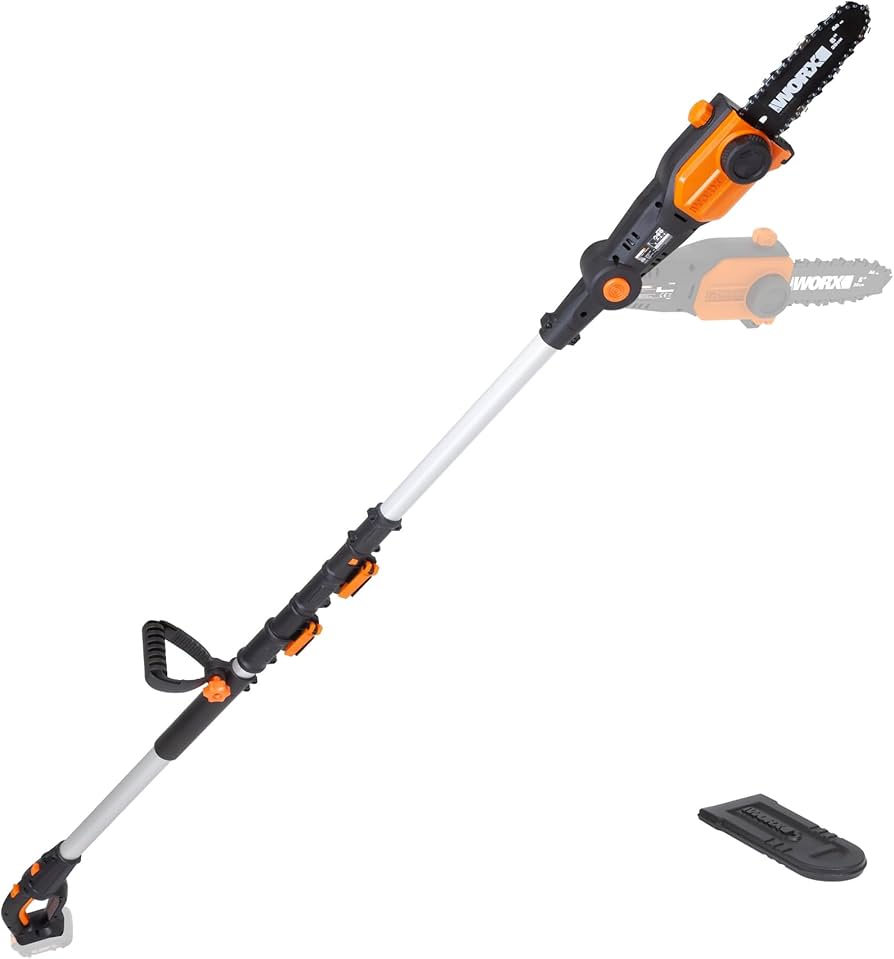
How To Use Pole Chainsaw: Safe, Easy Guide For 2026
A pole chainsaw extends your reach into the canopy without balancing on a ladder. It lets you prune high branches from solid ground, which is safer and faster than alternative methods. This guide walks through the complete process — choosing the right tool, preparing safely, making clean cuts, and maintaining the machine for years of reliable service.
Whether you own a battery-powered model or a gas unit, the core techniques stay the same. You will learn the specific habits that prevent kickback, protect tree health, and save you from common frustration like pinched bars and smoking chains. You can also read our guide on how does a chainsaw work.
Why a Pole Chainsaw Belongs in Your Shed
A pole saw solves a problem that every homeowner eventually faces. Branches grow into rooflines, over driveways, or against siding. They block sunlight from lawns and drop debris after storms. Reaching them usually meant a ladder, a hand saw, and a lot of risky leaning.
With a pole chainsaw, you stand on the ground and guide a cutting head up to 10 or 15 feet in the air. This eliminates the most dangerous part of pruning: working at height with a power tool. You can also read our guide on how to water lawn efficiently.
Consider this comparison before you buy or rent:
| Feature | Pole Saw | Hand Pruner on a Pole | Ladder + Chainsaw |
|---|---|---|---|
| Reach | 8–15 ft typical | 6–12 ft | Unlimited with ladder height |
| Cutting power | Handles 4–8 inch branches | Thin branches only | Full chainsaw power |
| Safety risk | Low (ground-based) | Low | High (fall hazard) |
| Fatigue | Moderate (tool weight) | High (manual effort) | High (climbing + holding saw) |
For most suburban yards, a pole chainsaw handles 90% of pruning tasks. The remaining 10% — large limbs over 8 inches thick or branches near utility lines — should go to a certified arborist.
Safety Equipment: Non-Negotiable Gear
Before you pull the trigger, gear up properly. Pole saws operate at eye level and above, which means debris falls directly toward you. Protection is not optional.
Minimum required PPE:
- Safety glasses or a full face shield — sawdust and falling bark will find your eyes
- Hearing protection — battery models are quieter, but gas units run loud
- Cut-resistant gloves — they improve grip and protect against chain contact
- Long sleeves and sturdy pants — not loose-fitting, but thick enough to stop small debris
- Steel-toe boots with good tread — you will be looking up, not at your feet
A hard hat is strongly recommended for overhead work. Even small branches can cause serious injury if they hit your head.
The U.S. Department of Labor emphasizes that chainsaw operators should never work alone in remote areas and should always maintain firm footing. This applies double for pole saws, where the weight of the tool shifts your center of gravity.
One rule above all: never use a ladder with a pole chainsaw. If the branch is out of reach from the ground, it is out of reach for you. That is when you call a professional.
Know Your Machine: Parts and Controls
Understanding the anatomy of your pole saw prevents fumbling mid-task. The layout is similar across brands, so once you learn one, you know them all.
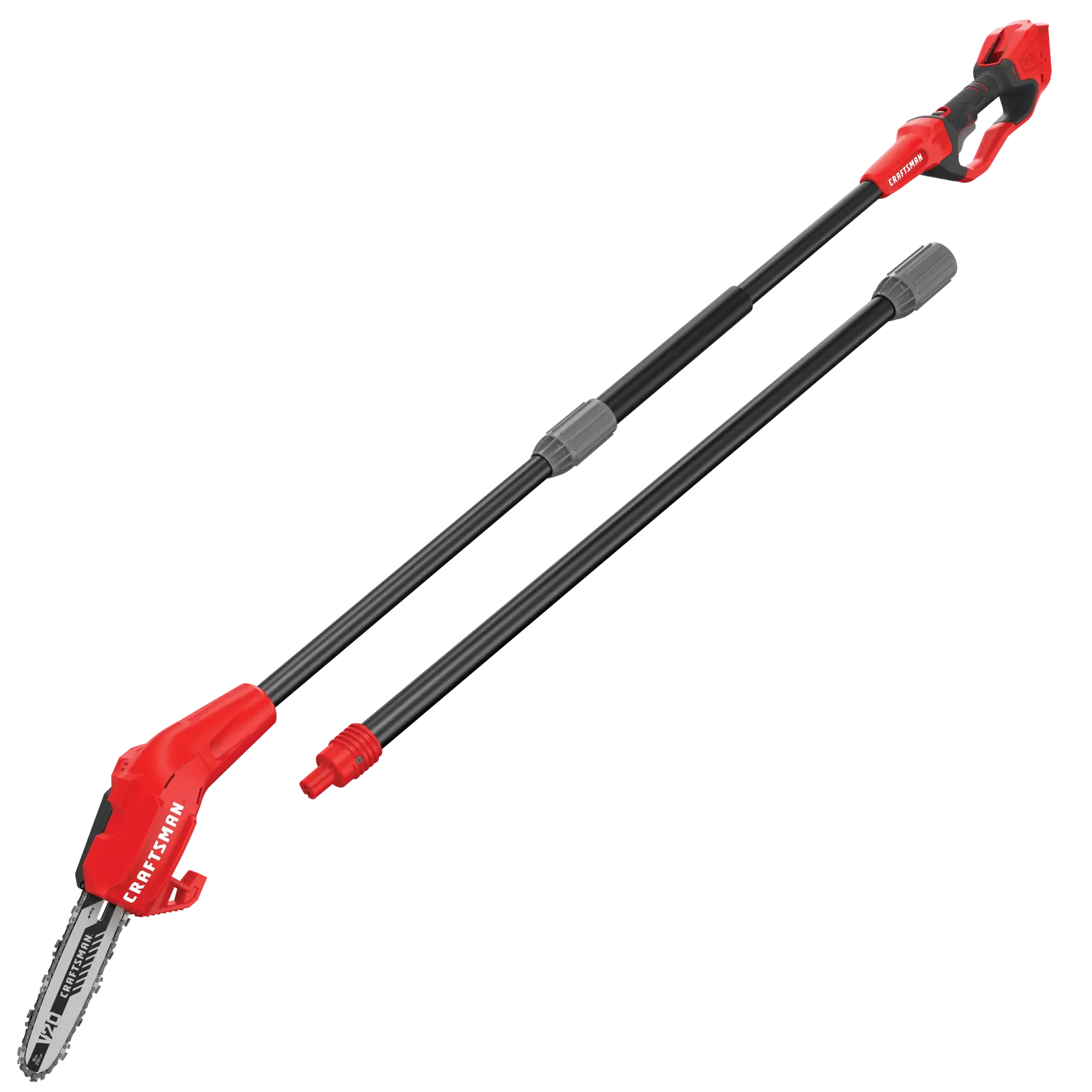
Image source: craftsman.com
The safety essentials laid out before any pruning task: glasses, gloves, hearing protection, and a hard hat.
Core components of a pole chainsaw:
| Part | Function | What to Check |
|---|---|---|
| Powerhead | Motor (battery or gas) | Charge level or fuel mix |
| Telescoping shaft | Extends your reach | Locks securely before each cut |
| Guide bar | Supports the chain | Straight, no burrs |
| Saw chain | Does the cutting | Tension and sharpness |
| Chain oil reservoir | Lubricates the bar | Fill before every session |
| Trigger and safety lock | Controls power | Practice on/off before cutting |
| Chain brake (if equipped) | Stops chain instantly | Test that it engages |
Battery models dominate the consumer market in 2026. They start instantly, run quietly, and need minimal maintenance. Gas models still win for extended jobs or very thick branches, but they require fuel mixing and more upkeep.
If you are choosing between power sources, read about battery vs gas chainsaw trade-offs to match the tool to your typical workload. For most homeowners pruning a few branches each season, a battery model with a spare battery is sufficient.
Pre-Use Checklist: The 5-Minute Inspection
Treat every session like a pilot's pre-flight check. Five minutes of inspection prevents fifteen minutes of frustration and potentially dangerous failures.
Walk through these steps before each use:
Inspect the chain tension. The chain should sit snug against the bar with no sag. You should be able to lift it slightly in the middle and feel it snap back. Too loose means it can derail mid-cut. Too tight means it will overheat and wear quickly.
Fill the chain oil. Pole saws consume bar oil faster than you expect. Most models have a small window that shows the level. A dry bar will smoke and dull the chain within minutes.
Check the chain direction. Look for arrows on the bar or chain. If the chain is backward, it will spin but not cut. This simple mistake happens more often than you would think.
Confirm the battery or fuel. Battery models need a full charge for consistent power. Gas models require fresh fuel. Stale fuel from last season causes hard starts and rough idling.
Test the controls. Engage the trigger, use the safety lock, and verify the chain stops when you release. Do this before you reach toward any branch.
For gas models, mix the fuel correctly. A 40:1 or 50:1 ratio is common, but check the manual. Getting this wrong can seize the engine permanently.
How to Cut a Branch: The 8-Step Process
This is the core skill. Follow these steps in order, and you will produce clean cuts that protect the tree and keep you safe.

Image source: amazon.com
A telescoping pole chainsaw extended to reach a high branch while the operator stands safely on the ground.
Step 1: Position yourself correctly. Stand slightly to the side of the branch, never directly under it. Your feet should be shoulder-width apart on stable ground. Identify an escape path in case the branch falls unexpectedly.
Step 2: Extend the pole to the branch. Adjust the telescoping section so the saw head reaches the branch with your elbows slightly bent. Overreaching forces you to lean, which compromises your balance. If you must stretch, move closer instead.
Step 3: Start the saw away from the branch. Engage the trigger and let the chain reach full speed before touching wood. A chain that is still accelerating tends to grab and jerk.
Step 4: Make the undercut. Position the bar about one foot from the trunk. Cut upward into the branch, one-third of the way through. This undercut prevents the bark from tearing when the branch weight pulls down during the main cut.
Step 5: Cut from the top. Move slightly farther out on the branch, about two inches beyond your undercut. Cut downward through the remaining wood. The branch will snap cleanly at the undercut, leaving a stub.
Step 6: Make the final flush cut. Now remove the stub. Cut just outside the branch collar — the swollen area where the branch meets the trunk. Do not cut flush to the trunk, and do not leave a long stub. Both slow the tree's natural healing.
Step 7: Let the chain stop completely. Only then should you reposition the saw or move to the next branch. A spinning chain near your body or face is an accident waiting to happen.
Step 8: Check the cut. A clean cut should be smooth with no torn bark. If you see ragged edges, your chain is dull. If you cut into the branch collar, you have removed too much.
Cutting Techniques That Prevent Kickback
Kickback is the most dangerous phenomenon in chainsaw operation. It happens when the tip of the bar contacts an object or the chain binds unexpectedly, throwing the saw upward and back toward the operator.
How to prevent kickback with a pole saw:
- Use the lower edge of the bar for most cuts. The chain pulls material downward and away from you.
- Keep the bar tip clear. The upper quadrant of the bar tip is the danger zone. If the chain touches a branch at that angle, it can kick violently.
- Avoid cutting with the tip. Never attempt to start a cut using the last few inches of the bar.
- Let the chain do the cutting. Apply light forward pressure and let the saw's weight guide the cut. Pushing hard makes the chain bind and increases kickback risk.
- Watch for branch movement. Heavy branches shift as you cut through them, sometimes rotating and pinching the bar.
Another common issue is the bar getting pinched inside a cut. The branch closes around the bar, locking it in place. Avoid this by always cutting with the undercut technique described above. If the bar does get pinched, never yank the saw. Turn it off, then work the bar free carefully.
For deeper maintenance knowledge, understand how long does a chainsaw chain last so you know when wear is normal versus when it is time to replace.
Step-by-Step Pruning Strategy for Trees
A methodical approach beats random cutting every time. This is how professionals approach a pruning job, scaled down for a homeowner with a pole saw.
Before you cut anything:
- Walk around the tree and identify which branches need removal
- Look for dead, diseased, or crossing branches first
- Note branches that touch structures, power lines, or other trees
- Plan the order of cuts from bottom to top
When you start cutting:
- Remove dead branches first. They are lighter and have less structural integrity than live wood.
- Work from the bottom of the canopy upward. Falling debris clears the area below.
- Take heaviest branches in sections. A three-inch branch may be manageable, but six-inch branches should be removed piece by piece.
Important tree health rules:
- Do not remove more than 25% of a tree's crown in one season. Heavy pruning shocks the tree.
- Leave the branch collar intact. This swelling at the branch base contains the tree's natural healing cells.
- Prune in late winter or early spring for most species. Avoid heavy pruning during hot, dry summer months.
- Never top a tree. Removing the main leader destroys its structure and encourages weak regrowth.
If a branch is thicker than your bar length, or if it hangs over a roof or road, stop and call a certified arborist. The cost of professional removal is far less than the cost of property damage or personal injury.
Common Mistakes and How to Avoid Them
Every pole saw owner makes these mistakes at some point. Learn them now, and you will skip the frustration entirely.
Mistake #1: Overreaching The telescoping pole is designed to extend, but your body should stay stable. If you find yourself stretching, leaning, or standing on tiptoes, move the ladder away and reposition the saw.
Mistake #2: Skipping the undercut This is the most common cause of bark tearing and ugly wounds on trees. The undercut takes ten seconds and prevents damage that takes years to heal.
Mistake #3: Cutting branches that are too large A 10-inch bar cannot safely cut a 12-inch branch. The chain will bind, the motor will strain, and the cut will be dangerous. Know your tool's limit.
Mistake #4: Ignoring chain tension A loose chain derails. A tight chain overheats. Check tension before every session and again after the first few minutes of use. New chains stretch noticeably.
Mistake #5: Working near power lines This is not a negotiable rule. Stay at least 10 feet away from any overhead line. If branches contact lines, call your utility company. They handle this professionally and for free.
Mistake #6: Forgetting to oil A dry chain smokes, dulls quickly, and wears out the bar. Check the oil window before starting and keep a bottle of bar oil nearby.
Troubleshooting: When The Saw Won't Cooperate
Even with proper maintenance, things go wrong. Here is how to diagnose common problems quickly.
The chain is spinning but not cutting: Check if the chain is installed backward. Look for direction arrows on the bar. If the chain is correct, it is likely dull. A dull chain produces fine dust instead of wood chips.
The cut is slow and produces smoke: The chain is dull or the bar is dry. Stop immediately, add oil, and inspect the chain teeth. Pushing harder never solves this — it only makes it worse.
The saw stalls mid-cut: On battery models, the battery is likely depleted or overheated. On gas models, check the fuel mix and air filter. Let the saw rest for a few minutes.
The chain keeps loosening: New chains stretch. Tighten after the first few cuts, then re-check after ten minutes of use. It will settle after a few sessions.
The chain derails from the bar: Stop the saw immediately. Reinstall the chain and check tension. If it continues to derail, inspect the bar for burrs or damage — both are signs that the bar needs replacement.
For gas models, proper fuel preparation prevents many starting issues. Learn how to mix oil and gas for leaf blower — the same principles apply to your chainsaw.
Maintenance That Extends the Life of Your Saw
A pole chainsaw is a precision tool. With minimal care, it lasts a decade or more. Neglect it, and it fails within a season.
After every use:
- Wipe down the bar and chain to remove sap and sawdust
- Check the oil level and top it off before storage
- Loosen the chain slightly if storing for more than a week
- Charge the battery and store it in a cool, dry place
- Clean the air filter on gas models
Every few uses:
- Sharpen the chain with a round file matching the chain pitch
- Check the bar rails for wear and burrs
- Flip the bar to distribute wear evenly
- Inspect the chain brake mechanism for smooth operation
Seasonal maintenance:
- Replace the chain when teeth are worn beyond filing
- Replace the air filter and spark plug on gas models
- Lubricate the telescoping shaft with silicone spray
- Inspect all bolts and screws for tightness
A sharp chain is safer than a dull one. A sharp chain cuts quickly and predictably. A dull chain requires force, produces dust, and increases the chance of kickback.
Frequently Asked Questions
What size branch can a pole chainsaw cut? Most consumer pole saws handle branches up to 6–8 inches in diameter. Check your model's bar length — the safe limit is roughly the bar length minus one inch. Thicker branches require a professional.
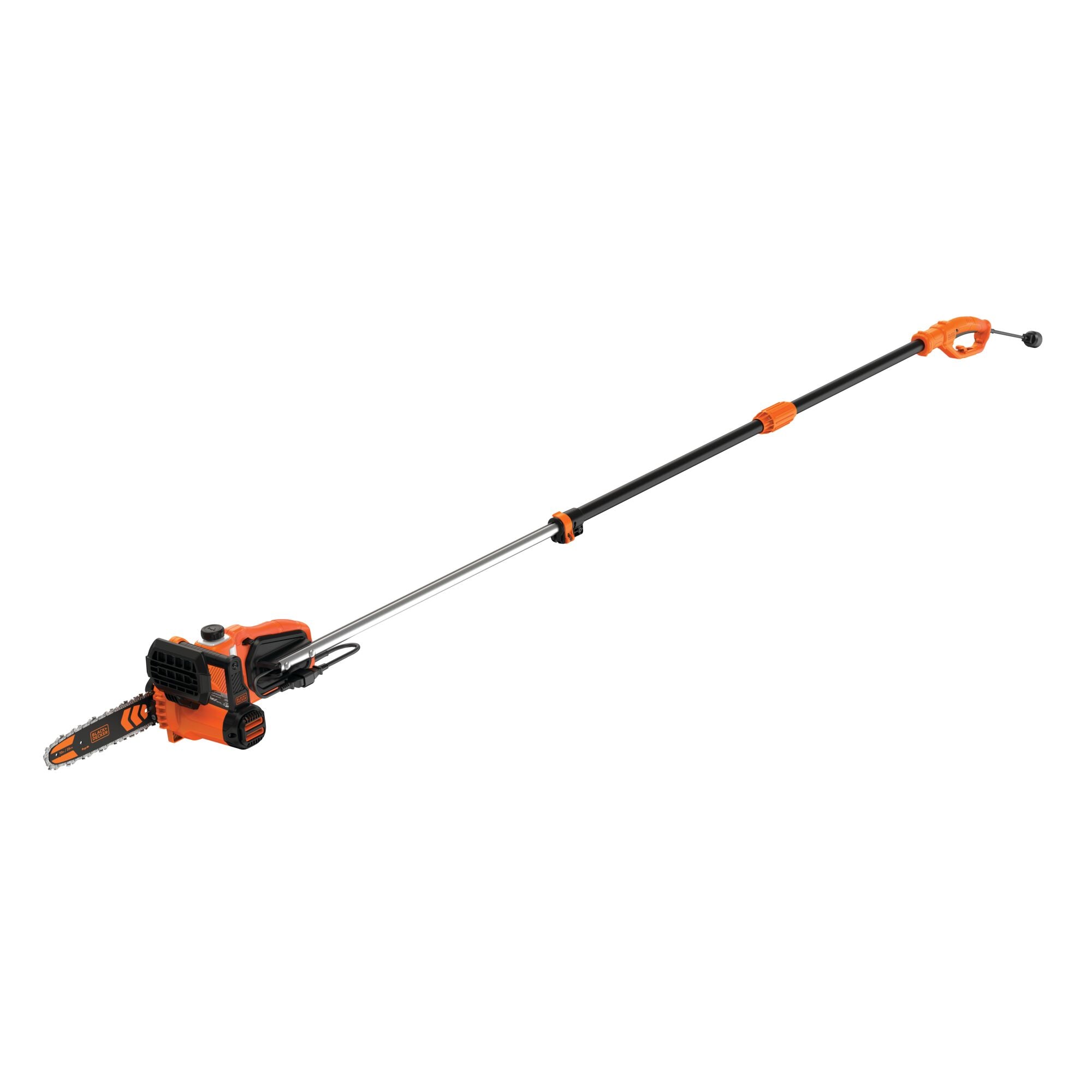
Image source: blackanddecker.com
A cordless pole saw demonstrating the proper angle for cutting while the operator keeps both feet planted.
Can I use a pole chainsaw near power lines? No. Stay at least 10 feet away from any overhead line. The rule applies even to insulated poles because they are not rated for electrical contact. Contact your utility company for branches near lines.
How often should I oil the chain? Check the oil reservoir before starting and after every few cuts. A visible oil line on the wood surface during cutting is the best indicator that the system is working.
Should I cut from the top or bottom? Both. Start with an undercut from below, then cut from above slightly farther out. This two-step process prevents the branch from tearing bark as it falls. Finish with a clean cut at the branch collar.
Gas, corded, or battery: which is best? Battery models are ideal for most homeowners in 2026. They start instantly, run quietly, and require no fuel mixing. Gas models deliver more sustained power for thick branches or long sessions. Corded models work but limit mobility.
How do I know the chain is dull? The saw produces fine sawdust instead of wood chips. The chain feels like it is pulling rather than cutting. You have to push hard to make progress. Any of these signs means it is time to sharpen.
Is a ladder safe with a pole chainsaw? No. The entire point of a pole saw is to work from the ground. Using one on a ladder creates a high fall risk and removes your ability to control the saw. If a branch is out of reach, hire a professional.
When to Call a Professional
Sometimes the smartest DIY decision is to pick up the phone. Certain situations demand expertise and equipment beyond a pole saw.
Call an arborist when:
- The branch is thicker than your bar length
- The tree shows signs of disease or structural weakness
- The branch hangs over a roof, road, or power line
- The tree is very tall and the branches are high
- You feel uncomfortable or fatigued
Call your utility company when:
- Branches touch or approach power lines
- Trees threaten service lines to your home
- Storm damage has brought trees into lines
A professional arborist has the training, insurance, and equipment to handle complex jobs safely. The hundreds of dollars they charge are a good investment compared to hospital bills or damage repairs.
Conclusion
Using a pole chainsaw safely is a skill anyone can learn. The fundamentals come down to preparation and discipline. Gear up fully before every session, inspect the tool, plan each cut from the ground, make the undercut before the top cut, and respect the kickback zone at the bar tip.
Battery models have made pole saws more accessible than ever. They start easily, run quietly, and require almost no maintenance. With a sharp chain and a full oil reservoir, a pole saw handles most pruning tasks quickly and cleanly.
The trees in your yard will respond to proper pruning with healthier growth and fewer disease issues. The time you invest in learning these techniques pays off every season. Start with one small branch, build your confidence, and soon you will look at every tree with a plan.
When you hit the limits of your tool — thick branches, high limbs, or risky positions — recognize that limit and call in a professional. Good judgment is the most important safety feature you own.


