How To Use A Pole Chainsaw

How To Use A Pole Chainsaw: Safe, Pro Tips For 2026

A pole chainsaw is one of the most effective tools for trimming high branches without climbing a ladder. It extends your reach, saves your shoulders, and lets you make clean cuts from solid ground. But it also demands respect: an extended, vibrating saw bar is a unique safety challenge. Whether you're clearing storm damage or shaping a backyard tree, knowing how to use a pole chainsaw correctly makes the difference between a quick job and a trip to urgent care.

This guide walks you through the full process—from choosing the right model and gearing up to making precise cuts and maintaining your tool. You'll learn what the pros do differently, where most homeowners go wrong, and how to handle tricky situations like tensioned wood and overhead work. By the end, you'll be ready to prune with confidence. You can also read our guide on how to repair garden hose connector.

What Is a Pole Chainsaw and When Should You Use One?

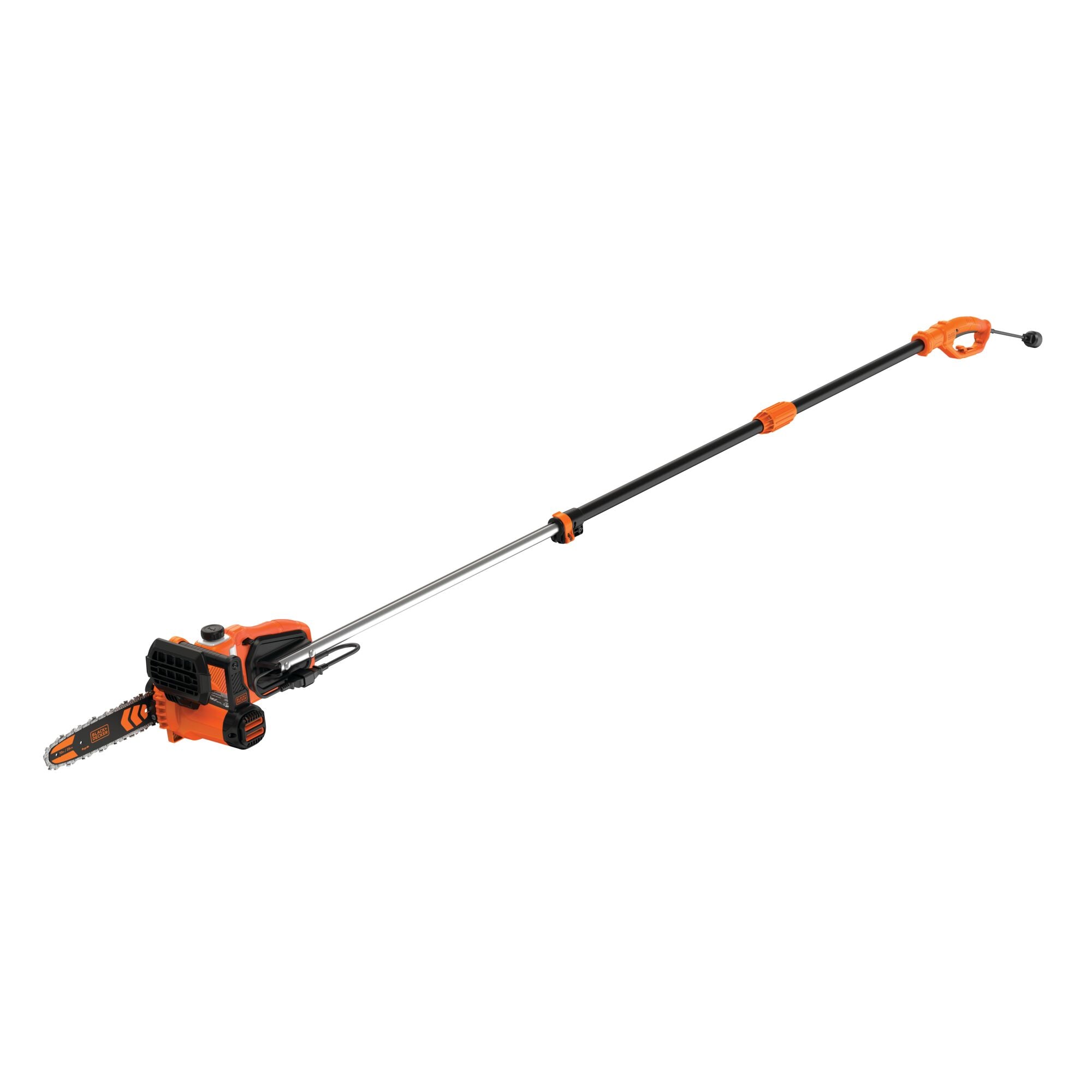
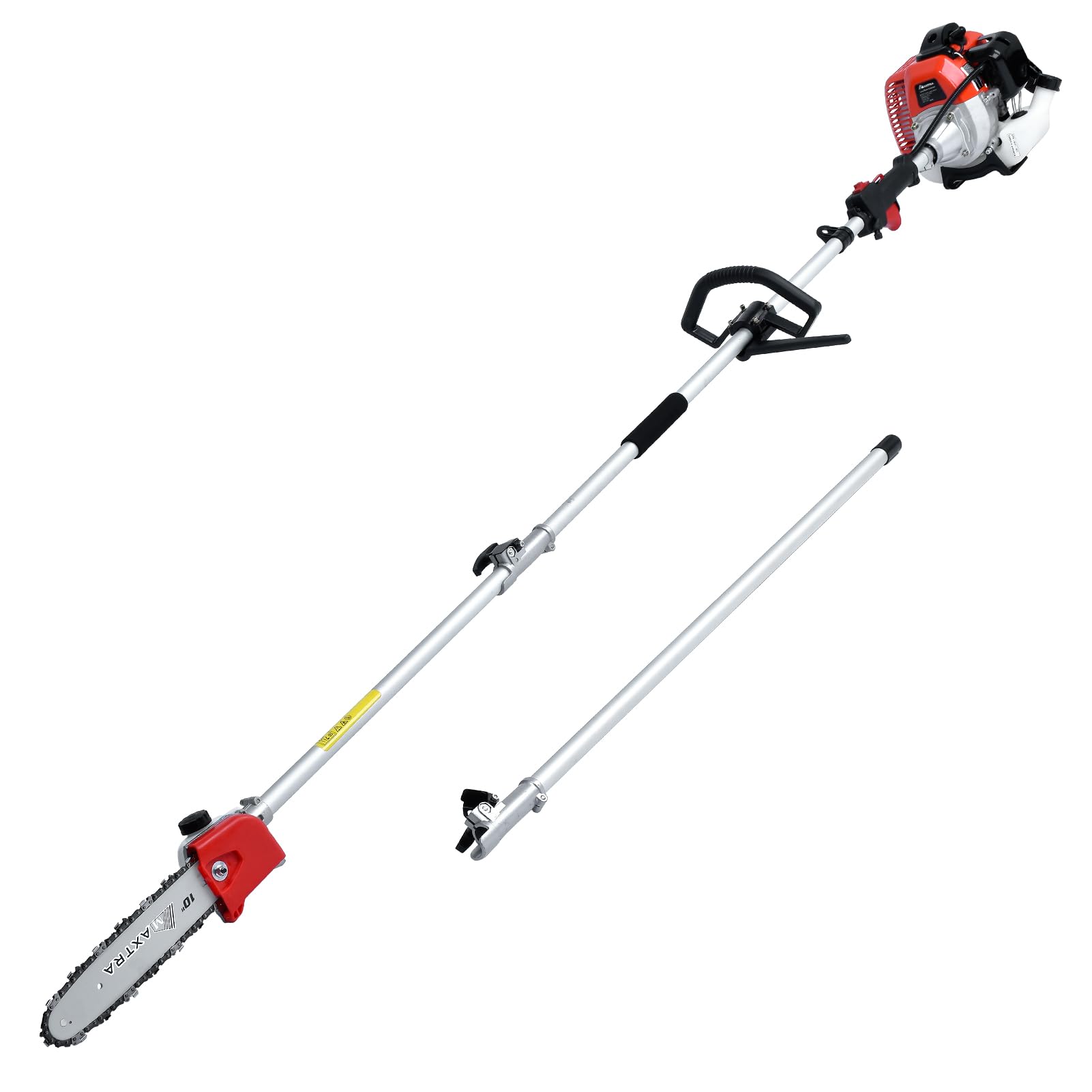
A pole chainsaw pairs a small chainsaw head with a telescoping shaft, giving you a working reach of 8 to 14 feet or more. Unlike a manual pole saw, it does the cutting for you with a motorized chain. Models come in three main power types: battery, corded electric, and gas.

Best uses for a pole chainsaw:

  • Pruning small to medium tree limbs up to about 8 inches thick
  • Removing deadwood and storm-damaged branches
  • Trimming branches overhanging your roof, driveway, or walkway
  • Light orchard and fruit tree maintenance
  • Clearing understory growth along fence lines

When NOT to use a pole chainsaw:

  • On limbs larger than the bar can handle
  • On wood that is rotten, cracked, or unstable
  • Anywhere near power lines—keep a minimum of 10 feet away, and call a utility company if there's any risk
  • In high winds, rain, or icy conditions

If a branch is too big for your saw or the situation feels risky, don't push it. A certified arborist has the equipment and training to handle dangerous removals. Pushing a pole saw past its limits is how accidents happen.

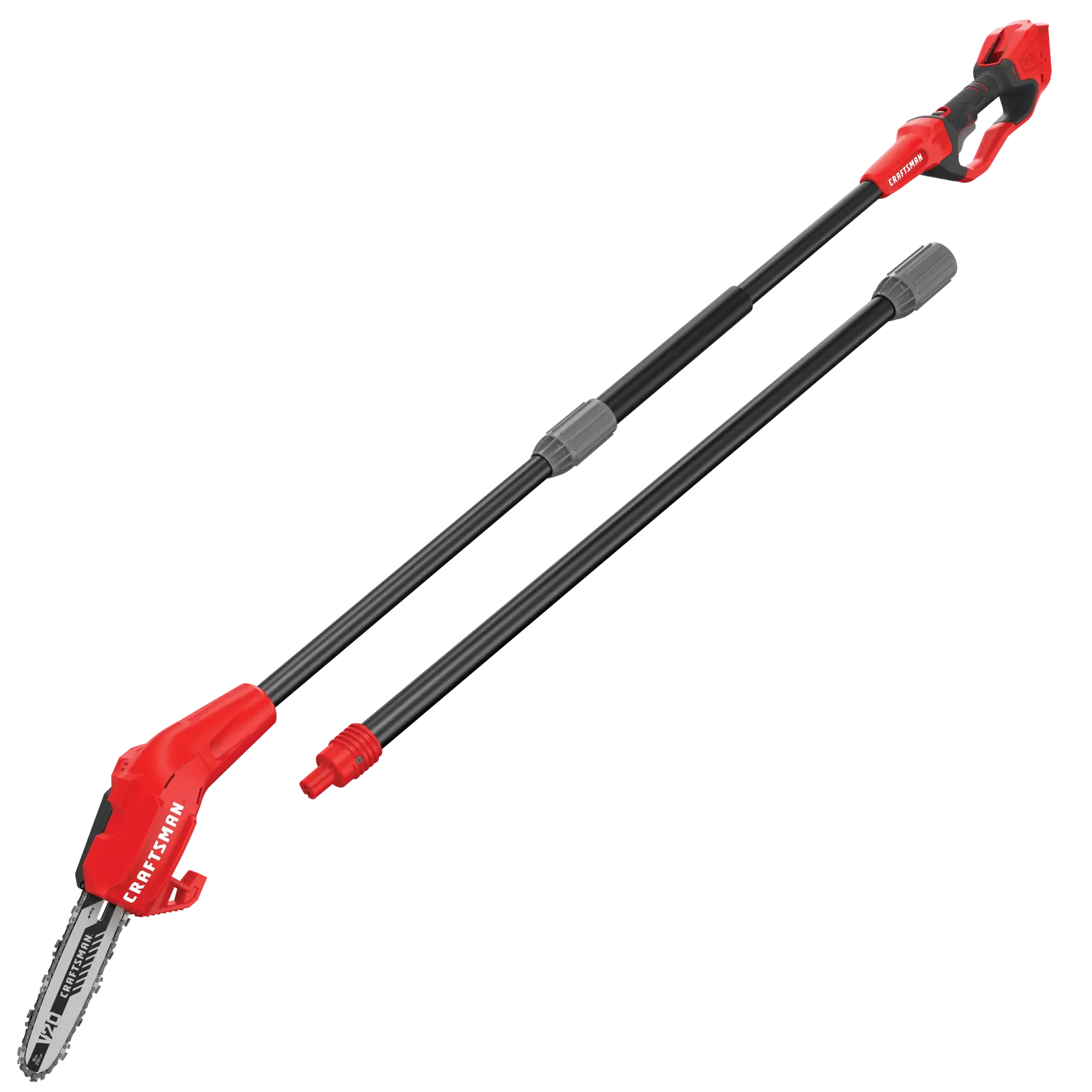
Pole chainsaw extended with cutting head visible

Image source: craftsman.com


Essential Safety Gear: What to Wear Before You Start

Pole saws throw sawdust, chips, and occasionally small branches. The chain is moving at high speed just feet from your face. Proper PPE is non-negotiable.

Minimum safety equipment:

Item Why You Need It
Helmet with face shield Protects your head and face from falling debris
Safety glasses or goggles Even with a shield, eye protection stops dust and small particles
Hearing protection Chainsaws run at 100+ dB; use ear muffs or plugs
Cut-resistant gloves Grip the pole securely and protect hands from splinters
Chainsaw chaps or protective pants Stop the chain if it contacts your legs
Steel-toe boots with good traction Protect feet and prevent slips on uneven ground
High-visibility vest Essential if anyone else is nearby or you're working near a road

Before you start, also:

  • Wear snug-fitting clothing. Loose sleeves can catch on the pole or branch.
  • Remove jewelry and tie back long hair.
  • Set up a drop zone twice the height of the highest cut. Keep people and pets well outside this area.
  • Keep a fully stocked first-aid kit within reach.

For a deeper look at workplace tree-care safety standards, the Occupational Safety and Health Administration offers comprehensive guidelines on tree trimming and removal operations that apply to residential work too.

Pre-Use Checks: A 5-Minute Inspection That Prevents Disaster

A pole chainsaw is a precision tool with a violent action. If something is loose, dull, or misaligned, it will fail—loudly and dangerously. Run through this checklist every time, before the first cut.

Inspect the saw head:

  • Check the bar for cracks, bending, or excessive wear at the nose
  • Examine the chain for broken or chipped teeth, rust, and loose rivets
  • Confirm the sprocket spins freely with no wobble
  • Test the chain brake: engage it and try to rotate the chain; it should lock instantly

Check chain tension:

The chain should fit snugly against the bar but still pull freely by hand. Pull it away from the bar at the midpoint—the drive links should stay seated in the groove. If it's too loose, it can derail; too tight, and it will overheat and wear fast. Re-check tension after the first few minutes of cutting, because a warm chain stretches.

Verify oiling:

  • Fill the bar and chain oil reservoir with a quality bar oil
  • Test the oiler by running the saw at low speed with the chain off the wood—you should see a light spray of oil
  • Never run the saw dry; a lubricated chain is a cool chain

Secure the pole:

  • Lock all telescoping sections so the pole feels solid
  • Give it a firm shake—any wobble means a section isn't seated
  • On gas models, check for fuel leaks around the tank and lines

Power system check:

  • Battery: Use a fully charged pack and seat it until it clicks. Carry a spare.
  • Corded: Use the correct gauge extension cord for the distance—too-light gauge causes voltage drop and overheating. Keep the cord behind you.
  • Gas: Use fresh fuel mix per the manual. Prime according to instructions and warm up at idle with the chain brake engaged.

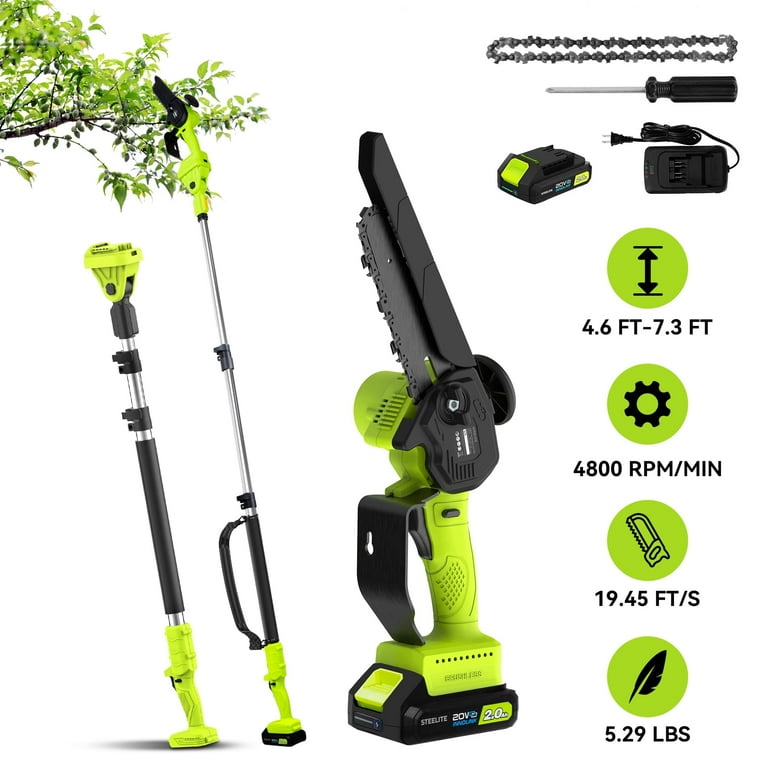
Close-up of pole chainsaw chain and bar

Image source: walmart.com


How to Use a Pole Chainsaw: Step-by-Step Instructions

Now the actual work. The golden rule: control first, speed later. Every cut should be deliberate, supported, and planned.

Step 1: Position Your Body

Stand clear of the fall path of the limb. Plant your feet shoulder-width apart, one slightly forward for balance. Keep your knees soft, not locked. Your stance is your anchor—if you feel unstable, move your feet, don't reach further.

Step 2: Set the Pole Length

Extend the pole only as far as necessary. At full extension, leverage drops and the saw head becomes harder to control. If you can move closer to the tree, do it. A shorter pole is a safer pole.

Step 3: Grip Correctly

  • Lower hand on the rear handle, thumb wrapped around
  • Upper hand midway up the shaft for balance and steering
  • Keep both hands firmly on the tool at all times

Step 4: Start and Position the Saw

Start on the ground with the chain brake engaged. Bring the saw up only when you're ready to cut. Align the bar so the chain meets the branch top at a slight angle—this helps the saw bite rather than bounce.

Step 5: Cut with Light Pressure

Disengage the chain brake and let the saw reach full speed before touching wood. Apply gentle, steady pressure. Let the chain do the work. Forcing the saw creates kickback risk and tears the wood.

Step 6: Manage the Cut

  • Watch the bar tip—the upper front quadrant is the kickback zone. Keep it clear of the branch.
  • Cut in small sections for branches over about 2 inches thick. Remove weight progressively, then finish near the collar.
  • As the limb starts to move, ease off the throttle. Never stand under a loaded branch.

Step 7: Move with Purpose

Re-engage the chain brake every time you reposition, walk, or set the saw down. It takes one second and prevents accidental contact.

Pro Tip

If you feel the saw wobble or the cut wandering, stop. Lower the pole, shorten it, or change your stance. A stable tool produces clean cuts; a shaky one invites accidents.

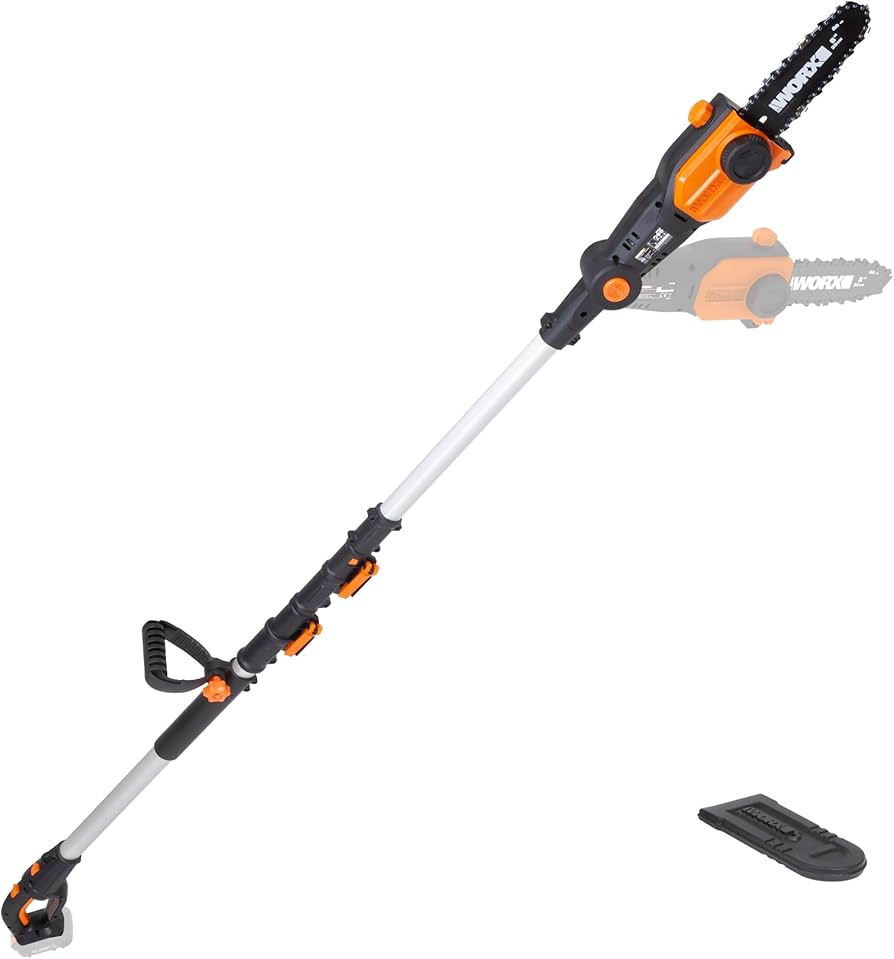
Step-by-step diagram of cutting a branch

Image source: amazon.com


Cutting Techniques for Clean, Safe Pruning

How you cut matters as much as where you cut. A clean cut heals quickly; a torn, jagged cut leaves the tree open to disease and pests.

The Three-Cut Method for Larger Limbs

This technique prevents bark tearing—a common mistake that damages the trunk.

  1. Undercut: Make a shallow cut from underneath the limb, 6 to 12 inches from the trunk. Cut about a third of the way through.
  2. Top cut: Move a few inches further out and cut from the top until the limb breaks away. The undercut guides the break and stops the bark from peeling.
  3. Final cut: Remove the remaining stub with a clean cut just outside the branch collar—the swollen area where the branch meets the trunk. Never flush-cut into the trunk. This preserves the tree's natural healing zone.

For Light Branches

On small limbs under 2 inches, a single clean cut from the top is fine. Keep the bar level and let the weight of the branch carry the cut.

Weight Reduction First

For long or heavy limbs, always reduce the weight before the final cut. Slice off smaller sections working from the tip toward the trunk. This prevents the branch from splitting and the falling weight from tearing the wood. The routine upkeep of your saw's chain—sharpening and proper tension—is critical here, because a dull chain tears rather than cuts.

Visual Reference

If you're unsure where the branch collar is, stop and step closer to look. A correct cut is smooth and close to the trunk without cutting into it. When in doubt, leave a slightly longer stub—the tree will manage it better than a flush cut.

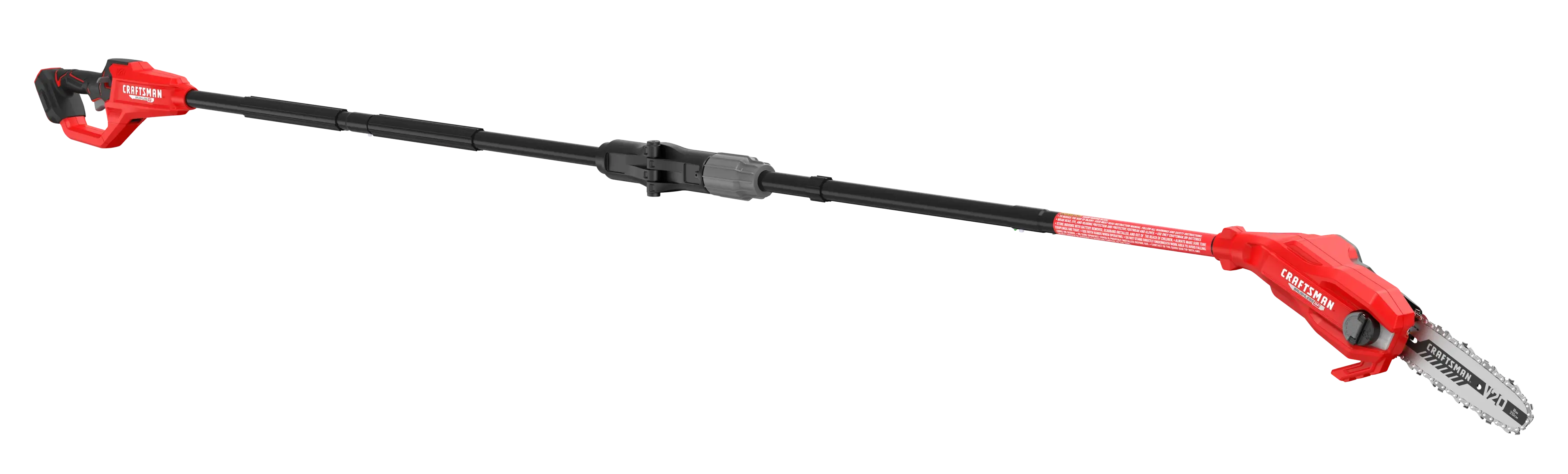
Proper three-cut pruning technique illustration

Image source: bedbathandbeyond.com


Body Mechanics, Stance, and Balance

Overhead work is exhausting. But fatigue isn't just uncomfortable—it leads to sloppy cuts and accidents. Engineers and arborists approach limb removal with structured techniques, and the same discipline applies here: think about what the limb will do before you cut.

Maintain a Stable Stance

  • Keep feet shoulder-width apart, one slightly forward
  • Bend slightly at the knees, not at the waist
  • Keep the pole in front of your torso, not off to one side
  • Work at chest-to-eye level wherever possible—this minimizes fatigue and maximizes control

Reduce Strain

  • Keep elbows slightly bent and wrists straight
  • Rotate your whole body rather than twisting at the waist
  • Take a 2-minute break every 10 to 15 minutes

Watch Your Head Position

Never stand directly under the limb you're cutting. Offset your position to the side of the fall path. A falling branch will not drop straight down—it pivots at the cut point. The side stance also keeps your face out of the sawdust stream.

The same warning applies if you're doing cleanup between cuts: don't step under overhanging material while repositioning. And if you're also planning garden work afterward, a good pair of hand tools—like the versatile weeding tool for soil work—makes ground cleanup easier on your back.

Proper stance and grip on pole chainsaw

Image source: amazon.com


Hazard Zones: Power Lines, Kickback, and Tensioned Wood

Three hazards demand your full attention. They cause the most serious pole saw injuries.

Power Lines: Non-Negotiable Distance

Stay at least 10 feet away from any power line—more if the line is high voltage. And remember: branches move when cut, and they can fall onto a line even if the saw head never gets close. If there's any chance a limb could contact a line, stop and call the utility company or a certified arborist. This is not a DIY job, no matter how skilled you are.

Kickback: The Silent Killer

Kickback happens when the bar nose—specifically the upper front quadrant—contacts wood. The saw kicks violently up and back toward your face. Pole saws are particularly prone to this because the extended bar creates a long lever arm.

How to avoid kickback:

  • Never cut with the bar tip
  • Start cuts with the mid-bar against the wood
  • Keep a firm grip with both hands
  • Maintain a sharp chain—a dull chain grabs and kicks
  • Keep the chain speed high; don't force the saw

Tensioned Wood: Read the Bend

A limb under tension can snap violently when cut. Look for the signs:

  • The branch bends upward or downward under load
  • The cut gap opens or closes as you saw
  • The wood is leaning on other branches

The rule: cut on the compression side first. If a branch is pinched between two others, make a small relief cut on the side that's being pushed, then cut from the opposite side. Go slowly and be ready for the limb to move.

Weather Stops

If winds pick up or rain starts, stop immediately. Wet bark is slick, your grip weakens, and the saw becomes harder to control. There's no deadline worth that risk.

Pole chainsaw positioned safely away from power lines

Image source: craftsman.com


Maintenance: Aftercare and Storage

A pole chainsaw is only as good as its chain. A sharp, well-oiled chain cuts fast, clean, and safe. A neglected one burns through wood slowly, produces dangerous chips, and increases kickback risk.

Immediately After Use

  • Brush off sawdust, sap, and debris from the bar and saw head
  • Clean the bar groove and oil hole with a thin wire or pick
  • Wipe down the pole—moisture and sap corrode extension locks over time

Sharpening

  • Touch up the chain after every full battery cycle or tank of fuel, or whenever cuts slow down
  • Use the correct file size for your chain pitch
  • File at the manufacturer's specified angle, typically 25 to 35 degrees
  • File every tooth evenly—a lopsided chain pulls to one side
  • Check depth gauges every few sharpenings; they should sit slightly below the cutter tops

Chain and Bar Care

  • Flip the bar every few sharpenings to distribute wear evenly
  • Replace the chain when teeth are too short to sharpen or when rivets are worn
  • Replace the bar if the groove is too shallow or the rails are burred
  • Sprocket nose wear is easy to overlook—replace it before it ruins a new chain

Storage

  • Top off bar oil before storage
  • For gas models, empty the fuel tank or add a stabilizer before long-term storage
  • Loosen chain tension slightly after the day's work
  • Hang the saw or store it horizontally in a dry shed, protected from sun and rain

If your saw is struggling with performance issues, check the fundamentals: a worn chain or a failing engine component might be the culprit. It's worth diagnosing before you spend money on replacements.

Pole chainsaw after maintenance with chain cleaned

Image source: amazon.com


Common Mistakes and How to Fix Them

Even experienced users fall into bad habits. Here's how to catch yourself:

Mistake Why It Happens The Fix
Overreaching with full pole extension Convenience over safety Move your feet; shorten the pole and reposition
Cutting too large a limb at once Impatience Reduce the branch in sections, then finish near the collar
Running a dull chain or empty oiler Ignoring maintenance Sharpen regularly; confirm oil flow before every session
Standing directly under the branch Lack of planning Mark your drop zone and stand to the side of the fall path
Ignoring loose chain tension Assuming it's fine Re-tension after the first few cuts, then periodically throughout the job

Each of these is fixable in the moment. The moment you notice the saw pulling sideways, the chain smoking, or your stance getting uncomfortable, stop and correct it. That's the difference between a pro and an amateur.

Common misuse of pole chainsaw with overreach

Image source: blackanddecker.com


Troubleshooting: Quick Fixes from the Field

Here are the problems I see most often, and the simple solutions that get you back to work.

The saw bogs down in the cut.

Ease up on the pressure. Let the chain spin faster. If it still bogs, the chain is dull—sharpen it before you continue.

The chain keeps coming loose.

Chains stretch as they heat up. Let the saw cool, re-tension, and tighten the bar nuts firmly. Re-check after 10 minutes of cutting.

The bar runs hot and smokes.

This is a lubrication problem—always. Stop and check the bar groove for packed sawdust, clean the oiler port, and top off the oil. Running a dry bar destroys both the bar and chain in minutes.

Cuts wander or pull to one side.

Usually uneven tooth height. File all teeth the same number of strokes at the same angle. If it persists, the bar is likely bent—replace it.

Hard to see the bar tip in bright sun.

Paint a bright mark near the bar nose. A dab of orange or yellow paint is invisible when you're working but makes tip position obvious for safer cutting.

Frequently Asked Questions

What size branch can a pole chainsaw cut?

Most homeowner models handle branches up to 6 to 8 inches in diameter. But size isn't the only factor—a long, heavy limb may be too dangerous to cut even if it fits the bar. Reduce large branches in sections or hire a professional for anything questionable.

Can I use a pole chainsaw from a ladder?

Never. A ladder plus an extended pole saw is one of the most dangerous combinations in yard work. The weight of the saw at arm's length is enough to tip you. Work from the ground, or hire an arborist for anything beyond your reach.

How often should I sharpen the chain?

Roughly every tank of gas or battery cycle on average, or whenever you notice the cutting slowing down. A few strokes with a round file keep the cut clean and the saw safe. Some users find touch-ups are needed even sooner in dirty wood.

What is the right chain tension?

Pull the chain at the middle of the bar. The drive links should remain seated in the bar groove, and the chain should snap back snugly when released. It should still rotate by hand with moderate effort. Re-check after the first few minutes of cutting since chains stretch as they warm.

Is bar oil different from motor oil?

Yes. Bar oil is sticky and formulated to cling to the bar and chain at high speed. Regular motor oil flings off immediately, leaving your chain dry. Use the type recommended in your manual.

How do I avoid kickback?

Keep the bar tip away from wood, especially the upper quadrant of the nose. Start cuts with the mid-bar, use both hands, maintain a sharp chain, and never force the cut. Kickback is avoidable at every point where it starts.

What is the three-cut method?

An undercut, a top cut, and a final finish cut. The undercut prevents bark tearing when the branch falls. The top cut removes the weight. The finish cut, just outside the branch collar, lets the tree seal the wound cleanly.

Conclusion

Using a pole chainsaw safely is about preparation, patience, and positioning. You've got the full picture now: gearing up with proper safety equipment, running pre-use checks, making clean cuts with deliberate technique, and maintaining the tool so it's ready for next time.

Start with small branches. Get comfortable with the weight and reach. Keep your stance solid, cut in sections, and never force the saw. If a job looks risky—power lines nearby, a heavy limb, or unstable footing—make the professional call. There is no branch worth a hospital visit.

Want more expert tool guides and seasonal maintenance tips? Subscribe to our newsletter for practical advice you can use in your yard this weekend. And if you have a question about your specific setup, leave it in the comments below—we read every one.

Similar Posts

Leave a Reply

Your email address will not be published. Required fields are marked *