Cape Cod Weeder Tool: 2026 Buyer’s Guide And Pro Tips
A Cape Cod weeder tool is one of the most underrated hand tools in the garden. With its distinctive L-shaped blade and pull-action design, it slices through young weeds at soil level in a single, satisfying stroke. Unlike larger hoes that require swinging and bending, this compact tool offers precision, speed, and remarkable gentleness on your back.
Whether you’re tending raised beds, clearing gravel paths, or working around delicate seedlings, the Cape Cod weeder earns its place in any serious gardener’s arsenal. In this updated guide, we’ll break down the design, show you exactly how to use it effectively, and help you choose the right model for your hands and garden style. For more on this, see our guide on hole digging tool.

The signature L-shaped blade that defines the Cape Cod weeder.
Image source: amazon.com
What Is a Cape Cod Weeder Tool?
A Cape Cod weeder tool is a hand-operated hoe with a narrow, L-shaped blade mounted at a right angle to a short handle. You work it with a pulling motion—drawing the sharp edge toward you just beneath the soil surface to sever weed stems and crowns cleanly.
Because the cutting action is shallow and precise, it leaves nearby plant roots undisturbed. That makes it particularly valuable in densely planted beds where swinging a full-size hoe risks collateral damage. Gardeners sometimes call it a “pull hoe” or a “Cape Cod hoe,” and it has been a staple in New England gardens for generations. For more on this, see our guide on metal detecting digging tool.
In practice, the tool excels at one specific job: dispatching small, actively growing weeds before they become a problem. It is not a digger, a pry bar, or a cultivator. Its narrow blade reaches into tight spacing between vegetables, herbs, and ornamentals where larger tools simply cannot fit.
Anatomy and Design: What Makes It Work
Understanding the tool’s construction helps you choose wisely and use it effectively. A quality Cape Cod weeder consists of three primary components:
The Blade
The blade is typically narrow—around 1.5 to 2 inches wide—with a sharp beveled edge on one side. Blade material matters significantly:
- Stainless steel resists rust and requires less maintenance, making it ideal for damp climates.
- High-carbon steel takes and holds a keener edge but demands regular oiling to prevent corrosion.
The Shank
The shank is the metal neck that connects the blade to the handle. It sets the blade at the crucial angle that allows the edge to sit flat against the soil during the pull. A poorly designed shank causes the blade to dig in or skip across the surface. For more on this, see our guide on matic digging tool.
The Handle
Handles come in various lengths and materials:
- Short handles (12–18 inches) offer maximum control for close work in beds.
- Long handles (36–48 inches) reduce bending for standing work in open areas.
- Ash or oak handles feel sturdy and absorb shock well.
- Ergonomic grips with soft-touch materials reduce hand fatigue during extended sessions.
Handedness Is Not a Gimmick
One detail many buyers overlook: Cape Cod weeders come in right-handed and left-handed versions. The blade’s cutting edge is oriented to match your pulling hand. A right-handed model, pulled with your right hand, tracks straight and keeps the edge flat against the soil. Using the wrong version results in the tool wanting to veer sideways or skip, which quickly becomes frustrating.
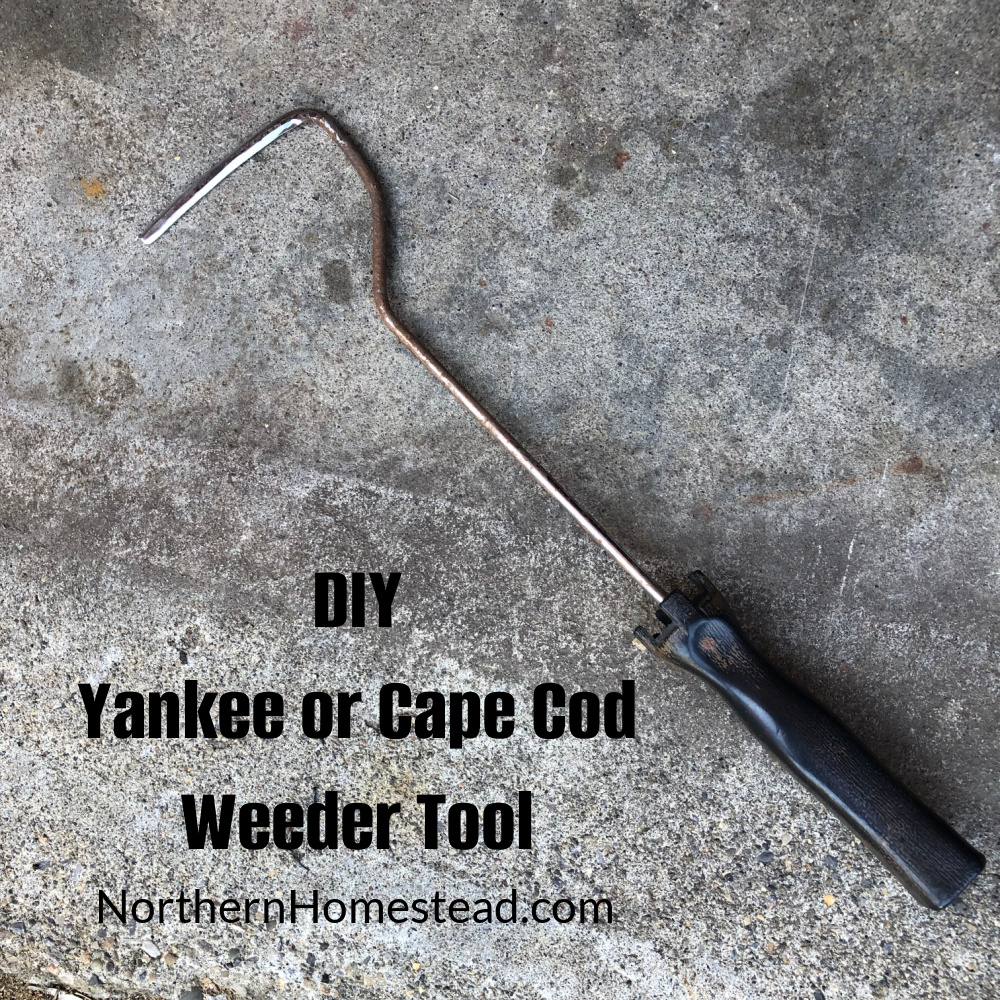
Anatomy of a Cape Cod weeder: blade, shank, and handle working together.
Image source: northernhomestead.com
Why Gardeners Love It: Benefits and Limitations
Core Benefits
- Slices weeds at the crown with one clean pass, killing most annual weeds outright.
- Minimal soil disturbance protects soil structure and beneficial organisms near the surface.
- Precision work allows you to operate within inches of desirable plants without harming them.
- Reduced strain compared to repeated bending or swinging a long-handled hoe.
- Fast operation allows you to clear a bed in minutes during routine touch-ups.
Honest Limitations
The Cape Cod weeder has real boundaries. It will not:
- Remove deep taproots like dandelions or dock. You’ll slice the top growth, but the root survives and resprouts.
- Lift or dislodge established clumps of grass or large weeds.
- Penetrate hard, baked clay effectively. Dry, crusty soil causes the blade to bounce rather than slice.
As one experienced gardener puts it: “The tool kills the weed you see, not the root you don’t.” For taproot problems, use a narrow dandelion digger or a hand fork instead. For general maintenance, though, the speed and precision of the Cape Cod weeder are unmatched. For more on this, see our guide on best tool for edging garden beds.
When and Where to Use It
The Cape Cod weeder is at its best against young, actively growing weeds. Target them at the “white thread” stage—when seedlings are just emerging—or when only their first true leaves have appeared. At this stage, slicing the stem below the cotyledons is a certain kill.
Ideal Weed Targets
- Annual weeds: chickweed, purslane, lambsquarters, pigweed, and bittercress.
- Shallow-rooted perennials: plantain, creeping Charlie, and small grasses, which weaken with repeated slicing.
- Rhizome weeds like quackgrass: slice off shoots regularly to starve the underground runners.
Best Locations for Use
- Vegetable beds with closely spaced starts and herbs
- Perennial borders and groundcovers where precision matters
- Along drip irrigation lines and beneath mulch edges
- Gravel paths, patio joints, and crack weeding
- Under low-growing foliage where larger tools cannot reach
Timing Matters
The best time to weed is on a dry morning after the surface soil has crusted slightly. A light crust allows weed roots to break cleanly when sliced. Wet, sticky soil clings to the blade and smears rather than cutting. If your soil is heavy clay, wait a day or two after rain until the top inch dries out.
How to Use a Cape Cod Weeder Like a Pro
Mastering the Cape Cod weeder takes a few minutes, but refining your technique pays off in speed and efficiency.
The Basic Technique
- Grip the handle like you would a dinner knife, with your thumb resting along the top for directional control.
- Position the blade flat against the soil surface, with the cutting edge facing you.
- Pull in short strokes, aiming for the base of the weed where it meets the soil.
- Keep the cut shallow—about a quarter-inch deep is sufficient for most seedlings.
- Work in systematic rows or arcs so you don’t miss patches.
- Shake off excess soil and leave sliced weeds on the surface to wilt and dry.
Advanced Tips
- Time your sessions. Five minutes every other day beats a three-hour marathon once a month.
- Edge first, then sweep. Cut along bed edges and borders, then work through the interior.
- Use mulch after weeding. A fresh layer of mulch blocks light and suppresses re-germination.
- Clean the blade between beds to avoid transferring weed seeds or soil-borne diseases.

Proper hand grip and blade angle for an efficient pull.
Image source: redpigtools.com
A Rhythm That Works
Experienced users develop a steady, almost rhythmic motion. Short pulls of 6 to 12 inches, delivered at a consistent pace, keep the blade tracking flat and minimize fatigue. Trying to slice longer strokes invites the blade to dive or skip.
Care and Maintenance for Long Life
A sharp Cape Cod weeder is a joy to use. A dull one makes weeding feel like arm wrestling. Basic care takes minutes and dramatically extends the tool’s lifespan.
After Every Session
- Rinse off soil and debris with water.
- Dry the metal thoroughly with a rag.
- Apply a thin film of camellia oil or mineral oil to the blade.
Sharpening Steps
- Secure the tool in a bench vise or clamp the blade firmly.
- Use a fine mill file or diamond sharpening stone.
- Match the factory bevel angle—typically 20 to 30 degrees.
- File in one direction only, from the heel to the tip.
- Remove the burr with two light passes on the flat back.
- Wipe clean and apply oil.
Light users may sharpen a few times per season. Heavy users should touch up the edge every few weeks of regular use.
Seasonal Maintenance
Once a year, sand the wooden handle smooth and wipe it with boiled linseed oil. Check the ferrule—the metal collar where the handle meets the shank—for looseness. A wobbly head makes precise work impossible.
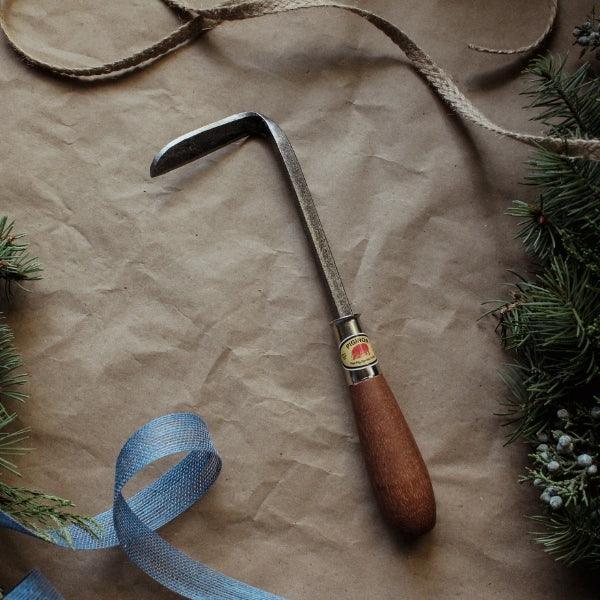
A well-maintained Cape Cod weeder with a conditioned wooden handle.
Image source: schreinersgardens.com
Cape Cod Weeder vs. Other Weeding Tools
Choosing the right tool for the job means understanding how the Cape Cod weeder compares to its cousins.
| Tool | Best For | Limitations |
|---|---|---|
| Cape Cod weeder | Precision slicing in tight beds | Not for taproots or hard soil |
| Stirrup (action) hoe | Open rows and broad areas | Needs swing space, less precise |
| Collinear hoe | Standing work, shallow slicing | Less control in confined spaces |
| Hori-hori knife | Digging, cutting, prying | Slower for mass weeding |
| Hand fork | Lifting clumps, loosening soil | Disturbs more soil structure |
For quick, surgical removal of small weeds in densely planted areas, the Cape Cod weeder has no equal. For deep-rooted perennials, pair it with a dedicated taproot remover. For breaking new ground, reach for a heavier tool first.
Ergonomics and Body Care
Gardening should not leave you aching. The Cape Cod weeder is inherently back-friendly because it eliminates bending, but good posture still matters.
- Keep your wrists straight. Let your elbow and shoulder drive the pulling motion.
- Take short strokes. Avoid overextending your reach, which strains the lower back.
- Switch hands regularly to distribute fatigue evenly.
- Use a kneeler or sit on a low stool for extended bed work.
- Wear gloves with a grippy palm to prevent the handle from slipping during pulls.
If the blade snags on a root or stone, stop and reset rather than wrenching the tool. For compacted soil, moisten it or loosen it with a fork first.
Buying Guide: How to Choose the Right Model
Not all Cape Cod weeders perform equally. Price differences reflect steel quality, handle material, and overall fit and finish.
What to Look For
- Steel quality: Stainless steel resists rust; high-carbon steel takes a sharper edge. Choose based on your climate and tolerance for maintenance.
- Secure ferrule: The blade-to-handle joint should be tight with no wobble.
- Comfortable grip: Try different handle shapes and diameters if possible. A too-thick handle strains the hand; a too-thin one cramps.
- Correct handedness: Match the model to your dominant pulling hand.
- Weight and balance: The ideal tool feels light but substantial, not flimsy.
Price Ranges
Budget models ($15–$25) work adequately for occasional weeding but may bend or dull quickly. Mid-range options ($25–$45) typically offer the best balance of quality and value. Premium tools ($45 and up) from specialty manufacturers add refined ergonomics and premium steel that hold an edge exceptionally well.
For raised beds and container gardening, a short-handled model gives you the control you need. If you have wide rows or standing garden paths, consider a long-handled version to save your back. Many experienced gardeners keep both on hand.
A Season-Long Weeding Strategy
The Cape Cod weeder works best as part of a consistent plan, not as a cure-all.
Spring
- Slice the first flush of seedlings as the soil warms.
- Follow immediately with a 2–3 inch layer of mulch to suppress re-germination.
Summer
- Walk the beds twice weekly, spending five focused minutes per bed.
- Clip shoots of rhizome weeds regularly to weaken the underground network.
Fall
- Clear late-season weeds on dry days so they desiccate quickly.
- Top up mulch to prevent winter annuals from establishing.
Winter
- Clean, oil, and hang the tool in a dry location.
- Sharpen the blade and inspect the handle for cracks.
Small, consistent sessions keep weeds perpetually weak and your beds looking sharp. The goal is to never let weeds reach the “big job” stage.
Common Mistakes to Avoid
Even experienced gardeners make these errors:
- Waiting too long between sessions. Large weeds require far more effort and may need a different tool.
- Cutting too deep. A quarter-inch is plenty. Deeper cutting tires you out and disturbs soil unnecessarily.
- Using the wrong handed model. If the tool skips or veers, check your handedness before blaming technique.
- Neglecting sharpening. A dull blade pushes and tears weeds rather than slicing them cleanly.
- Weeding wet clay. Sticky soil clogs the blade and results in smeared, incomplete cuts.
The Cape Cod weeder rewards attention and regular upkeep. Keep it sharp, keep your strokes light, and make it a habit.
Frequently Asked Questions
What is a Cape Cod weeder tool used for?
It slices weeds off at or just below the soil surface. The action is fast, clean, and incredibly low-disturbance, making it ideal for routine maintenance in planted beds.
Is a Cape Cod weeder good for dandelions?
It will shear off the foliage quickly, but dandelions have deep taproots that resprout. Use a narrow digging tool to extract the root, then use the Cape Cod weeder for follow-up shoots.
Should I get a right- or left-handed model?
Match the tool to your dominant hand. A correctly oriented blade tracks straight and keeps the edge flat to the soil. The wrong model will feel awkward and skip.
How often should I sharpen it?
Light users can sharpen a few times per season. If you weed regularly, touch up the edge every few weeks.
Can I use it in heavy clay soil?
Yes, but timing is everything. Work when the top layer is dry, or moisten the soil first to reduce drag and clogging.
Will it damage my vegetable seedlings?
Only if you get careless. Keep the blade flat and shallow, and its narrow profile allows you to work very close to stems safely.
What handle length is best?
Short handles excel in raised beds and tight plantings. Long handles reduce bending for open rows and standing work.
Conclusion
The Cape Cod weeder tool proves that a simple, well-designed implement can outperform flashier alternatives. With its razor-sharp blade, ergonomic pull action, and surgical precision, it turns weeding from a dreaded chore into a quick, satisfying routine.
Invest in a quality model matched to your dominant hand. Keep it sharp and clean. Use it consistently—little and often—and your garden beds will stay neat, healthy, and virtually weed-free with minimal strain on your body.
Put this guide to work this week. Pick up the right Cape Cod weeder for your hands, sharpen it properly, and try the light pull method on your next bed. Your back—and your garden—will thank you.