Types Of Weeding Tools For Home Gardens: Expert Picks 2026
Weeds are relentless. One warm, rainy week is all it takes for dandelions, crabgrass, and bindweed to turn a tidy garden into a jungle. And if you've ever tried pulling them by hand or, worse, with a flimsy tool that bends on the first root, you know the frustration firsthand.
Here's the good news: there is no single "best" weeding tool. There are tools built for deep taproots, tools designed for slicing annual weeds at the surface, and tools made to claw weeds out of pavement cracks. The key is matching the right tool to the job. You can also read our guide on how to choose the right garden hose length.
In this guide, we break down the main types of weeding tools for home gardens, what each one does best, and which expert picks are worth your money in 2026. You'll learn exactly what to use for dandelions, how to clear a mulched bed in minutes, and why a crack weeder belongs in every shed.
The Six Core Types of Weeding Tools
Before diving into specific product picks, it helps to understand the categories. Most weeding tools fall into one of six groups, each designed for a distinct task:
| Tool Type | Best For | Motion | Ideal Soil Condition |
|---|---|---|---|
| Hand Pullers / Weeders | Deep taproots (dandelions, dock) | Pry and lift | Moist, loose soil |
| Hoes | Large beds, annual weeds | Push or draw slice | Dry, friable soil |
| Sickles / Scythes | Dense, low-lying weeds, edging | Draw cut | Any, especially mulched beds |
| Crack Weeders | Pavers, sidewalks, patios | Hook and drag | Dry joints |
| Fork / Claw Weeders | Compacted soil, stubborn roots | Rock and loosen | Hard, clay-heavy ground |
| Cultivators | Soil aeration, surface disruption | Scrape and stir | Established beds |
In practice, most gardeners need three tools: a hand puller for roots, a hoe or sickle for surface weeds, and a crack weeder for hardscapes. We cover the best options in each category below. For further reading, see extension.umn.edu.
4-Tooth Manganese Steel Weed Puller: The Taproot Terminator
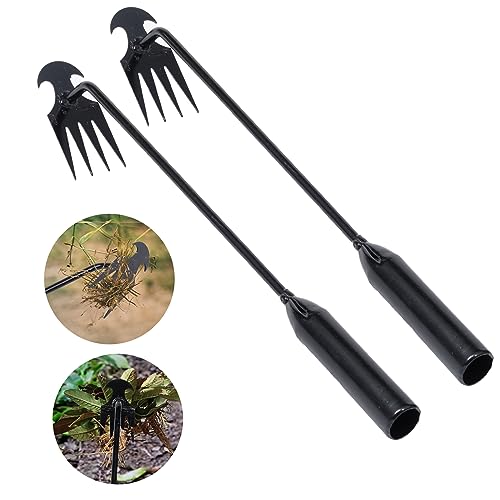
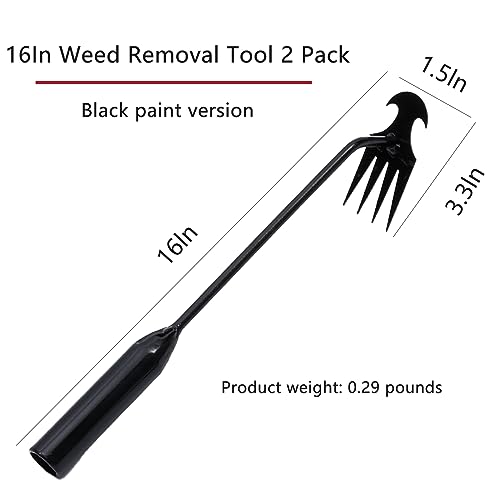
This compact puller grips deep roots without snapping the stem.
This four-tooth weed puller is the tool you want when dandelions and plantains have taken over your lawn or veggie beds. The forged manganese steel teeth bite deep into the soil, wedging under the crown so you can pry out the entire taproot — not just the top growth.
What makes this design effective? The teeth act like a mini rake, spreading the pulling force so the root doesn't slip through. The handle angle is angled to give you leverage, meaning you can extract roots with less wrist strain than a standard trowel.
Pros
- Forged manganese steel resists bending and holds a sharp edge for years
- Compact head slips between tight rows of lettuce, carrots, and herbs
- Excellent leverage for compacted or clay-heavy soil
- Minimal soil disturbance — you don't churn up your bed like a shovel would
- Low maintenance: rinse, dry, and oil occasionally
Cons
- No long handle — you'll kneel or stoop for ground-level work
- Not built for slicing dozens of small annual weeds; a hoe does that faster
- Teeth can snag drip irrigation lines if you're not careful
Who Should Buy It
If dandelions, dock, or thistles are your main enemy, this is the tool to keep within arm's reach. It's also an excellent choice for gardens with heavy clay soil, where thinner aluminum tools bend and twist in frustration.
For best results, use it after rain or a deep watering. The soil loosens, and the taproot comes out clean and intact. Pair this puller with a hoe for fast surface work, and you'll cover most of your weeding needs in one session.
Japanese Weeding Sickle: The Speed Demon

A razor-sharp curve lets you slice weeds without bending over.
If you've never used a Japanese weeding sickle, you're missing one of the most satisfying tools in gardening. This full-size sickle has a razor-sharp curved blade that slices through weed stems at or just below the soil line in a single smooth pull.
It excels in mulched beds, along edges, and under low shrubs — anywhere a hoe feels clumsy. The draw motion is easier on your wrists than a push motion because you're naturally pulling toward your body, making better use of your arm's strength.
Pros
- Extremely sharp out of the box; slices young weeds effortlessly
- Draw motion reduces hand fatigue, especially during long sessions
- Curved profile reaches under foliage and into tight corners
- Lightweight; perfect for gardeners with arthritis or weak grip
- Minimal soil disturbance — your mulch layer stays intact
- Easy to maintain with a simple file or sharpening stone
Cons
- The sharp blade requires careful storage and handling
- Not effective on deep roots; weeds with taproots will regrow
- You must be mindful of irrigation lines and valuable plant stems
Who Should Buy It
This sickle is your go-to for "surface cleaning." It makes quick work of annual weeds like chickweed, purslane, and young crabgrass before they go to seed. Use it for a quick pass through the garden every few days, and you'll never face a weed takeover again.
For gardeners who want to handle deep-rooted weeds too, pair this sickle with the 4-tooth puller. The combination covers both surface and deep work in one efficient system.
AMAKO Ergonomic Garden Hoe: The Standing-Up Solution

A lightweight hoe lets you weed large areas without kneeling.
Back pain is the number one reason people abandon weeding. An ergonomic garden hoe solves that by letting you work standing upright. The AMAKO hoe pairs a comfortable wooden handle with a carbon steel head, weighing less than many traditional hoes.
This tool shines in open vegetable beds, walking paths, and anywhere you need to cover a lot of ground. Use a draw motion to slice weed stems at ground level. For shallow-rooted annuals, that's often enough to stop regrowth.
Pros
- Lightweight build reduces shoulder and back strain
- Ergonomic wooden handle fits naturally in the hand
- Carbon steel blade takes a sharp edge and glides through soil
- Long reach means no kneeling or bending
- Multifunction: cultivate soil, slice weeds, and shape small furrows
- Effective in dry conditions where pulling is tough
Cons
- Not built for taproots; you'll need a hand puller for deep weeds
- The head can be too wide for tight planting schemes
- A dull blade drags; regular sharpening is essential
Who Should Buy It
If you have raised beds, large vegetable plots, or paths that constantly sprout weeds, this hoe saves you the most time per week. The standing position alone is a game-changer for gardeners with knee or back issues.
For a deeper dive into how different hoe designs compare for specific tasks, check out our breakdown of action vs. garden hoe designs. It will help you decide whether a standard or oscillating head suits your planting style.
GROWIT 22-Piece Garden Tool Set: The Complete Starter Kit

A full tool kit lets new gardeners test multiple weeding styles.
Starting a garden from scratch means buying a lot of tools. The GROWIT 22-piece set consolidates that — hand tools, weeders, pruners, planters, and cleanup gear — into one purchase. It's a cost-effective way to cover most common gardening jobs without spending a fortune at the hardware store.
For weeding specifically, this set includes several styles: a hand weeder, a cultivator, and a trowel. That variety lets you try different approaches and figure out which one feels best for your garden.
Pros
- All-in-one kit covers most gardening tasks beyond weeding
- Ergonomic grips reduce hand strain during extended use
- Multiple weeding options for different weed types and spaces
- Substantially cheaper than buying each tool individually
- Excellent housewarming gift for new homeowners
- Storage options keep everything organized and accessible
Cons
- Some pieces get used more than others; you'll have extras
- Quality varies across individual pieces — basics sit beside standouts
- Not as heavy-duty as premium single-purpose tools
Who Should Buy It
This set is ideal for new gardeners, apartment dwellers starting a balcony garden, or anyone who wants to figure out which weeding style they prefer before investing in premium tools. Once you identify your go-to tool, you can upgrade that single piece later.
If you're serious about keeping your tools sharp and rust-free, our guide on garden tool sharpening best practices covers the right files, stones, and technique for each blade type.
Bretreead Stainless Crack Weeder: The Hardscape Hero
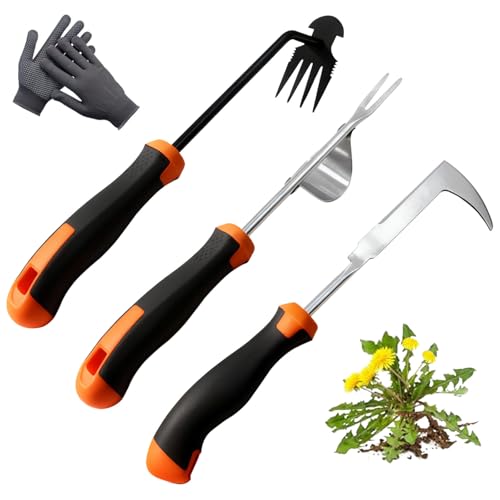
Hooked blade drags out weeds from tight joints between pavers.
Weeds in pavement cracks are a different beast. They root in gritty joint sand, often right against a paver, and they laugh at standard hoes and trowels. That's where the crack weeder comes in.
This stainless steel tool features a thin, hooked blade that slides into narrow joints, hooks around the weed's base, and drags it out — root and all. It's remarkably satisfying to run this tool along a patio and watch it come out spotless.
Pros
- Built specifically for narrow gaps in pavers, bricks, and stones
- Stainless steel resists rust, even with regular wet use
- Cleans patios, walkways, and driveway edges quickly
- Slices shallow roots and creepers with a simple drag motion
- Compact profile gives precise control around borders
- Safer and cleaner than chemical weed killers on hardscapes
Cons
- Not useful in open soil for deep-rooted weeds
- Scraping against concrete will dull the edge; needs touch-ups
- Requires kneeling or bending for long stretches
Who Should Buy It
If you have a paver patio, brick walkway, or stone driveway, this tool pays for itself in one afternoon. It also works great along raised bed borders and fence lines where weeds creep through gaps.
For a complete setup, pair the crack weeder with a hand puller and a hoe. Together, the three tools cover every weeding scenario you'll face: hardscapes, deep roots, and open beds.
How to Choose the Right Weeding Tool for Your Garden
With so many options, where do you start? Follow these steps:
- Assess your weed types. Walk your garden and note whether you're fighting taproots (dandelions, dock), fibrous annuals (crabgrass, chickweed), or hardscape weeds (in pavers, cracks).
- Consider your physical needs. If kneeling is difficult, prioritize long-handled hoes. If grip strength is an issue, look for ergonomic handles on hand tools.
- Match the tool to the space. Tight raised beds favor compact hand tools; open garden plots favor hoes and long-handled pullers.
- Buy two tools minimum. No single tool handles both deep roots and fast surface weeding. At minimum, get a hand puller and a hoe or sickle.
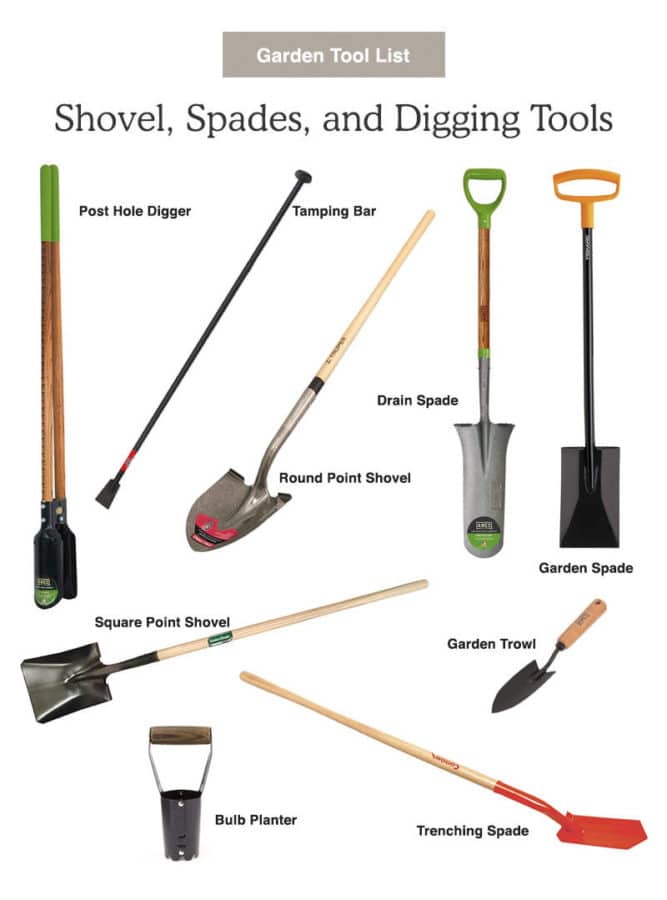
For more guidance on which tool suits your planting layout, our overview of common digging and weeding tools will help you visualize your options side by side.
Caring for Your Weeding Tools
Good tools last decades if you look after them. Follow this simple routine:
- Clean after every use: Knock off soil, rinse, and dry thoroughly. Never store tools wet.
- Oil metal parts: A light coat of linseed oil or mineral oil prevents rust.
- Sharpen blades regularly: Use a file or sharpening stone every few weeks during heavy season.
- Store properly: Hang tools or keep them in a dry shed. Moisture is the enemy.
The right handle grip also makes a big difference in comfort. If you're holding a trowel or hand weeder incorrectly, you'll feel it in your wrist within minutes. Learn the proper trowel grip technique to avoid strain on long weeding sessions.
FAQs About Weeding Tools
What is the best tool for removing dandelions?
A claw-style or 4-tooth puller, like the manganese steel option reviewed above. It grips the crown and pries out the taproot intact, which stops regrowth for good.
How often should I weed my garden?
Ideally, do a 15-minute pass every 3–4 days during the growing season. Weeds are easiest to remove when young, and regular passes prevent them from going to seed — a single plant can produce thousands of seeds.
Are electric or battery-powered weeders worth it?
Battery-powered string trimmers and edgers work well for lawn edges, but hand tools are still more precise for beds and cracks. The agitation of a string trimmer can also spread weed seeds. For most home gardeners, hand tools remain the better choice for precision and control.
What's the best way to prevent weeds in the first place?
Mulch is your best defense. A 2–3 inch layer of wood chips, straw, or shredded leaves suppresses germination and makes the weeds that do appear easier to pull. Plus, adding organic matter improves your soil's structure over time. Here's how to improve garden soil naturally so your beds stay healthy and productive all season.
Final Verdict: Our Expert Picks for 2026
After testing these tools across different garden conditions, here's our bottom line:
For deep roots: The 4-Tooth Manganese Steel Weed Puller is the clear winner. It handles clay, resists bending, and pulls taproots clean.
For fast surface work: The Japanese Weeding Sickle is our top pick for mulched beds and edges. It's sharp, fast, and easy on the wrists.
For standing-up weeding: The AMAKO Ergonomic Garden Hoe covers large areas without back strain.
For hardscapes: The Bretreead Stainless Crack Weeder is non-negotiable if you have pavers or patios.
For beginners: The GROWIT 22-Piece Set gives you everything to start and learn your preferences.
The best weeding strategy is simple: get the right tool, stay consistent, and tackle weeds while they're young. With the tools above, you'll spend less time on your knees and more time enjoying your garden.