How To Flush A Radiator With A Garden Hose: Quick DIY Guide
A radiator flush is one of the most satisfying DIY jobs you can do in your driveway. It takes about an hour, costs less than a professional service, and can extend the life of your engine by years. The good news? A standard garden hose is genuinely the best tool for the job—no expensive pressure flusher required.
Your coolant doesn't last forever. Even the best antifreeze breaks down over time, losing its corrosion inhibitors and heat-transfer ability. What starts as bright green or pink fluid gradually turns brown, gritty, and acidic. When that happens, your cooling system stops doing its job, and your engine pays the price. You can also read our guide on how to maintain garden tools.
The process is straightforward: drain the old coolant, flush the system with water until it runs clear, and refill with fresh coolant. Here's exactly how to do it safely, step by step, without making the mistakes that turn a simple job into a costly repair.

Coolant that looks brown or muddy instead of bright and translucent is long overdue for a flush.
Source: yardbutler.com
Why Your Engine Needs A Periodic Coolant Flush
Coolant does more than keep your engine from freezing in winter. It raises the boiling point in summer, prevents corrosion inside your engine block, lubricates the water pump, and keeps the heater core working. Over time, those additives deplete. You can also read our guide on how to choose the right garden hose length.
Here's what happens when coolant gets old:
- Corrosion protection fades, allowing rust to form inside the engine block and radiator
- Heat transfer drops, so the engine runs hotter even under normal load
- Scale and silicate gel form, clogging narrow radiator tubes and heater core passages
- The water pump works harder, shortening its lifespan
A flush clears out that built-up debris and restores your cooling system to its designed performance. It's one of the cheapest insurance policies you can buy for your engine.
Signs Your Radiator Needs Attention
You don't need to wait for an overheating event. Watch for these early warnings:
- Temperature gauge climbs higher than usual, especially in traffic or under load
- Coolant in the overflow tank looks brown, cloudy, or gritty
- Sludge or crust visible around the radiator cap neck
- Cabin heater blows lukewarm air even at full temperature
- A sweet, syrupy smell under the hood after a drive
Any one of these is enough to justify a flush. Catch it early and you might save yourself a radiator replacement later.
Tools And Materials You'll Need
Gather everything before you start. Running to the store halfway through a flush, with coolant dripping on your driveway, is no fun—and it's avoidable. For more on this, see our guide on how to flush radiator with garden hose.
| Item | Purpose |
|---|---|
| Garden hose with spray nozzle | Controlled water flow for flushing |
| Drain pan (2–3 gallon capacity) | Catch old coolant and rinse water |
| Pliers or nut driver | Remove hose clamps |
| Funnel and measuring jug | Clean, accurate refill |
| New coolant (correct type for your car) | Final fill after flushing |
| Distilled water | Mixing with concentrate, if needed |
| Radiator flush chemical | Optional, for heavily contaminated systems |
| Gloves and safety glasses | Protect skin and eyes from coolant |
| Rags or absorbent pads | Manage spills |
| New radiator cap (optional) | Replace if the old one is worn or corroded |
One practical note: check that your garden hose reaches the radiator fill neck before you begin. If it doesn't, you'll need an extension hose, or you'll be holding a bucket of water up to the radiator by hand—which works but takes much longer. The right hose for the job will make this step far more manageable.
Safety Preparation Before You Start
Coolant—especially older formulas containing ethylene glycol—is toxic to humans and animals. It tastes sweet, which makes it dangerous for pets that might lap up a spill. Treat every drop as hazardous material.
Engine Temperature Matters
This is the most important rule: never open a hot cooling system. The system operates under pressure, and the coolant temperature can exceed 220°F. Opening a hot radiator cap releases scalding steam and superheated fluid. Let the engine cool completely—at least 2–3 hours, or overnight if you can wait.
Work Area Prep
- Park on level ground with the parking brake set and a wheel chocked
- Lay absorbent pads under the radiator drain area
- Keep children and pets away from the work zone
- Have a bucket or container ready for immediate spill cleanup
A cold, well-prepped workspace makes the rest of the job dramatically easier.
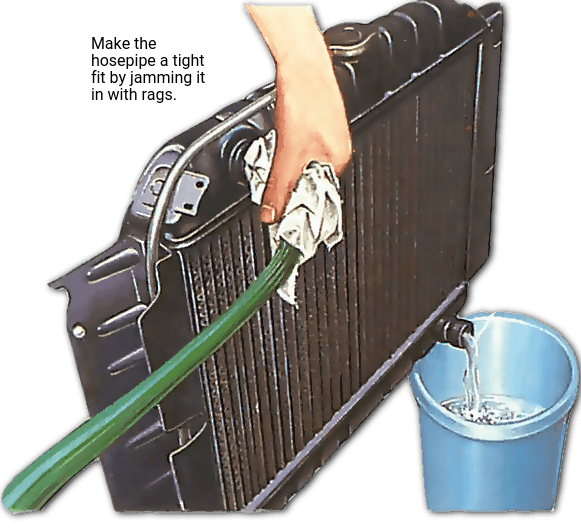
Always open the system on a cold engine to avoid burns from pressurized hot coolant.
Source: howacarworks.com
Step-By-Step: How To Flush A Radiator With A Garden Hose
Once everything is ready, the process takes about an hour of actual work time. Follow these steps in order.
Step 1: Drain The Old Coolant
Put on your gloves and glasses. Slowly rotate the radiator cap to release any residual pressure, then remove it completely. If you hear a hiss, stop and wait longer—pressure is still present.
Position the drain pan under the radiator drain valve, which is typically a small plastic petcock at the bottom corner. Open it by hand or with pliers if it's stiff. If your vehicle doesn't have a petcock, you'll need to loosen the lower radiator hose clamp and ease the hose off to let fluid drain.
Overflow tank: drain this too and rinse it out while you're at it.
Step 2: Fill With Water And Circulate
Close the petcock and fit the lower hose back snugly. Fill the radiator with clean tap water—this is fine for flushing, as long as you don't leave it in the system long-term. Replace the cap loosely (one or two turns, so it seals but can't pressurize).
Start the engine, turn the heater to maximum and the fan to low, and run it for 5–10 minutes. This opens the thermostat and circulates water through the entire cooling system, including the heater core. Shut off the engine and let it cool completely before the next step.
Step 3: Flush With The Garden Hose
Here's where the garden hose earns its keep. With the engine cold and the lower hose disconnected or petcock open, place the spray nozzle tip into the radiator fill neck. Use gentle, steady water flow—not full pressure.
Watch the water exiting the drain point. You'll see dirty, rusty water at first. Keep the water running until it runs completely clear. Depending on how contaminated your system was, this can take 5–15 minutes.
Common mistake: blasting at maximum hose pressure. Aggressive flow can shift debris into narrow radiator tubes, causing a blockage that didn't exist before. It can also dislodge weak seals and turn a slow weep into a steady leak. Steady, moderate flow is all you need.
Optional: Back-Flush The Heater Core
If your coolant was heavily sludged, the heater core likely collected debris too. A back-flush cleans it out effectively.
Find the heater inlet hose (the one running from the engine to the heater core). Disconnect it, then aim your garden hose into the heater core outlet side. Run gentle water through for a few minutes until it exits clear, then reconnect the hose and tighten the clamp.
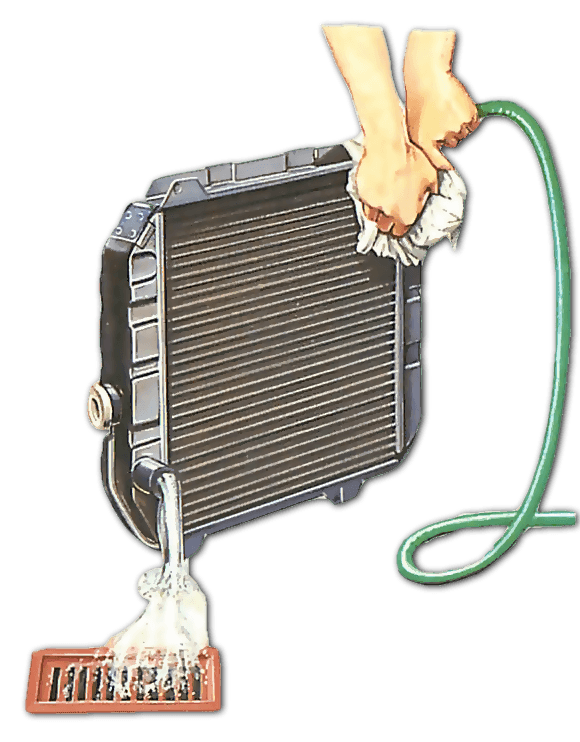
Back-flushing pushes debris out of the heater core rather than deeper into its narrow tubes.
Source: howacarworks.com
Step 4: Drain The Water Completely
After the flush water runs clear, let all residual water drain out. Tilt the car slightly if needed to get every bit out—leftover tap water in the system will dilute your new coolant concentration.
If you used a flush chemical product, the process is similar: add the chemical with water, run the engine with the heater on for the labeled time, drain, then rinse with the garden hose until clear.
Refilling And Bleeding Air Correctly
Now the flush is done, and it's time to get the cooling system back to working order. Rushing this step is the most common cause of a "successful flush" followed by persistent overheating.
Choose The Right Coolant
Check your owner's manual for the specific coolant your vehicle requires. Modern cars increasingly use specialized OAT (Organic Acid Technology) or HOAT (Hybrid Organic Acid Technology) formulations that aren't interchangeable. Mixing incompatible coolant types can cause gel formation that plugs your cooling system—the exact problem you just flushed away.
If you're using full-strength concentrate, mix it 50/50 with distilled water (never tap water for the final fill—minerals in tap water can leave deposits). Measuring jug and funnel make this clean and precise.
Fill Slowly And Bleed Trapped Air
Air pockets in the cooling system are worse than a small leak. They cause hot spots, erratic temperature readings, and weak cabin heat.
- Fill the radiator to the neck, then fill the overflow tank to the cold-fill line
- If your engine has a bleed screw on the thermostat housing, open it while filling until coolant flows out without bubbles, then close it
- Start the engine with the heater on high
- Watch the coolant level drop as the thermostat opens and the system pulls fluid in—top it up as needed
- Squeeze the upper radiator hose several times to massage trapped air upward
- Once the engine reaches operating temperature, check the coolant level again, then replace the cap
Confirm the heater blows hot air while the engine idles. That's your best confirmation that the system is properly filled.

Always use the coolant formulation specified in your owner's manual, never generic "universal" blends.
Source: youtube.com
Troubleshooting After A Flush
Usually, a flush solves the problem. When it doesn't, here's what to check.
Still overheating. Confirm the thermostat actually opens. Feel the upper radiator hose after the engine warms up—it should get hot suddenly when the thermostat opens. Also check that the cooling fan engages properly and the coolant level is correct after a full heating/cooling cycle.
No cabin heat after flushing. Trapped air is the usual culprit. Repeat the bleed procedure: with the engine warm and running, squeeze the upper hose, add coolant to the radiator if it drops, and confirm the heater blows hot at idle. Some vehicles benefit from parking nose-up on an incline to help air rise to the bleed point.
Dripping at hose ends or the drain petcock. Tighten clamps and verify the petcock is fully closed. Check the water pump weep hole for coolant streaks—a small leak there signals the water pump bearing is failing.
Coolant looks dirty again within days. That points to heavy internal rust. A chemical flush may not be enough; plan a professional power flush or inspect the radiator for internal blockage that requires replacement.

After the flush, check the water pump weep hole for coolant residue—a sign of a failing bearing.
Source: wikihow.com
Common Mistakes That Ruin A Flush
A few easily avoidable errors separate a clean flush from a driveway disaster.
Opening the system hot. This is the only mistake that can genuinely injure you. Scalding coolant sprays at face height when a hot cap is removed. Always wait for a fully cold engine.
Using tap water for the final fill. Flushing with tap water is fine; leaving it in the system isn't. Hard water leaves mineral deposits in the heater core and radiator, gradually reducing heat transfer. Rinse thoroughly and use distilled water for the final mix.
Mixing coolant types. "Universal" coolant claims are marketing, not chemistry. Different formulations use different corrosion inhibitors, and mixing them can form a gel that plugs your entire system.
Over-tightening clamps. The plastic radiator necks on many modern cars crack easily. Snug is enough on spring clamps and gear clamps alike.
Skipping the heater core. On a sludge-heavy system, a simple radiator flush leaves the heater core full of debris. Weeks later, you get weak heater output and wonder why.
How Often Should You Flush Your Radiator?
Most manufacturers recommend a full coolant service every 2–5 years or 30,000–100,000 miles, depending on the vehicle and coolant type. Check your owner's manual for the exact interval—it varies a lot between vehicles.
Beyond the schedule, let these signs override the calendar:
- Coolant that looks rusty, gritty, or opaque
- A sweet smell near the hood after driving
- Temperature gauge creeping higher in traffic
- Rapid coolant discoloration after a recent service
One thing to note: the best technique for feeding coolant into a narrow system mouth matters more than you'd think—a good funnel prevents spills that can attract pets.
Safe Disposal Of Old Coolant
Your used coolant is hazardous waste. It contains ethylene glycol, heavy metals from engine corrosion, and whatever else accumulated over years of service.
What not to do:
- Don't pour it down a drain or storm sewer
- Don't dump it on soil or into a flower bed
- Don't leave it in an open container where pets can reach it
What to do instead:
- Collect all drained fluid in sealed plastic containers
- Take it to an auto parts store or municipal hazardous waste drop-off that accepts used coolant
- Wipe up spills with absorbent pads and dispose of those with the same container
Many parts stores accept used coolant for free—calling ahead saves a wasted trip. The USDA offers guidance on proper disposal of household hazardous wastes that varies by state and locality.
Cost, Time, Skill Level
This is a genuinely beginner-friendly job, and the economics are unbeatable.
| Factor | What to Expect |
|---|---|
| Time | 1–2 hours, plus cool-down time between steps |
| Cost | $30–$60 for coolant (2–3 gallons premix or concentrate plus distilled water) |
| Extra parts | $10–$20 for a new radiator cap, if needed |
| Skill level | Beginner. If you can change your own oil, you can do this |
The only "expensive" version of this job is one where you skip the patience part—overtightening a clamp into a plastic neck, or using the wrong coolant, can turn a $50 job into a $400 repair.
Consider it a two-hour investment that protects your engine year-round. Before you finish, it's also worth knowing the basics of what your coolant actually does in extreme conditions. The Environmental Protection Agency's coolant disposal guidelines clarify proper handling if you're ever unsure about local rules.
Frequently Asked Questions
Can I flush the radiator without removing the thermostat?
Yes, and for most vehicles you should leave it in. With the engine running during the water-circulation step, a functioning thermostat opens at operating temperature and lets water flow through the entire system. If your engine tends to overheat or your heat is weak, removing the thermostat for the flush can help confirm it's not stuck closed—just reinstall it before the final fill.
Is a garden hose safe for modern aluminum radiators?
Absolutely, if you use common sense. Aluminum radiators have thin fins and soft tubes. A gentle, steady garden hose flow won't damage them. What you want to avoid is a high-pressure nozzle set to "jet"—that concentrated stream can bend fins or dislodge engine block debris into the radiator. Keep the nozzle on a wide, gentle spray setting.
What coolant should I use after flushing?
The exact type specified in your owner's manual. For many newer vehicles, that's a specific OAT or HOAT formula with a particular color. If your manual is missing, check the coolant reservoir cap—many have the spec printed on them. When in doubt, buy the OEM (original equipment manufacturer) coolant from a dealership rather than gambling on an "all makes and models" blend.
Do I need a chemical flush product?
Not for routine maintenance. Water flushing handles normal sediment and degraded coolant. Reach for a chemical flush only when you see heavy rust, sludge, or oil contamination in the old coolant. Follow the label instructions exactly—leaving chemical flush in the system too long can attack seals and gaskets.
How do I know all the air is out of my cooling system?
Three solid indicators: the heater blows hot air at idle, the temperature gauge settles at its normal position and stays there, and the upper radiator hose feels hot and firm (but not rock-hard) after warm-up. If your car has a bleed screw, you'll see coolant flowing steadily without air bubbles during the final bleed.
Conclusion
Flushing your radiator with a garden hose is one of the most cost-effective maintenance jobs you can do at home. You need no special tools—just a hose, a drain pan, the right coolant, and about two hours of careful work.
The payoff is meaningful: a cooling system that runs at the correct temperature, a heater that blows properly warm, protection against rust and sludge, and peace of mind knowing you caught a problem before it became a head gasket failure or radiator replacement.
Do this job once and you'll have the confidence to make it part of your regular maintenance routine. Pick a dry day, grab your gloves and safety glasses, and give your cooling system the refresh it deserves. Your engine will thank you at the next 100-degree traffic jam.