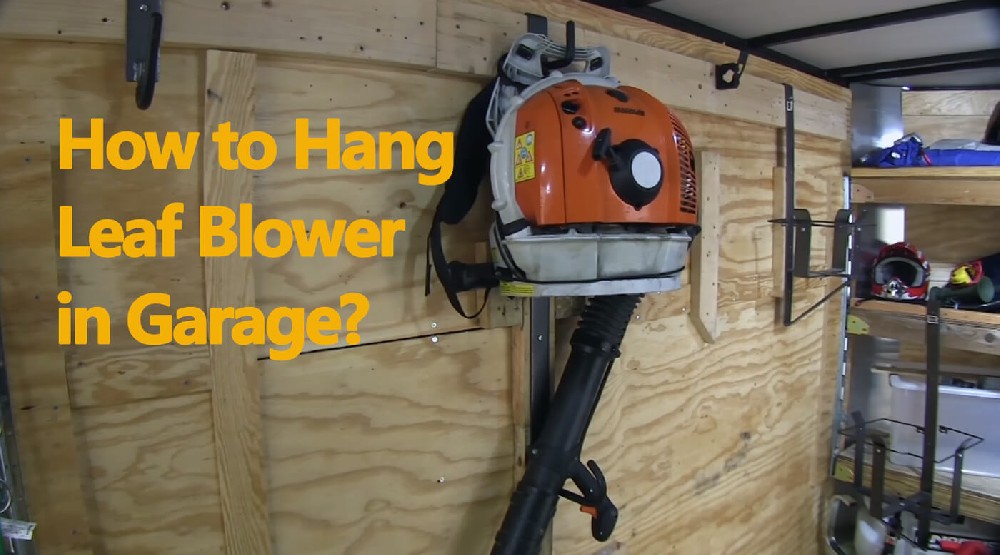
How To Store A Leaf Blower: Best Tips For Small Spaces
A leaf blower that refuses to start in the fall is usually a storage problem, not an engine problem. You can spend serious money on a quality unit and still watch it struggle after one careless winter on a damp garage floor.
The challenge grows when space is tight. A gas backpack blower, a cordless model with two batteries, or a corded unit trailing 50 feet of cable can turn a small garage into a cluttered maze. The good news is that compact storage is possible — it just takes a deliberate routine. You can also read our guide on how to drain a garden hose for winter.
This guide covers the complete process for every blower type: cleaning, fuel and battery preparation, wall-mounting ideas for small spaces, and the safety practices that protect both your equipment and your home.
Why Proper Storage Matters More Than You Think
Three predictable problems ruin stored leaf blowers: moisture, pests, and perishable fuel. Each one is preventable with the right habits. You can also read our guide on how to mix oil and gas for leaf blower.
Moisture is the silent killer. When humid air meets metal engine components, rust forms on cylinder walls, carburetor jets clog, throttle cables seize, and electrical connections corrode. Concrete floors make it worse — they wick ground moisture into anything sitting on them. A single damp winter can turn a minor tune-up into a full repair job.
Pests are the second threat. Mice and squirrels treat exhaust ports, air intakes, and air filter boxes as prime nesting real estate. They chew through air filters, fuel lines, and wiring. A blocked intake can also make the engine run dangerously lean when you finally start it. You can also read our guide on how to mix gas for leaf blower.
Fuel and batteries have their own chemistry. Ethanol-blended gasoline begins oxidizing within weeks and leaves a sticky varnish in the carburetor bowl; batteries stored at full charge or in freezing temperatures degrade slowly but permanently. That's why the gasoline you use matters as much as how you park the machine.
In practice, the blowers that need the most spring repairs are the ones that spent winter on the floor, with old fuel in the tank and a dusty air filter. Good storage is genuinely cheaper than good repairs. You can also read our guide on how to mix gas for a leaf blower.
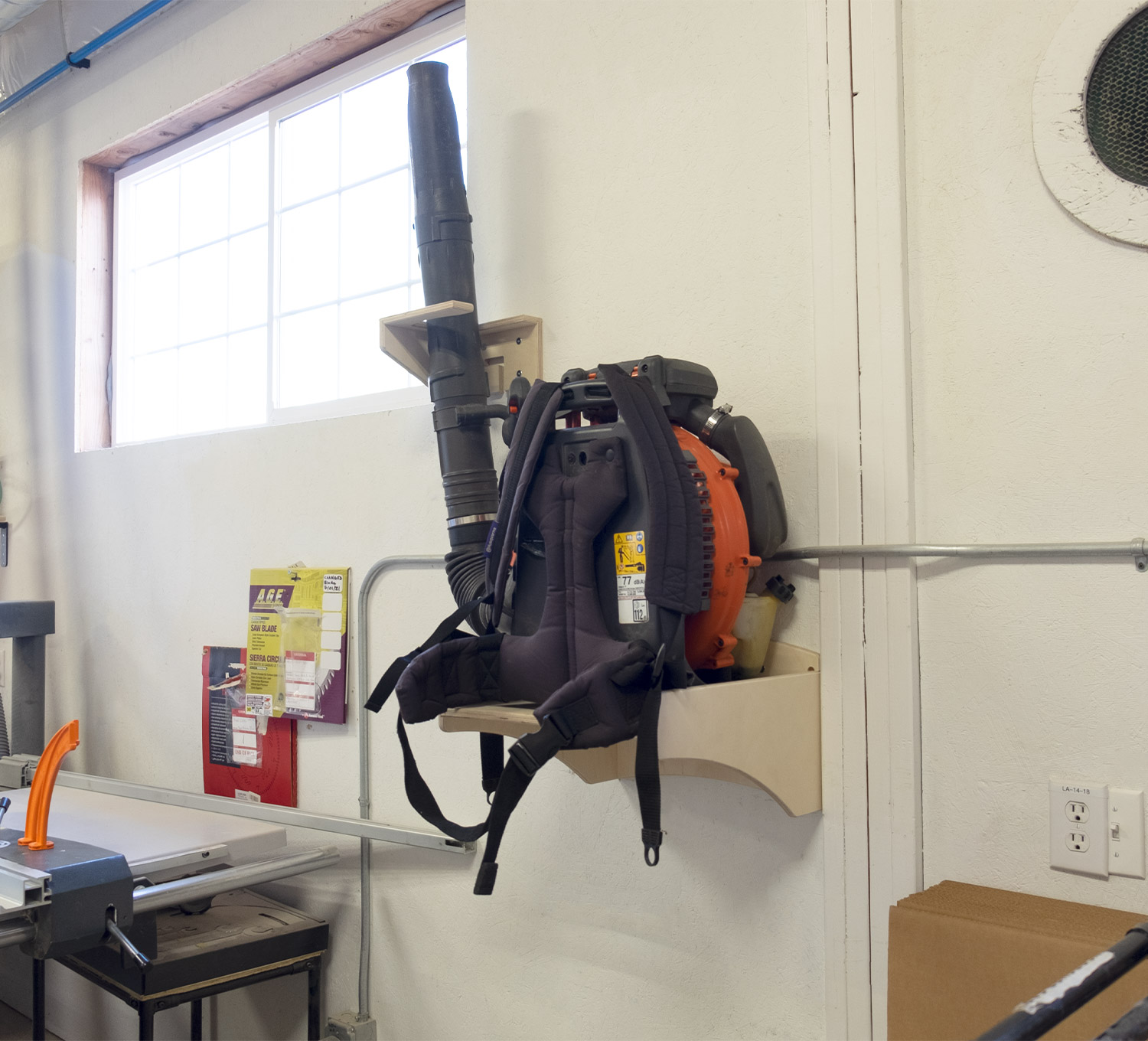 Even a heavy backpack blower can live on a wall mount, off the damp floor and out of the way.
Pre-Storage Cleaning: Do This First
Skipping the cleaning step is the most common mistake we see. Dried leaf debris, grass clippings, and dust trap moisture against the housing and engine fins. That moisture accelerates corrosion, and the debris itself attracts pests looking for nesting material.
Work through this checklist before you even think about hooks and shelves. It takes about ten minutes.
- Disconnect the power source. Remove the battery or pull the spark plug boot. No power during cleaning.
- Let the engine cool completely. Wait at least 30 minutes after the last run.
- Brush off loose debris. Use a stiff nylon brush or a shop vacuum with a crevice tool. Pay attention to crevices around the handles and tubes.
- Blow out the cooling fins and vents. Compressed air at low pressure works well. Keep the nozzle a few inches away so you don't push debris deeper into the housing.
- Wipe down every surface. A damp microfiber cloth removes sap, oil film, and grime. Dry the unit thoroughly afterward — a damp blower going into storage is a rusted blower in spring.
- Clean the intake screen and air filter area. A blocked screen restricts airflow and gives rodents an entry point.
- Inspect the cord, plug, or battery contacts. Look for cracks, fraying, or corrosion. Fix issues now, not in spring.
- Check fasteners and straps. Tighten anything loose. A rattling blower is both annoying and dangerous.
How To Store A Gas Leaf Blower
Gas blowers demand the most attention because fuel is perishable. The steps below work across most brands and models.
Step 1: Stabilize Or Drain The Fuel
Draw the line at 30 days. If the blower will sit for less than a month, add a fuel stabilizer to a full tank of fresh gasoline and run the engine for five minutes so the treated fuel reaches the carburetor. This habit of conditioning the fuel prevents the varnish that plugs tiny jets.
If the blower will sit for more than 30 days — which includes most winters — drain the system instead. Drain the tank into an approved container, then run the engine until it stalls. That burns the remaining fuel out of the carburetor bowl and fuel lines. Pull the cord two or three more times to clear the last drops, but don't force it.
Step 2: Choose Wet Or Dry Storage
There are two accepted methods, and your manual may specify a preference.
| Method | What it means | Best for | Watch out for |
|---|---|---|---|
| Wet | Stabilized fuel left in the tank and carburetor | Off-seasons of 1–3 months | Stabilizer can weaken; varnish risk if fuel sits too long |
| Dry | Fuel tank drained; engine run until it stalls | Winter and storage beyond 3 months | Seals may dry out; needs fresh fuel in spring |
Most professional technicians prefer dry storage for anything beyond a season. An empty carburetor can't varnish.
Step 3: Fog The Cylinder
For storage of 90 days or more, add a small amount of fogging oil through the spark plug hole. Pull the cord slowly several times to spread the oil film across the cylinder walls. This coating protects the piston rings and cylinder bore from rust. It's a five-minute job that adds real protection during a long winter.
Step 4: Service The Air Filter And Spark Plug
Clean or replace the air filter before storage. A foam filter can be washed with mild soap and water, then dried completely. A dirty paper filter should be replaced.
Check the spark plug gap and electrode condition, and replace the plug if it's been more than a season. A fresh plug makes the first spring start dramatically easier.
Step 5: Seal The Openings
Cap the fuel tank and stuff a clean rag into the exhaust port. This stops insects and rodents from nesting inside the engine. Write "REMOVE BEFORE START" on the rag with a marker so you don't launch it into the muffler in spring. Blocking the air intake with mesh or tape works too.
Step 6: Store It Upright And Elevated
Mount the blower on a wall hook or a shelf. Never store it directly on a concrete floor, which wicks moisture into the housing and engine. Keep it in a cool, dry, ventilated area, away from water heaters, furnaces, and pilot lights — full-size backpack units in particular need a properly reinforced mount.
Fuel Storage Safety
Store gasoline only in approved, tightly sealed containers designed for fuel. Keep them off the ground, out of direct sunlight, and away from any ignition source. The U.S. Consumer Product Safety Commission publishes practical guidance on portable fuel container safety, and most local fire codes limit how much fuel you can keep in a residential garage.
A useful habit: label the blower with the date and the storage method you used. When spring arrives, you'll know instantly whether the carburetor is dry and ready for fresh fuel.
How To Store A Cordless Leaf Blower
Cordless blowers are easier to store than gas models, but the battery needs its own care. Lithium-ion cells degrade when left at extreme charge levels or temperatures.
- Remove the battery from the tool and charger. A battery left on the charger for months degrades faster.
- Charge to 40–60%. This is the ideal resting state. A battery stored at 100% experiences cell stress; one stored at 0% can drop below minimum voltage and become unrecoverable.
- Store in moderate temperatures. The sweet spot is roughly 50–77°F. Avoid freezing garages and hot attics, both of which accelerate chemical degradation.
- Wipe the contacts clean. Dirt and oxidation cause poor connections and heat buildup.
- Check the charge every 60 days. If it drops below 30%, top it back up to the 50% range.
- Never store a swollen battery. If the casing is deformed, dispose of it properly and replace it.
Keep the battery indoors in a climate-controlled room, and give the plastic blower body its own spot in the garage. If you're still shopping for a model, top battery-powered picks almost all share this storage-friendly feature: a removable battery pack.
 Wall mounting keeps a bulky cordless blower accessible without claiming floor space.
How To Store A Corded Leaf Blower
Corded blowers are mechanically simpler, but the power cord introduces its own failure mode. A damaged cord is a safety hazard — exposed copper can shock or start a fire.
- Wipe down the housing and vents to remove dust and debris.
- Coil the cord in generous loops, roughly 12–18 inches in diameter. Tight coils and knots stress the internal copper conductors and cause breaks over time.
- Secure the coil with a Velcro strap. Avoid tape, which leaves sticky residue that degrades the cord's insulation.
- Protect the plug prongs with a small cap or a plastic bag secured with a twist tie to keep out dirt.
- Hang the blower so the cord stays off the floor, where it could be stepped on or crushed under other items.
A pegboard hook or a simple wall hook near a power outlet is the most convenient setup — you can see the blower, reach it easily, and keep the floor clear.
Short-Term vs Long-Term Storage
Every storage decision comes down to one question: how long will the blower sit idle?
| Blower type | Under 30 days | 30 days or more |
|---|---|---|
| Gas | Leave stabilized fuel in the tank; wipe down after use | Drain fuel for best results; fog the cylinder for 90+ days |
| Cordless | Remove battery; keep it at room temperature | Charge to 40–60%; check charge monthly |
| Corded | Wipe down; coil cord loosely | Inspect cord insulation carefully before storing |
This quick-reference comparison covers the seasonal decisions you'll actually face.
Space-Saving Storage Ideas For Small Spaces
Floor space in a small garage is precious. These proven solutions keep the blower out of the way without sacrificing access.
Wall Hooks
The simplest solution. Use rubber-coated steel hooks rated for at least double your blower's weight. Anchor them directly into wall studs — drywall anchors alone won't hold a heavy unit. Hang the blower by its main handle or harness, never by the discharge tube.
French Cleat System
A 45-degree angled cleat mounted to the wall, paired with a matching bracket on the blower side. This system handles heavy tools securely and makes removal easy. You can build one from a single 2×4, and it easily supports more than a hundred pounds when anchored into studs.
Slatwall Or Pegboard
Install slatwall panels in a utility area and use deep hooks or tool cradles designed for power tools. Pegboard works well for lighter corded and cordless blowers. This system flexes as your tool collection grows.
Ceiling-Mounted Rack
If the walls are full, install a ceiling rack above a workbench. Store blower tubes and accessories in a mesh bin overhead, and keep the main unit on a wall hook within reach. A pair of ratchet straps keeps the rack secure.
DIY Blower Bracket
Quick build for a backpack blower:
- Cut a 2×6 board to the width of the harness.
- Screw a 1×2 lip along the front edge to prevent the blower from sliding forward.
- Wrap rubber tape around contact points to protect the housing.
- Lag bolt through the board into wall studs. Check level and height before tightening.
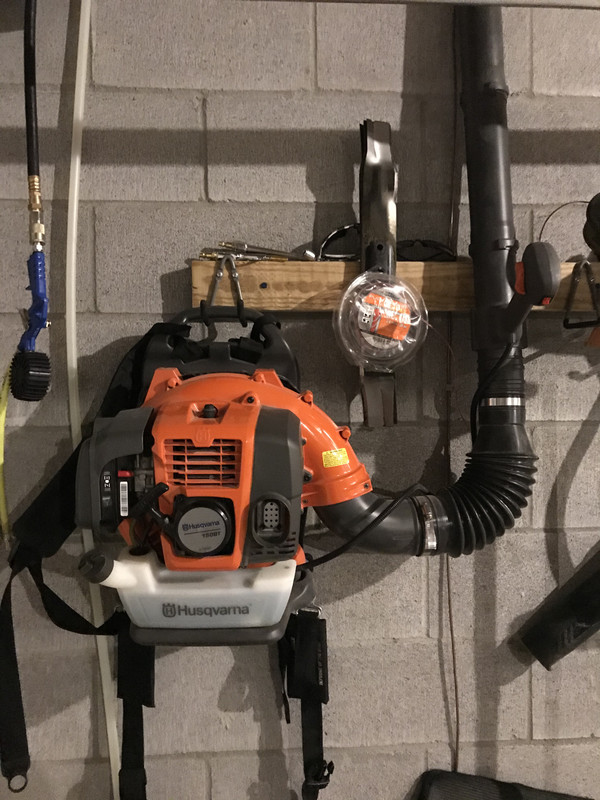 A simple shop-built bracket keeps a heavy backpack blower off the floor and within reach.
A Dedicated Accessory Bin
Keep every maintenance item — fuel stabilizer, spark plugs, air filters, rags — in one clear, labeled tote. When spring service day arrives, you won't hunt for a spark plug across three shelves.
Climate, Humidity And Pest Protection
Even a clean, well-mounted blower can suffer if the storage environment is wrong.
Managing Humidity
Aim for 35–55% relative humidity in the storage space. Too much moisture promotes rust and mold; too little can dry out rubber seals and gaskets. In damp climates, add a desiccant pack to the storage tote or run a small dehumidifier in the garage.
Choosing The Right Cover
Use a breathable fabric cover. Plastic traps condensation against the housing and creates the exact moisture problem you're trying to avoid. A light canvas or purpose-built tool cover keeps dust off while letting air circulate.
Discouraging Pests
- Plug every opening with mesh or rags — and remember to remove them before first start.
- Keep seeds, pet food, and bird feed far from the storage area. They attract rodents.
- Elevate everything off the floor. A mouse can climb, but it is far less likely to inhabit a wall-mounted tool.
If you live in a coastal area or another high-humidity region, the combination of a breathable cover and a desiccant pack makes a visible difference in rust control.
Safety And Compliance Essentials
Proper storage respects safety codes as much as it protects the tool.
- Gasoline containers. Use only approved, tightly sealed containers kept off the ground and out of sunlight.
- Ignition distance. Keep fuel and the blower away from water heaters, furnaces, and pilot lights. Flammable vapor is heavier than air and can travel across a garage floor.
- Ventilation. Never run an engine indoors, and make sure the storage space has airflow so fumes don't accumulate. The carbon monoxide risks described by OSHA are a real concern in attached garages.
- Child safety. Use childproof locks on sheds and cabinets containing power tools and fuel.
- Fire preparedness. Install a smoke alarm in the storage area and keep a Class B-rated fire extinguisher nearby.
Maintenance Calendar For Year-Round Readiness
A simple schedule keeps the blower ready whenever you need it.
| Frequency | Tasks |
|---|---|
| Monthly | Check for moisture, rust, or pest activity. On battery models, verify charge level and storage temperature. |
| Start and end of season | Clean or replace the air filter. Inspect spark plug and fuel lines for cracks. Check fasteners, straps, and tubes. Run the blower for 2–3 minutes to confirm operation. |
| Yearly | Replace brittle fuel lines. Clean the carburetor screen and spark arrestor. Deep-clean cooling fins with compressed air. |
Catching minor issues early is far cheaper than a mid-season failure.
Common Storage Mistakes To Avoid
These errors account for most post-storage repair visits.
- Leaving ethanol gasoline in the carburetor all winter.
- Storing a battery at 0% or 100% charge for months.
- Parking the blower directly on a damp concrete floor.
- Wrapping the cord tightly around the handle.
- Blocking cooling vents with plastic covers.
- Hanging a heavy blower from a single thin screw or weak strap.
Avoid these, and the blower will reward you with years of reliable service.
Post-Storage Startup And Troubleshooting
The first start after a long rest can be tense. Here's the quick path for each type.
Gas Blowers
Add fresh fuel, prime per the manual, set the choke, and pull with smooth, full strokes. If it won't start, check the spark plug, air filter, and exhaust screen first. A new plug and fresh fuel mix solve most cases. If it still stumbles, the carburetor is usually the culprit — restoring clean fuel flow is the fix that works more often than not.
Battery Blowers
Warm the battery to room temperature before use and seat it firmly. If power drops quickly, run a balance charge cycle if your charger supports it, then test again. If the engine runs rough after the first few starts, clearing carbon deposits from the combustion chamber is a smart first step.
Corded Blowers
Inspect the cord and plug for damage. Try a different outlet, or reset a tripped GFCI.
Frequently Asked Questions
How dry should the blower be before storage?
Very dry. Wipe the entire unit down and let air pass through the vents. Any residual moisture can rust metal components and corrode electrical connections over months of idle time.
Should I drain the fuel or use a stabilizer?
For storage beyond 30 days, draining is the more reliable method. Stabilizers extend fuel life, but an empty carburetor cannot varnish at all. If you choose wet storage, use fresh fuel and a quality stabilizer, and never store treated gas longer than a few months.
What battery charge level is best for storage?
Between 40% and 60%. Check the charge every two months and top it up modestly if it drops low.
Can I store a leaf blower in a shed during winter?
Yes, if the shed is dry and ventilated. Store batteries indoors at room temperature — freezing temperatures damage lithium-ion cells. In very humid climates, add a desiccant pack to the storage area.
Is it safe to hang a blower by its handle?
Use a strong, rubber-coated hook anchored into a wall stud, and check your manual to confirm hanging doesn't stress the controls or fuel tank. Heavier backpack units are better supported by a cradle or cleat system.
How often should I replace the spark plug?
Check it each season and replace it yearly, or follow your manual's interval. A fresh plug improves starting and engine performance, and it costs very little.
Do I need a cover for my blower?
A breathable fabric cover helps keep dust off while letting moisture escape. Avoid plastic covers, which trap condensation against the tool.
Can I store a leaf blower in an apartment or on a balcony?
Yes, with the right prep. Gas blowers need the fuel drained and should stay out of living spaces. Cordless and corded models store easily on a wall hook, closet shelf, or balcony cabinet if you keep them dry and shielded from direct weather.
Conclusion
Storing a leaf blower correctly isn't complicated, but it does require a deliberate routine. Clean the unit thoroughly. Prepare the fuel system or battery according to the blower type. Mount it securely in a dry, elevated spot. Protect it from pests and moisture. Then follow a simple calendar year-round.
These steps protect your investment, reduce fire risk, and ensure the blower starts when you need it. The thirty minutes you invest at the end of the season saves hours of frustration and potentially expensive repairs next spring.
Pick one step today — clean the unit, drain the fuel, or install a wall hook. Your future self, standing in a cluttered garage next spring, will thank you.