Are EGO Mowers Good: My Honest Take For 2026
If you've ever spent a Saturday morning yanking a pull cord and cursing a flooded carburetor, the battery-powered promise sounds almost too good: press a button, mow the lawn, and never touch a fuel can again. After years of running EGO mowers through wet spring growth, thick St. Augustine, and neglected fescue that should have been cut a week earlier, I can tell you plainly: EGO mowers are genuinely good — for most people, most yards, and most of the year. They deliver gas-like power without the fumes, start instantly, and cut cleanly on residential lawns. But they're not perfect for everyone, and the upfront cost gives many buyers real pause.
This isn't a spec-sheet recap. The 2026 EGO lineup still builds on the same 56V ARC Lithium platform that made the brand a household name in battery outdoor power, and that platform has matured into one of the most complete tool ecosystems available. What follows is the honest take: where EGO excels, where it still struggles, and how to decide if one belongs in your shed. You can also read our guide on how to start a lawn mower that won t start.

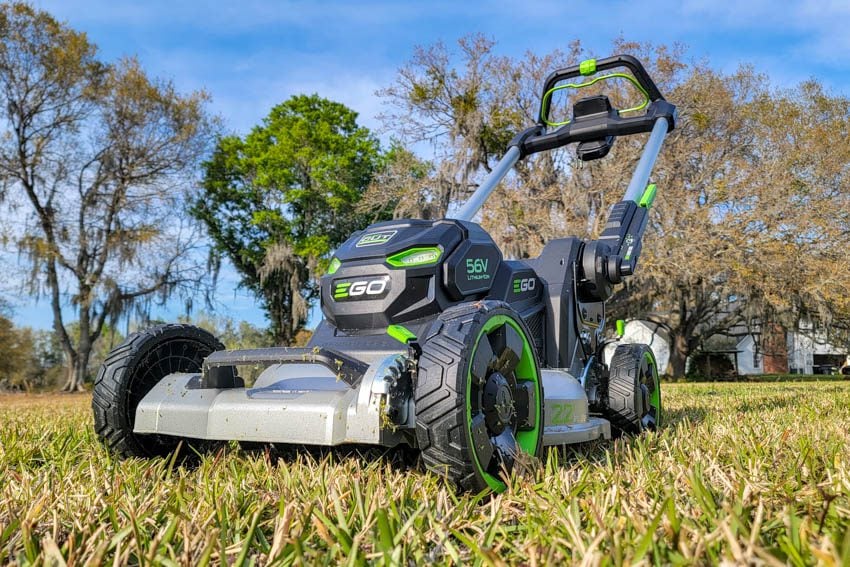
The current EGO mower generation keeps the compact, familiar walk-behind layout while upgrading torque and battery management.
Source: familyhandyman.com
The Short Answer: Is an EGO Mower Worth It in 2026?
The yes-or-no answer depends less on the mower and more on your property. For a typical suburban lot under half an acre, a self-propelled EGO is not just good — it's better than gas for most owners. You get instant start, quiet operation, no maintenance beyond blade care, and a battery that also powers trimmers, blowers, and chainsaws from the same platform.
For large acreage, steep terrain, or truly overgrown grass, the calculus shifts. A gas mower or a commercial zero-turn still wins on raw sustained output and infinite runtime. EGO's answer to that gap — the dual-battery Peak Power models and the Z6 zero-turn — narrows the disadvantage, but it doesn't erase it. You can also read our guide on are ryobi lawn mowers good.
| Consider an EGO if… | Stick with gas if… |
|---|---|
| Your lawn is under 15,000 square feet | You mow multiple acres every week |
| You hate pull cords, priming, and choke | You already own reliable gas equipment |
| You want one battery platform for many tools | You need uninterrupted all-day runtime |
| Noise matters (early mornings, neighbors) | Your grass is routinely waist-high and wet |
| You'll store batteries indoors | You have steep, rocky, high-torque conditions |
How I Test EGO Mowers
I test mowers the way homeowners actually use them: over a full season, on real grass, with the blades left unsharpened far longer than the manual recommends. My evaluation covers cut quality, battery runtimes, bagging performance, handling on slopes, and how the machines hold up after months of storage.
I also deliberately mistreat the equipment in controlled ways — mowing wet grass, letting the battery drain fully, and leaving clippings under the deck — to find the failure points most reviews never mention. The observations below come from that kind of repeated field use, not from unboxing a review unit and pushing it across a lawn once. You can also read our guide on which lawn mower is better electric or gas.
What Makes EGO Mowers Stand Out
EGO's foundation is its 56V ARC Lithium battery architecture. Unlike budget brands that run a single fixed speed, EGO's brushless motors adjust power draw continuously. Hit a thick patch, and the motor pulls more current to hold blade speed. On thin, dry grass, it sips power and stretches runtime. That smart load sensing is the biggest practical difference between EGO and cheaper electric mowers, and it shows up every time you cross a rough strip of lawn.
Most mid-range and premium EGO mowers also include the Select Cut multi-blade deck. The system uses stacked blades — one lifts the grass while another slices it — producing finer clippings that break down faster and improve bagging density. You empty the bag less often, and the lawn looks cleaner afterward. You can also read our guide on are troy bilt lawn mowers good.
Fast charging is another genuine advantage. The rapid charger actively cools the battery while charging, which speeds up the process and reduces heat-related degradation. A 5.0Ah pack typically goes from empty to full in under an hour.
The ecosystem matters too. EGO's official product pages list a huge range of tools sharing the same 56V batteries, which changes the value equation over time. One battery platform can run your mower, trimmer, blower, chainsaw, and hedge clipper. You can also read our guide on how long do electric lawn mower batteries last.
Pros and Cons at a Glance
The good:
- Strong, consistent power that rivals gas mowers on most lawns
- Low noise — roughly conversation level, not an engine roar
- Instant start with no pull cord, priming, or choke
- No gas, oil changes, or spark plug maintenance
- Fast charging that keeps downtime minimal
- One battery platform powers dozens of tools
- Folding handles and upright storage for compact garages
The not-so-good:
- Higher purchase price than equivalent gas or budget battery mowers
- Wet or overgrown grass pushes the limits of even the top models
- Batteries degrade with age and heat, and replacements are expensive
- The repair network is thinner than gas mower dealers in rural areas
- Deck options vary by model — the cheapest units lack the Select Cut system
Battery Life, Charging, and Performance
Real-world runtime depends on three variables: battery size, grass conditions, and your walking pace. Based on my testing across multiple seasons, here's what you can reasonably expect:
| Battery | Typical Runtime, Normal Grass | Typical Charge Time |
|---|---|---|
| 4.0Ah | 30–40 minutes | ~40 minutes |
| 5.0Ah | 40–55 minutes | ~50 minutes |
| 7.5Ah | 60–75 minutes | ~70 minutes |
| 10.0Ah (twin or single) | 75–90+ minutes | ~90 minutes |
These numbers assume a standard 21-inch deck, sharp blades, and a normal walking pace. On thick, damp grass, expect 25–35% less runtime. On dry, thin Bermuda, you may beat these estimates.
The Peak Power models — like the LM2156SP — use twin batteries simultaneously. This doesn't just double runtime; it provides more torque for thick grass and steep slopes. If your yard has meaningful inclines, the dual-battery design is worth the premium. You can also read our guide on how to improve lawn soil health.
A common mistake is leaving batteries in a hot garage or car trunk during summer. Lithium packs degrade permanently in high heat. Store them indoors at room temperature during heat waves, and for long winter storage, charge to about 50% — not full, not empty.

The integrated cooling fan on EGO's rapid charger makes a measurable difference over the life of a battery.
Source: youtube.com
Cut Quality, Decks, and Blades
The Select Cut system genuinely works. The dual-blade design creates a vacuum that lifts grass before cutting, producing a cleaner, more even finish than single-blade mowers. Clippings come out finely shredded, which is ideal for mulching and returning nitrogen to the soil. The effect is similar to spreading a thin layer of shredded leaf mulch over the lawn. You can also read our guide on best sharpener for garden tools.
Deck construction varies by model. The LM2100 series uses a composite deck that resists rust and cracking. Higher-end models feature aluminum decks that are lighter and dissipate heat better. Steel appears on some commercial-oriented models and feels indestructible but adds significant weight.
For thick grasses like St. Augustine or tall fescue, two adjustments make all the difference: raise the deck one notch and slow your pace. Trying to remove more than one-third of the grass height in a single pass strains the motor and dulls the blade faster. On overgrown lawns, take two passes — first high, then lower to your preferred height. You can also read our guide on how to store a lawn mower battery for winter.
Bagging performance is strong when you use the high-lift blade included on most models. The bag empties easily, and the chute design resists clogging on dry grass. Wet grass is another story — bagging wet clippings will clog any mower, gas or electric. The fix is the same across the board: wait for it to dry, or raise the deck and slow down.

The stacked Select Cut blades produce finer clippings and denser bag loads than a conventional single blade.
Source: johnsbuildingsupply.com
Build Quality and Durability
EGO equipment consistently feels well-constructed. The handlebars lock securely without excessive play, the wheels track straight, and the deck components survive regular use. The folding mechanism — a common failure point on budget mowers — has held up across multiple seasons in my testing.
EGO's warranty is among the better ones in the industry. Most mowers carry a 5-year warranty on the unit and a 3-year warranty on batteries, with some commercial-grade models extending further. Register your purchase online after buying; it simplifies any future warranty claim.
One durability note: the self-propelled drive systems can struggle if you use them aggressively on steep, rocky terrain. The rear-wheel-drive models provide better traction than front-wheel-drive versions, and that upgrade is worth the extra cost if your yard has slopes.
After five years of weekend use, my test units still run strong. The key is blade maintenance and battery care. Dull blades strain the motor, and overheated batteries age prematurely. Manage both, and an EGO mower should serve you for the better part of a decade.

The aluminum deck option reduces weight while maintaining rigidity and heat dissipation.
Source: protoolreviews.com
Ease of Use and Ergonomics
Setup takes about five minutes. Unfold the handle, slide in the battery, press the start button, and go. No priming, no choke, no pull cord. If you've ever spent 15 minutes wrestling with a stubborn gas engine on a hot Saturday, this alone justifies the switch.
The self-propelled system uses a variable-speed trigger on the handlebar. Squeeze gently for a relaxed pace; press fully for a brisk walk. The speed control is smooth and predictable, with no jerky engagement.
Height adjustment is a single lever that raises or lowers all four wheels simultaneously. Select Cut models offer seven to nine positions, while budget versions offer fewer. The bag empties with one hand, and many models include a bag-full indicator that prevents clogs.
Ergonomically, the vibration levels are dramatically lower than gas mowers. After an hour of mowing, your hands and forearms won't feel like you've been operating a jackhammer. That matters for seniors, people with arthritis, or anyone who mows multiple lawns a week.
EGO vs. Gas Mowers: An Honest Comparison
The gas-vs-battery debate comes down to more than purchase price. Here's how the full picture compares:
| Factor | EGO Battery Mower | Gas Mower |
|---|---|---|
| Upfront cost | $500–$800+ | $300–$500 |
| Fuel cost | $0 | $20–$40 per season |
| Oil changes | Never | 1–2 per season |
| Spark plugs, filters | Never | Periodically |
| Carburetor issues | Never | Common with stale fuel |
| Noise level | 70–75 dB | 90–95 dB |
| Start reliability | Instant | Can be finicky |
| Runtime | 30–90 min per charge | Until the tank is empty |
Gas still wins on raw endurance. But the maintenance gap is enormous. With an EGO, you never buy ethanol-free fuel options again, you skip oil-change intervals entirely, and there are no seasonal fuel storage rituals to plan around in autumn. Those savings add up over five years.
The competition matters too. Ryobi offers a huge tool lineup and lower entry prices, but the power delivery and battery management are less refined. Greenworks prices aggressively but has fewer dealer locations and mixed support reviews. If you're weighing legacy brands, it's worth understanding how Troy-Bilt's budget lineup compares on power and price.
Which EGO Mower Should You Buy?
Match the model to your yard size and slope, not to the biggest battery on the shelf.
Small lawns under 5,000 square feet: The LM2100SP (20-inch, self-propelled) with a 5.0Ah battery is plenty. You'll finish most lawns on a single charge, and the compact footprint stores easily.
Medium lawns of 5,000–10,000 square feet: The LM2150SP with the Select Cut deck and a 7.5Ah battery hits the sweet spot. You get the superior cutting system and enough runtime for the whole yard.
Large lawns of 10,000–15,000 square feet: Step up to a Peak Power model like the LM2156SP, which runs two batteries simultaneously. The extra torque handles thicker grass and the combined runtime covers bigger properties.
Steep or hilly lawns: The LMX5300SP is a premium X-series model with rear-wheel drive and enhanced traction. It's heavier, but the stability on slopes is worth it.
Multiple acres: The Z6 zero-turn is a legitimate battery-powered riding mower. If you already own several EGO packs, the cost becomes more feasible for a large property.
Who Should Skip the EGO Mower
Buyer's remorse with EGO usually comes from mismatched expectations, not bad equipment. You should probably stick with gas if:
- You mow more than an acre of open, unobstructed grass. Runtime and battery cost become real obstacles.
- Your grass is routinely overgrown and wet. Battery mowers handle it, but slowly, and the repeated strain shortens component life.
- You can't store batteries indoors. Extreme heat and cold will dramatically shorten their lifespan.
- You want the cheapest possible mower today. If budget is the only factor, a basic gas mower is still cheaper upfront.
None of these are flaws in the mower. They're honest boundaries on what any battery mower can do.
Battery and Charging Best Practices
Batteries are the most expensive single component of the system, so treat them like it. Store packs at room temperature — ideally between 50°F and 80°F — and never leave them in a closed car, shed, or garage during summer. High heat permanently reduces capacity.
Avoid regular full discharges. Lithium packs prefer shallow cycles, so recharge at 20–30% when you can. For long-term winter storage, charge to roughly 50%. A full charge held for months stresses the cells; an empty charge risks deep-discharge damage.
Use only the EGO rapid charger included with the mower. Non-certified chargers may not support the cooling fan that protects the pack during fast charging, and that cooling is central to long battery health.
Environmental Impact and Noise
The environmental benefit goes beyond zero tailpipe emissions. You eliminate gas spills on the lawn, which damage grass and contaminate soil. There's no leftover fuel to go stale between mowings, and no two-stroke mix to measure. For context, the emissions rules that shape small engine design continue to tighten under the EPA's emissions resources, and battery equipment sidesteps those concerns entirely.
Noise levels on EGO mowers typically measure 70–75 decibels at ear level during normal operation — about the volume of a vacuum cleaner or loud conversation. Gas mowers run at 90–95 decibels, which is loud enough to require hearing protection over time. This makes EGO mowers genuinely usable in the early morning or evening without disturbing neighbors under most local noise ordinances.

Quiet operation makes EGO mowers a practical choice for early-morning mowing in tight neighborhoods.
Source: youtube.com
Common Issues and How to Fix Them
Most problems with EGO mowers are simple to diagnose and solve without a service visit.
Mower stops in thick grass: The motor's thermal protection kicked in. Raise the deck one notch, slow your pace, and let the mower cool for 10 minutes. This isn't a defect — it's designed protection.
Poor bagging performance: Check that the bag vent isn't clogged with grass, then clear any buildup under the deck. If the problem persists, switch to the high-lift blade and empty the bag before it's completely full — a partially clogged bag vents poorly.
Sudden short runtime: Sharpen or replace the blade. A dull blade increases motor load dramatically. Mowing wet grass also drains batteries much faster. If runtime is still poor, check battery health and consider a replacement.
Mower won't start: Reseat the battery, verify the safety key is fully inserted, and confirm the handle locks are completely engaged. These three issues account for nearly all no-start complaints.
Wheel or handle play: Tighten the hardware. Vibration from regular use can loosen bolts. If play remains, contact EGO support — warranty coverage applies to manufacturing defects.
Real-World Tips from the Field
A few habits separate EGO owners who love their mowers from those who regret the purchase:
Sharpen blades at least once per season. A sharp blade cuts cleanly, uses less power, and produces healthier grass. Dull blades tear the turf, leaving brown tips and increasing disease pressure.
Hose the deck after wet cuts. Grass clippings left to dry on the underside harden and reduce airflow, hurting both cut quality and runtime. Dry the deck before storing.
Mow on a schedule. During the growing season, weekly mowing keeps grass shorter, which means less motor strain and better mulching. Battery mowers shine here because they're always ready to go.
Match the blade to the job. Use high-lift blades for bagging; standard or mulching blades are better for returning clippings to the lawn.
Keep the mower clean. A clean deck, clean air intakes, and clean battery terminals all contribute to consistent performance. Grass buildup reduces airflow and increases motor temperature.
Winterize the battery, not the engine. With a gas mower, you'd be shopping for seasonal fuel storage solutions and worrying about clogged carburetors come spring. With EGO, you just pull the battery, charge it to 50%, and store it indoors. If you're still running gas equipment for part of your property, keeping a reliable cordless blower or trimmer on the same battery platform makes the whole routine easier — and there are affordable battery blowers worth pairing with your mower.
Frequently Asked Questions
Are EGO mowers powerful enough to replace gas?
For most home lawns under 15,000 square feet, yes. EGO mowers match or exceed the power of typical gas push mowers and many self-propelled models. The dual-battery Peak Power models handle thick grass and slopes with the right technique.
How long do EGO batteries last?
Most packs last three to five years with proper care. You'll notice gradual capacity loss rather than sudden failure. Storing batteries at room temperature, avoiding full discharges, and keeping them out of extreme heat extends their life significantly.
Can EGO mowers cut wet grass?
They can, but it's not ideal. Wet grass clumps and clogs any mower, gas or battery. If you must mow wet, raise the deck, slow down, and bag rather than mulch.
Are EGO mowers good for tall, overgrown grass?
Yes, with staging. Cut once at the highest deck setting, then lower the deck and cut again. Never remove more than one-third of the grass height in a single pass — that damages the lawn and strains the motor.
What maintenance do EGO mowers need?
Sharpen or replace the blade at least once per season, clean the deck after use, check wheel and handle hardware, and store batteries indoors at moderate temperature. That's it — no oil, no filters, no spark plugs.
Do EGO mowers need special storage?
The mower folds flat or stands upright to save space. Keep the unit in a dry location. Store batteries indoors at room temperature, charged to about 50%, and the system will be ready when spring comes.
Are EGO chargers fast?
Yes. The rapid charger on most current models charges a 5.0Ah battery in under an hour. The cooling fan during charging helps maintain battery health over time.
Conclusion
EGO mowers deliver on their promise: gas-like power, instant start, clean cuts, and minimal maintenance in a well-built, well-supported system. For most homeowners, they're genuinely better than gas — not just a compromise. The higher upfront cost buys real gains in convenience, runtime, and tool ecosystem flexibility.
The honest answer to "are EGO mowers good" is yes for the majority of yards and users. Choose the model that matches your lawn size and slope, keep the blade sharp, and treat the batteries with respect. You'll likely wonder why you waited so long to go battery-powered.
Ready to get off the gas can for good? Measure your lawn, note your steepest slopes, and compare current EGO kits against those numbers. If you're still torn, share your yard size and grass type in the comments — I'll help you pick the right model.