Best Gas Cans For Lawn Mowers: Top Picks For 2026
A gas can looks like a simple purchase, but it’s one of the most consequential items in your garage. A poorly designed can dribbles fuel across a hot mower deck, strips paint, attacks plastic shrouds, and turns a two-minute refuel into a cleanup project. A can with bad venting or a weak seal can fill your shed with gasoline fumes—a serious fire risk that most homeowners don’t think about until something goes wrong.
After years of fueling walk-behind mowers, riding mowers, and zero-turns, one pattern stands out: the can matters as much as the mower. The best gas cans for lawn mowers share a few non-negotiable traits—smooth, controlled flow; a spout that stops instantly; proper venting; and construction that survives being tossed around for years. This guide explains what to look for, reviews the top performers for 2026, and covers the safety habits that keep both you and your equipment out of trouble. You can also read our guide on how to choose the right garden hose length.
Why the Right Gas Can Matters
Mower fuel tanks are small, engine decks get hot, and gasoline is aggressive. A cheap or damaged can makes every refuel a gamble. Open spouts glug and splash. Worn seals let fumes escape. Thin plastic cracks in cold weather. And a container that’s too large leaves fuel sitting long enough to degrade before you ever use it.
The most common mistake is buying a single 5-gallon can for a small walk-behind mower. By the time you work through the fuel, it has already started to sour—and the mower gets blamed for what is really a storage problem. Ethanol-blended gasoline can begin to degrade within a month, especially in a partially empty can that’s exposed to temperature swings. You can also read our guide on how to store garden tools in small space.
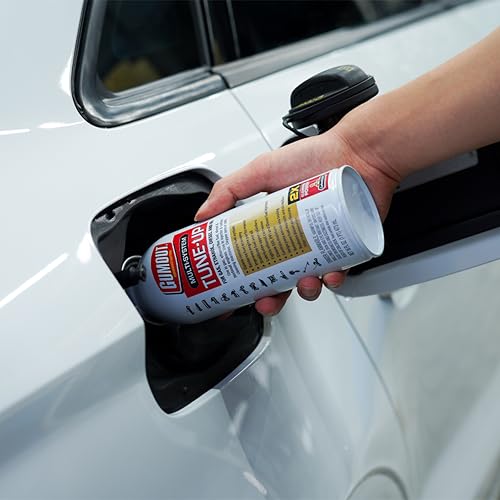
One way to reduce that risk is to start with unblended pump fuel, which removes most of the storage variables from the equation.
What to Look For in a Gas Can
Capacity: Match the Can to the Tank
Your mower’s fuel tank should drive the capacity decision. The goal is to use a full can within four to six weeks, while keeping the filled weight manageable. You can also read our guide on are troy bilt lawn mowers good.
| Mower type | Typical tank size | Practical can size |
|---|---|---|
| Walk-behind mower | 0.5–1.5 gal | 1.25–2.5 gal |
| Riding mower / lawn tractor | 2–5 gal | 5-gal can or 14–15 gal caddy |
| Zero-turn mower | 3–7 gal | 14–15 gal caddy or two 5-gal cans |
| Multiple small engines | Varies | 5-gal cans or a wheeled caddy |
Check your owner’s manual before buying. A can that’s too big means stale fuel and heavy lifting. A can that’s too small means unnecessary trips to the pump.
Spout Design: Clean Pour vs. Messy Dribble
Modern no-spill spouts use a push-button or trigger mechanism that releases fuel only while you press it. Release the button, and the flow stops instantly. There’s no drip, no fuel running down the tank, and no puddle on your driveway. You can also read our guide on what gas is best for lawn mower.
Traditional open spouts are cheaper, but they are a headache in practice. They air-lock, splutter, and splash. They also can’t seal completely, which means fumes escape into your garage year-round.
Venting matters too. A properly vented can lets air flow in as fuel flows out, so the pour stays steady. A blocked vent causes the telltale glug and spray that ruins a clean fill. You can also read our guide on best cordless leaf blowers for home use.
Plastic vs. Metal: Honest Trade-Offs
| Feature | Plastic (HDPE) | Metal (Galvanized Steel) |
|---|---|---|
| Weight | Light and easy to handle | Heavy, especially when full |
| Durability | Resists dents but can crack in extreme cold | Survives drops and rough handling |
| Corrosion | Won’t rust; UV can degrade plastic over years | Prone to rust if the coating is scratched |
| Fire resistance | Burns through in a direct fire | Better suited for workshops; flame arrester options exist |
| Fuel visibility | Easy to see through translucent plastic | Hard without a sight glass |
| Best for | Most homeowners and occasional use | Workshops, commercial use, garages with ignition sources |
For most people, a high-density polyethylene (HDPE) can is the right pick. It’s light, corrosion-proof, and affordable—plenty good for fueling a mower a few times a month. Metal safety cans are the standard in professional shops because they’re rugged and more fire-resistant, but the weight and price are real trade-offs for home use.
CARB Compliance, EPA Rules, and What They Mean
You’ll see “CARB compliant” on most modern cans. That label means the can meets California’s strict evaporative-emission standards, which require tightly sealed spouts that keep fumes contained. The practical effect is simple: less gasoline smell, less evaporation, and safer storage.
The EPA’s fuel-container standards are why modern cans seal differently from older ones. California goes further through the California Air Resources Board, which is where the “CARB” label comes from.
The downside is pour speed. Compliant spouts are slower than the open spouts on old gravity-feed cans. But in exchange, your garage doesn’t smell like a gas station and fuel doesn’t disappear between mows.
Type I vs. Type II Safety Cans
Type I safety cans have a single opening, with the pouring spout and vent built into one fitting. Many are self-closing, which makes them a solid choice for mower fueling.
Type II cans have separate fill and pour openings, often paired with a flexible metal hose. They’re better for dispensing fuel into hard-to-reach tanks, but they’re bulkier and usually more expensive.
For most homeowners, a Type I can is the practical answer. Type II cans shine in a shop or fleet setting where you refuel many machines.
Extra Features That Earn Their Keep
- Translucent plastic so you can see the fuel level.
- A wide base and balanced handle for stable pouring.
- A self-closing lid to prevent accidental spills.
- A flame arrester on metal cans stored near ignition sources.
- Wheels and a long hose if you choose a fuel caddy.
Skip complicated gimmicks. A simple, reliable valve beats one with more pieces to fail.
How We Tested and Selected These Picks
To build this list, we evaluated gas cans across the capacity range most homeowners actually use. Each model was tested in real refueling conditions: pouring into walk-behind tanks and riding-mower tanks, checking for drips, smelling for fumes, and testing how well the spout resealed.
We favored cans that work with one hand, seal completely, and don’t require contortions around a hot engine. We also skipped cans with thin handles, flimsy valves, and spouts that are impossible to clean. The picks below are the models that kept earning their place in a working garage.
Best Gas Cans for Lawn Mowers in 2026
| Model | Capacity | Best For | Spout Type |
|---|---|---|---|
| No-Spill 1415 | 1.25 gal | Small walk-behind lawns | Push-button no-spill |
| No-Spill 2.5-Gallon | 2.5 gal | Most homeowners | Push-button no-spill |
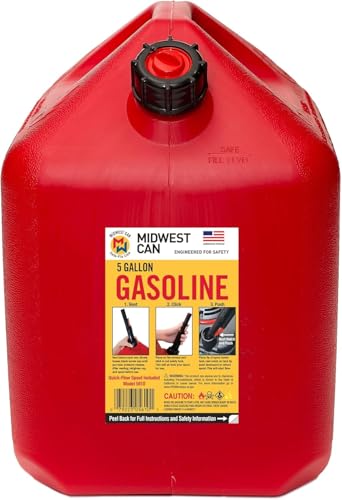
| Midwest Can 5610 2-Pack | 5 gal ×2 | Multiple machines / backup storage | Basic controlled spout |
| Eagle 2-Gallon Type I | 2 gal | Garage and workshop safety | Self-closing safety spout |
| Scepter Duramax Flo 'N Go | 14 gal | Riding mowers and large properties | 10-ft hose with manual pump |
| TricaLktdp 15-Gallon Caddy | 15 gal | Mixed equipment operations | Siphon pump with 10-ft hose |
No-Spill 1415 1.25-Gallon Gas Can (CARB)
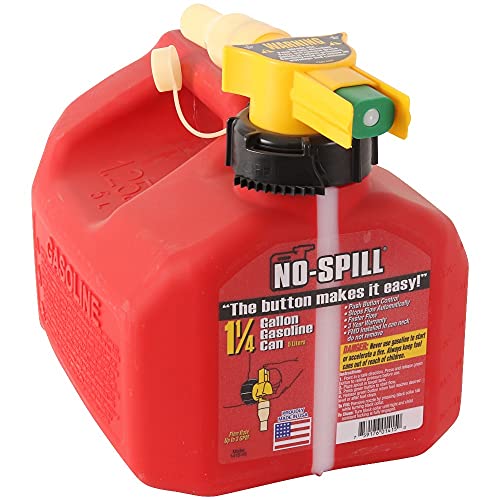
The 1.25-gallon No-Spill is sized for quick weekly fills on a walk-behind mower.
Best for: small yards and walk-behind mowers.
The No-Spill 1415 is the can to grab for a quick top-off. It holds enough fuel for a typical walk-behind mowing session without leaving half a can to go stale. The push-button spout is the reason to buy it: press to pour, release to stop. No dribble, no splash, no fuel on your gloves.
The CARB-compliant spout seals completely when not in use, so fumes stay contained during storage. The compact body is easy to manage one-handed, and the small footprint fits on any garage shelf.
Pros
- Push-button spout provides precise flow control.
- Light enough for one-handed pouring on small mower tanks.
- Fully sealed spout keeps storage odor low.
- Small footprint stores easily.
Cons
- Too small for riding mowers or large yards.
- Higher cost per gallon than larger cans.
- Requires more frequent refills on bigger properties.
Verdict: If you mow a quarter-acre or less with a walk-behind, this is the easiest can to live with.
No-Spill 2.5-Gallon Gas Can
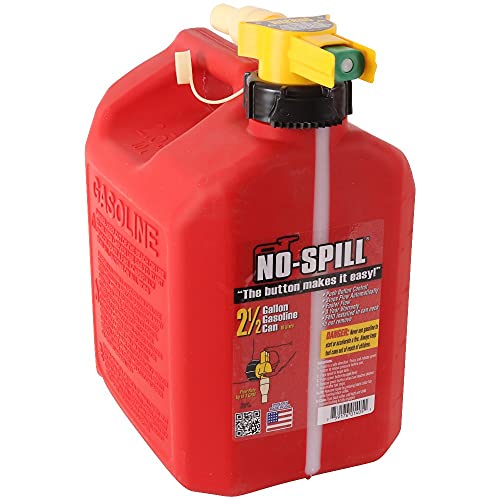
The trigger-style spout gives the same no-drip control in a bigger package.
Best for: mid-size yards and spill-averse homeowners.
The 2.5-gallon No-Spill is the Goldilocks pick. It’s small enough to lift comfortably and large enough to cover several mowing sessions. The push-button mechanism works the same way as the smaller model, which is exactly what you want when the filler opening is cramped.
The wide base and balanced handle keep the can stable while you position it over the tank. That stability is where most spills are prevented.
Pros
- Smooth, controlled no-spill spout.
- Capacity fits most home mowing routines.
- Wide base improves stability while pouring.
- Sealed cap keeps garage odor low.
Cons
- Not enough fuel for a full riding-mower session.
- Pricier than basic cans.
Verdict: For most homeowners, this is the best all-around gas can for a lawn mower.
Midwest Can 5610 5-Gallon Gas Can (2-Pack)

Two five-gallon cans give you reserve fuel for other equipment or storm-season power outages.
Best for: multiple machines and backup storage.
If you fuel a mower, trimmer, blower, and the occasional generator, a two-pack of 5-gallon cans solves the logistics. The polyethylene bodies resist dents, the handles balance well when full, and the spouts are simple—fewer moving parts means fewer failures.
These are not flashy no-spill designs. They pour with the predictable flow of a basic can, and the caps seal tightly for storage. At roughly 30 pounds of fuel per can when full, they’re best kept near where you refuel.
Pros
- Two cans at a practical value price.
- Plenty of capacity for a small-engine fleet.
- Simple, reliable spout design.
- Tight-sealing caps limit evaporation.
Cons
- Fuel alone weighs roughly 30 lb per full can.
- No instant-stop spout control.
- Bulky to carry long distances.
Verdict: Buy these if you need practical capacity and don’t want to pay a premium for nozzle technology you won’t use.
Eagle 2-Gallon Type I Safety Gas Can

The galvanized steel body and self-closing lid make this a workshop-grade fuel container.
Best for: garage and workshop storage near heat or spark sources.
The Eagle Type I is the can you want when fuel is stored near a water heater, furnace, or power tools. The galvanized steel body shrugs off drops that would crack plastic, and the flame arrester in the spout reduces the chance of an external flame igniting the contents.
The spring-loaded self-closing lid snaps shut automatically, so an open can is hard to leave behind. A small funnel is included, which helps when you’re filling the narrow tank on a walk-behind mower.
Pros
- Flame arrester adds a real safety layer.
- Self-closing lid prevents accidental spills.
- Steel body lasts for decades.
- Funnel included for cleaner pours.
Cons
- Heavier than plastic equivalents.
- Two-gallon capacity is limiting for riding mowers.
- Higher price reflects the safety engineering.
Verdict: It’s the right call if your fuel lives near ignition sources.
Scepter Duramax Flo 'N Go 14-Gallon Caddy

The rolling caddy does the heavy lifting, so you never carry a full fuel container to the mower.
Best for: riding mowers, zero-turns, and large lawns.
The Scepter Duramax is the benchmark for wheeled fuel caddies. Its 14-gallon capacity covers several weeks of mowing on a big property. The 10-foot hose reaches the tank on a zero-turn or tractor without moving the caddy, and the manual pump primes quickly and delivers steady flow.
Once you use a caddy for a rider, you don’t go back. No more lifting 30 pounds of fuel up to a deck-mounted tank.
Pros
- 14-gallon capacity cuts fuel station trips dramatically.
- 10-foot hose reaches awkward tank positions.
- Wheels eliminate heavy lifting.
- Solid build from a trusted brand.
Cons
- Needs dedicated floor space.
- Heavy to move across uneven ground.
- Higher upfront investment than cans.
Verdict: The long-term keeper for serious acreage.
TricaLktdp 15-Gallon Portable Fuel Caddy

The siphon pump and long hose make refueling multiple machines a one-stop job.
Best for: mixed equipment operations.
This 15-gallon caddy takes the caddy concept a step further. The pump is a simple siphon design: a few strokes primes it, then fuel flows with no electricity or batteries required. The 10-foot hose reaches fuel caps on tractors, ATVs, generators, and other equipment.
Caster wheels roll smoothly across concrete or a level garage floor. Once the pump seals shut, the caddy is safe to leave in a shed corner or transport in a truck bed.
Pros
- Maximum capacity in a home-use caddy.
- No electricity required for the pump.
- Long hose for multiple machines.
- Easy rolling on flat surfaces.
Cons
- Too bulky for small sheds.
- Pump flow depends on a good prime.
- Works best on level ground.
Verdict: Buy it if you maintain several machines on one property and want to refuel them all in one trip.
How to Refuel a Lawn Mower Safely
- Let the engine cool for at least 15 minutes before refueling. Gasoline vapors can ignite on contact with hot exhaust or engine surfaces.
- Touch the mower frame to discharge static electricity before pouring, especially in dry weather.
- Open the fuel cap slowly to release any pressure.
- Insert the spout fully and pour with a steady hand. Stop at about 90% tank capacity to leave room for expansion.
- Seal the can immediately after pouring, then wipe up any spill right away.
While the engine cools, it’s also a good time to check the correct fluid level and top up the oil if it’s low.
Gasoline Storage and Freshness
Start With Fresh Fuel
Buy only what you’ll use in the next month or two. Ethanol-blended gasoline is the main culprit behind gummed-up carburetors, so if your mower sits between uses, pay attention to what you put in the tank. If you also rely on heavy-duty blowing equipment, give those machines the same fresh-fuel treatment.
For homeowners who want to reduce maintenance overall, battery-electric yard tools remove the fuel question entirely on lighter jobs.
Use a Fuel Stabilizer
Add stabilizer when you fill the can, not after the fuel has already gone bad. Then run the engine briefly so the treated fuel reaches the carburetor.
Riding mowers with big tanks are the ones most likely to sit between uses, so a stabilizer suited to larger tanks is a smart buy for anyone who mows less often than every week.
Store Cans in the Right Place
Keep gas cans in a cool, ventilated area away from direct sunlight, heat sources, and ignition points. A shed or a detached garage is ideal. Never store gasoline inside your living space.
Place cans on a shelf or pallet rather than directly on a damp floor. This protects the bottom from impact and keeps the can out of the way of foot traffic.
Rotate Your Supply
Write the purchase date on the can with a permanent marker. Use the oldest fuel first, and refill the can you’re most likely to grab next. This simple habit prevents stale fuel from ever reaching your mower.
Know When Gas Has Gone Bad
Gasoline that looks dark, smells like varnish, or leaves sticky residue has passed its usable life. Don’t pour it on the ground or down a drain—contact your local hazardous waste authority for the right disposal site. And don’t mix old fuel with fresh fuel hoping it will dilute. It will simply contaminate the new batch.
If bad fuel has already gummed up the carburetor, a fuel-system cleaning pass often sorts out the problem.
Common Gas Can Problems and Fixes
- Glugging and splashing: The vent is blocked. Open the vent, clean the spout, and don’t shake the can while pouring.
- Dripping from the spout: The seal or O-ring is worn. Replace the spout if the manufacturer offers parts, or replace the can.
- Can won’t pour: The trigger valve is stuck or a piece of debris is blocking it. Inspect the spout and clear any obstruction.
- Swollen or distorted plastic: Fuel has degraded the can. Replace it immediately. A distorted can is no longer safe to use.
- Fumes in the garage: The cap isn’t sealing, or the can predates modern spout standards. Tighten the cap, replace the seal, or upgrade the can.
Signs You Should Replace a Gas Can
- Visible cracks in the body, handle, or spout.
- A fuel smell even when the can is closed.
- Warping, swelling, or white stress marks on plastic.
- A cap or spout that no longer seals.
- Missing or broken internal spout parts and no replacement available.
When in doubt, replace it. A new can is cheap insurance compared with a damaged mower or a garage fire hazard.
FAQs About Gas Cans for Lawn Mowers
What size gas can is best for a lawn mower?
For a walk-behind mower, choose a 1.25 to 2.5-gallon can. For a riding mower, a 5-gallon can or a 14–15 gallon wheeled caddy works better. Match the can to the tank size so fuel stays fresh and the filled weight stays manageable.
Are no-spill spouts worth the extra cost?
Yes, for most users. They stop flow instantly, reduce drips, and keep fumes sealed in during storage. The only real downside is a slower pour compared with old open spouts.
How long can I store gasoline for my mower?
Ethanol-blended gasoline can begin to degrade within a month or two. A stabilizer can keep fuel usable longer—roughly up to a year in ideal conditions. Stored fuel that smells like varnish should be disposed of properly.
Should I choose a plastic or metal gas can?
Plastic is lighter, cheaper, and corrosion-proof, which makes it the right choice for most homeowners. Metal safety cans are stronger and more fire-resistant, making them better for workshops or garages with ignition sources.
Is a fuel caddy better than a regular gas can?
For riding mowers, large properties, or anyone who refuels several machines, yes. A caddy eliminates heavy lifting and reaches awkward tanks with a long hose. For a single walk-behind mower, a standard can is simpler and more practical.
Do I need a CARB-compliant can?
Retailers now ship CARB-compliant cans to most states, and they seal better by design. Even if your state doesn’t require one, it’s a worthwhile upgrade for fume control and fuel savings.
Final Verdict: The Best Gas Cans for Lawn Mowers in 2026
For most homeowners, the No-Spill 2.5-gallon is the best all-around choice. It has the right capacity for a typical yard, a clean no-spill spout, and a sealed design that keeps fumes out of the garage.
For smaller properties, the No-Spill 1415 is the easiest grab-and-go can. For riding mowers and multi-machine properties, the Scepter Duramax or TricaLktdp caddy will save you time and strain. And if fuel is stored near ignition sources, the Eagle Type I safety can is the responsible pick.
Whichever you choose, pair it with fresh fuel, a stabilizer, and basic engine upkeep. A gas can is one of the cheapest maintenance tools you own. If your current can is cracked, smells, or dribbles, replace it before the next mow—your mower, your garage, and your nose will thank you.