Are Troy Bilt Lawn Mowers Good: Honest Review 2026
Ask a homeowner who has owned one for five seasons and the answer is usually yes. Ask a commercial landscaper and the answer is usually no. Both are right. Troy-Bilt does not build mowers for professionals. It builds simple, affordable machines for the person mowing a quarter-acre or half-acre yard every weekend. For that job, Troy-Bilt mowers are genuinely good.
This review covers the full picture: model lineup, cut quality, engine options, maintenance, warranty, pricing, competitor comparisons, and the common problems owners actually run into. It focuses on how these mowers behave in ordinary residential use, not on marketing claims. You can also read our guide on how to clean leaf blower air filter.
What You Can Expect From Troy-Bilt Mowers
Troy-Bilt sits firmly in the value tier of the gas mower market. That means straightforward controls, no unnecessary complexity, and pricing that fits a typical household budget. The walk-behind lineup centers on 21-inch stamped-steel decks and small four-stroke engines that are easy to service.
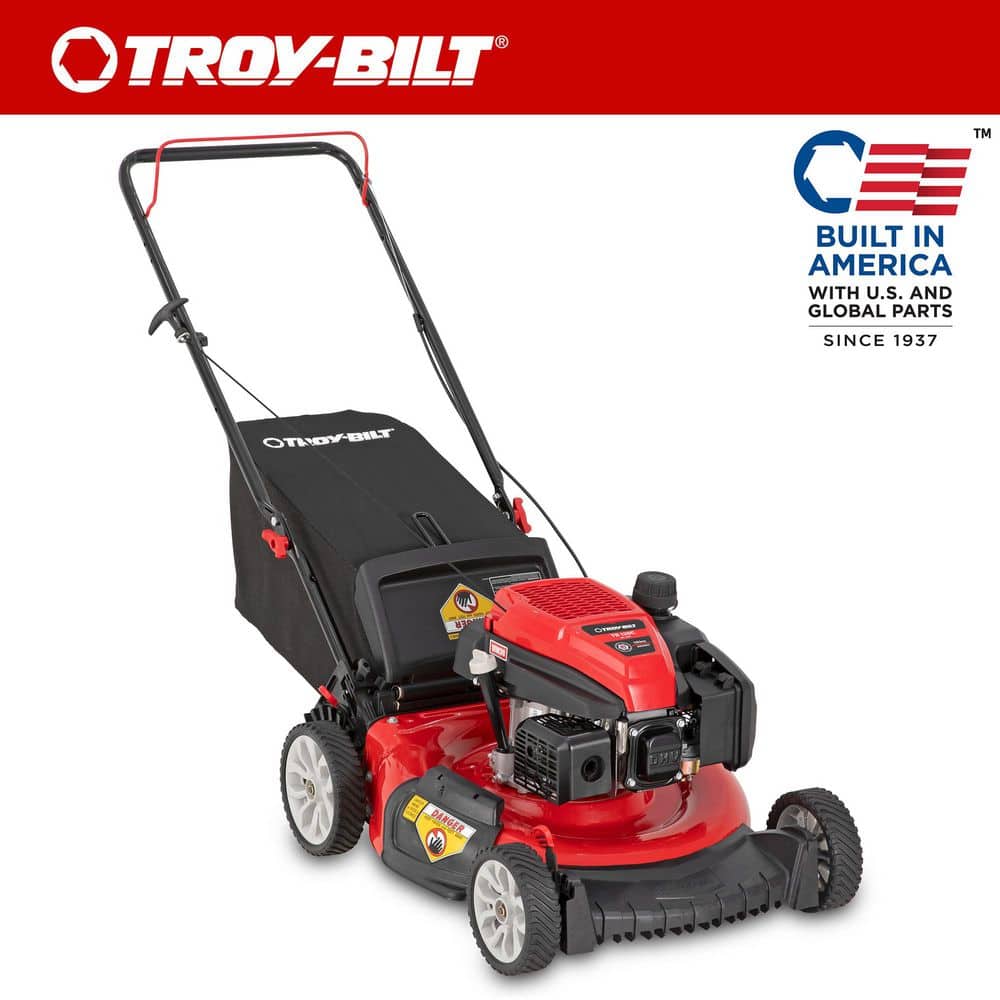
Image source: bignellspowersports.com
The TB310C is a straightforward entry-level push mower, not a feature-heavy machine.
What you get with most current Troy-Bilt models:
- Easy starting. Several models include automatic choke technology, so there is no manual choke lever to fiddle with. You prime, pull, and go.
- Decent cut quality. The TriAction deck lifts grass before cutting and recuts clippings for finer mulch. For weekly maintenance mowing, results are surprisingly clean.
- Simple maintenance. Oil changes, blade swaps, and air filter replacements are basic DIY jobs with standard hand tools.
- Strong parts availability. Troy-Bilt parts are stocked at big-box retailers, independent dealers, and online sellers. That matters when you need a blade mid-season.
- Quick assembly. Most walk-behinds arrive mostly assembled. Expect 20–30 minutes of setup work: attach the handle, install the bag, add oil and fuel.
The honest caveat is that these are homeowner-grade machines. The decks are stamped steel rather than fabricated steel, the transmissions are simple, and the build quality is not meant for daily commercial abuse. For the intended audience, though, the value is hard to argue with. You can also read our guide on how to remove rust from garden tools.
Who Troy-Bilt Fits Best
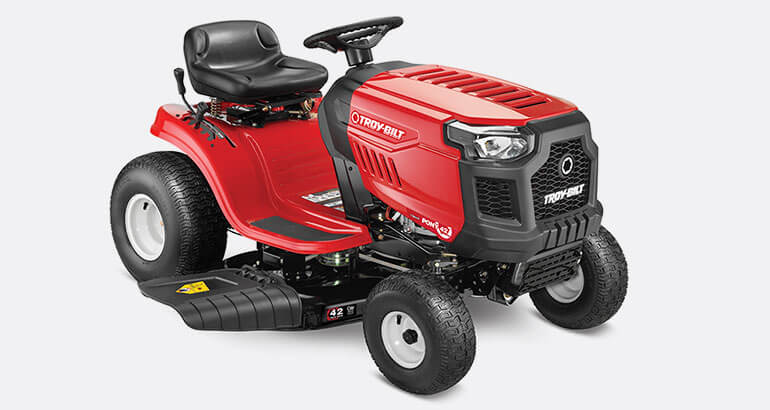
Image source: troybilt.com
The Pony is Troy-Bilt’s entry-level rider, aimed at lawns that are too big for a walk-behind.
Troy-Bilt mowers shine in specific situations. The right choice depends on your lawn size, terrain, and how much maintenance you are willing to do.
Troy-Bilt is a strong fit if you:
- Have a small or mid-sized yard of roughly ¼ to ½ acre. A 21-inch walk-behind handles this efficiently.
- Have flat or gently sloping ground. Standard wheel-drive models manage mild inclines fine; rear-wheel-drive versions are better on hills.
- Are buying your first mower. The controls are intuitive and the owner’s manual is genuinely helpful.
- Want to keep upfront costs low. Troy-Bilt typically undercuts premium brands by $100–$300 on comparable walk-behinds.
Skip Troy-Bilt if you:
- Have a large, complex property of 2 acres or more. A zero-turn or commercial-grade rider will save you significant time.
- Need professional-grade durability. Daily commercial use demands fabricated decks, commercial engines, and heavier transmissions.
- Demand the very best cut and bagging performance. Brands like Honda and Toro offer superior bagging systems and more refined mulching on thick, lush grass.
The key insight is that Troy-Bilt is not trying to be everything to everyone. It is a value-driven brand for practical homeowners, and that focus is a strength. You can also read our guide on how to store garden hose without kinks.
2026 Troy-Bilt Model Lineup: Which One Is Right for You?
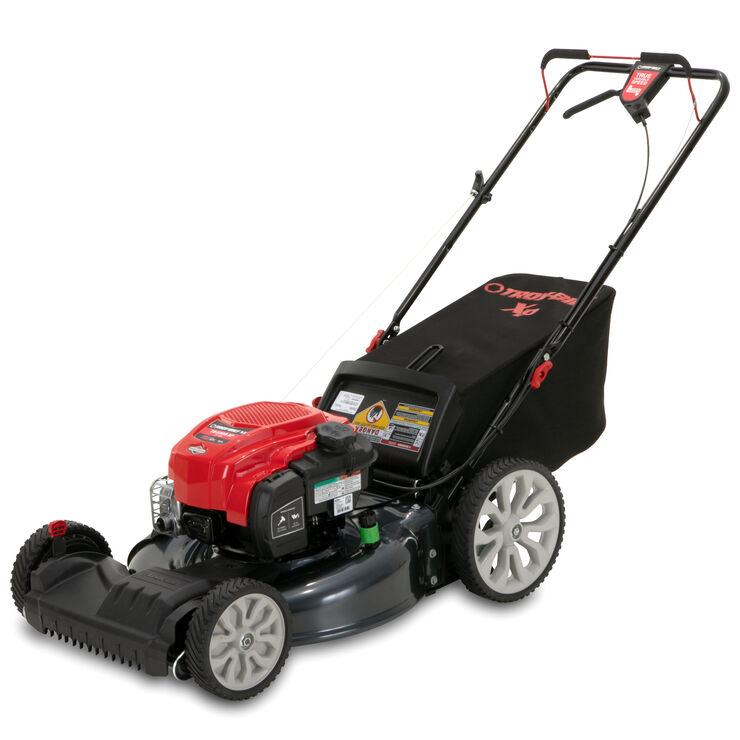
Image source: allmachines.com
Troy-Bilt’s 2026 lineup covers three categories: walk-behinds, riders, and zero-turns.
Troy-Bilt organizes its lineup into three main families, plus a small electric selection. Model names and specs change year to year, so use this as a planning map, then check Troy-Bilt’s current lineup before you commit.
Walk-Behind Mowers
Walk-behinds are Troy-Bilt’s core product. The range breaks down roughly like this:
- Push mowers. Basic 21-inch models with engines around 140cc to 163cc. They are light, cheap, and best for flat yards under ¼ acre.
- Self-propelled mowers. Add front-wheel drive or rear-wheel drive so the machine does most of the pushing. Rear-wheel drive is the better choice for slopes.
- Premium walk-behinds. Larger engines, better deck features, and electric-start options on some models. These feel closer to mid-range Toro and Honda machines but usually cost less.
Typical street prices for 2026 walk-behinds fall roughly between $300 and $650. That is a wide range, but it reflects the difference between a bare-bones push mower and a rear-wheel-drive electric-start model. You can also read our guide on are murray lawn mowers any good.
Riding Mowers
Troy-Bilt riders target homeowners with ½ to 2 acres:
- Pony. The entry-level rider, usually with a 42-inch deck. It is the budget choice and often the least expensive new riding mower at a big-box store.
- Bronco. A step up with larger wheels, a better transmission, and deck sizes from 42 to 46 inches.
- Super Bronco. The top of the line with more horsepower, wider decks, and better comfort features.
All of these use stamped-steel decks rather than fabricated decks. On flat, open lawns they perform well. They are not built for heavy impact or rough terrain.
Zero-Turn Mowers
Troy-Bilt’s zero-turn line is aimed at homeowners with larger yards who want speed and maneuverability:
- Mustang series. Decks from 42 to 54 inches and engines from roughly 22 to 26 horsepower.
- Super Mustang series. More premium models with fabricated decks, upgraded seats, and larger engines.
Zero-turns are excellent on open lawns with minimal obstacles. They cut mowing time dramatically and turn tightly around trees and beds. The trade-off is price and a steeper learning curve compared with a traditional rider. You can also read our guide on how to clean up dog poop in yard.
Battery and Electric Options
Troy-Bilt also sells electric walk-behinds. They are quiet, they need no gas, and they start instantly. For a small flat lawn under ¼ acre, a battery mower from Troy-Bilt can be a sensible choice.
The limitation is runtime. If you have closer to ½ acre, you will likely need a second battery or a mid-mow recharge. Most homeowners who already own a Troy-Bilt battery platform are the best candidates for these models.
Real-World Performance: Cut Quality, Power, and Ergonomics
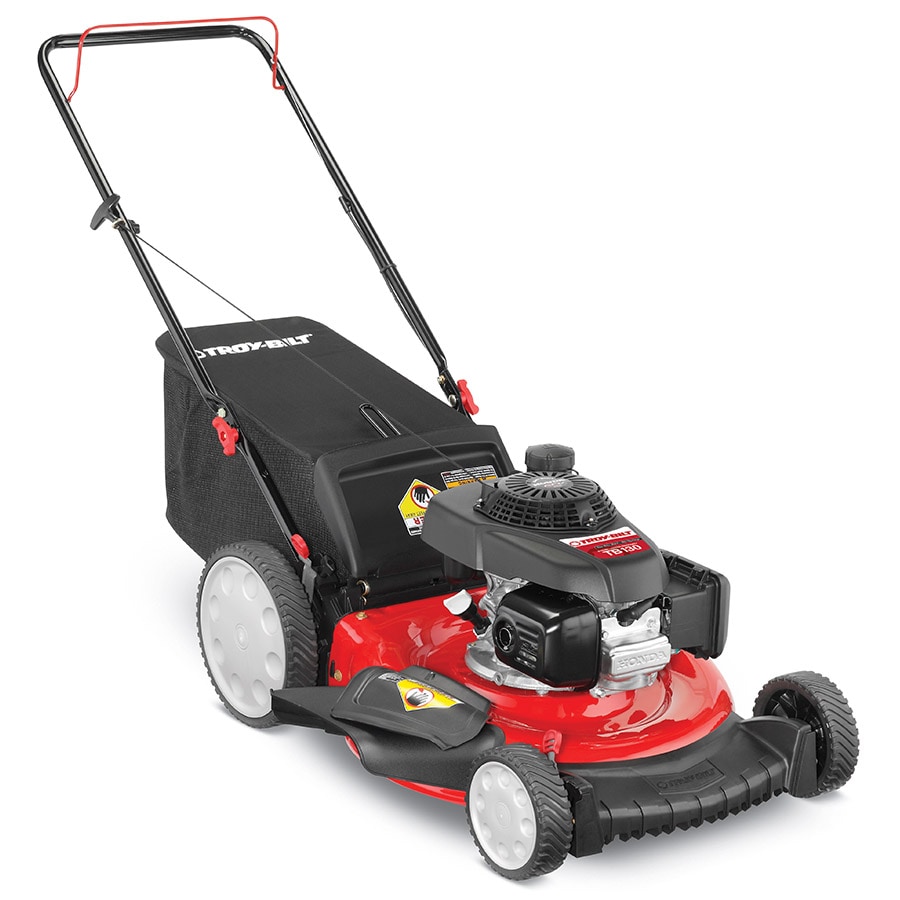
Image source: lowes.com
The TriAction deck is designed to pull grass upright before the blade cuts it.
Cut Quality
Troy-Bilt’s TriAction deck is not just marketing. The curved deck shape creates a vacuum that stands grass up before the blade slices it. On weekly cuts with a sharp blade and dry grass, the result is a clean, even finish.
Mulching performance is above average for the price point. The deck recirculates clippings several times, breaking them into small pieces that break down quickly. If you mow leaves in the fall, shredding leaves as mulch adds organic matter back into the lawn.
Side discharge handles tall or overgrown grass well, though you should slow down and take narrower passes in thick growth.
Bagging is the weakest mode. The bag fills acceptably with dry, short grass, but wet or long grass clogs the chute quickly. If you bag regularly, look for a model with a high-lift blade upgrade.
Power and Engines
Engine choices are the main variable across the lineup:
- Briggs & Stratton. The most common engine brand in Troy-Bilt walk-behinds. These engines start reliably, run smoothly, and tolerate a reasonable amount of neglect. If you need specs or service support, you can find engine documents through Briggs & Stratton’s support site.
- Honda. Found on select walk-behind models. Honda engines start easier, run quieter, and feel more refined. They also add cost.
- Kohler. More common on riders and zero-turns. These are workhorse engines with strong torque for thick grass.
For most residential lawns, an engine in the 140cc to 163cc range is enough. Choose a larger engine if you deal with very thick grass, steep terrain, or frequent bagging.
Ergonomics and Comfort
Troy-Bilt has made real improvements in comfort over recent model years:
- Foldable handles save garage space.
- Adjustable handle heights fit different operators.
- Soft-grip handles reduce vibration.
- Larger rear wheels improve maneuverability on rough ground.
The trade-off is that budget models still use plastic height-adjusters rather than metal levers. They work, but they feel less sturdy than premium alternatives, and they crack if forced too hard.
Durability, Maintenance, and Parts Support

Image source: coldclimategardening.com
Most routine maintenance on a Troy-Bilt rider is accessible with basic hand tools.
Durability is where value mowers get judged the hardest. The truth is that a Troy-Bilt will last if you respect its limits: stamped-steel deck, plastic body components, and a simple transmission.
Build Quality and Expected Lifespan
Walk-behind Troy-Bilt mowers typically give owners 5–7 seasons before major repairs are needed. Riders and zero-turns, because they are bigger investments with larger engines, often serve 8–12 years when maintained properly.
The stamped-steel deck resists rust when cared for, but it will not stand up to heavy impacts the way a fabricated commercial deck will. Plastic parts are common on wheels, handles, and some drive components. They hold up for years, but rough handling can crack them.
The Maintenance Routine That Actually Keeps Them Alive
The most important maintenance tasks are simple and inexpensive:
- Oil changes. Change the oil after the first 5 hours of use during break-in, then every 50 hours or once a year. Pick the correct oil type for your climate.
- Fresh fuel. Old gasoline is the main cause of no-start problems. Use fresh fuel and consider a no-ethanol gasoline to reduce carburetor deposits.
- Air filters. Replace the air filter yearly, or more often in dusty conditions. A clogged intake costs power and wastes fuel.
- Blades. Sharpen or replace the blade every season. A dull blade tears grass, leaving brown tips and increasing disease risk.
- Underside cleaning. Rinse grass clippings from under the deck after each mowing. This simple habit prevents rust and keeps cut quality high.
- Fuel storage. Before winter, run the mower dry or treat the fuel to keep it stable. Treating stored fuel is cheap insurance against a frustrating spring start.
If the engine sputters or stalls, adding a cleaning additive to fresh fuel often solves the problem before any parts need to be replaced.
Parts Availability
This is one of Troy-Bilt’s biggest advantages. Blades, belts, air filters, spark plugs, and drive cables are widely stocked. You can find them at Lowe’s, Home Depot, independent dealers, and online parts retailers. Most common replacement parts cost between $10 and $30, and even larger components rarely feel overpriced.
Price, Warranty, and Overall Value
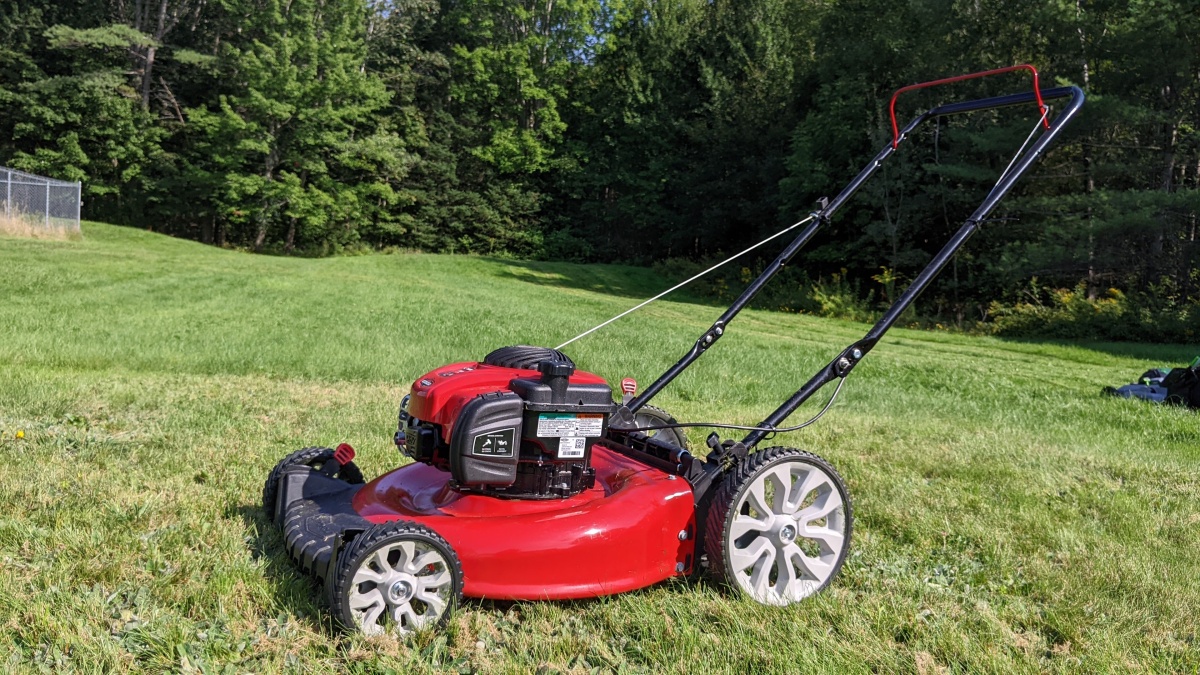
Image source: techgearlab.com
Troy-Bilt’s pricing undercuts premium brands while keeping the essentials intact.
Price is where Troy-Bilt wins. The brand consistently undercuts premium competitors while still delivering the features most homeowners actually need.
Price by Category
Street prices vary by region and retailer, but the 2026 ranges look roughly like this:
| Mower type | Typical price range | What you get |
|---|---|---|
| Push mower | $300–$450 | 21-inch deck, basic engine, no self-propel |
| Self-propelled | $400–$650 | Front or rear drive, easier on slopes |
| Riding mower | $2,000–$3,500 | 42–50 inch stamped-steel deck, 17.5–24 hp |
| Zero-turn mower | $2,800–$5,500 | 42–54 inch deck, faster cutting, sharp turns |
Compared with Honda, Toro, and John Deere, Troy-Bilt usually costs 15–25% less on comparable models. That is real money when you are also buying fuel, oil, and a spare blade.
Warranty
Typical consumer coverage is:
- Walk-behind mowers: 2-year limited warranty.
- Riding mowers: 3-year limited warranty on the mower.
- Zero-turn mowers: 3-year limited warranty.
Engine warranties are handled separately by the engine manufacturer, so terms can vary. Keep your receipt and follow the maintenance schedule. Warranty claims often require proof that the mower was maintained properly.
The Value Question
Are Troy-Bilt mowers worth the money? For the target buyer, yes.
You get a clean, reliable residential cut, easy starting, low-cost maintenance, and solid parts support. What you sacrifice is premium deck material, more refined transmission systems, and dealer-level support. If those things matter more to you than saving $200–$400, a premium brand is the better call.
Troy-Bilt vs. the Competition

Image source: youtube.com
Brand comparisons come down to trade-offs between features and price.
Troy-Bilt vs. Honda
Honda wins on cut quality, engine refinement, and bagging performance. The HRX series is still a benchmark for premium walk-behinds, but it costs $600–$900.
Troy-Bilt wins on price, parts availability, and simplicity. For a homeowner who mows weekly and does not demand perfection, the savings are hard to ignore.
Troy-Bilt vs. Toro
Toro offers better deck designs and the famous Personal Pace self-propelled system. On hills, Toro’s rear-wheel-drive Personal Pace system feels noticeably more refined.
Troy-Bilt counters with lower prices and comparable cut quality on flat terrain. If you are weighing the two, the Toro matchup explains where the practical differences show up.
Troy-Bilt vs. Craftsman
This is the closest comparison. Both brands target the same buyer, use similar engines, and price in the same range. Troy-Bilt’s TriAction deck gives it a slight edge in mulching, while Craftsman has a similar parts footprint.
The Bottom Line
Troy-Bilt holds its own against every competitor in its price class. It will not embarrass you next to a Honda, and it should not disappoint after five seasons of service. For value-conscious homeowners, that is exactly what matters.
Common Troy-Bilt Problems and How to Avoid Them
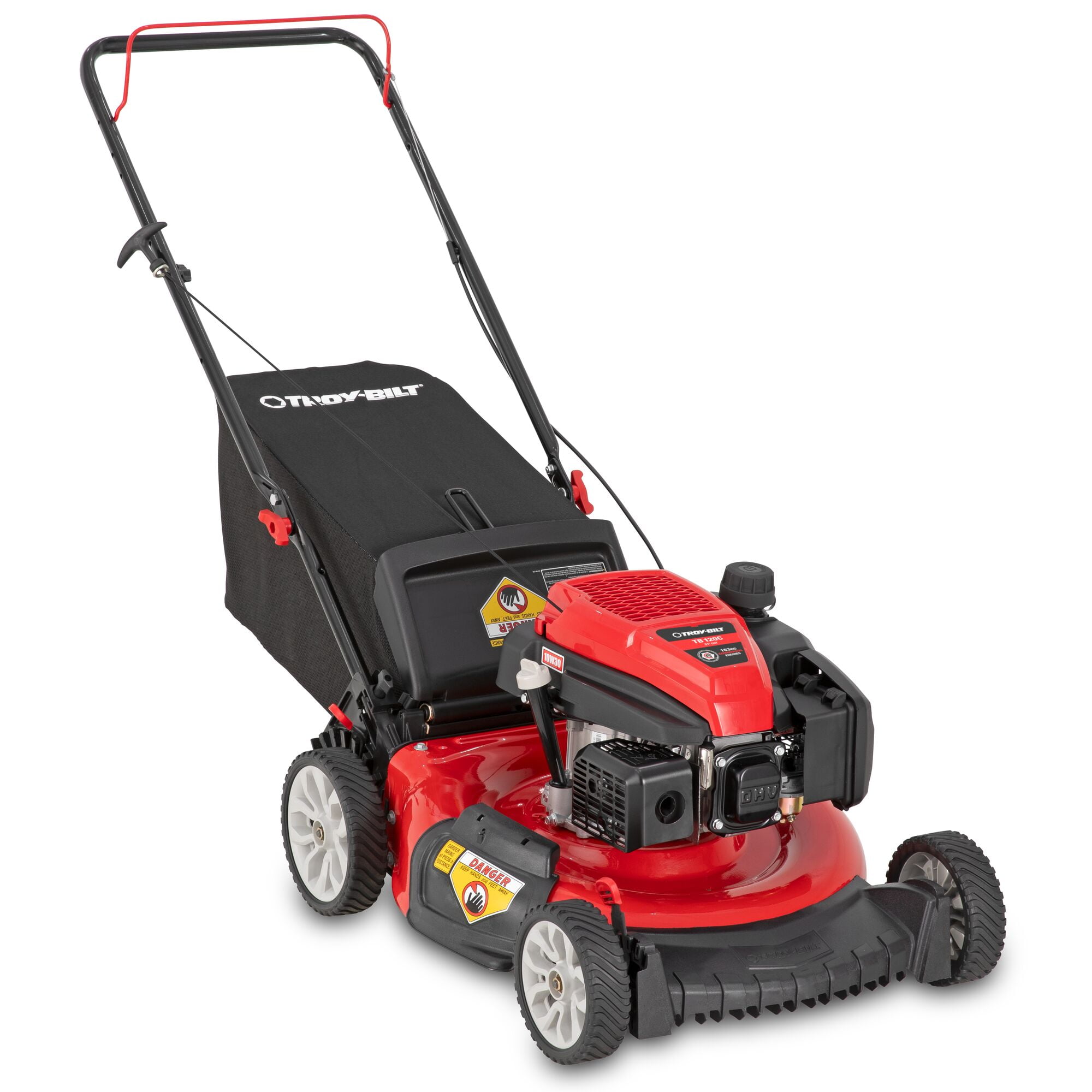
Image source: walmart.com
The engine compartment on a Troy-Bilt walk-behind is simple enough to work on at home.
Most Troy-Bilt problems are common small-engine issues, not unique brand defects. But avoiding them is straightforward.
- Stale fuel is the #1 no-start cause. Drain old gas, run the carburetor dry, or use a fuel stabilizer before long storage.
- A gummed-up carburetor follows old fuel. If the mower will not idle or surges, cleaning a gummed-up carburetor is often the fastest fix.
- Deck rust happens when clippings are left to sit. Rinse the underside after every mowing and let it dry. This takes five minutes and can add years of deck life.
- Dull blades cause more lawn damage than most people realize. A sharp blade is the cheapest upgrade you can make.
- Plastic wheel adjusters crack under force. Clean the debris around them and never force the lever past its stop.
- Skipped oil changes shorten engine life. Annual oil changes are simple, cheap, and make the engine start easier.
Buying Tips and Setup Checklist

Image source: lowes.com
Check the drive controls and deck height adjuster before you commit to a model.
Before buying any Troy-Bilt mower, match the machine to your property:
| Lawn size | Recommended Troy-Bilt type |
|---|---|
| Under ¼ acre | Push mower |
| ¼ to ½ acre | Self-propelled walk-behind |
| ½ to 1 acre | 42-inch riding mower |
| 1 to 2 acres | 46–50 inch rider |
| 2+ acres | Zero-turn or commercial-grade equipment |
Choose the Right Drive System
- Push mower: Best for flat yards under ¼ acre. Lighter, cheaper, and fewer parts to maintain.
- Front-wheel drive: Good for flat terrain and tight spaces. The most affordable self-propelled option.
- Rear-wheel drive: The right choice for hills. It gives better traction and climbing ability.
- All-wheel drive: Found on premium models. Handles uneven ground confidently, but you pay for it.
If your lawn has any noticeable slope, skip front-wheel drive and pay the extra for rear-wheel drive. You will feel the difference on the first hill.
Set It Up Correctly the First Time
- Read the manual completely, especially the oil and fuel requirements.
- Add oil before starting. These engines ship without oil, and running one dry destroys it.
- Use fresh fuel. Gasoline older than 30 days is the most common source of starting trouble.
- Set the deck height high for the first cut and lower it gradually over the next few mowings.
- Check the blade bolt and make sure it is snug.
- Test the safety features, including the blade brake and dead-man switch.
It is also worth buying a spare blade and air filter while you are already at the store. That way, a mid-season dull blade or dirty filter does not park your mower for a week.
Frequently Asked Questions
Are Troy-Bilt lawn mowers reliable?
Yes, for typical residential use. They start reasonably, cut cleanly, and handle weekly mowing on small to medium lawns without drama. Reliability depends heavily on basic maintenance, especially fresh fuel and regular oil changes.
How long do Troy-Bilt walk-behind mowers last?
Most owners get 5–7 seasons from a walk-behind model with routine care. Riders and zero-turns often last longer because they are bigger, more expensive machines that owners tend to maintain more carefully.
Are Troy-Bilt mowers good on hills?
Mild slopes are fine, especially with rear-wheel drive. Steep terrain requires caution. If your property is severely sloped, consider a commercial-grade mower or professional service rather than pushing a standard walk-behind.
Do Troy-Bilt mowers mulch well?
Yes. The TriAction deck performs above average for mulching when the grass is dry and the blade is sharp. For thick or wet grass, side discharge is the more practical mode.
Are Troy-Bilt mowers easy to service at home?
Very easy. Oil changes, air filter replacements, spark plug swaps, and blade changes are straightforward jobs with basic hand tools. The owner’s manual includes clear instructions, and parts are easy to find.
Which is better, Troy-Bilt or Toro?
It depends on your budget and terrain. Toro has a more refined self-propelled drive system and slightly better bagging. Troy-Bilt costs less and offers comparable cut quality on flat ground. The choice really comes down to how much you value the extra features.
Final Verdict: Are Troy-Bilt Mowers Worth It in 2026?
Yes, with one clear condition: buy a Troy-Bilt because you want a dependable, affordable mower for a typical residential lawn, not because you expect commercial-grade durability or premium cut perfection.
The brand’s strengths are obvious. They are simple to operate, easy to maintain, and priced fairly. Parts are available almost everywhere, and the TriAction deck delivers a genuinely good cut for the price. With even basic care, a Troy-Bilt will give you years of service.
The weaknesses are just as honest. Stamped decks, plastic components, and simple transmissions are not built for abuse. Bagging performance trails premium brands, and thick or wet grass will test the chute. If you need the best of everything, you should pay more.
For most homeowners, though, a Troy-Bilt is an honest machine that rewards simple care with dependable seasons. Use the lawn-size table above to pick the right model, spend the money you saved on a spare blade and fresh oil, and you will get your money’s worth.