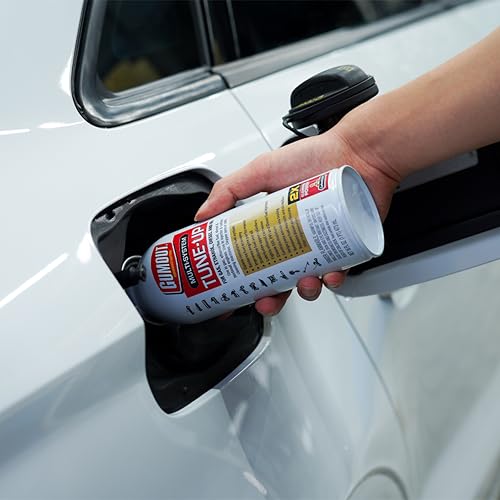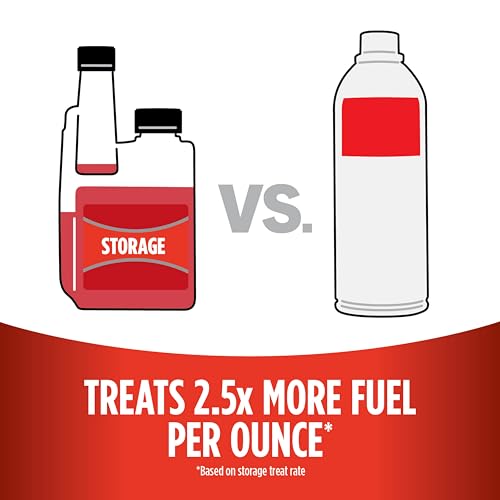
Best Fuel Stabilizer For Riding Lawn Mower: Top Picks 2026
There is a familiar sound that every riding mower owner dreads: you turn the key on the first spring morning, the engine cranks, coughs, sputters, and dies. The gas has that sour, varnish-like smell. Inside the carburetor, a sticky residue has already taken hold. What should have been a five-minute start turns into an afternoon of disassembly.
That scenario is almost entirely preventable. Modern gasoline, especially ethanol-blended fuel, starts degrading within weeks, not months. A fuel stabilizer slows that breakdown, protects the fuel system from corrosion, and keeps your mower ready to go after months of storage. You can also read our guide on how to drain a garden hose for winter.
In 2026, the best fuel stabilizer for riding lawn mower owners is simple to choose once you understand how these products work. This guide reviews the top picks, explains the difference between standard and marine formulas, and shows you exactly how to winterize your mower.
Why Your Riding Mower Needs a Fuel Stabilizer
Gasoline does not age gracefully. When it sits in a tank, the lighter hydrocarbons evaporate, leaving behind heavier compounds that form gum and varnish. Ethanol-blended fuel makes the problem worse. Ethanol attracts moisture from the air, and when enough water accumulates, the fuel separates into layers. That separation leads to poor combustion and corrosion inside the carburetor and fuel lines. You can also read our guide on what gas is best for lawn mower.
A quality stabilizer works in three ways:
- Antioxidants slow the oxidation that turns fresh fuel into varnish.
- Corrosion inhibitors protect metal surfaces from rust and acid buildup.
- Metal deactivators neutralize the catalytic effect of copper and other metals.
The practical result is simple: fuel stays fresh longer, the carburetor stays clean, and the mower starts reliably after months of sitting. That matters for riders that sit idle from October through April.
What to Look For in a 2026 Fuel Stabilizer
Not all fuel stabilizers are the same. Before choosing one, check these features:
- Ethanol-safe formulation for E10 and E15 fuels.
- Storage protection rated for at least 12 months.
- Corrosion protection, especially for damp sheds or coastal garages.
- Easy measuring, ideally with a built-in dosing cap.
- A bottle size that matches the number of engines you maintain.
- Clear instructions for how much to add per gallon.
The goal is not just preserving the gas in the tank. It is protecting the entire fuel system, including the carburetor bowl, fuel lines, and fuel valve. You can also read our guide on how to recycle a garden hose.
How to Winterize Your Mower with Fuel Stabilizer
Using the right stabilizer is only half the job. Applying it correctly matters just as much.
A common mistake is adding stabilizer to old, already-degrading fuel. At that point, you are trying to stop damage that has already happened.
Follow these steps in order:
- Start with fresh fuel. Fill the tank with new gasoline from a busy station. Fresh fuel responds to stabilization far better than fuel that has been sitting in a can for months.
- Add the correct dose. Check the label for the treat rate. Most STA-BIL Storage formulas call for 1 ounce per 5 gallons. Use the measuring cap instead of guessing.
- Run the engine for 5–10 minutes. This is the critical step. The treated fuel needs to reach the carburetor and fuel lines. Running the engine circulates the stabilized gasoline through the entire system.
- Turn off the fuel valve if your mower has one. Close it and let the engine run until it stalls. That empties the carburetor bowl and prevents fuel from evaporating into varnish.
- Store with a full tank. A full tank leaves less air space where condensation can form. This is the opposite of what many owners assume, but it is the correct approach.
Best Fuel Stabilizer for Riding Mower: Top Picks for 2026
The picks below are grouped by use case. Most riders only need one product. Owners in humid climates, or those with multiple machines, should read the marine formula section carefully. You can also read our guide on how to improve lawn soil health.
STA-BIL Storage (8 oz) — Best Overall
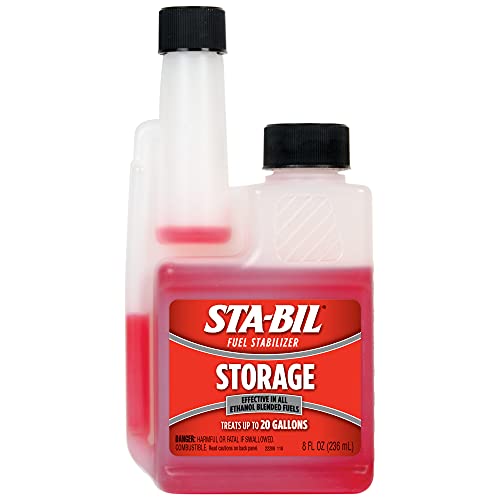
The classic 8-ounce STA-BIL bottle is the benchmark for small-engine storage.
STA-BIL Storage remains the standard that other stabilizers are measured against. The 8-ounce bottle treats up to 40 gallons of gasoline, which covers a typical riding mower tank several times over.
Its formula focuses on preventing oxidation, the chemical reaction that turns fresh fuel into gum and varnish. STA-BIL's official product information rates it for up to 24 months of storage protection. It works with ethanol-blended fuel and is widely available at hardware stores and big-box retailers. You can also read our guide on how to clean lawn mower air filter.
Pros:
- Proven track record across decades of small-engine use.
- Prevents gum, varnish, and corrosion.
- Ethanol-safe.
- Simple and consistent dosing.
Cons:
- Won't clean a carburetor that is already gummed up.
- Not specifically formulated for extreme humidity.
Best for: Most homeowners who need dependable seasonal storage protection.
On some store shelves, the same formula appears under the model number 22208 with a slightly different cap.

Same chemistry, slightly different packaging. Either version works.
If you see the 22208 version, it is the same trusted product. Buy whichever your local store stocks.
STA-BIL Storage (16 oz) — Best for Multiple Engines

The 16-ounce bottle makes sense when you treat more than one machine.
The 16-ounce version uses the exact same formula but treats roughly 80 gallons. That is the right size if you maintain a riding mower, a push mower, a snow blower, and a generator.
This size is especially useful when you fill a 5-gallon gas can and feed several engines from it. Treat the can itself, and every engine you fill gets protected automatically. It is also cheaper per ounce than the smaller bottle. You can also read our guide on how long do electric lawn mower batteries last.
Pros:
- Better value per ounce.
- Enough for multiple engines and gas cans.
- Same trusted formula as the 8-ounce version.
Cons:
- Overkill if you only own one small mower.
- Still a storage additive, not a cleaner.
Best for: Multi-equipment households and anyone who keeps a stabilized gas can on hand.
STA-BIL Storage (4 oz) — Best for One Mower
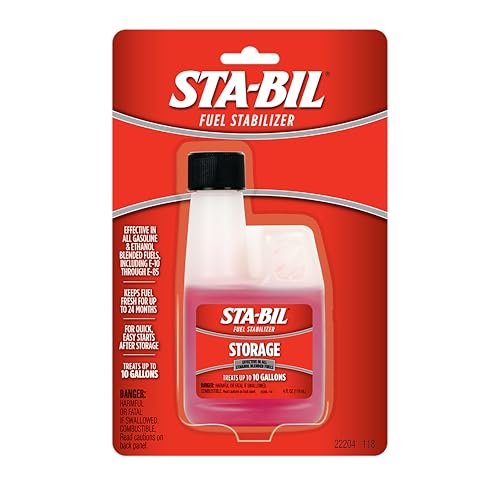
The 4-ounce size is enough for a single mower tank and a small gas can.
For a single riding mower, the 4-ounce bottle treats approximately 10 gallons. That is enough for one season of storage without leaving a half-empty bottle on the shelf.
This size is also a good entry point for first-time users. It costs less, stores easily, and fits in a toolbox or drawer. You can also read our guide on trufuel for lawn mower.
STA-BIL sells two nearly identical 4-ounce SKUs, the 22204 and the 22204-AD. Both contain the same formula.

The 22204-AD version is functionally identical to the standard 4-ounce bottle.
Pros:
- Budget-friendly entry point.
- Compact and easy to store.
- Enough for most single-mower owners.
- No wasted product.
Cons:
- Not enough for multiple machines.
- Requires more frequent repurchasing.
Best for: First-time buyers, single-mower owners, and anyone who wants a compact emergency bottle.
STA-BIL 360 Marine (10 oz) — Best for Humid Climates

Marine-grade protection is worth the extra cost in humid environments.
If your mower lives in a damp shed, an unheated garage, or a coastal property, STA-BIL 360 Marine is the better choice.
The formula adds stronger corrosion protection, plus detergents that help keep the fuel system clean during operation. That matters when condensation inside the tank is a constant threat.
The 10-ounce bottle treats up to 100 gallons, so it offers solid value despite the higher price per bottle.
Pros:
- Superior corrosion protection for wet environments.
- Detergents help keep the fuel system clean.
- Formulated for ethanol-blended fuel.
- High coverage per bottle.
Cons:
- More expensive than standard storage formulas.
- Overkill in dry climates.
Best for: Coastal and high-humidity areas where rust is a bigger risk than fuel degradation alone.
STA-BIL 360 Marine (8 oz) — Compact Wet-Climate Option

The smaller marine bottle fits a single mower without going to waste.
The 8-ounce 360 Marine bottle treats roughly 80 gallons per label. It brings the same corrosion-fighting formula as the larger marine bottles, but it is sized for single-machine households.
If your mower is stored near a lake, river, or anywhere with heavy condensation, this smaller bottle gives you marine-grade protection without buying bulk.
Pros:
- Same marine-grade protection in a smaller bottle.
- Easy to store.
- Great for damp garages.
Cons:
- Higher cost per ounce than larger bottles.
- Unnecessary in dry, arid climates.
Best for: Humid-region riders who need corrosion defense without a bulk purchase.
STA-BIL 360 Marine (32 oz) — Best Bulk Buy
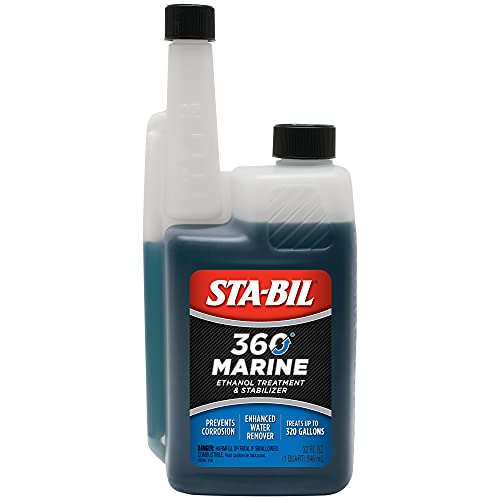
The 32-ounce size delivers the lowest cost per treated gallon.
For anyone managing multiple machines or storing bulk fuel, the 32-ounce marine bottle is the economical option. It treats up to 320 gallons, which covers a small fleet through several seasons.
The formula is identical to the smaller marine bottles, but the bulk sizing cuts the cost per treated gallon significantly.
One practical note: the larger bottle requires more careful measuring. The built-in cap helps, but keep the instruction label visible until you are comfortable with the correct dose.
Pros:
- Lowest cost per gallon treated.
- Marine-grade protection across multiple engines.
- Fewer trips to the store.
Cons:
- Overkill for a single small mower.
- Can be awkward to pour from.
Best for: Large properties, multiple machines, and anyone storing fuel in significant quantities.
HappyFuel Premium Fuel Stabilizer — Best Multi-Engine All-Rounder

HappyFuel handles cars, boats, motorcycles, generators, and lawn equipment from one bottle.
HappyFuel positions itself as a premium multi-purpose stabilizer. It is a good option for enthusiasts who own a variety of engines and want one product for everything.
The formula focuses on antioxidant protection, targeting oxidation, varnish, and phase separation. It is safe for ethanol-blended fuel and works across all gasoline-powered engines.
In practice, HappyFuel performs comparably to STA-BIL for standard storage periods. It shines in convenience: one bottle, one set of instructions, and one dose to remember.
Pros:
- One product for multiple engine types.
- Strong antioxidant package.
- Simple dosing instructions.
- Ethanol-safe.
Cons:
- Less field history than STA-BIL.
- Harder to find in brick-and-mortar stores.
Best for: Owners with a mixed garage who want a single stabilizer for everything.
Quicksilver Quickstor (12 oz) — Marine-Grade Alternative

Quicksilver brings Mercury Marine experience to small-engine fuel storage.
Quicksilver, a Mercury Marine brand, designed Quickstor for fuel systems exposed to months of storage. It includes corrosion inhibitors that protect metal components through temperature swings and condensation cycles.
The 12-ounce bottle treats about 80 gallons, which is a reasonable middle ground for home users. If you already use Quicksilver lubricants or own a boat, this brand keeps your maintenance products consistent.
Pros:
- Trusted marine brand heritage.
- Strong corrosion protection.
- Works across multiple engine types.
Cons:
- Less common in local stores.
- Price varies by region.
Best for: Marine-influenced garages and anyone who already trusts Quicksilver products.
Quick Comparison Table
| Product | Best For | Treats Up To | Key Strength |
|---|---|---|---|
| STA-BIL Storage 8 oz | Most homeowners | 40 gallons | Proven, simple, affordable |
| STA-BIL Storage 16 oz | Multiple engines | 80 gallons | Best value per ounce |
| STA-BIL Storage 4 oz | Single mower | 10 gallons | Compact and waste-free |
| STA-BIL 360 Marine 10 oz | Humid climates | 100 gallons | Extra corrosion protection |
| STA-BIL 360 Marine 8 oz | Damp small sheds | 80 gallons | Marine protection, smaller size |
| STA-BIL 360 Marine 32 oz | Fleet owners | 320 gallons | Lowest cost per gallon |
| HappyFuel | Multi-engine garages | Varies by engine | One bottle for everything |
| Quicksilver Quickstor | Marine-influenced garages | ~80 gallons | Mercury Marine heritage |
STA-BIL Storage vs. 360 Marine: Which Formula Do You Need?
The main choice is not really between brands. It is between the two STA-BIL formulas.
STA-BIL Storage is the general-purpose option. It prevents oxidation, stops gum and varnish, and protects against routine corrosion. It is ideal for dry climates, heated garages, and standard winter storage.
STA-BIL 360 Marine is a more aggressive formula. It is engineered for wet environments such as coastal properties, unheated sheds, and high-humidity regions. The marine-grade corrosion protection is noticeably stronger, and the added detergents clean the fuel system as the engine runs.
If tools in your shed develop rust, or if your garage feels damp even when it is not raining, choose the marine formula. In dry, climate-controlled storage, the standard formula is enough.
Year-Round Stabilizer Use vs. Storage-Only
Most riders only think about stabilizer when winter approaches. That is understandable, but it is not optimal.
If your mower sits for more than two weeks between cuttings, the fuel is already degrading. This is common during dry spells, shoulder seasons, or any week when the grass is not growing.
Year-round treatment is simple. Add the same dose to each fill-up. The cost is small compared to a carburetor cleaning or replacement.
If you run through a tank every week during peak season, continuous treatment is less necessary. Treat at the start of the season, before long storage periods, and whenever you fill up before a planned gap in use.
Common Mistakes to Avoid
- Skipping the run time. Adding stabilizer and parking the mower leaves untreated fuel in the carburetor. That is exactly where varnish forms.
- Treating old fuel. Stabilizer prevents degradation. It does not reverse it. If the gas is already stale, drain the tank and start fresh.
- Overdosing. More is not better. Follow the label. Excessive stabilizer can leave residues that cause problems.
- Ignoring moisture. Stabilizer reduces moisture damage but does not eliminate water in the fuel system. Keep cans sealed and store them off concrete floors.
- Forgetting the gas can. If you use a 5-gallon can to fill your mower, the can needs treatment too. Otherwise, you are introducing untreated fuel into a stabilized system.
Cost Comparison: Stabilizer vs. Repairs
The economic argument for fuel stabilizer is hard to beat.
| Item | Typical Cost |
|---|---|
| Fuel stabilizer for one season | $4–$12 |
| Carburetor cleaning kit | $15–$30 |
| Carburetor replacement part | $40–$120 |
| Small-engine shop labor | $75–$150 per hour |
| Fuel system replacement in severe cases | $150–$300+ |
A few dollars of stabilizer, applied correctly, prevents the most common cause of spring starting failure. That is cheap insurance.
Beyond Fuel: Full Off-Season Mower Prep
Fuel stabilization is only one part of winter storage. A complete preparation routine protects your whole machine.
- Clean the mower thoroughly. Grass clippings and dirt trap moisture and accelerate corrosion. Scrape off buildup and wash the underside.
- Change the oil. Old oil contains acids and moisture from combustion. Fresh oil protects internal components during months of inactivity.
- Check the battery. A battery left connected through winter will slowly discharge and can freeze. Remove it, store it in a cool place, and use a maintenance charger if you have one. If your mower has electric start, the same principles apply to electric-start battery care.
- Lubricate moving parts. Grease the front axle fittings, pivot points, and throttle cables.
- Cover the mower. Use a breathable cover so dust and moisture stay off without trapping condensation.
These steps apply to most major brands. Whether you run one of the popular Husqvarna lawn tractors or another brand, the storage basics are the same. Craftsman's current tractor line also gets the same treatment, as do most standard riding mowers.
How to Tell If Gasoline Has Already Gone Bad
Before adding stabilizer, learn to recognize fuel that is past saving.
- Smell: Fresh gasoline has a sharp, clean odor. Stale fuel smells sour and sweet, like varnish.
- Color: Fresh gas is light amber and clear. Aged fuel darkens to brownish or orange.
- Residue: A sticky film inside the tank or carburetor means oxidation is already underway.
- Separation: Ethanol fuel that has absorbed enough moisture shows visible layers.
If you see any of these signs, do not add stabilizer. Drain the tank, run the engine until it stalls, and start with fresh gas.
Seasonal Fuel Management for 2026
Gasoline formulations change with the seasons. Winter-blend gasoline contains more butane for cold starting, but that also makes it more volatile and faster to degrade. Summer-blend gas has lower volatility and tends to last longer.
This matters because fuel bought in late fall is often winter blend. That fuel needs to survive until spring.
Practical guidance for 2026:
- Buy ethanol-free fuel if you can find it. It is noticeably more stable than E10.
- Store fuel in sealed, airtight containers. Oxygen is the enemy of fuel stability.
- Do not hoard fuel. Buy what you will use within 30–60 days during the active season.
- Treat fuel immediately before storage rather than treating old fuel weeks later.
If you also keep a gas-powered chainsaw in the shed, treat the shared gas can so every engine gets protected. If you need a new saw, the current gas chainsaw recommendations will point you toward a model that runs well on stabilized fuel.
Environmental and Safety Considerations
Gasoline vapors are harmful, and fuel spills damage soil and water. A few precautions keep things safe:
- Work outdoors or in a well-ventilated space.
- Use a funnel when pouring.
- Wipe up spills immediately and dispose of rags properly.
- Never mix stabilizer near an open flame, pilot light, or running engine.
- Store fuel and stabilizer out of reach of children and away from ignition sources.
Never pour gasoline down drains, onto the ground, or into storm sewers. Most municipalities accept small amounts of fuel at household hazardous waste events. Check your local drop-off location before disposing of old fuel.
Frequently Asked Questions
Do I really need a fuel stabilizer for my riding mower?
Yes, if the fuel will sit for more than 30 days. A mower used every week may not need treatment between cuts, but any long storage period demands stabilization.
Can I use STA-BIL 360 Marine in a regular mower?
Yes. Marine formulas are safe for any gasoline engine. They simply provide stronger corrosion protection for wet environments.
How much stabilizer should I use per gallon?
Follow the product label. Typical rates are 1 ounce per 5 to 10 gallons, depending on the formulation. The measuring cap on STA-BIL bottles makes dosing straightforward.
Will stabilizer fix fuel that is already stale?
No. Stabilizers prevent degradation. They do not reverse it. Drain stale fuel, start with fresh gas, and then add stabilizer.
Does ethanol-free gas still need stabilizer?
Yes, but less urgently. Ethanol-free gasoline degrades more slowly than E10, but it still oxidizes over time. For anything stored more than a few months, stabilizer is still worthwhile.
Is fuel stabilizer the same as fuel additive?
Not exactly. All stabilizers are additives, but not all additives are stabilizers. Some additives improve octane or clean injectors. Stabilizers specifically focus on preventing fuel degradation and corrosion during storage.
Why does my mower still have starting issues after using stabilizer?
Stabilizer cannot fix mechanical issues like a dirty air filter, a failing spark plug, or a clogged fuel filter. Check those basics first, and confirm you used the correct dose.
How long does stabilized fuel last?
Stabilized fuel typically stays usable for 12–24 months under proper storage conditions. STA-BIL Storage is rated up to 24 months. The marine formula offers similar longevity with extra corrosion protection.
The Bottom Line
For most owners, the best fuel stabilizer for riding lawn mower storage is STA-BIL Storage in the 8-ounce bottle. It is proven, simple, widely available, and inexpensive. If you live in a humid or coastal area, step up to STA-BIL 360 Marine for the extra corrosion protection.
The habit matters more than the brand. Treat fresh fuel, run the engine long enough to circulate the treated gas, and store the mower with a full tank. Do that consistently, and your mower will start when you need it.
A mower that starts reliably is what lets you keep consistent mowing habits throughout the season, which makes a real difference to your lawn.
Choose a bottle, mark your calendar for the first frost, and treat your fuel before you park the mower. Ten minutes now saves an afternoon of frustration later.