Are Murray Lawn Mowers Any Good: Honest 2026 Review
Murray has been a familiar name in American sheds for decades, and in 2026 the brand still stands for the same thing: no-frills mowing at a price that keeps entry-level buyers happy. But "cheap" and "good" are not the same thing. The real question is whether a Murray will hold up in your yard, with your grass, and under the way you actually care for equipment.
The short answer is yes, for the right homeowner. Murrays are simple, gas-powered machines with proven engines and a genuinely low cost of ownership. But they also have real limitations in deck strength, ride comfort, and long-term durability. This review breaks down the 2026 Murray lineup, its performance in real conditions, what maintenance looks like, and exactly who should buy one. You can also read our guide on how does a chainsaw work.
The Murray Brand in 2026: Value Positioning
Murray does not compete with Honda, John Deere, or the premium commercial names. It competes with Yard Machines, entry-level Craftsman, and other value-priced brands you see on the floor of big-box stores. That placement is deliberate.
Murray’s biggest advantage is its engine relationship. Most Murray mowers are powered by Briggs & Stratton, one of the most widely serviced small-engine brands in America. That gives buyers a dependable, familiar powerplant wrapped in a budget-friendly frame. When you buy a Murray, you are paying mostly for a proven engine and an honest cutting deck, not for bells and whistles. You can also read our guide on how to water lawn efficiently.
The brand’s 2026 lineup still follows the same playbook: push mowers, self-propelled walk-behinds, and affordable riding mowers. None of them will blow you away with premium features, but they cover the basics well.
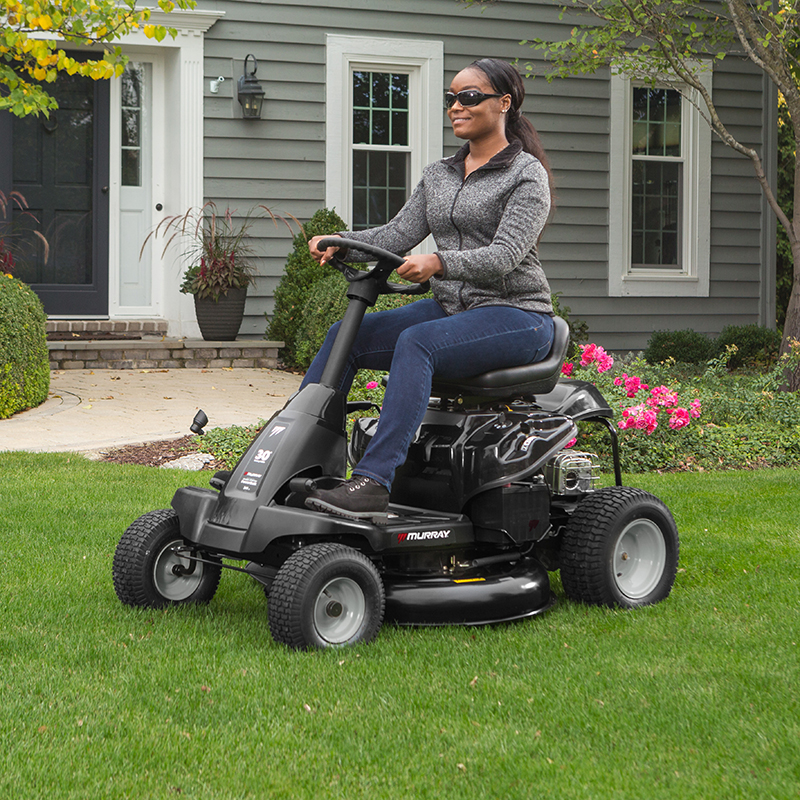
A current Murray riding mower pitched directly at entry-level buyers.
Source: murray.com
What Murray Currently Offers
- Push mowers: Usually 20- or 21-inch steel decks, ideal for flat yards under about 7,000 square feet.
- Self-propelled mowers: The best middle ground for most homeowners, with front-wheel drive on many models.
- Riding mowers: Simple automatic or manual transmission tractors with 30-inch to 46-inch cutting decks.
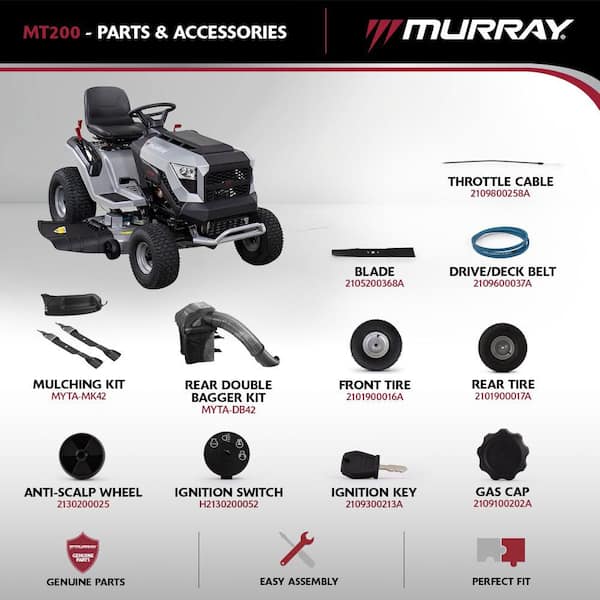
- Lawn care accessories: Grass catcher bags, mulching plugs, and compatible parts sold separately or online.
Real-World Cutting Performance
With a sharp blade and dry grass, a Murray push mower cuts an average suburban lawn cleanly. On regularly maintained fescue, Bermuda, or Kentucky bluegrass, the cut is even and respectable. The engine has enough torque for normal conditions, but it is not a powerhouse. You can also read our guide on how to sharpen lawn mower blades at home.
The most common mistake I see is letting grass get too tall before mowing. A Murray, like any budget mower, objects to thick, wet, or overdue lawns. When the grass is heavy, you have to slow your pace. The blades keep turning, but the deck can clog, and the engine note drops noticeably. If you stay disciplined and mow weekly during peak season, this is rarely an issue.
On slopes, self-propelled models are helpful but not aggressive. The drive systems on Murray mowers are tuned for light duty. On a steep, wet hill, the front wheels can lose traction and the drive loses confidence. A slower speed setting helps, but if your property is mostly steep terrain, a Murray will frustrate you. You can also read our guide on are troy bilt lawn mowers good.
Murray Mowers: Pros and Cons
Here is the honest 2026 breakdown.
| Pros | Cons |
|---|---|
| Very affordable compared to other brands | Thinner steel decks that can rust if neglected |
| Reliable Briggs & Stratton engines | Basic wheels, cables, and drive components |
| Simple, DIY-friendly maintenance | Few premium features like washout ports |
| Parts are easy to find online and in stores | Limited dedicated dealer network |
| Lightweight and easy to maneuver | Ride comfort on tractors is basic, not plush |
| Good cut quality on regular lawns | Struggles with heavy, thick, or wet grass |
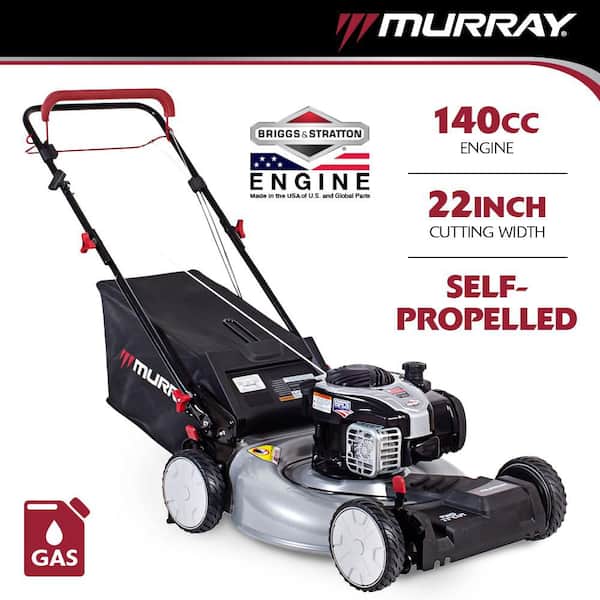
The self-propelled models are the most useful middle ground for most buyers.
Source: homedepot.com
Build Quality and Durability: Where the Savings Show
The biggest compromise in a Murray mower is the construction materials. The deck is made from lighter steel, which keeps the price down but makes the mower more vulnerable to rust, dents, and fatigue over time.
That does not mean a Murray is fragile. It means it demands a bit of respect. If you leave wet clippings caked under the deck and store the mower outside, the deck can rust through in a few years. That is the single most common reason budget mowers die early. You can also read our guide on are ryobi lawn mowers good.
To get a long life out of a Murray:
- Hose off the underside of the deck after every mow.
- Let it dry before storing.
- Keep it in a shed or garage, not outside under a tarp.
- Touch up scratches on the deck with spray paint before rust starts.
On tame suburban lawns with basic care, a Murray will easily last 4 to 7 seasons. Skip that care, and you will be shopping for another mower long before you should be.
Engines, Maintenance, and Parts: Murray’s Real Strength
The engine is the heart of the Murray value proposition. Briggs & Stratton units are simple, proven, and easy to service. Routine tasks like oil changes, air filter swaps, and spark plug replacements can be done in the driveway with basic hand tools.
I recommend treating engine maintenance as a twice-a-year habit: once in spring and once before winter storage. That includes checking the correct engine oil level, cleaning or replacing the air filter, and confirming the blade is sharp. If you keep the engine happy, the rest of the mower is easy to maintain.
Parts support is excellent. Blades, belts, air filters, fuel lines, and drive wheels are common items you can order quickly or find at local hardware shops. Many independent small-engine repair shops will work on a Murray without hesitation because they already know the Briggs & Stratton engine.
If you are new to small engines, read the correct engine oil advice before your first oil change. Getting that simple step right does more for engine life than nearly anything else. For deeper engine troubleshooting, official Briggs & Stratton documentation is a practical place to start.
Common Murray Problems and Easy Fixes
No budget mower is perfect. Knowing what tends to go wrong makes Murray ownership much less stressful.
Self-Propel Cable Stretch
The cable that engages the drive mechanism stretches over time. The symptom is a self-propel system that feels weak or does nothing until you squeeze the handle hard. Most Murray handles have a small adjustment nut near the cable. Tighten it a few turns to remove slack, and the drive should respond normally again.
Hard Starting After Storage
This is almost always caused by stale fuel. Gasoline that sits for months can leave sticky varnish inside the carburetor. The fix is prevention: drain the tank or add a fuel stabilizer before storing the mower. If the carburetor is already gummed up, running a fuel system cleaner through the engine is often the first fix to try.
Deck Rust
The thinnest metal is usually around the discharge chute and the front corners of the deck. Moisture and clippings sit there, and rust follows. The fix is regular cleaning and prompt touch-up paint. Same issue affects other small equipment, so a carburetor and fuel-system cleaning routine can keep your whole shed reliable.
Uneven Cut
A dull or damaged blade is the usual culprit. Sharpen or replace the blade at least once a season. Also check that all four wheels are set to the same height and that the deck is level. A Murray can cut cleanly, but it cannot compensate for a neglected blade.
Fuel, Ethanol, and Winter Storage
Fuel quality is the number one cause of small-engine problems. Most pump gasoline contains ethanol, which absorbs moisture and breaks down over time. If you leave it in the tank for months, you are asking for carburetor trouble.
The practical 2026 advice is simple:
- Use fresh gasoline when you fill the mower.
- If you can buy ethanol-free fuel, use it for your mower and other small engines.
- Add a fuel stabilizer to the tank before any period of storage.
- Run the mower for a few minutes so the treated fuel reaches the carburetor.
- In spring, check the fuel before starting.
For homeowners who want to avoid ethanol problems altogether, switching to ethanol-free fuel is the cleanest solution. If you own a riding mower or plan to store a tractor for winter, the same logic applies—a fuel stabilizer designed for larger fuel systems is worth using before the season ends.
Price and Value vs. Rivals in 2026
Murray’s main weapon is price. For a similar engine class and cutting width, a Murray usually costs less than a Toro, Husqvarna, or Honda. For first-time buyers or anyone who simply needs a dependable lawn mower without premium extras, that price gap matters.
What you sacrifice are the details: thicker steel decks, premium wheels, softer ride, better transmissions, and convenient features like washout ports. You also lose the tight dealer network that pricier brands offer. In exchange, you get a machine that cuts grass reliably and is inexpensive to repair.
If you are comparing Murray to rival budget brands, the differences are small. Most entry-level mowers share similar engines and similar compromises. The deciding factor is usually which one is in stock locally and which parts are easiest to find.
Battery-powered mowers have also improved by 2026. For small, flat lawns, electric models are quiet, low-maintenance, and increasingly affordable. But if you want raw cutting power in thick or wet conditions, a gas mower with a Briggs & Stratton engine remains the more capable choice.

Even entry-level Murray models keep the engine simple and easy to service.
Source: consumerreports.org
Is a Murray Riding Mower Worth It?
Murray riding mowers are best for flat, open lawns where comfort is less important than cost. The engines are familiar, the cutting decks are wide enough to finish a half-acre reasonably fast, and the price is usually the lowest in the room.
The trade-offs are obvious the first time you sit on one. The seat is basic, the ride is stiff, and the steering feel is loose compared to premium tractors. The transmissions are simple and functional, but they are not built for heavy landscaping work or aggressive turning.
If your property is mostly flat, a Murray tractor can still be a smart buy. If your lawn is hilly, rutted, or very large, the money saved at purchase will be spent on frustration later. Set expectations accordingly, and a Murray riding mower can deliver years of dependable service.
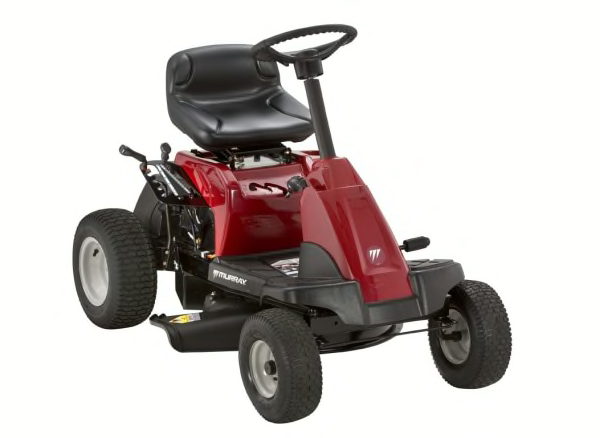
Murray tractor decks are simple, but the steel is thinner than pricier brands.
Source: consumerreports.org
Who Should Buy a Murray Mower (and Who Shouldn’t)
Murray makes sense for a specific type of buyer. Be honest about which group you are in.
A Murray is a great choice if you:
- Are buying your first mower and want to keep the initial cost low.
- Have a small or mid-sized flat lawn that is mowed regularly.
- Are comfortable doing basic maintenance like oil changes and blade swaps.
- Store equipment indoors and do not mind cleaning the deck after mowing.
- Want an inexpensive backup mower or a rental-property mower.
Look elsewhere if you:
- Have a large, hilly yard with thick grass that grows fast.
- Want premium features like electric start, hydraulic drives, or deck wash systems.
- Expect to do zero maintenance between seasons.
- Need a mower that can survive weekly abuse on rough terrain.
- Want a riding mower with a plush seat and car-like handling.
How to Choose the Right Murray for Your Lawn
Choosing the right model is more important than choosing the right brand. A quick walk around your yard before buying will save you money and frustration.
- Measure the mowing area. Under 7,000 square feet, a 21-inch push mower is enough. For larger lawns, a self-propelled model or a riding mower makes more sense.
- Look at slopes. If you have hills, choose a self-propelled model with rear-wheel drive if possible. Murray’s front-drive models work best on flatter ground.
- Think about bagging. If you want to collect clippings, look for a model with a rear bag. The bag is easier to empty and does not block the discharge as much as a side bagger.
- Consider thick spring growth. If your lawn grows fast, choose a model with a larger engine option. More displacement means fewer slowdowns in heavy grass.
- Check storage space. Foldable handles are standard on most modern push mowers, but confirm the folded size fits your shed.
For a first-time buyer, a simple self-propelled model with a standard blade is still the best recommendation. It covers the most common lawn sizes without unnecessary complexity.
Accessories That Make a Murray Better
A few low-cost accessories can make a basic Murray feel much more capable.
- Mulching plug: Many Murray models accept a mulching plug. This lets you recycle grass clippings back into the lawn. Mowing more often keeps the clippings short, so they break down quickly. If you also deal with fall leaves, a mower can help create shredded leaf mulch instead of bagging everything.
- Grass catcher bag: If you prefer a clean look, get the matching bagger for your model. Larger bags mean fewer trips to the compost pile.
- Blade sharpening kit: A sharp blade is the difference between a clean cut and a torn, brown-edged lawn. A basic benchtop sharpener or a drill attachment grinder pays for itself quickly.
- Deck coating: Apply automotive paste wax or a spray-on deck coating to the underside of the deck. Grass clippings slide off more easily, and the metal is better protected from moisture.
Warranty, Support, and Where to Buy
Murray mowers typically come with a two-year limited residential warranty. That is standard for the price range. Riding mowers and battery-powered models may differ, so read the warranty card before leaving the store.
Keep your receipt, record the model and serial numbers, and write down the engine model number too. Most service questions are answered using the engine information, not the brand name.
Murray does not have the dealer network that John Deere or Husqvarna maintains. In practice, that matters less than it sounds. Most independent small-engine shops are happy to work on Murray mowers because the engines and parts are familiar. Many owners never visit a dealer at all; they simply order parts online.
For manuals, diagrams, and model-specific specifications, Murray’s official site is the best place to start.
Frequently Asked Questions
Are Murray lawn mowers reliable for the price?
Yes, for light to moderate use. The Briggs & Stratton engines are solid, and the simple designs mean fewer complicated parts to fail. Long-term reliability depends on maintenance more than anything else.
How long should a Murray mower last?
With basic care, expect 4 to 7 seasons, sometimes more. That assumes indoor storage, annual oil changes, regular deck cleaning, and keeping the blade sharp.
Are Murray mowers good for thick, wet grass?
They can handle it if you slow down and keep the blade sharp. A self-propelled model helps maintain a steady pace. For consistently heavy, wet grass, a more powerful brand with a sturdier deck is a better choice.
Are Murray riding mowers worth it?
For flat, basic lawns, yes. The price is hard to argue with, and the engines are proven. For hilly terrain, heavy work, or long mowing sessions, a more expensive tractor will ride better and last longer.
Is it easy to get parts for Murray mowers?
Yes. Blades, belts, filters, and engine parts are widely available online and in many local stores. Because most models use Briggs & Stratton engines, parts cross-reference easily.
Are Murray mowers good for beginners?
Absolutely. They are simple to start, simple to operate, and simple to maintain. A beginner can learn the basics of lawn mower care without worrying about expensive, complicated components.
Do Murray mowers mulch well?
Yes, when equipped with the correct mulching plug and a sharp blade. Mow more frequently in spring so the clippings stay short, and they will break down quickly. That cut clippings help feed the soil naturally.
Final Verdict: Are Murray Lawn Mowers Any Good in 2026?
Murray mowers are good for what they are: honest, budget-friendly machines for everyday residential lawns. They cut well when maintained, start reliably when given fresh fuel, and cost less than almost any comparable brand. The Briggs & Stratton engine underneath is a genuine strength, and parts support keeps repair costs low.
The trade-off is less obvious at checkout and more obvious in year three or four. The deck steel is thinner. The wheels and cables feel cheaper. The ride on a tractor is basic. If your yard is simple and your expectations are realistic, none of that will be a dealbreaker. If your property is demanding, you will quickly outgrow a Murray.
The honest bottom line: for the right buyer, a Murray is absolutely worth it. Before you buy, walk your yard, measure the slopes, and check the current model specs on Murray’s official website. A few minutes of planning is the difference between a mower you enjoy for years and one you fight all season.