How Long Do Chainsaw Chains Last: Lifespan & Care 2026
If you’ve ever asked “how long do chainsaw chains last?” you already know the answer isn’t a simple number. A chain that lasts all afternoon in clean firewood can go dull in under a minute after kissing sandy soil. The real answer depends on what you cut, how you maintain the saw, and whether you sharpen early and often.
In this guide, we’ll give you realistic lifespan ranges, the exact signs that tell you when to stop sharpening and start replacing, and the care habits that can double or triple the useful life of every chain you buy. By the end, you’ll know precisely what to expect from your chain—and how to get the most out of it. You can also read our guide on how do you use a chainsaw.
What Determines a Chainsaw Chain’s Lifespan
Chain life isn’t about the brand or the price tag. It’s about the conditions you cut in and the habits you bring to the saw. Understanding the variables that wear down cutters is the first step to making a chain last.
The main factors that set lifespan:
Wood species and condition. Clean, soft softwoods (pine, spruce, fir) are gentle on cutters. Dry hardwood, frozen logs, and bark embedded with grit all accelerate wear significantly.
Dirt and abrasives. Soil, sand, mud, and even fine dust act like sandpaper on the cutting edge. One accidental ground contact can undo hours of careful sharpening.
Chain design. Full-chisel chains cut fast but dull quicker. Semi-chisel chains hold an edge longer in dirty or frozen conditions. Carbide-tipped chains last dramatically longer but require specialized sharpening equipment.
Bar oil and heat. Insufficient oil flow causes friction, which overheats the cutters and robs the steel of its hardness. A dry-running chain is a dying chain.
Tension and fit. A loose chain slaps the bar and wears rivets; an over-tight chain strains the engine and generates heat. Both shorten lifespan.
Sharpening quality. Correct file size, consistent angles, and proper depth gauge settings protect the edge and reduce the risk of kickback.
Cutting technique. Leaning into the saw and forcing the cut scrubs the edge. A sharp chain should pull itself through the wood with minimal pressure.
Bar and sprocket condition. Worn bar rails and a hooked drive sprocket will chew up even a brand-new chain in short order.

The cutting edge and depth gauge work together; if either is compromised, chain life suffers.
If you control the three biggest variables—dirt exposure, oiling, and sharpening frequency—you’ll see more productive hours from every chain you own. The saw itself matters too; choosing the right gas or battery power influences how much stress you’re putting on the chain.
Typical Lifespan Ranges You Can Expect
No single number answers “how long do chainsaw chains last” for everyone. But these practical ranges, based on normal use with good oiling and regular touch-up sharpening, give you a realistic picture:
| Cutting Condition | Standard Steel Chain | Carbide-Tipped Chain |
|---|---|---|
| Clean softwood, semi-chisel | 8–15 cutting hours | 25–50+ hours |
| Clean hardwood, full-chisel | 5–10 cutting hours | 15–30+ hours |
| Dirty or storm-damaged wood | 1–5 cutting hours | 5–15 hours |
| Milling or frozen wood | 2–6 hours between sharpening | 6–15 hours between sharpening |
A common mistake is expecting uniform life from every chain. In practice, the single biggest lifespan killer is grit. Cutting oak trunks that have been sitting in mud can dull a sharp chain in under 60 seconds. The same chain in clean, seasoned firewood might cut all weekend.
This is why focusing on conditions rather than a fixed hour-count is more useful. If you want a rough rule of thumb: plan for 5–10 hours of productive cutting from a standard steel chain in clean wood, and treat anything more as a bonus.
Clear Signs Your Chain Is Worn Out
Your saw tells you when the chain is struggling. Learning to read these signals keeps you safe and helps you know when replacement is due:
Fine dust instead of chips. A sharp chain throws coarse, curly chips. Dust means dull cutters that are grinding rather than slicing.
You have to push. The bar should feed itself into the cut with light pressure. If you’re leaning on the saw, the chain is dull.
Smoke or a hot bar. This signals dull cutters or poor oil flow. Both are dangerous.
The cut drifts. When one side of the chain is duller than the other, the saw pulls to one side and the cut wanders.
Blue or discolored cutters. Overheated steel loses temper and won’t hold an edge even after sharpening.
Stretched chain. If you’ve run out of adjuster travel, the chain is done.
Cracked rivets or broken teeth. Replace immediately. These are safety-critical failures.
If you’re seeing several of these signs regularly, the chain has reached the end of its useful life. Sharpening won’t fix a chain that’s physically worn out.
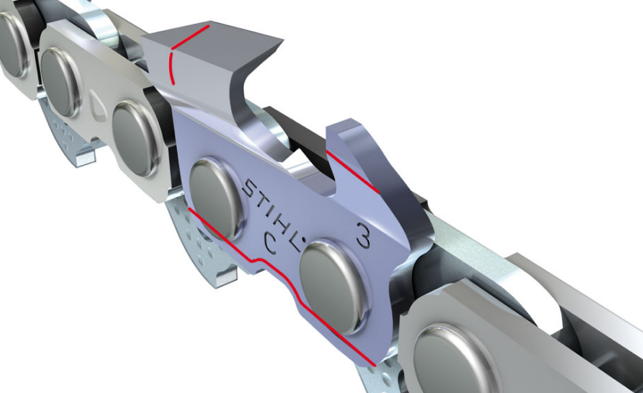
Inspect the cutters and drive links; visible wear indicators mean it’s time for a new chain.
How to Make Your Chain Last Longer
Small habits compound. These practices can genuinely double or triple chain life for most users:
Keep the chain away from dirt. Use a sawhorse or log stand to keep the bar off the ground. Brush mud and loose bark off logs before cutting. This is the single most effective habit you can adopt.
Oil generously. Use proper bar-and-chain oil, not used motor oil. Check flow by revving the saw over a stump; you should see a light oil line on the wood. In dry hardwood or hot weather, increase the flow.
Set correct tension. Pull the chain by hand; drive links should just peek out of the bar groove and snap back when released. Check tension every time you refuel—a hot chain loosens and a cold chain tightens.
Match the chain to the job. Semi-chisel chains excel in dirty or frozen wood. Full-chisel chains are faster in clean wood. Carbide-tipped chains are worth the cost for milling or abrasive conditions.
Sharpen little and often. A two-minute touch-up every tank of fuel is more effective than an aggressive session after the chain is badly dull.
Check depth gauges. Use a depth gauge tool every few sharpenings. Too-low gauges make the cut aggressive and unsafe; too-high gauges make it slow and prone to burning.
Maintain the bar. Clean the groove and oil holes with a putty knife or groove tool. Dress burrs with a flat file. Flip the bar every chain swap to distribute wear.
Rotate chains. Keep two or three sharp chains ready. Swap quickly on the job and sharpen later.
Store properly. Lightly oil the chain and bar after work, and store the saw in a dry place. A rusted chain is a ruined chain.
These habits are straightforward, but consistency matters more than perfection.

Tensioning the chain correctly is a quick task that prevents premature wear and unsafe operation.
Sharpening: When, How Often, and Limits
Sharpening is the daily lever you control. A sharp chain is safer, cuts faster, and puts less stress on the saw.
When to sharpen: After any contact with dirt, when chip size starts to shrink, or roughly every tank of fuel in normal cutting. Don’t wait until the chain is tearing wood instead of slicing it.
Hand-filing basics:
- Use the correct file size for your chain pitch (typically 3/16″ or 5/32″).
- Match the file angle to your chain (often 25–35 degrees for cross-cutting).
- File every cutter with the same number of strokes—usually 3–5 light passes.
- Work from the inside of the cutter outward.
Depth gauge maintenance: Check the depth gauges every 2–3 sharpenings using a depth gauge tool. File them down to spec if they’re standing too proud. This prevents the chain from grabbing aggressively and reduces kickback risk.
Grinder vs. hand file: A bench grinder produces consistent angles fast, which is ideal for badly dull chains. Hand filing works well if you’re disciplined about maintaining uniform angles. Many pros use both—grinder for the first pass, file for touch-ups.
When to stop sharpening: A chain should be replaced when the cutters reach the witness mark (the shallow groove at the base of the tooth), when teeth are uneven beyond correction, when rivets crack, or when the chain has stretched beyond the adjuster. A good chain takes 5–10 worthwhile sharpenings before hitting these limits.
For carbide-tipped chains, skip hand files entirely. They require diamond-coated stones or professional grinding equipment.
Replace vs. Sharpen: Cost, Time, and Safety
There comes a point when sharpening is no longer worthwhile. Recognizing that moment saves time and protects your safety.
Replace the chain when:
- Cutters are at or below the witness mark
- Several cutters are broken or missing
- The chain has stretched to the end of the adjuster
- Rivets show cracks or elongation
- Severe rock, nail, or rebar hits have left cutters too short to true up
Cost comparison:
| Option | Typical Cost | Time Invested |
|---|---|---|
| Standard chain replacement | $15–$30 | 5–10 minutes |
| Carbide chain replacement | $50–$100+ | 5–10 minutes |
| Pro sharpening service | $5–$10 | Drop-off/pick-up |
| DIY hand sharpening | ~$2 file | 5–10 minutes per session |
A common mistake is nursing a worn chain because replacement feels wasteful. In practice, a chain that needs constant filing to cut poorly is costing you cutting time. Replace it. Also replace the drive sprocket every 2–3 chains; a worn sprocket will destroy a new chain prematurely. Watching the drivetrain and replacing worn parts before they damage others is key.
Bar, Sprocket, and Oil: The Supporting System
Chain life depends on the components around it. A worn bar or sprocket will eat chains for breakfast.
Bar care: Clean the groove and oil holes regularly. A putty knife or a dedicated groove cleaner works well. Dress raised burrs on the rails with a flat file. Flip the bar every time you change chains to balance wear and extend bar life.
Sprocket health: The drive sprocket wears over time and develops a hooked profile. A hooked sprocket damages drive links and accelerates chain stretch. Replace the sprocket every 2–3 chains or with every chain set.
Oil selection: Use bar-and-chain oil rather than motor oil. Bar oil has better adhesion properties and is formulated for the high speeds and temperatures of a chainsaw. Increase flow for dry hardwood or hot weather; switch to winter-grade oil when cutting in cold temperatures.
Chain fit: Match pitch and gauge exactly to the bar and sprocket. A mismatched chain is dangerous and will shred components quickly. Your chain should sit snugly in the bar groove with the tie straps level with the rails.
Get these components right, and you’ll notice the difference in cutting speed and chain longevity within a single session. Even the best chainsaw maintenance practices are undermined if the bar and sprocket are worn out.

The drive sprocket, bar groove, and oil holes must all be maintained for a chain to reach its full lifespan.
Safety Risks of Running a Worn Chain
A dull chain is more than inefficient—it’s genuinely dangerous. Here’s why:
Kickback risk increases. Dull cutters and incorrect depth gauge settings make the chain more likely to catch and kick back violently. Kickback is a leading cause of chainsaw injuries.
Heat buildup can seize components. Friction from a dull chain generates extreme heat that can warp the bar, damage the clutch, or throw the chain off the saw.
Uncontrolled cuts and fatigue. A chain that wanders or cuts unevenly forces you to fight the saw. Tired hands make mistakes, and mistakes with a chainsaw are serious.
Always follow basic safety practices: wear chaps, eye protection, and hearing protection. Consult guidance from trusted sources like Oregon’s chain safety guidelines or local extension services to stay current on safe chainsaw operation.
Frequently Asked Questions
How long do chainsaw chains last for homeowners?
Most casual users see 5–10 hours of actual cutting time from a standard steel chain in clean wood. Spread across many weekends of light use, that can mean several years of service with regular sharpening.
How many times can I sharpen a chain before replacing it?
Standard chains typically take 5–10 light sharpenings before the cutters reach the witness mark. Dirty wood or accidental ground contact can cut that number in half.
Do carbide-tipped chains really last longer?
Yes, often 3–5 times longer in abrasive conditions. They cost more up front and need diamond sharpening tools or professional service, but they pay off in dirty or frozen wood.
Why does my chain get dull so fast?
The most common causes are ground or dirt contact, low bar oil flow, or mismatched chain type for the conditions. Fix oiling, stay out of the dirt, and consider a semi-chisel chain for dirty work.
How do I know when to replace rather than sharpen?
Replace when cutters hit the witness mark, the chain stretches past the adjuster, rivets crack, or the cut wanders after a proper sharpening and bar check. Safety comes first.
Does bar and sprocket wear affect chain life?
Absolutely. Worn rails and a hooked sprocket will destroy a new chain quickly. Dress the bar, flip it regularly, and replace the sprocket every 2–3 chains.
Conclusion
The honest answer to “how long do chainsaw chains last” is: it depends. In clean wood with good oil, proper tension, and regular touch-up sharpening, most standard chains deliver 5–10 productive hours and several sharpenings before reaching the witness mark. Grab a handful of dirt, run without bar oil, or ignore the depth gauges, and that lifespan drops to minutes.
The good news is that chain life is largely within your control. Keep the cutters out of the soil, oil generously, sharpen little and often, and maintain the bar and sprocket as a system. Do that, and you’ll stop wondering about average lifespans—you’ll be getting well above them.
Your next step: Before your next cutting session, do a 10-minute maintenance check—clean the bar, verify oil flow, and touch up the chain. It’s the fastest way to get more hours from every chain you buy. And if you’re thinking about upgrading your setup, consider how chain maintenance needs differ across your outdoor power equipment.