

Best Gas Chainsaw For Home Use: Top Picks For 2026
A fallen limb across your driveway, a stack of firewood that needs cutting, an overgrown fence line that keeps getting pushed to next weekend—these are the moments when a dependable gas chainsaw earns its place in the shed. The right model starts on the first or second pull, cuts cleanly through wood, and stays comfortable in your hands for more than a few minutes. The wrong model sits in the corner because it won't start, or it vibrates so badly you put it away after one log.
In 2026, gas chainsaws are still the best choice for homeowners who need consistent power, long runtime, and the ability to refuel and keep working. This guide breaks down the best gas chainsaw for home use, explains what actually matters when you compare models, and covers the maintenance and safety habits that keep a saw running for years. You can also read our guide on best gas for lawn mower ethanol free.
If you want the full picture before choosing a platform, our homeowner saw guide covers more ground. Here, we focus on the gas-powered picks that make sense for real yard work.
What To Look For In A Homeowner Gas Chainsaw
Bar Length: Match It To The Wood You Cut
The bar length is the length of the cutting portion of the saw. It determines the largest diameter log you can cut in a single pass. A practical rule of thumb is to choose a bar at least two inches longer than the thickest wood you plan to cut. That extra length gives you room to position the saw properly without forcing the tip into the cut. You can also read our guide on how much compression should a chainsaw have.
For most suburban homeowners, a 14 to 18-inch bar is enough. It handles pruning, storm cleanup, and small firewood. A 20-inch bar makes sense if you process firewood from larger trees. A longer bar adds weight, increases vibration, and raises kickback risk—so there is no reason to buy more bar than the job requires. If you’re torn between the two most common sizes, this bar-size breakdown explains the practical difference.
Engine Displacement: CCs Made Simple
Engine size, measured in cubic centimeters (cc), directly affects cutting power and weight. Here is how the classes break down for home use:
- 38–45cc: Light pruning, storm cleanup, and occasional cutting. These saws are easier to start, lighter, and far less tiring.
- 46–55cc: A balanced middle ground for mixed yard work, overgrown branches, and light firewood processing.
- 56–62cc: Serious torque for thick hardwood, large fallen trees, and frequent firewood sessions. These saws are heavier, but they pull through dense wood without bogging down.
A common mistake is buying a 62cc saw because it seems like better value for the money. If most of your work is pruning and small limb removal, you will spend the whole session fighting extra weight and vibration for power you never use.
Safety Features: The Non-Negotiables
Every modern chainsaw should have a chain brake that stops the chain instantly if kickback throws the bar up and back toward you. Look for an inertia-activated chain brake that triggers automatically, not just one you can engage by hand.
Other important features include:
- A low-kickback chain and guide bar
- Anti-vibration handles for longer sessions
- A throttle interlock that prevents the chain from moving until you deliberately squeeze the trigger
- A chain catcher near the rear handle
A saw without these basics is not worth the discount.
Weight And Ergonomics
A 62cc saw with a 20-inch bar often weighs 15 pounds or more before you add fuel and bar oil. That is manageable for a few cuts but exhausting for sustained work. The best gas chainsaw for home use is the one you can control safely when fatigue starts to set in.
Pay attention to how the saw balances. A well-designed rear handle, secure front grip, and effective anti-vibration mounts make a surprising difference after thirty minutes of cutting. If possible, hold the saw before buying—or at least read reviews from owners who mention comfort and vibration, not just power.
Parts And Service Availability
Gas chainsaws need regular parts and service over their lifetime: bars, chains, air filters, spark plugs, and occasional carburetor work. A saw from a brand with a strong dealer network is easier to maintain than an online-only model that requires you to wait a week for a replacement filter.
Husqvarna’s official website, for example, keeps manuals and part lists available for most current models. That kind of support matters when you plan to keep the saw for a decade.
How We Chose These Picks
The recommendations below are based on the same criteria that matter during real use:
- Does the engine size match common homeowner tasks?
- Is the saw balanced and comfortable enough to control?
- Does it start reliably and cut smoothly?
- Are safety features adequate for a non-professional user?
- Is the price reasonable for what you actually get?
A cheap saw that vibrates aggressively and dulls chains quickly is not a bargain. A more expensive saw that starts easily, cuts cleanly, and lasts for years is worth the extra money.
The Best Gas Chainsaws For Home Use In 2026
Here is a quick comparison of the top picks covered in this guide.
| Model | Engine / Bar | Best For | Bottom Line |
|---|---|---|---|
| Husqvarna 120 Mark III | 38cc / 14" | Pruning, storm cleanup, small firewood | Best overall for most homeowners |
| NEO-TEC 62cc | 62cc / 20" | Firewood and large fallen trees | Best power for the price |
| VEVOR 62cc | 62cc / 20" | Longer cutting sessions | Strong comfort and dual fuel tanks |
| SUPMIXTOOLS 62cc | 62cc / 20" | Home and farm work | Reliable workhorse |
| 62cc dual-bar package | 62cc / 18" + 22" | One saw for many jobs | Most versatile setup |
| PROYAMA 62cc | 62cc / 20" | Mixed hardwood cutting | Solid value |
| 52cc with tool kit | 52cc / 18" | Beginners and smaller yards | Easiest to manage |
| 62cc with safety gear | 62cc / 22" | Rural lots and big logs | Best starter bundle |
Husqvarna 120 Mark III: Best Overall For Most Homeowners

The 14-inch bar on the Husqvarna 120 Mark III keeps the saw compact and easy to control.
The Husqvarna 120 Mark III earns the top spot because it is sized for the jobs most homeowners actually do. Its 38cc X-Torq engine is designed to burn fuel more efficiently and produce lower emissions than older two-stroke designs. The 14-inch bar handles pruning, storm debris, and firewood from smaller logs, which covers the vast majority of residential cutting tasks.
In practice, what makes this saw stand out is balance. At roughly 10 pounds, it does not wear you down the way larger saws do. The automatic chain oiler keeps the bar lubricated, and the low-vibration design means your hands are less likely to feel numb after a longer session. The chain brake is easy to engage, and the saw starts reliably from cold when you follow the correct starting procedure.
Anyone who already trusts Husqvarna’s outdoor gear will recognise the attention to basics: solid build quality, thoughtful controls, and easy access to replacement parts.
Pros:
- Lightweight and well-balanced
- Cleaner, more efficient X-Torq engine
- Automatic chain oiler
- Inertia-activated chain brake
- Strong dealer and parts support
Cons:
- 14-inch bar limits capacity on very large logs
- Not suited for frequent heavy felling work
- Priced higher than many generic 62cc saws
Who should buy it: First-time chainsaw owners who want safety and control, and experienced homeowners who want a dependable saw for routine maintenance. It shines at pruning, cutting fallen branches, and keeping smaller firewood rounds in check.
NEO-TEC 62cc 20-Inch: Best Power For The Price

The NEO-TEC 62cc is built around torque and bar reach at a budget-friendly price.
If your property has mature trees and you routinely cut firewood, the NEO-TEC 62cc delivers serious cutting power without the premium price tag. The 62cc engine has enough torque to pull a 20-inch bar through oak and maple, and the longer bar means fewer passes when bucking logs. The ergonomic handle gives you a solid grip, and the saw holds a steady line through the cut.
This model sits in the sweet spot for homeowners who want the reach and muscle of a larger saw but do not want to pay professional-brand prices. It handles pruning, storm cleanup, and seasonal firewood work with equal competence.
Pros:
- Strong 62cc cutting performance
- 20-inch bar suits larger limbs and small trunks
- Ergonomic handle improves control
- Competitive price for the power offered
Cons:
- Heavier than smaller homeowner saws
- Higher fuel consumption than smaller engines
- Stock chain may warrant an upgrade
Who should buy it: Homeowners who want a single saw to handle most jobs on the property. A common upgrade is replacing the stock chain with a semi-chisel model, which stays sharper longer in mixed or dirty wood.
VEVOR 62cc 20-Inch: Comfort For Longer Sessions
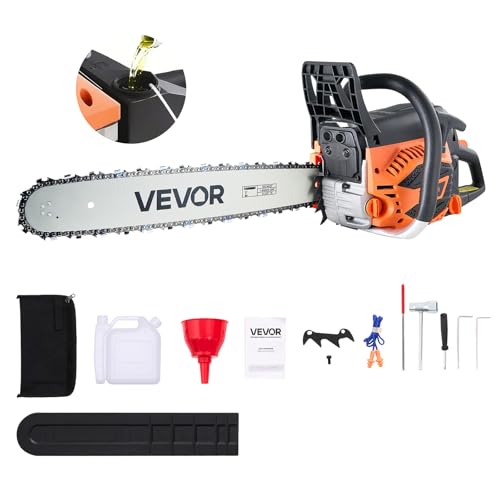
The VEVOR 62cc has a textured grip and twin fuel tanks for extended cutting.
The VEVOR 62cc is built for steady power and user comfort. The non-slip textured handle gives you a confident grip even with work gloves, and the dual fuel tanks let you plan longer cutting sessions with fewer interruptions. The 20-inch bar provides good reach, which reduces the need to flip logs during bucking.
This saw feels planted in the cut, and that stability helps with accuracy. It matters more than raw power when you are working near structures, fences, or uneven ground.
Pros:
- Strong 62cc output
- Non-slip handle
- Dual fuel tanks
- 20-inch bar
- Good value for the power
Cons:
- Heavier than compact models
- Chain may need frequent touch-ups on hardwood
- Bulkier to store
Who should buy it: Homeowners with enough property to justify a 62cc saw but who plan to spend more than a few minutes at a time cutting. The comfortable grip and longer runtime make it easier to finish the job without stopping.
SUPMIXTOOLS 62cc 20-Inch: Reliable Home And Farm Workhorse

The SUPMIXTOOLS 62cc is positioned for home, farm, and garden applications.
The SUPMIXTOOLS 62cc focuses on straightforward reliability. The two-stroke engine spins up quickly for confident starts, and the 20-inch bar handles long cuts across logs and heavy branches. It is a practical choice for rural lots where a capable, no-fuss saw is a regular workhorse.
This is not the lightest saw in the class, and you will feel the vibration more than you would on a premium model. But for the price, it delivers dependable power and enough reach for most homeowner tasks.
Pros:
- Strong 62cc power at an accessible price
- 20-inch bar
- Quick starts
- Suited to home and farm tasks
Cons:
- Heavier than smaller saws
- More vibration than premium brands
- Chain and bar upgrades may improve performance
Who should buy it: Homeowners who need a straightforward saw for mixed tasks and want to keep the upfront cost reasonable.
62cc Chainsaw With 18-Inch And 22-Inch Bars: Most Versatile

A dual-bar package lets you switch between control and maximum reach.
This package offers rare versatility: a 62cc engine with two bar sizes in the box. The 18-inch bar provides better control for smaller tasks like pruning and limbing, while the 22-inch bar extends your reach for big logs and wide trunks. The ergonomic non-slip handle helps keep the saw steady through varied cuts.
For homeowners who want one saw to cover both small and big jobs without buying a second machine, this is the most flexible option. Swap bars to fit the work at hand.
Pros:
- Two bars included
- 62cc engine handles a wide range of cuts
- Ergonomic grip
- Strong cost-to-capability ratio
Cons:
- Bar swaps add setup time
- Heavier with the 22-inch bar
- Regular chain maintenance required
Who should buy it: Homeowners who want maximum flexibility from a single saw and do not mind spending a few extra minutes changing bars.
PROYAMA 62cc 20-Inch: Solid Cut Speed And Reach
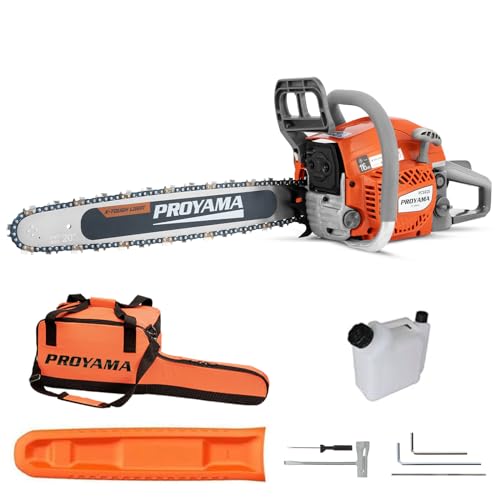
The PROYAMA 62cc delivers consistent cut speed through hardwood.
The PROYAMA 62cc delivers solid power for a range of tasks, with a cut speed that keeps up with demanding schedules. The 20-inch bar handles larger limbs, and the cordless petrol design keeps you mobile around the yard. For regular firewood prep and downed limb cleanup, it gets the job done with straightforward reliability.
Pros:
- 62cc engine handles mixed hardwood
- 20-inch bar
- Good bucking speed
- Reliable value
Cons:
- Weight can tire new users
- More vibration than premium options
- Stock chain may dull faster on dense wood
Who should buy it: Homeowners who need a dependable saw for regular firewood work and want more reach than a compact model provides.
52cc 18-Inch Chainsaw With Tool Kit: Best For Beginners

The 52cc model pairs a controllable bar length with a useful in-box toolkit.
This 52cc chainsaw with an 18-inch bar occupies the practical middle ground—more capable than a small pruning saw, lighter and easier to manage than a 62cc bruiser. The included tool kit covers field adjustments and chain swaps, and the 18-inch bar keeps kickback risk lower than longer bars while still handling most suburban tasks.
If you are new to chainsaws, this is the size to start with. It will not overwhelm you, and it can still handle the majority of storm debris and firewood you are likely to meet.
Pros:
- Manageable weight
- 18-inch bar for control
- Toolkit included
- Good for pruning and light firewood
Cons:
- Less torque than 62cc saws
- Not ideal for very large trunks
- Chain may need frequent sharpening on hardwood
Who should buy it: Beginners, smaller properties, and anyone who prefers a lighter saw that does not require as much physical effort to control.
62cc 22-Inch Chainsaw With Safety Gear: Best Starter Bundle

The long-bar package includes starter safety gear, ideal for new buyers.
This 62cc chainsaw with a 22-inch bar comes bundled with gloves and goggles. The long bar allows you to cut wide logs without flipping them as often, and the two-stroke engine provides steady power for rough work. It suits larger rural properties where big logs and post-storm cleanup are regular occurrences.
The included safety gear is a good starting point, but it is not a replacement for a proper chainsaw helmet, face shield, and protective chaps.
Pros:
- Long 22-inch bar
- Strong 62cc engine
- Safety gear included
- Handles big logs and thick trunks
Cons:
- Heavy and tiring for extended use
- Less nimble on small branches
- Higher kickback risk with longer bars
Who should buy it: Homeowners with large properties who want a powerful saw and are just starting to build their safety kit.
62cc Saws For Heavy Duty Work: What You Need To Know

A 62cc chainsaw brings the torque needed for thick trunks and dense hardwood.
The 62cc class remains popular among homeowners with larger properties because the engine size provides serious torque for storm cleanup and firewood processing. The trade-off is weight and vibration. Most of these saws tip the scales at 15 pounds or more, and extended overhead cutting will wear on your shoulders and hands.
If you choose a 62cc saw, invest in proper technique:
- Keep a firm stance with your feet spread for balance.
- Use both hands on the saw at all times.
- Avoid cutting with the tip of the bar, where kickback risk is highest.
- Stay on top of chain sharpening. A dull chain on a powerful saw creates more vibration and heat, which accelerates wear on the bar and sprocket.
For softwood like pine or cedar, a 52cc saw with an 18-inch bar is often more comfortable. For oak, maple, or hickory, the 62cc torque is worth the extra weight.
How To Start A Gas Chainsaw Safely
Starting a gas chainsaw correctly is not just about convenience—it is a safety issue. A saw that starts with the chain brake engaged and the throttle locked reduces the risk of the chain spinning when you do not expect it.
The standard procedure for most models:
- Set the chain brake to the engaged position.
- Flip the choke to the closed position for a cold start.
- Pump the primer bulb, if equipped, three to five times.
- Place the saw on flat ground and hold the rear handle between your knees. Never start a saw while it is dangling from one hand.
- Pull the starter cord firmly until the engine burps or fires briefly.
- Push the choke to the run position and pull again until the engine starts.
- Disengage the chain brake once the engine is idling.
A saw that struggles to start can often be traced to stale fuel, a dirty air filter, or a fouled spark plug. The maintenance routine below prevents most of those problems.
Gas Chainsaw Maintenance And Care
A gas chainsaw is a simple machine, but it needs consistent upkeep. Follow these routines to keep the saw starting and cutting reliably.
Before every use:
- Check chain tension. The chain should be snug against the bar with no sagging.
- Confirm the bar oil reservoir is full.
- Verify the chain brake works properly.
- Inspect the chain teeth for damage or dullness.
After every use:
- Clean sawdust and debris from the air filter and cooling fins.
- Loosen the chain tension slightly to prevent strain during storage.
- Empty the fuel tank if you will not use the saw for more than a month.
At regular intervals:
- Sharpen the chain every tank or two of fuel, or whenever it produces dust instead of wood chips.
- Inspect the bar for burrs and wear, and rotate it periodically for even wear.
- Replace the spark plug annually.
- Check the fuel lines and primer bulb for cracks.
Fuel matters more than most people think. The ethanol in standard pump gas attracts moisture and degrades quickly in small engines. Use fresh fuel with the correct oil-to-gas ratio, typically 50:1 for most modern saws, and consider ethanol-free fuel if it is available locally. Always verify the ratio in your owner's manual before mixing.
A clogged air filter restricts airflow and makes the engine run rich, which fouls the spark plug and reduces power. Checking it takes seconds and prevents a surprising number of starting problems.
Chainsaw Safety Tips For Homeowners
No chainsaw is safe in careless hands. These habits are not optional extras—they are the difference between a routine yard chore and a trip to the emergency room.
Wear full protective gear. Chainsaw chaps, a helmet with a face shield, hearing protection, and gloves are the minimum. The goggles and gloves included in starter bundles are a beginning, but chaps and a helmet with a mesh visor provide the most important protection against the two most common injuries: leg cuts and facial impacts from kickback. Review OSHA’s chainsaw safety guidance before you make your first cut.
Plan cuts carefully. Identify the tension side of a branch before you cut. This is the side that would release and swing if you cut it free. In practice, read the bend: cut on the side under compression first, then finish from the tension side. A limb that is pinned or bending can snap suddenly, and understanding where the stress sits prevents dangerous surprises.
Establish an escape route before felling. The tree will follow the direction it is leaning, along with wind and weight distribution. Plan where you will move as the tree starts to fall, and clear any obstacles from that path.
Never cut above shoulder height. If you must reach overhead, you are overextending. Use a ladder for higher branches, or hire a professional arborist.
Keep the chain sharp. A dull chain requires you to push harder, which makes the saw harder to control. A sharp chain cuts with minimal pressure.
Understand kickback. Kickback happens when the tip of the bar strikes an object, sending the bar up and back toward you. It happens in a fraction of a second. The chain brake is your primary defense, but avoiding the situation entirely—never cutting with the tip—is the better strategy.
Gas Chainsaws vs Battery Chainsaws: Which Should You Choose?
Battery-powered chainsaws have improved dramatically in recent years. Some premium models now rival small gas saws in cutting performance, with instant starts and no fuel mixing. For homeowners with modest cutting needs—pruning, occasional storm cleanup, trimming branches—a battery saw is often the more convenient option.
But gas still holds clear advantages in specific situations:
- Extended runtime: A gas saw with a full tank cuts for much longer than a battery before recharging.
- Raw power-to-weight: 62cc gas engines outperform most battery saws in dense hardwood.
- Field refueling: A gas can extends work sessions indefinitely. A drained battery stops you until you reach a charger.
If you cut firewood for the season or clear large trees after a storm, you likely want the power of a gas model. For light occasional cutting, battery may be simpler. Our detailed gas-versus-battery trade-offs can help you decide with more confidence.
How Long Do Chainsaw Chains Last?
Chain lifespan varies dramatically based on use. A homeowner cutting softwood for a few hours each month might get a year or more from a chain. A heavy user processing oak firewood every weekend might need a new chain every season.
Several factors shorten chain life:
- Cutting wood dirty with soil, sand, or nails
- Running insufficient bar oil
- Hitting rocks or metal hidden in the wood
- Cutting hardwood with improper sharpening angles
Signs your chain needs sharpening:
- You see fine sawdust instead of clean wood chips.
- You have to push harder to make cuts.
- The saw vibrates more than usual.
- The cut wanders or produces uneven results.
You can keep a chain alive longer by keeping it clean, lubricated, and properly tensioned. For the full breakdown on what affects chain longevity and how to get more life from yours, this chain lifespan guide covers the details.
When To Call A Professional
There are times when a homeowner should put the saw down and hire an arborist. These include:
- Trees near houses, power lines, or other structures
- Large dead trees with unknown decay
- Leaning trees under tension
- Branches hanging overhead, especially after a storm
- Any tree taller than roughly two stories
A chainsaw can make quick work of a fallen branch. It should never be used to gamble with a tree that could drop on you or your home. Sometimes the safest cut is the one you do not make.
FAQ: Best Gas Chainsaw For Home Use
What size bar is best for home use?
Most homeowners should choose a 14 to 18-inch bar. This range handles common limbing and small trunk cutting while keeping the saw easy to control. Longer bars are heavier and amplify kickback risk without real benefit if you are cutting small-diameter wood.
Is a 62cc chainsaw too powerful for beginners?
For most beginners, yes. New users should start with a 38–52cc saw to build technique and confidence before moving up. If you choose a 62cc model, train on small cuts first and wear full protective gear. The extra torque demands respect.
How often should I sharpen the chain?
Touch up the chain after every tank or two of fuel, or immediately if you see dust instead of chips. Sharp chains cut faster, safer, and with less vibration.
What fuel mix should I use?
Most modern two-stroke chainsaws run a 50:1 fuel-to-oil ratio, which is 2.6 ounces of quality two-stroke oil per gallon of gasoline. Always verify the mix ratio in your owner's manual, because some engines specify different ratios.
Do I need an automatic chain oiler?
Yes. A saw with an automatic oiler keeps the chain lubricated consistently, which reduces friction, prevents premature wear, and keeps cuts smooth. Manual oiling is easy to forget, and a dry chain destroys a bar quickly.
Should I buy a gas or battery chainsaw?
Choose gas if you need extended runtime, heavy cutting power, or the ability to refuel anywhere. Choose battery for light, quick tasks where convenience matters more than maximum power.
Final Verdict: Best Gas Chainsaw For Home Use In 2026
The best gas chainsaw for home use depends on matching the tool to your actual cutting needs.
For most homeowners, the Husqvarna 120 Mark III is the strongest choice. It is light, safe, reliable, and powerful enough for the vast majority of residential chores. The reduced vibration matters during longer sessions, and the automatic oiler means one less thing to monitor while you work.
For homeowners with mature trees or firewood needs, a 62cc model with a 20-inch bar is the better investment. The NEO-TEC offers the best balance of power and price in this class. If you need maximum versatility from one machine, the dual-bar 18-inch and 22-inch package covers the widest range of tasks.
For beginners and small properties, the 52cc model with the included tool kit is easier to manage than larger saws, and the included tools help you learn basic maintenance without buying extras.
Whichever you choose, pair it with proper safety gear, fresh fuel, a sharp chain, and a realistic understanding of your own limits. Start with smaller cuts to learn how the saw behaves. That habit alone will build the confidence you need to handle whatever storm debris or yard project comes next.


