

Are Husqvarna Mowers Good: Honest Review and Picks 2026
Husqvarna has been making outdoor power equipment since 1689, but its modern reputation rests on something simpler: a wide range of mowers that cut well, hold up over time, and keep their value when they’re maintained. The honest answer to “are Husqvarna mowers good?” is yes, for most homeowners. But the lineup spans budget-friendly tractors sold through big-box stores, serious zero-turns for open acreage, battery walk-behinds, and robotic mowers that mow while you do something else. The right choice depends on your lawn, your terrain, and how much maintenance you are willing to do.
After years in small-engine repair, I have seen Husqvarna machines arrive at the shop with over 1,000 hours of use and still cut cleanly. I have also seen nearly new units suffer from skipped maintenance, dull blades, and stale fuel. That practical experience shapes the recommendations below. You can also read our guide on how to sharpen garden hand tools.
What Makes Husqvarna a Strong Choice
Husqvarna’s core strength is consistent engineering across its most popular lines. The brand pairs proven engines — Kawasaki, Kohler, and Briggs & Stratton, depending on the model — with decks designed for strong airflow and even clipping distribution. In practice, that means a clean, uniform cut on most residential lawns without constant throttle or ground-speed adjustments.
The cutting decks deserve attention. Husqvarna’s ClearCut fabricated decks use a deeper profile that lifts grass before the blade engages, reducing tearing and leaving a sharper finish. On the riding side, the brand’s hydrostatic transmissions provide smooth, intuitive speed control that new owners pick up quickly. You can also read our guide on how to choose the right garden hose length.
Here is what stands out in real-world use:
- Cut consistency: the deck airflow minimizes clumping, even in thick, lush grass.
- Engine partners: Kawasaki and Kohler engines on mid-range and upper models are proven, serviceable powerplants.
- Dealer network: Husqvarna distribution is broad enough that parts and service are rarely hard to find.
- Robotic mowing leadership: Automower is genuinely a class leader, not a gimmick.
The brand’s reputation holds up when maintenance is respected. Decks resist corrosion well if you clean them after each season, and the cast-iron front axles on many tractor models handle rough terrain without developing steering slop. For many buyers, before you even compare prices, choosing the right riding series is the difference between a frustrating experience and a long-lived machine.
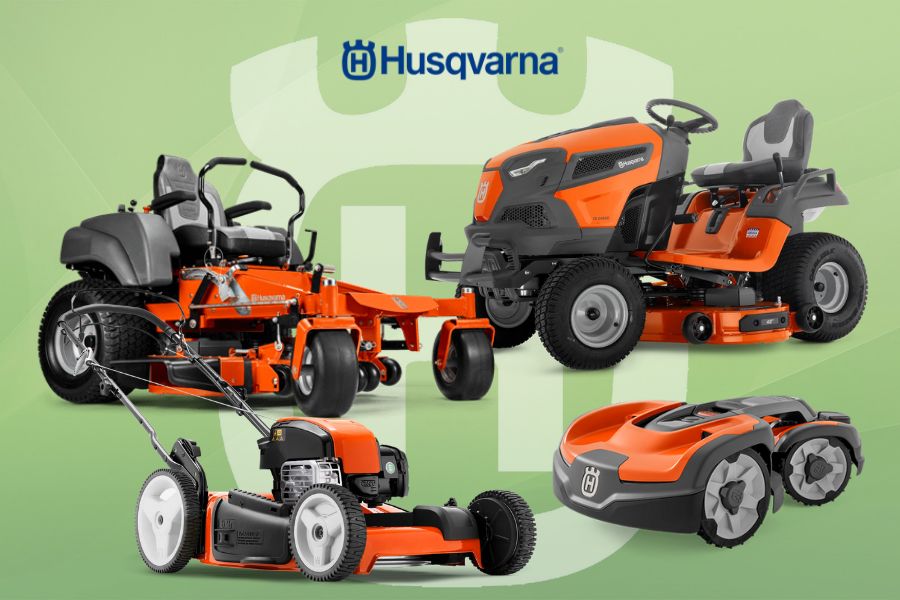
Image source: businessedge.ca
Dealer displays often include several Husqvarna series; the differences matter more than the paint.
Where Husqvarna Falls Short
No brand is perfect, and Husqvarna has some weak points that show up in the service bay. The most common problem involves entry-level riding tractors with light-duty transmissions. These hydrostatic units handle flat, modest-sized lawns fine, but they struggle on steep slopes or when towing heavy loads. If your property has serious grade, you need to step up to a heavier transmission rating. You can also read our guide on are troy bilt lawn mowers good.
The big-box store models deserve scrutiny. Husqvarna produces specific SKUs for retailers like Lowe’s and Tractor Supply, and these often carry lighter decks, smaller engines, or simplified transmissions compared with dealer-only equivalents at similar price points. You are still getting a functional mower, but the build difference is real.
Watch-outs I have observed repeatedly:
- Transmission limits: several entry-level tractors cannot handle sustained steep slopes without overheating or premature wear.
- Blade durability: factory blades dull quickly in sandy soil or when hitting sticks; plan on replacement sooner than you expect.
- Battery runtimes: budget battery models need the correct amp-hour packs, otherwise you will run out of charge mid-lawn.
- Wet grass: damp turf cuts acceptably if you raise the deck and slow down, but thick, wet thatch still clumps beneath the deck. Timing your mowing schedule remains the simplest workaround.
Husqvarna Lineup Overview
Understanding the lineup is essential because “Husqvarna” covers a massive range of machines. Knowing the tiers helps you avoid paying for capabilities you do not need — or worse, buying a model that cannot handle your property. You can also read our guide on are husqvarna riding mowers any good.
Riding Lawn Tractors
The TS series represents the sweet spot for most homeowners with a half-acre to two acres. These models feature heavier frames, better deck options, including the ClearCut fabricated deck on higher trims, and hydrostatic transmissions that justify the price premium over the entry-level L series. The L series, sold mostly through big-box stores, is fine for flat, simple lawns but skimps on frame thickness and deck durability.
Zero-Turn Mowers
Zero-turns are where Husqvarna shines competitively. The Z200 series targets homeowners who want speed and a premium cut without the commercial price tag. The MZ and pro-line models step up with heavier frames, larger hydraulic pumps, and thicker fabricated decks built for commercial use. If you are mowing more than an acre of open lawn, a zero-turn saves significant time compared with a tractor. You can also read our guide on best sharpener for garden tools.
Battery and Robotic Options
Husqvarna’s Automower line is the standout here. These robotic mowers handle complex lawns, navigate narrow passages, and manage slopes within their rated specs — all while operating quietly enough for early-morning starts in HOA communities. The battery walk-behind and rider lineup is improving quickly, with models that deliver respectable runtime and cut quality, provided you keep blades sharp and match the battery capacity to your yard size.
| Lineup | Typical series | Deck size | Best for |
|---|---|---|---|
| Riding tractors | L, TS | 42–54 in | Flat to rolling lawns, light towing |
| Zero-turn mowers | Z200, MZ | 42–61 in | Open lawns, tight obstacle courses, faster mowing |
| Walk-behind mowers | LC series | 21–22 in | Small lots, simple maintenance |
| Robotic mowers | Automower | n/a | Hands-free weekly mowing on established lawns |
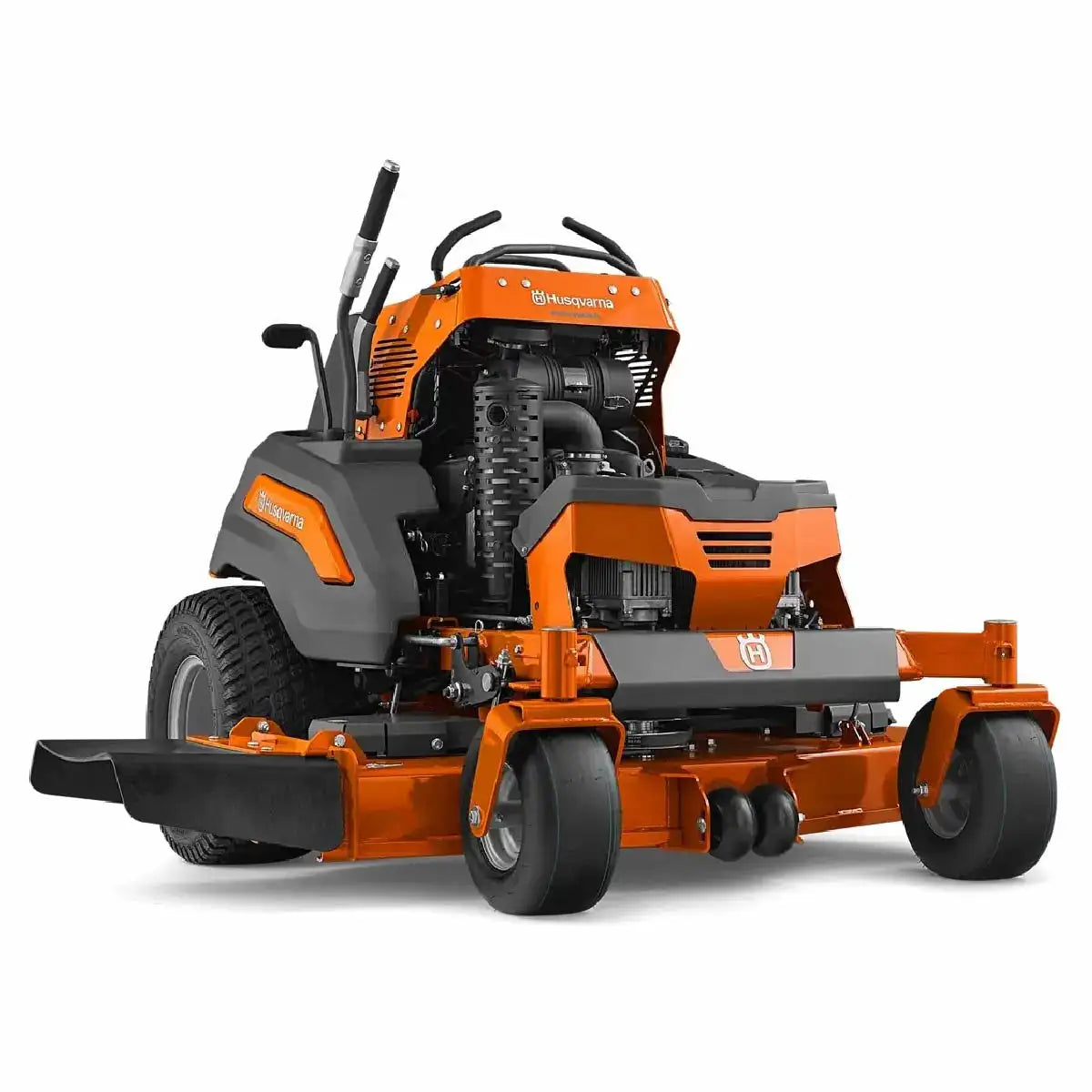
Image source: contractorsdirect.com
The lineup covers tractors, zero-turns, walk-behinds, and robotic mowers.
Best Husqvarna Mower Picks for 2026
These picks are starting points, not universal verdicts. Model availability and 2026 model-year changes shift exact part numbers, but the categories below are the ones that consistently make sense for real lawns. You can also read our guide on is craftsman a good riding lawn mower.
Best Riding Tractor for Most 1–2 Acre Lawns: TS 242
The TS series is where Husqvarna’s value becomes obvious. The TS 242 pairs a 48-inch deck with a hydrostatic transmission and has enough frame for rolling lawns and light hauling. On flat, open ground, a smaller TS 142 is fine. On slopes, pay the extra money for a heavier hydro unit rather than saving a few hundred dollars upfront.
Best Zero-Turn for Open Lawns: Z254F
With a 54-inch fabricated deck and a proven Kawasaki engine, the Z254F is a strong fit for properties in the 1.5- to 3-acre range. It cuts fast, turns tight, and the deck is tough enough for slightly rough ground. It is not a commercial machine; if you are mowing every day, step up to the MZ or pro series. You can also read our guide on are toro zero turn mowers good.
Best Hands-Free Choice: Automower 430XH
Husqvarna’s Automower line is genuinely a class leader. The 430XH handles complex lawns and moderate slopes without human input. Setup is more involved than buying a regular mower because boundary wire and a docking station are required, but the payoff is a consistently cut lawn through the season.
Best Value for Small Lawns: Battery Walk-Behind
For a quarter-acre lot, a battery walk-behind such as the LC221A avoids gas, oil changes, and pull starts. Runtime covers small lawns if you match the battery capacity to your yard size. Keep the blade sharp and cut dry grass, and the cut quality is surprisingly good for a battery platform. You can also read our guide on how to sharpen lawn mower blades at home.
Performance and Cut Quality in Real Yards
Deck design is the heart of cut quality, and Husqvarna’s engineering generally delivers. The airflow pattern pulls grass upright before the blade makes contact, which reduces matting and improves stripe definition when you use a roller kit. In side-by-side mowing, a Husqvarna 54-inch fabricated deck handled thick fescue without bogging down — as long as ground speed was moderated during peak spring growth.
To get the best cut quality from any Husqvarna model:
- Set cutting height properly: 3 to 3.5 inches works well for most cool-season grasses.
- Sharpen blades regularly: every 15 to 20 operating hours prevents ragged, brown-tipped grass.
- Cut dry grass: wet conditions cause clumping regardless of deck design.
- Vary your mowing pattern: this prevents ruts and reduces soil compaction.
Bagging performance is solid with the right accessories. High-lift blades paired with a matched bagger fill collection bags evenly, though you should not overrun the deck’s capacity in heavy growth. Mulching kits work well when the grass is dry and you mow regularly, but they are not magic — letting the lawn get too tall produces clumps.
Durability, Maintenance, and Parts Support
Longevity comes down to maintenance discipline more than brand loyalty, but Husqvarna gives you a fair starting point. Fabricated decks resist impacts and corrosion better than stamped decks, and many models include grease fittings on spindles that extend bearing life when you actually use them.
The maintenance schedule is straightforward but non-negotiable:
- Oil changes: annually or every 50 hours, whichever comes first.
- Air filters: replace when dirty and check before each season.
- Deck cleaning: remove grass buildup after every mow to prevent rust and improve airflow.
- Belts: inspect for cracking and replace before failure, not after.
In the shop, Husqvarna engines last well beyond 1,000 hours when owners maintain clean oil and unobstructed air filters. Choosing the right engine oil matters more than the brand name; use a quality oil rated for air-cooled small engines. At the end of the season, winterizing your riding mower prevents condensation, stale fuel, and rodent damage. If a machine runs rough after storage, cleaning a gummed-up carburetor is often the fix before spending money on parts.
Parts availability is a genuine strength. Husqvarna’s dealer network and online parts distribution mean you can typically source belts, blades, spindles, and filters without extended downtime. For DIY owners, the parts diagrams are clear, and the owner’s manuals provide adequate guidance for most routine repairs.

Image source: bensonslumber.com
A fabricated 54-inch deck is one of the strongest reasons to move up from an entry-level model.
Price, Value, and Total Cost of Ownership
Husqvarna occupies the middle-to-upper price range for residential equipment, and the value proposition is generally sound — provided you match the model to your actual needs. Total cost of ownership includes more than the sticker price. Fuel, blades, belts, filters, and your own labor all factor in.
Battery models cost noticeably more upfront than gas equivalents, but they eliminate fuel and oil expenses entirely and reduce maintenance time. For homeowners who mow an acre or less, the ownership math often favors battery when you include reduced servicing.
Fuel choice is a recurring theme in the shop. Most pump gas contains ethanol, and ethanol absorbs moisture. Because federal renewable fuel standards affect what is in the pump, check the label at the station; filling with ethanol-free gas is one of the easiest ways to avoid fuel-related failures. If you cannot find ethanol-free gas, adding a fuel stabilizer before storage protects the fuel system and prevents most springtime no-start complaints.
To maximize value:
- Size the deck to your yard: don’t buy a 54-inch deck for a half-acre lot; you will pay more upfront and burn more fuel.
- Match transmission to terrain: buy the heavier hydro unit if you have hills or plan to tow.
- Consider dealer proximity: warranty support is faster when a local dealer stocks parts and handles claims.
Resale value holds up well on popular models with documented maintenance records. Keeping receipts and logging service hours pays off when you sell or trade up.
Husqvarna vs Other Brands
How does Husqvarna compare with its biggest competitors? The answer depends on which category you are shopping.
Versus John Deere
John Deere offers exceptional dealer support and durable frames, particularly in the X-series tractors. However, you pay a premium for the green paint. Husqvarna delivers comparable cut quality and features at a lower price in most comparable size classes. If budget matters, Husqvarna typically wins; if dealer proximity and brand heritage are priorities, John Deere holds the edge.
Versus Toro
Toro zero-turns excel in maneuverability and mulching performance. Husqvarna counters with sturdy fabricated decks and competitive pricing. At similar deck sizes, Husqvarna usually offers more value, though Toro’s TimeCutter series remains a legitimate alternative. Other affordable brands such as Troy-Bilt also compete in this space; the Troy-Bilt versus Toro comparison shows how close the value gap can be at comparable price points.
Versus Honda and EGO
In the walk-behind category, Honda gas mowers deliver exceptionally clean cuts and remarkable longevity. EGO dominates the battery walk-behind segment with strong runtime and power. Husqvarna’s walk-behinds are capable, but the brand’s real strengths lie in riding mowers and robotics. If you are shopping for a push mower, you will likely get more for your money elsewhere.
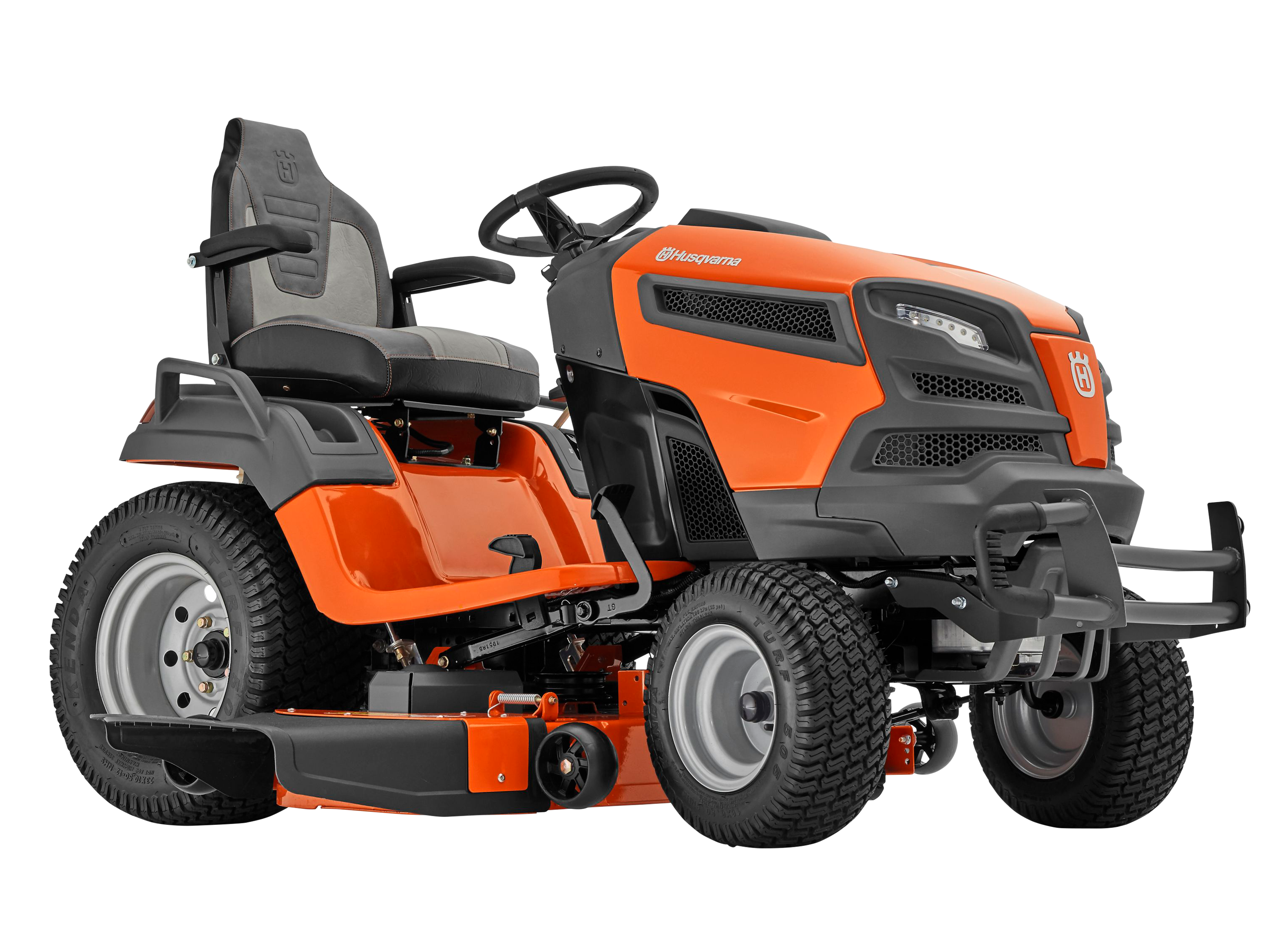
Image source: consumerreports.org
Husqvarna’s TS series competes directly with other residential tractors.
How to Pick the Right Husqvarna Mower
Choosing the right model starts with an honest assessment of your property. Measure your lawn, note the slopes, evaluate gate widths, and think about obstacles like trees and flower beds. This groundwork matters more than brand preference.
Simple fit guidelines:
- Under 0.5 acre: battery walk-behind or a compact rider is plenty.
- 0.5 to 1.5 acres: a 42- to 48-inch tractor or zero-turn handles the workload efficiently.
- 1.5 to 3 acres: step up to a 48- to 54-inch zero-turn with a heavier frame.
- Over 3 acres: you will want a pro-grade zero-turn with commercial pumps and wheel motors.
Key specification decisions:
- Deck type: fabricated for rough ground and long life; stamped for light, smooth lawns.
- Engine: choose a recognized brand such as Kawasaki or Kohler, sized appropriately for your deck width.
- Transmission: heavy-duty hydrostatic units are mandatory for hills and towing.
Gates deserve special attention. A 42-inch deck often fits through side gates where 48-inch models will not. Measure before you buy, and do not assume — the difference between fitting and not fitting creates unnecessary hassle.
My Hands-On Take and Practical Tips
Living with a Husqvarna day to day is generally pleasant. Controls are intuitive, deck-height adjustment is tool-free on most models, and the cut stays consistent when the blade stays sharp. The machines do not demand constant attention; they just need regular, simple care.
Practical tips from real-world experience:
- Keep a spare belt and sharp blade set on hand: this minimizes downtime when something fails mid-season.
- Use fuel stabilizer consistently: ethanol-blended gas degrades quickly; stabilizer prevents most carburetor issues.
- Blow off the deck and engine screen after each mow: this prevents overheating and premature belt wear.
- Replace blades before they fail: dull blades stress the engine and produce poor cut quality.
A common mistake is buying a machine with more deck than the yard needs. A 54-inch zero-turn on a quarter-acre lot is harder to maneuver, heavier on the turf, and more expensive to maintain. Another common mistake is leaving factory blades on too long; sandy soil and stick debris round the edge quickly.

Image source: youtube.com
Clean decks and sharp blades matter more than branded accessories.
Warranty, Dealer Network, and Support
Husqvarna’s support infrastructure is a genuine advantage. The dealer network spans the country, and even if you bought from a big-box store, warranty claims still flow through authorized service centers. For routine parts, online distributors ship quickly, reducing downtime significantly.
Most residential models include a limited warranty, typically covering three to five years for the unit itself, with shorter periods on specific components such as batteries. Terms vary by series and model year, so check the specific warranty documents before purchasing. You can confirm current coverage on the official Husqvarna website. Registering your mower online after purchase protects your coverage and simplifies future claims.
To get the most from support:
- Build a relationship with a local dealer: they prioritize customers they recognize.
- Log hours and service dates: documentation is essential for warranty claims.
- Bring photos of issues: clear visual evidence speeds diagnosis.
DIY servicing is entirely feasible on most Husqvarna models. Parts diagrams are detailed, and the owner’s manuals provide adequate torque specs and procedures for common maintenance tasks.
Frequently Asked Questions
Are Husqvarna riding mowers reliable for the long term?
Yes, when serviced on schedule and operated within their design limits. Choosing the correct transmission for your terrain extends life significantly. Most owners get many years of reliable service with basic care.
Do Husqvarna zero-turns cut better than tractors?
Zero-turns cut faster and maneuver tighter around obstacles, producing cleaner edge work. Tractors offer more versatility for towing and attachments. For pure cut quality, both can achieve excellent results when blades are sharp.
Is a fabricated deck worth the extra cost?
Yes, if your lawn is rough, rocky, or you want maximum longevity. Fabricated decks resist impacts and corrosion better than stamped alternatives. Stamped decks are perfectly adequate for flat, smooth lawns with light use.
Are Husqvarna mowers good on hills?
They handle modest slopes well with the correct transmission and tires. For steep terrain, choose a heavier-duty hydrostatic drive and reduce ground speed. Adding wheel weights improves traction on inclines.
How often should I sharpen the blades?
Every 15 to 20 cutting hours works well for most lawns. Sharpen more frequently if you cut sandy soil, encounter debris, or notice ragged grass tips — all signs that cut quality is degrading.
Conclusion
Husqvarna earns its reputation through strong cutting performance, a wide model range, and dependable parts support. The brand delivers good value when you match the machine to your property’s size, slope, and your maintenance habits. Entry-level models require realistic expectations, but mid-range and above offer excellent durability.
The decision process is straightforward: measure your lawn, identify your terrain challenges, choose the right deck size and transmission strength, and commit to regular maintenance. Start with those specs, compare a few current models at a local dealer, and the right Husqvarna will serve you reliably for years.


