Are Husqvarna Riding Mowers Any Good: The Real Truth
Husqvarna is one of the most recognizable names in outdoor power equipment, with a history stretching back to 1689. But brand recognition alone doesn't tell you whether a riding mower will hold up on your property. After years spent servicing, testing, and running these machines on real lawns, I can give you a clear answer: yes, Husqvarna riding mowers are genuinely good, but the right choice depends heavily on your yard size, terrain, and how you plan to use it.
This guide covers everything you need to know before spending anywhere from $2,000 to $6,000 on a new mower. We'll examine build quality, engine options, transmissions, real-world performance, reliability, costs, and how Husqvarna stacks up against its biggest competitors. You can also read our guide on how does a chainsaw work.
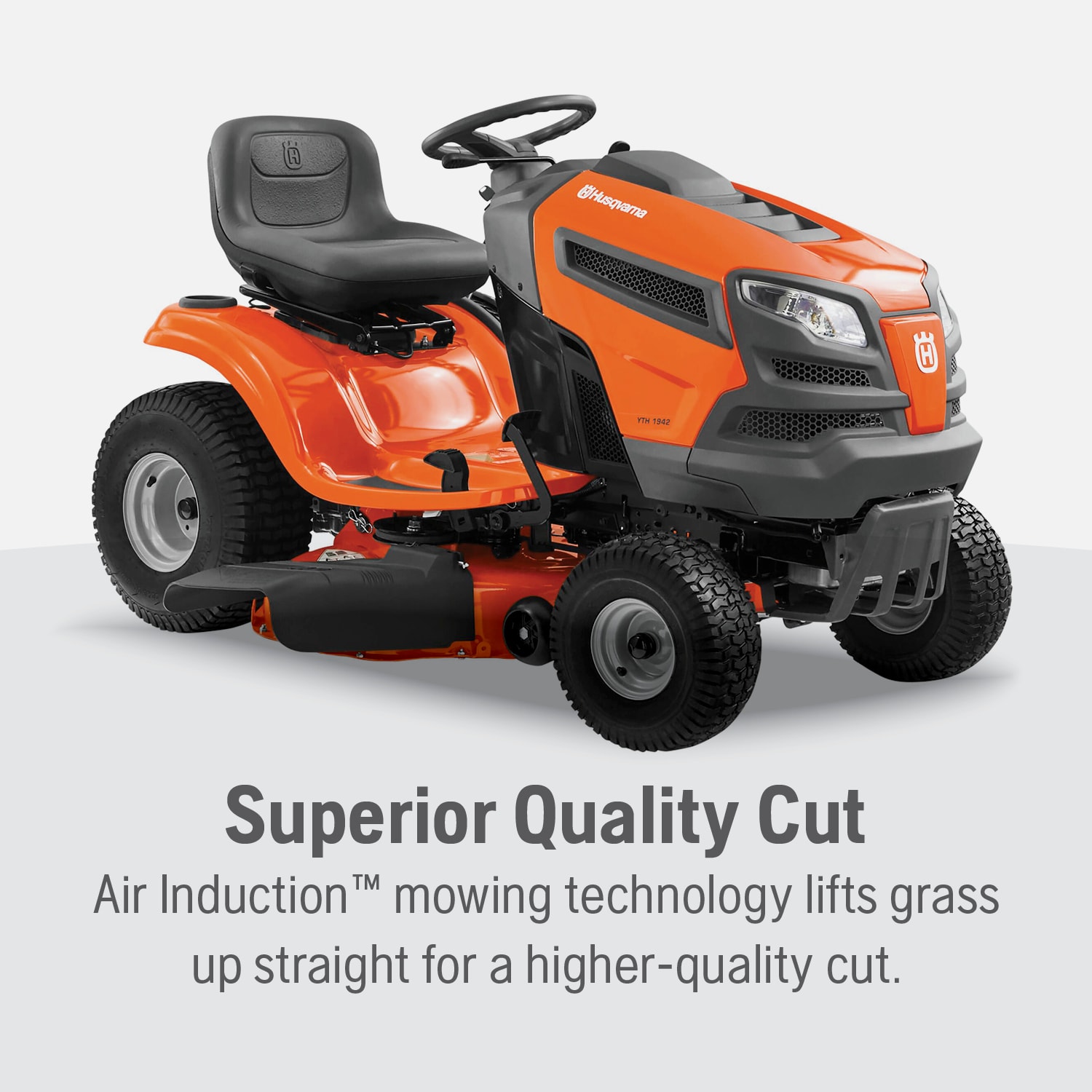
Image source: lowes.com
The Husqvarna Brand: More Than Just a Name
Husqvarna isn't a newcomer trying to cash in on lawn care trends. The Swedish company has manufactured outdoor power equipment for decades, and its consumer riding mowers benefit directly from engineering used in their commercial-grade lines. This brand heritage matters because it shows up in details like deck design, frame construction, and parts availability.
Today, Husqvarna produces two main categories of riding mowers:
- Lawn tractors (models like the T and TS series) designed for mowing plus towing, bagging, and snow removal
- Zero-turn mowers (models like the Z and Xcite series) built for speed and maneuverability on open ground
Most models are available through both authorized dealers and big-box retailers, which gives you flexibility in where you buy and get service. The consumer lineup uses proven component suppliers, which means replacement parts are rarely hard to find. You can also read our guide on how to remove rust from garden tools.
Build Quality: What You're Actually Getting
When you're asking whether Husqvarna riding mowers are any good, build quality is the first thing to examine. The honest answer is that Husqvarna offers good construction for the price point, but not all models are created equal.
Frames and Chassis
Budget-conscious models use stamped steel frames that are perfectly adequate for flat, smooth terrain. Step up to the mid-range and higher-end models, and you'll find welded, reinforced frames that resist flexing on uneven ground. The difference becomes noticeable when you mow bumpy yards or tow heavy loads like carts or aerators. For more on this, see our guide on are murray lawn mowers any good.
Cutting Decks
This is where Husqvarna's engineering shines. Their signature ClearCut decks are designed with deeper stamped or fabricated construction to create stronger vacuum lift. In practical terms, this means grass stands up straighter before the blade cuts, resulting in a cleaner, more even finish.
- Stamped decks are one-piece, pressed steel. They're lightweight and cut well on smooth lawns, but they can dent if you hit rocks or tree roots.
- Fabricated decks are welded from thicker steel plates. They handle rough ground better, resist damage from impact, and typically last longer under heavy use.
For most homeowners with a half-acre to two acres, a stamped deck will perform admirably. If you have rocky soil, uneven ground, or you mow frequently for many years, the fabricated deck option is worth the upgrade. For further reading, see kawasaki-engines.com.
Power and Engine Options
Husqvarna uses several proven engine brands across their lineup, and which one you get depends on the specific model and trim level.
| Engine Brand | Common In | Characteristics |
|---|---|---|
| Briggs & Stratton | Entry-level tractors | Reliable, affordable parts, good torque |
| Kawasaki | Mid to high-end tractors & zero-turns | Excellent longevity, smooth power delivery |
| Kohler | Select models | Strong torque, good oil filtration |
The key thing to look for is a V-twin engine rather than a single-cylinder unit. V-twins produce more torque at lower RPMs, which means you get better cutting performance without revving the engine to its limits. They also tend to run smoother and last longer because the load is distributed across two cylinders.
One common mistake I see is buying more engine than you need. A 24-horsepower engine on a 42-inch deck doesn't give you better cutting performance—it just burns more fuel. Match the engine to the deck size and your terrain rather than chasing horsepower numbers.
Transmissions: The Component Most People Overlook
The transmission is arguably the most important long-term reliability factor in any riding mower, and it's where many buyers make mistakes. Husqvarna uses hydrostatic drives from Tuff Torq on most tractors and Hydro-Gear on zero-turns.
Tuff Torq Transaxles
- K46: Entry-level, sealed, non-serviceable. Fine for flat, half-acre yards with light towing. Marginal on hills or with heavy loads.
- K58 and higher: Step-up units with better cooling and heavier internal components. Worth the upgrade if you have slopes or plan to tow.
Hydro-Gear Units
- ZT-2200 / ZT-2800: Common in residential zero-turns. The ZT-2800 offers better durability for hilly or rough terrain.
- ZT-3100 and above: Found in heavier-duty models, these handle commercial-adjacent use.
Here's the practical takeaway: if your yard is flat and under an acre, the base K46 transmission will likely serve you fine for years. If you have hills, a large property, or you plan to tow a cart or aerator, spend the extra money on a stronger transmission. This single decision has more impact on longevity than any other option you choose.
Comfort, Controls, and Ergonomics
Husqvarna has made meaningful improvements in operator comfort in recent years. The high-back seats on mid-range and higher models provide genuine lumbar support, which matters when you're spending two hours or more on the machine.
Controls are intuitive, particularly for first-time riders. The hydrostatic pedals respond predictably, and steering effort is light, especially on models with the optional steering assist feature. Zero-turns take a few sessions to master, but once you get the hang of the lap bars, you'll appreciate the precision.
Height adjustment levers are within easy reach, and most models have a comfortable range for a 52-inch deck, allowing you to adjust from 1.5 inches for fine Bermuda grass up to 4 inches for tall fescue.
Real-World Performance: Cutting, Bagging, and Hills
Specifications only tell you so much. Here's what I've observed running Husqvarna machines in real conditions across multiple properties.
Cut Quality
With sharp blades, Husqvarna mowers produce a clean, even cut in common grass types including fescue, bluegrass, and Bermuda. The ClearCut deck design genuinely makes a difference in how the grass stands up before cutting, and it handles damp, mid-length grass without excessive clumping.
In thick spring growth, you'll need to slow your ground speed or make two passes. This is true of virtually any mower, but the Husqvarna deck does a better job than most at throwing clippings evenly and preventing thatch buildup.
Bagging Performance
If you collect clippings or bag leaves in the fall, Husqvarna's bagger systems work well, especially on the TS-series tractors. The bagger mounts securely and fills relatively evenly, though you'll want to empty bags before they're completely full for best airflow.
Hill Handling
Light to moderate hills present no problem for most Husqvarna models with the right transmission. The limiting factor is almost always the transaxle, not the engine or deck. Steep slopes require either a stronger Tuff Torq unit or a zero-turn with upgraded Hydro-Gear drives.
One important safety note: no riding mower is safe on extremely steep slopes. Consult your manual for maximum incline ratings and use a walk-behind or string trimmer for those areas.

Image source: familyhandyman.com
Reliability and Longevity: What to Expect
The question "are Husqvarna riding mowers any good" is really asking about long-term reliability. With proper maintenance, these machines routinely last 8 to 12 years for the average homeowner, and many owners get 1,500 to 2,000 hours of use before major repairs are needed.
The most common problems I encounter are relatively minor:
- Deck belts stretching or snapping after 2-4 seasons
- Blades dulling, especially if you mow sandy soil or hit debris
- Batteries dying after 2-3 years
- Spindles failing on stamped decks after heavy impact
Sealed hydrostatic transmissions like the K46 have no serviceable oil, which simplifies maintenance but means you must size them appropriately for your property. If you overload a K46 on steep hills, it will eventually fail, and replacement is not a cheap job.
Maintenance Costs and Upkeep
Running a Husqvarna is no more expensive than any comparable brand, and in many cases, parts are cheaper and easier to find because of the brand's popularity.
| Maintenance Item | Frequency | Typical Cost |
|---|---|---|
| Oil change | Yearly | $20-$40 |
| Air filter | Every 2 years | $10-$20 |
| Blades (sharpening or replacement) | Yearly | $15-$50 |
| Deck belt replacement | Every 2-4 seasons | $25-$50 |
| Spark plugs | Every 2 years | $10-$25 |
You can keep costs down by doing basic maintenance yourself. Keeping your blades sharp not only improves cut quality but also reduces engine load and fuel consumption. It's also worth checking your owner's manual for the correct fluid level and following the recommended service intervals.
Who Should Buy a Husqvarna Riding Mower?
Best For:
- Homeowners with 1-3 acres: A 46 to 54-inch deck tractor or zero-turn handles this range comfortably
- Buyers wanting versatility: Lawn tractors accept baggers, carts, dethatchers, and snow blades
- First-time rider buyers: The controls are intuitive and the learning curve is manageable
- Value-focused shoppers: You typically get more features per dollar than with premium brands
Consider Alternatives If:
- Your yard is under a half-acre (a walk-behind makes more sense)
- You need a commercial-grade machine for daily mowing crews
- Resale value is your top priority (John Deere holds an edge here)
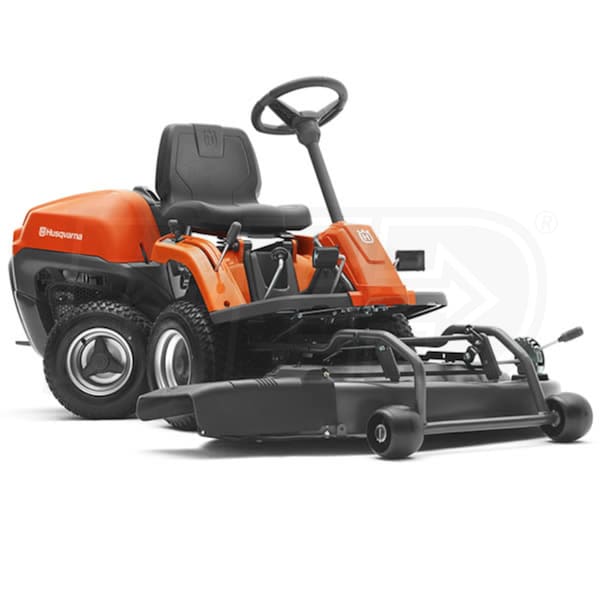
Image source: powerequipmentdirect.com
Husqvarna vs. John Deere, Cub Cadet, and Toro
Husqvarna vs. John Deere
John Deere's biggest advantages are its extensive dealer network and strong resale value. Their mowers ride smoothly and cut well. The trade-off is price—you'll often pay 10-20% more for comparable specifications. Husqvarna counters with better value in most big-box retail models and comparable build quality in mid-range offerings.
Husqvarna vs. Cub Cadet
Cub Cadet offers excellent cut quality and comfortable rides on many models. Their zero-turns have competitive feature sets for similar prices. The real difference comes down to dealer relationships and specific model comparisons. Both brands are solid; test drive the exact models you're considering.
Husqvarna vs. Toro
Toro dominates the commercial zero-turn market, and their homeowner zero-turns benefit from that pedigree. They're fast, responsive, and built to handle daily use. Husqvarna zero-turns compete well for residential buyers who want strong performance without paying commercial prices. For most homeowners mowing 1-2 hours per week, the Husqvarna is more than sufficient.
Buying Guide: 7 Things to Check Before You Buy
You can confidently assess any Husqvarna model by working through this checklist:
Assess your yard size
- Under 1 acre: 42-inch deck
- 1-2 acres: 46-48 inch deck
- Over 2 acres: 52 inches or larger
Evaluate your terrain
- Flat ground: Standard transmissions work fine
- Hills and slopes: Upgrade to a stronger transaxle
Count your obstacles
- Many trees and flower beds: Choose a zero-turn
- Wide-open lawns: A tractor is more versatile
Match the deck to your ground
- Smooth turf: Stamped deck is fine
- Rough, rocky ground: Fabricated deck is worth the cost
Right-size the engine
- Match horsepower to deck width, not ego
Visit a local dealer
- A good dealer provides proper setup and ongoing support
Test drive before buying
- Comfort and visibility are subjective—never buy sight unseen

Image source: youtube.com
Frequently Asked Questions
Are Husqvarna riding mowers reliable for the average homeowner?
Yes, with routine maintenance. Keeping blades sharp and following the oil change and filter schedule is sufficient for most owners. A well-cared-for Husqvarna typically delivers 8-12 years of service.
Do Husqvarna tractors handle hills well?
They handle light to moderate hills without issue when equipped with the right transmission. For steep terrain, you should upgrade to a stronger Tuff Torq unit on tractors or a zero-turn with Hydro-Gear ZT-2800 or higher.
How long do Husqvarna riding mowers last?
Most residential models last 8-12 years under normal use. Operating on rough ground, towing heavy loads, or skipping maintenance will reduce that lifespan.
Are parts and service easy to find?
Yes. Husqvarna sells through a broad network of dealers and big-box stores, so common wear parts like belts, blades, and filters are widely available. Most basic repairs are straightforward for DIY owners.
Are Husqvarna riding mowers any good in wet grass?
They perform adequately if you reduce ground speed and raise the deck height slightly. Wet, thick grass will clump on any mower if you rush the job.
Which is better: a Husqvarna tractor or zero-turn?
Tractors win for versatility because they accept snow blades, carts, and other attachments. Zero-turns win for pure mowing speed and maneuverability around obstacles. Choose based on your primary use case.
What size deck should I buy?
Match your deck to yard size and gate width. A 42-inch deck suits most residential lawns. A 52-inch deck cuts faster but requires more storage space and turning room.
Conclusion
So, are Husqvarna riding mowers any good? Based on real-world testing, maintenance records, and years of hands-on experience, the answer is a confident yes. They deliver strong cut quality, build quality that beats almost anything else at their price point, and a lineup that covers most residential mowing needs.
The key to satisfaction is choosing the right configuration for your specific property. Right-size the deck, upgrade the transmission if you have hills, and visit a dealer to test drive before committing. Do that, and a Husqvarna will give you years of reliable service without breaking your budget.
If your riding mower is a few seasons old and you're planning to keep it, basic upkeep like changing the oil and inspecting belts will stretch its lifespan considerably. And once you're ready to compare models, prioritize your terrain, your time, and the dealer you trust — those three factors matter more than any badge on the hood.