
How Loud Is A Chainsaw: Decibel Levels & Safety 2026
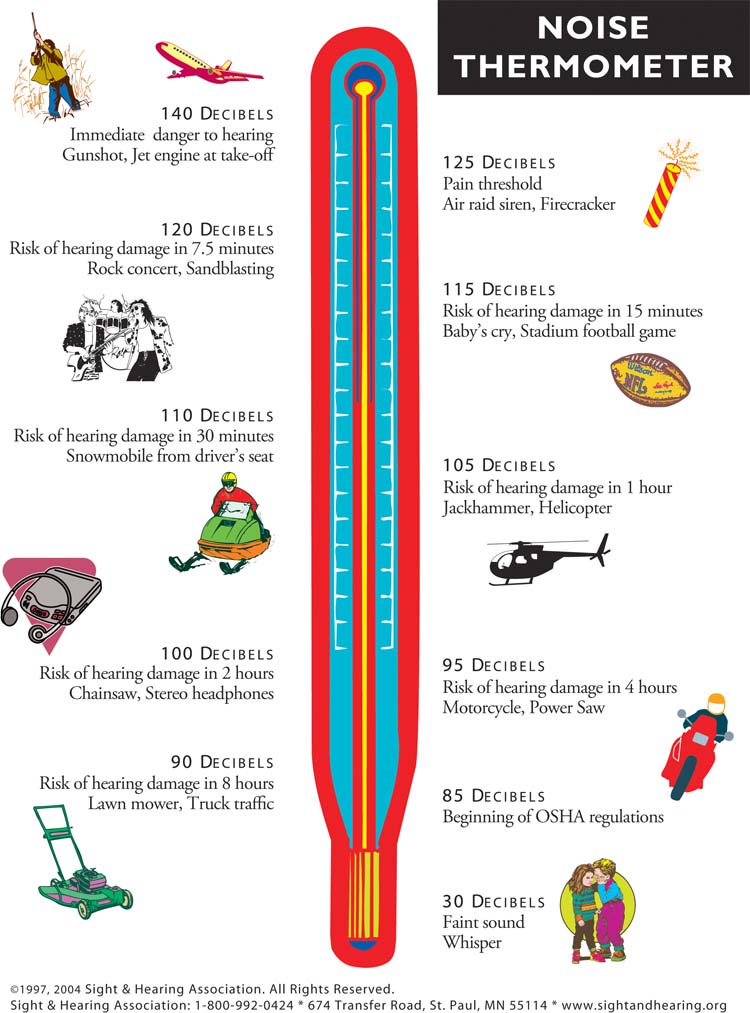
If you’ve ever fired up a chainsaw and felt your ears ring afterward, you already know the answer to “how loud is a chainsaw” isn’t just a number—it’s a health warning. Most chainsaws produce between 100 and 120 decibels at the operator’s ear during a cut. That’s loud enough to cause permanent hearing damage in minutes, not years.
The real question isn’t just about the number. It’s about what those decibels mean for your ears, your neighbors, and your choice of saw. In this updated guide for 2026, we break down real-world noise levels across gas, battery, and corded saws, explain how to measure noise yourself, and show you exactly how to protect your hearing without sacrificing cutting performance. You can also read our guide on best lightweight chainsaw for home use.
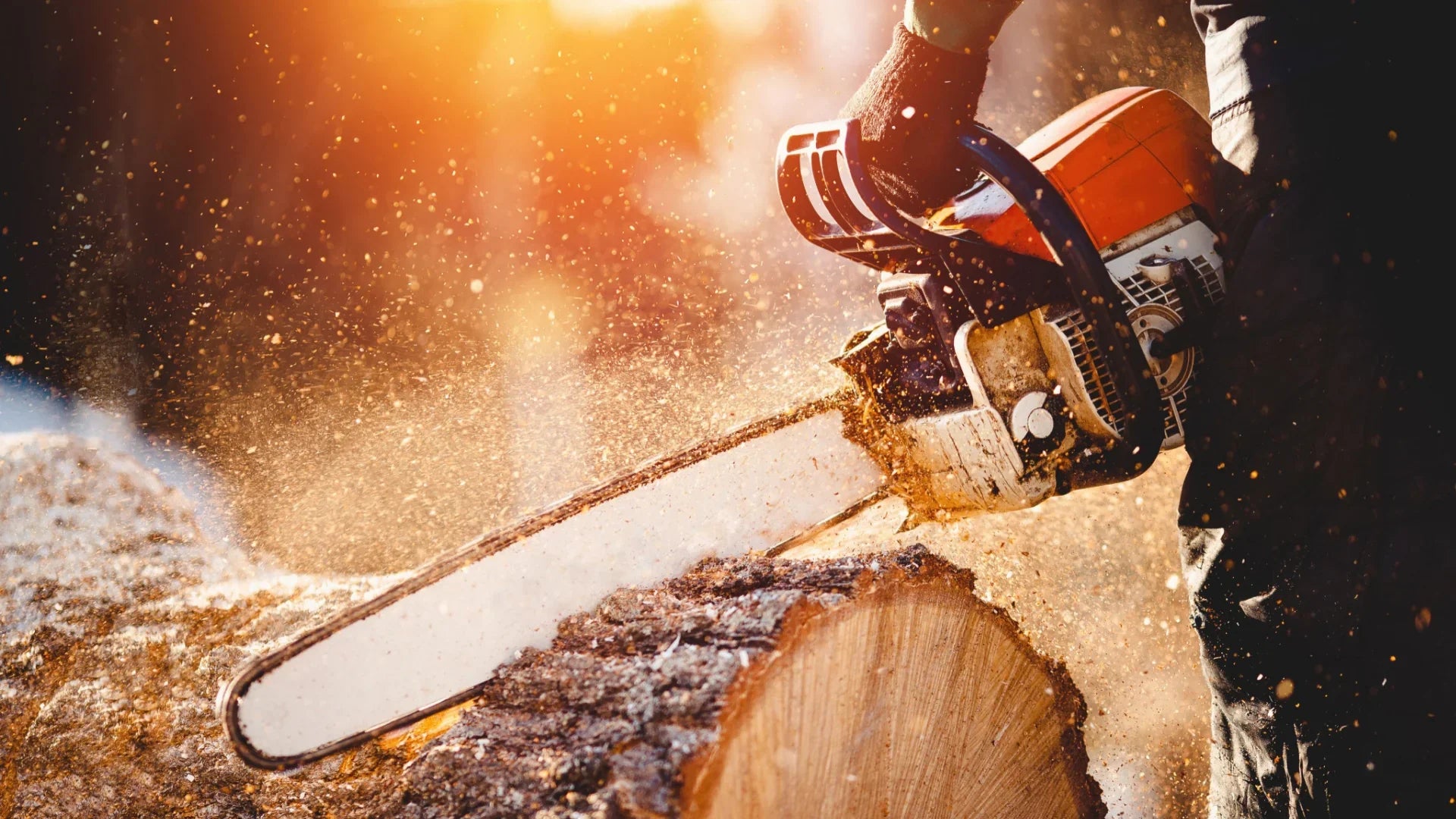
Image source: isotunes.eu
Decibels 101: What “Loud” Really Means
Sound intensity is measured in decibels (dB), and for tool noise, most testing uses dB(A)—an A-weighted scale that approximates how the human ear perceives sound. The scale is logarithmic, which means small numeric increases represent huge jumps in acoustic energy.
Here’s what that means in practice:
- Every 10 dB increase represents ten times more sound intensity.
- A 10 dB jump also sounds roughly twice as loud to your ears.
- A 3 dB increase doubles the sound energy reaching your ears.
This is why the difference between a 100 dB battery saw and a 115 dB gas saw feels enormous, even though the numbers are only 15 apart. Your ears aren’t exaggerating. The sound energy at 115 dB is more than 30 times greater than at 100 dB. For more on this, see our guide on how long do chainsaw chains last.
Understanding this math is the first step toward taking chainsaw noise seriously. It also explains why hearing protection isn’t optional—it’s the difference between a safe afternoon of cutting and cumulative, irreversible ear damage.
Real-World Decibel Levels by Saw Type
Spec sheets and field tests don’t always agree, but the numbers below reflect common readings from actual use in 2026.
Gas Chainsaws
- Homeowner models (35–50 cc): 100–112 dB(A) at the operator’s ear during cutting.
- Pro-grade saws (60–90 cc): 112–118 dB(A) under full load.
- Idle: roughly 85–95 dB(A) , which still exceeds safe continuous exposure limits.
Battery Chainsaws
- No-load running: 85–95 dB(A) .
- Under load in hardwood: 98–108 dB(A) .
- The tone is less harsh than gas, but the risk is still real.
Corded Electric Chainsaws
- Typical cutting range: 95–105 dB(A) .
- Less engine drone and vibration than gas, but the chain noise remains significant.
Situational Factors That Change the Numbers
- Wood type: Cutting dry hardwood like oak produces more noise than green softwood.
- Chain condition: A dull chain screams, chatters, and vibrates. A sharp chain cuts cleanly and quietly by comparison.
- Environment: Walls, fences, sheds, and even dense brush reflect sound back toward you, making a saw feel louder than it measures in an open field.
In field testing, a mid-size 50 cc gas saw reading 114 dB(A) in a hard cut drops to about 101 dB(A) at idle. A pro battery saw cutting oak typically reads around 104 dB(A) at the operator’s ear. These variations matter because they show that noise isn’t fixed—it changes with conditions you can control. For further reading, see osha.gov.
Health Risks and Safe Exposure Times
Once you know how loud a chainsaw is, the next question is how long you can be exposed before damage occurs. The answer depends on which safety standard you follow.
OSHA Guidelines
The Occupational Safety and Health Administration permits 90 dB(A) for up to 8 hours in the workplace. For every 5 dB increase, the safe exposure time is halved. That works out to:
- 100 dB(A): 2 hours maximum
- 105 dB(A): 1 hour
- 110 dB(A): 30 minutes
NIOSH Recommendations
The National Institute for Occupational Safety and Health uses a stricter threshold of 85 dB(A) for 8 hours, halving safe time every 3 dB. At 100 dB(A), NIOSH advises only 15 minutes of unprotected exposure.
Since most chainsaws exceed 110 dB(A) at the ear during cutting, you’re looking at safe exposure times measured in seconds to a few minutes, not hours.
Signs of Hearing Damage
- Ringing or buzzing in your ears after a cutting session
- Muffled hearing that persists into the next day
- Needing to turn up the TV or radio louder than before
- Difficulty following conversations in noisy rooms
Hearing loss from noise is cumulative and permanent. It doesn’t recover like a pulled muscle. The damage builds with every unprotected session, and by the time you notice it, the high-frequency hearing your ears need for speech clarity is often already gone.

Image source: chesapeakebayent.com
What Changes How Loud a Chainsaw Is
Chainsaw noise isn’t a fixed number. It shifts based on the tool itself, the environment, and how you operate the saw. Understanding these variables helps you reduce noise without buying new equipment.
Tool Setup and Condition
A well-maintained chain is the single biggest factor in reducing noise. Dull cutters create friction, chatter, and vibration instead of clean cuts. Keep the chain sharp and set depth gauges according to the manufacturer’s specification—too low causes chatter, too high makes the saw aggressive and loud.
Low-kickback chains run smoother and can produce less noise than aggressive full-chisel chains. Bar length also matters. A longer bar can load the saw harder and increase noise, especially if you’re cutting wood thicker than the bar’s intended range.
Environmental Factors
The National Institute for Occupational Safety and Health notes that for every doubling of distance from a sound source, the sound level drops by roughly 6 decibels in open space. This is why a saw that’s deafening at your ear becomes tolerable at 50 feet. But hard surfaces like walls, sheds, and pavement reflect sound back toward you, reducing that natural drop-off.
Operator Habits
How you use the saw matters as much as the saw itself:
- Avoid revving at full throttle when the chain isn’t in the wood.
- Keep the saw aligned so the chain cuts rather than squeals.
- Avoid pinched cuts that stall the motor, then surge it violently when freed.
- Let the saw do the work—pushing hard increases load and noise.
How to Measure Chainsaw Noise Yourself
You don’t need a laboratory to get useful noise readings from your own saw. Here’s how to approach it in 2026.
Quick Checks
Smartphone sound meter apps offer a rough estimate—typically within a few decibels of accurate for steady noise. They’re not lab-grade, but they’re excellent for comparing one saw to another or tracking how noise changes as your chain dulls.
Better Accuracy
For more reliable data, use a Class 2 sound level meter (available from most tool retailers for under $100). Set it to A-weighting and slow response, then record readings at three points:
- At idle
- At no-load full throttle (briefly)
- During an actual cut
Take readings at 3 feet, 25 feet, and 50 feet from the saw to understand how far the noise travels. Log the chain’s condition and wood type with each reading—you’ll be able to see how maintenance affects noise over time.
How to Make a Chainsaw Quieter Without Losing Performance
You can’t make a chainsaw silent, but you can dramatically reduce how much noise reaches your ears—and how much you project into your neighborhood.
Hearing Protection That Actually Works
The gold standard is double protection: foam earplugs inserted properly, plus over-ear muffs rated NRR 27–31 dB. Combined, these can reduce what reaches your inner ear by 30–40 dB, bringing a 115 dB saw down to a safe range.
Fit matters more than most people realize. Safety glasses with thick temples can break the seal on earmuffs. Long hair and beards can also compromise fit. Adjust your muffs every time you put them on, and replace foam plugs after a few uses—they lose their compression and effectiveness.
Tool Maintenance That Reduces Noise
- Sharpen the chain every tank or two of fuel.
- Keep the chain properly oiled. A dry chain howls and wears fast.
- Set depth gauges correctly. This is the most overlooked adjustment on homeowner saws.
- Check the muffler and spark arrestor. A missing muffler can raise noise by 10 dB or more and is illegal on public lands.
Work Smarter, Not Louder
- Cut during midday hours, not early morning or evening when sound carries further.
- Use a sawbuck or cutting stand to avoid pinched cuts that create rev spikes.
- Work with your back to open space rather than facing a wall or fence.
- Stage your cuts to minimize how long the saw runs at full throttle.
- Use a sharp saw that cuts faster—less time cutting means less total noise exposure.
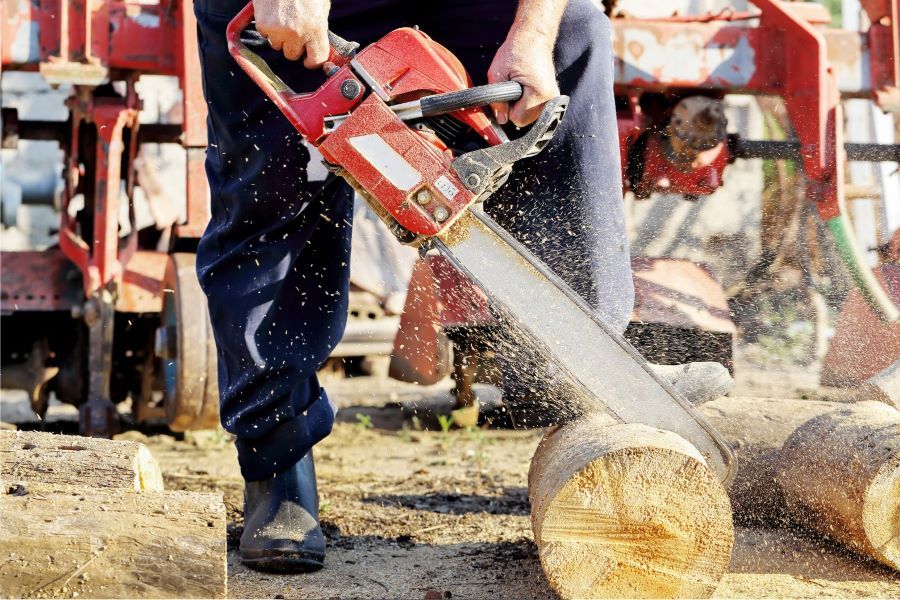
Image source: decibelpro.app
Choosing a Quieter Chainsaw for 2026
If you’re in the market for a new saw, noise is a legitimate buying criterion. Battery technology has improved significantly, and brushless motors now offer cutting power that rivals small gas saws with less noise and zero exhaust.
What to Look For
- Battery models with brushless motors: These run cooler, more efficiently, and typically quieter than brushed models.
- Narrow-kerf chains: These cut with less resistance and produce less chatter.
- Low-vibration mounts: These reduce the harshness you feel and hear, even if the measured dB is similar.
- An anti-vibration handle system: This makes long sessions more comfortable and reduces the physical stress of loud vibrations.
For most homeowners, a modern battery saw is quieter at idle and under light loads than a comparable gas model. It’s only during sustained heavy cutting that the gap narrows. If you’re using the saw for pruning and occasional firewood, a battery saw is the neighbor-friendly choice. For all-day felling and milling, a gas saw remains the workhorse.
Before you buy, it’s worth comparing both options side by side—the gas versus battery trade-off comes down to noise, runtime, and power needs for your specific jobs.
How Loud Is a Chainsaw Compared to Everyday Sounds
Putting chainsaw noise in context with familiar sounds makes the risk easier to grasp:
| Sound Source | Typical Level |
|---|---|
| Normal conversation | 60 dB(A) |
| Busy street traffic | 70–85 dB(A) |
| Lawn mower | 85–95 dB(A) |
| Leaf blower | 95–105 dB(A) |
| Chainsaw at the operator’s ear | 100–120 dB(A) |
| Rock concert | 110–120 dB(A) |
| Jet engine at 100 feet | 130 dB(A) |
A chainsaw at the operator’s ear is as loud as a rock concert’s front row. From a neighbor’s porch 100 feet away, that same saw typically registers 60–75 dB(A)—noticeable, possibly annoying, but not dangerous to bystanders. That’s why neighbors complain about late-night cutting even when they aren’t at risk themselves.
The takeaway: the person holding the saw takes the real hearing risk. Distance protects everyone else.
Frequently Asked Questions
How loud is a chainsaw at the operator’s ear?
Most chainsaws measure between 100 and 120 dB(A) during real cutting. Large gas models at full throttle sit at the top of that range, while battery saws typically land between 98 and 108 dB(A) under load.
How fast can a chainsaw damage hearing?
At 110 dB(A), hearing damage can begin in under one minute without protection. Even short, repeated sessions add up over time, and the damage is cumulative and permanent.
Are battery chainsaws safe without hearing protection?
No. Battery saws routinely exceed 100 dB(A) under load, which exceeds safe exposure limits within 15 minutes per NIOSH guidelines. Always wear ear protection.
Does a sharper chain make the saw quieter?
Yes. A sharp chain cuts cleanly and reduces chatter, vibration, and squeal. It also reduces total cutting time, meaning less overall noise exposure.
What is the best ear protection for chainsaw work?
Double protection—foam earplugs plus high-NRR earmuffs—offers the most reliable reduction. Proper fit is essential; glasses, hair, or a poor seal can cut effectiveness significantly.
How does chainsaw chain maintenance affect operation?
A dull chain not only creates more noise but also forces the saw to work harder, increasing fuel consumption and vibration. Regular maintenance extends the life of your bar and sprocket too. Keeping the chain in good shape also reduces the physical strain of cutting. For a deeper look at wear patterns, see how long a chainsaw chain lasts in typical use.
A Final Word on Chainsaw Noise and Safety
How loud is a chainsaw? Loud enough to permanently damage your hearing in minutes. But you’re not helpless against it. Sharp chains, smart technique, and proper hearing protection reduce both the noise level and your exposure time.
The single most effective habit you can build: wear ear protection from the moment you start the saw to the moment you set it down. No exceptions, no “quick five-minute cuts.” One brief unprotected session can cause ringing that lasts for hours—and repeated exposure causes damage that never goes away.
If you’re maintaining your saw this season, don’t overlook the chain and bar. Regular upkeep keeps cutting fast, smooth, and quieter. Checking engine health and proper compression can also reveal issues that make the saw run harder and louder than necessary.
Make this the year you cut smarter, not louder. Your ears—and your neighbors—will thank you.


