1/2 Inch Vs 5/8 Inch Garden Hose: Which Should You Buy
You turn on the spigot, ready to water the vegetable patch, and the stream dribbles out weak and sputtering. Or you drag a heavy hose across the lawn, fighting its weight and stiffness the whole way. More often than not, the culprit behind both frustrations is the hose diameter you chose.
The 1/2 inch vs 5/8 inch garden hose decision shapes every part of your watering experience: flow rate, nozzle pressure, how heavy the hose feels when full, and how easily it coils away. The “better” size is the one that matches your spigot, your yard, and the tools you actually use. You can also read our guide on how to choose the right garden hose length.
This guide explains what each size can and can’t do, how they behave on different hose lengths, and exactly when to choose one, the other, or both.

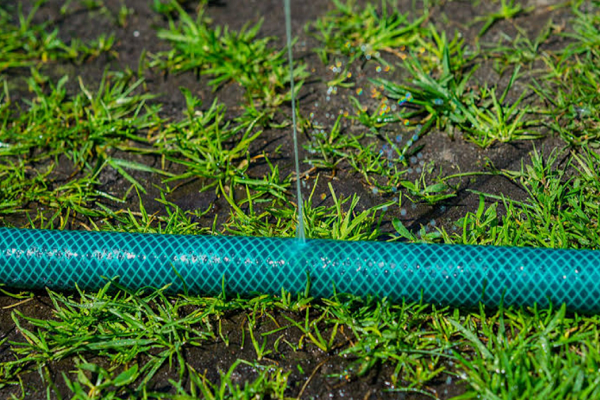
The wider 5/8 inch hose moves noticeably more water per minute than the 1/2 inch hose.
What “1/2 Inch” and “5/8 Inch” Actually Mean
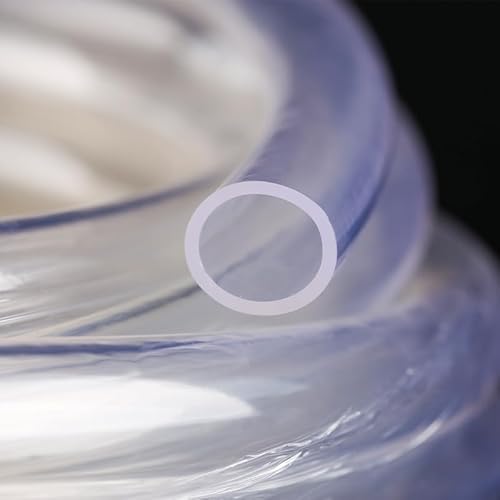
Garden hose sizes are measured by inner diameter (ID), not outer diameter. The number refers to the width of the opening through which water flows, not the thickness of the hose wall. You can also read our guide on how to recycle a garden hose.
A 1/2 inch hose has an internal opening of 12.7 mm. A 5/8 inch hose has an internal opening of 15.9 mm. That 3 mm difference sounds small, but water moves through a circular cross-section, so the actual area gain is substantial.
The 5/8 inch hose has about 56% more cross-sectional area than the 1/2 inch hose. At the same supply pressure, a wider hose can physically push more water through per minute. This single fact explains most of the practical differences between the two sizes. You can also read our guide on how to recycle garden hose.
Outer diameter is a separate story. Two hoses with the same inner diameter can look very different because wall thickness, rubber content, and reinforcement layers vary by brand. That’s why one 5/8 inch hose can feel light and floppy while another feels like a heavy-duty commercial tool.
Key Differences at a Glance
| Feature | 1/2 Inch Hose | 5/8 Inch Hose |
|---|---|---|
| Internal area | Smaller | About 56% larger |
| Typical flow at 50 ft | 3–5 GPM | 6–9 GPM |
| Weight when full | Lighter | Heavier |
| Coiling and storage | Easier | More effort |
| Pressure loss over distance | Higher | Lower |
| Sprinkler performance | Weak on long runs | Strong and consistent |
| Best use | Hand watering, pots, short runs | Sprinklers, long runs, high-flow tools |
| Typical price | Less expensive | More expensive |
These flow estimates assume a standard residential supply of 40–60 PSI. Your actual flow will depend on supply pressure, hose length, fittings, kinks, and how clean the hose interior is.
Water Pressure vs. Flow Rate: Why Diameter Matters
People often assume a wider hose gives higher water pressure. It doesn’t. Pressure is determined by your home’s supply and the spigot, not by the hose itself.
What the hose diameter affects is flow rate — the volume of water delivered per minute, measured in gallons per minute (GPM).
- Pressure (PSI) is the force pushing water through the hose.
- Flow rate (GPM) is how much water actually comes out the end.
A 5/8 inch hose does not increase pressure. It reduces friction loss along the hose’s length, which means more of your home’s available pressure reaches the nozzle. On a 25 foot hose, the difference is barely noticeable. On a 100 foot run, the difference is dramatic.
This is also why water conservation groups pay attention to hose setup. Following the EPA’s water-efficiency guidance can help you water deeply without waste, but the hose diameter still determines how much of the water you pay for actually lands where you need it.
If you want to check your real flow at home, grab a 5-gallon bucket and a stopwatch. Time how long it takes to fill the bucket, then divide 5 by the time in minutes. For example, if it takes 40 seconds, your flow is roughly 7.5 GPM.
Flow Comparison by Hose Length
| Hose Length | 1/2 Inch (approx. GPM) | 5/8 Inch (approx. GPM) |
|---|---|---|
| 25 ft | 5–6 GPM | 8–9 GPM |
| 50 ft | 4–5 GPM | 7–8 GPM |
| 75 ft | 3–4 GPM | 6–7 GPM |
| 100 ft | 2–3 GPM | 5–6 GPM |
These figures are ballpark estimates for a clean, straight hose at 45–50 PSI. They are not exact specifications because every home’s plumbing is a little different.
Notice that the 1/2 inch hose loses a much bigger percentage of its flow as length increases. At 100 feet, a 1/2 inch hose may not supply enough water for even a basic oscillating sprinkler.
When a 1/2 Inch Garden Hose Makes Sense
The 1/2 inch hose is often dismissed as the “small” option, but it is the right tool for many households.
Lighter Weight for Everyday Handling
A 50 foot 1/2 inch hose holds noticeably less water than a 5/8 inch equivalent. When full, it is easier to drag across a garden, lift over shrubs, and pull around tight corners. That difference matters most if you water by hand for long stretches.
Dragging a heavy hose around a yard for an hour is tiring. A lighter hose turns the same job into something you barely think about.
Gentler Flow for Containers and Seedlings
For potted plants, young seedlings, and freshly sown grass seed, the lower flow of a 1/2 inch hose is a genuine advantage. It delivers a softer stream that won’t blast soil away from tender roots or flatten fragile stems.
It also gives you more control. Because the flow is slower, you have extra seconds to react before an area becomes overwatered. If your garden is mostly containers and beds where you are already used to working the soil by hand, a lighter hose makes daily watering feel like less of a chore.
Easier Coiling and Storage
A 1/2 inch hose bends into tighter loops without fighting back. It fits more easily on a wall reel, in a decorative storage pot, or in a small shed. It also takes up less space and is easier to lift onto a hook.
This is a practical advantage for anyone with limited storage or limited upper-body strength.
Good for Short, Low-Demand Tasks
Filling a watering can, rinsing muddy tools, topping up a bird bath, and washing down a small patio do not need high flow. With a 1/2 inch hose, you are not pushing more water than necessary at the ground.
Where a 1/2 Inch Hose Falls Short
The weakness shows up over distance. On a 50 foot run, the smaller diameter causes more friction loss than a 5/8 inch hose. Attach a powerful lawn sprinkler or a pressure washer to a long 1/2 inch hose, and you will see the output drop immediately.
For sustained high-flow jobs — oscillating sprinklers, impact sprinklers, most pressure washers, and filling a large pool — a 1/2 inch hose will underperform.
When a 5/8 Inch Garden Hose Makes Sense
The 5/8 inch hose is the standard choice for many homeowners, and for good reason. It is the size most lawn professionals reach for when serious watering is required.
Sprinklers Need the Volume
Sprinklers need substantial water volume to maintain their coverage pattern. An oscillating sprinkler covering a large lawn will drain a 1/2 inch hose of pressure, producing weak coverage at the edges and patchy spots in the middle.
A 5/8 inch hose keeps enough water flowing to let the sprinkler do what it was designed to do. If you water a lawn regularly, this is the size to buy.
Deep, measured watering is also part of the routine care that supports a healthier lawn, so pairing a wide hose with sensible watering habits gives you the best chance of an even, green yard.
Better Performance on Long Runs
If the spigot is at the front of the house and the garden is at the back, a 75 or 100 foot run is common. The 5/8 inch hose suffers less pressure loss along the way, so more water actually reaches the nozzle.
At long distances, this is not subtle. The 5/8 inch hose delivers a noticeably stronger stream and keeps sprinklers working at the far end of the yard.
Faster Filling for Pools, Tanks, and Rain Barrels
Filling a 50-gallon rain barrel, a stock tank, or a large inflatable pool happens much faster with a 5/8 inch hose. Higher flow matters whenever you are moving meaningful volumes of water.
Works Well with Soaker Hoses and Drip Systems
Soaker hoses longer than 50 feet need a supply hose that can push enough water along their entire length. A 5/8 inch feed line is the practical backbone for slow, deep watering — the kind that works alongside building better soil. Without enough incoming flow, the far end of a soaker hose gets almost nothing.
Where a 5/8 Inch Hose Falls Short
The downside is weight and stiffness. A full 5/8 inch hose is heavy, especially in rubber. It is more awkward to drag around, harder to lift, and more resistant to tight bends. In a small garden, that stiffness can be genuinely frustrating.
The Smart Hybrid Setup: Use Both Sizes
For many homes, the best answer is not one hose. It is both.
A hybrid setup gives you high flow where you need it and light handling where you want it.
Option 1: 5/8 Inch Main Line with a 1/2 Inch Branch
Run a 5/8 inch hose from the spigot to the main watering area, then use a brass barb reducer to step down to a 1/2 inch hose for hand watering and delicate jobs. You keep full flow at the source while the hose you carry around most stays light and flexible.
Option 2: Short 5/8 Inch Leader with a Lighter Main Hose
Attach a 5 to 10 foot 5/8 inch leader directly to the spigot, then connect the rest of your 1/2 inch hose to the leader. The wider leader reduces strain at the connection point and maintains pressure into the system while the main hose stays manageable.
Option 3: Dedicated Hoses for Different Tasks
Keep a 5/8 inch hose for sprinklers, long runs, and heavy watering. Keep a 1/2 inch hose for daily hand watering, rinsing tools, and quick jobs. Switch between them as the task demands.

A short, wider leader at the spigot keeps flow strong without making the whole line heavy.
Measuring and Identifying Your Hose Diameter
Not sure what size hose you already own? The diameter is usually printed on the side of the hose as “1/2” or “5/8” followed by “ID” or “GHT.”
If the markings have worn off, measure the inside of the male connector. A 1/2 inch fitting is visibly more restrictive. A 5/8 inch fitting is wider and allows a coin to sink deeper into the opening. For an accurate measurement, use a ruler or caliper across the inner opening of the male end.
Knowing your existing hose diameter matters because mixing sizes requires the right adapter. Using the wrong transition fitting creates leaks and reduces flow.
Fittings, Connectors, and Water Filters
The hose is only part of the system. Fittings and connectors often determine how well a hose performs in real use.
- Solid brass fittings last far longer than plastic and resist cracking at the stress points where hoses fail most often.
- Swivel connectors at the spigot end make attachment easier and prevent the hose from twisting while you tighten it.
- Standard GHT threads ensure compatibility with spigots, nozzles, and sprinklers.
Water quality matters too. If your well water leaves rust-colored stains on concrete or plants, filtering out iron before it reaches the hose protects both your fittings and your garden. If scale buildup blocks spray nozzles, removing hard-water minerals can extend the life of every watering tool you own.
Which Hose Material Should You Choose?
Diameter controls flow, but material controls how the hose feels and how long it lasts.
Vinyl
Vinyl hoses are the most common and the least expensive. They are lightweight and flexible in warm weather but become stiff and brittle in cold temperatures. Reinforced vinyl adds kink resistance and durability without adding much weight.
Rubber
Rubber hoses are the premium choice. They stay flexible in cold weather, resist abrasion, coil without memory, and last for years. The trade-off is weight. A rubber 5/8 inch hose is noticeably heavier than a vinyl one.
Hybrid and Polymer Hoses
Hybrid hoses combine the light weight of vinyl with the flexibility of rubber. They tend to handle temperature extremes well, resist kinking, and are easier on the back than traditional rubber.
In practice, material can matter as much as diameter. A high-quality reinforced 1/2 inch hose can outperform a cheap, kink-prone 5/8 inch vinyl hose in daily use.

A quality rubber hose stays flexible in cold weather and coils without fighting back.
Weight and Handling: What You Notice Every Season
A full garden hose is heavier than people expect, and the difference between sizes adds up.
| Hose Type (50 ft length) | Empty Weight | Full Weight |
|---|---|---|
| 1/2 inch vinyl | 4–6 lbs | 10–12 lbs |
| 5/8 inch vinyl | 6–8 lbs | 14–16 lbs |
| 1/2 inch rubber | 8–10 lbs | 14–16 lbs |
| 5/8 inch rubber | 10–13 lbs | 18–22 lbs |
A 100 foot rubber 5/8 inch hose can easily exceed 40 pounds when full. For anyone with limited upper-body strength or a bad back, the difference between a 1/2 inch and a 5/8 inch hose is a practical everyday concern, not a theoretical one.
Kinking, Coiling, and Storage
Kinks are the most common complaint with any garden hose, and diameter plays a role.
A 1/2 inch hose bends into a tighter radius before buckling, which makes it easier to route around planters and into tight spaces. A 5/8 inch hose needs a larger bend radius and kinks more readily when forced around sharp corners.
That said, reinforcement matters more than diameter. A well-reinforced 5/8 inch hose with good spiral construction will kink less than a cheap, non-reinforced 1/2 inch hose.
Either way, the same habits prevent kinks: uncoil the hose fully before turning on the water, avoid sharp bends, and store it loosely. For long-term care, drain the hose completely, disconnect it from the spigot, and keep it out of freezing weather.
When a hose finally splits beyond repair, don’t just toss it in the trash. Giving it a second life keeps rubber and vinyl out of the landfill and is easier than most people think.
Cost and Longevity: Is Bigger Better?
A 5/8 inch hose usually costs more than a 1/2 inch hose of the same length and material. The exact difference depends on the brand, but the larger diameter is generally the more expensive option.
Material has an even bigger effect on price. A premium rubber 5/8 inch hose can cost several times as much as a basic vinyl 1/2 inch hose. The rubber hose often outlasts several cheap vinyl hoses, so the higher upfront cost can be worthwhile for daily use.
If you are choosing between a budget 5/8 inch vinyl hose and a better-built 1/2 inch hose at a similar price, the better-built 1/2 inch hose is often the smarter buy for light-duty household use. Fittings and material affect longevity more than diameter alone.
How to Choose Based on Your Yard and Watering Habits
There is no universal winner, only the right fit.
Choose a 1/2 inch hose if:
- You mostly hand-water pots, containers, and small beds.
- Your spigot is within 25 to 50 feet of the watering point.
- You value light weight and easy storage.
- You use a watering wand or spray nozzle rather than a sprinkler.
- You store the hose in a small space or need to move it often.
Choose a 5/8 inch hose if:
- You regularly use sprinklers, soaker hoses, or a pressure washer.
- The run from spigot to garden is longer than 50 feet.
- You have a large lawn or multiple garden zones.
- You fill rain barrels, pools, or tanks quickly.
- You are comfortable handling extra weight.
For many people, the honest answer is both. A 5/8 inch hose for heavy jobs and a 1/2 inch hose for daily handling covers every situation without compromise.
Frequently Asked Questions
Which garden hose size gives more water flow?
A 5/8 inch hose delivers significantly more flow than a 1/2 inch hose under the same supply pressure, often up to 50–60% more. The difference is most noticeable on runs longer than 50 feet and with high-demand tools like sprinklers.
Is a 1/2 inch hose enough for a sprinkler?
For small, low-flow sprinklers on short hose runs, yes. For larger oscillating or impact sprinklers covering a wide lawn, a 5/8 inch hose will produce much better coverage.
Does a 5/8 inch hose use more water?
It can, because it delivers more flow. But the hose itself does not set water usage. What is attached to the end, and how long you leave it running, determines consumption. A nozzle with a shutoff valve helps you control it regardless of size.
Can I connect a 1/2 inch hose to a 5/8 inch hose?
Yes. Use a barb reducer for permanent connections or a threaded GHT adapter for standard fittings. Avoid stepping down and back up again multiple times, because each transition adds a small restriction and another potential leak point.
Which hose is better for a pressure washer?
Most pressure washers need a steady supply of water. A 5/8 inch hose is the safer choice. A 1/2 inch hose can starve the machine of flow, which may cause pressure fluctuation and extra wear on the pump.
Final Verdict: Which Should You Buy?
For most households with a lawn and a single hose, the 5/8 inch garden hose is the more versatile choice. It handles sprinklers, long runs, and high-demand tools without struggling, and the extra weight is manageable for most able-bodied adults.
For small patios, balconies, and gardeners who water by hand, the 1/2 inch hose is not a compromise. It is the right tool. It is lighter, easier to coil, gentler on plants, and perfectly adequate for short runs.
Take one practical step before you buy: measure the distance from your spigot to the farthest watering point. Then choose the hose that makes that job feel effortless. If the answer points both ways, buy both — and never wrestle with the wrong hose again.