Battery Chainsaw Vs Gas: Which Is Best In 2026
A storm dropped a limb on your fence. You need it cut up before the weekend, and now you're deciding between a battery chainsaw and a gas model. The honest answer in 2026: most homeowners should buy battery, but plenty of you should still buy gas.
The deciding factors aren't brand names or spec-sheet horsepower. They're your cutting patterns, your tolerance for maintenance, and the size of the wood you actually handle. After running both styles through pruning, storm cleanup, and firewood bucking, the pattern is clear. This guide compares power, runtime, maintenance, noise, cost, and safety so you can make the call with confidence. If you want the short version first, the wider gas-versus-battery debate usually comes down to work style more than capability. You can also read our guide on how to use a chainsaw for beginners.
Quick Verdict: Battery Wins for Most Homeowners
For the typical suburban yard, a modern 40V or 60V battery chainsaw is the better buy in 2026. It starts with a trigger pull, runs quietly, needs no fuel mixing, and handles storm cleanup, limbing, and logs up to about 16 inches in diameter. You'll spend more time cutting and almost no time maintaining.
Gas still makes sense if you cut firewood for heat, clear large property after storms, work professionally, or regularly saw dense hardwood for hours at a time. Gas saws deliver continuous torque and refuel in seconds. Battery saws cannot match that sustained output over a full workday. You can also read our guide on battery powered chainsaw vs gas.
One more practical factor: if you already own battery outdoor tools, a chainsaw from the same brand shares batteries and chargers. That makes cordless yard-tool platforms the obvious starting point for most buyers.
Battery vs Gas at a Glance
| Factor | Battery Chainsaw | Gas Chainsaw |
|---|---|---|
| Power delivery | Strong burst, tapers as battery drains | Continuous high torque |
| Noise | ~85–95 dB | ~110–120 dB |
| Runtime | 20–45 min per battery | 15–20 min per tank |
| Refuel/recharge | 30 min–2 hr charge | 30-second refill |
| Maintenance | Low | Regular and ongoing |
| Upfront cost | $100–$600 | $150–$900 |
| Best for | Residential cutting, quiet work, short sessions | Big wood, all-day work, heavy firewood |
These numbers are real-world approximations, not lab measurements. They vary by model, temperature, and how hard you push the saw. You can also read our guide on which lawn mower is better electric or gas.
How We Compared Them
I evaluated saws on four jobs: pruning overhead branches, cleaning up storm debris, bucking firewood, and longer sessions that drain batteries and tanks. I looked at chain speed under load, how quickly power fades, vibration through the handles, noise at the operator's ear, and how much maintenance each saw needed afterward.
Spec sheets don't tell the whole story. A 40V saw can post great numbers but bog down in dense oak. A gas saw can feel indestructible but refuse to start after a season of storage. The observations below come from actual cutting, not marketing material. You can also read our guide on how long does a chainsaw chain last.
Power and Cutting Performance
Torque and Sustained Output
Gas chainsaws produce torque continuously. A 50cc homeowner saw generates roughly 3–4 horsepower, and it keeps that output as long as fuel flows. That matters most in dense hardwood like oak, hickory, and maple—wood that punishes a saw that can't hold chain speed.
Battery chainsaws deliver impressive peak power, but output decreases as the battery drains. A 40V brushless model can match a small gas saw on the first few cuts. By the final quarter of battery life, you'll notice the chain slowing under load. Higher-voltage platforms—60V, 80V, and 82V—narrow this gap considerably. You can also read our guide on best chainsaw for homeowners.
Understanding chain-speed basics helps set realistic expectations. A battery saw that starts fast will still slow down in tough wood, while a gas saw holds its speed through the cut.
Bar Length and What It Actually Cuts
Bar length determines the largest log you can cut in one pass, but it doesn't equal capacity. You also need to account for the nose of the bar and safe cutting technique.
| Saw Type | Typical Bar Length | Practical Max Log Diameter |
|---|---|---|
| Compact battery | 8–12" | 6–10" |
| Standard battery | 14–18" | 12–16" |
| High-voltage battery | 16–20" | 14–18" |
| Homeowner gas | 16–20" | 14–18" |
| Professional gas | 20–32" | 18–28" |
For most residential properties, a 16-inch bar handles everything you'll encounter. That size now exists on both battery and gas saws.
Real-World Cutting Observations
In practice, a 40V battery saw with a 16-inch bar will cut through a 12-inch seasoned oak log without complaint. The chain speed is a little slower than gas, and you need to let the saw work. Push too hard and the motor bogs—that's the most common mistake with battery chainsaws.
Gas saws, by contrast, reward aggressive feed pressure. The engine has reserve torque that keeps the chain spinning under load. The difference is most obvious in green or frozen wood, where a battery saw needs patience and a gas saw just powers through.
Runtime and Refueling: Plan Your Work Sessions
Realistic Battery Runtime
A 4.0Ah battery on a 40V brushless saw provides roughly 25–40 minutes of actual cutting time. That drops in cold weather, dense hardwood, or heavy bucking. Light pruning stretches it; aggressive cutting shortens it dramatically.
The practical formula:
- One battery: about 30–45 minutes of mixed yard work
- Two batteries: a typical afternoon
- Three batteries: most of a day with planned charging breaks
Most quality battery kits include two batteries, which covers the majority of homeowner needs. If you cut regularly, budget for an extra battery. Expect to pay $100–$200 depending on voltage and capacity.
Gas Refueling Advantages
A gas saw holds roughly 15–20 minutes of cutting per tank. Refueling takes 30 seconds. A gallon of premix in your truck lets you work through the day without hunting for an outlet.
For all-day sessions—clearing property lines, processing storm damage, or cutting firewood for the season—gas remains the pragmatic choice. You'll stop to sharpen and hydrate long before fuel becomes the limiting factor.
Using ethanol-free premix reduces the varnish and corrosion that gum up small engines, especially if you don't burn through fuel quickly.
Charging Logistics
Battery charging times range from 30 minutes to 2 hours, depending on the charger and pack size. Plan to charge during lunch or while you're doing other tasks.
Most owners adapt quickly: charge batteries during the week, cut on weekends, and rotate packs as needed. If you have two batteries, keep one on the charger while the other is in the saw.
Maintenance: Where Battery Saws Pull Ahead
Gas Chainsaw Maintenance Checklist
Gas saws require consistent attention. Here's the short list:
- Mix fuel correctly or buy premix
- Clean the air filter every few hours in dusty conditions
- Inspect the spark plug and replace it annually
- Adjust the carburetor if idle or starting degrades
- Stabilize fuel or run the carburetor dry before storage
If a saw starts hard and idles rough, proper carburetor service usually fixes it. Many of those problems start with old fuel, so fuel stabilizer before hibernation is not optional if you want a saw that starts next spring.
Battery Chainsaw Maintenance
Battery saws simplify upkeep dramatically:
- Keep the chain sharp
- Check tension regularly
- Top up bar oil
- Clean debris from the saw body
- Store batteries indoors at moderate temperatures
That's genuinely the full list for most owners. There's no fuel system to gum up, no carburetor to tune, and no spark plug to replace. Chain lifespan still depends on how you treat the bar and chain, but the engine side of the equation basically disappears.
Battery Health and Longevity
Lithium-ion batteries degrade over time. Expect 3–5 years of regular use before capacity drops noticeably. Store packs at room temperature, avoid fully draining them, and unplug chargers once the battery is full.
When a battery eventually dies, replacement costs $100–$200. That's a predictable expense, but it's years away for most casual users.
Noise and Vibration: The Experience Factor
| Saw Type | Noise Level | Comparison |
|---|---|---|
| Gas chainsaw | ~110–120 dB | Jackhammer range |
| Battery chainsaw | ~85–95 dB | Heavy traffic |
The difference is stark. Gas saws demand hearing protection without exception. Battery saws are quieter, but you should still protect your ears.
Lower noise has real practical benefits:
- Cut early in the morning without waking neighbors
- Work in HOA communities with noise restrictions
- Reduce fatigue during longer sessions
- Hear your surroundings and potential hazards
For hard numbers on how loud cutting actually gets, a decibel comparison helps you choose the right hearing protection.
Vibration is also lower on most battery saws because there's no combustion pulse. Anti-vibration handles help on premium gas saws, but a full day with a 58cc engine still takes a toll. Occasional users may not notice; heavy users definitely will.
Environmental Impact and Local Rules
Gas chainsaws produce exhaust emissions and require fuel handling. Federal standards for small non-road engines come from the Environmental Protection Agency, and some states and municipalities restrict gas-powered yard equipment during certain months or air-quality alerts.
Battery chainsaws produce zero emissions at the point of use. Their full lifecycle footprint depends on where your electricity comes from and how you dispose of the battery pack. Lithium-ion packs should go to manufacturer take-back programs or designated recycling points—never in household trash.
If local regulations are a concern, battery is the simpler choice.
Cost Comparison: What You'll Actually Spend
Purchase Price
| Saw Type | Entry Level | Mid-Range | Premium |
|---|---|---|---|
| Battery (kit with battery + charger) | $100–$150 | $200–$350 | $400–$600 |
| Gas (saw only) | $150–$250 | $300–$500 | $600–$900 |
Battery kits usually include batteries and a charger, which adds real value up front. Gas saws typically come bare—you'll need fuel, bar oil, and mixing equipment.
Long-Term Ownership
Over five years of typical homeowner use, 20–40 hours per year, battery saws generally cost less to operate.
Battery costs:
- Replacement battery every 3–5 years
- Bar oil, chains, and files
- No fuel expenses
Gas costs:
- Fuel and two-stroke oil
- Air filters, spark plugs, and carburetor parts
- Fuel stabilizer for seasonal storage
- Occasional carburetor service if neglected
The savings gap widens when you factor in the value of not troubleshooting starting problems.
Best Battery Chainsaws for 2026
These picks reflect what actually works for suburban cutting. Pay attention to voltage, amp-hours, and included accessories rather than brand hype alone.
Dong Cheng 40V 16" Brushless Cordless Chainsaw

The Dong Cheng kit includes two 4.0Ah batteries, a charger, and a 16-inch bar.
This 40V brushless model delivers strong torque for its class. The 16-inch bar handles limbing, storm cleanup, and bucking mid-size logs. Tool-free chain tensioning makes quick adjustments easy, and the chain brake adds confidence when you need to stop fast.
Two 4.0Ah batteries in the box stretch runtime substantially. The auto oiler keeps the bar lubricated without fuss, and the build feels solid without excessive weight.
Best for: Homeowners who want near-gas cutting without pull starts, noise, or fumes.
42V 16" Cordless Chainsaw with Brushless Motor

This quiet 42V model is built for suburban yards where noise matters.
This 42V cordless saw targets quiet, clean cutting. The brushless motor improves efficiency and reduces heat buildup. The 16-inch bar hits the sweet spot for residential work, and the included two batteries keep jobs moving without long pauses.
Low noise levels make it practical for early morning cutting or HOA neighborhoods. Startup is trigger-and-go—no pull cords, no fuel mixing. The lighter feel helps control in tight spaces and overhead trimming.
Best for: Suburban homeowners who cut near neighbors and value quiet operation.
Greenworks 40V 16" Brushless Chainsaw

The Greenworks 40V platform is a proven balance of runtime, power, and price.
Greenworks is a well-established name in cordless yard tools. This 40V 16-inch model balances runtime, power, and price effectively. The brushless motor delivers smooth cuts and extends tool life. A 4.0Ah battery and charger are included, so it's ready to work out of the box.
The chain brake adds protection during kickback events, and auto oiling keeps the bar lubricated without extra steps. Good weight balance makes it comfortable for longer sessions.
Best for: Budget-conscious buyers who want a reliable daily driver for regular yard care.
SEESII 40V 16" Brushless Cordless Chainsaw
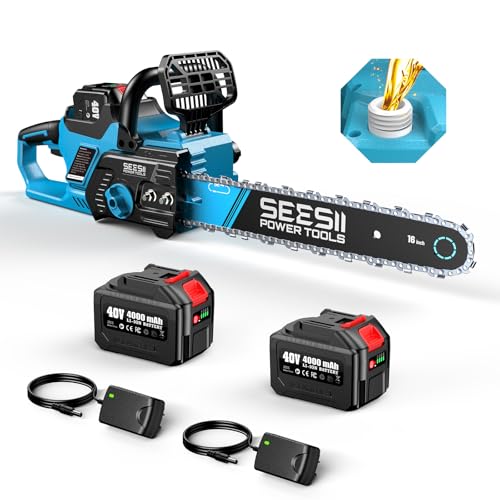
The SEESII 40V kit provides extended runtime with dual batteries.
This SEESII 40V delivers a complete kit for longer yard sessions. Two 4.0Ah batteries and a charger come in the box. Tool-free chain tensioning enables quick mid-job adjustments, and the auto oiler reduces wear and heat on the chain.
The brushless motor maintains speed through knots, and the low-vibration design keeps hands comfortable. For steady users, it offers a strong power-to-weight ratio.
Best for: Homeowners cutting firewood or doing longer sessions who want dual batteries included.
Greenworks 24V 10" Compact Chainsaw

The compact 10-inch Greenworks is ideal for pruning and quick trim jobs.
This 24V compact Greenworks is built for quick jobs where a full-size saw is overkill. The 10-inch bar keeps it light and maneuverable. It's perfect for pruning, small logs, and storm cleanup in tight spots, and it includes a 2.0Ah battery and charger.
It starts with a trigger squeeze, and the light weight makes positioning easy. Think branches, limbs, and small tree work around the yard.
Best for: Pruning enthusiasts and beginners who want a grab-and-go saw for small tasks.
SEESII 12" Brushless Cordless Chainsaw

The SEESII 12-inch model combines compact size with extended runtime.
This 12-inch SEESII blends a compact format with a brushless motor and two 4.0Ah batteries for long runtime. Auto-tension and auto-oiling reduce maintenance fuss. The size works well for trimming, small logs, and tight spaces where bigger saws feel clumsy.
Light weight and an ergonomic grip aid control during extended use. It's a step up from mini saws when you need more bar length without jumping to a full-size model.
Best for: Homeowners who want a small, capable saw for routine trimming with minimal maintenance.
Mini Chainsaw for Milwaukee 18V (Tool Only)
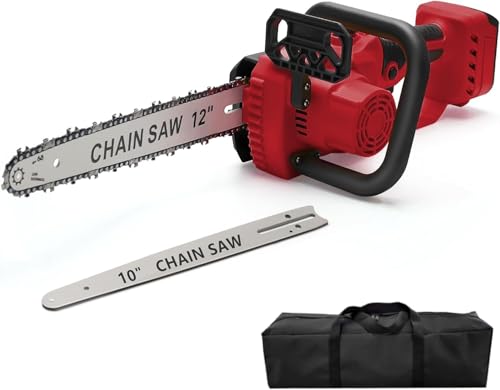
This tool-only mini chainsaw taps into the Milwaukee M18 battery ecosystem.
This mini chainsaw works with Milwaukee 18V batteries you may already own. It accepts 12-inch or 10-inch bars depending on your needs. The brushless motor, auto oiler, and safety lock add convenience. Because it's tool-only, you supply your own M18 battery and charger.
The compact size suits pruning and quick cuts around the property. It stores easily and deploys fast for touch-ups. If you're already invested in Milwaukee tools, this is a smart, cost-effective addition.
Best for: Milwaukee ecosystem owners who want a compact saw without buying a new battery platform.
CRAFTSMAN V20 RP 12" Cordless Chainsaw
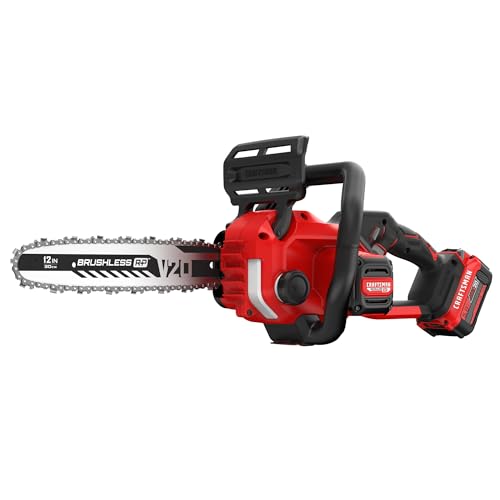
The Craftsman V20 offers approachable handling with a substantial 5Ah battery.
CRAFTSMAN's V20 RP 12-inch saw balances weight and cutting capability well. The included 5Ah battery provides solid runtime and steady power delivery. Light weight helps control during overhead cuts and extended sessions.
The compact bar keeps it nimble in tight spaces while still offering real cutting capacity on branches and small logs. It's less intimidating for first-time users than larger saws while remaining genuinely useful.
Best for: Beginners and budget-conscious buyers who want approachable handling.
UBeesize 8" Mini Cordless Chainsaw

The UBeesize 8-inch mini saw excels at precise, small-scale cutting.
This 8-inch mini saw prioritizes convenience above all. Small, light, and instantly deployable, it makes short work of garden tasks and shrub shaping. The brushless motor improves runtime and control, while the ergonomic handle reduces fatigue during extended trimming sessions.
The short bar delivers precise cuts in tight angles and awkward positions. This isn't a log-cutting saw, but as a companion tool for light yard work, it's genuinely enjoyable to use.
Best for: Garden enthusiasts who want a lightweight helper for precise, small cuts.
Best Gas Chainsaw for 2026
Getell 58cc Gas Chainsaw, 20"/18" Bars

The Getell 58cc delivers serious power with two included bar lengths.
This Getell 58cc gas saw is built for heavy-duty work. With a 58cc engine and your choice of 20-inch or 18-inch bars, it handles substantial cutting jobs without complaint. The anti-vibration system reduces fatigue during long sessions, and easy-start features make cold starts less frustrating.
It suits farm and ranch work, frequent firewood cutting, and any job where battery tools would bog down. Gas power maintains torque through dense hardwood, and the included dual bar lengths provide flexibility for different tasks.
Best for: Property owners who cut large hardwood regularly and need sustained, high-output performance.
How to Choose: A Decision Framework
Choose Battery If You:
- Cut in sessions under 2 hours
- Value quiet operation and no fumes
- Dislike mixing fuel and winterizing engines
- Want a saw that starts every time
- Have trees under 18 inches in diameter
- Face noise restrictions from neighbors or an HOA
Choose Gas If You:
- Cut firewood for home heating regularly
- Process storm damage that exceeds battery runtime
- Work professionally or on large rural properties
- Need maximum torque in dense hardwood
- Prefer refueling over battery swapping
- Accept the maintenance responsibilities
The Hybrid Approach
Many experienced owners end up with both. A battery saw handles 80% of routine work—quick trims, storm cleanup, branches. A gas saw comes out for the heavy days: big windfalls, firewood processing, property clearing. This combination costs more upfront but matches the right tool to each job.
If you're weighing compact models for light work, compact saw sizing helps explain where 4-inch and 6-inch bars fit—and where they don't.
Safety Considerations for Both Types
Kickback Prevention
Kickback is the most dangerous chainsaw hazard regardless of power source. Use saws with chain brakes, grip both handles firmly, and avoid cutting with the tip of the bar. Modern anti-kickback chains help, but operator technique is your primary defense.
Before your first cut of the season, brush up on safer cutting techniques. Chainsaw safety is a skill, not a spec.
Protective Gear
Minimum gear for any chainsaw work:
- Chainsaw-rated chaps or pants
- Safety glasses or face shield
- Hearing protection
- Heavy-duty work gloves
- Steel-toe or reinforced boots
For workplace-grade guidance, the Occupational Safety and Health Administration publishes baseline requirements for chainsaw operation and protective equipment.
Battery-Specific Safety
- Store batteries at room temperature
- Don't charge unattended overnight
- Inspect packs for damage before use
- Use only manufacturer-approved chargers
Gas-Specific Safety
- Mix and pour fuel outdoors, away from ignition sources
- Store fuel in approved containers
- Never refuel a hot saw
- Maintain proper chain tension to prevent derailment
A sharp chain is also a safety tool. Dull chains force you to push harder, which increases kickback risk and fatigue.
Common Mistakes to Avoid
Battery Saw Mistakes
- Forcing the saw instead of letting the chain cut
- Expecting gas-level sustained power from a single battery
- Ignoring chain tension after the first few cuts
- Using a battery with too little capacity for the job
- Storing batteries in extreme heat or cold
Gas Saw Mistakes
- Leaving fuel in the tank for winter
- Skipping air filter maintenance
- Using old premixed fuel that's already degraded
- Forgetting to top up bar oil
- Neglecting carburetor adjustments when the saw runs rough
Frequently Asked Questions
Which is better for homeowners: battery or gas?
For most homeowners, battery is the practical winner. It starts instantly, runs quietly, and requires minimal maintenance. Gas becomes worth the extra effort only if you regularly cut large hardwood or work in sessions that outlast two batteries.
How long do battery chainsaws run on a charge?
Most provide 20–45 minutes of active cutting per battery, depending on voltage, capacity, and conditions. Brushless motors and larger amp-hour packs extend runtime. Two batteries cover a typical afternoon of residential work.
Are battery chainsaws powerful enough for firewood?
Yes, for small to mid-size logs up to about 12–14 inches in diameter. For large hardwood or all-day production, gas still has the advantage in sustained output.
What maintenance do battery chainsaws need?
Keep the chain sharp and properly tensioned, oil the bar, clean debris from the saw body, and store batteries at moderate temperatures. That's the full list for most owners.
Do gas chainsaws cut faster?
Yes, especially in thick, dense wood. They maintain chain speed under load and refuel in seconds. The gap narrows with higher-voltage battery platforms but hasn't disappeared.
Can I use one battery platform for multiple tools?
Yes—and it's smart economics. If you already own battery lawn equipment, look for a chainsaw from the same brand. You'll share batteries and chargers across tools, reducing the total investment.
Final Verdict: Match the Saw to Your Work
The battery vs gas chainsaw decision comes down to your cutting patterns, not marketing claims.
Battery chainsaws have truly replaced gas for the majority of homeowner applications. They start instantly, run quietly enough for early mornings, and free you from fuel mixing and engine maintenance. In 2026, a quality 40V or 60V model handles storm cleanup, pruning, and firewood processing with capability that was hard to imagine a few years ago.
Gas chainsaws remain essential for sustained heavy work. If you process multiple cords of firewood annually, clear property after major storms, or work professionally, the continuous torque and quick refueling make gas the pragmatic choice. These saws reward proper maintenance with years of service.
The smartest approach for most people: start with a battery saw from a platform you already own. If you later find your cutting needs exceed what battery power can deliver, add a gas saw. You'll spend less overall and have the right tool for every job.
Whichever direction you choose, invest in a sharp chain and use good cutting technique. Those two factors influence performance, safety, and satisfaction more than any spec sheet.