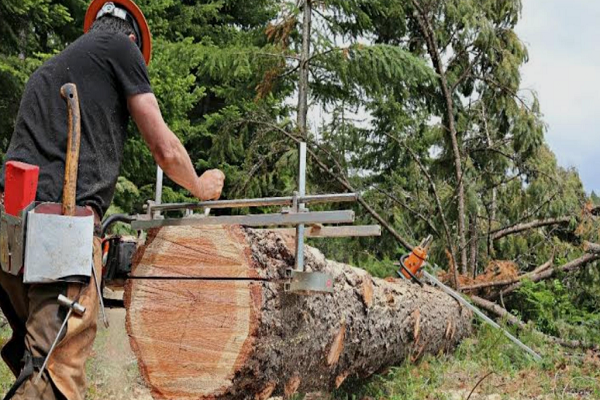
How To Use A Chainsaw Safely: Expert Tips For 2026
Every year, thousands of people are injured using chainsaws—most of those injuries were entirely preventable. Whether you're clearing storm damage, cutting firewood, or felling a small tree, knowing how to use a chainsaw safely is the difference between a productive afternoon and a trip to the emergency room.
This guide walks you through the complete safety picture: the right gear, the correct techniques, the routine checks, and the honest, practical habits that professional arborists and experienced landowners rely on. No shortcuts, no showboating—just field-tested advice you can put to work today.
Why Chainsaw Safety Matters More Than Ever
Chainsaws are among the most dangerous tools in any shed. A typical chain travels at roughly 60 miles per hour, and the cutting teeth can sever flesh before your reflexes even register the contact. The Consumer Product Safety Commission consistently reports tens of thousands of chainsaw-related injuries annually in the United States alone.
The good news? Nearly all of these incidents share common causes: skipped preparation, poor technique, dull chains, and operator fatigue. Each of these is within your control. Understanding the risk is the first step, but building the right habits is what actually keeps you safe.

Source: wikihow.com
The Safety Mindset: Your Most Important Tool
Before you pull the starter cord, check your headspace. The most experienced operators share one trait: they are never complacent. A chainsaw demands your full attention, every single time.
Here is the core philosophy that guides every safe cutting operation:
- Slow is smooth, and smooth is fast. Rushing leads to mistakes, and mistakes with a chainsaw are expensive.
- Stop when fatigued. Tired operators make poor decisions. A 10-minute break can prevent a lifetime of regret.
- Respect the tool. Familiarity breeds comfort, but comfort must never become carelessness.
- If something feels wrong, stop. Your instinct is often correct. Investigate before continuing.
A common mistake I've seen in the field is pushing through fatigue during storm cleanup. The saw feels heavier, your footing gets sloppy, and your reaction time slows. When you notice this happening, put the saw down. The wood will still be there tomorrow.
Personal Protective Equipment: The Non-Negotiables
Skipping PPE to "save time" is the quickest way to end a project prematurely. The most common injury sites are the legs, hands, and face—exactly where protective gear makes its stand. Wear the following every time you operate a chainsaw, even for a single cut:
| PPE Item | Why It Matters |
|---|---|
| Helmet with face shield or safety goggles | Protects against falling branches and flying sawdust; a face shield also stops kickback strikes to the face |
| Chainsaw chaps (rated for chain speed) | Made with cut-resistant fibers that jam the chain upon contact, stopping the cut before it reaches your leg |
| Cut-resistant gloves with grip | Deflect accidental chain contact and improve control in wet conditions |
| Steel-toe boots with non-slip soles | Protect feet from dropped logs and provide stable footing on uneven terrain |
| Snug long sleeves and trousers | Loose fabric can get caught in the chain; avoid drawstrings, hoods, or frayed cuffs |
| Ear protection | Chainsaws produce noise levels well above 100 decibels; prolonged exposure causes permanent hearing damage |
If you're teaching someone else how to operate a chainsaw, establish the PPE routine from the very first lesson. It is not a debate; it is the standard.

Source: farmanddairy.com
Know Your Chainsaw: Parts, Controls, and Features
A safe operator knows their equipment intimately. Before you ever start the engine, spend time with your saw. Practice with the engine off until the controls feel like second nature.
The Controls You Must Master
- Chain brake: The most important safety feature on any chainsaw. It stops the chain instantly, either manually or via the inertia-activated mechanism during kickback.
- Throttle and throttle lock: The throttle controls chain speed; the lock prevents accidental revving when you're not squeezing the trigger.
- Chain catcher: A small metal or plastic guard that catches the chain if it derails, preventing it from whipping back toward you.
- Front and rear hand guards: Protect your hands from branches and debris, and help prevent your hand from slipping onto the chain.
- Choke, primer bulb, and decompression valve: Starting aids that vary by model. Learn what yours requires for a predictable cold start.
Modern Safety Features Worth Knowing
Chainsaw technology has improved significantly in recent years. If you're in the market for a new saw, look for these features:
- Inertia-activated chain brakes: Automatically engage the brake when the saw jerks upward (kickback).
- Low-kickback chains: Designed with depth gauges that reduce the likelihood of the bar tip grabbing wood.
- Tool-free chain tensioning: Makes it easier to keep the chain at the correct tension, which is a critical safety factor.
- Anti-vibration systems: Reduce operator fatigue, allowing you to maintain a firm grip for longer.
If you're comparing power sources, the decision between battery and gas models has real safety implications. Battery saws are quieter, lighter, and start instantly, but runtimes are limited. Gas saws offer more sustained power but add weight, vibration, and fuel handling concerns. Researching the gas versus battery trade-offs before you buy can help you choose a saw that matches your needs and skill level.

Source: woodlandinfo.org
Pre-Start Checks: The 5-Minute Safety Inspection
Every safe job begins before the start pull. This quick checklist takes only a few minutes and prevents most mechanical failures that lead to accidents.
1. Chain Sharpness
A dull chain doesn't cut—it tears, and it makes the saw work harder than it should. Look at the cutting teeth: they should have crisp, even edges. If you see shiny, rounded edges, the chain needs sharpening. A sharp chain produces square wood chips; a dull one produces fine sawdust.
2. Chain Tension
With the engine off and the brake released, pull the chain upward at the middle of the bar. The drive links should just peek out of the bar groove, and the chain should snap back when released. Over-tensioned chains bind; under-tensioned chains can derail.
3. Bar Oil and Fuel
Check both reservoirs before every session. For bar oil, fill it to the brim and verify oiling by blipping the throttle over a clean surface—you should see a visible oil spray. Running a saw without bar oil destroys the bar and chain within minutes. For fuel, use the manufacturer-specified mix ratio (commonly 50:1 for modern two-stroke engines) with fresh, clean fuel.
4. Fasteners and Covers
Check that the bar nuts, top cover, and handle mounts are snug. Loose hardware can cause the bar to shift mid-cut, which is dangerous and damages the saw.
5. Controls and Brake Function
Engage and release the chain brake a few times. It should snap forward crisply. Test the throttle lock and the kill switch. If anything feels sticky or unresponsive, fix it before you cut.
If chain wear is a recurring issue, understanding how long chainsaw chains last can help you budget for replacements and recognize when it's time to stop sharpening and start fresh.

Source: familyhandyman.com
Safe Starting Procedures: Do It Right Every Time
Starting a chainsaw is inherently risky because the chain is moving during the pull. The correct procedure minimizes the chance of losing control.
The Ground Start (Most Recommended)
- Place the saw on firm, level ground.
- Engage the chain brake.
- Place your right foot through the rear handle and press down firmly.
- Grip the front handle with your left hand.
- Pull the starter cord with your right hand, using smooth, controlled pulls.
The Leg-Lock Start (Some Models)
- Grip the rear handle between your legs, just above the knee.
- Engage the chain brake.
- Hold the front handle with your left hand.
- Pull the starter cord with your right hand.
What To Avoid
- Drop-starting: Never hold the saw with one hand and pull the starter while the saw is in the air. This is a leading cause of loss of control.
- Starting on your lap or against your body: Any slip can bring the chain into contact with your body.
Once the engine starts, let it idle briefly before releasing the chain brake. Confirm the chain isn't spinning at idle, then rev it briefly to check the throttle response.
Core Cutting Techniques: Felling, Limbing, and Bucking
Mastering the three main cutting operations is essential. Each has its own safety considerations, and each rewards patience and planning.
Felling a Tree
Felling is the most dangerous operation. Before making a single cut, assess the situation:
- Check for lean and wind: A tree's natural lean and any wind will influence its fall direction.
- Identify the escape path: Clear a path away from the tree at a 45-degree angle from the direction of fall—never directly behind it.
- Look for hazards: Dead branches overhead ("widow-makers"), power lines, buildings, or uneven ground are all reasons to call a professional.
Once you've assessed the situation, execute the cuts:
- Make the notch cut: Cut a wedge (about 45 degrees) on the side of the tree facing the direction you want it to fall. The notch should be about one-third of the tree's diameter.
- Make the back cut: On the opposite side, cut horizontally about 2 inches above the base of the notch. Stop short of cutting through the hinge—the uncut strip of wood that guides the tree's fall.
- Retreat as the tree starts to fall: Move along your escape path at a 45-degree angle, watching the top of the tree as it comes down.
If a tree is larger than your saw's bar length requires, consider whether you have the right equipment for the job. The compression specifications of your saw will tell you whether the engine is healthy enough for demanding cuts.
Limbing a Felled Tree
Limbing—removing branches from a fallen trunk—is where many injuries occur because it's easy to become complacent.
- Keep the trunk between you and the saw whenever possible, cutting on the opposite side.
- Cut branches from the top side of the log to avoid cutting toward your legs.
- Watch for spring-loaded branches: A branch under tension can snap up violently when cut. Approach from the compression side (the side pushing down) to release tension safely.
Bucking a Log
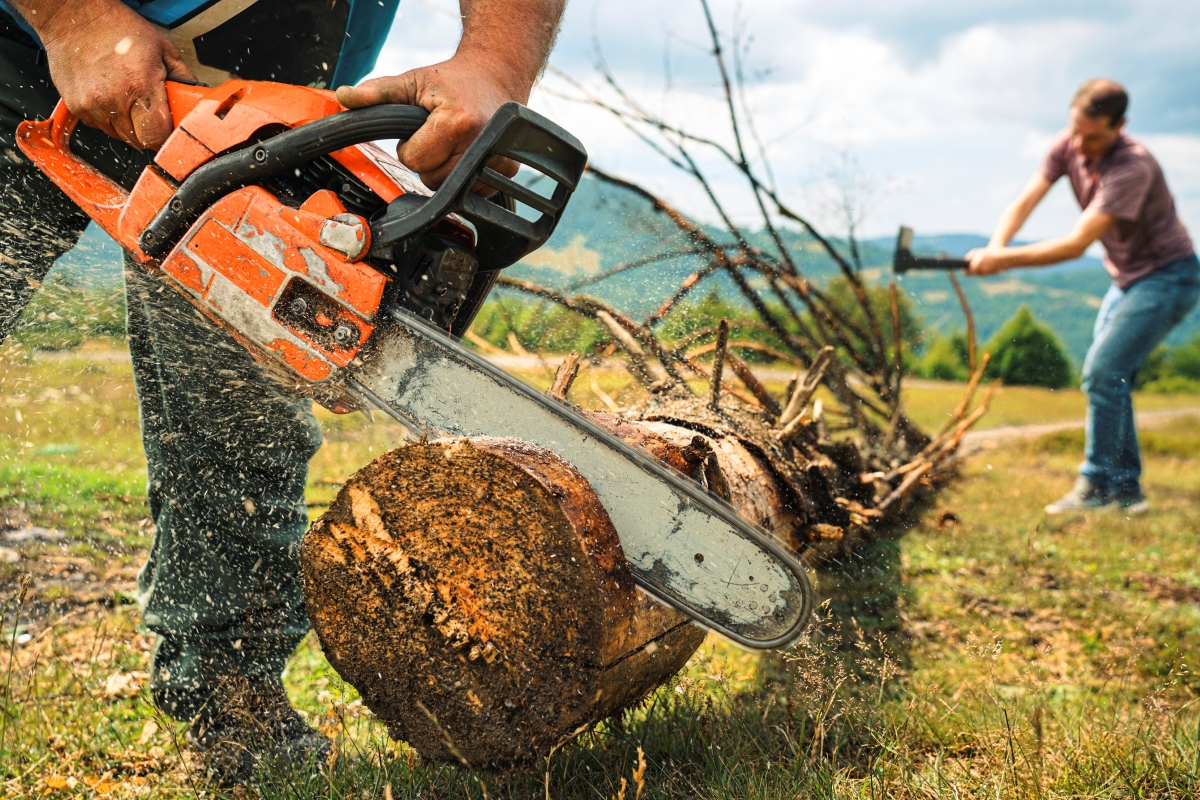
Bucking—cutting a fallen log into lengths—has its own challenges, mainly pinching.
- Support the log properly: Minimize the weight on the cut point by supporting the log at two points, or by cutting from the top of a supported end.
- Use the three-cut method for unsupported logs: Cut one-third of the way through from the top, then finish from the bottom to avoid the bar pinching.
- Stand to the side of the bar, never in line with the chain path.
Source: bobvila.com
Kickback: The Most Dangerous Phenomenon, and How to Prevent It
Kickback is a sudden, upward and backward motion of the bar that occurs when the upper part of the bar tip contacts wood. It happens in a fraction of a second, with tremendous force—it is the leading cause of chainsaw accidents.
The Anatomy of Kickback
Kickback occurs when the chain teeth at the upper quadrant of the bar tip catch the wood. The reaction forces the bar upward and backward, potentially toward your face and upper body.
How to Prevent It
- Never cut with the upper bar tip. Be aware of where the tip is at all times.
- Maintain a sharp chain and correct tension. A dull chain or loose tension increases the chance of grabbing.
- Lock your left thumb under the front handle. This grip position helps the chain brake function effectively during kickback.
- Stand slightly to the left of the bar path. This keeps your body out of the direct line of the bar's potential flight.
- Use a low-kickback chain if you're a beginner or are working in challenging conditions—it's designed to reduce the severity of kickback.
The Chain Brake Is Your Backup
The chain brake is an automatic defense against kickback, but you must test it regularly. It should engage instantly when you push the lever forward. If it feels slow or sticky, service it before your next session.
Maintenance: The Quiet Insurance Policy
A well-maintained chainsaw is not only more efficient; it is fundamentally safer. A clean, sharp saw cuts predictably, stalls less, and gives you the control you need in demanding situations.
Routine Maintenance Tasks
| Task | Frequency | Notes |
|---|---|---|
| Sharpen the chain | Every 2–3 tanks of fuel | Touch up with a file; ensure consistent angles on all teeth |
| Check and adjust chain tension | Before each use | Adjust as the chain warms up and stretches |
| Flip or rotate the bar | At each chain replacement | Evens out wear on the bar rails |
| Clean the bar groove and oil ports | Weekly or after heavy use | A clogged oil port starves the chain of lubrication |
| Replace a stretched or damaged chain | As needed | A worn chain is a safety hazard—do not push it |
| Check air filter and spark plug | Monthly or per manual | A clean filter and proper spark plug ensure reliable starting and running |
| Test the chain brake | Before every session | Essential safety function—verify it every time |
A neglected saw is a source of unpredictable behavior. Dull chains bind, loose chains derail, and a compromised chain brake fails exactly when you need it most. If you're not comfortable with chainsaw maintenance, learning the basics—like how to sharpen the chain properly—will improve both safety and cutting performance.

Source: wikihow.com
Weather, Terrain, and Site-Specific Hazards
Even with perfect technique, environmental conditions can turn a routine job into a dangerous one. Before you begin cutting, assess your surroundings honestly.
Weather Conditions to Respect
- Wind gusts: Increase the risk of branches falling unexpectedly and alter the trajectory of felled trees.
- Rain and mud: Compromise your footing and make the saw handle slippery.
- Snow and ice: Reduce both traction and grip, increasing the chance of slips.
Terrain and Site Hazards
- Slopes: Cutting on a slope changes your center of gravity. Always cut with the slope in your favor, positioning yourself uphill from the bar.
- Hidden obstacles: Rocks, wire fencing, or nails embedded in wood can dull or break the chain—and cause violent reactions.
- Occupied zones: Bystanders, pets, or vehicles should be at least two tree-lengths away from the work area.
A good rule of thumb: if you're working in less-than-ideal conditions, slow down and take more breaks. The risk-to-reward ratio of pushing through is almost never worth it.
Emergency Preparedness: When Things Go Wrong
No matter how careful you are, you must plan for the worst-case scenario. A chainsaw injury involves severe bleeding, and seconds count.
What to Have On Hand
- A tourniquet and pressure bandage within reach at all times—wear them on a belt, not in the truck.
- A fully charged phone with GPS coordinates or a clear address of your location.
- A partner or a check-in schedule if you're working alone. Text someone your start time and expected finish time.
Basic First Aid Everyone Should Know
- For heavy bleeding: Apply direct pressure to the wound. If bleeding continues, apply a tourniquet above the wound site (for limb injuries).
- For cuts from the chain: Clean the wound and cover it with a sterile bandage. Chainsaw injuries are often deeper than they appear; seek medical evaluation.
- For eye injuries: Do not rub; cover the eye with a clean cloth and seek immediate medical help.
Knowledge is your best tool in an emergency. The American Red Cross and other first aid organizations offer short, practical courses—taking one is a small investment with potentially life-saving returns.
Common Mistakes (and How to Avoid Them)
The most dangerous moments often come not from a single dramatic failure, but from the accumulation of small errors. Here are the mistakes I see most often, and the habits that prevent them:
- Skipping PPE for "just one quick cut": The saw doesn't know it's a quick job. Wear the gear every time.
- Cutting above shoulder height: This is a recipe for losing control. Even experienced loggers use a pole pruner or a lift for higher work.
- Working with a dull chain: You'll push harder, the saw will bind, and the risk of kickback increases dramatically.
- Carrying a running saw: The chain is moving; the risk of accidental contact is high. Always kill the engine before walking.
- Working alone without a check-in plan: If something goes wrong, you need someone to know where you are.
One habit that has served me well: when a cut binds or the saw misbehaves, I stop, throttle down, and reassess. Forcing a bind never works; repositioning nearly always does.
Chainsaw Safety FAQ
What is the single most important safety step?
Wearing full PPE and locking your left thumb under the front handle are the two highest-impact habits you can form. They prevent the most common injuries and maximize the effectiveness of the chain brake.
How often should I sharpen the chain?
Touch up the chain every one to two tanks of fuel, or as soon as you notice sawdust instead of chips. A sharp chain is a safe chain.
Can I cut with one hand like I see in some videos?
No. Two hands on the saw at all times. One-handed operation removes the control you need to manage kickback and directs the bar's force unpredictably.
What fuel mix should I use for a two-stroke saw?
Always follow your manual's ratio, commonly 50:1 for modern saws. Using fresh fuel at the correct ratio prevents engine damage and mid-cut stalls.
How do I know if my chain tension is correct?
Pull the chain up mid-bar; the drive links should just peek out of the groove. The chain should snap back when released.
Is it safe to cut alone?
It's risky. If you must work alone, establish a check-in schedule, share your location, and keep a trauma kit on your person.
What should I do if the bar gets pinched in a cut?
Stop the saw, engage the chain brake, and shut off the engine. Wedge the cut open or cut from the opposite side to release the bar. Never force it.
Final Thoughts: Building a Lifetime of Safe Cutting
Using a chainsaw safely isn't about memorizing a list of rules; it's about building a set of habits that become second nature. Wear your gear, plan your cuts, check your saw, and respect the tool. These actions—done consistently—are what separate a competent operator from a statistic.
Start with one thing tomorrow: commit to the full pre-start checklist before you touch the saw. Once that's a habit, add the next layer. Every safe cutting session is a skill built, and every accident avoided is a lesson learned the easy way.
Now, go out there and work safely. Your future self—and your limbs—will thank you.