Best Chainsaw For Homeowners: Top Picks For 2026
A chainsaw is one of the few tools that can save you an afternoon and send you to urgent care in the same weekend. Used properly, it turns storm damage, overgrown limbs, and fallen trees into neat firewood and manageable brush. Used recklessly, it creates kickback, fatigue, and serious injury.
The truth about the best chainsaw for homeowners in 2026 is simpler than most marketing suggests: for the typical residential property, a 16–18-inch cordless chainsaw is the smartest starting point. It starts instantly, runs quietly, needs no fuel mixing, and handles almost every pruning, limbing, and storm-cleanup job you will face. Gas still makes sense for acreage, firewood, and long cutting sessions. Corded saws still make sense for budget buyers who work near an outlet. You can also read our guide on how to use a chainsaw for beginners.
Below, you will find the top picks by category, a close look at what actually matters when comparing specs, and a practical safety and maintenance routine that will keep your saw running for years.
Quick Recommendations: Best Chainsaws for Homeowners at a Glance
| Saw | Power Source | Bar Length | Best For |
|---|---|---|---|
| EGO Power+ 18-Inch | 56V battery | 18 in | Homeowners who want near-gas performance without gas maintenance |
| Greenworks 80V 16-Inch | 80V battery | 16 in | Balanced power, weight, and a proven battery platform |
| SEESII 40V 16-Inch | 40V battery | 16 in | Budget buyers who want two batteries included |
| 12-Inch 20V Cordless | 20V battery | 12 in | Light trimming, beginners, and ladder work |
| Husqvarna 455 Rancher | Gas | 20 in | Firewood cutting and acreage owners |
| 62cc 20-Inch Gas | Gas | 20 in | Budget-minded buyers who need serious torque |
| Husqvarna 120 Mark III | Gas | 14 in | Homeowners who prefer gas but want a compact saw |
| Oregon CS1500 | Corded | 18 in | Unlimited runtime at a low price |
How to Choose a Chainsaw: What Actually Matters
The best chainsaw is not the one with the longest bar or the highest voltage. It is the one that fits your wood, your strength, and your willingness to maintain it. You can also read our guide on how to choose the right garden hose length.
Bar Length: Match It to the Wood You Cut
Bar length controls the thickest log you can cut in one pass. The simple rule is to choose a bar at least 2 inches longer than the diameter of the thickest wood you expect to cut.
| Bar Length | Sweet Spot | Limits |
|---|---|---|
| 10–12 inches | Pruning, small branches, light storm debris | Struggles with logs over 10 inches thick |
| 16–18 inches | Most suburban and rural homeowner work | The best all-around range for typical yards |
| 20 inches and up | Firewood, felling, acreage clearing | Heavier, more tiring, and harder to control |
A common mistake is buying a 20-inch saw “just in case.” Longer bars add weight, slow chain speed, and increase fatigue. Unless you regularly cut logs thicker than 14–16 inches, an 18-inch bar is plenty. You can also read our guide on battery vs gas chainsaw.
Power Source: Gas, Battery, or Corded
This is the biggest decision you will make. Each option has real trade-offs, and the right choice depends on how and where you cut.
Cordless is the best balance for most homeowners. Modern 56V and 80V brushless saws deliver chain speeds that feel close to small gas models. They start instantly, run with little noise, and need almost no maintenance. The catch is battery cost: a spare pack can cost nearly as much as a budget saw. You can also read our guide on how long does a chainsaw chain last.
Gas still wins for sustained heavy cutting. No battery today can outlast a full tank of fuel when you are bucking logs all afternoon. Gas saws also have better dealer support in many areas, which matters for repairs. The trade-offs are fuel mixing, pull-start frustration, noise, and more regular maintenance.
Corded is the budget champion. You get instant starts, consistent power, and unlimited runtime for far less money. The cord is genuinely annoying, though, and it is a non-starter anywhere beyond about 100 feet from an outlet. You can also read our guide on how long do chainsaw chains last.
For gas models, fuel quality matters more than most owners realize. Small-engine carburetors are sensitive to stale fuel, so a fuel without ethanol is worth seeking out whenever you can.
Safety Features Worth Paying For
A chain brake is non-negotiable. Every saw on this list has one, but there are meaningful differences in how well they work.
Look for:
- An inertia-activated chain brake that engages automatically during kickback.
- A low-kickback chain that reduces the force of a kickback event.
- Anti-vibration handles that reduce hand fatigue and improve control.
- A trigger stop that halts the chain immediately when you release the handle.
Remember: the safest saw is the one you can control comfortably for the entire job. A saw that is too heavy or too aggressive for your strength is a safety risk.
Weight and Ergonomics: The Hidden Decider
Manufacturers list “dry weight,” but that number does not include the battery, bar, and chain. A more honest number is the ready-to-cut weight.
Most 16-inch cordless saws weigh between 8 and 11 pounds ready to cut. Gas saws typically run heavier, often 12 pounds or more before fuel. That extra weight compounds over an afternoon of overhead limbing.
In practice, staying under 12 pounds makes a noticeable difference in both comfort and control. If you have shoulder, back, or grip issues, test the saw in person before buying.
Chain Adjustment and Maintenance Ease
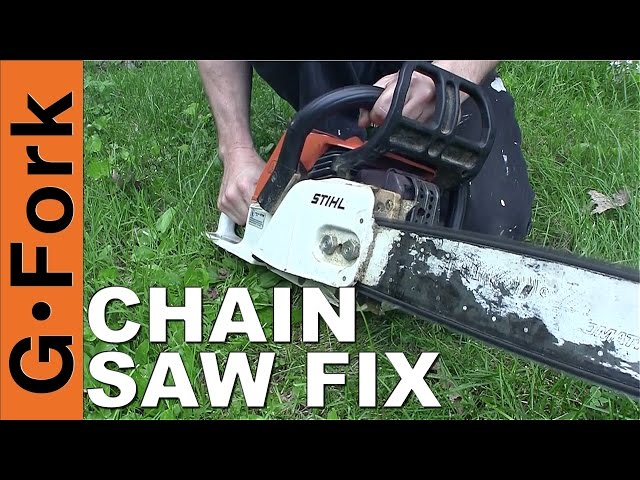
Chain tensioning is the most frequent maintenance task on any chainsaw. You should check it every time you refuel, swap batteries, or stop for a break.
Tool-free tensioning systems, usually a dial or lever, make this a 10-second job. Traditional systems require a wrench and are easier to get wrong. For beginners, tool-free adjustment is a genuinely useful feature because you will actually do it.
Chainsaw Terms You Need to Know Before Buying
Understanding a few basic terms makes it much easier to choose a saw and buy the correct replacement chain.
| Term | What It Means |
|---|---|
| Chain pitch | The distance between drive links; must match the bar and sprocket |
| Gauge | The thickness of the drive links; must fit the groove in the bar |
| Drive links | The number of links in the chain; full replacement chains list this count |
| Kickback | A sudden upward reaction when the nose of the bar contacts wood |
| Automatic oiler | A system that delivers bar oil to the chain while the saw runs |
| Bucking spike | A pointed hook near the guide bar that provides leverage when cutting logs |
If you buy a replacement chain, you need all three numbers: pitch, gauge, and drive-link count. Mixing them up is one of the most common reasons a new chain does not fit or cuts poorly.
The Best Cordless Chainsaws for Homeowners in 2026
Cordless saws dominate the homeowner category for good reason. They have improved dramatically in the last several years, and current high-voltage models cut fast enough for almost any residential job.
EGO Power+ 18-Inch 56V Cordless Chainsaw
 The EGO’s 18-inch bar gives it near-gas reach in a battery-powered package.
The EGO Power+ 18-Inch remains the benchmark for premium cordless saws. The 56V brushless motor delivers strong chain speed, and the 18-inch bar gives you more reach than most battery-powered alternatives.
What sets it apart in daily use is the battery ecosystem. The same 56V pack powers EGO lawn mowers, leaf blowers, and string trimmers. If you already own other EGO tools, this saw becomes much more affordable because you are not buying a new battery system.
The honest trade-off is weight and price. It is heavier than smaller 40V saws, and the initial cost is higher than entry-level battery models. But for homeowners who cut a few times each month, this saw can fully replace a small gas model. It is quiet enough for early-morning work, starts every time, and stops the moment you release the trigger.
Best for: Homeowners who want near-gas cutting performance without gas maintenance, and anyone already invested in the EGO 56V platform.
Greenworks 80V 16-Inch Brushless Chainsaw
 The Greenworks tool-free tensioner makes chain adjustments quick.
The Greenworks 80V 16-Inch hits the sweet spot between power, weight, and price. The 16-inch bar handles nearly all routine homeowner cutting, and the brushless motor runs efficiently without overheating during longer sessions.
Two details stand out in real-world use. First, the tool-free chain tensioning is genuinely easy: loosen a knob, adjust the bar, lock it down in seconds. Second, the chain brake engages quickly and the trigger response is immediate. For newer users, those touches build confidence.
The battery is shared across Greenworks’ 80V outdoor equipment lineup, so it slots easily into an existing tool collection. A single charger and one spare battery cover most pruning sessions and storm cleanup work.
The honest trade-off is weight with the battery installed, and the 80V platform is not as widely stocked in big-box stores as some 40V and 56V systems.
Best for: Suburban homeowners who want gas-like performance without the mess, plus a battery platform that powers multiple tools.
SEESII 40V 16-Inch Cordless Chainsaw
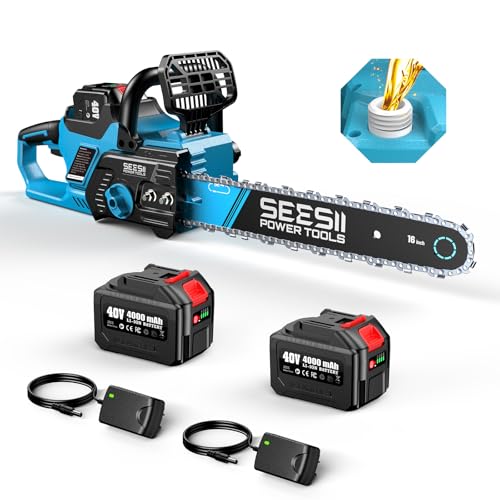 Two batteries mean the SEESII can keep cutting while one pack charges.
The SEESII 40V is the value pick that does not feel cheap. The included pair of 4.0Ah batteries solves the biggest complaint about budget cordless saws: downtime. When one pack drains, you swap in the second and keep working.
The brushless motor provides good efficiency, and the 16-inch bar is comfortable for standard yard work. The automatic oiling system delivers consistent bar lubrication, which extends chain life when you are cutting dry or dusty wood.
The honest trade-off is torque. At 40V, it produces less cutting force than the 56V and 80V premium options. It is fine for limbs up to 6–8 inches thick, but it will bog down on dense hardwood logs. The brand ecosystem is also smaller, so you have fewer compatible tools if you want to expand later.
Best for: Budget-conscious buyers who want a complete cordless kit with two batteries, without paying a premium price.
12-Inch 20V Cordless Chainsaw: Best for Light Trimming
 A 12-inch saw is best treated as a powered pruner, not a felling tool.
If your cutting needs are truly light, a compact 12-inch saw is a revelation. It weighs barely more than a cordless drill, which makes it ideal for one-handed trimming and ladder work where a larger saw is dangerous and unwieldy.
The twin 4.0Ah batteries provide impressive runtime for a 20V tool. Because the bar is short, the chain speed feels quick relative to the small motor, so cutting small branches is fast work.
The honest trade-off is capability. This is not a general-purpose chainsaw. It cannot fell trees, buck large logs, or handle serious firewood work. If you buy one as your only saw, you will eventually overload it. It shines as a first saw for beginners, a lightweight second saw for elevated trimming, or a quick cleanup tool.
Before you drop even smaller, it helps to understand the limits of super-compact saw sizes, because 4-inch and 6-inch models are even more specialized.
Best for: New users learning proper cutting technique, and homeowners who need a lightweight option for pruning and ladder work.
The Best Gas Chainsaws for Homeowners Who Need Real Power
Battery technology is impressive, but it has not fully replaced gas for sustained heavy cutting. If you own acreage, cut firewood every year, or regularly deal with large storm damage, gas is still the most dependable choice.
Husqvarna 455 Rancher 20-Inch Gas Chainsaw
 The 455 Rancher is built for hours of sustained cutting, not quick trims.
The Husqvarna 455 Rancher has been a mainstay for homeowners with serious cutting needs for years, and it remains a strong recommendation in 2026. The 20-inch bar and 60.3cc X-Torq engine handle the biggest jobs a homeowner will face: felling medium trees, bucking large hardwood rounds, and clearing brushy land.
The anti-vibration system is the standout feature. After an hour of cutting, your hands and arms feel dramatically fresher than with budget gas saws. That is not just comfort; reduced vibration means better control and fewer mistakes as fatigue sets in.
The automatic oiler delivers consistent bar lubrication, and the captive bar nuts make chain tensioning simpler than older Husqvarna designs. Parts and service availability are also excellent, which matters for a machine you will own for years.
The honest trade-off is weight and noise. At over 13 pounds, it is tiring for overhead limbing, and it requires serious hearing protection. Like all gas saws, it needs regular maintenance: air filter cleaning, spark plug checks, and fuel system care.
Best for: Acreage owners cutting firewood, clearing lots, or processing large storm damage. If you cut for more than a couple of hours at a time, this saw earns its weight.
62cc 20-Inch Gas Chainsaw: Budget Pro-Style Power
 High-cc saws demand a proper break-in before heavy use.
For budget-minded buyers who need serious gas power, a 62cc saw represents the affordable end of pro-level cutting. The 20-inch bar handles large logs, and the high displacement provides the torque needed to keep cutting through dense hardwood without bogging down.
The anti-vibration features help manage the power, and the quick-start design reduces the pull-start frustration many budget gas saws suffer. For firewood processing and occasional land clearing, this saw delivers exceptional value.
The honest trade-off is support and break-in care. Brand support and parts availability are less established than Husqvarna or Stihl. More importantly, the break-in procedure matters enormously on high-cc engines. Skipping the initial tuning and break-in sequence leads to poor performance and short engine life. If you are not comfortable with basic small-engine mechanics, a premium brand is a safer investment.
Best for: Value-focused buyers who understand gas engine maintenance and need occasional bursts of serious cutting power.
Husqvarna 120 Mark III 14-Inch Gas Chainsaw
 A compact gas saw still needs the same safety gear as a full-size model.
The Husqvarna 120 Mark III is a compact gas saw that makes sense if you prefer gas but want something less intimidating than a full-size rancher model. The 14-inch bar is maneuverable in tight spaces, and the X-Torq engine delivers cleaner, more fuel-efficient power than older two-stroke designs.
The inertia-activated chain brake provides solid kickback protection, and the automatic oiler keeps the chain running smoothly. For cutting tasks up to 8 inches thick, it handles everything without feeling unwieldy.
The honest trade-off is the familiar gas saw routine: pull starts, fuel mixing, and carburetor tuning. It is louder and heavier than equivalent cordless models. It is best suited to people who already own gas equipment and understand the maintenance rhythm.
Best for: Homeowners who prefer gas power but want a smaller, more manageable bar length for pruning and light storm cleanup.
The Best Corded Chainsaw: Unlimited Runtime on a Budget
Corded saws may seem old-fashioned, but they solve a real problem: unlimited runtime for a fraction of the cost. If your cutting area is within 100 feet of an outlet, a good corded saw is one of the best values in the category.
Oregon CS1500 Self-Sharpening Chainsaw
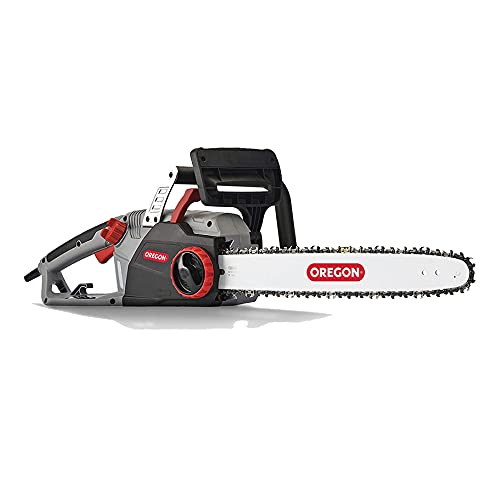 Pull one lever to restore a sharp edge on the Oregon CS1500.
The Oregon CS1500 solves the most common chainsaw complaint: dull chains. The PowerSharp self-sharpening system is genuinely useful for homeowners. When the chain slows down, you pull a lever and rotate the bar for a few seconds. The built-in sharpener grinds the cutters back to the correct angle, and you are cutting smoothly again.
The 15-amp motor provides consistent corded power, and the 18-inch bar gives you more cutting reach than most corded models. The electric start means no pull cord, and the overall design is lighter than most gas saws.
The honest trade-off is the proprietary chain. The self-sharpening system only works with Oregon’s PowerSharp chain, which costs more than standard chains. You are also tethered to an outlet, which is a dealbreaker for remote parts of your property.
If you want the absolute lowest cost of entry, the CRAFTSMAN 16-inch 12-Amp corded saw is still a solid budget option. The 12-amp motor and 16-inch bar handle standard yard work, and its lighter weight makes it easier for smaller users to control. The Oregon, however, adds the self-sharpening feature that most owners appreciate within the first month of use.
Chainsaw Safety: Gear and Rules That Prevent the Worst Injuries
A chainsaw is the most dangerous common homeowner tool. State and federal agencies publish detailed guidance, including the New York State Department of Health, which covers safe operation and protective equipment.
Before you make your first cut, invest in the following:
| Gear | Why It Matters |
|---|---|
| Chainsaw chaps | The only protection that stops a running chain from reaching your legs |
| Safety glasses or face shield | Wood chips and debris travel at high speed |
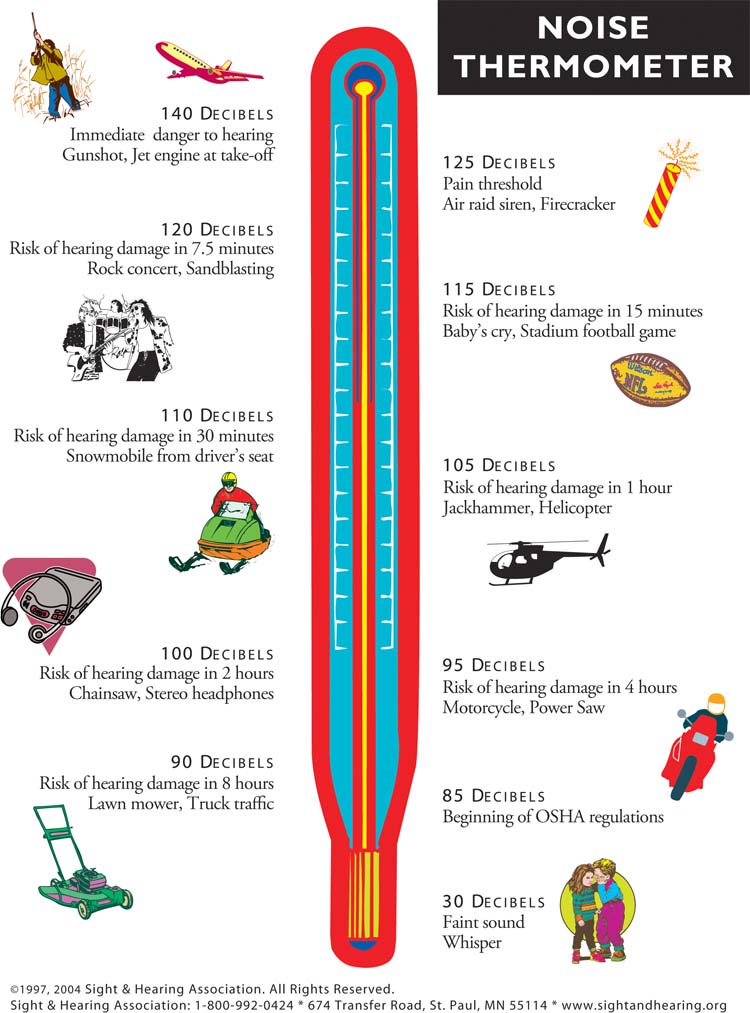
| Hearing protection | Gas saws can permanently damage your hearing over time |
| Steel-toe boots | Protect against dropped logs and kickback |
| Work gloves | Improve grip and protect your hands if the chain slips |
Follow the basic rules every time:
- Never cut above shoulder height. Kickback on an overhead cut can easily reach your face and neck.
- Never cut alone. If something goes wrong, you want someone nearby to call for help.
- Keep both hands on the saw whenever the engine is running.
- Clear the ground around you before starting the cut.
The U.S. Occupational Safety and Health Administration also offers practical chainsaw safety guidance that is useful even for homeowners, especially if you are cutting for long sessions.
Chainsaw Maintenance: Keep It Reliable for Years
A well-maintained chainsaw will outlast several cheaper replacement saws. This routine takes about 15 minutes per use and prevents most common failures.
Check chain tension every time you refuel or swap batteries. A loose chain is dangerous and cuts poorly.
Top up bar oil whenever you add fuel or recharge the battery. Running the bar dry can ruin the guide bar in minutes.
Clean the air filter monthly on gas models. A clogged filter reduces power and increases fuel consumption.
Sharpen the chain when it starts producing fine sawdust instead of chunky shavings. A sharp chain cuts faster, with less pressure and less kickback risk.
Small engines fail in predictable ways, and the cleaning process for a gummed-up carburetor is basically universal. If a gas saw has been sitting for months, the carburetor is usually the reason it will not start.
For long-term gas storage, drain the tank or add a fuel stabilizer before storage. Ethanol-blended fuel left in a carburetor can turn into varnish in a matter of weeks.
How to Make Your First Cut Safely: Step by Step
If you are new to chainsaws, follow this sequence until it becomes habit.
- Set up your work area. Clear the ground, ensure your footing is stable, and check for obstacles near the cut.
- Put on all safety gear before starting the saw.
- Position the saw correctly. For limbing, let the chain contact the wood with the bottom of the bar, where the saw pushes away from you. Cutting with the top of the bar pulls the saw toward you and increases kickback risk.
- Start the cut at full throttle. Never bring a moving chain into the wood at idle speed.
- Let the saw do the work. Heavy pressure slows the chain, produces poor cuts, and increases kickback risk.
- Use the bucking spike when cutting logs on the ground. It gives you leverage and control.
- Support the saw’s weight with the wood whenever possible, not with your arms. Fatigue causes mistakes.
When to Call a Professional Instead of Cutting It Yourself
Not every chainsaw job is a DIY job. Call a professional in these situations:
- The tree is leaning against another tree.
- The tree is touching power lines.
- There are broken or hanging branches overhead.
- The tree is larger than your bar length can handle safely.
- You are not confident about which direction the tree will fall.
A fallen tree or storm-damaged limb can be unpredictable. If there is any doubt about how it will move, a certified arborist is cheaper than an emergency room visit.
FAQ: Chainsaw Questions From Homeowners
What size chainsaw is best for most homeowners?
A 16–18-inch bar is the best range for typical residential work. It handles limbs up to about 14 inches thick, stays maneuverable, and keeps weight manageable. Smaller saws are for light trimming; larger saws are for firewood and acreage.
Should I choose gas, cordless, or corded?
For most homeowners, cordless is the best overall choice because of instant starts, no fuel mixing, and quiet operation. Choose gas if you cut firewood regularly or need sustained power. Choose corded if you are on a tight budget and cut near outlets.
How important is chain sharpening?
A sharp chain is the single most important factor in safe, efficient cutting. Dull chains require more pressure, produce more sawdust, and increase kickback risk. Learn to sharpen with a file, or choose a self-sharpening model like the Oregon CS1500.
What safety gear is non-negotiable?
Chaps, eye protection, and hearing protection are the minimum. A face shield and helmet add meaningful protection when felling or cutting overhead. Never cut while you are alone on your property.
How long should a chainsaw chain last?
With regular sharpening, a chain can last several seasons of moderate homeowner use. Replace it when you cannot restore a sharp edge, the drive links show visible wear, the chain will not maintain tension, or there are any cracks or damaged teeth.
How do I store my chainsaw for the off-season?
Clean the bar and chain, wipe off sawdust, and apply light oil. For gas models, drain the fuel or add a stabilizer for storage longer than 30 days. For cordless models, store batteries at around 50% charge in a cool place. Keep the saw dry and covered in a shed or garage.
Final Verdict: Which Chainsaw Should You Buy?
The right chainsaw depends on what your property demands, not on the most impressive spec sheet.
For most suburban homeowners, the EGO Power+ 18-Inch or Greenworks 80V 16-Inch delivers the best blend of power, convenience, and safety. You will never fight a pull cord or mix fuel again.
For budget-conscious buyers who want a complete kit immediately, the SEESII 40V with two batteries offers genuine value. The corded Oregon CS1500 is the best choice if you want unlimited runtime and hate sharpening chains.
For acreage owners and serious firewood cutters, the Husqvarna 455 Rancher is worth the weight and maintenance. Gas still wins when you are cutting for hours at a time.
For seniors, beginners, or smaller-framed users, the 12-inch 20V model is light enough to control confidently and safe enough for learning proper technique.
Start with your property’s real cutting list, test the weight in person if you can, and make safety gear part of the purchase. That is how you end up with a saw that still feels like a smart decision years from now. Once the cutting is done, clearing the yard afterward is much faster when you have the right blower for your lot size and the same hands-on approach to maintenance.