Boost garden hose pressure by clearing blockages, shortening hose, and using 3/4-inch.
If your sprayer feels weak or your sprinkler sputters, you’re not alone. I’ve helped many homeowners figure out how to increase water pressure in garden hose systems without tearing apart plumbing. This guide shows what matters, what to check, and what fixes actually work. You’ll get clear steps, pro tips, and simple tests you can do in minutes.
Understanding garden hose pressure, flow, and friction
Pressure pushes water. Flow is how much water moves. You need both.
Most homes have 40 to 80 psi at the main. Hoses and nozzles cut that down. Long runs and small hose size add friction. Each bend, splitter, and valve adds loss. Dirt and scale make it worse.
Think of the hose like a road. A narrow, crowded road slows traffic. A short, wide road moves cars fast. Water acts the same way.
Key points:
- Each 50 feet of 1/2 inch hose can drop several psi at common flows.
- A 3/4 inch hose has far less friction than 1/2 inch at the same flow.
- Kinks, clogged screens, and small nozzles restrict water fast.
- Peak use times in your area can drop pressure.
If you want how to increase water pressure in garden hose setups, reduce friction, remove clogs, and match parts to your water supply.

A fast checklist: how to increase water pressure in garden hose today
Try these quick wins first:
- Open the spigot all the way. Many are only half open by habit.
- Remove the nozzle. Test straight from the hose end. If flow jumps, the nozzle is the choke.
- Check for kinks and tight coils. Lay the hose flat and straight.
- Clean the hose washers and screens. Sediment loves to hide there.
- Bypass splitters and timers. Test one simple path from spigot to hose.
- Shorten the hose. Use the shortest run that reaches the job.
- Switch to a high-flow nozzle. Look for large internal openings.
- If legal in your area, remove the nozzle flow restrictor. Follow maker rules.
These steps often solve how to increase water pressure in garden hose issues in minutes.

Diagnose the cause before you buy anything
Smart fixes start with simple tests. Let’s isolate the problem.
Test your house pressure
- Use a cheap pressure gauge on the hose bib.
- Normal is 40 to 80 psi. Under 40 means a supply issue or a tight regulator.
- Run a sink or two and watch the gauge. A big drop shows supply limits.
Check the spigot and valve
- Old sillcocks trap debris. Unscrew and inspect the stem washer.
- Many hose bibs have a tiny screen. Clean it if clogged.
Inspect the hose
- Look for kinks, bubbles, and soft spots. These hint at internal damage.
- Cheap 1/2 inch hoses restrict flow. Measure your hose size at the fitting.
Evaluate the nozzle or sprinkler
- Remove and rinse any screens.
- Try a different nozzle. Compare patterns and flow.
- Some sprinklers need a minimum flow to rotate well.
Hunt for hidden leaks
- With the spigot open and nozzle closed, listen for hissing.
- Walk the line. Look for damp soil or fine mist from pinholes.
- Check splitters and quick-connects. O-rings fail often.
If you confirm the bottleneck, you can plan how to increase water pressure in garden hose lines with surgical fixes, not guesses.
Fixes that work: how to increase water pressure in garden hose for each problem
If the regulator is too low
- Many homes have an adjustable pressure regulator near the main. A plumber can set it near 60 to 70 psi if safe for your plumbing.
- Do not exceed local code or fixture limits.
If the spigot is restricted
- Replace worn stem washers and seats.
- Clean or replace vacuum breakers and anti-siphon devices if clogged.
- Install a full-port hose bib for better flow.
If the hose is the choke
- Upgrade to a 5/8 inch hose for general use. Use 3/4 inch for long runs or high-flow tools.
- Use the shortest hose that does the job.
- Choose kink-resistant, reinforced hoses. They keep their shape under load.
If the nozzle or sprinkler is the limit
- Pick nozzles labeled high flow with large internal passages.
- Match sprinklers to your flow. Use gear-drive heads for steady rotation at lower flow.
- Remove restrictive washers only if allowed by the maker and local rules.
If you need more oomph at the yard edge
- Add a manifold near the work area. Run a larger supply hose to it, then short leads.
- Use quick-connects with large bore fittings.
When supply is weak at certain times
- Water during off-peak hours. Early morning is best.
- Avoid running washers, showers, and hoses at once.
If you truly need more pressure
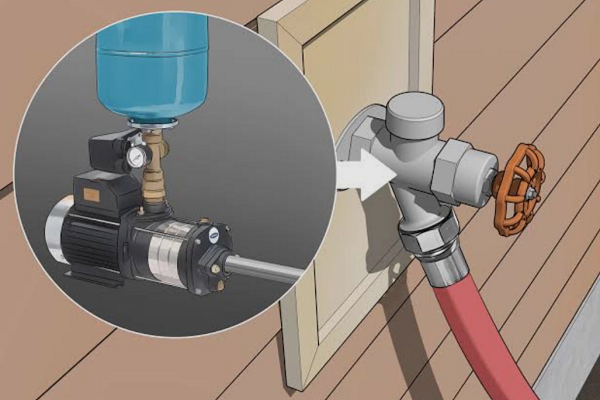
- Install a booster pump with a small pressure tank. Size it to your peak flow.
- Most garden hoses handle about 60 to 80 psi. Check your hose rating before boosting.
- Add a pressure relief valve for safety.
These target fixes are how to increase water pressure in garden hose systems without waste. I have seen 20 to 40 percent gains from a hose and nozzle swap alone.

Advanced upgrades for big yards and long runs
For long beds or large lawns, think system design.
- Run a 3/4 inch main hose to a central point. Split into short 5/8 inch leads.
- Use a two to four zone manifold. Water one zone at a time for steady pressure.
- For beds, switch to drip or soaker lines. They need less pressure and give better watering.
- For far corners, consider a small storage tank and a booster pump with a pressure switch.
This is the long-term way for how to increase water pressure in garden hose layouts that serve wide spaces.
Safety and common mistakes to avoid
- Do not exceed your hose or fitting rating. Many garden hoses are rated to 60 to 90 psi.
- Do not deadhead a booster pump with a closed nozzle. Use a bypass or pressure switch.
- Keep backflow protection in place. It protects your home water. Many areas require it by law.
- Avoid stacking cheap splitters. Each adds loss and leak risk.
- Replace cracked O-rings and washers. Small leaks kill pressure fast.
These steps protect your gear while you improve how to increase water pressure in garden hose setups.

Tools and materials you may need
- Pressure gauge with hose adapter
- Replacement rubber washers and O-rings
- High-flow nozzle or wand
- New 5/8 inch or 3/4 inch hose
- Full-port hose bib or quality splitter
- Pipe tape and basic hand tools
- Optional booster pump and small pressure tank
This small kit solves most how to increase water pressure in garden hose problems fast.

Costs and results you can expect
- New washers and O-rings: a few dollars. Gain can be big if leaks were present.
- High-flow nozzle: modest cost. Expect a clear boost in spray reach.
- 5/8 inch hose upgrade: moderate cost. Flow can rise 20 to 40 percent.
- 3/4 inch supply hose for long runs: higher cost. Big gain over distance.
- Booster pump kit: higher investment. Use only if supply pressure is the real limit.
Real-world note from my projects: replacing a 100 foot 1/2 inch hose with a 50 foot 3/4 inch main plus a 25 foot 5/8 inch lead made a sprinkler spin smoothly where it once stalled. That is how to increase water pressure in garden hose lines with smart design.

Maintenance plan to keep strong flow all season
- Monthly: Check for kinks, leaks, and worn washers.
- After heavy use: Rinse screens in nozzles and splitters.
- Each season: Flush the hose. Look for bulges and soft spots.
- Winter: Drain and store hoses off the ground. Protect the hose bib from freeze.
- Yearly: Test pressure at the spigot. Note any drop from last year.
A simple plan keeps how to increase water pressure in garden hose results lasting and reliable.
Frequently Asked Questions of how to increase water pressure in garden hose
Why is my garden hose pressure so low all of a sudden?
A clog or a kink is likely. Check screens, washers, and the nozzle first, then test without the nozzle.
Does a longer hose reduce water pressure?
Yes. Longer hoses add friction, which lowers flow and effective pressure at the end. Use the shortest hose you can.
Will a bigger hose increase pressure?
A larger diameter cuts friction and boosts flow. It does not raise house pressure, but it gives more usable pressure at the nozzle.
Can I remove the flow restrictor from my nozzle?
Sometimes. Follow local rules and maker guidance. If you remove it, watch for leaks and higher spray force.
Is a booster pump safe for hoses?
Yes if set up right. Keep pressure within hose ratings and add a pressure switch and relief valve.
Conclusion
You can fix weak hose pressure with simple steps. Clear clogs, stop leaks, shorten runs, and use the right hose and nozzle. If needed, tune the regulator or add a booster within safe limits. This is the practical path for how to increase water pressure in garden hose systems at home.
Start with the quick checklist today. Test, tweak, and upgrade where it counts. If you found this helpful, subscribe for more backyard fixes or drop your pressure puzzle in the comments.