Clean clogs, fix leaks, use a shorter wider hose, and raise supply pressure.
If your hose sputters or your sprinkler is weak, you can fix it. This guide shows how to increase garden hose water pressure the right way. I’ve solved this on many yards, from tiny patios to big slopes. I’ll walk you through fast checks, smart upgrades, and pro tips that last.

Pressure vs flow: why your hose feels weak
Low pressure is not always the problem. Often, the real issue is low flow.
Pressure is the push. Flow is how much water comes out. Long or narrow hoses cut flow. So do clogs and sharp turns.
Gravity matters too. You lose about 0.43 psi for every foot of rise. A hose going uphill can feel weak fast.
City water often runs 40 to 60 psi at the house. That is fine for most hoses. If it feels weak, friction or blockage is likely. Fix those first before you try to boost pressure.
Quick diagnostic checklist
Use this list to spot easy wins in minutes.
- Check for kinks. Uncoil the hose fully and remove tight bends.
- Look for leaks. Wet spots, drips at fittings, or mist mean lost pressure.
- Remove the nozzle. Test flow direct from the hose end.
- Clean screens. Wash the washer screen in the female end of the hose and nozzle.
- Try a shorter hose. Test with a 25 or 50 foot hose if you can.
- Test a different spigot. Some outdoor valves are half shut or clogged.
- Check time-of-day demand. Flow often drops at dinner time.
- Inspect the splitter. Cheap Y-splitters choke flow. Use a full-flow type.
- Open valves fully. Quarter-turn ball valves beat old multi-turn valves.
If these quick steps help, you already know how to increase garden hose water pressure without spending much.

Step-by-step: measure before you fix
You cannot improve what you do not measure. Here is a simple method.
- Do a bucket test
- Fill a 5-gallon bucket from the hose end.
- Time it in seconds.
- GPM = 5 ÷ (seconds ÷ 60).
- Under 4 GPM from a normal spigot is a red flag.
- Read actual pressure
- Screw a cheap gauge on the spigot.
- Static pressure (no water running) should be 40 to 60 psi for most homes.
- Run a hose and read again. If it drops a lot, you have a flow choke.
- Isolate the problem
- Good pressure at the spigot but weak at the end means hose loss.
- Weak pressure at the spigot means a supply or regulator issue.
I use this flow and pressure check on every job. It sets the plan and stops guesswork, which is key when learning how to increase garden hose water pressure the smart way.

Fast fixes you can do today
These are low or no-cost changes with a big payoff.
- Shorten the hose. Use the shortest hose that reaches. Less length means less friction.
- Go wider. A 3/4 inch hose can almost double flow vs a 1/2 inch hose.
- Clean or remove restrictors. Many nozzles have tiny disks that limit flow.
- Replace flat washers and screen washers. A crushed washer leaks under load.
- Use a high-flow nozzle. Fireman-style nozzles often flow better than pistol grips.
- Avoid 90-degree turns. Use gentle curves and straight runs.
- Upgrade the splitter. Pick full-port splitters with big openings.
- Tighten every fitting. Use thread tape on metal to metal joints if needed.
Personal tip: I swapped a 100 foot 1/2 inch hose for a 50 foot 3/4 inch hose on a sloped yard. The sprinkler went from a weak mist to a full arc. That one change taught my client how to increase garden hose water pressure with simple hardware.

Upgrades that make a big difference
When quick fixes are not enough, try these.
-
Adjust or replace the pressure regulator
Most homes have a pressure reducing valve on the main line. Many set it to about 50 psi. If it fails, pressure drops or surges. Have a pro adjust or replace it if your static pressure is low. -
Add a booster pump and small tank
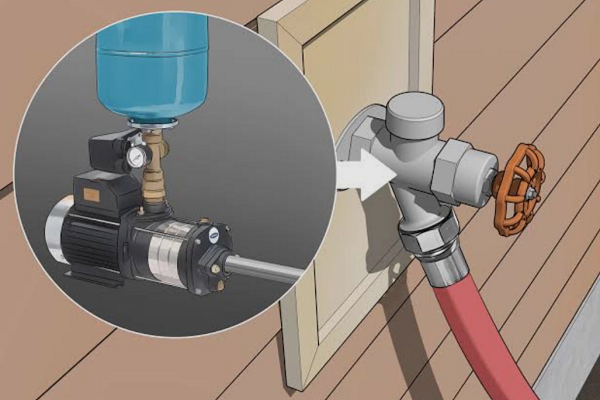
If supply pressure is weak, a booster can lift it. Aim for 50 to 70 psi max at outdoor points. Many pumps include sensors and a bypass for steady flow. -
Install a full-port outdoor spigot
Old sillcocks can choke flow. A 3/4 inch full-port ball valve spigot passes more water with less loss. -
Run a larger feed line to the spigot
A 3/4 inch or 1 inch feed line cuts friction. This helps long runs and backyard taps. -
Add or service a sediment filter
Rust or sand in pipes and screens kills flow. A simple spin-down filter that you flush often works well.
These upgrades are how to increase garden hose water pressure for long-term results. They pay off if you water often or run sprinklers.
Advanced solutions for big yards, slopes, and irrigation
If you have a large lot, steep grade, or many zones, plan the system.
-
Split zones
Run one sprinkler or one soaker line per zone. Parallel lines beat long daisy chains. -
Balance elevation
Place valves or hose ends lower when you can. Each 10 feet up costs about 4.3 psi. -
Use drip for plants
Drip uses low pressure and saves water. It reduces the need for high hose pressure at all. -
Pair rain barrels with a pump
Gravity barrels give very low pressure. A small 12V or AC pump boosts it to usable levels. -
Choose the right sprinkler
Rotor heads need more pressure than oscillating bars. Check the maker’s psi and GPM chart.
I set up a hillside home with two short 3/4 inch hoses running in parallel from a high-flow Y. Flow improved more than 40% at each head. This is a great example of how to increase garden hose water pressure without overloading one line.

Safety, limits, and when to call a pro
Know the limits so you do not break things.
-
Do not exceed 80 psi at fixtures
Most codes cap indoor pressure at 80 psi. Higher can stress pipes, washers, and hoses. Many hoses burst far below their stated burst rating when aged or sun baked. -
Use a backflow preventer
It keeps dirty water from being sucked into your home line. Many outdoor spigots include one. Replace if it sticks or leaks. -
Watch for system red flags
Brown water, loud hammer, big pressure swings, or poor flow at all taps point to bigger issues. Call a licensed plumber if the gauge shows under 35 psi at rest or if pressure drops huge when one tap runs. -
Avoid risky hacks
Do not hook a pressure washer to “boost” house pressure. That tool is for high-pressure spray only, not for supply.
With care, you can learn how to increase garden hose water pressure and stay within safe limits. Good planning beats brute force every time.
Frequently Asked Questions of how to increase garden hose water pressure
What is normal water pressure for a garden hose?
Most homes have 40 to 60 psi at the spigot. That is enough for most sprinklers if the hose is short and wide.
Does hose diameter really matter?
Yes. A 3/4 inch hose has far less friction than a 1/2 inch hose. That means higher flow at the end.
How can I test my hose flow without tools?
Do a bucket test. Time how long it takes to fill a 5-gallon bucket and calculate GPM.
Will a longer hose reduce my pressure?
It reduces flow due to friction, which feels like low pressure. Keep hoses as short as possible for best results.
Can I remove the restrictor in my nozzle?
You often can, and it helps flow. Keep in mind it may void the warranty or change the spray pattern.
What if my house pressure is low everywhere?
Check the pressure regulator or the main shutoff valve. A plumber can test and adjust it or suggest a booster pump.
How much pressure do sprinklers need?
Most hose-end sprinklers work well at 30 to 50 psi. Check the product specs for ideal psi and GPM.
Conclusion
Now you know how to increase garden hose water pressure with simple checks and smart upgrades. Start with kinks, leaks, screens, and hose size. Then move to a better spigot, a clean filter, or a booster if needed.
Test, tweak, and track your gains. Small changes stack up fast in the yard. Try one tip today and share your results. Want more guides like this? Subscribe or drop a comment with your setup and questions.