Measure inner diameter with calipers; or wrap string, divide circumference by π.
If you’ve ever stood in a hardware aisle, hose in hand, wondering which fitting to buy, you’re in the right place. I’ve spent years matching hoses, faucets, and sprinklers, and I’ll show you how to measure garden hose diameter the right way. This guide breaks down how to measure garden hose diameter with simple tools, clear steps, and real tips you can use today.
Why garden hose diameter matters
The diameter of your hose controls flow. A bigger diameter moves more water with less pressure loss. That means faster bucket fills, better sprinklers, and stronger spray at the end of a long run. If you want the right parts the first time, you need to know how to measure garden hose diameter.

Tools and prep
You can measure a hose in minutes with basic tools. Gather these first so you can follow each step without stopping.
- Calipers or a ruler. A digital caliper makes it easy.
- Flexible tape measure or string. You can use this for circumference.
- A marker and a notepad. Write down each number.
- A small flashlight. Helpful when looking at the fitting.
- A thread gauge, if you have one. Not required, but nice to have.
Before you learn how to measure garden hose diameter, remove any quick-connects or spray nozzles. Clean the hose end so you can see the threads and the hose wall.
Step-by-step: Measure outside diameter (OD)
The outside diameter helps you understand hose size and wall thickness. It also helps when you buy clamps or repair sleeves. Here is the simple way to measure OD.
- Use calipers. Open the jaws and place them around the hose body. Do not pinch. Read the number. That is the outside diameter.
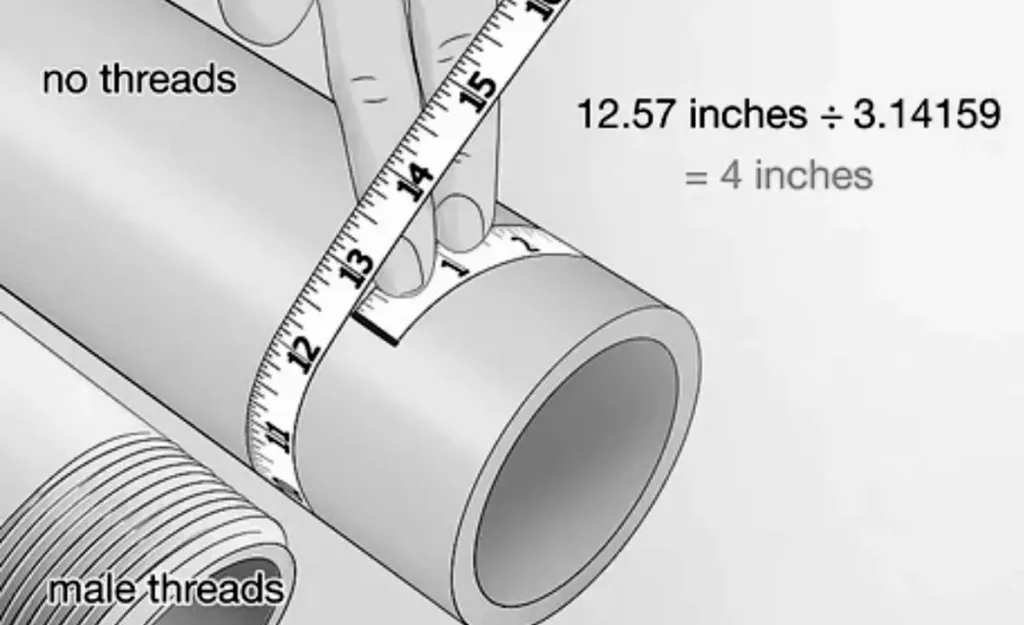
- No calipers? Use string. Wrap it once around the hose body. Mark where the string meets. Lay it flat and measure the length. Divide by 3.14 (π). That gives you the outside diameter.
- Take two readings. Measure near the end and a few inches back. Hoses can flatten or swell with age.
Example: Your string reads 3.14 inches. 3.14 ÷ 3.14 = 1.0 inch OD. This is a common outside diameter for a 5/8 inch hose. Keep this number in your notes as you work through how to measure garden hose diameter.
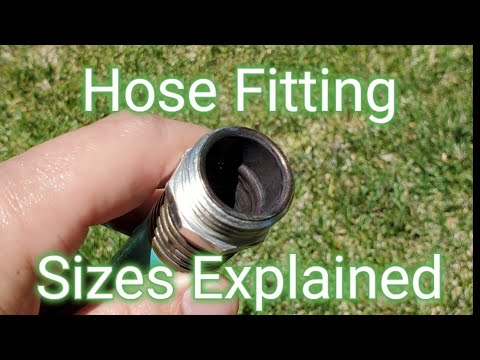
Step-by-step: Determine inside diameter (ID)
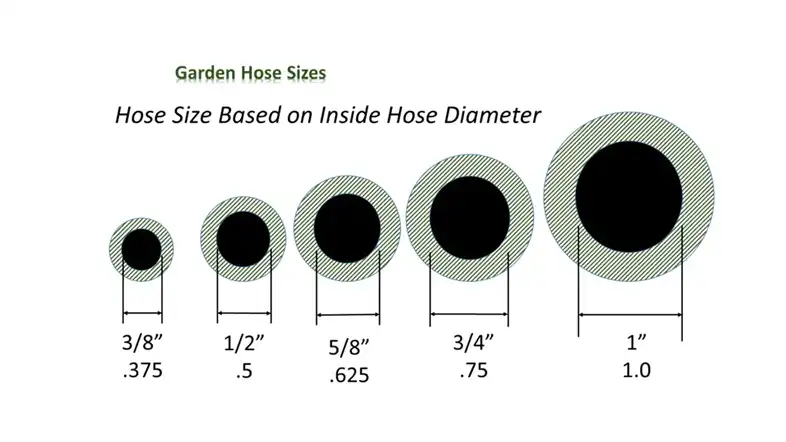
The inside diameter is the size most people mean by “hose diameter.” It sets flow and fitting size. Most garden hoses are 1/2 inch, 5/8 inch, or 3/4 inch ID.
Try these methods:
- Check the print. Many hoses have the size printed on the jacket. Look for 1/2", 5/8", or 3/4".
- Use calipers on a clean cut end. If the hose is already cut, measure the opening. That number is the inside diameter.
- Estimate from OD and wall thickness. Many 5/8 inch hoses have about 1.0 inch OD, give or take. If your OD is near 1.0 inch, the ID may be 5/8 inch. If the OD is closer to 1.1–1.2 inches, the ID may be 3/4 inch.
Pro tip from the field: When I repair hoses onsite, I bring barbed fittings in 1/2, 5/8, and 3/4 inch. I test fit the barb in the hose end. The right size slides in with firm hand pressure. If it rattles, it is too small. If it needs force or folds the hose, it is too big. This hands-on check can confirm how to measure garden hose diameter when numbers are unclear.
Measure thread size and type
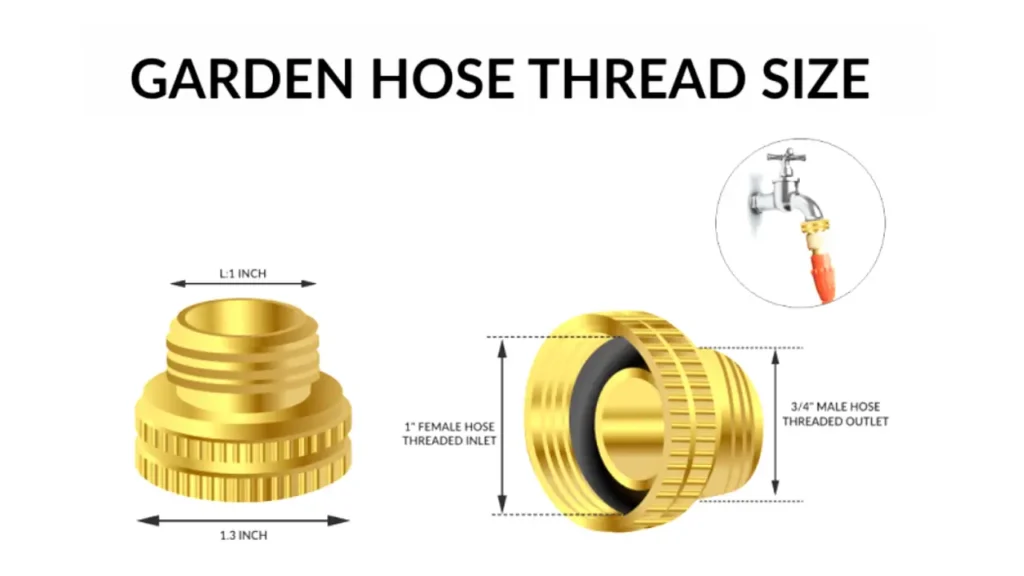
Knowing how to measure garden hose diameter also means knowing your thread type. In North America, most outdoor faucets and hoses use 3/4 inch GHT (garden hose thread). It is also called 3/4-11.5 NH. That 11.5 stands for 11.5 threads per inch.
Use these checks:
- Measure across the threads. The outside of a male GHT is about 1.05 inches across. The inside of a female GHT is near that size too.
- Count threads per inch. If you see about 23 threads over 2 inches, that is 11.5 TPI.
- Do not confuse GHT with NPT. NPT is tapered and used for plumbing pipes. GHT is straight and used for garden hoses.
If your threads do not match, you can use a GHT to NPT adapter. But first make sure you truly know how to measure garden hose diameter and thread type. It saves returns and leaks.

Matching fittings, couplers, and accessories
Once you know the ID and thread type, matching parts gets easy. This is where a correct read on how to measure garden hose diameter pays off.
- Nozzles and sprayers. Most are 3/4 inch GHT. If the nozzle leaks, check the washer and size.
- Splitters and timers. Most connect to a 3/4 inch GHT spigot. Confirm your faucet thread before you buy.
- Repair ends. Pick the barb that matches your hose ID. Use the OD to pick the right clamp size.
- Quick-connects. These attach to GHT. Choose brass for durability and better threads.
Tip: Always replace the rubber washer in female fittings. It is a cheap fix for drips and improves seals after you measure and refit.
Common garden hose sizes and what they mean
You will see three common sizes on the shelf. Use this quick guide to match size to job and reinforce how to measure garden hose diameter.
- 1/2 inch ID. Light weight, shorter runs, gentle flow. Good for hand watering small beds.
- 5/8 inch ID. The most common size for homes. Good balance of flow and weight.
- 3/4 inch ID. High flow, long runs, pressure washers, and large sprinklers. Heavier but powerful.
Long hoses lose pressure. If your run is 100 feet or more, size up. This is where knowing how to measure garden hose diameter helps you keep strong flow at the end.

Real-world examples, tips, and mistakes to avoid
I have fixed many “mystery leak” jobs that came down to wrong size. Here are simple lessons that will help you master how to measure garden hose diameter.
- Do not measure over quick-connects. Remove all add-ons first.
- Watch for swollen hose ends. Sun and pressure can widen OD near the fitting. Measure a few inches back.
- Replace old, cracked washers. The best measurement will still leak with a bad washer.
- Write the size on the hose with a marker. Future you will be happy.
- Store hoses in shade. UV can harden the jacket and change fit over time.
Mistake I learned the hard way: I once forced a 5/8 inch barb into a 1/2 inch hose. It held for a week, then split on a hot day. Take the extra minute to confirm how to measure garden hose diameter and choose the right barb. Your hose will last much longer.
Step-by-step summary checklist
Use this short list the next time you need to confirm how to measure garden hose diameter.
- Remove nozzles and washers. Clean the end.
- Measure OD with calipers or the string method.
- Find ID from print, a cut end, or OD estimate.
- Verify threads are 3/4 inch GHT and note TPI.
- Match fittings by ID, and match threads by GHT.
Do these steps and you will buy the right parts the first time. It is the simplest way to nail how to measure garden hose diameter.
Frequently Asked Questions of how to measure garden hose diameter
What is the most common garden hose diameter?
Most home hoses are 5/8 inch inside diameter. You will also see 1/2 inch and 3/4 inch in many stores.
How do I measure without calipers?
Wrap string around the hose body, mark it, then measure the length. Divide by 3.14 to get the outside diameter and estimate the inside size.
Are garden hose threads the same as pipe threads?
No. Garden hose thread is 3/4 inch GHT with straight threads. Pipe thread is NPT and tapered, so it will not seal without an adapter.
Will a 3/4 inch hose increase my water pressure?
It will not raise pressure at the source, but it reduces pressure loss over distance. You get better flow at the nozzle on long runs.
How do I know if my faucet is GHT?
Most outdoor spigots in the U.S. are 3/4 inch GHT. Measure across the threads or test with a known GHT fitting to confirm.
Can I connect a 1/2 inch hose to a 3/4 inch faucet?
Yes, using standard GHT fittings and washers. Flow will be limited by the smallest inside diameter in the system.
Conclusion
Now you know how to measure garden hose diameter with simple tools and clear steps. Check OD with string or calipers, confirm ID, and verify GHT threads. Match fittings to your numbers and you will get tight seals, better flow, and fewer returns.
Take five minutes today to measure your hose and write the size on it. You will save time on every future project. Want more helpful guides like this? Subscribe, share this article with a friend, or drop a question in the comments.