PVC Vs Vinyl Garden Hose: Best 2026 Buying Guide
Dragging out a garden hose should be the simplest part of your day. Instead, it is often the moment a kink slows the water to a trickle, a stiff coil fights every step, or a hairline crack turns into a spray. After years of putting hoses through real yards—gravel paths, hot concrete, freezing sheds, and pump setups—the material inside the hose matters more than the color of the packaging or the size of the brand name.
This guide compares PVC and vinyl hoses in practical terms, highlights the strengths and weaknesses of each, and helps you choose the right hose for the 2026 season without overpaying. You will also find a short list of dependable PVC and vinyl options, plus the maintenance habits that make either material last. You can also read our guide on how to connect garden hose to pvc pipe.
The Real Difference Between PVC and Vinyl Hoses
Vinyl hoses are not a completely separate material from PVC. They are made from PVC resin that has been softened with plasticizers, which is why they flex easily and often look clear or translucent. Standard PVC hoses use less plasticizer and are built with thicker walls, making them firmer, tougher, and more resistant to abrasion.
That one manufacturing difference explains nearly every performance gap. Softer vinyl is easier to coil, but it is also easier to puncture and faster to degrade in sunlight. Firmer PVC is heavier and stiffer, but it stands up to rough terrain and higher water pressure. Hybrid models try to blend the two—for example, PVC hoses with flexible outer layers or vinyl hoses with internal reinforcement. You can also read our guide on how to recycle garden hose.
Why Material Choice Affects Everyday Use
A hose is not just a pipe; it is a tool you handle several times a week. The material determines how much effort it takes to lift, bend, drag, coil, and store.
A common mistake is choosing the lightest, cheapest hose for every job. That works for small patio plants, but it can lead to bursts, kinks, and premature cracking when the same hose is used for a sprinkler or a transfer pump. In practice, a hose rated for one duty can fail fast when pushed into another. The sections below break down the real differences so you can match the material to the task. You can also read our guide on how to improve lawn soil health.
PVC Vs Vinyl Garden Hose: Key Differences
Durability and Abrasion Resistance
PVC is more durable. A well-made PVC hose can be dragged across concrete, gravel, and brick without showing the same wear as vinyl. Its stiffer wall resists punctures from stepping on it, catching it on a hose pot, or pulling it over a sharp edging.
Vinyl is softer, so it wears quicker. The most common failure point is the last few feet near the nozzle, where the hose drags over the ground. Once the outer surface scuffs through, water pressure finds the weak spot and a bulge or leak follows. For tough runs, choose reinforced PVC over plain vinyl. You can also read our guide on how to recycle a garden hose.
Flexibility and Handling
Vinyl is much easier to handle. It coils tightly, follows corners, and does not fight you when you move it around planters. That makes it a good choice for balconies, greenhouses, and anyone with limited grip strength.
PVC feels stiffer in comparison. Some reinforced PVC hoses become noticeably rigid in cool weather, especially below 50°F. If you water in the morning in colder months, a light vinyl hose is more forgiving. If you are watering a large lawn, the extra stiffness is a fair trade for durability.
Temperature and UV Resistance
Both materials harden and crack after prolonged exposure to sunlight. UV light breaks down plasticizers, which makes the hose stiff, brittle, and prone to splitting. Storing a hose in a shed, garage, or covered reel dramatically extends its life.
In cold weather, all garden hoses get stiffer. Vinyl hoses become less flexible at freezing temperatures, and PVC hoses can become almost rigid. Neither should be left full of water during a hard freeze. If you live in a climate with real winter, drain and store hoses indoors before the first frost.
Water Safety and Leaching
Most ordinary garden hoses are not certified for drinking water. That matters if you fill a child’s pool, a pet bowl, an RV tank, or anything you plan to drink from. Look for a label that says lead-free, phthalate-free, and safe for potable water. Independent certification such as NSF/ANSI 61 provides more confidence than a claim printed on the package.
If your water comes from a well and has rusty supply lines, a hose-end filter can protect plants and keep staining off patios. For broader questions about tap water and home plumbing, the EPA’s drinking-water guidance is a useful starting point.
Pressure, Flow, and Kink Resistance
Reinforcement makes the biggest difference. A plain vinyl hose typically handles only low-pressure jobs like gravity-fed rain barrels. A reinforced PVC hose, especially one with braided layers, can handle much higher pressure from sprinklers, pumps, and pressure washers.
Kink resistance follows the same pattern. Soft vinyl tends to kink when twisted or pulled around corners. Thick-walled or braided PVC holds its shape better, so the water keeps flowing. Larger diameters also resist kinking better than narrow ones, at the cost of more weight.
Cost and Value
Vinyl usually costs less upfront. That makes it attractive for a first hose or a temporary setup. But vinyl hoses tend to wear out faster, so the lower price does not always mean lower cost over time.
PVC hoses cost more, especially reinforced models with brass fittings. If you care for them properly, they generally last longer and handle more jobs. For most gardeners, a mid-range PVC hose is the better value if it will be used regularly.
PVC Vs Vinyl Garden Hose: Quick Comparison Table
| Factor | PVC Garden Hose | Vinyl Garden Hose |
|---|---|---|
| Durability | Excellent; resists abrasion and punctures | Good for light duty; wears faster on rough ground |
| Flexibility | Stiffer, especially in cool weather | Very flexible; coils easily |
| Weight | Heavier | Light |
| Kink resistance | Good when reinforced; moderate when plain | Lower; tends to kink when twisted |
| Clarity | Usually opaque | Often clear or translucent |
| Pressure handling | Wide range; reinforced versions handle high pressure | Usually best for low pressure |
| UV resistance | Better, but still degrades in sun | Hardens and cracks faster in sunlight |
| Typical best use | Sprinklers, pumps, rough terrain | Rain barrels, containers, light watering |
| Upfront cost | Higher | Lower |
How to Choose Based on Your Watering Task
Your regular watering work should decide the material. Here is how the decision breaks down by job.
Sprinklers and Lawn Coverage
Choose reinforced PVC. Oscillating and impact sprinklers need steady pressure and consistent flow, and a soft vinyl hose can bulge or leak at the connections when the sprinkler cycles. A 5/8-inch reinforced PVC hose is a dependable match for most medium-size lawns. Pair it with a comfortable trigger nozzle so you can control the spray without gripping a stiff handle all afternoon.
Rain Barrels and Gravity-Fed Irrigation
Vinyl is the practical choice here. Rain barrel pressure is low, so the hose does not need heavy reinforcement. Vinyl is light enough to route around beds and easy to move when you refill containers. Clear vinyl is especially useful because you can see air bubbles, debris, or clogs moving through the line before they become a problem.
Cars, Concrete, and Outdoor Cleaning
For washing the car, rinsing patios, or cleaning trash bins, use a shorter hose and a flexible material. A 25- or 50-foot vinyl hose is easier to pull around the driveway. If you wash vehicles regularly, add a dedicated sudsing attachment so you can cover a panel with foam without dragging a pressure washer around. For high-pressure cleaning, switch to a reinforced PVC line and check the hose rating first.
Ponds, Pumps, and Water Features
This job usually calls for dedicated PVC tubing, not a standard garden hose. Braided or corrugated PVC resists collapse under suction and handles the pulsing pressure from fountain and pond pumps better than soft vinyl. If you are connecting a pump, buy a hose that is specifically rated for that purpose rather than adapting a regular garden hose.
Patios, Balconies, and Small Spaces
A short vinyl hose is hard to beat in tight spaces. It coils into a small tub, follows the curve of a planter, and does not strain the hook on a balcony wall. A 25- to 50-foot light hose covers most container gardens without becoming a tripping hazard. Add shredded leaf mulch to container beds to hold moisture in the soil, which means fewer trips to the spigot.
Flow and Irrigation Setup Tips
Once you know the material, match the hose diameter to the demands of your system.
- Drip irrigation: Low pressure and low flow. A 1/2-inch line is enough for small beds.
- Sprinklers: High pressure and high flow. Use a 5/8-inch or larger reinforced PVC hose.
- Soaker hoses: These run directly from a spigot or hose, so the main line still needs adequate volume.
- Rain barrels: Gravity pressure is low. Keep the hose short and use the largest diameter practical to maintain flow.
- Long runs: The longer the hose, the more pressure you lose to friction. Buy the shortest length that reaches the job.
How to Measure Hose Diameter Before Buying
Hose size is based on the inner diameter, not the outer diameter. Most residential hoses come in 1/2 inch, 5/8 inch, and 3/4 inch. The 5/8-inch size is the most common all-round choice for lawn and garden watering.
Here is how to check what you have before you buy:
- Disconnect the hose and drain the water out.
- Look inside the female end. If the hole looks tight, it is probably a 1/2-inch hose.
- For a more exact measurement, use a caliper on the inner rim.
- Check the label or the imprint printed on the side of the hose if it is still legible.
The sizing trade-offs matter because a narrower hose moves less water and loses more pressure over longer runs. If you are replacing an old hose, you can usually stay with the same diameter and avoid surprises at the spigot.
Best PVC and Vinyl Hoses to Buy in 2026
These picks cover the different ways people actually use garden hoses. None of them is the single best hose for everyone, so use the notes after each option to decide which fits your setup.
Eastrans 1/2" Clear Vinyl PVC Tubing, 50 ft
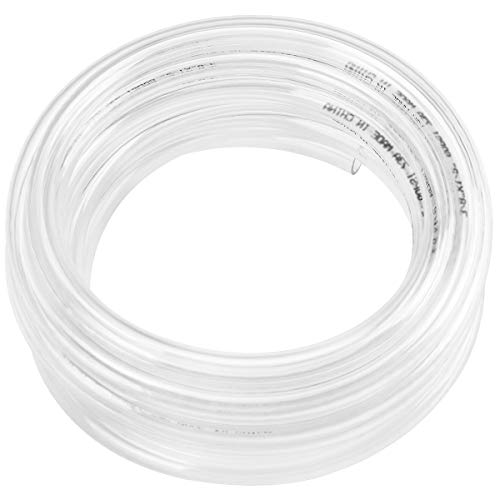
Clear 1/2-inch vinyl tubing makes low-pressure flow easy to see.
This clear vinyl tubing is not a standard garden hose with threaded ends, but it is a great line for rain barrels, aquarium work, and low-pressure transfer jobs. The transparent wall lets you see water movement, air pockets, and clogs. At 50 feet long and 1/2 inch in diameter, it is light enough to route around a raised bed or down a gutter downspout.
Because it has no factory fittings, you will need barbed connectors and hose clamps. That makes it more of a DIY option. It is not built for high water pressure, hot water, or drinking water. For low-pressure jobs, it is inexpensive and easy to cut to length.
Pros:
- Lightweight and flexible for tight paths
- Clear tube shows flow and debris
- Easy to cut and fit with barbed adapters
- Low-cost material for greenhouse and barrel setups
Cons:
- No threaded ends; requires add-on fittings
- Not for high-pressure or hot-water use
- Clear vinyl can stiffen after long UV exposure
Best for: Rain barrel delivery, aquarium lines, greenhouse misting, and low-pressure transfer.
JAKARDA 3/4" Braided PVC Hose, 10 ft

Reinforced braided PVC keeps its shape under pressure.
This 10-foot braided PVC hose is more of a utility line than a lawn hose. The braided reinforcement helps the tube hold its round shape and resist kinking, and the 3/4-inch inner diameter lets water move through quickly. Two clamps are included, so you can attach barbed fittings right out of the package.
It handles water and light oil transfer, which makes it useful in a garage or workshop as well as in the yard. It is stiffer than vinyl and intended for short runs. If you need to connect a pump to a sprinkler or extend a hard-piped system, this type of hose holds up better than a soft vinyl hose.
Pros:
- Braided wall resists kinking and collapse
- 3/4-inch bore supports high flow
- Includes two clamps for quick setup
- Works for water and light oil jobs
Cons:
- Only 10 feet long; may need couplers for longer runs
- Stiffer and harder to coil than vinyl
- Not for high-temperature service
Best for: Short pump runs, transfer lines, filter bypasses, and garage utility work.
FUNJEE 25 ft PVC Garden Hose, 1/2" Brass Ends

A 25-foot PVC hose with brass ends suits small spaces.
This is a genuine PVC garden hose with 1/2-inch brass fittings. The brass ends are a clear upgrade over soft plastic fittings; they resist cross-threading and keep the connection drip-free longer. At 25 feet, it is short enough to handle quickly and long enough for balconies, small patios, and car-washing duty.
The smaller 1/2-inch bore means less flow than a 5/8-inch hose, so it is not ideal for big lawns. It can also kink if you force it around tight corners. But for light watering and rinsing, it is easy to lift, coil, and store.
Pros:
- Brass fittings last and seal well
- Light enough for everyday handling
- Good size for balconies and small yards
- Easier to store than a long, bulky hose
- Less thread damage than plastic-end models
Cons:
- 1/2-inch diameter restricts flow
- Can kink in tight turns
- Short length may require coupling for larger areas
Best for: Patio plants, quick car rinses, and small garden spots.
Orbit 3/4" Slip x FHT PVC Fitting, 2-Pack

These adapters join rigid PVC pipe to standard hose threads.
This is not a hose; it is a fitting that connects 3/4-inch PVC pipe to a standard garden hose thread. The slip side bonds to Schedule 40 PVC with solvent cement, and the threaded side accepts a hose, nozzle, or sprinkler. It is a clean way to add a hose outlet to an underground sprinkler line or a hard-piped drip system.
You will need PVC primer and cement to make the joint, plus a rubber washer on the hose-thread side. Once installed, it lets you switch between flexible hoses and fixed pipe without adding more hardware. For anyone building or extending an irrigation system, this two-pack is a practical part to keep on hand.
Pros:
- Simple transition from PVC pipe to hose thread
- Two-pack gives you a spare or a second zone
- Standard 3/4-inch size fits common pipe
- Resists corrosion and weather damage
Cons:
- Requires solvent welding
- Not a flexible hose
- FHT side needs a washer to seal properly
Best for: Sprinkler system tie-ins, seasonal hose hookups, and drip line connections.
YASHINE 1-1/2" x 100 ft Lay-Flat PVC Hose

Lay-flat PVC handles bulk water jobs and folds away compactly.
This wide lay-flat PVC hose is built for moving large volumes of water. At 1-1/2 inches in diameter and 100 feet long, it works for pool backwash, drainage, pond filling, or flood control. It rolls flat when empty, so it takes up far less storage space than a round hose of the same length.
It is not meant for a regular spigot. You need a barbed adapter sized to 1-1/2 inches, and once the water is inside, the hose is heavy and hard to bend. But when the job is moving water, not watering a flower bed, this design gets the work done with less friction loss than a narrow hose.
Pros:
- High flow for pools, ponds, and drainage
- Lays flat for compact storage
- Reinforced PVC wall handles rough use
- Long reach for distant discharge points
- Two clamps included for connections
Cons:
- Requires special adapters for a spigot
- Heavy and bulky when full
- Poor choice for tight bends or regular garden work
Best for: Pool backwash, pond maintenance, drainage lines, and rainwater transfer.
How to Care for Your PVC or Vinyl Hose
Proper storage is the cheapest way to make either material last longer. Follow these habits from the first day:
- Drain the hose after every use. Standing water grows algae and puts constant pressure on the inner wall.
- Store out of direct sunlight. UV exposure is the main cause of cracking and stiffening. A garage, shed, or under-cover hose reel is better than a sunny hook.
- Coil loosely. Avoid sharp bends. A figure-eight pattern is easier on the hose than a tight wrap around your elbow.
- Disconnect from the spigot. A hose left attached traps water and stresses the fittings.
- Inspect before the season starts. Look for cracks, blisters, and brittle sections. Catching a weak spot early prevents a messy mid-summer break.
If a hose is beyond repair, do not leave it in the garden. Many recycling programs accept hoses through special collection events. Check with your local waste service before tossing it in the trash.
Common Hose Problems and Solutions
Even a good hose will act up occasionally. Here is how to fix the usual suspects.
Kinking
No hose is completely kink-proof. Soft vinyl kinks more than reinforced PVC, and narrow hoses kink more than wide hoses. Use the shortest length that reaches, avoid pulling the hose around sharp corners, and consider a braided PVC hose for problem areas.
Leaks at the Connection
A drip at the spigot or nozzle is usually a worn rubber washer. Replacing the washer costs almost nothing and fixes most leaks. If the drip continues, check the threads for damage. Brass fittings are more forgiving than plastic and usually solve the problem.
Stiffness in Cold Weather
All PVC and vinyl hoses stiffen when temperatures drop. Store hoses indoors in winter and avoid stretching a cold hose across the yard. If you must water in cold weather, bring the hose inside a few minutes before use to let it warm up.
Bad Taste or Smell
Stagnant water causes most odors. Drain the hose after each use, and flush it occasionally with a weak vinegar solution. If you need water for drinking or cooking, use only a hose labeled safe for potable water.
PVC Vs Vinyl Garden Hose FAQs
What is the main difference between PVC and vinyl hoses?
Vinyl hoses are PVC softened with extra plasticizers. That makes vinyl more flexible and often clear, but less durable. Standard PVC hoses are stiffer, tougher, and more resistant to high pressure and abrasion.
Which material lasts longer outdoors?
Reinforced PVC generally lasts longer outdoors because it resists UV and abrasion better than plain vinyl. With shade storage and regular draining, both materials last longer. Vinyl tends to become brittle sooner, especially in sunny locations.
Are PVC or vinyl hoses safe for drinking water?
Only if the label says so. Most garden hoses are not certified for drinking water. Look for a clear statement that the hose is lead-free, phthalate-free, and safe for potable water. If it does not say that, do not use it for filling drinking containers.
Which kinks less: PVC or vinyl?
Reinforced PVC kinks less. The stiffer wall resists the sharp folds that stop water flow. Soft vinyl is easier to coil but more likely to kink when twisted. A larger diameter also helps, so choose at least 5/8 inch for general yard work.
Can I use hot water with a PVC or vinyl hose?
Usually not. Most garden hoses are made for cold water only. Using hot water can soften the walls, cause the hose to burst, or release plasticizers. Check the temperature rating printed on the package before you connect it to anything hot.
Final Verdict: Which Should You Buy in 2026?
The PVC vs vinyl garden hose debate comes down to the job you do most often.
Choose reinforced PVC if you water a lawn with sprinklers, drag hoses across rough ground, or need dependable pressure for pumps and cleaning. The extra weight and stiffness are worth it.
Choose vinyl if you need a light, flexible line for rain barrels, container plants, balconies, or short utility runs at low pressure. It costs less and is easier to handle in small spaces.
Choose a braided or reinforced hybrid if your tasks fall in between. It will not be as soft as vinyl or as firm as heavy PVC, but it gives you a practical middle ground.
Before you order, measure your fittings, choose the diameter that matches the run, and buy the shortest hose that reaches the job. That routine saves more water, money, and frustration than any material debate.