5/8 Garden Hose Vs 3/4: Which Size Is Best In 2026
Pick 5/8 for everyday watering; choose 3/4 for maximum flow and distance.
You roll out your hose and the spray seems weak at the far end of the yard. Or your pressure washer sputters when you rinse the driveway. The fix often comes down to one simple choice: hose diameter. The classic debate of 5/8 garden hose vs 3/4 hits flow, reach, and weight. I’ve managed large lawns, drip systems, and pressure tools. I’ve tested both sizes across seasons. Below I break down how to choose the right size, and I review the best repair kits and connectors that fit both, so you can fix leaks fast and keep that perfect flow.
Biswing 5/8 Barb x 3/4 GHT Repair Kit (4-Pack)

This Biswing kit is a practical fix for split hose ends. The 5/8-inch barb connects to standard hoses, and the 3/4-inch GHT threads fit common nozzles. The aluminum body keeps weight down but resists corrosion. Four sets mean you can repair multiple lines or keep spares in the shed.
Installation is simple. Slide the barb into the cut hose and tighten the stainless clamps. I like that the grips bite cleanly without crushing soft hose walls. If you want the best balance in the 5/8 garden hose vs 3/4 debate, this kit lets you repair 5/8 ends while keeping 3/4 GHT compatibility.
Pros:
- Light yet strong aluminum menders
- Stainless clamps resist rust
- Works with 5/8 hose and 3/4 GHT ends
- Four-pack offers solid value
- Quick install with basic tools
Cons:
- Aluminum can gall if over-tightened
- Not ideal for heavy commercial abuse
- Barb can be tight on old, stiff hoses
My Recommendation
Choose this if you run a 5/8 hose for daily watering and need dependable repairs. It is great for patio bibs, sprinklers, and light pressure sprayers. If you juggle 5/8 garden hose vs 3/4 flow needs, this keeps your 5/8 line compatible with standard 3/4 GHT tools. The set is a smart, low-cost fix to extend hose life.
| Best for | Why |
|---|---|
| Home gardeners | Simple, fast repairs on 5/8 hoses |
| Budget fixes | Four-pack covers multiple breaks |
| Mixed tool setups | Standard 3/4 GHT threads fit common gear |
Hourleey Repair Connectors, 4 Set (3/4 or 5/8)

Hourleey’s kit fits both 3/4 and 5/8 hoses, which is helpful when you have a mix at home. The clamps are sturdy and easy to snug with a flathead screwdriver. The menders have a smooth barb that eases installation. You can fix a leaky end in minutes.
I like this kit for family yards and rentals. It shrinks the headache of the 5/8 garden hose vs 3/4 debate because it covers both sizes. Keep it on hand for guests or crew who might cut a hose by mistake. It gets your water back on fast.
Pros:
- Fits both 3/4 and 5/8 hoses
- Sturdy clamps with good grip
- Works with standard 3/4 GHT threads
- Four complete repair sets
- Good value for multi-hose homes
Cons:
- Not as heavy as premium brass
- Older hoses may need heat to slide on
- Finish can scuff with rough storage
My Recommendation
Pick Hourleey if you have both hose sizes across the yard. It is best for mixed setups where the 5/8 garden hose vs 3/4 question comes up often. It saves you from buying two separate kits. The repair is simple, and the parts hold tight once clamped.
| Best for | Why |
|---|---|
| Mixed hose sizes | Covers 3/4 and 5/8 with one kit |
| Quick home repairs | Simple tools and fast install |
| Loaner hoses | Reliable fix when the end splits |
DBR Tech Metal Hose Repair Kit, 2 Set

This DBR Tech set aims for heavy-duty performance. The metal fittings feel solid in hand, and threading is clean. You get male and female ends to fix either side of the hose. It is built to stop leaks and hold pressure.
I use this for 100-foot runs and job sites. It handles both 5/8 and 3/4 hoses, which helps when I test flow. In the 5/8 garden hose vs 3/4 choice, this kit keeps performance high by preventing end loss and blowouts. It is a durable answer for regular use.
Pros:
- Heavy-duty metal build
- Clean, precise threads
- Male and female ends included
- Good under higher pressure
- Works with 5/8 and 3/4 hoses
Cons:
- Two sets may not cover large needs
- Heavier than aluminum options
- Costs more than light-duty kits
My Recommendation
Use DBR Tech when you want a robust fix that lasts. It is great for long hoses, sprayers, and light pressure-washer setups. If 5/8 garden hose vs 3/4 keeps you torn, this kit gives both sizes a strong, leak-free end. It is a smart buy for daily use.
| Best for | Why |
|---|---|
| Long runs | Resists leaks on 100 ft hoses |
| Higher pressure tasks | Solid metal threads and body |
| Frequent users | Durable fix for daily watering |
Rierdge 6-Set Hose Repair and Extender Kit
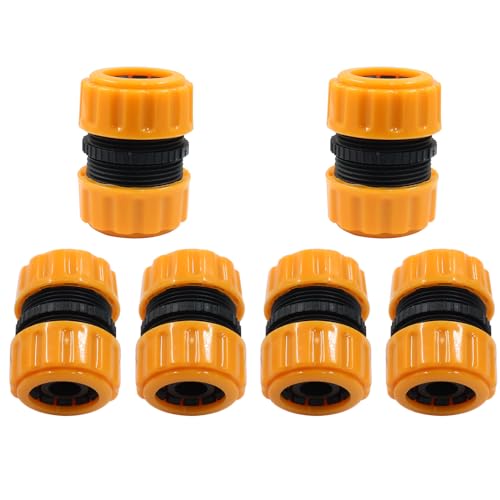
Rierdge packs six repair sets, making it cost-effective if you maintain many hoses. The parts fit both 3/4 and 5/8 sizes, which gives you freedom. Use these to mend ends or join two hoses for extra length. The clamps keep a steady seal.
I like this for property managers and large gardens. You get enough kits to fix several lines at once. For the 5/8 garden hose vs 3/4 debate, it lets you maintain both and link them as needed. It cuts downtime when flow matters.
Pros:
- Six complete repair sets
- Fits 3/4 and 5/8 hoses
- Good for extenders and menders
- Solid seal with clamps
- Great value per repair
Cons:
- Not as refined as premium brands
- Clamps may need re-tightening after first use
- Basic finish shows wear over time
My Recommendation
Pick Rierdge if you oversee many hoses or a big yard. It is the economical choice for keeping both 5/8 and 3/4 hoses alive. When you toggle 5/8 garden hose vs 3/4 for different zones, these kits let you adapt fast. The result is steady water, day after day.
| Best for | Why |
|---|---|
| Large properties | Six sets cover many repairs |
| Mixed diameters | One kit handles both sizes |
| Season prep | Fix and extend before peak watering |
Sanpaint Brass Repair Connectors (3/4 or 5/8)

Sanpaint uses solid brass for extra durability and corrosion resistance. Brass threads feel smooth and seat well against washers. The kit works for both 5/8 and 3/4 hoses. It is a classic, sturdy solution for leaks at the end.
Brass is my go-to when fittings see lots of use. It tolerates repeated connections and disconnections. For 5/8 garden hose vs 3/4 setups, brass helps maintain a tight seal across tools and sprinklers. It is an easy upgrade with long life.
Pros:
- Solid brass build
- Smooth, durable threading
- Fits 5/8 and 3/4 hoses
- Great corrosion resistance
- Good for frequent tool changes
Cons:
- Heavier than aluminum
- Costs more than basic kits
- Can seize if cross-threaded
My Recommendation
Choose Sanpaint if you value long-lasting fittings and a tight, reliable seal. It is ideal for frequent nozzle swaps and heavy watering cycles. In the 5/8 garden hose vs 3/4 match-up, brass helps both sizes keep pressure and stop drips. It is a smart buy for long-term value.
| Best for | Why |
|---|---|
| Durability seekers | Brass lasts and resists corrosion |
| Frequent connectors | Threads stay smooth after many uses |
| Mixed hose fleets | Fits both 5/8 and 3/4 lines |
Aluminum Alloy Repair Kit, 3 Sets (Male/Female)

This three-set aluminum kit keeps weight down and offers both male and female ends. The fittings work with 5/8 and 3/4 hoses. The design is simple, and the clamps are straightforward. It is a good mid-range option for most homes.
I recommend this for gardeners who value light hoses and easy handling. It is a nice fit if heavy brass feels overkill. In the 5/8 garden hose vs 3/4 choice, this kit ensures either size gets a quick, clean fix. It supports steady watering without fuss.
Pros:
- Lightweight aluminum
- Three full repair sets
- Male and female ends included
- Fits 5/8 and 3/4 hoses
- Good price-to-performance
Cons:
- Not as rugged as brass or steel
- Care needed to avoid cross-threading
- Clamps may need periodic checks
My Recommendation
Use this if you want light, easy handling and decent durability. It is great for daily lawn care and hose carts. When comparing 5/8 garden hose vs 3/4 setups, this set keeps both diameters leak-free and simple to maintain. It offers strong value for most users.
| Best for | Why |
|---|---|
| Everyday watering | Light parts, easy install |
| Budget-minded buyers | Three sets at a fair price |
| Hose carts | Low weight aids handling |
Hooshing 5/8 Barb to 3/4 GHT Female, 2-Pack

This brass swivel fitting connects a 5/8 hose to standard 3/4 GHT female. The swivel action helps prevent twist and kinks at the tool end. The brass body is solid and clamp-friendly. Two pieces let you fix two hoses or keep one spare.
I use this when I want a smooth, quick-connect feel at the nozzle. It pairs well with spray guns and timers. In the 5/8 garden hose vs 3/4 discussion, this fitting keeps a 5/8 line tool-ready with minimal drip. It adds a professional finish to your hose end.
Pros:
- Solid brass swivel design
- Smooth threading on 3/4 GHT
- Clean seal with clamps
- Reduces twist at the tool
- Two-pack adds value
Cons:
- Swivel can stiffen without lube
- Brass adds weight at the end
- Requires careful clamp placement
My Recommendation
Choose this for a flexible, no-fuss connection to your nozzle or sprinkler. It is ideal if you prefer a 5/8 hose but want robust 3/4 GHT compatibility. It also helps in the 5/8 garden hose vs 3/4 decision by making 5/8 setups feel premium and tight.
| Best for | Why |
|---|---|
| Nozzle users | Swivel reduces twist and leaks |
| 5/8 hose owners | Seamless 3/4 GHT connection |
| Neat finishes | Clean, professional hose end |
DBR Tech Metal Hose Repair Kit, 4 Set

If you liked the 2-set, this four-set DBR Tech bundle is for bigger needs. The fittings are heavy-duty metal with precise threads. You get enough parts to restore a small fleet. It’s built to take knocks and still seal well.
This is my choice for busy, high-use yards and light commercial work. It fits 5/8 and 3/4 hoses without fuss. In the 5/8 garden hose vs 3/4 tradeoff, this kit ensures both sizes deliver their best flow with no end leaks. It reduces downtime and saves hoses from the trash.
Pros:
- Heavy-duty build across four sets
- Reliable threads and seals
- Supports both common diameters
- Good for frequent handling
- Strong cost per repair at this pack size
Cons:
- Heavier than aluminum kits
- Overkill for rare fixes
- Needs careful alignment to avoid cross-threading
My Recommendation
Buy this if you repair often or manage many hoses. It suits long runs, frequent nozzle swaps, and pressurized tasks. With 5/8 garden hose vs 3/4 systems, it keeps both sizes running strong over a full season. It’s a no-nonsense, durable set.
| Best for | Why |
|---|---|
| High-use yards | Four sets cut downtime |
| Mixed-size fleets | Supports 5/8 and 3/4 hoses |
| DIY pros | Long-lasting metal fittings |
Hooshing 5/8 Barb x 3/4 Female GHT, 2-Pack

This brass adapter is simple and strong. It links a 5/8 hose to a 3/4 GHT female end with a snug fit. The included stainless clamp keeps the seal tight. Two adapters give you backup or a second repair.
I reach for this when I want a classic, reliable fix without extras. It thrives in daily watering and light tool use. If you compare 5/8 garden hose vs 3/4 lines, this helps your 5/8 hose play nice with 3/4 GHT gear. It is practical and long-lasting.
Pros:
- Solid brass construction
- Clean 3/4 GHT fit
- Stainless clamps included
- Two-pack boosts value
- Easy, proven design
Cons:
- Single function part
- Brass needs care to avoid cross-threading
- Not a full repair kit with multiple ends
My Recommendation
Pick this if you need a tough, simple 5/8 to 3/4 GHT female fix. It suits daily home use and standard nozzles. In the 5/8 garden hose vs 3/4 comparison, it lets your 5/8 line integrate cleanly with common tools. Expect a tight seal and easy handling.
| Best for | Why |
|---|---|
| Simple fixes | Basic, dependable adapter |
| Daily watering | Strong seal and durability |
| 5/8 owners | Reliable 3/4 GHT compatibility |
Hooshing 5/8 Barb x 3/4 GHT Male, 2-Pack

This male adapter converts a 5/8 hose end to a 3/4 GHT male thread. It is made of solid brass, so it stands up to wear. The clamps are sturdy and easy to tighten. The two-pack gives you coverage for two repairs.
Use it when you need a male end for split hoses or custom setups. It is great for connecting to female quick-connects, timers, or Y-splitters. In the 5/8 garden hose vs 3/4 context, it gives a 5/8 hose more tool options. That keeps your system flexible.
Pros:
- Solid brass for long life
- Standard 3/4 GHT male threads
- Strong clamps for secure hold
- Two-pack value
- Ideal for custom hose ends
Cons:
- Only for 5/8 hose ends
- Brass can mar if tools slip
- No female end included
My Recommendation
Choose this if you need a male-thread fix for 5/8 hoses. It helps integrate with many water tools and fittings. If you juggle 5/8 garden hose vs 3/4 gear, this adapter levels the field for 5/8 lines. It is a strong, simple part with lasting value.
| Best for | Why |
|---|---|
| Custom builds | Lets you create a male end |
| Timers and splitters | Standard 3/4 GHT compatibility |
| Durable repairs | Brass threads hold up to use |
5/8 Garden Hose vs 3/4: How to Choose the Right Size
Before I wrap up, here is the clear, field-tested take. A 3/4-inch hose can move more water than a 5/8-inch hose. The difference is not small. The cross-section is larger, which boosts flow when pressure is the same.
In simple terms, a 3/4 hose can deliver up to about 40% more flow than a 5/8 hose under ideal conditions. That matters on long runs, steep slopes, or when using high-flow sprinklers. It also helps if your outdoor spigot has low static pressure. More diameter means less friction loss per foot.
But 3/4 hoses are heavier and stiffer. They are harder to coil and pull. A 5/8 hose is lighter and easier to handle, especially for shorter runs. For typical home watering, a 5/8 hose is more than enough.
Here is how I decide. Under 50 feet and basic watering? I use a 5/8. Over 75 feet or high-flow tasks like filling pools or pressure washer feeds? I pick a 3/4. Between those, I look at the toughest task and match the hose to that. The 5/8 garden hose vs 3/4 choice should fit your yard and your tools.
Also note the threads. Most outdoor tools in the US use 3/4 GHT threads. Both 5/8 and 3/4 hoses use 3/4 GHT ends. That is why the repair kits above work across hose diameters. The inner hose size affects flow. The thread standard stays the same.
Practical Use Cases: 5/8 Garden Hose vs 3/4
For small lawns and patio gardens, I keep a light 5/8 hose. It saves my back. It also keeps kinks down around furniture. Flow is fine for hand watering.
For long beds and deep backyards, I run a 3/4 hose as the main line. I then step down to 5/8 or 1/2 to feed drippers or sprayers. That setup protects flow across distance. It makes sprinklers perform like they should.
For pressure washers, I prefer a 3/4 supply hose. It cuts inlet starvation, which can cause pump wear. For filling a pool or large trough, a 3/4 hose also saves time. In the 5/8 garden hose vs 3/4 debate, high-flow tasks favor 3/4.
For kids and pets, a 5/8 hose is easier to handle and safer to move. It is light. It is flexible. It is less likely to knock over pots when dragged.
Care and Safety Tips for Hose Repairs
Cut the hose square before installing a barb. Use a sharp utility knife. A square cut improves the seal. It reduces uneven clamp pressure.
Warm stiff hoses in the sun for a few minutes. This helps the barb slide in. It makes the clamps easier to seat. A drop of soapy water can also help.
Do not over-tighten clamps. Snug and check for leaks under pressure. Then add a quarter turn if needed. Wrenching down too hard can deform fittings.
Rinse new fittings before use. If you drink from the hose, use lead-free fittings. Most modern brass is safe for garden use, but it is smart to verify. Always check product specs.
FAQs Of 5/8 garden hose vs 3/4
Does a 3/4 hose always give more pressure?
No. It gives more flow, not more static pressure. But higher flow at the tool can feel like stronger performance.
How much more water does 3/4 move than 5/8?
Up to about 40% more in ideal cases. Real gains depend on hose length, bends, and your spigot pressure.
Are 5/8 and 3/4 hose ends the same thread?
Yes. Both use 3/4 GHT threads in the US. That is why most fittings work on either hose size.
What size should I choose for 100 feet?
Use 3/4 for 100 feet. It fights friction loss better and keeps flow stronger at the end.
Which is better for hand watering planters?
5/8 is best. It is light, flexible, and easy to move around tight spaces.
Final Verdict: Which Should You Buy?
If you want easy handling for daily watering, pick 5/8. It is light, simple, and more than enough for short runs.
If you need max flow over distance, pick 3/4. In the 5/8 garden hose vs 3/4 choice, match size to task and use the right repair kit.