

Best Gas Chainsaw For The Money: Top Picks For 2026
A gas chainsaw is one of the fastest ways to turn a weekend of storm cleanup, firewood cutting, or trail clearing into a manageable job. The hard part is knowing which saw actually deserves your money. Prices vary wildly, and the cheapest model is rarely the best value once you factor in starting behavior, vibration, parts availability, and how long it holds up.
The phrase “best gas chainsaw for the money” means different things to different buyers. A homeowner with two downed branches needs something light and easy to start. An acreage owner processing firewood needs torque, a longer bar, and the stamina to run for hours. The right saw for you is the one that matches the work you actually do — not the most powerful one on the shelf. You can also read our guide on how long do chainsaw chains last.
This guide breaks down the top gas chainsaw picks for 2026 across every common use case, explains what separates a smart buy from a costly mistake, and gives you a practical checklist for choosing, maintaining, and safely operating your saw.
What Makes a Gas Chainsaw Worth the Money
Value is not just the price tag. A $150 saw that drains your arms, stalls at the worst moment, and dies after one season is no bargain. A more expensive saw that starts reliably, holds its resale value, and handles the work without fighting you is often the cheaper tool in the long run. You can also read our guide on how to store garden hose without kinks.
Match the Engine to the Work
Engine displacement, measured in cubic centimeters (cc), is the best predictor of cutting power. Most homeowner saws fall into a few practical ranges:
| Engine size | Typical jobs | Recommended bar length |
|---|---|---|
| 35–45cc | Limbing, pruning, small logs, light yard debris | 14–16 inches |
| 50–60cc | Firewood, storm cleanup, small tree felling | 18–20 inches |
| 60cc and up | Large timber, heavy bucking, frequent professional use | 20–24 inches |
A bigger engine feels satisfying on paper, but it adds weight, fuel consumption, and fatigue. Choose the smallest displacement that comfortably handles your biggest regular job.
Bar Length: Longer Is Not Automatically Better
Bar length determines the largest log you can cut in one pass, but it also changes how the saw handles. A 16-inch bar is nimble and easier to control. A 20-inch bar gives more reach but pushes the saw’s weight forward, which makes it tiring and slightly harder to guide. You can also read our guide on how heavy is a chainsaw.
The common mistake is buying a 20-inch saw for work that is mostly pruning. You end up carrying extra weight and paying for power you never use. If your biggest logs are about the size of your thigh, a 16-inch bar is plenty.
Build Quality, Parts, and Support
A chainsaw is only as good as the parts behind it. Established brands like Husqvarna and Stihl have dealer networks, replacement chains, bars, filters, and engine parts that are easy to find. Budget brands often sell the same basic design across many names, and when something breaks, you may be left searching online for an obscure part. You can also read our guide on how to use oregon chainsaw sharpener.
Long-term value also includes resale. A well-kept Husqvarna or Stihl holds a meaningful portion of its value, while a no-name saw is worth almost nothing once used.
Weight, Balance, and Vibration
Two saws with the same engine size can feel completely different because of balance and anti-vibration mounts. A well-balanced saw lets the bar do the work. A poorly balanced one flips forward and strains your wrists. You can also read our guide on how long does a chainsaw chain last.
Vibration is not just comfort — it is safety and endurance. Constant vibration numbs your hands and makes it harder to control the saw over a long afternoon. If a saw vibrates hard, every cut becomes more exhausting and less precise.
Fuel Efficiency and Emissions
Modern two-stroke engines are far cleaner and more fuel-efficient than older designs. Husqvarna’s X-Torq engines, for example, burn less fuel while producing comparable power. That matters during a long cutting day. You can also read our guide on battery vs gas chainsaw.
Fuel quality also plays a major role. Ethanol attracts moisture, degrades rubber lines, and leaves gummy deposits in carburetors. Many experienced operators buy fuel without ethanol for all small engines, and the EPA’s renewable fuel program explains why ethanol is so common in pump gas — even though small engines prefer fuel without it.
The Top Picks at a Glance
| Model | Best for | Engine | Bar |
|---|---|---|---|
| Husqvarna 130 | Light homeowner use | 38cc | 16 inches |
| Husqvarna 120 Mark III | Pruning and precision cuts | 38cc | 14 inches |
| VEVOR 62cc | Budget heavy cutting | 62cc | 20 inches |
| 62cc with chain brake | Budget pro-style cutting | 62cc | 20 inches |
| 62cc with dual fuel tanks | Long cutting sessions | 62cc | 20 inches |
| 58cc adjustable bar | Mixed tasks | 58cc | 18 or 20 inches |
| SUPMIXTOOLS 62cc | Farm and cabin use | 62cc | 20 inches |
| Husqvarna 460 Rancher | Large timber | 60.3cc | 24 inches |
| VEVOR 58cc | General property maintenance | 58cc | 20 inches |
| Husqvarna 450 Rancher | All-around homeowner use | 50.2cc | 20 inches |
Prices change quickly on these models, so the product links in each section show current availability.
The Best Gas Chainsaws for the Money in 2026
Best Lightweight Homeowner Saw: Husqvarna 130

The Husqvarna 130 pairs a 38cc engine with a 16-inch bar for everyday yard work. (Image source: Amazon)
Check the current price on Amazon
The Husqvarna 130 has been a first-saw favorite for good reason. The 38cc engine and 16-inch bar give you enough reach and power for overgrown limbs, small logs, and general storm debris without the weight of a professional saw.
In practice, the automatic chain oiler is one of the most useful features here. It keeps the bar and chain lubricated consistently, which is the foundation of a long-lasting setup. The X-Torq engine also burns fuel efficiently and keeps emissions reasonably low for a two-stroke.
The downsides are predictable. The plastic housing scuffs easily, and the included chain is basic rather than brilliant. Plan to upgrade the chain after the first season. This is not a saw for felling large trees or bucking hardwood all day, but for a typical suburban property, it is one of the easiest saws to own.
Best Compact Precision Saw: Husqvarna 120 Mark III

The shorter 14-inch bar on the Husqvarna 120 Mark III makes it easy to guide through tight cuts. (Image source: Amazon)
See the current price on Amazon
The Husqvarna 120 Mark III shares the same 38cc engine as the 130 but uses a shorter 14-inch bar. That small difference changes the saw’s personality. With less weight at the nose, the saw feels more balanced and easier to control in awkward positions.
This is the pick for pruning, trimming branches flush against a trunk, and cutting smaller material where precision matters more than raw power. Beginners also benefit from the shorter bar because it reduces kickback risk and makes the saw feel far less intimidating.
The trade-off is real: this saw bogs down when you push it into serious firewood production. If you try to use it for heavy bucking, you will be frustrated. Keep it in its lane and it will reward you with years of dependable service.
Best Budget Heavy Cutter: VEVOR 62cc 20-Inch
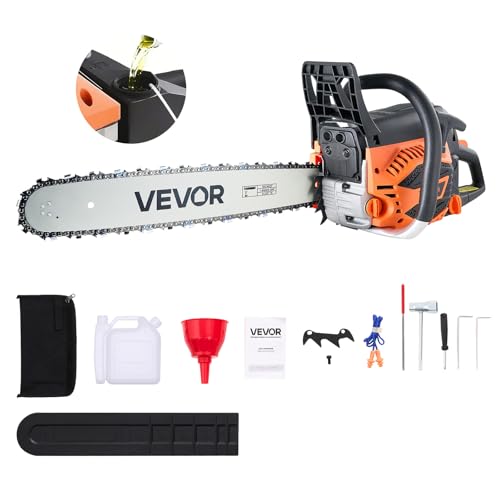
The VEVOR 62cc pushes serious displacement into a budget-friendly price bracket. (Image source: Amazon)
Check the current price on Amazon
For buyers who need serious cutting power without the premium brand price, the VEVOR 62cc is hard to ignore. The claimed 3.8 HP output and 20-inch bar give it enough authority to move through firewood logs, storm debris, and moderate tree work.
The strongest argument for this saw is power per dollar. You are getting professional-level displacement for a fraction of what an equivalent premium model costs. The non-slip handle is a nice touch, and the dual fuel tanks mean fewer stops during long sessions.
What do you sacrifice? Fit and finish are basic, vibration damping is not refined, and the saw is heavier than similarly sized models from Husqvarna or Stihl. You may also need to adjust the carburetor if you cut at higher altitude or in very cold weather. In short, this saw will perform if you maintain it, but it will not coddle you.
Best Budget Pro-Style Saw: 62cc 20-Inch with Chain Brake

The chain brake on this 62cc saw adds an essential safety layer for longer bar work. (Image source: Amazon)
This 62cc saw takes a practical approach: a 20-inch bar matched to a 62cc engine, with a chain brake built in. That combination gives you sustained cutting capability without the high cost of a name-brand pro saw.
The chain brake is non-negotiable on a saw this size. If the bar kicks back, the brake stops the chain quickly and prevents a much worse injury. Never buy a 20-inch saw without one.
The saw is also refreshingly easy to service. Tension adjustments are straightforward, and nothing about the design demands a dealer visit for routine maintenance. The main downsides are noise, vibration, and a basic chain that will need frequent sharpening if you cut dirty or weathered wood. This is a solid value for seasonal users who need real cutting ability on a budget.
Best Extended-Run Saw: 62cc 20-Inch with Dual Fuel Tanks

Dual fuel tanks on this 62cc model reduce refueling stops during long cutting sessions. (Image source: Amazon)
Check this saw’s current price on Amazon
If you spend whole afternoons cutting firewood or clearing trails, the constant stop-and-refuel rhythm becomes the most annoying part of the job. This 62cc saw answers that problem with dual fuel tanks, which let you keep cutting longer between fills.
In practice, extended run time matters more than people realize. Once you are in a rhythm with a stack of logs, every interruption costs momentum. Being able to finish a round of bucking before refueling makes the work feel more efficient.
The saw is heavier than a homeowner model, but the 20-inch bar handles larger logs without forcing you to reposition every piece. Expect to check chain tension periodically and take hand breaks, because vibration damping is not as polished as premium saws. For homesteaders and rural property owners, the practical value here is strong.
Most Versatile Budget Saw: 58cc Gas Chainsaw with 18–20 Inch Bar Options
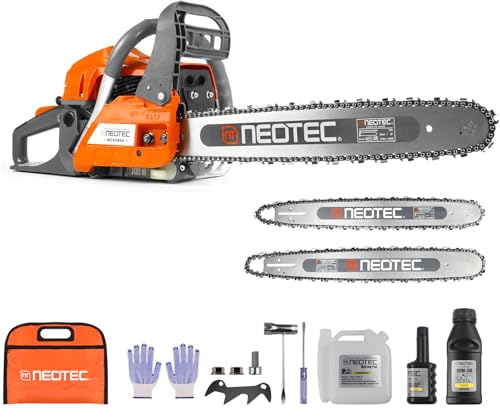
This 58cc engine runs an 18-inch or 20-inch bar, giving owners more flexibility. (Image source: Amazon)
See the current price on Amazon
Versatility is a form of value. This 58cc saw supports both 18-inch and 20-inch bars, so you can set it up for lighter pruning one weekend and heavier bucking the next. That flexibility is rare in the budget segment.
The 58cc displacement is a practical middle ground. It generates enough torque for firewood and land clearing without dragging around the full weight of a 62cc saw. The quick-stop chain brake and anti-vibration mounts add safety and reduce fatigue, two features that are often missing on the cheapest saws.
One honest caveat: budget saws can have occasional quality-control variation between individual units. Some owners will get a saw that runs perfectly out of the box; others may need to tune the carburetor or upgrade the chain early. Buy from a retailer with a fair return policy and be prepared to do a small amount of setup.
Best Farm and Cabin Saw: SUPMIXTOOLS 62cc 20-Inch

The SUPMIXTOOLS 62cc chainsaw is built around dependable, straightforward cutting power. (Image source: Amazon)
Check the current price on Amazon
Cabin owners and small farmers need a saw that starts when they need it and can be fixed without a service department. The SUPMIXTOOLS 62cc fits that profile well, with a traditional two-stroke design that has been proven for decades.
Once warmed up, the saw idles predictably and delivers solid torque in the cut. It is simple to work on at home, which is a real advantage in rural areas where dealers are far away. Keep a spare chain on hand, check the fuel filter occasionally, and this saw will keep earning its place in the shed.
The weaknesses are visible the moment you use it for a long session. Vibration is noticeable, and the overall fit and finish are functional rather than refined. But if you need basic, dependable cutting power without the premium price, this saw delivers exactly what a farm tool should.
Best Large-Property Workhorse: Husqvarna 460 Rancher

The Husqvarna 460 Rancher handles large-diameter logs that smaller saws cannot manage. (Image source: Amazon)
See the current price on Amazon
When the job involves medium-sized tree felling or large trunks, the Husqvarna 460 Rancher is a serious tool. Its 60.3cc engine and 24-inch bar give you the reach and torque to work through substantial timber without hesitation.
The 460 has earned a loyal following because it is durable and relatively forgiving for its size. The adjustable automatic oiler lets you match lubricant flow to the bar length and wood type, which helps both the chain and bar last longer. Husqvarna’s X-Torq design also reduces fuel consumption while keeping power steady in the cut.
Understand that this is a heavy saw. If most of your work is light yard maintenance, it will wear you out and feel unnecessarily expensive. For acreage owners, firewood producers, and frequent forest cleanup, the 460 Rancher is a long-term investment that earns its keep for years.
Best Do-It-All Budget Saw: VEVOR 58cc 20-Inch

The VEVOR 58cc covers most property tasks with a balanced combination of power and weight. (Image source: Amazon)
Check the current price on Amazon
The VEVOR 58cc is the kind of saw that disappears into the background because it simply does the job. The 20-inch bar handles nearly everything a property owner encounters, while the 58cc engine keeps weight more manageable than the larger 62cc models.
In the cut, this saw performs well for bucking firewood, clearing trails, and trimming thick branches. The two-cycle engine is easy to understand, and most maintenance tasks can be done with basic tools. Carburetor adjustments may be needed if you cut at altitude or during drastic weather changes, but that is true of many budget saws.
Compared with premium brands, you give up some polish and vibration comfort. For the price difference, many property owners find that an easy trade. With consistent maintenance and sharp chains, this saw provides a surprising amount of value.
Best Mid-Range All-Rounder: Husqvarna 450 Rancher

The Husqvarna 450 Rancher balances power and weight for versatile property maintenance. (Image source: Amazon)
See the current price on Amazon
If you want one saw that can handle nearly everything, the Husqvarna 450 Rancher is the strongest argument in this guide. Its 50.2cc engine and 20-inch bar hit a sweet spot between cutting capability and manageable weight.
The 450 feels right in the hands. It handles storm cleanup, firewood, fence lines, and trail work without making you feel like you are wrestling the tool. The X-Torq engine sips fuel relative to its output, and the overall ergonomics make extended use much more comfortable than budget alternatives.
The support network matters too. Husqvarna dealer availability means parts, bars, and chains are easy to find, and resale value holds up better than off-brand saws. The saw rewards routine care: keep the air filter clean, sharpen the chain, and use fresh fuel. For most property owners, this is the best gas chainsaw for the money when total long-term cost is considered.
How to Choose the Right Gas Chainsaw
Match the Saw to the Work
Think about the single biggest job you will do, not the imaginary perfect job. If that job is bucking firewood, buy a saw with 50cc or more and an 18–20 inch bar. If the job is clearing branches after storms, a lighter 38–45cc saw with a 16-inch bar is the smarter choice.
Consider Parts and Support
If you plan to do your own maintenance, a simple budget saw is fine. If you would rather have a local shop handle repairs, buy a brand with dealers nearby. The saw that is easiest to support is the one that actually stays in service.
Gas vs. Battery in 2026
Battery saws have improved dramatically, and for short, light tasks they are excellent. But gas still wins for sustained cutting, large logs, cold weather, and remote work where recharging is impractical. If you only cut for 20 minutes at a time near a power source, compact all-electric options may serve you better. For serious, hours-long cutting, gas remains the strongest value per dollar.
Essential Maintenance for Long Service Life
Fuel Mix and Fresh Gas
Use fresh gasoline whenever possible and follow the mix ratio printed on your saw. Most modern models use a 50:1 ratio, but always confirm in the owner’s manual. Old mixed fuel is the leading cause of hard starts and carburetor problems. If your saw sits for more than a few weeks, drain the tank or add a stabilizer.
Over time, deposits in the fuel system can make starting difficult. Running a keep the fuel system healthy routine before long storage prevents many common issues.
Chain and Bar Care
A sharp chain is not a luxury; it is the difference between a safe, efficient cut and a dangerous, exhausting one. When the saw produces fine sawdust instead of wood chips, the chain needs attention. Keep the chain tension snug enough that it cannot sag, but loose enough to pull around the bar by hand.
Check bar oil before every use. Running a chain without oil ruins the bar in a single afternoon. Replace worn sprocket nose bars rather than pushing them too far.
Seasonal Storage and Winterizing
At the end of the season, do not leave fuel in the saw. Run the carburetor dry or use a fuel stabilizer designed for small engines. Before long-term storage, clean the exterior, remove the bar and chain, and store everything in a dry place. A few minutes of preparation prevent stale fuel and keep the saw ready for spring.
When to Call a Shop
If the saw won’t start, check the spark plug, air filter, and fuel first. Many “broken” chainsaws just need fresh fuel and a quick carburetor cleaning routine. If the saw still struggles after that, it may need a carburetor rebuild or a new fuel line — jobs that are worth paying a professional for if you are not comfortable.
Safety First: Two Rules Every Operator Should Follow
Chainsaws are powerful and dangerous tools. The single best way to protect yourself is to follow the federal chainsaw safety guidance from the Occupational Safety and Health Administration. They cover the basics: keep both hands on the saw, never cut above shoulder height, and use proper personal protective equipment including eye protection, hearing protection, chaps, and gloves.
Always Use a Working Chain Brake
Before every cut, test the chain brake. It is your primary defense against kickback. A saw with a broken chain brake is not ready to use.
Keep Your Body Out of the Kickback Zone
Kickback happens when the tip of the bar touches an object, sending the bar upward and back toward you. Stay to the left of the cut, avoid cutting with the nose of the bar, and never let your face or torso line up behind the bar.
Frequently Asked Questions
What size gas chainsaw is best for firewood?
For regular firewood cutting, a 50–60cc saw with an 18–20 inch bar is the sweet spot. It handles typical logs in one pass without the weight of a large professional saw. If you only cut a few small logs each season, a 38–45cc model with a 16-inch bar may be enough.
Is a cheap gas chainsaw worth buying?
Yes, if you set realistic expectations. Budget saws from VEVOR and similar brands cut well when the chain is sharp and the fuel is fresh, but you may need to tune the carburetor and replace the chain sooner. They make sense for light use, not daily professional work.
How long should a gas chainsaw last?
A well-maintained gas saw can last 10 years or more; professional models often last decades. The key is regular maintenance: fresh fuel, clean air filter, sharp chains, and proper storage. Budget saws tend to wear faster, but even they last a long time if you address problems early.
What fuel mix does a gas chainsaw need?
Most modern two-stroke chainsaws use a 50:1 fuel-to-oil ratio, meaning 2.6 ounces of quality two-stroke oil per gallon of gasoline. Always check your owner’s manual, because some older or high-rpm engines spec differently. Use fresh ethanol-free gas whenever possible.
How often should I sharpen the chain?
Touch up the chain after every tank of fuel or whenever the saw starts producing fine sawdust instead of chips. A sharp chain is faster, safer, and easier on the engine. If the cut drifts or the chain needs extra pressure, stop and sharpen before continuing.
Are gas chainsaws being phased out?
Not in the heavy-duty segment. Battery technology has improved, but gas still offers the best energy density for large trees, long cutting sessions, and remote projects. Some states have tightened small-engine emissions rules, which is why modern gas saws are cleaner and more efficient than older models.
Final Verdict: Which Gas Chainsaw Should You Buy?
The best gas chainsaw for the money depends on the work you do most often.
- For most homeowners, the Husqvarna 450 Rancher is the most balanced all-around pick. It cuts well, handles comfortably, and holds its value.
- For light-duty users who want a dependable weekend saw, the Husqvarna 130 is simple, affordable, and easy to live with.
- For serious cutting on a tight budget, the VEVOR 62cc models offer impressive power per dollar if you keep up with maintenance.
- For acreage owners dealing with large timber, the Husqvarna 460 Rancher has the bar length, torque, and durability that smaller saws cannot match.
Before you buy, compare current prices on the models that fit your workload. The right saw is not the one with the biggest engine or the lowest sticker price — it is the one that starts easily, cuts exactly the wood you deal with, and keeps running season after season.


