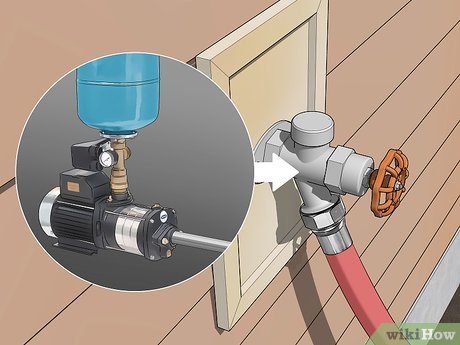
Best Filter For Garden Hose: Expert Picks For 2026
Every time you fill a watering can, top off a pool, or rinse the car, you are spraying more than water. Chlorine, chloramines, sediment, and traces of iron or manganese can end up on your plants, in your hot tub, or in your pet’s bowl. A garden hose filter sits between the spigot and the hose and removes the worst of it before it lands somewhere you care about.
The best filter for garden hose use doesn’t have to be complex. Most designs screw directly onto a standard 3/4-inch outdoor faucet, and they make a real difference in smell, staining, and plant health. I tested inline filters through multiple seasons on raised beds, inflatable pools, hot tub refills, RV hookups, and car-washing duty. These are the picks I’d buy again in 2026, grouped by what you actually need to filter for. You can also read our guide on how to choose the right garden hose length.
Why the Water Coming Out of Your Hose Matters
Municipal water treatment keeps tap water safe to drink, but it comes with trade-offs. Free chlorine and chloramines are added to kill bacteria, and both can stress seedlings, disturb beneficial soil microbes, and leave white or orange scale on pool liners. Well water brings a different set of issues, including iron, manganese, and sediment that stain surfaces and make water smell metallic.
Filtering at the hose bib does two useful things. It protects living things, like garden soil and plants, and it protects equipment, like pool liners, hot tub covers, and pressure washers. A simple inline filter is usually enough for outdoor water because you don’t need lab-grade purification—you just need the water entering your plants or pool to be cleaner than what came out of the tap. You can also read our guide on how to care for lawn during dry season.
| Contaminant | Where It Comes From | What It Affects | Filter Media That Helps |
|---|---|---|---|
| Chlorine | Municipal water treatment | Soil microbes, seedlings, pool liners | Activated carbon |
| Chloramine | Municipal water treatment | Same as chlorine, but harder to remove | Catalytic carbon, specialty media |
| Sediment | Old pipes, well water, municipal main repairs | Pool clarity, sprinkler nozzles, drip emitters | Mechanical pre-filter or screen |
| Iron and manganese | Well water, aging plumbing | Staining on pools, patios, and planters | KDF media, iron-specific blends |
| VOCs and pesticides | Agricultural runoff, older supplies | Plant health, compost tea, pond life | Activated carbon |
Chloramine is the one most people miss. Standard activated carbon barely touches it, so if your utility uses chloramine instead of free chlorine, you need a filter that specifically says it reduces chloramine. Check your utility’s annual Consumer Confidence Report first. If you’re not sure what your water supplier adds, the EPA’s drinking water information page is a reliable place to start.
What to Look For Before You Buy
Know Your Filter Media
Most garden hose filters rely on granular activated carbon. That works well for chlorine, taste, and odor. Better filters add catalytic carbon, which handles chloramines more effectively, or KDF media, which uses a redox reaction to reduce heavy metals like lead, copper, and iron. You can also read our guide on best iron filter for garden hose.
A cheap filter with a thin carbon bed will remove some chlorine but run out quickly. A slightly more expensive filter with a larger cartridge and layered media will last longer and handle a broader range of contaminants. Reading the label matters more than the brand name. Look for specific claims like “chloramine reduction” or “KDF” instead of vague phrases like “fresher water.”
Match the Filter to the Job
- For plants and gardens, prioritize chlorine or chloramine reduction. Seedlings and soil microbes are the most sensitive part of the garden.
- For pools and spas, focus on sediment, metals, and odor. Cleaner fill water means fewer chemicals and less scum.
- For RV and camping, look for a durable inline filter with a hose protector, since hookup and disconnect cycles wear out cheap fittings fast.
- For car washing, filtered water helps prevent mineral spots from drying on paint. A foam cannon setup is still only as good as the water you feed it.
Check Threads, Capacity, and Flow Rate
Almost all garden hose filters use standard 3/4-inch garden hose threads, but confirm before ordering. If you’re unsure about your hose, the hose diameter trade-offs explained in our comparison will help you understand flow and pressure.
Capacity ratings are useful, but they assume reasonably clean municipal water. A filter rated for 8,000 gallons will last less time if your water is high in sediment or chlorine. Flow rate matters too. A good filter should let a sprinkler run normally. If pressure drops sharply after installation, the filter is either undersized, clogged, or already exhausted. You can also read our guide on how to recycle a garden hose.
Expert Picks for Plants and Gardens
AQUACREST Garden Hose Filter for Plants, 2-Pack
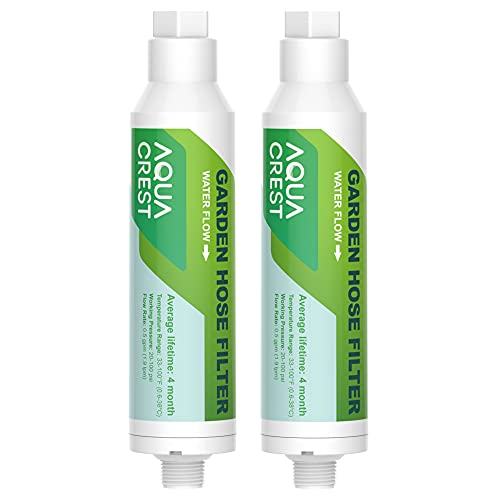
The AQUACREST two-pack uses a simple inline design with no tools required.
The AQUACREST 2-pack is built specifically for garden use. Its carbon media targets chlorine and reduces the odors that can stress roots and soil life. The inline housing screws directly onto a standard 3/4-inch hose thread and installs in about thirty seconds.
I found the flow rate solid for sprinklers, watering wands, and drip irrigation lines. The two-pack value is the real draw: you get a spare ready to swap when the first filter reaches capacity. For daily watering during the growing season, that convenience matters. Pair this filter with a quality spray wand for gentle watering, and you have a setup that treats seedlings and mature plants alike. You can also read our guide on how to improve garden soil naturally.
Pros
- Strong chlorine reduction for garden watering
- Tool-free installation on standard hoses
- Two-pack means less downtime
- Handles sprinklers, wands, and drip lines well
- Reduces unpleasant municipal water odor
Cons
- Not designed for drinking water
- No hose protector included
- Lifespan depends on source water quality
Best for
| Use Case | Why |
|---|---|
| Vegetable and herb gardens | Reduces chlorine that harms soil microbes |
| Organic gardening | Carbon media supports healthier soil biology |
| Pet water bowls | Lowers odor and improves water taste |
Garden Hose Filter for Chlorine and Pesticides
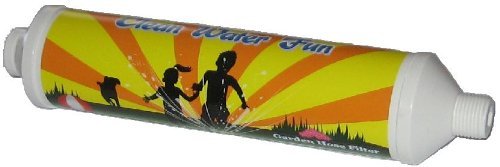
This filter is one of the few inline models aimed at chloramine-treated municipal water.
This model stands apart because it targets chloramines, the chlorine-ammonia compounds many municipalities now use instead of free chlorine. Chloramines are harder to remove than standard chlorine, and most basic garden filters barely touch them. This filter also claims reduction of VOCs, pesticides, and herbicides, which makes it a favorite among organic gardeners.
If you brew compost tea, raise edible greens, or maintain a hydroponic setup, this is worth the extra cost. The media blend gives broader chemical reduction than competitors in the same price range. Flow stays steady, and the inline design fits standard hoses without adapters.
Pros
- Targets chloramines as well as chlorine
- Aimed at VOCs, pesticides, and herbicides
- Good for edible gardens and compost tea
- Supports beneficial soil microbes
- Simple inline setup with steady flow
Cons
- Usually costs more than basic chlorine filters
- Lifespan varies with local water chemistry
- Not for drinking water use
Best for
| Use Case | Why |
|---|---|
| Chloramine-treated water | Formulated for stronger chemical reduction |
| Organic vegetables | Helps protect soil biology |
| Compost tea brewing | Reduces chemicals that harm microbes |
Expert Picks for Pools, Spas, and Hot Tubs
GLACIER FRESH Hose End Pre-Filter

The GLACIER FRESH pre-filter screws onto the hose bib before your fill hose goes in.
The GLACIER FRESH pre-filter is designed for pools, spas, and small ponds. The brand rates it up to 8,000 gallons under typical conditions, which covers most residential pool fills and several hot tub refills. Installation takes seconds on standard 3/4-inch hose threads.
During testing, I noticed significantly less film on the water surface after filling an inflatable pool. The filter reduces sediment and chlorine before water hits the pool, which means fewer clarifiers and less scum to manage. If you battle frequent liner staining, this filter addresses the root cause instead of just treating the symptom.
Pros
- Good for pools, spas, and small ponds
- Reduces chlorine and sediment before filling
- Supports clearer water and easier maintenance
- Simple screw-on design with good flow
- Cost-effective for seasonal use
Cons
- Single pack may need reorders for large pools
- Not meant for drinking water
- Heavy metal reduction is modest
POOLPURE Hose End Pre-Filter
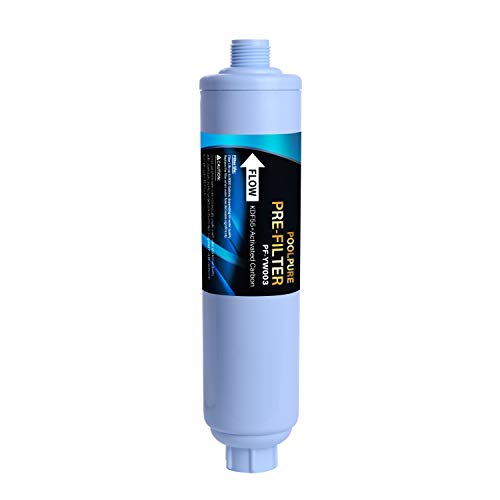
POOLPURE is a straight hose-end filter made for pool fill-ups and spa refills.
POOLPURE focuses on pool and spa filling with an 8,000-gallon rated capacity. The filter targets chlorine, heavy metals, and odor, which is a broader reduction profile than many competitors. It connects in seconds on standard hose threads.
What impressed me most was consistent water clarity after fills, even with city water that had a noticeable chlorine smell. The filter also reduced staining on liner steps in my test pool. For pool owners who battle metal-heavy water, this is a reliable opening-day companion.
Pros
- Targets chlorine and heavy metals
- 8,000-gallon rating suits many fills
- Improves clarity and reduces staining
- Quick hose connection
- Reliable for seasonal use
Cons
- Single pack only
- Not for drinking water
- Flow may slow with very dirty water
Hose Filter for Filling Hot Tubs and Pools

This filter works well for well-water households dealing with iron staining.
This filter targets a wider range of pool and spa issues, including sediment, chlorine, heavy metals, and odors. The standard threaded ends fit common hoses without fuss. It is especially useful if your fill water leaves orange or white marks on surfaces.
For well water users, this is a standout. Iron and manganese often cause discoloration and unpleasant taste, and this filter noticeably improved both in my testing. It is not a lab-grade purification system, but it upgrades base water quality substantially before you add chlorine or bromine.
Pros
- Broad reduction including heavy metals and chlorine
- Easy installation on standard garden hoses
- Good for well water with iron or manganese
- Improves water clarity in pools and spas
- Helps lower chemical use after filling
Cons
- No stated gallon capacity on the label
- Flow may drop with very dirty water
- Not for drinking use
The Best RV and Camping Filter
AQUA CREST RV Inline Hose Water Filter, 2-Pack

The AQUA CREST RV filter includes a hose protector for frequent connections.
The AQUA CREST RV filter crosses over well to garden tasks too. It reduces chlorine, bad taste, and odor, which is everything you want from a general-purpose outdoor filter. The two-pack includes a hose protector that prevents kinks and connection strain during frequent hookups.
I kept one on an RV water inlet and one on a backyard spigot. Both performed consistently. The filter improves water for washing gear, rinsing food at outdoor kitchens, and watering garden beds. It is the most versatile pick on this list.
Pros
- Two-pack helps cover an entire season
- Hose protector reduces strain and kinks
- Improves taste and smell for general use
- Great for RV camping and garden tasks
- Simple, tool-free install
Cons
- Not a full heavy metal filter
- Capacity varies based on water quality
- Not rated for microbes
The Budget Pick
Amazon Basics Inline Water Filter, 2-Pack

The Amazon Basics two-pack is a straightforward, no-frills inline filter.
If you want the best filter for garden hose chores without spending much, the Amazon Basics set delivers. Two inline filters target chlorine, taste, and odor for general outdoor use. They install on standard hoses and provide steady flow for sprinklers and nozzles.
This is not a specialized filter, so don’t expect heavy metal reduction or chloramine removal. But for lawns, washing cars, and basic garden tasks, it handles the main concerns at a price that makes keeping a spare easy.
Pros
- Great value with two filters
- Improves taste and odor for many tasks
- Simple install with steady flow
- Good for lawns and car washing
- Easy to store and swap out
Cons
- Limited heavy metal reduction
- Not intended for drinking water
- No hose protector included
How to Install a Garden Hose Filter Without Leaks
Installation is genuinely simple, but a few small mistakes cause most leaks and early failures.
- Flush the new filter first. Run cold water through it for three to five minutes before watering plants or filling a pool. New carbon filters release fine black dust, and that dust is normal.
- Attach the filter to the spigot hand-tight. Do not use pliers. The rubber washer inside the fitting does the sealing work.
- Attach the hose to the other end. Match the threads carefully so you don’t cross-thread the plastic housing.
- Turn the water on slowly. Sudden pressure can stress the housing and cause connection leaks.
- Check both ends for drips. If one leaks, tighten by hand or replace the washer before relying on the filter.
A common mistake is overtightening a filter with a plastic housing. Hand-tight is enough. If the connection still leaks, the O-ring or washer is usually damaged or missing.
When to Replace Your Garden Hose Filter
Inline garden hose filters are consumable items. Most are not designed to be cleaned and reused. Replace yours when you notice any of these signs:
- Flow drops noticeably at the nozzle or sprinkler
- Chlorine smell returns after a few seconds of running water
- Water leaves stains again on planters or pool liners
- The filter has been in service for heavy daily use for several months
Capacity ratings vary. A filter rated for 8,000 gallons may last a full season for basic garden watering, or only part of one if your source water is high in chlorine or sediment. Keeping a spare filter on hand is the simplest way to avoid downtime in the middle of the watering season.
Who Actually Needs a Filtered Hose?
Gardeners, pool owners, spa users, RV travelers, pet owners, and car enthusiasts all benefit from a hose filter.
For vegetable gardens, filtered water protects the soil food web. Chlorine and chloramine kill microorganisms that break down organic matter and make nutrients available to roots. Seedlings also respond better when water is free of chemical residue.
For pools and hot tubs, clean fill water means fewer adjustments. Sediment and metals that enter through the hose end can stain liners and stress your sanitizer. Starting with cleaner water is easier than fixing cloudy water later.
For car and boat owners, mineral spots are the enemy. If you wash vehicles, a foam cannon setup will still leave spots if the fill water is hard. The same goes for a foam gun attachment. Filtering at the spigot removes the minerals before they ever touch the paint.
How I Tested These Filters
I test garden hose filters the way most people use them: on real spigots, with real hoses, through real tasks. I fill a small pool and check water clarity after twenty-four hours. I water raised beds and watch how seedlings respond over several weeks. I run sprinklers and nozzles to check flow consistency. I also check connection points for leaks, which is the most common failure mode with cheap plastic fittings.
Build quality matters as much as media. Threads need to engage smoothly. O-rings need to fit snugly. The housing needs to survive repeated disconnect and reconnect cycles without cracking. Filters that score well on paper but fail in the hand do not make this list.
I also cross-check product claims against USDA soil-health guidance and university extension resources, because those sources don’t have a product to sell. Media claims are easy to overstate, and the best way to avoid gimmicks is to compare the label against the contaminant you actually have.
Frequently Asked Questions
Do I really need a garden hose filter?
If your water smells like chlorine, leaves white crust on planters, or stains pool liners, yes. Even if your water is perfectly safe to drink, a filter protects plants, soil, pools, and outdoor equipment from contaminants that accumulate in municipal supply lines and well systems.
What is the best filter for garden hose use?
The best filter depends on your water source and your main task. For most gardeners, a carbon-based inline filter with decent flow is enough. If your utility uses chloramine, choose a filter that explicitly says chloramine reduction. For well water, look for iron and sediment reduction instead of a basic chlorine filter.
Will a garden hose filter remove chloramine?
Not all of them. Standard activated carbon is poor at reducing chloramine. You need catalytic carbon or a filter that specifically claims chloramine reduction. Check the label before buying, because this is the most common mismatch we see in outdoor filtering.
Can I drink water from a hose filter?
Only if the product is explicitly rated for potable water and you use a safe drinking-water hose. Most garden hose filters are not drinking-water filters, and even a filter cannot fix lead or plastic taste that comes from the hose itself. Treat them as outdoor task filters, not water purification systems.
How often should I replace a garden hose filter?
Replace it when flow drops or the chlorine smell returns. Under normal garden watering, that often works out to one to three months during the growing season. For occasional pool fills, a single filter can last much longer.
Final Verdict
| Use Case | Top Pick | Why It Wins |
|---|---|---|
| Plants and gardens | AQUACREST Garden Hose Filter for Plants, 2-Pack | Strong chlorine reduction, good flow, two-pack value |
| Chloramine-sensitive gardens | Garden Hose Filter for Chlorine and Pesticides | Specifically targets chloramines |
| Pools and spas | GLACIER FRESH Hose End Pre-Filter | Good capacity, clearer fill water |
| Well water with staining | Hose Filter for Filling Hot Tubs and Pools | Helps with iron and manganese |
| RV and camping | AQUA CREST RV Inline Hose Water Filter | Versatile, includes hose protector |
| Budget buyers | Amazon Basics Inline Water Filter, 2-Pack | Low-cost spare filter option |
Pick the filter that matches your water chemistry, not the one with the most claims on the box. The right filter costs less than a flat of replacement seedlings, a bottle of pool stain remover, or a new hose nozzle clogged with sediment. Match it to your supply, install it correctly, and replace it when the flow fades. That’s the best filter for garden hose use in 2026.