Battery Powered Chainsaw Vs Gas: The Real Winner 2026
A heavy limb comes down after a storm, and you have a narrow window to clear the driveway before work. You reach for a chainsaw — and that’s when the battery vs. gas question stops being theoretical.
By 2026, battery chainsaws are no longer the weak, underpowered tools they were a decade ago. They start instantly, cut cleanly, and require almost no upkeep. Gas saws still hold the top spot for heavy, sustained work. The real winner depends less on brand loyalty and more on how you actually cut. You can also read our guide on how to use a chainsaw for beginners.
This guide compares power, runtime, weight, noise, safety, maintenance, and cost — then gives you a clear decision framework.
Why the 2026 Battery vs. Gas Answer Is More Nuanced
The chainsaw market changed faster than most homeowners realize. Brushless motors, higher-voltage batteries, and improved battery management systems turned electric saws from pruning tools into serious cutting machines. You can also read our guide on battery vs gas chainsaw.
Walk through a hardware store today and you’ll see cordless versions of almost every yard tool, from trimmers to leaf blowers to budget backpack blowers. The same lithium-ion platforms that power a drill now run a 16-inch chainsaw.
Gas saws have also improved. Anti-vibration systems are better, starting is easier, and modern two-stroke engines run cleaner than older models. But the fundamental strengths remain the same: gas delivers steady, sustained power for hours; battery delivers instant power with almost no maintenance. You can also read our guide on how to choose the right garden hose length.
The real question isn’t “Which is better?” It’s “Which fits the wood you cut and the time you have?”
Battery vs. Gas at a Glance
| Comparison | Battery Chainsaw | Gas Chainsaw |
|---|---|---|
| Power feel | Instant torque, tapers as battery drains | Steady torque throughout the session |
| Runtime | Roughly 20–60 minutes per charge | Roughly 30–45 minutes per tank, refuel in seconds |
| Weight | Typically 8–12 lb | Typically 12–16 lb |
| Noise | Quieter, but still needs hearing protection | Loud; hearing protection is essential |
| Maintenance | Minimal | Regular fuel, filter, and spark plug care |
| Upfront cost | Higher | Lower |
| 5-year cost | Comparable | Comparable |
| Best for | Homeowners, storm cleanup, pruning | Firewood, felling, acreage, long sessions |
Power and Cutting Performance
What a Gas Saw Does Well
A gas chainsaw’s main advantage is sustained power. A mid-size 40–50cc engine can keep the chain spinning at full speed from the first cut to the last. That predictability matters when you’re felling a tree or bucking a thick oak log.
Gas saws also handle stalls better. If you push hard into a cut, the engine can often power through instead of bogging down. That’s why professional loggers, tree services, and serious firewood cutters still choose gas. You can also read our guide on how to hold a gardening trowel.
What a Battery Saw Does Well
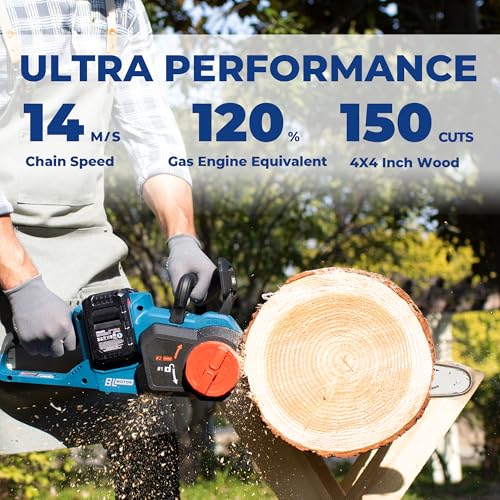
Modern battery saws deliver full torque almost instantly. A 60V or 82V brushless model can cut through 12- to 16-inch seasoned hardwood without slowing down — as long as the chain is sharp and the battery is charged.
The tradeoff is endurance. A battery saw starts strong, but the motor gradually draws harder as the charge drops. The slowdown is most noticeable in the last 20% of the battery. If you plan heavy cuts early in the session and save smaller branches for the end, the limitation is easy to manage. You can also read our guide on how long does a chainsaw chain last.
The Cutting-Speed Question
Gas saws still cut faster under sustained heavy loads. But for limbing, pruning, and storm cleanup, the speed difference is minor. A sharp, properly tensioned chain matters more than the power source.
A common mistake is blaming the saw when the chain is dull. With both types, a sharp chain cuts faster, safer, and with less strain on the motor or engine. You can also read our guide on how long do chainsaw chains last.
Runtime and Recharging
Realistic Session Lengths
Battery runtime is the number that changes the buying decision.
- Compact 20V–24V saws: best for pruning and small branches
- Mid-range 40V–48V saws: good for 25–40 minutes of active cutting
- High-voltage 60V–82V saws: roughly 40–60 minutes per charge
Most kits include two batteries. That effectively doubles your working window, but you still need to stop and recharge, usually for 30–60 minutes with a fast charger.
The Two-Battery Rule
If you buy a battery saw, choose a kit with two batteries. One can charge while the other is in the saw. For most homeowners, that’s enough for a weekend task like one storm cleanup or a morning of pruning. You can also read our guide on best cordless leaf blowers for home use.
Gas is still the only option if you need hours of uninterrupted cutting. Refueling takes seconds, and there’s no charging pause. If you process firewood for home heat or manage several acres, that alone can justify a gas saw.
Weight, Ergonomics, and Vibration
Battery saws win this category clearly.
A typical 16-inch battery saw weighs less than many gas models, and the weight is often balanced differently. With no fuel tank and a smaller powerhead, the saw feels easier to control in awkward positions. You can also read our guide on what gas is best for lawn mower.
The bigger difference is vibration. Gas engines create constant pulsation through the handles. Even with anti-vibration mounts, an hour of cutting leaves your hands and forearms fatigued. Battery motors are much smoother.
For occasional users, this is one of the biggest reasons to switch. Less fatigue means better control, and better control means safer cutting. You can also read our guide on trufuel for lawn mower.
Noise, Fumes, and Neighbor-Friendliness
If you live on a small lot, this is a deciding factor.
Battery saws are noticeably quieter than gas saws. They still produce enough noise to justify hearing protection, especially with the chain spinning, but they won’t echo across the neighborhood. You can cut early in the morning without starting a feud.
Gas saws run at higher decibel levels and produce exhaust fumes. Even modern two-stroke engines release a distinct smell that lingers on your clothes. You can also read our guide on how long do electric lawn mower batteries last.
Battery saws also make it easier to work near your house, garage, or shed without filling the space with fumes.
Environmental Impact and Local Rules
Gas chainsaws use small two-stroke engines that are disproportionately high emitters per hour of operation when compared with modern car engines. Battery saws produce zero emissions at the point of use.
That doesn’t make them perfectly green. Electricity has to come from somewhere. As the EPA’s emissions explainer points out, the cleaner your local grid, the greener any electric tool becomes over time. You can also read our guide on how much compression should a chainsaw have.
Many local air-quality agencies now restrict gas-powered lawn and garden equipment during summer months, and some offer rebates for switching to electric. Before you buy, check your local rules. A battery saw can be the difference between cutting legally and cutting under a noise complaint.
Maintenance and Upkeep Compared
Battery Chainsaw Maintenance
- Keep the bar and chain oiled
- Sharpen or replace the chain when needed
- Wipe the saw down after use
- Store batteries at room temperature
- Avoid leaving the battery fully discharged for long periods
That’s basically it. There’s no fuel to mix, no spark plug to replace, no air filter to clean, and no carburetor to tune.
Gas Chainsaw Maintenance
- Mix gas and two-stroke oil in the correct ratio
- Replace the spark plug periodically
- Clean or replace the air filter
- Inspect fuel lines for cracks
- Empty the tank or add a fuel stabilizer before storage
- Be ready for carburetor work on older saws
Most “it ran last year” failures happen because of a gummed-up carburetor after months of sitting. Fresh fuel, a clean filter, and a fuel stabilizer prevent most of these problems.
Comparing Time and Hassle
A battery saw takes roughly 15–30 minutes of maintenance per year. A gas saw can take a few hours, plus the cost of fuel, oil, filters, and plugs.
If you enjoy working on small engines, that’s not a burden. If you just want a tool that works when you pull the trigger, battery is the easier path.
The True 5-Year Cost Picture
Here’s a realistic comparison for a homeowner who cuts about two hours per month.
| Cost Factor | Battery Saw | Gas Saw |
|---|---|---|
| Initial purchase | $250–$350 with two batteries | $200–$300 |
| Fuel and oil | Electricity cost is negligible | $50–$70 per year |
| Bar and chain care | $20–$40 per year | $20–$40 per year |
| Replacement battery/parts | Possible in year 3–5 | Spark plugs, filters, misc. |
| Estimated 5-year total | $450–$700 | $500–$800 |
The totals are close. Battery tends to cost more upfront but less to maintain. Gas costs less upfront but adds fuel, oil, and parts over time.
The real saving with battery isn’t always money. It’s the convenience of never mixing fuel, winterizing a tank, or pulling a cord twenty times.
Safety Differences You Shouldn't Ignore
Chainsaws are dangerous regardless of power source. OSHA’s safety guidance treats chain brakes, proper stance, and protective equipment as non-negotiable.
There are some power-specific safety points:
- Gas saws require a pull start, which can cause shoulder strain and sometimes a jerky reaction when the engine catches.
- Gas handles and mufflers get hot. Accidental burns are common during fueling or after a long cut.
- Battery saws start instantly. If the switch is left on, a battery saw can spin up unexpectedly when you connect a battery or set it down.
- Battery saws are quieter, which means bystanders may not hear them. Think about where others are standing.
Every saw should have a functioning chain brake, a low-kickback chain, and a chain guard. Wear chaps, gloves, and eye protection. Hearing protection is smart on any saw, even a battery model.
Cold Weather, Altitude, and Storage
Weather affects both types differently.
Battery saws lose some performance in extreme cold. Output can drop noticeably below freezing, and charging a cold battery can reduce its lifespan. Store batteries inside during winter and fit them into the saw just before cutting.
Gas saws have their own quirks. At higher altitudes, the fuel mixture runs rich unless the carburetor is adjusted. In cold weather, starting can take more pulls, especially after the saw has sat for months.
For gas storage, use fuel without ethanol when you can. Ethanol attracts moisture and can damage fuel lines and carburetor gaskets. Before storing the saw long-term, run the carburetor dry or add a fuel stabilizer to keep the fuel system clean.
Battery Chainsaw Buying Guide for 2026
Voltage vs. Amp-Hours
Voltage gives the motor more headroom; amp-hours gives you more runtime. A 40V saw with a high amp-hour battery can outlast a 60V saw with a small battery.
For most homeowners, a 40V–60V brushless saw is the sweet spot. It handles branches, storm debris, and firewood up to about 14 inches without the weight or cost of an 82V pro-style model.
If you already own a 60V system for other tools, staying in that platform is worth the money.
Brushless Motors and Battery Management
Choose brushless. Brushed motors are cheaper, but they wear out faster and run less efficiently. Brushless motors deliver more torque, run cooler, and extend battery life.
A good battery management system is also important. It prevents overcharging, balances cells, and cuts power before the battery is damaged. This protects the most expensive part of the saw.
Bar Length and Chain Specs
Match the bar to your actual work:
- 10–12 inches: pruning and tight spaces
- 14–16 inches: general yard work and medium firewood
- 18–20 inches: larger logs and heavy storm cleanup
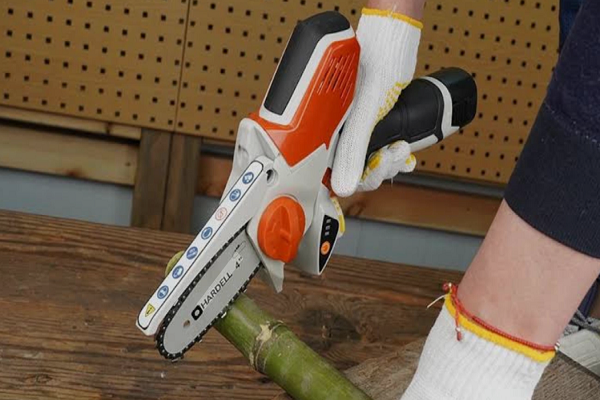
If your main job is pruning, a compact mini saw might be enough, but it will struggle on a 12-inch oak limb. A 16-inch bar is the best all-around length for most homeowners.
Low-profile chains are safer and easier to sharpen than full-complement chains. They cut slightly slower but are far more forgiving.
The Battery Ecosystem Question
If you already own cordless outdoor gear such as battery leaf blowers, buy the same brand’s chainsaw as a bare tool. You’ll save $100–$200 by skipping the battery kit.
The same logic applies if you’re starting from scratch. Choose a brand with a broad lineup — not just a chainsaw, but trimmers, blowers, and hedge clippers. You’re not just buying a saw; you’re buying a platform.
Gas Chainsaw Buying Guide for 2026
Engine Size vs. Bar Length
| Engine Size | Best For | Common Bar Length |
|---|---|---|
| 30–40cc | Light homeowner tasks | 14–16 inches |
| 40–50cc | General firewood and medium trees | 16–18 inches |
| 50–60cc | Heavy firewood and felling | 18–20 inches |
| 60cc+ | Professional and industrial use | 20–32 inches |
A 40–50cc model is the right starting point for most residential and small-acreage work. A bigger engine only adds weight if your tasks are light.
Features Worth Paying For
- Chain brake: non-negotiable
- Anti-vibration handles: worth the extra cost
- Side-access chain tensioning: makes adjustments much easier
- Tool-less fuel and oil caps: saves time on the job
- E-start: a small battery-assisted starter that removes pull-start frustration
E-start is becoming more common on gas saws. It adds $50–$100 but is a reasonable upgrade if you’ve ever spent ten minutes pulling a cord on a cold morning.
Fuel, Mixing, and Storage
Use a 50:1 mix of premium gas and quality two-stroke oil. If the saw sits unused for more than a few weeks, drain the fuel or use pre-mixed fuel that’s stable for up to two years.
Buying Used
Used gas saws can be a great value, but factor in repair costs. Old carburetors, fuel lines, and primer bulbs often need replacing. A fuel system cleaner can clear light deposits, but a serious clog needs the carburetor off the saw and fully cleaned.
Decision Framework: Which Saw Belongs on Your Shelf?
Buy a battery chainsaw if:
- Your cutting sessions usually fit within 30–45 minutes
- You value instant starts and minimal maintenance
- You cut branches, storm debris, and logs under 14 inches
- Neighborhood noise and fumes are a concern
- You already own a compatible battery system
Buy a gas chainsaw if:
- You heat with wood or process several cords every year
- You fell trees or manage a large property
- You need hours of continuous cutting without stopping
- You’re comfortable with basic small-engine maintenance
- You want the lowest upfront cost for maximum power
Buy both if:
- Your budget and storage allow it
- You want a battery saw for quick jobs and a gas saw for heavy days
- You’ve hit the limits of your current single saw
For most suburban and small-acreage homeowners, a 40V–60V brushless battery chainsaw is the better buy in 2026. For serious firewood cutters and professionals, gas is still the workhorse.
Frequently Asked Questions
Can a battery chainsaw replace a gas chainsaw entirely?
For most homeowners, yes. A 60V–82V brushless saw handles logs up to 16 inches and runs long enough for typical yard work. Only heavy users — people cutting multiple cords of firewood or felling trees regularly — still need gas.
What voltage battery chainsaw do I need for firewood?
For firewood up to 12 inches, a 40V saw works well. For larger rounds up to 16–18 inches, step up to 60V or higher. Choose based on the thickest wood you regularly cut, not the average.
Do battery chainsaws have enough power for hardwood like oak?
Yes, with the right voltage and a sharp chain. A 60V–82V brushless saw can cut seasoned oak up to 14–16 inches. It will cut slower than a gas saw in dense wood, but the cut will still be clean.
How long do battery chainsaw batteries last before needing replacement?
Most lithium-ion packs are built for many charge cycles. With typical homeowner use, expect several years of service before capacity drops noticeably. Store batteries at room temperature and avoid leaving them fully discharged to maximize lifespan.
Are gas chainsaws being phased out?
No. Some local governments restrict gas-powered yard equipment, but gas chainsaws remain widely available and necessary for professional forestry and heavy residential work. The shift toward battery is happening through consumer preference and local incentives, not a national ban.
Which is cheaper over the long term?
The totals are very close. Battery saws cost more upfront but save on fuel, oil, and maintenance. Gas saws cost less upfront but keep adding fuel and parts costs. Over five years, either choice can end up in the same range.
Final Verdict: The Real Winner for 2026
For the average homeowner, the battery-powered chainsaw is the real winner. It starts every time, cuts cleanly through typical storm debris and firewood, and takes the stress out of seasonal maintenance. Today’s 60V models are powerful enough for almost any residential task.
For heavy-duty users, gas still wins on sustained power, runtime, and endurance. If your saw is a tool for income, or you process more than a few cords of wood every winter, gas remains the right call.
The honest answer is that the best saw is the one that fits your cutting life. Look at the thickest wood you cut and the longest session you actually run. Then choose — and put the saw to work before the next storm hits.