
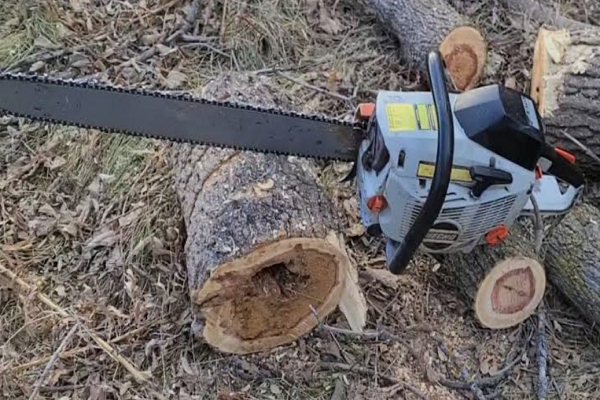
How To Port A Chainsaw: Best Step-By-Step Guide 2026
Porting a chainsaw cylinder is a precision modification that reshapes the intake, transfer, and exhaust passages in a two-stroke engine. Done carefully, it improves the way the saw breathes, giving you faster cutting, stronger torque, and crisper throttle response. Done carelessly, it produces a saw that runs hot, detonates, or seizes in the first tank.
This 2026 guide covers the entire process: what porting actually changes, the tools you need, how to map your stock timing, how to make safe cuts, and how to tune and break in the finished saw. The principles apply whether you want a reliable work saw or a weekend race build. You can also read our guide on how to water lawn efficiently.
What Porting a Chainsaw Actually Does
A two-stroke chainsaw engine moves the air-fuel mixture through openings in the cylinder wall, and the piston controls when those openings open and close.
- Intake port — lets the fresh mixture enter the crankcase.
- Transfer ports — move the mixture from the crankcase into the cylinder above the piston.
- Exhaust port — lets burned gases out.
Manufacturers tune these ports for emissions compliance, fuel economy, noise limits, and long service life. Porting shifts those priorities toward higher flow and more useable power.
When you reshape a port, you change two things:
- Port timing — when the port opens and closes relative to the piston’s position, measured in degrees of crankshaft rotation.
- Port shape and size — how easily the mixture flows through the port.
A good work port improves scavenging, which is the process of clearing exhaust gas and drawing in fresh charge. The result is better cylinder filling, stronger mid-range pull, and a saw that cuts faster without needing more throttle.
Porting is not a substitute for a sharp chain or a well-running carburetor. It is a set of small, measured changes that work together. The patient builder wins.
Safety, Legality, and Setting Realistic Expectations
A ported saw is not a stock saw with extra paint. It is a modified engine with higher stresses and less tolerance for mistakes.
- Warranty — porting modifies original parts, and most manufacturers will not cover damage caused by aftermarket engine work.
- Emissions rules — some regions regulate small-engine emissions. If you use a modified saw professionally, check local requirements before you start.
- Noise — a freer-flowing muffler can push a ported saw past normal noise levels.
- Durability — more power means more heat and wear. A conservative work port can still last for years; an aggressive race port may need a rebuild after a few hours of hard use.
Safety on the bench is non-negotiable:
- Wear eye protection, hearing protection, and a respirator rated for fine abrasive dust.
- Clamp the cylinder in a soft-jawed vise so it cannot move.
- Work in a clean, well-lit area away from fuel and solvents.
- Keep a fire extinguisher nearby if you are using solvents or testing fuel systems.
A ported saw also demands more from the person holding it. If you are new to two-stroke engines, start with a cheap or spare cylinder. The skills are the same, but the cost of a mistake is much lower.
For general chainsaw safety at work and around the bench, the guidance from OSHA’s official site is a useful reference.
Tools and Parts: What You Need for a Clean Build
Porting is a measuring job, not a grinding job. These are the tools that make the difference between a controlled build and a ruined cylinder.
| Category | What You Need | Why It Matters |
|---|---|---|
| Measuring | Degree wheel, piston stop, pointer, dial calipers, micrometer | Timing decisions are made in degrees, not guesses |
| Squish check | Electrical solder, calipers | A cheap way to measure piston-to-head clearance |
| Cutting | Rotary tool or die grinder, carbide burrs in several shapes | Removes material in controlled areas |
| Finishing | Cartridge rolls, 400–600 grit emery, fine stones | Cleans up edges without mirror-polishing flow surfaces |
| Engine parts | Gasket set, extra base gaskets, high-temp sealant | Allows squish adjustment and leak-free reassembly |
| Tuning | Tachometer, carburetor screwdriver | Set idle and max RPM safely |
| Testing | Compression tester, pressure/vacuum test kit | Catches air leaks before they seize the saw |
| Shop supplies | Solvent, shop towels, compressed air | Keeps metal dust out of bearings and oil passages |
A coarse carbide burr is for rough material removal. A fine stone or cartridge roll is for finishing and chamfering. Do not polish the transfer or intake ports like chrome — a slightly textured surface helps keep fuel atomized in the airstream.

Image source: reddit.com
A complete bench setup should include cutting, finishing, and measuring tools within easy reach.
Plan the Build: Work Port, Woods Port, or Race Port
Before you touch a cylinder, decide what the saw is for.
- Work port — conservative timing, strong torque, quick throttle response, and long life. Best for a saw you depend on daily.
- Woods hot — a step above a work port. Faster cutting in firewood or felling, while still remaining reliable.
- Race port — maximum timing, tight squish, and high RPM. Expect a shorter service life and more frequent maintenance.
For many 50–70 cc saws, a safe work build usually follows these starting points:
- Squish: 0.6–0.9 mm for a work saw. Do not go tighter than about 0.5 mm unless you know your fuel and ignition system well.
- Exhaust: raise the roof a small amount and widen it gradually. Many builders stop before the exhaust exceeds roughly 70% of the bore diameter, because a wider opening gives the rings room to bulge into the port.
- Transfers: clean and match the passages, but avoid aggressive opening. Crankcase velocity is what builds torque.
- Intake: widen slightly. Extra intake duration can help high-RPM filling, but too much makes the low end feel soft.
- Blowdown: keep the difference between exhaust opening and transfer opening moderate. A work saw usually prefers steady pull over a sharp top-end hit.
These are starting points, not universal specs. Every cylinder, piston, and crank stroke behaves differently. Measure your own saw before cutting anything.
Not every saw is worth porting. If you run one of the compact electric saws, the practical differences between small electric saws matter far more than cylinder work.
Step-by-Step: How to Port a Chainsaw
Work in order. Each step depends on the previous one.
1) Baseline Test and Documentation
If the saw still runs, check compression, idle quality, and wide-open throttle RPM. Record the numbers and read the spark plug color.
A common mistake is porting a saw that already has low compression or an air leak. You will chase the false problem with porting and then blame the wrong part.
2) Disassembly and Inspection
Remove the bar, chain, top cover, carburetor, muffler, and handle components. Pull the cylinder carefully.
Inspect the piston, ring ends, and bearings for scoring or wear. Mark the cylinder orientation before removal. Take photos of every port from multiple angles so you can compare shape and angle later.
3) Map Stock Timing with a Degree Wheel
This is the most important step of the entire build.
Fit a degree wheel to the crank and add a piston stop through the spark plug hole. Rotate the crank clockwise until it touches the stop and record the reading. Rotate counterclockwise until it touches again and record that reading. True TDC is exactly halfway between the two.
Set the pointer to zero at true TDC. Then rotate the crank slowly and record when:
- The exhaust port opens and closes.
- Each transfer port opens and closes.
- The intake port opens and closes.
Use the recorded numbers to draw a simple timing map. Keep that map on the bench beside you. Every cut should be based on it.

Image source: youtube.com
The degree wheel turns vague port height measurements into consistent, repeatable timing numbers.
4) Set Your Targets
Compare your stock timing map to the targets you chose in your build plan. Then decide exactly how much material to remove.
- Raise the exhaust roof only if you want more top-end RPM.
- Widen the exhaust only after checking ring support.
- Clean and match the transfer entries before enlarging them.
- Widen the intake slightly from the outer edges.
Change one variable at a time. If you raise the exhaust roof and widen the port in the same session, it is hard to know which change caused the result.
5) Cut and Shape the Ports
Use sharp carbide burrs with light pressure. Let the tool do the cutting. Pressing hard creates chatter marks and removes more material than planned.
- Keep the exhaust roof smooth and the port sides reasonably straight.
- Do not create sharp edges anywhere.
- Leave a fine, slightly textured finish on the intake and transfer surfaces.
- Re-measure after every cutting pass.
A good practice is to cut a little, measure, then cut a little more. Porting is not a one-pass operation.
6) Chamfer Every Port Edge
This step is not optional.
Use a small fine stone or file to break the edges of every port where it meets the cylinder bore. A sharp port edge will catch a piston ring and snap it in seconds.
Chamfer generously, especially at the exhaust port where ring wear is greatest. One smooth chamfer prevents most porting failures.
7) Check and Set Squish
Use a piece of soft electrical solder through the spark plug hole. Rotate the piston slowly past TDC, then remove the crushed solder and measure it with calipers.
If squish is too loose, you can:
- Remove the base gasket.
- Use a thinner base gasket.
- Have a machine shop make a light cut on the cylinder base.
Do not cut the cylinder head. Once the squish is set, avoid making large timing changes that require removing the base again.
8) Improve the Muffler and Match the Case
A ported saw usually needs a modest muffler modification to reach its potential.
- Open the muffler outlet moderately.
- Add a deflector to keep exhaust gas moving in one direction.
- Avoid a huge open hole. It kills velocity, adds noise, and can actually hurt performance.
If you have access to a porting kit, match the intake and transfer openings between the cylinder and the crankcase. Remove only obvious mismatches, not whole walls of material.
9) Clean, Reassemble, and Pressure Test
Wash the cylinder thoroughly with hot soapy water to remove every trace of abrasive dust. Rinse well, dry it, and oil the bore lightly.
Install new gaskets and torque all fasteners to the manufacturer’s specifications.
Before you attempt to start the saw, pressure and vacuum test the crankcase. A small air leak makes the saw run lean, overheat, and seize. This test is cheap insurance after any engine modification.
Measuring and Adjusting Port Timing
Port timing is always discussed in degrees of crankshaft rotation, not millimeters. The same port height on two different saws can produce different timing because stroke length and rod ratio vary.
Key terms to understand:
| Term | What It Means |
|---|---|
| Duration | The total degrees of crank rotation that a port is open |
| Blowdown | The degrees between exhaust opening and transfer opening |
| Squish | The clearance between the piston crown and the head at TDC |
| Ring support | The amount of piston ring that still covers the port at any moment |
A mild work build usually makes small timing changes. A race build runs the same ports much harder, but every degree of extra timing trades away reliability.
The reason to map your stock saw first is that factory porting varies by model and generation. Two identical-looking cylinders can be different inside. The degree wheel removes guesswork.
Carb Tuning and Break-In After Porting
Porting is only half the battle. Tuning makes the build run safely.
Start Rich
After a port job, the engine moves more air and fuel. The stock carburetor settings are almost always too lean. Start with both the low and high needles slightly richer than the stock settings, then tune from there.
Warm the saw fully before making adjustments.
- Set the idle so the chain stays still.
- Adjust the low-speed needle for crisp throttle pickup without bogging.
- Set the high-speed needle so the saw four-strokes slightly at wide-open throttle with no load, then cleans up in the cut.
- Use a tachometer and stay under the manufacturer’s maximum RPM limit.
A plug with a white or pale look is a warning sign. Stop leaning the saw out and go richer immediately.

Image source: youtube.com
After porting, carburetor settings should be checked with a tachometer, not by ear alone.
Break-In Tips
The first few tanks determine how long the ported saw lasts.
- Use fresh, high-octane fuel, ideally fuel without ethanol, because ethanol attracts moisture and burns with less energy.
- Mix your two-stroke lubricant at the ratio printed on the saw, and avoid guessing.
- Keep the tune rich during the first few heat cycles.
- Avoid holding the saw at maximum RPM out of the wood.
- Work the saw in normal cuts, varying throttle, and let it cool naturally between sessions.
If the saw has been sitting and the carburetor circuits are gummed up, proper carburetor maintenance is worth doing before you blame the porting work.
Common Mistakes to Avoid
Most failed porting jobs come down to the same few errors.
- Removing too much from the exhaust roof. Heat goes up, torque goes down, and the saw becomes a peaky screamer.
- Skipping chamfers. This is the fastest way to destroy a piston ring.
- Mirror-polishing the intake and transfers. A smooth, matte finish works better than a high shine.
- Ignoring squish. Loose squish wastes power; too-tight squish risks detonation and piston-to-head contact.
- Porting a saw with an air leak. Always pressure-test before the first fire.
- Opening the muffler without richening the carburetor. More flow means a leaner mixture, which causes seizures.
- Chasing big numbers instead of good cutting behavior. A saw that pulls hard in the wood is worth more than a saw with impressive bench numbers.
A conservative port with perfect assembly will outperform a wild port that fails after two tanks.
Real-World Results and What to Expect
A well-executed work port will not turn a 50 cc saw into an 80 cc saw. What it does is remove the restrictions in the stock engine so the saw can use more of its own potential.
Most builders describe the result as:
- Faster cuts under load with the same bar and chain.
- Stronger mid-range pull.
- Cleaner throttle response.
- Less need to lean on the saw in hardwood.
The exact gain depends on the specific saw, the quality of the tune, and the skill of the builder. Some builds feel like a fresh top end; others feel like a different machine. The real satisfaction comes from making your own saw run better than it ever did before.
A ported saw also puts more stress on the fuel system. If the carburetor or fuel lines are already weak, the new engine will expose the problem quickly. Periodic fuel-system cleaning helps keep the tune stable after the build settles in.
Maintenance for a Ported Saw
A ported saw can be as dependable as a stock saw if you stay ahead of the extra stress.
- Check the tune with the seasons. Air density changes the mixture. A saw tuned in summer can run dangerously lean in winter.
- Keep the air filter clean. A modified engine needs clean, consistent airflow.
- Inspect the spark plug and piston wash. After the first few tanks, look for a medium brown plug and a healthy dark wash on the piston crown.
- Check the muffler screen and exhaust outlet. Carbon build-up changes the flow characteristics.
- Torque-check fasteners. More vibration works bolts loose faster.
- Pay attention to fuel storage. If the saw will sit for more than a few weeks, protect the fuel system for long-term storage so the carburetor stays clean.
A ported saw does not need to be high-maintenance. It needs to be inspected on a schedule instead of only when it stops running.
Frequently Asked Questions
Is porting legal and safe for everyday cutting?
Porting is legal in many places, but it can affect emissions compliance, noise output, and warranty coverage. It is safe when done with correct measuring, a rich tune, and a leak-free assembly. Always check local rules before modifying an engine for commercial use.
How much power can I gain from porting?
The gain varies by saw and build. A conservative work port usually produces a noticeable improvement in torque and cut speed, especially in the mid-range. A more aggressive race port can add serious top-end power, but the saw becomes less forgiving and needs more maintenance.
Do I need a degree wheel to port a chainsaw?
Yes. A degree wheel gives you repeatable, safe results. Guessing at port heights leads to broken rings, hot running, and wasted cylinders.
Should I change the muffler when porting?
A modest muffler mod helps a ported saw breathe, but it must be paired with a richer carburetor setting. Keep the outlet controlled with a deflector instead of opening a huge hole.
What fuel and oil should I use after porting?
Use fresh, high-octane fuel and a quality two-stroke oil at the manufacturer’s recommended ratio. Avoid ethanol-heavy fuel when possible, and retune the carburetor if you change fuel brands or octane.
How do I know if my tune is safe?
The saw should four-stroke slightly at wide-open throttle with no load and clean up when cutting. The spark plug should be medium brown, and the piston wash should show a healthy dark pattern. If the plug is white or the piston crown looks polished, the saw is too lean.
Conclusion
Porting a chainsaw is equal parts measuring, planning, and restraint. The builders who get the best results are not the ones making the biggest cuts—they are the ones making the most accurate cuts.
Start with a clean timing map, make small changes, protect the rings with proper chamfers, and tune rich before you sneak up on the final setting. The payoff is a saw that pulls harder, runs more efficiently, and makes your work feel easier.
Ready to start? Set up your bench, gather your tools, and begin with a mild, careful build. Practice on a spare cylinder first, measure everything twice, and you will end up with a saw that is both faster and dependable.


