

Clean the blade, file the bevel, keep the angle, hone, deburr, then oil.
Sharp tools cut cleaner, save time, and protect your plants. This guide shows how to sharpen garden hand tools with clear steps, pro tips, and real shop wisdom. I’ve tuned everything from pruners to hoes for years, and I’ll walk you through what works, what fails, and how to get razor results that last.
Why sharp tools matter
A sharp blade slices stems cleanly. That helps plants heal faster and lowers disease risk. It also means less force and less fatigue for you.
Dull blades crush, tear, and bruise. That invites pathogens and makes work slow and frustrating. If you learn how to sharpen garden hand tools, you boost results and reduce injuries.
Clean cuts also protect tool edges. A sharp, honed bevel glides and resists chips. This simple habit can double tool life.
Safety, tools, and setup for how to sharpen garden hand tools
Sharpening is simple, but set up right. Safety comes first. Use gloves that grip, eye protection, and a stable bench. Good light helps you see the bevel.
Gather what you need:
- Stiff brush and rag to clean
- Mild soap or degreaser for sap and dirt
- File, medium and fine (mill file and smooth file)
- Diamond plate or whetstone for honing
- Permanent marker to color the bevel
- Rust eraser or fine sandpaper
- Lubricant: light oil, dry lube, or paste wax
- Disinfectant for pruning tools
- A vise or clamp to hold the tool steady
I keep a small tray for filings and a magnet to collect metal dust. It keeps the bench clean and safe.
The core method: how to sharpen garden hand tools
This method works for most edges. Follow it and you’ll get repeatable results.
-
Clean and inspect
Remove dirt, sap, and rust. Look for nicks, chips, and bent edges. Color the bevel with a marker so you can see your progress. -
Set and maintain the angle
Most garden edges like 20–30 degrees for cutters, 25–35 for hoes, and 35–45 for shovels. Match the factory bevel if you can. Use the marker wear to confirm you are on the bevel. -
File the working bevel
Push the file away from you in smooth strokes. Keep the full file flat on the bevel. Count strokes and keep even pressure. -
Raise and remove the burr
A small burr forms on the back as you file. Flip and wipe the burr off with one or two light passes, flat to the back. Do not create a new bevel on the back. -
Hone for a keener edge
Use a fine diamond plate or stone. Light strokes on the bevel, then a gentle kiss on the back to remove the last burr. Less pressure, more control. -
Smooth, protect, and test
Break any wire edge with a light cork or wood pass. Wipe clean. Oil the metal to stop rust. Test on a scrap branch or cardboard. It should cut without crushing.
If it still drags, repeat light honing. This is the heart of how to sharpen garden hand tools: clean, file, hone, deburr, protect.

Tool-by-tool steps
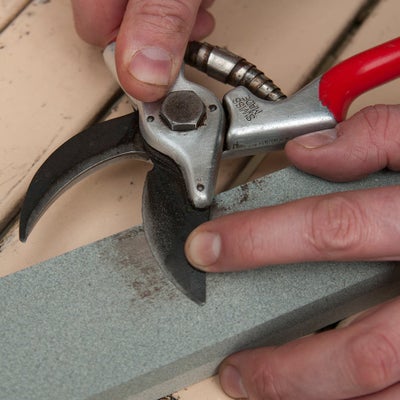
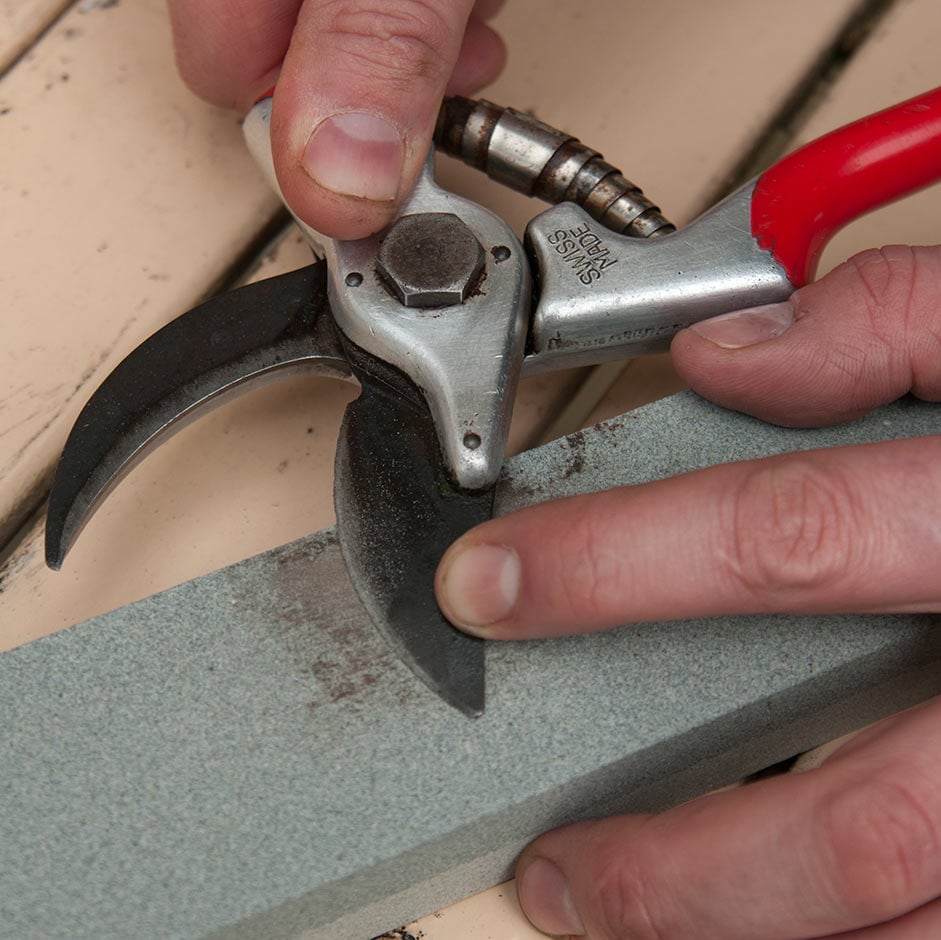
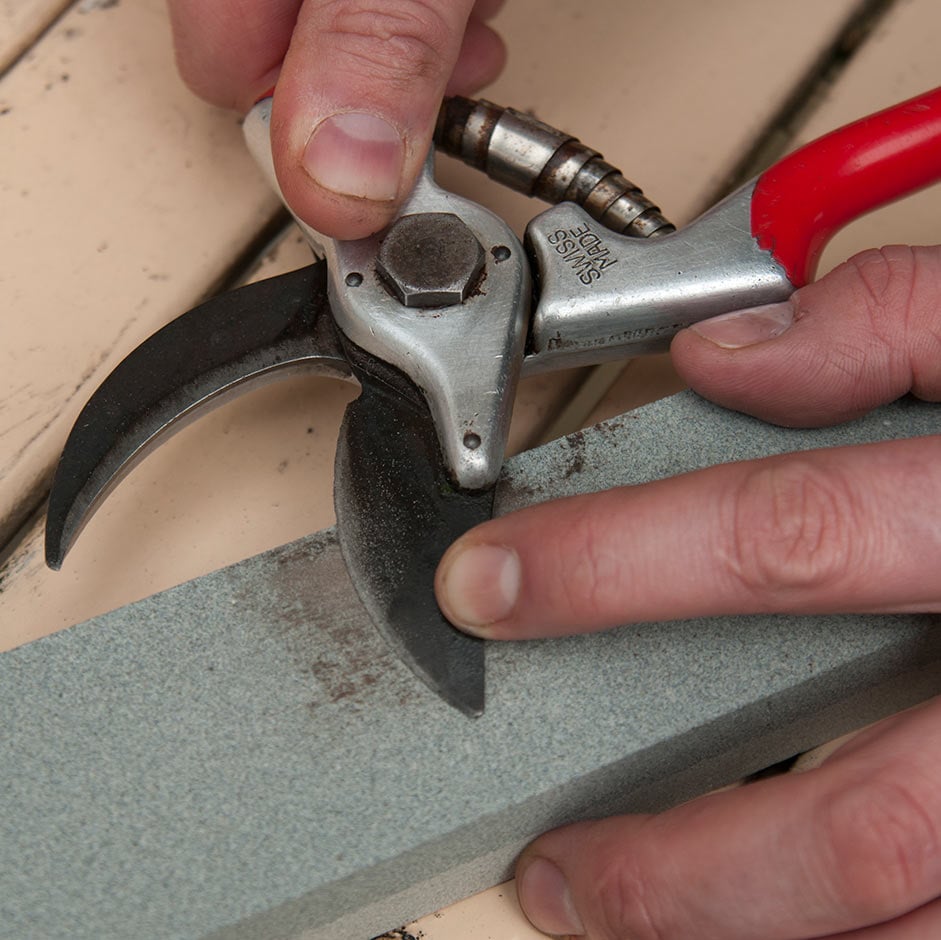
Bypass pruners and loppers
* Disassemble if possible. Clean sap. Disinfect the blade.
- File the beveled blade only. Keep the non-beveled side flat.
- Maintain about 25 degrees. Light, even strokes.
- Hone the bevel. Wipe the back flat to remove burr.
- Reassemble, oil pivot, and set tension so it closes cleanly without play.
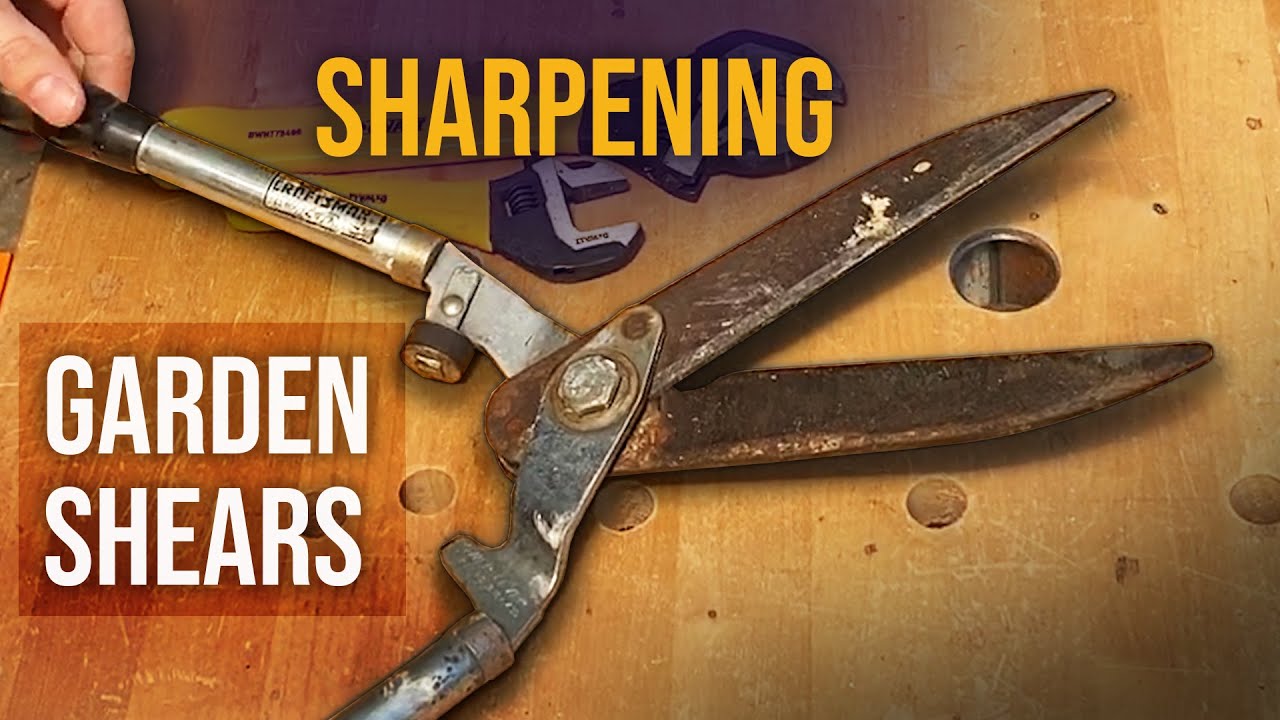
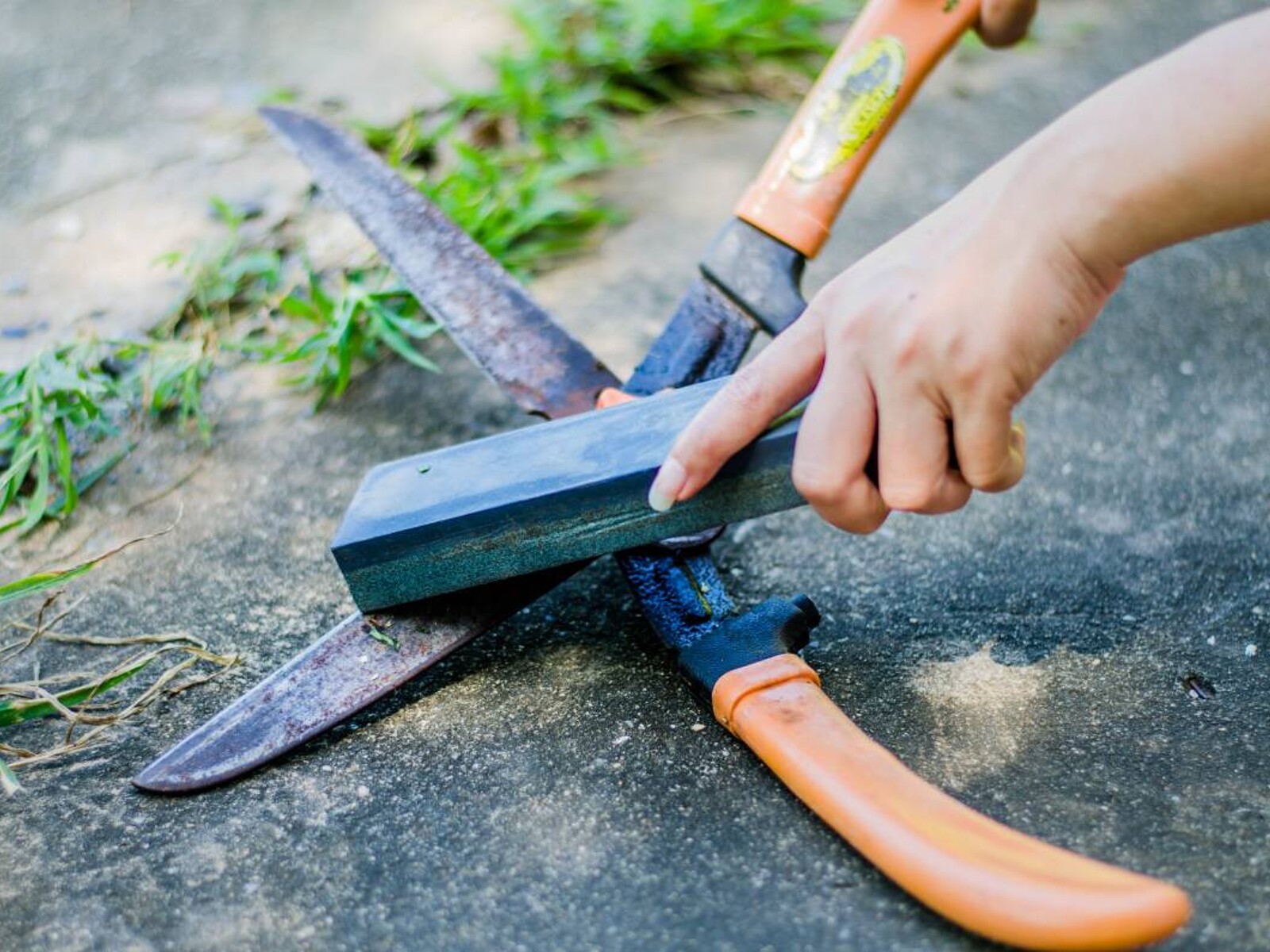
Hedge shears and grass shears
- Clean and check for bends. Align blades if needed.
- File only the outside bevels. Keep the inside faces flat and smooth.
- Use long file strokes to keep edges straight.
- Hone with a fine stone. Remove burrs gently.
- Oil the pivot and test on paper for a smooth cut.
Hoes (draw, stirrup, collinear)
- Clean and clamp the blade. Choose 25–35 degrees.
- File only the working edge. Follow the curve if present.
- Hone for a refined edge that stays tough in soil.
- Wax the blade to shed dirt. It reduces drag and rust.
Shovels and spades
- Clean and sand off rust near the lip.
- File a 35–45 degree bevel on the front side.
- Keep the edge straight, not razor thin. You want durable, not fragile.
- Smooth with a few honing strokes. Oil or wax to protect.
Axes and hatchets used in the garden
- Secure firmly. Mark the bevel.
- File a 25–30 degree convex bevel for strength.
- Hone with a stone in small circles. Alternate sides to balance.
- Protect with oil. Store with a sheath.
Hand trowels, edgers, and weeding knives
- Clean well. Remove burrs and chips.
- File the working edge to 30–35 degrees.
- Hone lightly. Over-sharp can chip in rocky soil.
- Wax to reduce sticking in clay.
These steps show how to sharpen garden hand tools across many types. Follow the angle, remove the burr, and protect the steel. That is the winning pattern.

Rust removal and blade rehab
Surface rust is easy. Rub with a rust eraser or fine sandpaper. Wipe clean and oil. For heavy rust, use a wire brush, then refine with a fine abrasive.
Small chips need a few extra file strokes at the bevel. Keep the angle steady. For deep chips, reprofile slowly. Avoid overheating with power tools. Heat can ruin the temper, so hand tools are safer for most people.
If the edge is wavy, use a long file and light strokes. Let the file cut. Rushing makes dips and flat spots. This is a key part of how to sharpen garden hand tools that many skip.

Lubrication, alignment, and reassembly
Clean parts before lube. Use a drop of light oil on pivots and springs. On blades, use dry lube or paste wax if you cut edibles, since it stays cleaner.
Set pruner tension so the blades kiss, not grind. The tool should close with one finger pressure. If it springs open too hard or drags, adjust hardware and recheck.
Wipe off extra oil. Cycle the tool open and shut several times. This sets the edge and reveals any sticky spots. Proper lube and alignment finishes how to sharpen garden hand tools the right way.
Maintenance schedule and storage tips
Sharpen little and often. A few honing swipes after each day saves big reshaping later. Touch up before the tool gets dull.
Simple schedule:
- Pruners and shears: hone weekly in season, file monthly
- Hoes and shovels: touch up every few uses, file monthly
- Axes and knives: hone as needed, inspect after hard knots or roots
Store tools dry and off the floor. Hang them or keep in a rack. Wipe metal with oil or wax. This routine supports how to sharpen garden hand tools and keep them sharp longer.
Common mistakes to avoid
- Filing both sides on single-bevel tools. Keep the back flat.
- Changing the factory angle too much. It weakens the edge.
- Leaving the burr on. It folds fast and feels dull.
- Using heavy pressure while honing. Light touch gives control.
- Skipping cleaning and oiling. Dirt and rust undo your work.
Avoid these and you will master how to sharpen garden hand tools with less effort and better results.

Troubleshooting your results after you learn how to sharpen garden hand tools
If the tool still crushes, the angle may be too steep or the burr is still there. Re-hone and remove the burr. Adjust the bevel a few degrees if needed.
If the edge chips, the bevel is too thin or the steel is brittle. Increase the angle slightly. Hone a micro-bevel for toughness.
If cuts drift or snag, check alignment and tension. Realign blades, smooth the inside faces, and lubricate. This fine-tuning is part of how to sharpen garden hand tools to a pro level.
Frequently Asked Questions of how to sharpen garden hand tools
How often should I sharpen garden hand tools?
Touch up edges often and sharpen fully as needed. If you feel drag, it is time for a quick hone.
What angle should I use for most garden tools?
Pruners and shears like about 25 degrees. Shovels and hoes do better with 30–40 degrees for durability.
Can I use a power grinder to sharpen?
You can, but it is easy to overheat the edge. Hand files and stones are safer and give more control.
Do I need to sharpen both sides of pruners?
No. Sharpen the beveled side only and keep the back flat. Remove burrs with a light pass.
What is the best lubricant after sharpening?
Use light oil on steel and pivots, or paste wax for blades that touch soil or food plants. Dry lube stays cleaner in dust.
Conclusion
Sharp tools change the way you garden. You work faster, cut cleaner, and protect your plants. Learn how to sharpen garden hand tools with a simple routine: clean, file at the right angle, hone, remove the burr, and protect the steel.
Set aside 10 minutes after your next garden session. Touch up one tool and feel the difference. Want more tips like this? Subscribe, share your results, or drop your sharpening questions in the comments.

