Lesche Vs Garrett Digging Tool: Which Wins In 2026?
Every detectorist knows the feeling: the target signal is strong, you push your digger into the turf, and the blade stops dead on a knot of roots. You rock the handle, pry harder, and the plug crumbles into a messy patch. Minutes disappear, and the grass takes weeks to recover. The problem is rarely the target. It is almost always the digging tool.
In 2026, two names still dominate the conversation: Lesche and Garrett. Both make tough, dependable tools, but they approach the same job differently. Lesche is built around surgical precision, while Garrett focuses on comfort and value. This guide compares their hand diggers, shovel, and bundles in real-world conditions so you can pick the one that matches your cutting motion, digging style, and local rules. You can also read our guide on how to store garden tools in small space.
Why the Digging Tool Is the Most Important Piece of Kit
The digging tool sits between you and every target. It shapes the plug, protects the grass, and controls how quickly you move from signal to signal. A digger that does not match your cutting style slows you down all day and leaves visible scars on the ground.
Several factors separate a great digger from a frustrating one:
- Blade thickness and stiffness — determines how cleanly it slices turf
- Serration placement — must match your natural cutting direction
- Handle ergonomics — prevents hand fatigue on long hunts
- Weight distribution — affects control and precision
- Sheath quality — keeps the tool secure and accessible on your belt
Both Lesche and Garrett built reputations on these fundamentals, but they make different trade-offs. That is why small-space tool kits rely on the same principles: narrow blades, secure grips, and minimal disturbance. A well-designed hand digger is no different. You can also read our guide on best sharpener for garden tools.
Meet the Contenders: Lesche vs Garrett at a Glance
| Brand | Approach | Blade Character | Price Position | Best For |
|---|---|---|---|---|
| Lesche | Precision-first | Thin, stiff, knife-like | Higher | Park hunters and careful plug cutters |
| Garrett | Comfort-first | Wider, aggressive serrations | More accessible | Beginners and long sessions |
Lesche Digging Tools: Precision-First Design
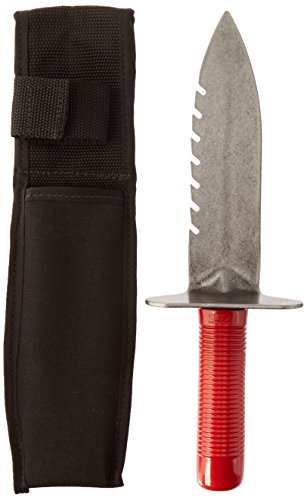
Lesche has become a legend among serious detectorists because its blades are heat-treated, stiff, and sharp. They feel more like fine knives than digging shovels. You slice through turf instead of brute-forcing your way into the ground.
Lesche Digging Tool & Sod Cutter (Left Serrated)

The left-serrated Lesche suits detectorists who cut counterclockwise.
This Lesche model is built for detectorists who naturally cut counterclockwise — a motion many right-handed hunters use when working around a target. The heat-treated blade is thin, rigid, and holds a sharp edge even in compact soil. It slices through turf with less downward force, which keeps your arm fresh over several hours of hunting. You can also read our guide on hole digging tool.
The handle has a molded hand index that keeps your grip consistent, even with wet or muddy gloves. The included sheath snaps onto a belt and holds the tool close to your hip, so you can move between signals without fumbling.
Where this tool shines is public lawn hunting. The narrow blade cuts tidy V-plugs that flip cleanly and close without obvious scars. That low-impact style is what keeps detectorists welcome in parks and schoolyards. For further reading, see nrcs.usda.gov.
The trade-off is simple: this is not the cheapest digger, and if you cut clockwise, the left-side serrations will feel awkward. Orientation matters as much as brand.
Lesche Digging Tool & Sod Cutter (Right Serrated)
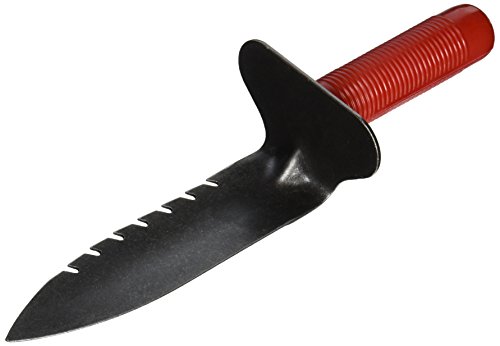
The right-serrated Lesche is the most common sight at club digs.
This is the model I see most often at club hunts. If you cut clockwise — the motion favored by many right-handed detectorists — this blade matches your muscle memory perfectly. The right-side serrations bite into roots as you rotate the blade, making clean cuts without aggressive sawing.
The blade is strong, thin, and notably stiff. It enters compact soil with minimal pressure and keeps the plug shape intact throughout the cut. The fine tip also lets you probe carefully before committing to a full plug, which is useful for locating a shallow coin without unnecessary damage.
Maintenance stays simple: knock off loose dirt, wipe the blade dry, and apply a light coat of oil. The sheath holds firmly to a belt or molle strap, and the balance works well during long sessions.
The trade-off is that right-side serrations are not ideal for left-handed hunters or those who cut counterclockwise. The price also sits above budget-oriented options.
Lesche 31-Inch T-Handle Shovel (Double Serrated)

The Lesche T-handle shovel handles deep targets that hand diggers cannot reach.
Hand diggers excel in parks, but deep targets demand a full-size shovel. The Lesche T-handle model brings the same build quality to a larger scale. The T-grip provides serious leverage without crushing your wrist, which makes deep plugs far less physically demanding.
Double serrations cut roots from either side of the blade, giving you a real advantage in wooded areas and root-heavy fields. The blade keeps its edge and shape even when it meets rocky soil and dense root systems.
This tool can significantly shorten dig time when coins or relics sit beyond the reach of a hand digger. On private land with deep targets, it can double your finds per hour compared with struggling on your knees.
The trade-off is that many public parks and schools prohibit full-size shovels entirely. The extra length and weight also make it less convenient for quick hunts. Think of this as a specialized tool for the right conditions.
Garrett Digging Tools: Comfort and Value First
Garrett Electronics is a household name in metal detecting, and its digging tools follow the same practical, user-friendly design philosophy as its detectors. Garrett focuses on comfort, ease of use, and accessible pricing.
Garrett Edge Digger with Belt Sheath

The Garrett Edge Digger pairs a cushioned grip with aggressive serrations.
The Garrett Edge Digger earns its reputation through comfort and value. The rubberized handle is shaped to lock into your palm and noticeably reduces hand strain during extended sessions. This is the tool to reach for when you know you will dig dozens of signals across several hours.
The serrations are more aggressive than those on the Lesche blades. They grab roots quickly and require less sawing motion. The pointed tip starts the initial cut fast, getting you into the ground without delay.
The included belt sheath is tough and practical. For new detectorists, the learning curve is gentle: the handle is forgiving, and the blade performs well in mixed soil conditions.
The trade-off is that the blade does not offer the same level of precision as the thinner Lesche. In tight clay, or when shaping meticulous plugs, you may notice slightly less control. The nylon sheath can also show wear faster than leather options under heavy use.
Garrett Edge Digger + All Terrain Pouch Bundle

The Garrett bundle pairs the Edge Digger with a finds pouch for a complete field setup.
The bundle pairs the Edge Digger with a rugged finds pouch that keeps targets, trash, and tools organized. The pouch includes mesh or drain areas that let soil and sand fall away, which is especially useful on beach hunts.
This setup speeds up the whole process. Instead of fumbling for separate bags and tools, everything sits within easy reach. A more organized workflow translates directly into more targets per hour.
The value proposition is strong. Buying the bundle costs less than buying the digger and a comparable pouch separately, and for new hunters it provides a field-ready kit on day one.
The trade-off is that the bundle costs more than the digger alone. The pouch adds bulk to your belt, and you may need to adjust the belt fit for your specific setup.
Lesche Vs Garrett Digging Tool: Head-to-Head
| Feature | Lesche Hand Digger | Garrett Edge Digger |
|---|---|---|
| Blade design | Thin, stiff, knife-like | Wider, more aggressive serrations |
| Precision | Excellent for clean plugs | Good, but less refined |
| Comfort | Functional grip | Cushioned, ergonomic handle |
| Learning curve | Moderate | Gentle |
| Price position | Higher | More accessible |
| Best for | Park hunters, precision-focused users | Beginners, long hunts, budget buyers |
| Durability | Exceptional | Very good with proper care |
Blade Design and Steel Quality
The biggest practical difference between these brands is blade philosophy. Lesche makes a thinner, stiffer blade that rewards a patient, precise cut. Garrett makes a wider blade with coarser serrations that rewards a quicker, more forceful cut.
Both tools use heat-treated steel that holds an edge well, but they feel different in the ground. In practice, the Lesche feels like a knife while the Garrett feels like a small shovel. Neither is wrong. The correct choice depends on the conditions you hunt most often.
For hard, dry clay, the thinner Lesche blade enters the ground with less effort. For root-bound soil, the aggressive Garrett serrations chew through obstacles faster. For certain soils and targets, other purpose-built digging tools are worth considering too, but these two cover most detecting situations.
How to Choose the Right Serration for Your Cutting Motion
The most common mistake new detectorists make is buying a digger without thinking about serration direction. This one detail changes everything.
Determine your natural cutting motion:
- Stand as if you are about to cut a plug.
- Notice which direction your wrist naturally rotates.
- Match your digger to that motion.
Right-serrated blades suit clockwise cutting, which comes naturally to many right-handed hunters. Left-serrated blades suit counterclockwise cutting.
If you choose the wrong orientation, you will constantly fight the tool. Root cutting becomes inefficient, your plugs suffer, and you waste energy. Test your motion before spending money, and you will avoid weeks of frustration.
What About Left-Handed Hunters?
Handedness is a useful starting point, but it is not a guarantee. Some left-handed detectorists cut clockwise, and some cut counterclockwise. The only reliable way to know is to run the motion test above.
Lesche sells separate left- and right-serrated versions, which makes it the easier brand for left-handed hunters who need a specific orientation. If you choose Garrett, check product photos and descriptions carefully before ordering, since the Edge Digger is not marketed the same way.
Spend ten minutes with a cheap tool before committing. It is easier to identify your natural motion in the backyard than after you have already paid for the wrong blade.
When to Use a Hand Digger vs a Full-Size Shovel
Hand diggers cover the vast majority of detecting situations, but not all of them. Knowing when to step up to a full-size tool saves time and protects your body.
Use a hand digger when:
- Hunting public parks, schoolyards, or sports fields
- Targets are within 6–8 inches of the surface
- You need to minimize visible ground disturbance
- Local regulations restrict larger tools
Use a shovel when:
- Hunting private land with permission
- Searching cellar holes, old homesteads, or farm fields
- Targets sit at depth beyond hand digger reach
- Working root-heavy wooded areas
Always research local regulations before carrying a full-size shovel on public property. For example, National Park Service rules generally prohibit metal detecting and excavation on NPS-managed lands unless a permit specifically allows it. A hand digger is the appropriate choice in most municipal settings, and many public landowners expect one.
Maintenance: Keep Your Digger Cutting Like New
Whichever brand you choose, regular maintenance extends the life of the blade and keeps it cutting cleanly. Rust is the primary enemy of high-carbon steel diggers.
After every hunt:
- Rinse the blade with clean water to remove corrosive soil compounds.
- Dry the blade thoroughly with a cloth.
- Apply a thin coat of light oil to the blade surface.
- Store the tool in a dry location.
A common mistake is storing the tool in its sheath while still damp. That traps moisture against the steel and accelerates corrosion. Take the extra minute to dry and oil the blade properly.
When the edge starts to dull, use a flat file or diamond sharpener for the straight sections and a round file for the serrations. Follow the existing bevel angle, then wipe away loose metal and re-oil. Avoid power grinders, which overheat the steel and soften it.
If a clean plug exposes a stubborn taproot, taproot weed pullers can help you remove the whole root without widening the hole. The same sharp, low-impact approach that protects your plugs also makes precision garden work easier.
Digging Clean Plugs Protects Lawns and Keeps Permissions Open
The digging tool you use directly affects how welcome detectorists remain in public spaces. A tool that tears up turf creates complaints. A tool that cuts clean plugs leaves no trace.
From a turf perspective, keeping turf resilient means avoiding torn roots, compacted soil, and exposed grass crowns. A sharp, appropriately sized blade achieves all of that. Over the long run, the goal is healthier soil over time, which is exactly why clean plugging matters.
When you cut a clean V-shape or flap plug with a proper digger, grass recovers within days. The same spot dug with a flat shovel or screwdriver can take weeks to heal. That is why precision matters far beyond personal convenience. Landowners notice, and that determines whether they let you return.
The soil health principles promoted by the USDA Natural Resources Conservation Service apply directly to detecting. Compacted soil, exposed roots, and torn grass all come from poor technique. A clean plug preserves the soil structure and helps the grass bounce back quickly.
Pricing and Value in 2026
Lesche still sits at the higher end of the hand digger market. The blade quality, included sheath, and precision justify the premium if you hunt public spaces often. The Garrett Edge Digger remains the stronger value play, especially for newcomers who want a comfortable, reliable tool without a large upfront investment.
The Garrett bundle is the smartest way to buy that brand because it adds a practical finds pouch for less than the separate pieces would cost. Lesche does not offer the same bundle structure, so expect to pay full price for the digger and buy a pouch separately if you need one.
In 2026, availability is rarely an issue. Both brands are widely stocked by metal detecting retailers, and sheaths and replacement parts are easy to find. The real variable is your own cutting style, not product availability.
Final Verdict: Which Wins in 2026?
The right answer depends on your priorities.
Choose Lesche if precision and clean plugs matter most. The thin, stiff blade shapes tidy plugs that protect grass and speed up your recovery between signals. The right-serrated model is the safest bet for most right-handed detectorists who hunt public spaces.
Choose Garrett if comfort and value come first. The cushioned handle is easier on your hands during long hunts, and the price is more accessible for beginners. The learning curve is gentler, and the aggressive serrations handle roots effectively.
Choose the Lesche 31-inch T-Handle Shovel if you primarily hunt private land, fields, or woods. It gives you the leverage and depth capacity that hand diggers cannot match.
For most detectorists, the right-serrated Lesche hand digger remains the benchmark. It balances precision, durability, and park-safe performance in a way few competing tools match. If your budget stretches, it is the tool I recommend most often.
If value guides your decision, the Garrett Edge Digger delivers solid performance at a friendlier price. It will serve you well without emptying your wallet.
Before you buy, spend two minutes testing your cutting motion. The result will tell you which serration to choose, and it will save you far more than the price difference between these two excellent tools.
Frequently Asked Questions
Is a Lesche digging tool worth the price?
Lesche hand diggers cost more than many alternatives, but the heat-treated blade holds an edge and slices turf with less force. If you hunt public lawns often and want clean plugs, the precision pays for itself. If you dig occasionally, a Garrett Edge Digger may be the smarter value.
Which serration should I choose on a digging tool?
Hold the digger the same way you use it, then mimic a plug cut. If your wrist rotates counterclockwise, choose a left-serrated blade. If it rotates clockwise, choose a right-serrated blade. Matching the serration to your natural motion is more important than the brand name.
Can I use a digging tool in parks and public land?
It depends on the landowner. Many parks allow hand diggers if you fill plugs and leave no trace, while some prohibit any disturbance. Always check local rules first. On federal land such as National Park Service sites, metal detecting and digging are generally prohibited.
How do I sharpen a Lesche or Garrett digger?
Use a flat file or diamond sharpener on the straight edges and a round file for serrations. Follow the blade’s existing bevel angle, then wipe away loose metal and oil the blade. Avoid power grinders, which overheat the steel and soften the edge.
Is the Garrett Edge Digger good for beginners?
Yes. The cushioned grip reduces hand fatigue, the aggressive serrations cut roots quickly, and the price is more forgiving. It is less precise than a Lesche for meticulous park plugs, but it lets a new hunter learn good digging habits without fighting the tool.
Do I need a full-size shovel for metal detecting?
Only if you regularly hunt private land, farm fields, or old homesteads where targets sit deeper than about 8 inches. For parks and most public areas, a hand digger is safer, easier to carry, and more likely to be permitted. Add a T-handle shovel for deep relic sites.