How To Break In A Chainsaw: Pro Tips For A Smooth Start
A new chainsaw is a beautiful thing. The bar shines, the chain is razor-sharp, and the engine smells like fresh metal. But what you do in the first few tanks of fuel will decide whether that saw runs strong for a decade or burns out before its first season.
Skip the break-in, and you risk a scored piston, a stretched chain, and a saw that never quite runs right. Do it properly, and you'll be rewarded with better compression, smoother throttle response, and a cutting tool that feels like it was made for your hands. Here's exactly how to break in a chainsaw the right way—no shortcuts, no guesswork. You can also read our guide on how hard is it to use a chainsaw.
Why Break-In Still Matters in 2026
Modern chainsaw engines are machined to incredibly tight tolerances. Cylinders are coated with nickel-silicon or similar materials, and pistons are precision-cast. So why does break-in still matter?
Because the piston rings need to seat against the cylinder wall. During the first few hours, microscopic high spots on the rings and cylinder gradually wear down, creating a perfect seal. This seating process is what gives you maximum compression, which translates directly to power and fuel efficiency. For more on this, see our guide on how long does a chainsaw chain last.
A controlled break-in also does three other things:
- Mates the chain to the bar rails and sprocket. New chains stretch as the drive links and tie straps settle. That's normal, but it needs attention.
- Seats the clutch shoes against the clutch drum.
- Lets the engine's tune settle. Auto-tune and M-Tronic systems learn your altitude, fuel, and cutting style. Manual carbs need a slightly rich setting during this period.
Skip this process, and the rings may never seal properly. You'll lose power, burn more fuel, and risk a seizure on a hot day. In practice, I've seen new saws with scored pistons simply because the owner ran them wide-open in hardwood on the very first tank.
Safety and Tools Checklist
Before you pull that starter cord, gather your gear. Chainsaw break-in isn't just about the engine—it's about doing it safely while you're distracted by all the new-saw checks. For more on this, see our guide on how long do chainsaw chains last.
Wear this:
- Chainsaw chaps or cut-resistant pants
- Helmet with face shield and hearing protection
- Cut-resistant gloves
- Steel-toe boots with good grip
Have these tools ready:
- Fresh fuel and quality two-stroke oil (more on ratios below)
- Bar and chain oil, plus a spare bottle
- A scrench (the combined wrench and screwdriver tool that came with your saw)
- Flat file, round file, and depth gauge tool for the chain
- Clean rag and a paint marker for marking fasteners
- A tachometer if your saw has a manual carburetor (a digital tach is under $30 and worth every penny)

The scored piston on the left is what happens when break-in is skipped. The clean piston on the right is the result of proper heat cycling.
Source: reddit.com
Step-By-Step: How To Break In A Chainsaw
This process takes about half a day of light work across 3 to 5 tanks of fuel. Follow it in order, and don't rush.
Step 1: Pre-Start Setup
Before the first pull:
- Check the chain direction. The cutting teeth must face forward on the top of the bar.
- Fill with fresh fuel and bar oil.
- Set the chain tension so it snaps back when you pull it away from the bar, but still slides freely by hand. Lift the chain at the bar tip—you should see just a sliver of the drive links.
- Prime the saw and set the choke exactly as the manual says.
Step 2: First Start and Warm-Up
Start the saw and let it idle for 30 to 60 seconds. Blip the throttle a few times to get oil flowing through the system. Do not hold it wide open.
Check for oil throw by revving the saw near a stump or piece of cardboard. A light line of oil should appear on the surface. No oil? Stop and fix the oiler before continuing. For more on this, see our guide on battery vs gas chainsaw.
Step 3: Heat Cycle, No Load
Run the saw for 5 to 10 minutes with light throttle bursts. Vary the RPM constantly—think of it as the engine's warm-up laps. Then shut it down and let it cool completely.
This heat-cool cycle is the single most important part of break-in. It lets the piston and rings expand and contract gradually, which helps the rings seat against the cylinder wall without overheating. For more on this, see our guide on how much compression should a chainsaw have.
Retension the chain while the saw cools. New chains stretch noticeably as they warm up.
Step 4: Heat Cycle, Light Load
Now it's time for the first cuts. Choose softwood—pine, cedar, or poplar, not oak or hickory. Make a few shallow cuts at half to three-quarters throttle. Keep each cut short, under 10 seconds.
Let the saw cool again. While it cools, inspect for leaks, loose fasteners, and the color of the chain. A bluish tint on the chain edge means heat—open up the oiler and let the chain cool before continuing. For further reading, see greenlawnora.com.
Step 5: First Tank Under Varied Load
You're ready for a little more work now. Buck a few small logs, but avoid long, full-throttle cuts. If your saw has an adjustable oiler, set it to a higher flow for the first tank.
Check and set chain tension every 10 to 15 minutes. Yes, that often. New chains stretch at a surprising rate during the first few hours.
Step 6: Inspect After the First Tank
After the first tank is empty, do a quick inspection:
- Spark plug color: Light tan is ideal. White means lean, wet black means rich or fouled.
- Air filter: Give it a light tap if dusty.
- Fasteners: Mark the muffler bolts and bar nuts with paint. If the marks shift, retorque.
Step 7: Tanks Two Through Five
Keep varying the throttle and cut length. Avoid long, high-load cuts in hardwood until the saw has had at least 3 tanks. If your saw has a manual carb, keep the high-speed circuit a touch rich. You should hear a mild, clean four-stroke note at no-load wide open that clears up in the cut.
Keep checking chain tension and bar oil level. Every time you refuel, check both.
Step 8: Full Service After Break-In
After 3 to 5 tanks (roughly 2 to 4 hours of run time), do a full service:
- Retorque all fasteners, including cylinder bolts if accessible
- Clean the spark arrestor screen
- Check the clutch cover and drum for dust buildup
- Dress the bar rails if one side shows a burr
- Swap the bar ends if you haven't already
Once this is done, you can run the saw at full power with confidence.
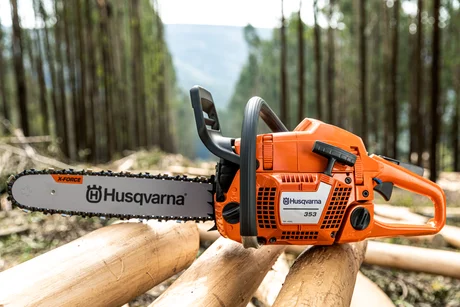
A properly broken-in chainsaw should idle smoothly and accelerate without hesitation.
Source: husqvarna.com
Fuel, Oil, and Tuning Essentials
Getting the fuel right is half the battle. Here's what matters.
Fuel Mix Ratio
Follow the manual first. Most modern saws call for 50:1 with high-quality two-stroke oil. Some owners run 40:1 during break-in for extra lubrication, but many manufacturers now advise staying at the recommended ratio—their engines are designed for it, and extra oil can actually lean out the air-fuel mixture and cause overheating.
Use fresh, ethanol-free fuel whenever possible. Ethanol absorbs moisture and degrades quickly, which can cause hard starting and lean running. If you must use E10, mix small batches (one tank at a time) and never store it for more than 30 days. Mixing fuel correctly matters just as much for your leaf blower or any other small engine.
Bar and Chain Oil
Standard bar oil works in most conditions. In hot weather, use a thicker grade; in winter, switch to a thinner winter grade. If the chain looks dry, smokes, or the bar tip runs hot, open up the oiler.
Carburetion and Tuning
Modern saws with auto-tune or M-Tronic systems adapt as you run varied loads. They need time and varied throttle to learn your conditions. A common mistake is trying to tune an auto-tune saw by ear—don't. Let the computer do its job.
For manual carbs:
- Set both L and H screws slightly rich during break-in
- Use a tachometer to target the manufacturer's no-load RPM
- Verify the saw four-strokes slightly at wide-open throttle off-load
- Do not tune lean to chase RPM. A lean tune kills pistons.
No matter what your saw setup looks like, make sure you're using quality fuel and oil. The fuel you put in your saw is just as important as the fuel that goes in your lawn mower.
Break-In by Saw Type
Not every saw needs the same treatment. Here's how to adjust based on what you're running.
Professional Gasoline Saws
Expect tight tolerances and a longer break-in period. Heat cycling matters more here. Keep the mixture rich and the load varied for the first 4 to 5 tanks. These saws are built to work hard, but they appreciate a gentle introduction.
Homeowner Gasoline Saws
Many homeowner saws are set lean from the factory to meet emissions standards. If the saw overheats, races at idle, or four-strokes excessively, have a dealer check the tune. Some of these saws benefit from a slightly richer setting that's only accessible with a dealer tool.
Battery Chainsaws
The electric motor needs no break-in. The bar and chain still do. Run short cuts first, check tension often, and keep bar oil flowing. The chain is the wear item here, and it settles just like on a gas saw.
Corded Electric Saws
Same as battery: focus on the chain and bar. Use the same first-day checks. No fuel mix to worry about, but the cutting system needs identical care.
No matter the platform, the chain and bar need attention during the first few cuts. That's true whether you're using your saw to trim branches or clear fallen trees.
Common Mistakes and How to Avoid Them
I see these mistakes constantly when owners ask why their new saw runs poorly. Avoid these, and you'll be ahead of most.
- Holding wide open for long, hard cuts in hardwood on tank one—this generates massive heat before the rings have seated
- Running stale fuel or fuel with too much ethanol—this causes hard starting, lean running, and eventually a scored piston
- Using no-name two-stroke oil or the wrong ratio—cheap oil leaves carbon deposits and offers poor lubrication
- Letting the chain run dry or too tight—this wears the bar rails and overheats the chain
- Long idling that fouls the plug and builds carbon—ten minutes of idling is worse than ten minutes of light cutting
- Tuning by ear alone without allowing auto-tune time to adapt
Each of these raises heat or adds friction. The result is the opposite of a smooth break-in.

A chainsaw that's overheating will show signs on the chain and bar long before the engine fails.
Source: jumpichiban.com
Post Break-In Maintenance and Performance Checks
After 3 to 5 tanks, do these quick tasks to lock in the gains:
- Clean or replace the air filter
- Inspect the spark plug—light tan is ideal; replace if fouled or white
- Check the clutch drum and rim sprocket for grooves
- Flip the bar to even out wear on both rails
- Dress the bar rails if needed
- Retorque the muffler, cylinder, and bar nuts
This is the moment when a saw settles. Done right, you'll feel stronger pull and cleaner throttle response. The saw will idle more steadily and cut more aggressively.
Troubleshooting During Break-In
Sometimes things go wrong even with careful break-in. Here's how to diagnose and fix common issues.
Hot, Smelly, or Weak Power
Stop immediately and let the saw cool. Check the fuel mix, look for air leaks, and verify the oiler is working. Run richer if you can. A hot saw is a damaged saw in the making.
Surging or Hanging Idle
Look for an air leak at the carburetor boot or crank seals. Do not continue heavy use until the leak is fixed. A lean condition from an air leak will quickly destroy a piston.
Bog on Throttle
On a manual carb, open the L screw an eighth of a turn. For auto-tune saws, run varied cuts to let the system learn. If the bog persists, check the fuel filter and lines.
Chain Smokes or Turns Blue
Increase oil flow. Retension the chain. Use a sharper chain to reduce friction. A dry chain will ruin a bar quickly.
Remember the basics of chainsaw maintenance—a sharp chain cuts faster and generates less heat. Keeping your chain sharp during break-in makes the whole process easier.

A tachometer is essential for tuning a manual-carb chainsaw during break-in.
Source: amazon.com
Frequently Asked Questions
How long does it take to break in a new chainsaw?
Most saws settle after 3 to 5 tanks of fuel. You can run normal work after that, but keep up your checks and maintain good oiling habits.
Should I use a richer oil mix for break-in?
Follow the manual first. Many modern saws are designed for 50:1 even during break-in with high-quality oil. Extra oil doesn't fix a lean carburetor.
Can I let it idle for an hour to break in?
No. Long idling can foul the plug and build carbon. Use short idle periods, varied throttle, and light cuts instead.
Do battery chainsaws need break-in?
The motor does not, but the chain and bar do. Start with short cuts, check tension, and keep bar oil flowing.
When can I run full throttle in long cuts?
After 3 to 5 tanks with proper checks. Make sure tuning and oiling are correct before sustained full-load cuts.
How often should I check chain tension on day one?
Every 10 to 15 minutes of cutting. New chains stretch fast as they heat and seat.
Conclusion
A careful break-in is simple: control heat, feed clean fuel, and watch the chain. Use short, varied cuts and steady checks during the first few tanks. That's how to break in a chainsaw for long life and strong power.
The process takes half a day of light work, but it pays off for years. You get better compression, smoother throttle response, and a saw that starts easier and cuts harder. You also avoid the heartbreak of a scored piston or a blued chain.
Put this plan into action on your next new saw. Keep notes, listen to the engine, and let the tool settle. When you're done, that saw will be ready for whatever you throw at it—and it'll still be running strong when the next saw rolls off the shelf.