

Ten Best Leaf Blowers For Home: Top Picks For 2026
Leaf cleanup should not eat your entire weekend. A good leaf blower can turn an afternoon of raking, bagging, and hauling into a focused hour of work. The 2026 lineup is the strongest it has ever been: cordless models now deliver enough force for damp leaves, battery packs are bigger, and many kits include two or three batteries right in the box.
The problem is choice. High CFM numbers, speed settings, backpack straps, and battery platforms all compete for your attention. The right pick depends on your yard size, the debris you deal with, and how much maintenance you want. That is why this guide ranks the ten best leaf blowers for home use in 2026 based on real-world usability, not just peak specs. You can also read our guide on best backpack leaf blowers for home use.
If you already know a backpack-style blower would suit your property, start with our roundup of hands-free backpack options before you compare handhelds.
How to Choose the Right Leaf Blower for Your Yard
Before looking at specific models, it helps to understand what actually matters on a spec sheet. Get this part right and the decision becomes much simpler. You can also read our guide on best cordless leaf blowers for home use.
CFM vs. MPH vs. RPM: What Actually Matters
Three numbers dominate every blower listing, but they are not created equal.
- CFM (cubic feet per minute) measures the volume of air moving. This is the most important number for moving leaves. Higher CFM means you can push more material with each pass.
- MPH (miles per hour) measures the speed of that air. This matters for dislodging wet, stuck, or compacted debris, like leaves packed against a curb.
- RPM (revolutions per minute) refers to motor speed. It does not translate directly to usable airflow, so treat it as background noise rather than useful information.
The practical takeaway: for leaves, prioritize CFM. For embedded or wet debris, prioritize MPH. Ignore RPM claims entirely.
Cordless vs. Gas vs. Corded: Which Type Is Right?
The type of blower you choose matters more than the brand or the specific model.
- Cordless electric is the best starting point for most homeowners. Modern brushless motors handle typical lots, there is no fuel to mix, and noise levels are much lower than gas. The trade-off is runtime, which is why buying a kit with two batteries matters so much. In 2026, cordless models handle dry and moderately damp leaves with ease.
- Gas remains the best option for large properties, wet matted leaves, and hours of continuous work. But gas blowers are louder, heavier, and require fuel mixing and seasonal maintenance. If you have under an acre, they are usually overkill.
- Corded electric is cheap and consistent but limited by your outlet range. It only makes sense for a small yard close to power, and you will be managing a cord the entire time.
If you are comparing battery-powered options in a specific price range, our guide to affordable cordless kits covers more ground. You can also read our guide on how to use a leaf blower for yard cleanup.
Battery Runtime and Noise: What to Expect in Practice
Battery life depends on speed setting and cell capacity. A 4.0Ah battery might give you 15–25 minutes on high or closer to 40 minutes on low. For realistic planning, expect 20–30 minutes per battery during mixed use. That is why kits with two or three batteries are so valuable: they effectively double or triple your working time without forcing you to wait for a recharge.
Noise is also a bigger factor than most spec sheets admit. Cordless blowers generally run at conversational volume, while gas blowers can push past 90 dB with prolonged use. If you have close neighbors, this alone may rule out gas. You can also read our guide on how to mix oil and gas for leaf blower.
A Quick Note on Local Noise and Emissions Rules
Many municipalities now restrict gas-powered leaf blowers because of noise and exhaust. The EPA's work on small engines explains why local governments are paying closer attention to this category, and California has already restricted new small off-road engines through the state's Air Resources Board. Before you commit to gas, it is worth checking your local codes. Cordless is becoming the safer long-term investment in many areas.
How We Picked These Models
To keep this list useful, we focused on balance rather than a single impressive number. A blower that moves 700 CFM but dies in ten minutes is not a home tool; it is a frustration. You can also read our guide on how to improve lawn soil health.
We compared each model for:
- Usable power for typical fall leaf cleanup
- Battery value and total runtime
- Comfort during 15–30 minute sessions
- Noise, storage, and everyday practicality
- Honest trade-offs that fit specific home situations
The ten blowers below are the standouts from that process.
The 10 Best Leaf Blowers for Home Use in 2026
1. Best for Power: 650 CFM Cordless Leaf Blower (2x 5.2Ah)

The 650 CFM kit comes with two 5.2Ah packs, so you can keep working while one battery charges.
This is the model to beat in 2026. Its 650 CFM output is strong enough to move wet, heavy leaves that stall lesser cordless blowers. The two 5.2Ah batteries are the key selling point: instead of stopping after one pack, you swap and continue. Three speed modes let you drop the power around flower beds or near parked cars, and the adjustable shoulder strap spreads the weight during longer jobs.
The catch: the larger batteries add heft, and the blower is not quiet at full power. If your yard is very small, you will not use most of what it offers. You can also read our guide on how to store a leaf blower.
Who it's for: homes with medium to large lots, mixed leaf cover, and no interest in mixing fuel.
2. Best Lightweight Option: 21V Cordless Leaf Blower, 2×4.0Ah + Fast Charger

This 21V kit is light enough to use one-handed on patios and walkways.
If your yard is mostly hard surfaces, this is the blower you will grab daily. It balances well in one hand, starts with a squeeze of the trigger, and comes with two 4.0Ah batteries plus a fast charger. For dry leaves on a driveway, dust in the garage, or grass clippings on a walkway, it is genuinely effective.
The catch: wet, matted piles are beyond its power. Think of it as an everyday maintenance tool rather than a heavy-duty autumn machine. You can also read our guide on how long do electric lawn mower batteries last.
Who it's for: townhouses, small yards, apartment balconies, and anyone who wants a grab-and-go blower.
3. Best Runtime: 21V Cordless Blower, 2×6.0Ah, High-RPM

The two 6.0Ah packs deliver the longest working time in this roundup.
Some cordless tools run out of battery right before you finish. This kit solves that with two 6.0Ah packs. It handles dry and slightly damp leaves with solid airflow and gives you enough runway for long driveways, larger lots, and multi-task cleanups. Because the speed control works well at lower output, it is also useful for clearing sawdust, drying a car, or tidying a shed.
The catch: bigger batteries make the blower heavier, and peak power is not class-leading. You are trading raw force for endurance.
Who it's for: homeowners who care more about finishing the job than about the highest CFM number.
4. Best Budget Pick: YUQUESEN 21V Cordless Leaf Blower, 2×4.0Ah
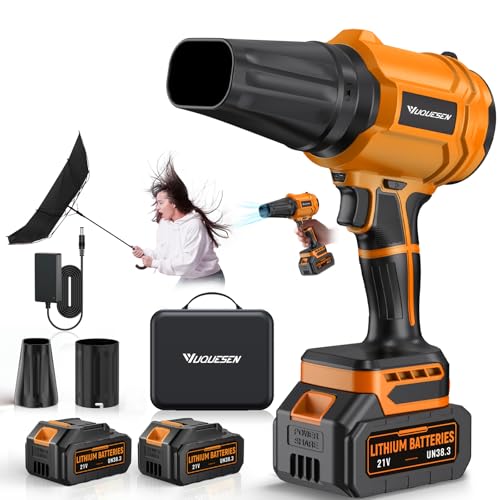
The YUQUESEN kit pairs a lightweight body with two batteries at a budget-friendly price.
You do not need to spend a lot to handle routine yard maintenance. This YUQUESEN blower is light, uncomplicated, and comes with two 4.0Ah batteries, so the box actually has enough juice for a full session. The bright orange housing makes it easy to spot in a garage or shed.
The catch: heavy wet leaves will not move well against this much airflow. It is built for regular, moderate jobs, not storm cleanup.
Who it's for: first-time buyers, small lots, and anyone who wants a usable kit without a high price tag.
5. Most Versatile: Comchoi 680 CFM Cordless Leaf Blower, 5 Speeds

Five speed settings make this one of the most adaptable handheld blowers in the lineup.
Five speeds may sound excessive until you need a light breeze for a flower bed and then full power for a pile of wet leaves against a fence. This Comchoi delivers the most airflow in this guide at 680 CFM, while the lower speeds preserve battery and keep noise down near neighbors.
The catch: at top speed the battery drains quickly, and the blower sits on the heavier side for a handheld. The power has a cost.
Who it's for: anyone with a mix of delicate garden areas, hard surfaces, and serious fall leaves.
6. Best Reach: SNJORT Cordless Leaf Blower, Extended Nozzle

The extended nozzle reduces bending and reaches spots a standard tube cannot.
This model earns its place through ergonomics. The extended nozzle gets under decks, benches, and planters without forcing you to crouch or bend. It also helps along fence lines and in tight corners where debris collects. The blower is light, simple, and effective for dry leaves, grass clippings, and dust.
The catch: the longer tube is awkward to store, and this is not a high-power machine. It is built for reach and control, not heavy wet material.
Who it's for: people with hard surfaces, tight spaces, or back and knee problems.
7. Best Entry-Level Kit: 21V Cordless Leaf Blower, 2×2.0Ah, 2 Speeds

A no-frills, two-speed blower that keeps the price and complexity low.
Sometimes simple is the whole point. This kit strips away extra modes and comes with two compact 2.0Ah batteries, a fast charger, and just enough power for patios, steps, and light leaf cover. It is one of the lightest blowers you can buy, which makes it easy to grab for ten-minute jobs.
The catch: per-battery runtime is short, and power is limited. It cannot plow through deep or wet leaves.
Who it's for: condos, small townhouse lots, and anyone who wants a basic tool for occasional tidying.
8. Best All-Rounder: GEVEELIFE 650 CFM Cordless Blower, 2×5.0Ah

The GEVEELIFE works for fall leaves, spring dust, and light snow.
If you want one blower that handles a bit of everything, this is it. The 650 CFM output clears normal fall leaves, the three speed settings protect garden beds, and the 5.0Ah batteries deliver enough runtime for most suburban lots. When light snow dusts a driveway or walkway, it blows powder away before it melts and turns icy.
The catch: for a small yard this is more tool than necessary, and full power drains the batteries faster than you might expect.
Who it's for: households that want a single, four-season blower without owning a gas engine.
9. Best Battery Bundle: VASG Cordless Leaf Blower, 3 Batteries
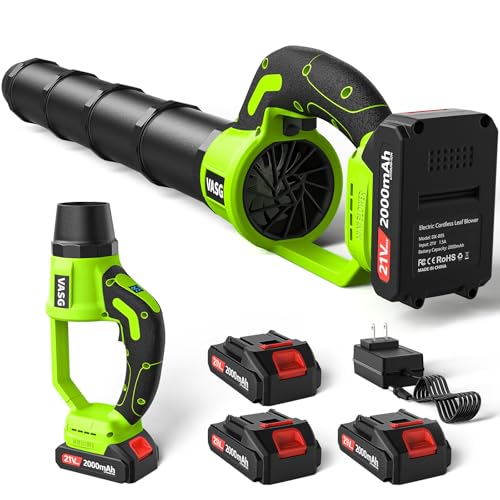
Three batteries in the box mean you can rotate packs without stopping to charge.
Battery anxiety is the main reason people hesitate to buy cordless. This VASG kit answers it with three 21V batteries in the box. You can run one pack down, swap in the next, and recharge the first before you need it again. The variable-speed trigger gives you good control, and the fast charger keeps downtime short.
The catch: peak airflow is not as strong as the top models here, and the plastic body feels budget-oriented.
Who it's for: convenience-first buyers who want a long working session without paying for two giant batteries.
10. Best for Heavy Duty: Thalorus 52cc Gas Backpack Blower, 550 CFM
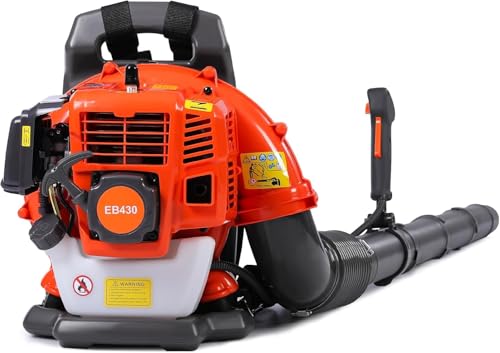
For acreage and soaked leaf piles, a gas backpack blower still has the advantage.
Cordless technology has improved fast, but it has not fully replaced gas for the toughest jobs. This Thalorus backpack blower brings professional-level force to a home-sized budget. The 52cc engine keeps moving through wet, matted leaves that stop battery-powered handhelds. The harness shifts weight to your back, and the low-vibration design reduces hand fatigue during long sessions.
The catch: gas blowers are loud, need fuel mixing, and require regular maintenance. You also have to store fuel safely. If your property is under an acre, this is probably more machine than you need.
Who it's for: large properties, heavy annual leaf loads, and people comfortable with seasonal engine care.
Choosing gas also means committing to maintenance. A carburetor can clog after a season of sitting with old fuel, so routine carburetor care is part of ownership. Using ethanol-free fuel reduces the risk of fuel-system problems. And if you want backpack power without the noise, our price-focused backpack picks are worth reviewing.
Comparison Table: The 2026 Home Leaf Blower Lineup
| Model / Kit | Type | Airflow | Batteries Included | Best For |
|---|---|---|---|---|
| 650 CFM Cordless | Handheld cordless | 650 CFM | 2 × 5.2Ah | Large yards, wet leaves |
| 21V 4.0Ah Kit | Handheld cordless | Mid-range | 2 × 4.0Ah | Patios and small yards |
| 21V 6.0Ah Kit | Handheld cordless | Mid-range | 2 × 6.0Ah | Long runtimes, driveways |
| YUQUESEN 21V | Handheld cordless | Mid-range | 2 × 4.0Ah | Budget buyers |
| Comchoi 680 CFM | Handheld cordless | 680 CFM | 2 × capacity varies | Mixed and heavy dry debris |
| SNJORT Extended Nozzle | Handheld cordless | Mid-range | 1 × varies | Hard surfaces and tight spaces |
| Entry 21V 2.0Ah | Handheld cordless | Low | 2 × 2.0Ah | Quick, light jobs |
| GEVEELIFE 650 CFM | Handheld cordless | 650 CFM | 2 × 5.0Ah | Four-season all-rounder |
| VASG 3-Battery | Handheld cordless | Mid-range | 3 × 21V | Maximum uptime |
| Thalorus 52cc | Gas backpack | 550 CFM | Not applicable | Large properties, wet leaves |
How to Get the Most From Your Leaf Blower
Owning a good blower is one thing. Using it effectively is another. A few practical habits will cut your cleanup time significantly.
Blow Leaves When They Are Dry
Dry leaves move far more easily than wet ones. If you can wait a day or two after rain, you will save battery power and effort. When leaves are damp, use a higher speed setting and expect to make more passes.
Work the Yard in Layers
Start from the downwind edge of your yard so the debris moves away from you instead of back into your face. Move cars, bikes, and outdoor furniture before you start. For deep leaf cover, use high speed to break up the pile, then lower speed to push the material toward your collection area.
If you have a lot of leaves, run over them with your lawn mower first. Chopped leaves are lighter, easier to blow, and can be left on the lawn to feed the soil. If you would rather use them in garden beds, our guide to turning leaves into mulch is a useful next read.
Use Your Blower Year-Round
A good leaf blower earns its keep beyond autumn:
- Clear grass clippings off driveways after mowing
- Dust out the garage or workshop
- Dry a freshly washed car from a safe distance
- Clear light snow from walkways and porches
- Remove debris from garden beds without disturbing the soil
This also keeps the tool from sitting idle for nine months, which is better for battery health.
Protect Yourself and the Batteries
Wear eye protection whenever you use a blower. Hearing protection is a good idea with gas models and with cordless blowers at high speed. Never point the nozzle at people or pets.
Store batteries at moderate room temperature, avoid leaving them in a hot garage, and recharge them before long-term storage. That simple habit extends the life of any cordless tool.
Leaf Blower Maintenance That Prevents Problems
Cordless blowers need very little care: clean the air intake, remove debris from the fan, and keep the nozzle free of cracks. Gas blowers need more attention.
Use fresh, clean fuel and consider a fuel stabilizer if you store gasoline for weeks at a time. A clogged carburetor is the most common reason a gas blower will not start, so routine carburetor care should be part of your seasonal checklist. If you store a gas blower over winter, drain the system or run it dry before putting it away.
Frequently Asked Questions
How do I choose between CFM and MPH?
Focus on CFM first. It tells you how much air the blower moves, which directly affects how much leaf material you can shift. MPH matters when you are dealing with compacted or wet debris that needs force to dislodge. For autumn leaves, CFM is the more useful number.
Are cordless blowers strong enough for wet leaves?
Some are. Models in the 650 CFM range can handle damp leaves, but heavily soaked, matted piles are still best left to gas. If you face wet leaves every fall, choose a high-CFM cordless model or consider a backpack blower.
How long do leaf blower batteries last?
Expect roughly 15–45 minutes per battery depending on speed setting and capacity. Larger packs, such as 5.0Ah and 6.0Ah, last longer. Most quality kits in 2026 include two or more batteries, so total working time is double the single-pack figure.
Can I use a leaf blower for snow?
For a light dusting or powder, yes. Many high-CFM models handle it well. Avoid heavy or wet snow, which can strain the motor and damage the fan. The GEVEELIFE and Comchoi models in this guide are both good at light snow duty.
Are gas leaf blowers being phased out?
Not everywhere, but regulations are tightening. California has already restricted new small off-road engines, and other states and cities are paying closer attention to noise and emissions from gas lawn equipment. If your area has existing or upcoming restrictions, cordless is the safer long-term investment. Check your local ordinances before committing to gas.
Final Verdict: Which Should You Buy?
For most homeowners, the best all-around choice in 2026 is the 650 CFM cordless model with dual 5.2Ah batteries. It delivers enough power for realistic fall cleanup, includes enough battery life to actually finish the job, and avoids the noise and maintenance of gas.
If runtime is your top priority, the 21V 6.0Ah kit or the VASG three-battery bundle are the standouts. Both keep you working without waiting around for charges. If you have a large property or face heavy wet leaves every year, the Thalorus backpack blower is the only option here that truly will not quit. It costs more in maintenance and noise, but it also delivers more sustained power than any cordless handheld.
On a tight budget, the YUQUESEN kit offers real value with two batteries included, and it is more than capable of routine maintenance around a typical suburban lot.
The right leaf blower is not the most powerful one; it is the one that fits your yard, your schedule, and your comfort level. Use the comparison table to shortlist two or three models, then focus on the trade-offs you can live with. Nail that decision, and fall cleanup becomes something you plan for rather than dread.


