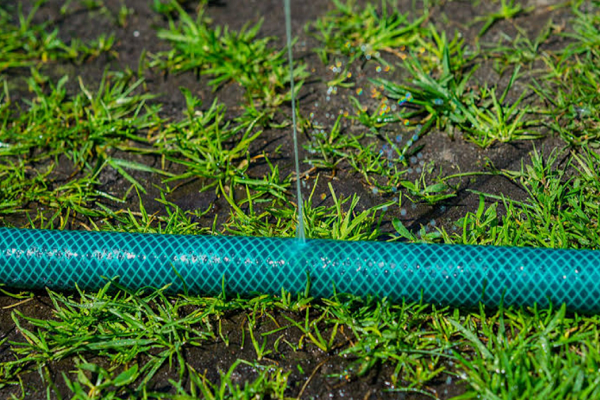
PVC Vs Rubber Garden Hose: Best Choice Guide 2026
Rubber hoses win for durability and flexibility; PVC wins for budget and weight.
You step outside to water the lawn and the hose fights back. It kinks. It feels hard in the cold. Or it leaks at the spigot. If you’ve been stuck choosing between PVC and rubber, I’ve tested enough hoses to know the trade-offs. PVC is cheaper and lighter. Rubber is tougher, stays flexible in heat and cold, and resists abrasion. In this guide, I break down pvc vs rubber garden hose choices in real-world terms, then review top picks so you can buy once and water happy.
Guitrees 50ft 3/4″ Heavy-Duty Rubber Hose

This Guitrees 3/4-inch rubber hose is built for heavy use. The five-layer braiding adds muscle where cheap hoses fail. With a 300 PSI working pressure and 1000 PSI burst rating, it handles strong water flow and tough jobs. It also tolerates hot and cold water, which makes it handy for all seasons.
I like the 3/4-inch ID for volume. You get faster fill times on livestock troughs and big sprinklers. The rubber jacket resists abrasion if you drag it over gravel or concrete. It’s heavier than PVC, but the flexibility makes it easier to coil and uncoil, even on cold mornings.
Pros:
- True heavy-duty rubber with five-layer reinforcement
- 300 PSI working pressure, 1000 PSI burst for safety margin
- Stays flexible in hot and cold conditions
- 3/4-inch flow for high-output tasks
- Abrasion-resistant jacket for rough surfaces
Cons:
- Heavier than PVC and many hybrid hoses
- Black rubber can scuff light siding if dragged
- Large diameter may be overkill for small yards
My Recommendation
If you’re choosing pvc vs rubber garden hose for demanding work, this Guitrees is a smart buy. It shines on farms, large gardens, and construction sites. I’d pick it if you run long watering sessions or use hose-end sprayers that need volume. The durability offsets the added weight and cost over time.
| Best for | Why |
|---|---|
| Heavy-duty chores | High PSI ratings and reinforced rubber |
| Cold or hot climates | Flexible in extreme temperatures |
| High-flow watering | 3/4-inch ID pushes more water |
Flexzilla 5/8″ x 50′ All-Weather Hose
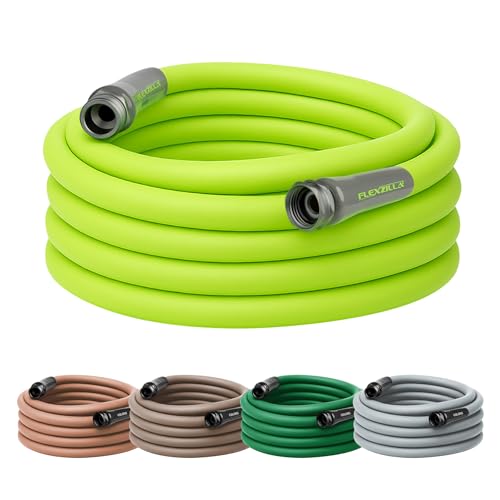
Flexzilla’s hybrid polymer is famous for staying supple. It lays flat, coils easily, and works in all weather. The 5/8-inch diameter is a sweet spot for home use. It’s lighter than rubber, but far more flexible than basic PVC.
The fittings are designed to seal well and reduce leaks. Bright color helps you spot it in grass to avoid mower mishaps. If you hate wrestling kinks, this hose is a relief. It’s not pure rubber, but it beats PVC on flexibility and cold-weather performance.
Pros:
- Ultra-flexible in hot and cold
- Lays flat and resists kinks
- Lighter than many rubber hoses
- Good flow for residential watering
- High-visibility color for safety
Cons:
- Not as abrasion-resistant as thick rubber
- Hybrid polymer can scuff on rough concrete over time
- May retain slight memory in very tight coils
My Recommendation
If the pvc vs rubber garden hose debate leaves you torn, Flexzilla is a great middle path. It feels like rubber in hand without the weight. I recommend it for everyday yard work, car washing, and hose-reel setups. It’s a go-to for homeowners who want easy handling and reliable performance.
| Best for | Why |
|---|---|
| Everyday yard care | Flexible, kink-resistant, simple to coil |
| Hose reel users | Light weight and smooth jacket |
| Cold climates | Stays pliable below freezing |
Worth Leader 3/4″ x 25′ PVC-Rubber Hose

This 25-foot hose blends PVC and rubber for a balance of price and performance. It claims a 500 PSI burst rating, which is strong for a compact hose. The 3/4-inch size gives solid flow for pressure nozzles and sprinklers. Short length reduces pressure loss over distance.
The jacket is designed to resist kinks while staying manageable. Brass ends help seal well at the spigot and nozzle. For small patios or balcony gardens, 25 feet is easy to store. It’s a simple, stout option when you want better-than-PVC handling without the cost of full rubber.
Pros:
- Hybrid PVC-rubber build balances weight and toughness
- Strong burst rating for its length
- 3/4-inch ID supports high-flow tools
- Compact 25-foot design stores fast
- Brass fittings for leak resistance
Cons:
- Stiffer than pure rubber in deep cold
- Short length limits reach
- Hybrid jacket can develop memory if kinked repeatedly
My Recommendation
When comparing pvc vs rubber garden hose for small spaces, this hybrid earns a spot. I would buy it for patios, raised beds, and short runs to a sprinkler. The 3/4-inch bore keeps flow strong even with a nozzle. It’s a practical, budget-friendly pick with fewer handling headaches.
| Best for | Why |
|---|---|
| Small yards/patios | Easy storage and quick setup |
| High-flow nozzles | 3/4-inch diameter supports volume |
| Budget-minded buyers | Hybrid performance at a fair price |
Eden 1/2″ x 50′ Rubber Garden Hose Set

Eden’s 1/2-inch rubber garden hose is a lighter-duty take on rubber. The smaller diameter reduces weight while keeping decent flow for hand watering. A DIY set often includes fittings or adapters to get started fast. It’s a friendly choice if you want rubber flexibility without the heft.
The 50-foot length reaches around midsize yards and gardens. Rubber remains easier to coil than PVC, especially in cool air. I like smaller hoses for planters, micro-irrigation, and gentle watering needs. It’s a tidy, durable tool for home gardeners who value control over volume.
Pros:
- Lighter than larger-diameter rubber hoses
- Flexible handling in cool and warm weather
- Good reach for typical backyards
- DIY-friendly accessories in the set
- Durability upgrade over PVC for frequent use
Cons:
- Lower flow than 5/8″ or 3/4″ hoses
- Not ideal for big sprinklers or filling tasks
- Can still feel heavier than PVC of the same size
My Recommendation
In the pvc vs rubber garden hose decision, pick this if you hand-water often. It’s great for planters, borders, and gentle watering where control matters more than speed. I’d also use it on hose reels thanks to its tidy diameter. It’s a chill, reliable rubber option for everyday care.
| Best for | Why |
|---|---|
| Planter watering | Light, manageable 1/2-inch size |
| Hose reels | Coils neatly, less bulk |
| Daily hand use | Rubber flexibility reduces kinks |
Heavy-Duty Rubber Hose Washers (40-Pack)
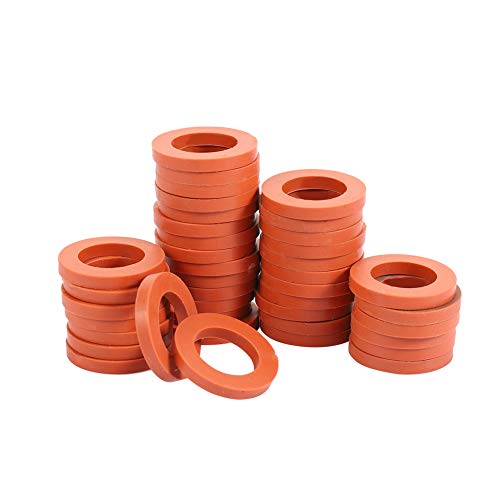
Leaky connections are often just bad washers. This 40-pack of heavy-duty rubber washers fits standard 3/4-inch garden hose fittings. The red color makes them easy to spot in a toolbox. A fresh washer can save water and protect fittings from overtightening.
I keep spares near every spigot. Swapping one takes seconds and solves most drips. Rubber seats better than cheap plastic. Whether you use PVC, rubber, or hybrid hoses, good washers are the cheapest upgrade you can make.
Pros:
- Fixes most leaks fast
- Standard size fits typical garden hose threads
- Durable rubber for a better seal
- Bulk pack means fewer store runs
- Bright color is easy to find
Cons:
- May compress over time and need replacement
- Not a fix for damaged metal threads
My Recommendation
No matter where you land on pvc vs rubber garden hose, add these washers to your kit. They prevent wasted water and protect your fittings. I recommend putting a few on each spigot so you never hunt for one. It’s a tiny spend with a big payoff in convenience.
| Best for | Why |
|---|---|
| Stopping leaks | Quick seal at hose and nozzle ends |
| Preventing damage | Less need to overtighten fittings |
| Prepared homeowners | 40-pack keeps spares on hand |
FUNJEE 10′ 1/2″ PVC Garden Hose

Short runs need short hoses. This 10-foot PVC hose is perfect for connecting a spigot to a hose reel, filter, or faucet splitter. The 1/2-inch size is easy to manage and store. PVC keeps costs low for simple jobs.
Brass GHT fittings add durability at the ends. The jacket is flexible enough for quick bends in tight spaces. For a small courtyard or a short jump to a drip system, this is a tidy solution. It avoids dragging a long hose where you don’t need it.
Pros:
- Ideal length for short connections
- Budget-friendly PVC construction
- Brass fittings for snug seals
- Lightweight and easy to store
- Great for hose-reel leaders
Cons:
- Stiffness increases in cold weather
- Not for high-flow or hot-water tasks
- Can kink if bent sharply
My Recommendation
When the pvc vs rubber garden hose choice is about a short leader line, PVC wins on price. I’d buy this for a reel connection or a filter hookup. Keep it out of harsh cold and avoid tight knots. It’s a simple, useful piece for tidy setups.
| Best for | Why |
|---|---|
| Leader hose to reel | Short, flexible, easy to route |
| Drip system feed | Compact link from spigot |
| Budget builds | Low cost for light-duty use |
PLYPLYE 50′ TPU Lightweight Garden Hose

This PLYPLYE hose uses TPU, not PVC, to stay ultra-light and flexible. It’s non-shrinking, easy to store, and designed for all-weather use. The jacket has a smooth feel that glides over turf and pavers. It’s also marketed as drinking-water safe, which is a plus for pet bowls and kids’ play.
I like TPU for folks who coil and uncoil daily. It resists kinks, lays flat, and handles temperature swings better than economy PVC. The black and gray design looks clean by modern homes. If you’re over heavy rubber, this is a nimble, friendly alternative.
Pros:
- Ultra-light and flexible TPU material
- Resists kinking and lays flat
- All-weather handling
- Drinking-water safe materials
- Easy to store on small reels
Cons:
- Not as abrasion-proof as thick rubber
- Lower mass can move with strong water pulses
- May scuff on rough concrete over time
My Recommendation
Weighing pvc vs rubber garden hose against modern TPU, this PLYPLYE lands in a sweet spot. It’s great for families, pet owners, and anyone who values easy handling. I’d grab it for daily yard work and filling play pools. It keeps chores light and stress-free.
| Best for | Why |
|---|---|
| Families and pets | Drinking-water safe materials |
| Frequent use | Lightweight and low-kink handling |
| Small storage | Coils tight on compact reels |
Sunifier 5/8″ x 50′ Hybrid Rubber Hose
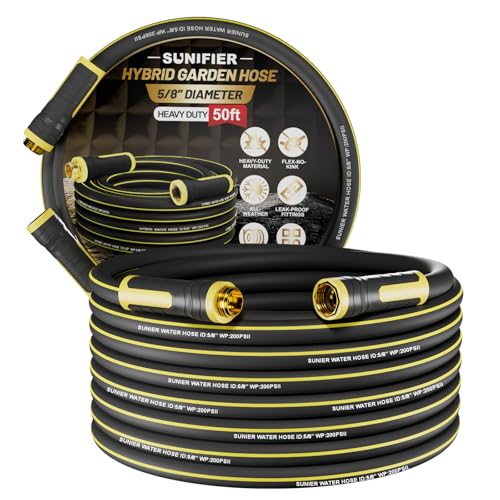
Sunifier blends rubber with flexible materials to reduce weight and kinking. The three-layer reinforcement backs a 600 PSI burst claim. At 5/8 inch by 50 feet, it’s a popular all-purpose size. It’s billed as water-safe and all-weather, which fits most home needs.
The jacket feels robust without turning into a chore to move. I like hybrid rubber hoses for mixed tasks like lawn sprinklers, car washing, and drip lines. They handle reel duty well too. It’s a nice balance of toughness and comfort in hand.
Pros:
- Hybrid rubber reduces kinks while keeping strength
- 600 PSI burst rating for peace of mind
- All-weather flexibility
- Good flow from 5/8-inch diameter
- Works well on reels and hangers
Cons:
- Heavier than TPU or thin PVC
- Hybrid blends can vary in feel below freezing
- Black jacket may warm in direct sun
My Recommendation
For pvc vs rubber garden hose shoppers who want strong but manageable, this Sunifier hits the mark. I’d use it as a main yard hose where durability matters. It feels premium without being punishing to lift. It’s a solid, long-term pick for a typical home.
| Best for | Why |
|---|---|
| Main yard hose | Balanced strength and handling |
| Sprinklers/cars | 5/8-inch flow supports many tools |
| All-weather use | Hybrid rubber stays flexible |
Guitrees 50ft 5/8″ Heavy-Duty Rubber Hose

This 5/8-inch Guitrees rubber hose mirrors the 3/4-inch model’s toughness in a friendlier size. You still get the 300 PSI working and 1000 PSI burst ratings. The five-layer braiding resists twists and rough use. It’s ideal if you need rubber strength but prefer lighter handling.
At 50 feet, it covers many yards without major pressure loss. Rubber’s cold-weather pliability makes it easy to coil in shoulder seasons. It’s built for people who water often and want a hose that lasts years, not months. A dependable choice for heavy home use.
Pros:
- Strong PSI ratings for safety and longevity
- Five-layer reinforcement resists abuse
- Better handling than 3/4-inch hoses
- Performs in hot and cold
- Versatile length for most yards
Cons:
- Heavier than polymer or TPU hoses
- Black rubber can mark white trim if rubbed
- May outlast cheaper fixtures, so keep washers fresh
My Recommendation
If pvc vs rubber garden hose weighs on you and you want long service life, get this. It’s my pick for homeowners who want pro-grade toughness in a manageable form. It handles nozzles, sprinklers, and reels well. This is a “buy once, use hard” solution.
| Best for | Why |
|---|---|
| Frequent watering | Rubber stands up to daily use |
| Mixed chores | 5/8-inch fits most tools |
| Cool climates | Stays flexible to coil and store |
FUNJEE 25′ 1/2″ PVC Garden Hose

The 25-foot FUNJEE PVC hose is a compact, budget option for light chores. The 1/2-inch size reduces water weight and makes it easy to carry. Brass GHT fittings aim for leakproof connections. It’s a good starter hose for small patios and condo gardens.
PVC is stiffer than rubber in cold, so store it in mild spaces if winters bite. For quick watering, rinsing tools, or feeding a small sprinkler head, it does the job. If you need a low-cost, short reach hose, it fits the bill. Keep expectations in the light-duty lane.
Pros:
- Affordable and compact
- Brass fittings help prevent leaks
- Lightweight for quick carry
- Easy to stash in small spaces
- Good for balconies or small yards
Cons:
- Stiffens in cold weather
- Prone to kinking under sharp bends
- Lower flow than larger-diameter hoses
My Recommendation
On pvc vs rubber garden hose, pick this if you want low cost and short reach. It’s best for light watering and rinsing chores. I’d keep it on a small reel or U-hook to avoid kinks. For long sessions or cold use, consider hybrid or rubber instead.
| Best for | Why |
|---|---|
| Budget buyers | Low upfront cost |
| Small spaces | Short and lightweight |
| Quick tasks | Easy to deploy and store |
Comparing PVC vs Rubber Garden Hoses: Key Buying Factors
Before you click buy, here’s the quick way I frame pvc vs rubber garden hose choices. Rubber wins on flexibility, durability, and all-weather performance. PVC wins on price and weight. Hybrid polymer or TPU sits in the middle for many homeowners.
Ask yourself four questions. How cold does it get? How long will you run the hose? Do you use high-flow nozzles or sprinklers? Do you store on a reel or hook? These answers make the right material clear and save you money over time.
Real-World Performance: PVC vs Rubber
Cold weather is the PVC stress test. It stiffens and can crack if kinked hard. Rubber stays pliable and coils without a fight. If you water in spring and late fall, rubber or hybrid makes life easier.
For abrasion, rubber takes the win. Drag it over gravel or concrete and it shrugs. PVC jackets scuff faster. For drinking-water situations, look for “drinking-water safe” claims on TPU or hybrid hoses.
FAQs Of pvc vs rubber garden hose
Which lasts longer: PVC or rubber garden hoses?
Rubber usually lasts longer. It resists abrasion, UV, and cold better than basic PVC. PVC can be fine for light use but shows wear sooner.
Do rubber hoses kink less than PVC?
Yes. Rubber stays more flexible, so it resists kinks. PVC tends to kink and hold memory, especially in cold weather.
Are PVC garden hoses safe for drinking water?
Not all. Check the label for drinking-water safe or lead-free claims. TPU and some hybrid hoses are often safer choices for pets and kids.
Which is better in cold weather, pvc vs rubber garden hose?
Rubber is better. It stays pliable below freezing, while PVC gets stiff and can crack if bent sharply.
Does hose diameter matter more than material?
For flow, yes. A 3/4-inch hose moves more water than 1/2-inch. But material still affects kinks, durability, and handling.
Final Verdict: Which Should You Buy?
If you want durability, flexibility, and year-round ease, choose rubber or a quality hybrid. If you need a low-cost, light hose for quick chores, PVC works.
Think about climate, flow needs, and storage. For pvc vs rubber garden hose, rubber is the long-term value; PVC is the budget pick.