
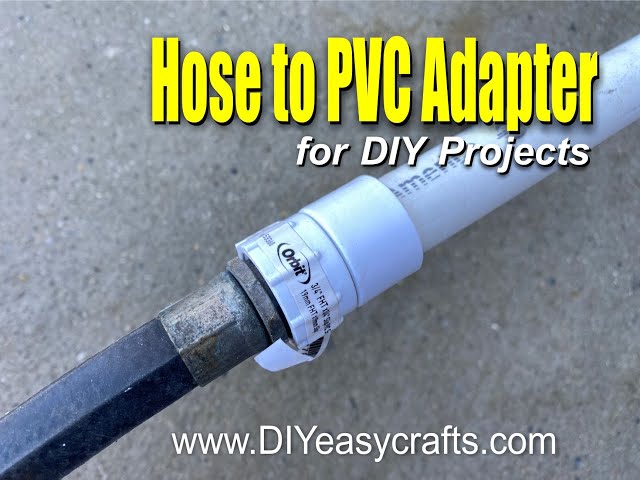
Use a GHT-to-NPT adapter and PVC fittings, seal threads, and glue.
If you want a clean, leak-free hookup, you need the right parts and a careful plan. In this guide, I show how to connect garden hose to PVC pipe the right way. I cover sizes, threads, tools, and steps. I share field tips from many backyard and irrigation builds, so you avoid drips and do it once.
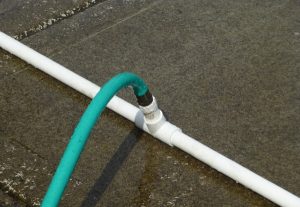
What you need to get started
The fastest way to learn how to connect garden hose to PVC pipe is to gather the right parts first. You will need a garden hose thread adapter, the correct PVC fittings, and basic hand tools. Keep seals and thread tape ready to stop leaks.
Essential parts and tools:
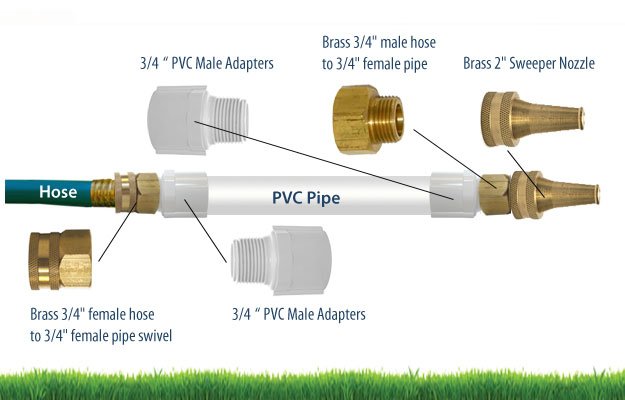
- Garden hose thread to pipe thread adapter. The common type is 3/4 inch GHT female swivel to 1/2 inch or 3/4 inch male NPT.
- PVC fitting to match your pipe. Use a slip socket or a female or male NPT adapter.
- PVC pipe and primer and cement. Use rated solvent for your pipe schedule.
- PTFE thread tape for NPT threads.
- Rubber washer for the hose swivel. Most new adapters include one.
- Adjustable wrench or pliers. A strap wrench is gentle on plastic.
- Hacksaw or PVC cutter. Use a deburring tool or utility knife.
- Marker, tape measure, and a clean rag.
Personal note: I keep a small kit with three adapters. It saves runs to the store when sizes change.

Thread sizes and standards you must know
Before you start, learn the thread terms. It makes how to connect garden hose to PVC pipe simple and safe.
Key facts:
- Garden hose thread is 3/4 inch GHT. It is also called 3/4 inch NH at 11.5 TPI. It is straight thread and seals with a washer.
- National Pipe Thread is NPT. It is tapered and seals on the threads with tape or dope.
- GHT and NPT do not mate. You must use a GHT to NPT adapter.
- PVC sizes are nominal. A 1/2 inch PVC pipe does not measure 1/2 inch outside diameter.
- Slip means a smooth socket for glue. FIP means female NPT. MIP means male NPT.
These basics stop cross-threading and broken parts. They also help you pick the right adapter on the first try.

Step-by-step: how to connect garden hose to PVC pipe
This is the most common setup for a hose-to-PVC tap. It works for yard taps, drip zones, or temp wash stations. It is the fastest way to learn how to connect garden hose to PVC pipe and get a tight seal.
Steps:
- Plan the layout. Decide where the hose will connect. Leave room to turn the swivel.
- Cut the PVC pipe square. Use a PVC cutter or a fine-tooth saw. Deburr the edges.
- Dry-fit the PVC pieces. Check alignment. Add a union or a ball valve if you want easy service.
- Prime and cement the PVC joints. Use the right primer and cement for your pipe. Push, quarter-turn, and hold for 10 seconds.
- Let joints set. Follow the can label. Light handling is fine in 15 minutes for small pipe at room temp. Full cure can take up to 2 hours or more.
- Wrap the NPT male threads on your adapter with PTFE tape. Use 2 to 3 wraps, snug and clockwise.
- Thread the adapter into the PVC fitting. Hand-tight first, then a quarter to half turn with a wrench. Do not over-tighten.
- Check the rubber washer inside the GHT swivel. Replace if cracked or missing.
- Attach the garden hose to the GHT swivel. Hand-tight is enough. No tape on GHT. The washer makes the seal.
- Pressurize and test. Open water slowly. Look and listen. Tighten a quarter turn more if needed.
Tip from practice: If you need more wiggle room, add a short length of flexible hose before any rigid parts.

Alternative setups for special cases
Sometimes the space, pressure, or flow needs a different path. Here are quick options that still follow best practice for how to connect garden hose to PVC pipe.
Quick-connect coupler at the hose
- Add a brass or polymer hose quick-connect set to the GHT side.
- This speeds up tool swaps and reduces thread wear.
Inline shut-off, filter, or backflow device
- Add a ball valve to PVC near the adapter. You gain fine control.
- Use a simple screen washer or Y-filter for grit.
- Use a vacuum breaker if tied to potable water. Many codes require this.
Adapting to different PVC sizes
- For 1/2 inch PVC: use a 1/2 inch FIP or slip-to-1/2 inch MIP, then a 3/4 inch GHT adapter with a 1/2 inch NPT side.
- For 3/4 inch PVC: match with a 3/4 inch NPT side on the GHT adapter.
- For 1 inch PVC: reduce to 3/4 inch NPT with a bushing, then attach the GHT adapter.
Using a barbed adapter and hose stub
- Slide a barbed adapter into a short hose piece. Clamp it.
- Glue the other side to PVC with the right fitting.
- This helps absorb vibration and angle changes.

Adhesives, sealants, and curing times
Good joints start with clean prep. This section keeps the bond strong and watertight.
Best practices:
- Use a listed primer and cement that match PVC schedule 40 or 80. Read labels.
- Wipe dust and water from pipe and sockets before glue.
- Apply primer to both surfaces. Apply cement to both. Insert and turn a quarter turn.
- Hold for 10 to 15 seconds. Wipe squeeze-out.
- Wait at least 15 minutes before low-pressure testing for small pipe at room temp. Wait longer in cold weather.
- Use PTFE tape on NPT only. Do not use tape on GHT. The washer seals GHT.
Note: High temps and pressure need longer cure times. Always check the product chart.

Pressure, leaks, and safety checks
You can avoid cracks and drips with a few simple checks. These habits make how to connect garden hose to PVC pipe last longer.
What to check:
- Typical home water runs at 40 to 60 psi. Most PVC schedule 40 handles this at 73°F, but sunlight and heat lower ratings.
- Keep PVC out of direct sun or paint it with a UV-stable paint.
- Use a pressure regulator if you see spikes or use a booster pump.
- Add strain relief. A short hose loop saves stress on the adapter.
- Protect from freeze. Drain or blow out lines before frost.
Leak tips:
- Drip at GHT joint means a bad washer or loose swivel.
- Drip at NPT means add one more wrap of tape and re-seat.
- Weeping at glued joints means poor prep. Cut out and redo.
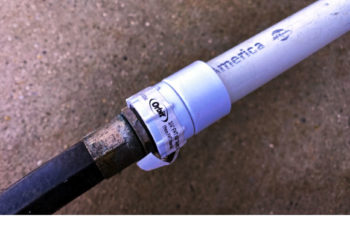
Troubleshooting and maintenance
Small issues start small sounds. Fix them fast and cheap.
Common problems:
- Cross-threaded parts. Stop at the first bind. Back off. Align and try again.
- Over-tightened plastic. Look for cracks at the hex. Replace the part.
- Water hammer knocks. Add a ball valve and open it slowly. Use arrestors if needed.
- Clogged screens. Clean or swap the washer screen at the hose end.
Care tips:
- Replace hose washers every season. Keep spares on hand.
- Rewrap NPT threads if you remove the adapter more than twice.
- Rinse grit from threads before re-connecting.

Cost, time, and planning tips
It helps to plan the run and budget. Here is what I see on most jobs for how to connect garden hose to PVC pipe.
Typical ranges:
- GHT-to-NPT adapter: 5 to 12 dollars for polymer. 8 to 20 dollars for brass.
- PVC fittings and pipe: 5 to 25 dollars per small project.
- Primer and cement: 10 to 20 dollars per set.
- Quick-connect kit: 8 to 25 dollars.
Time plan:
- Layout and cuts: 15 to 30 minutes.
- Glue-up: 10 to 20 minutes.
- Cure time before test: 15 to 60 minutes, based on size and temp.
- Total same-day finish: 1 to 2 hours.
Pro tip: Buy two adapters in case one cross-threads or cracks. It saves trips and delays.
Mistakes to avoid
A few traps can ruin a clean build. Avoid them and you will master how to connect garden hose to PVC pipe with ease.
Watch out for:
- Forcing GHT into NPT without an adapter. Threads will strip.
- Skipping primer or using wrong cement. Joints will fail.
- Over-tightening NPT into thin PVC fittings. Use gentle torque.
- Forgetting the hose washer. You will chase leaks for no reason.
- Testing at full blast right away. Pressurize slow and watch.
Frequently Asked Questions of how to connect garden hose to pvc pipe
What adapter do I need to connect a garden hose to PVC?
Use a 3/4 inch GHT to NPT adapter that matches your PVC fitting size. Most builds use 1/2 inch or 3/4 inch NPT.
Do I need thread tape on garden hose threads?
No. GHT seals with a rubber washer. Use PTFE tape only on NPT threads.
Can I glue a garden hose directly to PVC?
No. Hoses do not solvent weld to PVC. Use a GHT adapter or a barbed fitting with a clamp.
Will PVC hold normal house water pressure?
Yes, schedule 40 PVC usually handles 40 to 60 psi at room temp. Protect from sun and freeze, and follow glue cure times.
How do I stop leaks at the adapter?
Replace the hose washer for GHT leaks. For NPT leaks, rewrap the male threads with 2 to 3 wraps of PTFE tape and snug gently.
Can I add a shut-off valve at the hose connection?
Yes. Install a PVC ball valve before the GHT adapter. It helps control flow and service parts.
Are GHT and NPT the same size?
No. GHT is straight thread and seals with a washer. NPT is tapered and seals on the threads.
Conclusion
You now know how to connect garden hose to PVC pipe with confidence. Pick the right adapter, match threads, glue clean joints, and test slow. Add a valve or quick-connect to make daily use easy.
Put these steps to work on your next yard project today. You will get a neat setup that lasts and stays dry. Want more guides like this? Subscribe, share your build, or ask a question so we can help you dial it in.


