

Set the deck to the right inch setting, match your grass, and adjust all wheels evenly.
Learning how to adjust lawn mower cutting height is the fastest way to get a healthier, cleaner lawn. I’ve tuned hundreds of mowers across yards, parks, and sports fields, and I’ll show you how to set the right height, measure the true cut, avoid scalping, and adapt through the seasons. Stick with me and you’ll master how to adjust lawn mower cutting height like a pro, in simple steps you can use today.

Why Cutting Height Matters
Cutting height controls lawn health more than any other mowing choice. Taller grass grows deeper roots, holds water better, and crowds out weeds. Short cuts stress the plant and expose soil, which invites pests and disease. Research in turfgrass shows a 3-inch height can reduce weeds and improve drought tolerance.
You also get better stripes, fewer ruts, and less thatch when you pick the right height. The rule of one-third is key. Never remove more than one-third of the blade at a time. This reduces shock and keeps color rich. Learning how to adjust lawn mower cutting height makes all this easy.

Know Your Grass Type and Target Heights
Your grass type sets your ideal range. Start with the low end in spring. Move higher as heat rises. Always follow the rule of one-third.
Cool-Season Grasses
These like cooler temps and a higher cut.
- Kentucky bluegrass: 2.5 to 3.5 inches
- Perennial ryegrass: 2.5 to 3.5 inches
- Tall fescue: 3.0 to 4.0 inches
Warm-Season Grasses
These prefer warmth and can handle a lower cut.
- Bermuda: 1.0 to 2.0 inches for rotary, 0.5 to 1.5 inches for reel
- Zoysia: 1.0 to 2.5 inches
- St. Augustine: 2.5 to 4.0 inches
- Centipede: 1.5 to 2.0 inches
Use these as a start, then adjust for your site. Shade, soil type, and traffic matter. If you are unsure, go a little higher. This simple shift can fix scalping and dry spots. Knowing how to adjust lawn mower cutting height by species prevents damage and saves time.
Safety and Tools Before You Adjust
Small checks prevent big repairs. Set up first, then adjust.
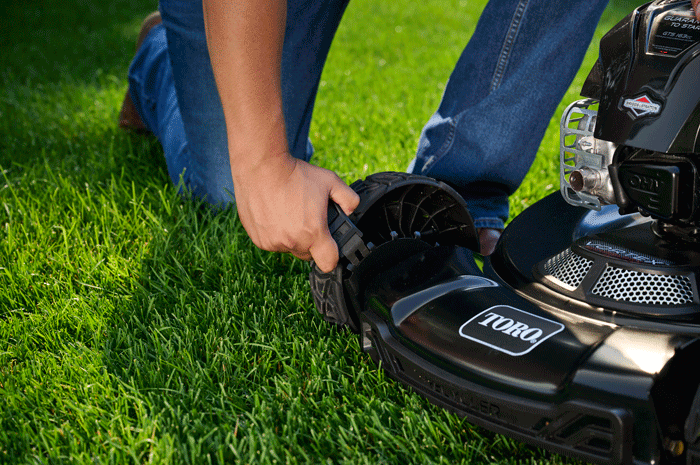
- Park on flat, hard ground. A driveway works best.
- Shut off power. Remove the key or battery. Unplug spark plug on gas models.
- Wear gloves and eye protection.
- Check tire pressure on riders. Uneven tires change deck level.
- Clean the deck. Built-up grass changes the true cut.
Helpful tools:
- Tape measure or ruler
- Block or carpenters square
- Wrench or sockets for deck bolts
- Owner’s manual for your model
This prep makes how to adjust lawn mower cutting height quick and safe.

Step-by-Step: How to Adjust Lawn Mower Cutting Height by Mower Type
The method depends on your mower. Use these steps and verify with a ruler. Do not trust the dial alone. Settings often read higher than the real cut.
Walk-Behind Rotary Mowers
Single-lever deck
- Set the lever to your target height, like 3 inches.
- Make sure the lever locks on both sides of the deck.
- Check the front and back blade tips with a ruler on a flat surface.
- Aim for the rear blade tip to be about 1/8 inch higher than the front for a clean cut.
Four-corner wheel levers
1. Adjust each wheel to the same notch.
2. Verify with a ruler at the blade tip. Notches can vary.
3. Fine-tune one wheel at a time to remove tilt.
4. Spin the blade by hand to check all tips.
Self-Propelled and Battery Mowers
- Set the central lever or electronic setting.
- Confirm battery is removed when measuring.
- Measure blade tip height on a flat surface.
- Make small changes and recheck. Many systems have half-step gaps.
Riding Lawn Tractors and Zero-Turns
- Inflate tires to spec. This keeps the deck level.
- Set the deck height dial or pin to your target.
- Use the deck hangers or leveling nuts to set side-to-side level.
- Set front-to-rear pitch. Front blade tip should be 1/8 to 1/4 inch lower than rear.
- Adjust anti-scalp wheels. They should float, just above the ground during normal mowing.
Reel Mowers
- Use the front roller or height screws to set the reel-to-bedknife gap.
- Confirm true height with a gauge or ruler.
- Backlap or adjust the bedknife if you hear scraping.
- Reel mowers need very flat lawns. Lower is not better if your yard is bumpy.
How to measure true cutting height
- Place mower on smooth concrete.
- Use a ruler from ground to the blade tip at the discharge side.
- Rotate the blade and measure all tips. Use the lowest reading as the true height.
This is the gold standard for how to adjust lawn mower cutting height. It avoids misleading deck numbers and prevents scalping.

Seasonal Settings and Growth Stages
Grass needs change through the year. Your settings should change too. This is a core part of how to adjust lawn mower cutting height.
Spring
- Start mid-range for your grass type.
- Raise height if growth is fast. This avoids removing more than one-third.
Summer heat
- Raise by 0.5 inch to reduce stress.
- Taller blades shade soil and save water.
- Mulch clippings to keep moisture in.
Fall
- Lower slightly for clean-up and leaves.
- Keep cool-season grass at 2.5 to 3 inches before winter.
New sod or seed
- Keep higher while roots set.
- Mow only when growth reaches one-third above your target height.
Drought or stress
- Pause mowing or raise height more.
- Do not scalp. It can take weeks to recover.
Troubleshooting Uneven Cuts and Scalping
When the cut looks ragged, fix the root cause. A small tweak often solves it.
Common causes
- Dull or bent blades tear grass.
- Deck not level side-to-side.
- Wrong tire pressure.
- Deck clogged with wet clippings.
- Going too fast over bumps.
Simple fixes
- Sharpen or replace blades. Balance them to reduce vibration.
- Level the deck with a ruler at blade tips.
- Set the front-to-rear pitch as noted above.
- Slow down in rough areas or raise the deck a notch.
- If you see scalp lines, raise height 0.5 inch and cut again.
These steps are key to how to adjust lawn mower cutting height for a smooth, even look.

Pro Tips From the Field
These are habits I use on customer lawns and my own yard. They keep the cut clean and the grass happy.
- Use the rule of one-third. If the lawn got tall, raise the deck, cut, then lower next time.
- Mow in different directions each week to avoid ruts.
- Mark favorite settings with paint or a small zip tie on the lever.
- After blade sharpening, reset height. Fresh edges can change the effective cut.
- Keep a log of dates, height, and weather. Patterns jump out fast.
Mistakes to avoid
- Chasing a golf-green look on a bumpy yard. That needs a reel mower and a flat surface.
- Trusting deck numbers. Always measure the blade tip.
- Cutting low to reduce mow days. It backfires with more weeds and dry spots.
These habits make how to adjust lawn mower cutting height second nature.
Maintenance That Affects Cutting Height
Height is not only about the lever. Small parts shift the real cut over time.
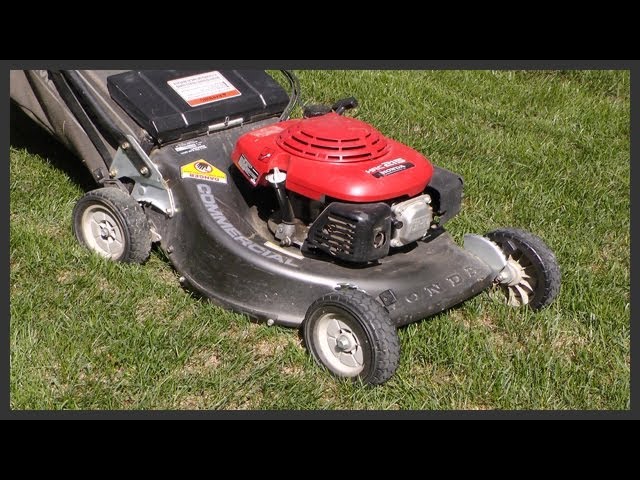
- Tire pressure: Uneven pressure tilts the deck.
- Bushings and hangers: Worn parts let the deck sag.
- Anti-scalp wheels: Set to protect on bumps, not to carry the deck.
- Blade length and shape: Wrong blades change lift and height.
- Engine or motor speed: Low RPM tears grass and leaves stragglers.
- Deck cleaning: Built-up grass raises the effective height.
Check these monthly in peak season. It supports how to adjust lawn mower cutting height with less effort.

Quick Reference: Measuring and Marking Your Preferred Height
Set it once, then lock it in with a simple system.
- Pick a flat spot on your driveway as your setup zone.
- Use a 2×4 block or a cut wood shim at your favorite height.
- Slide the block under the deck and lower the lever until it just touches.
- Mark the lever or dial with a permanent marker.
- Log the setting by season so you can swap fast.
When a friend asks how to adjust lawn mower cutting height, show them this trick. It is fast and repeatable.
Frequently Asked Questions of how to adjust lawn mower cutting height
How often should I change my mower height?
Change it with the season and after major weather shifts. In heat or drought, raise it by about 0.5 inch to reduce stress.
What is the best height for most lawns?
For most cool-season lawns, 3 inches is a safe, healthy target. Warm-season lawns often look best between 1 and 2.5 inches, based on type.
Should I trust the height numbers on my mower?
Use them as a guide but verify with a ruler at the blade tip. Many mowers cut lower than the dial suggests.
How do I avoid scalping on uneven ground?
Raise the deck one notch and slow down over bumps. Set anti-scalp wheels to float just above the turf.
Does mulching change the best cutting height?
Mulching works best at moderate to higher heights. It returns nutrients and helps keep moisture in the soil.
Is lower mowing better for weeds?
No. Lower mowing often boosts weeds by exposing soil and stressing grass. A higher cut shades weed seeds and improves turf density.
Can I adjust height while the mower is running?
Avoid it. Turn the mower off, remove the key or battery, and make the change safely.
Conclusion
The right deck height brings color, density, and fewer weeds with less work. Start with your grass type, measure the true blade height, and follow the one-third rule. Make small, steady changes and your lawn will respond fast.
Put this guide on your phone and walk out to the mower today. Practice how to adjust lawn mower cutting height on a flat surface, measure the real cut, and mark your best settings. Want more tips like this? Subscribe for updates, ask a question in the comments, or share your results with a photo.


