Gardening Tools Weeder: Top Picks And Buying Guide 2026
Weeding is the chore most gardeners put off: it is repetitive, it strains the back, and — when you reach for the wrong tool — it does not even work. The problem is rarely the gardener. Most weeding tools are designed for a specific weed and a specific soil condition, and using one tool for everything is a recipe for broken taproots, sore knees, and weeds that regrow within a week.
A proper weeder, matched to your soil, your weeds, and your height, turns the same task into a comfortable ten-minute sweep. This guide covers the main types of weeders, the top pick in each category, how to match a tool to your conditions, the technique that actually removes the whole root, and the 2026 buying advice that holds up in real gardens. You can also read our guide on digging tools crossword clue.
The 6 Types of Weeders and the Top Pick for Each
A "weeder" is not one tool. It is a family of blades, each designed for a different weed, soil type, and working posture. Knowing which one to grab is the single biggest step toward effortless weeding.
1. V-Notch Weeder (Dandelion Weeder)
The V-notch weeder has a long, narrow fork with a notch cut into the tip. You push it into the soil next to a taproot, rock the handle back, and lever the entire root out of the ground in one piece. The notch grips the root instead of slicing it, which stops the root from breaking and regrowing. You can also read our guide on types of weeding tools for home gardens.
- Best for: Dandelions, plantain, dock, thistles, and other deep taproots in lawns or beds.
- Why it works: It lifts the root whole rather than cutting it at the surface.
- Top pick: The classic Wilcox All-Pro weeder — forged steel, ash handle, and a blade built to survive heavy leverage. If you prefer to stay standing, the Fiskars Big Grip stand-up weeder uses the same notched-head principle with a long handle.
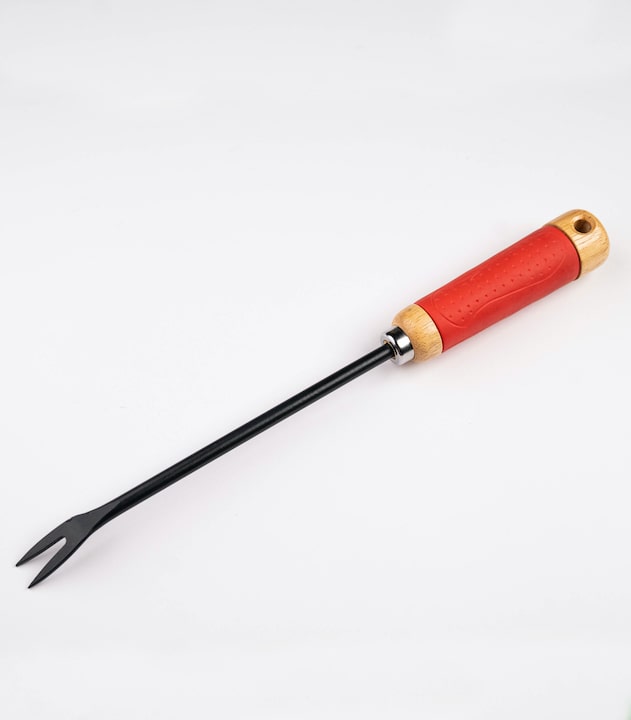
A rubber-grip hand weeder removes taproot weeds like dandelions with less hand strain.
Image source: horticult.co
2. Hori-Hori Knife
The hori-hori is a heavy, pointed blade with a straight cutting edge on one side and a serrated edge on the other. It is the closest thing gardening has to a multitool: it cuts, pries, digs, and plants. The sharp point lets you work into the soil at an angle and rock out roots that would bend a thinner blade.
- Best for: Rocky soil, tight spaces, cutting tough fibrous roots, dividing perennials, and planting bulbs.
- Why it works: The sturdy blade acts as a lever, and the serrated edge saws through roots that a V-notch cannot grip.
- Top pick: The Nisaku hori-hori, a Japanese-style blade that takes a keen edge and keeps it. If you already have one, it earns its place for everyday digging chores and serves as the perfect partner to your dedicated weeders.
3. Stirrup Hoe (Oscillating Hoe)
The stirrup hoe has a U-shaped steel loop that swings slightly as it moves, slicing weeds just below the soil surface on both the push and the pull stroke. Because the blade is designed to skim shallowly, it disturbs less soil and does not bring dormant weed seeds up to the surface. You can also read our guide on piece garden hand tools gifts for gardener.
- Best for: Clearing young annual weeds from vegetable beds, paths, and any large open area.
- Why it works: The back-and-forth cutting action covers ground fast with minimal effort.
- Top pick: The DeWit oscillating hoe — a Danish-made tool with a replaceable blade and a handle attached through the full length of the head. It costs more than hardware-store hoes, and the difference is obvious the first time you use it on moist soil.
4. Dutch Hoe (Push Hoe)
The Dutch hoe is a flat, angled blade on a long handle. You push it forward, skimming just below the surface, and the sharp edge severs weed stems cleanly. It is the traditional choice for open vegetable rows because it keeps you upright while you work.
- Best for: Seedling weeds in open rows and standing-height maintenance in large beds.
- Why it works: The forward push requires little force when the blade is sharp, and the long handle protects your posture.
- Top pick: A long-handled Burgon & Ball Dutch hoe, with a solid forged head and a comfortable ash handle. Look for a blade that is set at a slightly upward angle — that geometry is what makes it cut rather than dig in.
5. Cape Cod Weeder
The Cape Cod weeder is a short tool with a narrow, hooked blade at the end. Instead of chopping downward, it glides horizontally just under the soil surface, slicing weed stems close to desirable plants without harming their roots. You can also read our guide on cape cod weeder tool.
- Best for: Weeding between tight plantings, under shrubs, along the edges of raised beds, and in containers.
- Why it works: Its small size lets you work precisely where long-handled hoes cannot fit.
- Top pick: The Lee Valley Cape Cod weeder, a simple, well-made version of this New England classic. If you garden mostly in raised beds, this is often the tool you will reach for most.
6. Stand-Up Weeder
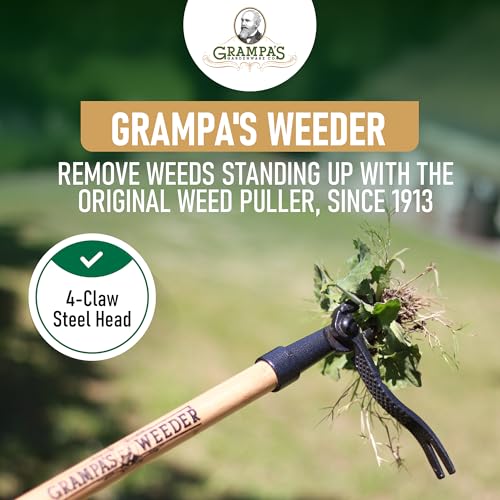
Stand-up weeders combine a long handle with a notched or claw-style head, and many have a foot pedal that pushes the head into the soil. You pull the handle back and the weed comes out by the root — all without bending over or kneeling.
- Best for: Lawns, large beds, and anyone who wants to reduce back and knee strain.
- Why it works: Leverage replaces bending, making removal of taproots easier on the body.
- Top pick: The Fiskars Big Grip stand-up weeder, which has a comfortable handle angle, a steel head, and a simple pivot action. The trade-off is precision: stand-up models are less delicate than hand tools, so use them for broad lawn work, not for tight planting areas.
Quick Comparison of Top Picks
| Weeder Type | Top Pick | Best For | Handle Length | Typical Price Range |
|---|---|---|---|---|
| V-notch weeder | Wilcox All-Pro | Taproots, dandelions | 5–12 in | $15–$30 |
| Hori-hori knife | Nisaku | Rocky soil, roots, planting | 8–12 in | $15–$25 |
| Stirrup hoe | DeWit oscillating | Vegetable beds, seedlings | 48–60 in | $40–$60 |
| Dutch hoe | Burgon & Ball | Open rows, standing work | 48–60 in | $30–$50 |
| Cape Cod weeder | Lee Valley | Tight spots, raised beds | 8–10 in | $15–$25 |
| Stand-up weeder | Fiskars Big Grip | Lawns, no kneeling | 39–48 in | $30–$45 |
Prices are typical retail ranges and vary by retailer. Most home gardeners need only three of these tools to cover 90% of weeding tasks: a stirrup hoe for the broad sweeps, a V-notch weeder for stubborn taproots, and a hori-hori for the tough spots. You can also read our guide on best sharpener for garden tools.
How We Evaluated These Weeders
The tools above are the ones that survive real garden use, not just attractive product photos. We evaluated each weeder on the factors that determine whether it makes the job easier or harder:
- Blade steel quality: Does the edge hold through a full season, or does it roll after a few dozen cuts in clay?
- Shank and blade connection: The most common failure point on cheap weeders is where the blade meets the handle. A thick, solidly attached shank transfers leverage without bending.
- Handle comfort and leverage: Does the grip stay secure when wet? Is the handle the right length to keep your spine neutral?
- Sharpening ease: How difficult is it to restore the edge at home?
- Honest trade-offs: Stainless steel resists rust but is harder to sharpen. High-carbon steel takes a sharper edge but needs oiling. There is no single "best" steel — only the right steel for how you store and use your tools.
In practice, the tools that fail first share one weakness: a thin blade that flexes when you pry. A weeder is a lever, and a lever that bends is useless. Buy for blade thickness and handle attachment before you buy for brand.
How to Choose the Right Weeder for Your Garden
The best weeder is the one that matches your specific garden conditions. Evaluating three factors — weed type, soil type, and bed style — will narrow the options quickly. You can also read our guide on digging tools names with pictures.
Match the Weeder to the Weed
- Taproots (dandelions, thistles, dock): Use a V-notch weeder or hori-hori to lift the entire root without breaking it.
- Fibrous roots (crabgrass, annual bluegrass): A stirrup or Dutch hoe slices through the stems and surface roots quickly.
- Seedling annuals (chickweed, purslane): A stirrup hoe removes them in bulk with one pass.
If you are not sure what weed you are fighting, identify it before buying a tool. Local university extension guides are the most reliable way to confirm the species and understand its root system.
Match the Weeder to Your Soil
- Heavy clay: Choose forged high-carbon steel with a thick shank that can handle leverage without bending. A sharp edge is critical, because clay blunts blades quickly. If your soil is truly compacted, you may need to fix that first — working hard, compacted ground with any weeder is an uphill battle.
- Sandy soil: Wider blades work well because the soil is loose and easy to penetrate. Even a basic stamped-steel tool will perform acceptably here.
- Rocky soil: A pointed hori-hori is far more effective at working around rocks than a wide hoe blade.
Match the Weeder to Your Bed Style
- Raised beds: Short-handled tools like the Cape Cod weeder give you control in a confined space without hitting the sides. The same digging rules that apply when preparing elevated plots still matter — loose, well-amended soil is what makes hand weeding effortless.
- Open vegetable rows: Long-handled hoes, like the stirrup or Dutch hoe, let you cover ground quickly without kneeling.
- Containers and pots: A hand fork or small Cape Cod weeder is usually enough.
- Lawns: Leave the hoes in the shed. A V-notch weeder is the correct tool for isolated taproots in turf.
- Bed edges: A weeder is not the right tool for defining borders where grass creeps into beds — that job belongs to a dedicated edge tool. For keeping bed edges tidy, you want a sharp half-moon edger, not a hand tool designed for individual weeds.
Handle Length, Material, and Grip
Handle length directly controls your posture:
- Long handles (48 inches or more) keep you standing, reduce back strain, and are best for open beds and large areas. The trade-off is less precision.
- Short handles (under 18 inches) give you maximum control for close work on your knees in raised beds, containers, and dense plantings.
Handle material matters more than most buyers realize. Ash handles are light, strong, and absorb shock; fiberglass resists breaking and bending; aluminum reduces weight but can feel cold and slippery. Whatever the material, make sure the grip is comfortable in your hand. A rubberized, non-slip grip prevents blisters during longer sessions — this is one of the first details to test before buying. You can also read our guide on how to maintain garden digging tools.
Blade Steel Explained
- High-carbon steel holds a sharper edge longer and is easier to sharpen. It rusts quickly if neglected, so it demands a light oil coating after use.
- Stainless steel resists corrosion and requires less maintenance, but it is harder to sharpen and often flexes more at thin gauges.
- Forged, one-piece construction is more durable than welded or stamped blades. The heavier the soil, the more you need a forged tool.
If you notice your tools dulling quickly and you are not sure whether the blade or your sharpening technique is the issue, the problem is usually the steel. High-carbon tools respond to a few passes with a mill file; cheap stamped stainless often does not.
Weeder Technique: How to Remove Weeds Without Breaking Roots
The right technique matters just as much as the right tool. A V-notch weeder cannot help you if you pull straight up while the soil is dry and the root snaps at the tip.
Start When the Soil Is Moist
Weed when the soil is slightly moist — not soaking wet, not bone dry. Moist soil lets the root slip out cleanly; dry soil causes it to break. A simple test: if a handful of soil crumbles in your hand, it is ready to weed. If it forms a hard lump, wait, or water the area a few days ahead. A gentle shower from a spray wand softens the ground without compacting it the way a heavy blast from a hose can.
Removing Taproots in 5 Steps
- Insert the blade into the soil at a slight angle, about one inch from the weed's crown.
- Push the blade down along the side of the root to as close to its full depth as you can reach.
- Rock the handle gently back and forth to loosen the soil around the root.
- Pry the handle back toward you, lifting the root out with the soil still clinging to it.
- Shake the root clean and remove it from the bed. If you leave it lying on top of bare soil, it can re-root in warm, damp conditions.
How to Hoe Young Weeds Fast
When clearing seedlings with a stirrup or Dutch hoe, skim just below the surface. The goal is to cut the stems, not to dig deep trenches. Work in a steady rhythm — push and pull with a stirrup hoe, push forward with a Dutch hoe — and do not raise the blade between strokes. The most efficient hoers move the blade in a continuous shallow arc, covering ground the way a broom covers a floor.
Common Mistakes to Avoid
- Weeding when the soil is dry: Roots snap, and you only remove the top of the plant.
- Burying the tool too deep: Deep hoeing brings dormant weed seeds to the surface, where they germinate in their thousands.
- Working after weeds have set seed: One missed weed can produce hundreds of seeds. This is why regular, early passes matter more than occasional heroic sessions.
- Pulling with straight arm muscles: Use the leverage of the tool and the strength of your legs and back, not a sharp yank from the wrist.
- Ignoring broken roots: Weeds like bindweed and dock regrow from root fragments. With these species, you need to dig out as much of the root as possible, not just nick the crown.
Weed Prevention: How to Weed Less in 2026
The best weeding technique is the one that prevents weeds from becoming established in the first place. An integrated approach cuts the time you spend weeding by more than half.
- Mulch bare soil. A three-inch layer of organic mulch smothers annual weeds and keeps the soil surface from drying out. You can use bark, straw, or mulch made from your own leaves, which also feeds the soil as it breaks down.
- Plant densely. When desirable plants shade the soil, weed seeds get less light and germinate far less readily. Gaps in a bed are an open invitation.
- Water the plants, not the path. Drip irrigation and soaker hoses deliver water to the crop roots while leaving the spaces between plants dry. Weeds germinate far more slowly in dry soil.
- Use a pre-emergent. In lawns, a spring application of corn gluten meal suppresses weed seeds before they sprout. It is not a selective herbicide and does not harm established turf.
- Follow the ten-minute rule. One quick pass every week prevents weeds from establishing deep roots or setting seed. A ten-minute sweep is easier to stick to than a four-hour weekend marathon.
- Stop deep digging. Shallow cultivation — an inch or two deep — removes weeds without dragging buried seeds back to the surface. Save the deep work for preparing new beds.
Healthy, actively growing soil also grows fewer weeds overall. The basics — good drainage, adequate organic matter, and balanced fertility — give your crops a head start, and the USDA soil health principles offer a solid framework for building that foundation in any garden.
Maintenance, Sharpening, and Safe Storage
A sharp weeder is a safe weeder. Dull blades require more force, which increases the risk of slipping and causing injury. Proper maintenance also extends the life of a good tool for decades.
After Every Use
- Scrape off soil and plant sap with a stiff brush.
- Wipe the blade dry immediately after use.
- Apply a light film of mineral oil or linseed oil to the metal once a month — and always before storage over winter.
Sharpening Steps
Most weeders have a single bevel, meaning only one side of the edge is angled. Sharpening is straightforward:
- Secure the tool in a vice, or hold it firmly against a stable surface.
- Use a mill file or medium sharpening stone, following the existing angle of the bevel.
- Push the file away from you along the edge, working in one direction. Do not use a back-and-forth sawing motion.
- Finish with a few light strokes on a fine stone or honing steel to remove the burr.
- Wipe the blade clean to remove metal filings, then oil it.
If you have never sharpened a blade before, practice on an old tool first. A file will not damage the steel, but it will definitely teach you the angle.
Safety and Storage
- Always cut and pry away from your body.
- Wear gloves and closed-toe shoes; thin flip-flops and weeders do not mix.
- Keep children and pets clear of your work area.
- Store tools with blades facing down, or hang them on a rack so you never reach into a drawer full of sharp edges.
- At the end of the season, clean rust with fine steel wool, oil all metal parts, and condition wooden handles with linseed oil.
Budget vs. Premium: What Is Worth Paying For?
Weeder prices range from under $10 to over $50, and the spread is not just branding. Here is what each price tier actually delivers.
| Price Tier | Typical Features | Who It Is For |
|---|---|---|
| Entry (under $20) | Stamped steel blade, basic grip, thinner shank | Small pots, light soil, occasional use |
| Mid-range ($20–$40) | Carbon or forged steel, comfortable grip, solid shank | Most home gardeners with moderate weed pressure |
| Pro-grade ($40+) | Forged blade, replaceable parts, thicker steel, longer warranty | Heavy clay, large plots, daily use |
The sweet spot for most home gardeners is the mid-range tier. Paying a little more for high-carbon steel and a solidly attached handle makes a noticeable difference in how easily the tool cuts through soil and how long it lasts. Pro-grade tools are worth the money if you have extensive beds or heavy clay; a cheap tool that bends in the first season is not a saving.
One honest warning: the most expensive tool is still the wrong tool if it does not match your weed type and soil. A premium Dutch hoe is wasted in a raised bed of flowers, and a $10 V-notch weeder will do a better job on dandelions than a $50 hoe will.
Frequently Asked Questions
What is the best weeder for dandelions?
A V-notch hand weeder is the most effective. The notch grips the taproot so you can lever the entire root out without breaking it. In hard or rocky soil, a hori-hori with a pointed blade can do the same job by prying the root loose from the side.
How often should I weed?
A light pass every week is far more effective than one heavy session per month. Short, regular sessions stop weeds from establishing deep roots and prevent them from setting seed. Ten minutes a day is a realistic benchmark for most gardens, and it keeps the job from ever becoming overwhelming.
Are stand-up weeders worth it?
Yes, if you weed large lawns or want to avoid kneeling. Stand-up weeders use leverage instead of bending, which makes them easier on the back and knees. The trade-off is precision: long-handled designs are less delicate, so they are not the best choice for removing weeds from among tight plantings.
What handle length should I choose?
Use long handles (48 inches or more) for standing work in open beds and large areas. Use short handles (under 18 inches) for kneeling work in raised beds, containers, and tight spaces. Many gardeners keep both on hand, and they are used for completely different jobs.
Do I really need more than one weeder?
Most gardens need three: a stirrup hoe for clearing large areas, a V-notch weeder for taproots, and a hori-hori for tough spots and rocky soil. If you only buy one, make it the tool that targets your most persistent weed — that is the one you will use weekly.
Is stainless steel better than high-carbon steel?
It depends on your habits. Stainless resists rust and needs less maintenance, but it is harder to sharpen and can feel more flexible at thin gauges. High-carbon steel holds a sharper edge and sharpens easily, but you must keep it oiled or it will rust. Most gardening professionals prefer high-carbon for the edge and simply wipe the blade dry after use.
When is the best time of day to weed?
Early morning, after the dew has dried but before the heat of the day, is ideal. The soil is still slightly moist from the night, which makes roots easier to remove. Late afternoon, after a light watering, works equally well.
Conclusion
Weeding does not have to be the most dreaded task in the garden. The right tool, matched to your soil and weed type, reduces both the physical effort and the time spent. A sharp blade works with you rather than against you, and a regular weekly rhythm prevents weeds from ever becoming a serious problem.
Start by identifying the weed that annoys you most. Choose a single high-quality tool designed for that weed — a V-notch weeder for taproots, a stirrup hoe for vegetable beds, or a hori-hori for rocky ground — and test it on a small area of moist soil this weekend. One focused session will teach you more about weeding than any guide, and your back will thank you for it.