
Digging Tools List: Essential Picks For 2026
Digging is the most physical part of any landscaping or gardening project, and using the wrong tool turns a simple hole into an exhausting ordeal. This is not just a catalog of names — it’s a field guide built around how each tool actually performs in real soil conditions. Whether you are breaking new ground for a vegetable bed, setting fence posts, or planting a mature tree, choosing the right digger for the job saves hours of labor and protects your back.
The list below is organized by task and soil type, not just by tool category. You will find the standard picks — shovels, spades, forks, and bars — alongside specialized equipment for roots, hardpan, and trenches. Let’s get into what works and why.
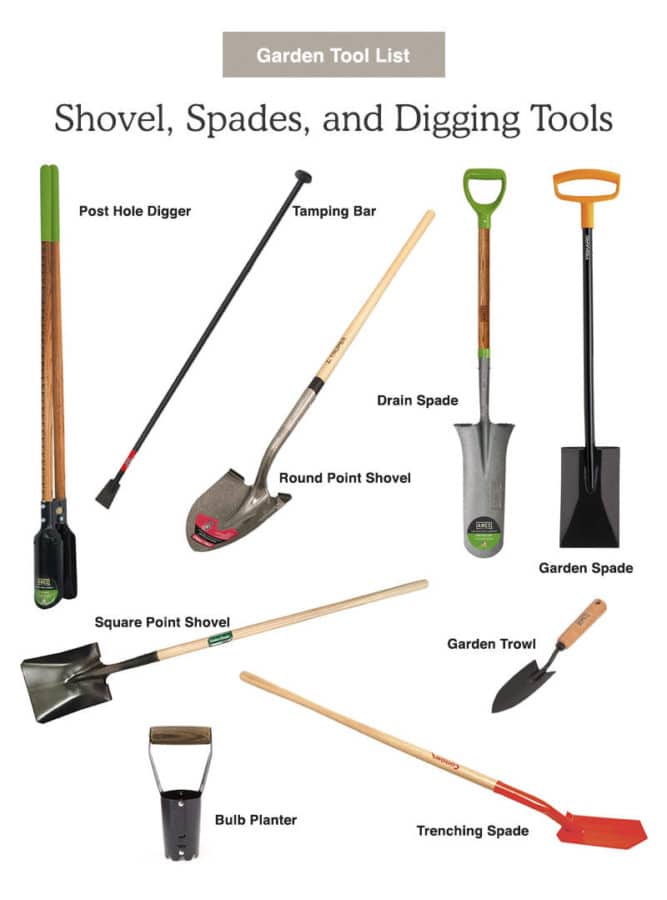
Image source: clinicadentalrociomontero.com
The Full Digging Tools List for Home and Garden
A complete kit is not about owning every tool on the shelf. It is about knowing which tool handles the specific job you are facing. The categories below cover hand tools for close work, long-handled tools for leverage, and powered options for high-volume projects.
Shovels and Spades: The Workhorses
Most people use the terms interchangeably, but they are different tools with distinct jobs. A shovel has a curved blade for scooping and moving loose material. A spade has a flatter blade designed to cut into soil and slice through roots.
| Tool | Best Use | Key Feature |
|---|---|---|
| Round Point Shovel | General digging, planting, moving soil | Curved blade, pointed tip for penetrating soil |
| Square Point Shovel | Moving gravel, sand, mulch | Flat edge for scooping and scraping |
| Trenching Shovel | Digging straight narrow trenches | Long, narrow blade for clean cuts |
| Drain Spade | Deep narrow holes, root work | Slim tapered blade for tight access |
| Garden Spade | Slicing sod, edging beds | Flat straight edge for clean cuts |
| Border Spade | Raised beds, tight spaces | Smaller version of garden spade |
| Root-Cutting Spade | Cutting through established roots | Serrated edge on the blade |
For general home use, a round point shovel and a drain spade cover about 80% of the jobs you will encounter. If you garden in heavy clay, the right digging techniques and tool choices will make a noticeable difference in how much effort you expend.
Hand Digging Tools: Precision and Control
When the job is small or the space is tight, hand tools give you the control that a full-sized shovel cannot match. These are the tools you will reach for daily for planting bulbs and weeding.
- Garden Trowel: The basic planting tool for bulbs, seedlings, and container work. Look for a forged, one-piece design where the blade meets the handle without a weak joint. The proper grip matters more than people think — holding a trowel correctly prevents blisters and gives you better control.
- Hori-Hori Knife: A Japanese soil knife with a sharp, slightly concave blade. It cuts through roots, slices sod, digs out weeds, and measures planting depth with the tick marks on the blade. This is the one hand tool professionals keep within reach at all times.
- Bulb Planter: A cylindrical tool that pulls out a clean plug of soil so you can drop in a bulb without loosening the surrounding earth. Works best in loose, prepared soil.
- Hand Cultivator: Three or four curved tines for breaking up surface soil, working in amendments, and pulling shallow weeds before planting.
Forks and Bars: Leverage and Soil Structure
A digging fork loosens soil without destroying its structure the way a shovel does. A digging bar breaks up whatever a fork cannot lift.
- Spading Fork: Four flat tines that penetrate compacted soil, lift and turn it, and break up clods. It respects soil life — earthworms and beneficial microbes survive a fork’s work far better than a shovel’s cuts.
- Broadfork: A U-shaped tool with two long handles and four or five deep tines. You stand on the crossbar, rock back, and lift the tines through the soil to loosen depth without turning it over. This is the premier tool for no-till gardening.
- Digging Bar or San Angelo Bar: A solid steel bar, typically 5 to 6 feet long, with a chisel point. This is the tool for breaking up hardpan, prying out rocks, and starting holes in ground that a shovel cannot penetrate.
- Pry Bar: A curved steel bar with a flattened end for lifting heavy objects — slabs, large stones, or stubborn roots. Always combine this with a wooden block or brick for a fulcrum; never force it beyond its leverage.
Picks and Mattocks: Brute Force for Hard Ground
When the soil is rocky, root-bound, or baked solid, a pick or mattock is your first choice. These tools break ground so your shovel can do the excavating.
- Pickaxe: A heavy head with a pointed spike on one end and a flat blade on the other. The spike breaks rock and compacted clay; the flat blade works like a narrow adze for prying.
- Cutter Mattock: An axe blade on one side and an adze blade on the other. The adze cuts down into soil while the axe chops through roots. This is the go-to tool for clearing tree roots and shaping trenches in rooty ground.
- Pick Mattock: A pick point replaces the axe blade, making it more effective on rocky ground and compacted fill.
Understanding the difference between an action hoe and a standard garden hoe can help you avoid buying the wrong style of tool for your soil type.
Post Hole Tools: Digging Deep and Narrow
Fence posts, mailbox posts, and structural supports all require holes that are narrow and deep — a shape that standard shovels cannot achieve efficiently.
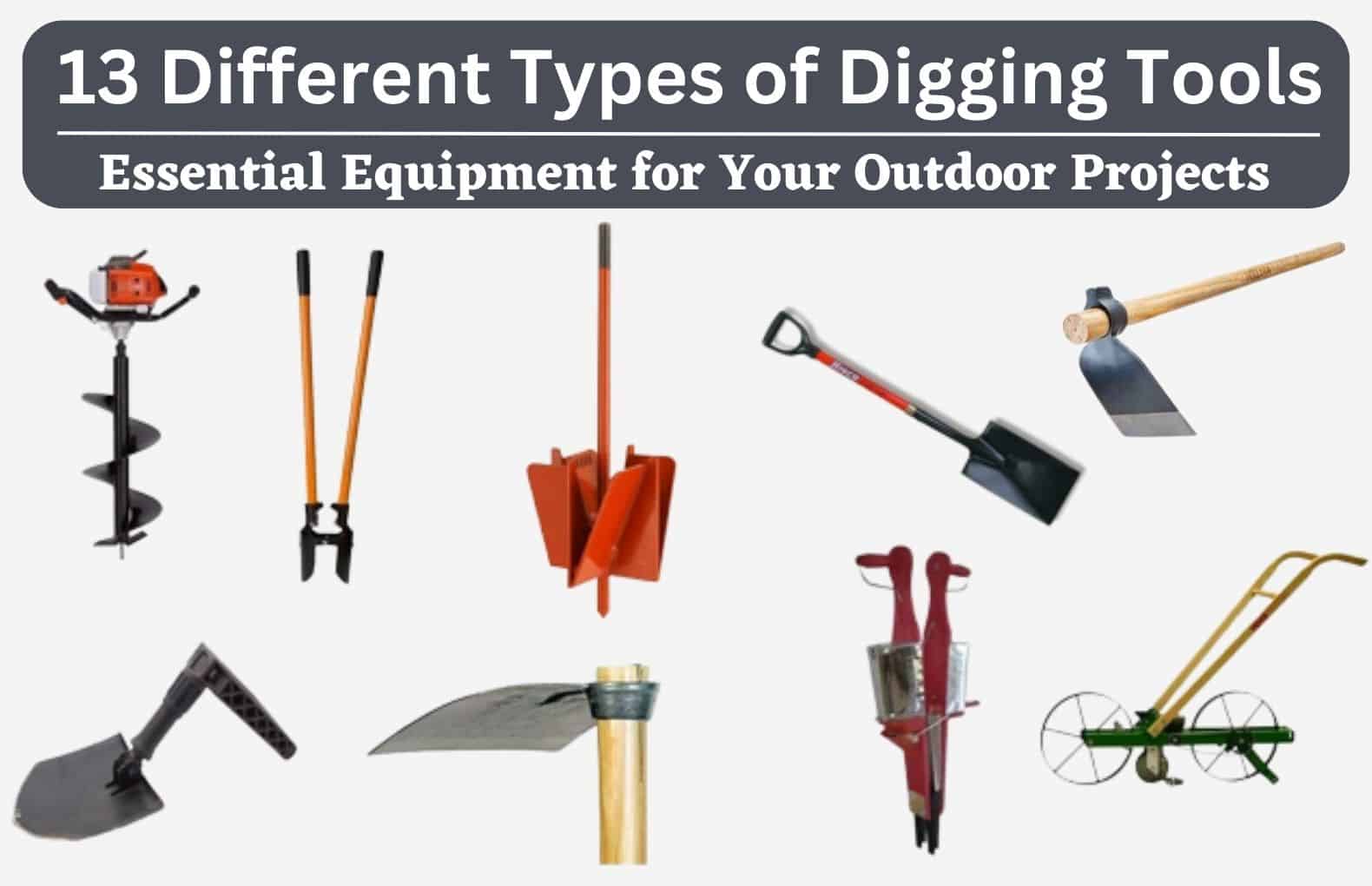
- Manual Post Hole Digger: Two hinged blades that you drive into the ground, pull apart to grip the soil, and lift out. It works well in loamy and sandy soil, gives you precise control, and is completely quiet.
- Earth Auger: A T-handle with a corkscrew bit that pulls soil to the surface as you twist. It is faster than a clam-shell digger in loose soil but struggles with clay and rocks.
- Power Auger: A gas or electric machine that drills holes quickly. Ideal for fence lines with many posts. This is the option to rent when you have more than a handful of posts to set, since a rented unit saves significant time without the cost of ownership.
You can find a more detailed breakdown of the full range of hole diggers and when each type makes sense.
Specialty and Shaping Tools
These tools serve specific tasks that come up less frequently but are invaluable when they do.
- Half-Moon Edger: Cuts clean vertical lines along beds and walkways. Use it to score sod before you begin digging a new bed — it creates a visual guide and a clean edge.
- Grub Hoe: A heavy, flat blade mounted at a right angle to the handle. It chops and pulls soil, efficiently clearing weeds and shallow roots.
- Root Saw: A serrated blade on a handle designed to cut through roots that block your digging. It slices through material that would dull or bend a shovel.

Image source: bigrentz.com
How to Select the Right Digging Tool for Your Soil
Matching the tool to your specific conditions is what separates an easy afternoon from a full day of frustration. Here is a decision guide based on the variables that matter.
Assess Your Soil Type
Sandy or loamy soil: These soils dig easily with a round point shovel, trowel, or manual auger. The challenge is soil collapsing back into the hole — a drain spade with its narrow profile helps in deeper excavations.
Heavy clay: Clay requires blades that slice through rather than scoop up. A drain spade, trenching shovel, or cutter mattock handles clay effectively. Wet clay sticks to blades; dry clay turns to concrete. Time your digging for when the soil is slightly moist but crumbly.
Rocky soil: A pickaxe and digging bar break up the ground, then a narrow drain spade cleans out the hole. Do not expect a standard shovel to make progress in rocky ground — this is where you save the most effort by using the correct tool from the start.
Consider the Hole or Trench Shape
- Narrow and deep: Drain spade, post hole digger, or earth auger
- Wide and shallow: Round point shovel or garden spade
- Long straight trench: Trenching shovel, or a power trencher for utility-scale work
Think About Speed, Noise, and Safety
Power augers and trenchers cut digging time dramatically — frequently cutting the work in half or better. But they are loud, require fuel or battery, and can be dangerous when they strike underground obstacles. Hand tools are quieter, safer near utilities, and easier to control in tight spaces. Always call your local utility location service before digging in an unfamiliar area.
Match Handle Length to Your Body
A handle that is the wrong length will cause back strain within minutes. Stand the tool beside you — the handle should reach approximately your chest height. Test both D-handles and straight handles to see which gives you better control without overreaching. A proper handle grip reduces fatigue substantially over a long day of work.
My Field-Tested Favorites from the Digging Tools List
After years of working in clay, rocky fill, and everything in between, some tools simply earn their place. These are the picks I keep returning to:
- Round Point Shovel with D-Handle: The most versatile tool in the kit. The D-handle gives you wrist control for directing the blade, and the sharp point penetrates tough soil. It excels at creating new beds and general excavation.
- Drain Spade: For deep, clean holes and reaching established roots, there is nothing better. The slim blade minimizes soil disturbance and gives you access that standard shovels cannot match.
- Cutter Mattock: Roots are the most frustrating obstacle in digging. The cutter mattock chops through them quickly and protects your wrists from the shock that a shovel would transmit.
- Spading Fork: It loosens and aerates soil without destroying its structure. Plants respond with better growth, and you will appreciate how much easier the soil is to work the following season.
- Manual Post Hole Digger: Precise, quiet, safe near buried lines, and it requires no fuel. For a small fencing project, it beats dragging out a power auger.
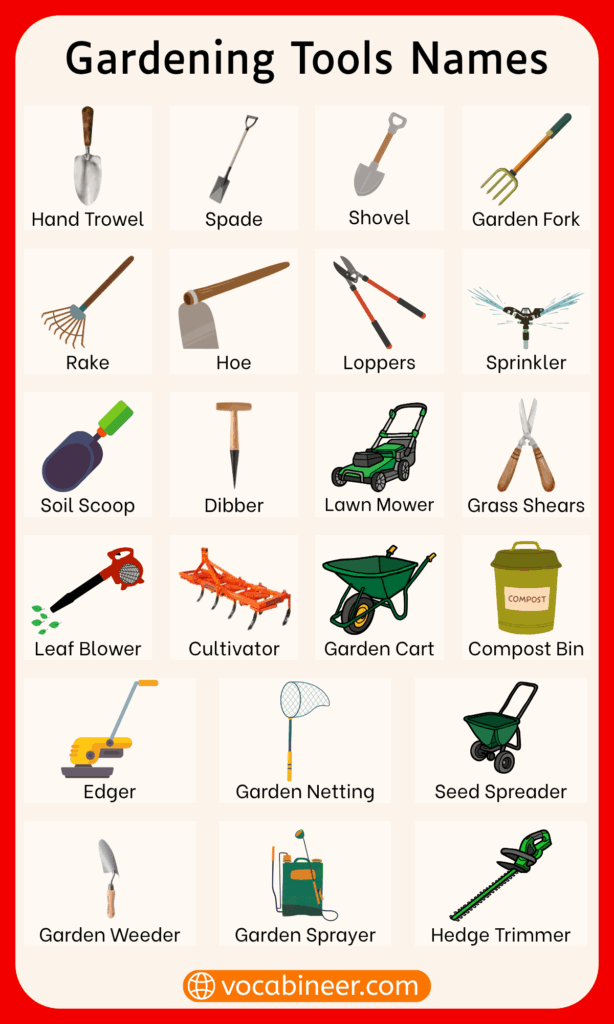
Image source: vocabineer.com
For a broader look at naming and identification of these tools, you can reference a visual guide to all the different types.
Digging Technique, Safety, and Setup
The right tool in the wrong hands will still produce poor results. Proper technique is what keeps you safe and your back intact.
Before You Dig
Call for utility locating. In the United States, dial 811 at least a few days before your project. This is not optional — hitting a gas line or electrical cable is dangerous and costly.
Water the soil. Dry soil is difficult to penetrate. Water the area the day before your dig and let the moisture soak in. This simple step makes almost every digging task twice as easy.
Score your lines. Use an edger to cut a clean outline of any new bed or trench. This gives you a guide and creates a neat finished edge.
Body Position and Lifting
- Keep your back straight and bend at the knees, not the waist.
- Step on the shovel’s footrest — the top of the blade — to drive it into soil. The flat surface is there for your foot, not the blade edge.
- Take small loads and toss soil to the side rather than lifting it high. Hoisting full shovelfuls above waist height wastes energy and risks injury.
Handling Hard Ground and Obstructions
- For compacted soil, start a pilot hole with a digging bar or mattock, then switch to a shovel.
- Use a trenching shovel to check the depth of trench as you go.
- Cut cleanly through roots with a root saw or the edge of a cutter mattock. Tearing roots by pulling on a shovel damages the surrounding soil and leaves rough edges.
Power Tool Safety
Power augers require eye protection, ear protection, and sturdy gloves. Keep the bit sharp and clear accumulated soil from the flutes regularly. If you hit an obstruction you cannot identify, stop immediately and switch to hand tools to investigate.
Maintenance: Keep Your Digging Tools Performing
Clean, sharp tools dig better, require less effort, and last for decades. Establishing a maintenance habit takes five minutes per session.
Daily and Post-Use Care
- Knock off loose soil with a stiff brush.
- Wipe metal blades dry to prevent rust.
- For caked-on clay, use a putty knife to scrape the blade clean.
Seasonal Upkeep
- Rub a light coat of oil — mineral oil or boiled linseed oil — over metal surfaces after cleaning.
- Sharpen shovel and spade edges several times per season using a mill file. Work the file at the existing bevel angle, keeping a smooth, even edge. A file guide helps maintain the correct angle.
- Sand rough wooden handles and apply boiled linseed oil to revive them. Check fiberglass handles for cracks that may compromise their strength.
- Tighten any loose bolts or replace worn grips before the tool fails at the wrong moment.
Image source: redboxtools.com
Learn the essential techniques for keeping your cutting edges in serviceable condition with this guide to the best sharpening tools.
Budgeting, Quality, and Where to Buy
You do not need to buy every tool at once, and you should not need to on the first day. Building a kit starts with the essentials, then grows with your projects.
Start with These
- Round point shovel
- Drain spade
- Spading fork
Add a cutter mattock when you start dealing with roots. Rent a power auger for large fencing projects rather than buying one you will rarely use.
What to Look For
- A solid blade-to-handle joint — check for a continuous piece of metal extending up into the handle
- Heat-treated steel for strength and durability
- Comfort grips balanced correctly toward the blade end
- A reasonable weight you can lift repeatedly without strain
Price Ranges and Key Differences
- Entry level ($20-$40): Fine for light, rare gardening tasks, but edges dull faster and handles may loosen.
- Midrange ($40-$80): The sweet spot for most homeowners. Quality steel and solid construction that will serve for years.
- Pro grade ($80-$150): Built for daily professional use. Heavier steel, stronger joints, and ergonomic improvements.
Shop at a local hardware store where you can handle the tools. Grip them, feel the weight, and test the balance. The right feel is worth the extra cost because a tool that fits your body will be used; one that does not will stay on the shelf.
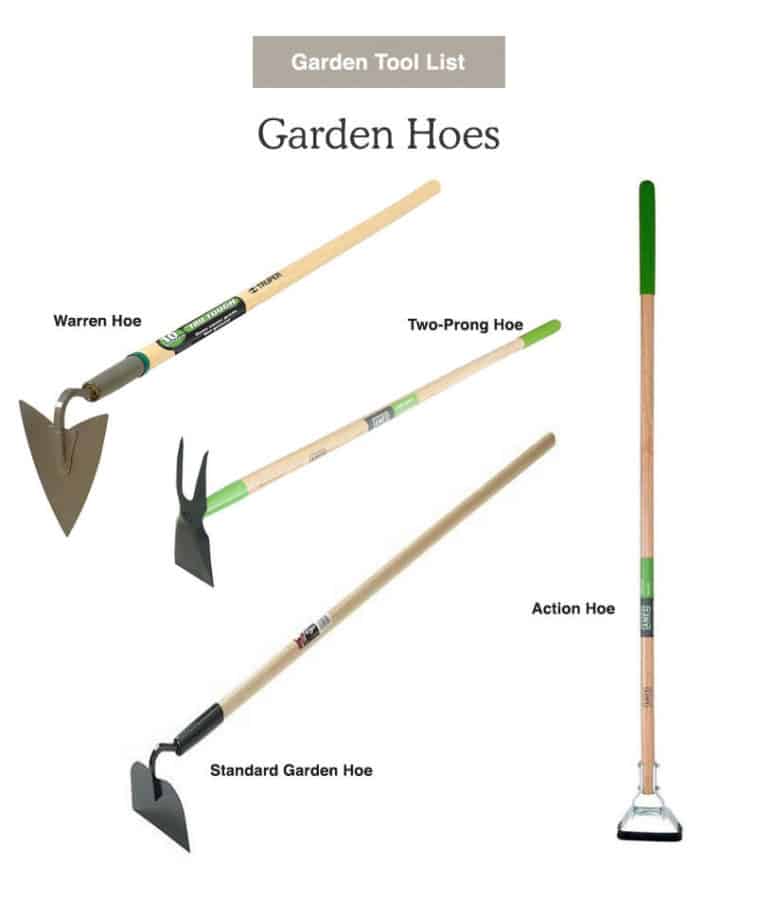
Image source: freshexchange.com
Seasonal Digging Kits for Specific Projects
A focused kit for each project keeps your gear organized and light. These bundles cover the common jobs most homeowners take on.
New Garden Bed Creation
- Round point shovel
- Spading fork
- Half-moon edger
- Hori-hori knife
Fence Post Installation
- Post hole digger or rental power auger
- Digging bar
- Drain spade
- Level and measuring tape
Planting Trees and Shrubs
- Round point shovel
- Drain spade
- Root saw
- Wheelbarrow for soil and mulch
Trenching for Drainage or Irrigation
- Trenching shovel
- Cutter mattock
- Pry bar
- Measuring rod

Image source: youtube.com
Frequently Asked Questions
What is the difference between a shovel and a spade?
A shovel has a curved, concave blade for scooping and moving loose soil. A spade has a flatter blade with a straight edge, designed for cutting through sod and creating clean edges. Each is built for a specific task — the names are not interchangeable.
Which tool works best in rocky soil?
Start with a pickaxe or digging bar to break up the rock and compacted material, then switch to a narrow drain spade to clean out the hole. Trying to force a standard shovel through rocky ground is inefficient and risks bending the blade.
Should I rent a power auger or dig by hand?
Rent a power auger for any job with more than half a dozen posts. It will save you significant time and physical effort. Opt for hand tools when working near buried utilities, within root zones, or in tight spaces where the machine cannot maneuver safely.
How do I keep my digging tools sharp?
Use a mill file on a dry, clean blade, following the existing bevel. Work in one direction along the edge rather than back and forth. After filing, wipe the blade with oil to protect the fresh edge from rust.
Which handle material lasts the longest?
Fiberglass resists moisture, cracking, and warping better than wood in most conditions. Wood handles feel warm in the hand and are relatively easy to repair or replace, but they require more maintenance. Steel handles are the strongest option but transmit more shock and are heavier.
Conclusion
A smart digging strategy starts with the right tool for your specific soil and project. Build a lean kit around the essentials — a sharp round point shovel, a drain spade, a spading fork, and a cutter mattock for root work. Keep blades clean and sharp, use proper lifting technique, and let the tool do the heavy work.
Ready to get digging? Start with the basics, test your soil, and expand your kit as your projects grow. If you are planning a new bed this season, spend time preparing your soil properly — improving soil health before you break ground makes every subsequent dig easier and gives your plants a stronger foundation to thrive.


