Remove kinks and clogs, fix leaks, use a bigger hose, and boost supply.
If you want to know how to increase water pressure in a garden hose, you are in the right place. I work with outdoor water systems and see the same issues often. This guide explains what matters, what does not, and the exact steps that work. Stick with me, and you will get stronger, cleaner flow without wasting time or money.
How water pressure works in your garden hose
Water pressure is the force. Flow is the volume. You want both. Homes usually have 40 to 80 psi. If yours is low, your hose will feel weak.
Hoses lose pressure from friction. Long runs and small diameters lose more. A 3/4 inch hose flows more than a 5/8 or 1/2 inch hose. Every 10 feet of rise costs about 4.3 psi. That matters on slopes.
A nozzle can raise speed by narrowing the stream. But it cannot add pressure from thin air. If you need real gains, remove limits in the system. That is how to increase water pressure in a garden hose for good.

Quick diagnosis: Find the real bottleneck
Start simple. If you ask how to increase water pressure in a garden hose, begin with a fast check.
Do a bucket test. Time how long it takes to fill a 5‑gallon bucket. GPM equals 60 times gallons divided by seconds. Test at the spigot, then at the hose end. A big drop points to hose losses.
Use a pressure gauge on the spigot. Note static pressure with the valve closed. Then open a hose or sprinkler and note dynamic pressure. Big drops mean a restriction or undersized supply.
Check for:
- Partly closed valves at the main, hose bib, or splitters
- Kinks, tight coils, or hose reel crush points
- Clogged screens in the spigot, nozzle, or quick‑connects
- Worn or missing hose washers causing leaks
- A stuck or clogged vacuum breaker or backflow device
- Long or small‑diameter hoses that starve flow
Easy fixes you can do today
These quick wins often solve low flow in minutes. They are the first moves when you ask how to increase water pressure in a garden hose.
- Open every valve fully, including splitters and ball valves
- Straighten kinks and unspool the hose from reels
- Remove restrictive nozzles; test with the hose end open
- Clean inlet screens and filters at the spigot and nozzle
- Replace flat or cracked rubber washers in couplers
- Tighten loose clamps on repair menders to stop leaks
- Shorten the hose run; connect closer to the spigot
- Swap cheap quick‑connects for high‑flow, full‑bore types
Expect an instant boost if a clog or kink was the issue. Small leaks can waste several gallons per minute. Fixing them helps more than most people think.

Hardware upgrades that make a big difference
When basics are done, upgrades can unlock real flow. This is where I see the largest gains in the field.
- Use a 3/4 inch hose for long runs or sprinklers. It carries more water with less loss than 5/8 or 1/2 inch
- Keep hoses as short as you can. Join only what you need
- Choose full‑port brass fittings and ball valves. Many plastic parts choke the flow
- Pick high‑flow Y‑splitters, or avoid splitters when possible
- Replace crimped garden bibs with high‑flow, 3/4 inch valves where allowed
- Use larger‑bore quick‑connects designed for high flow
These changes reduce friction. Lower friction means more usable pressure at the hose end. That is the heart of how to increase water pressure in a garden hose.
Improve the water supply side
Sometimes the hose is fine. The supply is weak.
- Check your pressure regulator (PRV) near the main shutoff. Many are set near 50–60 psi. If safe and legal, adjust slightly up. Do not exceed 80 psi
- Run a dedicated 3/4 inch cold water line to the hose bib. Small house lines starve outdoor use
- Avoid peak times when neighbors water. Use early morning for best pressure
- Lower the hose end if possible. A downhill run adds pressure
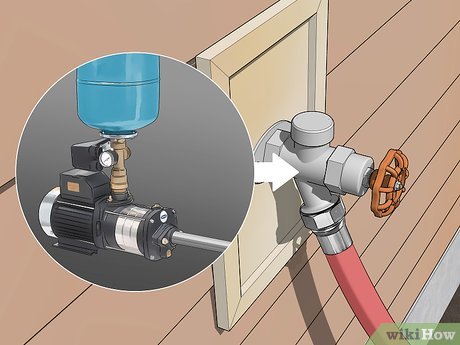
- Add a booster pump with a small tank if your static pressure is low. Pick a unit with a pressure switch and a bypass
Follow local codes. Protect fixtures with a PRV if your street pressure is high. This is a reliable path for how to increase water pressure in a garden hose when supply is the limit.

Smart nozzle and sprinkler choices
Not all nozzles are equal. Some look nice but strangle flow.
- Use open‑bore or fireman‑style nozzles for max flow and reach
- Many multi‑pattern nozzles have small orifices. They are handy but reduce flow
- For sprinklers, impact and rotor heads work best with higher flow and stable pressure
- Oscillating bar sprinklers often need more pressure. They can stall on weak lines
Match the tool to the supply. High‑flow tools help with how to increase water pressure in a garden hose without touching the plumbing.

Maintenance, safety, and seasonal tips
Good care keeps pressure healthy over time.
- Drain and store hoses in shade. Sun and heat soften walls and cause kinks
- Replace brittle hoses and split gaskets each season
- Keep a backflow preventer on outdoor taps to protect drinking water
- Avoid sudden valve slams to reduce water hammer. Open and close slowly
- Use hose washers, not thread tape, on garden hose threads. The washer makes the seal
These small habits protect parts and pressure. They also avoid surprise leaks when you need water most. They matter for how to increase water pressure in a garden hose over the long term.

Real‑world examples and mistakes to avoid
A client called me about a weak sprinkler zone. The static pressure was 62 psi. But dynamic pressure fell under 30 psi when the hose ran. The culprit was a clogged vacuum breaker at the spigot. We replaced it with a high‑flow anti‑siphon. Flow rose by about 25% on the spot.
In my own yard, a switch from a 100‑foot 1/2 inch hose to a 3/4 inch 50‑foot hose changed the game. The same nozzle threw farther with a smoother stream. It was a simple, low‑cost move. This is a classic win in how to increase water pressure in a garden hose.
Common mistakes I see:
- Chaining several long, small hoses together
- Using fancy but restrictive nozzles for distance
- Ignoring tiny leaks that waste pressure
- Leaving hoses crushed under reels or wheels
Common myths about hose pressure
Myth: A smaller nozzle always gives more pressure. Truth: It gives higher speed but lowers flow. Your plants and sprinklers need flow.
Myth: Two hoses in series help reach farther without loss. Truth: Every joint and foot adds friction. Keep it short and wide.
Myth: Thread tape fixes garden hose leaks. Truth: Washers seal hose threads. Tape is for pipe threads, not hose couplers.
Myth: A pressure washer is the same as a high‑pressure hose. Truth: It has a pump. Your spigot does not. For how to increase water pressure in a garden hose, you must reduce losses or boost supply.
Tools and parts shopping list
These items make the job quick and clean. They also support how to increase water pressure in a garden hose with less guesswork.
- Pressure gauge with a garden hose adapter
- Assorted rubber hose washers and screen washers
- Full‑port brass Y‑splitter and ball valve
- High‑flow quick‑connect set
- 3/4 inch, high‑quality hose in the shortest needed length
- Pliers, utility knife, and hose repair menders
- Small pump and PRV if a supply upgrade is needed
Frequently Asked Questions of how to increase water pressure in a garden hose
How do I know if my house pressure is the problem?
Attach a gauge to the spigot. If static pressure is under 40 psi, the supply is likely weak. If it drops a lot when water flows, you have a restriction or undersized piping.
Does a longer hose reduce pressure?
Yes. Longer hoses add friction and drop pressure at the end. Use the shortest hose that reaches the job.
Will a bigger nozzle increase my pressure?
No. A bigger nozzle lowers back pressure and raises flow. Use high‑flow nozzles to get more volume and reach.
Is 3/4 inch hose worth it?
If you run long hoses, sprinklers, or multi‑zone splitters, yes. It reduces friction loss and gives more flow at the nozzle.
Can I adjust my pressure regulator myself?
Often yes, but do it slowly and stay at or below 80 psi. If you are unsure, call a pro to avoid damage or code issues.
Does water temperature affect hose pressure?
Slightly. Hot water can soften a hose and increase kinks. The pressure effect is minor compared to hose size and length.
Will a booster pump hurt my plumbing?
Not if it is sized right and paired with a PRV and a pressure switch. Keep max pressure under code limits.
Conclusion
You can get stronger flow with a smart plan. Fix kinks and clogs. Use short, wide hoses and high‑flow parts. If the supply is weak, tune the regulator or add a small booster. That is the practical path for how to increase water pressure in a garden hose.
Test, tweak, and try one upgrade at a time. You will see fast wins without overspending. Want more tips like this? Subscribe, share your setup in the comments, and let’s solve your water flow together.