Size Of Standard Garden Hose: Which Diameter Do You Need?
In the U.S., the size of a standard garden hose is 5/8-inch diameter with 3/4-inch GHT fittings.
If you want better water flow, easier watering, and fewer leaks, you must know the size of standard garden hose. I have tested many hoses in real yards and on job sites. In this guide, I explain the size of standard garden hose in clear terms. You will learn what to buy, why it matters, and how to avoid common mistakes.
Understanding the size of standard garden hose
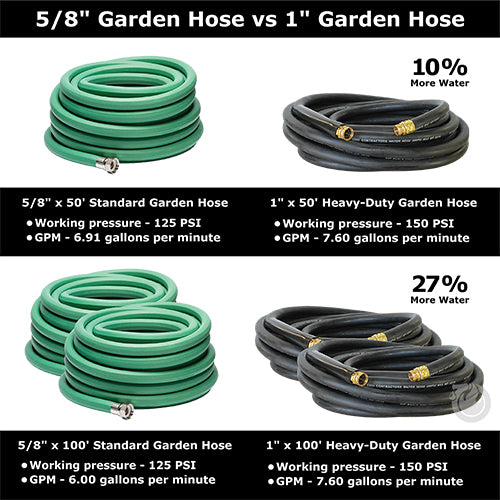
When people ask about the size of standard garden hose, they mean two things. They mean the inner diameter of the hose. They also mean the thread size on the ends.
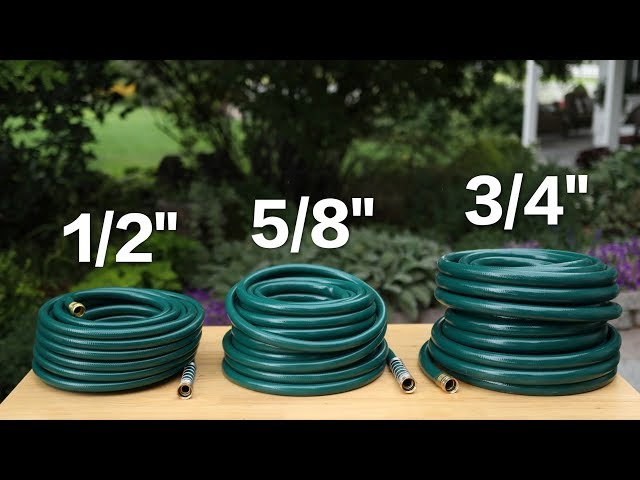
In the U.S., the most common inner diameters are 1/2 inch, 5/8 inch, and 3/4 inch. The size of standard garden hose for most homes is 5/8 inch. It offers a good mix of flow and weight. The ends use 3/4-inch GHT. GHT stands for Garden Hose Thread. It is also called 3/4-inch NH. NH means National Hose. It fits most outdoor spigots and hose nozzles in the U.S.
Note this key point. The 3/4-inch on the fitting is not the hose inner size. It is the thread size only. So a 1/2-inch, 5/8-inch, or 3/4-inch hose can all use 3/4-inch GHT ends.
This is why the phrase size of standard garden hose can feel confusing. Once you split it into inner size and fitting size, it is easy.
Common diameters, flow, and use cases
Each hose diameter changes how much water you get. It also changes how heavy the hose feels and how easy it is to coil.
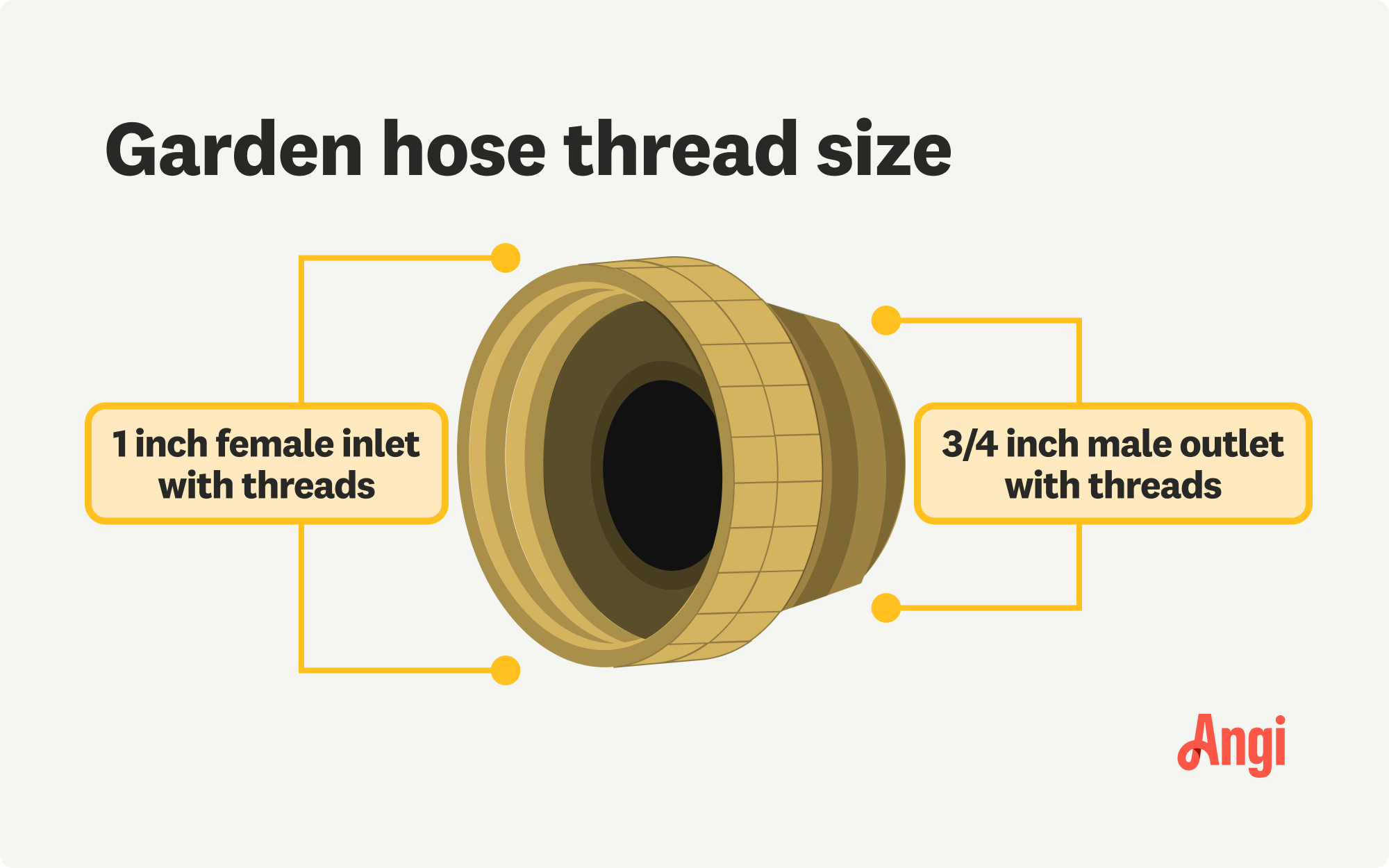
- 1/2-inch ID. Light and cheap. Best for short runs under 50 feet. Good for hand watering. Flow is modest.
- 5/8-inch ID. The size of standard garden hose for most homes. Good flow. Easy to handle. Works well at 25 to 100 feet.
- 3/4-inch ID. High flow for long runs and big tools. Heavier and stiffer. Great for large yards, pressure washers, or filling pools.
Typical flow at normal home pressure can vary a lot. Still, here are safe ballpark ranges that match many specs:
- 1/2-inch: about 4 to 8 gallons per minute, short runs.
- 5/8-inch: about 8 to 14 gallons per minute.
- 3/4-inch: about 12 to 22 gallons per minute.
Friction loss grows with length. A 100-foot 5/8-inch hose can drop several PSI at higher flows. A 3/4-inch hose drops much less at the same flow. If your sprinkler is weak at the end of a long hose, go up one size.
Real-world tip from my work: I ran a 100-foot 5/8-inch line to a rotary sprinkler. The arc was weak. I switched to 3/4-inch for the first 50 feet. The sprinkler snapped to life. The size of standard garden hose made the fix.
Standard hose lengths and when they make sense
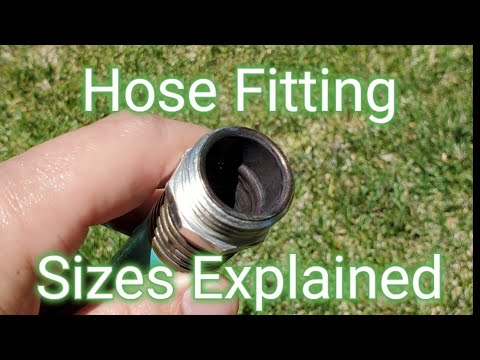
You will see 25, 50, 75, and 100-foot hoses in stores. The size of standard garden hose by length depends on your yard plan.
- 25 feet. Great for patios or balconies. Light and tidy.
- 50 feet. The most common pick. Reaches most beds and cars.
- 75 feet. Good when 50 feet is just short. Slightly heavy.
- 100 feet. Best for large yards. Heavy and more pressure loss.
Longer hoses add weight fast. A 100-foot rubber 5/8-inch hose can weigh over 20 pounds. Vinyl is lighter but kinks more. Plan routes to minimize length. Two 50-foot hoses can be easier to move than one 100-foot.

Fittings, threads, and adapters you should know
U.S. hoses and spigots use 3/4-inch GHT threads. The pitch is 11.5 TPI. This is not the same as NPT pipe threads. Do not force NPT onto GHT. It will leak or crack parts.
Traveling or importing gear? Europe often uses BSP threads. You will need an adapter. Quick-connect sets help, but choose full-flow styles. Narrow quick-connects can choke flow.
A washer inside the female hose end makes the seal. Replace worn washers to stop drips. A new washer often fixes a “bad” hose in seconds.
Materials, wall thickness, and how they affect size
The size of standard garden hose can feel different by material. The inner size might match, but the outer size and stiffness change.
- Vinyl. Light and low cost. Kinks more. Lower burst pressure.
- Rubber. Durable. Stays flexible in cold. Heavier and pricier.
- Hybrid polymer. Good mix of light weight and kink resistance.
- Stainless braid. Very tough shell. Often has a small inner tube. May reduce flow.
- Expandable hoses. Great for small spaces. Light and compact. Inner tube is narrow. Flow can drop. Avoid hot water and high pressure.
Wall thickness affects kink resistance and burst pressure. Higher ply counts can help. Check the burst rating. Many quality hoses rate 300 PSI or more. Home water is usually 40 to 80 PSI. A safe margin is wise, especially in heat.

How to choose the right size of standard garden hose
Use this simple path. It works for most homes.
- Define the job
- Hand watering and short runs. 1/2-inch or 5/8-inch, 25 to 50 feet.
- Sprinklers and car wash. 5/8-inch, 50 to 100 feet.
- Long runs, multiple sprinklers, or filling pools. 3/4-inch for the main run.
- Map the route
- Measure the longest path. Buy only the length you need.
- Avoid tight corners that cause kinks.
- Match fittings
- Standard is 3/4-inch GHT in the U.S.
- If you see NPT or BSP, add adapters.
- Pick material
- Rubber or hybrid for daily use. Vinyl for light tasks.
- Drinking water safe for RVs or pets.
- Test flow
- If sprinklers sputter, upsize the hose. Or shorten the length.
This plan puts the size of standard garden hose right at the center of your choice.

How to measure your current hose and confirm compatibility
Not sure what you own? Try this.
- Check the print on the hose jacket. It often shows 1/2, 5/8, or 3/4 inch.
- Measure the inner diameter at a clean cut. A simple ruler works.
- Test the thread with a known 3/4-inch GHT nozzle. If it fits, you are set.
- Look at the washer. Replace it if it is cracked or flattened.
If you use a reel or cart, confirm the inlet size. A 3/4-inch reel feeding a 5/8-inch hose is fine. The reverse can restrict flow.

Pressure, flow, and sprinkler performance
Sprinklers need volume and steady pressure. The size of standard garden hose drives both. Here are quick rules that have served me well.
- Over 50 feet with one sprinkler. Use 5/8 inch.
- Over 100 feet or two sprinklers in a chain. Use 3/4 inch for the main run.
- Low city pressure under 45 PSI. Favor larger hose sizes to cut losses.
- Use full-flow valves and quick-connects. Small bores reduce output.
If you want to go deeper, irrigation charts show friction loss per 100 feet. They confirm the same trend. Larger hose, lower loss, better sprinkler arcs.

Care, storage, and safety tips
Good care keeps your hose sizing choices working for years.
- Drain after use. Water left inside can grow algae.
- Store in shade. UV breaks down cheap vinyl.
- Do not drag over sharp edges. Use a hose guide at corners.
- For drinking water, look for lead-free and PVC-free claims. Choose hoses rated for potable water.
Tip from my own yard: a simple wall-mounted reel near the spigot changed my routine. The hose coils clean. Kinks stopped. The right reel plus the right size of standard garden hose saves time every week.
Frequently Asked Questions of size of standard garden hose
What is the most common size of standard garden hose?
The most common inner diameter is 5/8 inch. Most hoses use 3/4-inch GHT fittings on the ends.
Are 3/4-inch hoses better than 5/8-inch hoses?
They carry more water with less pressure loss, especially over long runs. They are heavier and can be harder to handle.
Will a 1/2-inch hose fit my outdoor faucet?
Yes, most 1/2-inch hoses still use 3/4-inch GHT ends. They will screw onto standard U.S. spigots.
Does hose length affect pressure?
Yes, longer hoses cause more friction loss. You may notice weaker spray or sprinkler arcs at longer lengths.
Can I connect two different hose sizes together?
Yes, use a proper reducer or adapter between sizes. Expect the smaller hose to limit total flow.
Are expandable hoses a good choice for a small patio?
They can be great for light use and tight spaces. Expect less flow due to the narrow inner tube.
What does GHT mean on hose fittings?
GHT means Garden Hose Thread, also called NH. In the U.S., the standard is 3/4-inch GHT.
Conclusion
The size of standard garden hose is simple once you split it into inner diameter and thread size. For most homes, a 5/8-inch hose with 3/4-inch GHT ends is the sweet spot. Go up to 3/4 inch for long runs or high-demand tools. Keep your lengths as short as you can, and pick materials that match your climate and use.
Set a plan today. Measure your longest run. Match the right diameter. Swap worn washers. With the right size of standard garden hose, every task gets faster and cleaner. Want more practical guides like this? Subscribe, share your setup, or drop a question in the comments.