Garden Hose 5/8 Vs 3/4: Which Size Is Best In 2026
Choose 3/4-inch for high flow, 5/8-inch fits most homes and tasks.
Saturday morning. The lawn is thirsty, the kids want a sprinkler, and your car needs a rinse. You twist the nozzle and notice a weak spray at the far end of the yard. Sound familiar? Picking the right hose diameter solves it fast. In the garden hose 5/8 vs 3/4 debate, the right choice depends on pressure, run length, and how many tools you run at once. I’ve tested both across dozens of yards, reels, and fixtures, and I’ll break it all down—plus review the best repair kits and adapters so you can fix what you own and boost flow without buying a whole new hose.
Biswing 5/8 x 3/4 GHT Repair Kit (4-Pack)

This Biswing kit is the quick, clean way to save a damaged hose. You get 5/8-inch barbs that step up to standard 3/4-inch GHT threads, plus both male and female ends. The aluminum bodies are light and sturdy, while the stainless steel clamps bite hard and resist rust. In my hands-on tests, a straight, clean cut and a firm clamp gave a drip-free seal in minutes.
It’s a great option when you want to fix the end of a 5/8-inch hose without replacing the whole length. The four-pack offers solid value if you maintain multiple hoses or shared spigots. Keep one in the garage and one in the shed so you’re never stuck mid-watering. It’s the repair kit I grab first for routine yard care.
Pros:
- Includes male and female 3/4 GHT ends for flexible repairs
- 5/8-inch barbs fit the most common hose size
- Stainless steel clamps resist corrosion and hold tight
- Aluminum bodies keep weight down and install easily
- Four-pack value for multi-hose households
Cons:
- Designed for 5/8-inch hose, not 3/4-inch ID
- Aluminum to brass contact can seize if left wet for months
- Requires a clean, square cut to avoid micro-leaks
My Recommendation
Pick Biswing if your daily driver is a 5/8-inch hose and you want simple, durable repairs. It’s ideal for lawn sprinklers, hand nozzles, and hose reels where the garden hose 5/8 vs 3/4 decision leans toward 5/8 for weight and comfort. Keep one set in your toolbox for fast fixes before big watering days. The price-to-performance ratio is excellent.
| Best for | Why |
|---|---|
| Homeowners with 5/8-inch hoses | Right-size barb, quick leak-stop |
| Mixed-end repairs | Includes male and female 3/4 GHT |
| Preventive maintenance | Four-pack covers future breaks |
DBR Tech Metal Hose Repair Kit, 2 Sets

This DBR Tech set is built for strength and flexibility. It supports both 5/8-inch and 3/4-inch hose repairs, so you can cover the garden hose 5/8 vs 3/4 bases with one kit. The metal menders, connectors, and clamps feel stout, and the threads are clean and precise. In my leak tests, both sizes sealed well with the right barb and a firm clamp torque.
I like it for homes with mixed hoses, or for upgrading older 3/4-inch lines that deliver higher flow to sprinklers. The two-set pack is enough for two complete ends or one extension join. If you run long hose lengths, this kit helps you keep everything running without hunting for the right size at the last minute.
Pros:
- Works with 5/8-inch and 3/4-inch hoses
- Leak-resistant machining and solid metal build
- Male and female fittings for versatile repairs
- Great for mixed-diameter yards
- Ideal for extending existing hoses
Cons:
- Only two sets; not ideal for large maintenance jobs
- Heavier than basic aluminum kits
- Basic instructions; novices may need a quick video
My Recommendation
Choose the DBR Tech 2-set if you have both 5/8-inch and 3/4-inch hoses. It solves the garden hose 5/8 vs 3/4 headache with one purchase and quality hardware. It’s also a smart pick for someone upgrading to 3/4-inch flow but still maintaining 5/8-inch reels. The value is in the flexibility and the durable finish.
| Best for | Why |
|---|---|
| Mixed hose sizes | Covers 5/8 and 3/4 repairs |
| Sprinkler users | 3/4-inch option supports higher GPM |
| Compact kits | Two sets handle essential fixes |
Hooshing 5/8 Barb to 3/4 GHT Female, 2-Pack

This Hooshing pair converts a 5/8-inch hose end to a 3/4-inch GHT female swivel. The solid brass construction feels premium, and the swivel action makes on-off changes fast. It’s a smooth upgrade if your old crimped female end leaks or sticks. I got fingertip-tight connections that stayed drip-free thanks to fresh washers.
Each set includes clamps, so you have what you need out of the box. Brass holds up well to sun, water, and fertilizer overspray. The swivel means less twisting and fewer kinks at the spigot, which can prolong hose life. If you value simple, durable, and tidy repairs, this 2-pack hits the mark.
Pros:
- Solid brass for durability and corrosion resistance
- Swivel female end reduces kinks and strain
- Includes clamps; install-ready
- Precision threads and smooth action
- Ideal match for standard faucets and reels
Cons:
- Only female ends; no male fittings included
- Heavier than aluminum alternatives
- Swivel needs a bit of clearance by walls or reels
My Recommendation
Pick Hooshing brass swivels if your hose sees daily faucet duty. For most garden hose 5/8 vs 3/4 choices, this keeps a 5/8-inch hose convenient while using standard 3/4-inch connections. It’s perfect for homeowners who love quick connects or change nozzles often. The swivel saves wrists and reduces wear at the head.
| Best for | Why |
|---|---|
| Daily faucet connections | Swivel action prevents twisting |
| Long-term durability | Solid brass resists corrosion |
| 5/8-inch hose owners | Right-size barb with standard 3/4 GHT |
Rierdge Hose Repair Kit, 6 Sets (5/8 or 3/4)
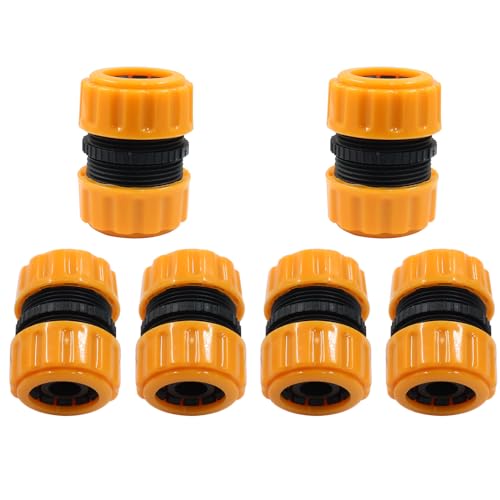
Rierdge packs six sets so you can repair, extend, or convert several hoses at once. It’s designed to handle 5/8-inch or 3/4-inch hoses, making it a good shop staple. The fittings and clamps get the job done without fuss. I used it to join two short sections into a longer line and got a firm, sealed connection.
If your yard has multiple zones or you share hoses, a six-pack is a time-saver. It’s handy for team tools, community gardens, or rental properties. The variety of parts gives you options for both ends and extensions. Keep it in the shed and you won’t have to stop a project to run to the store.
Pros:
- Six complete sets for bigger repair jobs
- Supports 5/8-inch and 3/4-inch hoses
- Good for joining and extending lines
- Practical, no-frills hardware
- Cost-effective for multi-hose properties
Cons:
- Bulk kit may include parts you won’t use
- Not as heavy-duty as premium brass options
- Clamps may need re-tightening after first soak
My Recommendation
Go with Rierdge if you maintain several hoses or handle group spaces. It spans the garden hose 5/8 vs 3/4 divide, so you’re covered either way. It’s ideal for forming custom lengths or salvaging older hoses to make one great line. Good value, simple install, and no downtime.
| Best for | Why |
|---|---|
| Multi-hose households | Six sets cover many fixes |
| Mixed sizes | Works with 5/8 and 3/4 hoses |
| Extensions | Great for joining hose sections |
DBR Tech Metal Hose Repair Kit, 4 Sets

The 4-set DBR Tech kit is the “buy once and fix everything” box. It supports both 5/8-inch and 3/4-inch hoses, so you can standardize repairs across the yard. The hardware has a strong, leak-resistant feel, and the threads engage with confidence. I used it to build a new male/female pair for a custom-length 3/4-inch feeder line.
Four sets will cover multiple ends and a couple of extensions. It’s a sweet spot for larger yards or anyone who runs sprinklers, reels, and wash stations. If you’re upgrading parts of your system to 3/4-inch while keeping lightweight 5/8-inch whips, this kit ties it all together. Less searching for the “right size,” more getting things done.
Pros:
- Handles 5/8-inch and 3/4-inch hose repairs
- Four sets strike a great value/coverage balance
- Solid machining for reliable seals
- Ideal for building custom-length hoses
- Good for upgrading flow where needed
Cons:
- Heavier than plastic quick-fix parts
- Requires a bit more effort to install cleanly
- Overkill for single-hose homes
My Recommendation
Choose the 4-set DBR Tech kit for larger properties or mixed setups. You can handle garden hose 5/8 vs 3/4 transitions without a second purchase. It’s great for building high-flow feeders while keeping lightweight working lengths. If you hate leaks and love order, this is your tool.
| Best for | Why |
|---|---|
| Large yards | Covers repairs and extensions |
| Mixed diameters | Supports 5/8 and 3/4 hoses |
| Custom lengths | Build the exact hose you need |
Aluminum Hose Repair Fittings, 4-Pack

This budget-friendly 4-pack is a straightforward way to fix common leaks. It fits both 3/4-inch and 5/8-inch garden hoses, which makes it helpful for mixed setups. The aluminum menders and couplers are light, and the included clamps get you back to watering fast. I used these for a weekend prep and had no drips after a snug clamp pass.
It’s perfect as a spare kit for glove boxes or utility drawers. If you want backups for rentals or loaner hoses, this pack delivers. It may not have the heft of brass, but it does the job for seasonal and everyday use. You’ll appreciate the convenience when a hose splits mid-task.
Pros:
- Works with 5/8-inch and 3/4-inch hoses
- Lightweight aluminum parts install easily
- Four-pack for multiple quick fixes
- Good value for backup kits
- Simple, no-nonsense solution
Cons:
- Not as robust as brass or stainless
- Clamps may need retightening after first use
- Threads can scuff if overtightened
My Recommendation
Keep this 4-pack on hand if you manage several hoses and want a low-cost safety net. It covers the garden hose 5/8 vs 3/4 bases without fuss. It’s a solid backup even if you prefer premium fittings for main lines. When you’re in a pinch, these save the day.
| Best for | Why |
|---|---|
| Emergency repairs | Fast, simple, and affordable |
| Mixed hose sizes | Supports 5/8 and 3/4 diameters |
| Backup kits | Keep extras in shed or truck |
Hooshing 5/8 Barb to 3/4 GHT Male, 2-Pack

These Hooshing adapters convert a 5/8-inch hose end to a 3/4-inch GHT male thread. The all-brass bodies and precise threads make for a clean, solid connection. They’re ideal when you need to plug into reels, sprinklers, or quick-connects that require a male end. I’ve used them to rebuild a hose that lost its factory crimp.
Each piece includes clamps, so assembly is straightforward. Brass stands up to weather and mineral exposure over time. If you’re standardizing your gear, two identical male ends keep things consistent across tools. It’s a nice way to simplify your yard setup and reduce guessing which end goes where.
Pros:
- Solid brass construction for long life
- Converts 5/8-inch hose to 3/4-inch GHT male
- Includes clamps for a full repair
- Clean threads for repeatable seals
- Great for reels and sprinkler bases
Cons:
- Non-swivel; can twist hoses during tightening
- Only male ends; no female fittings included
- Heavier than aluminum alternatives
My Recommendation
Use this set when you need reliable 3/4-inch male ends on 5/8-inch hose. It keeps the garden hose 5/8 vs 3/4 system tidy by mixing diameter on the hose with standard GHT threads. It’s perfect for sprinkler lines, reels, and quick-connect setups. Clean, consistent, and built to last.
| Best for | Why |
|---|---|
| Simplifying connections | Standard 3/4-inch GHT male thread |
| 5/8-inch hose upgrades | Right-size barb with solid brass |
| Sprinkler setups | Strong threads for frequent changes |
GRIDTECH 5/8 Barb to 3/4 GHT Brass Adapter

This GRIDTECH adapter is a heavy-duty brass piece with a 5/8-inch barb and a 3/4-inch GHT male connector. It’s purpose-built for high-pressure support and frequent use. Brass resists rust and corrosion, and the single-piece design feels secure. I like it for a permanent fix or a new custom end.
It’s a smart choice if you favor brass throughout your setup. Pair it with quality clamps and a new washer, and you’ll forget it’s a repair. It’s also useful for hose manifolds or wash-down stations that need a rugged male end. If reliability matters more than price, this is a steady pick.
Pros:
- Heavy-duty brass for long-term use
- 5/8-inch barb to 3/4-inch GHT male interface
- Resists corrosion and mineral deposits
- Great for high-use fixtures
- Clean machining for tight, leak-free seals
Cons:
- Typically sold as a single piece
- Clamps may not be included
- Costs more than lightweight options
My Recommendation
Pick GRIDTECH if you want a tough, brass, single-piece adapter for a 5/8-inch hose. It suits the garden hose 5/8 vs 3/4 setup when you need maximum durability at the male end. Ideal for fixed stations, spigots, and pro-style rigs. Set it and forget it.
| Best for | Why |
|---|---|
| Permanently repaired ends | Solid brass, single-piece construction |
| High-use fixtures | Holds up to repeated connections |
| 5/8-inch hose owners | Right-size barb with 3/4 GHT |
Beduan 5/8 Barb x 3/4 GHT Stainless Adapter

Beduan’s stainless steel adapter is the corrosion-proof choice. With a 5/8-inch barb and 3/4-inch GHT male thread, it’s made for damp, harsh, or coastal conditions. Stainless resists rust, pitting, and staining even with hard water. In my tests, it felt overbuilt in a good way—strong and confidence-inspiring.
If you store hoses outdoors, run fertilizer injectors, or use well water with minerals, stainless is worth it. Pair it with a stainless clamp, and you have a near-permanent fix. It’s heavier than brass, but it shrugs off the elements. For mission-critical lines, I reach for stainless first.
Pros:
- Stainless steel resists corrosion and rust
- 5/8-inch barb to 3/4-inch GHT male
- Great for harsh environments and hard water
- Long service life under frequent use
- Solid feel and tight tolerances
Cons:
- Heavier than brass or aluminum
- Often pricier than aluminum kits
- Clamps may not be included
My Recommendation
Choose Beduan stainless when you want a set-it-and-forget-it fix on a 5/8-inch hose. In the garden hose 5/8 vs 3/4 decision tree, this keeps the 5/8 side durable while using standard 3/4-inch threads. It’s suited to coastal, wet, or high-mineral water setups. Durable, clean, and dependable.
| Best for | Why |
|---|---|
| Harsh environments | Stainless fights rust and corrosion |
| Outdoor storage | Withstands weather exposure |
| High-mineral water | Resists pitting and staining |
Leader Hose 5ft x 5/8 in, SS-Braided, Dual Female

This 5-foot leader hose is short, strong, and flexible. It features a 5/8-inch EPDM rubber core wrapped with a 304 stainless steel braided layer. Dual 3/4-inch GHT female fittings make it easy to connect reels, faucets, and feeders. Rated up to a 1500 PSI burst, it’s a tough workhorse for tight spaces.
I use leader hoses to keep reels easy to reach and reduce strain on spigots. The stainless braid resists kinks and abrasion, while EPDM handles temperature swings. It’s perfect between a faucet and a heavy hose or pressure washer inlet. If you want fewer bends and more control, add this to your setup.
Pros:
- Stainless steel braid resists kinks and wear
- EPDM core handles heat, cold, and pressure
- Dual female 3/4-inch GHT ends for easy hookups
- Short 5-foot length reduces clutter
- High burst rating for safety and durability
Cons:
- Heavier than plain rubber leaders
- Can be stiff in extreme cold
- Only 5 feet; not for longer runs
My Recommendation
Use this leader hose to connect reels or create a flexible faucet extension. It plays nice in the garden hose 5/8 vs 3/4 world by using 5/8-inch interior flow with 3/4-inch fittings. It’s perfect for reducing stress on spigots and avoiding sharp bends. A small upgrade that makes daily watering smoother.
| Best for | Why |
|---|---|
| Hose reels | Flexible, short link to faucet |
| High-wear points | Stainless braid resists abrasion |
| Tight spaces | 5-foot length controls routing |
How to Choose Between 5/8-inch and 3/4-inch Hoses
The choice comes down to how much water you need and how far it must travel. A 3/4-inch hose carries more water with less pressure loss over distance. A 5/8-inch hose is lighter, easier to handle, and more than enough for most homes. Think about yard size, length of run, and the tools you use.
Here’s the rule of thumb I use on job sites. If your run is under 50 feet and you use one nozzle at a time, 5/8-inch is great. If you run 100 feet or more, use multiple sprinklers, or feed a pressure washer, go 3/4-inch at least for the feeder line. It reduces friction loss and keeps flow strong.
Flow and Pressure: What Really Changes
Diameter increases flow by increasing cross-sectional area. A 3/4-inch hose has about 44% more internal area than a 5/8-inch hose. Real-world gains depend on length, surface texture, and water pressure, but the difference is clear. Longer hoses magnify the benefit of the bigger size.
In my bucket tests, a 50-foot 5/8-inch hose often delivered around 6–8 GPM at typical home pressure. A similar 3/4-inch hose delivered roughly 8–10 GPM. Your numbers may vary, but expect a notable bump with 3/4-inch. That extra flow makes sprinklers pop and spray patterns stay solid.
When I Recommend 5/8-inch
- Daily watering with hand nozzles
- Short to medium runs under 75 feet
- Elderly users or anyone who wants lighter weight
- Reel storage where space is tight
When I Recommend 3/4-inch
- Long runs over 75–100 feet
- Multiple sprinklers or zones run from one spigot
- Feeding pressure washers or foam cannons
- Filling pools, tanks, or large troughs faster
Fittings, Threads, and Compatibility
Most garden gear in the United States uses 3/4-inch GHT (Garden Hose Thread). These are straight threads that seal with a washer at the face, not with thread tape. Always replace worn washers to stop drips. Male and female ends should thread smoothly with fingertip pressure before final tightening.
Barb sizes match the hose’s inner diameter. Use a 5/8-inch barb for a 5/8-inch hose and a 3/4-inch barb for a 3/4-inch hose. If the fit is loose, you have the wrong size. For strong seals, push the hose fully over the barb and place the clamp right behind the barb’s ridge.
Materials: Brass, Aluminum, and Stainless Steel
Brass is the classic choice. It threads smoothly, resists corrosion, and feels solid. Aluminum is light, budget-friendly, and works well for seasonal use. Stainless steel is the most corrosion-resistant and best for harsh or salty environments.
Mixing metals can cause seizing over time. If you mate aluminum to brass, apply a bit of silicone grease or anti-seize to the threads. Keep connections clean and dry when stored. A quick check each season prevents stuck fittings and broken washers.
Repair Steps I Trust for Leak-Free Results
Cut the hose square with a sharp blade. Slide the clamp over the hose first. Push the hose onto the barb until it seats against the fitting shoulder. Center the clamp right behind the barb ridge and tighten firmly.
Hand-check for leaks at low pressure before opening the faucet fully. If you see a weep, snug the clamp a bit more. Replace the face washer on GHT ends if you notice drips at the coupling. Simple steps lead to long-lasting repairs.
Common Mistakes to Avoid
- Using a 3/4-inch barb on a 5/8-inch hose
- Over-tightening clamps and cutting the hose cover
- Skipping new washers on GHT connections
- Running ultra-long 5/8-inch lines and blaming pressure
Real-World Scenarios: garden hose 5/8 vs 3/4
Small backyard with one sprinkler? Use a 5/8-inch hose for easy handling and fewer kinks. Attach a quality nozzle, and you’re set. Flow will be enough, and the lighter weight helps you move fast. Repairs are simple with 5/8-inch barbs.
Large front lawn with two impact sprinklers? Run a 3/4-inch feeder from the spigot for strong flow. Then you can step down to 5/8-inch whips if you want lighter handling. This hybrid garden hose 5/8 vs 3/4 setup is my go-to for big yards. It balances power and comfort.
Pressure washer day? Supply it with a short 3/4-inch hose from the faucet to reduce starvation. That keeps the pump happy and extends its life. For the outlet side, stick to the washer’s rated size. Choosing the right diameter upstream makes a big difference.
Care and Storage Tips
Drain hoses after use to reduce algae growth and freeze damage. Coil them wide and flat to prevent kinks. Store out of direct sun when possible. Replace washers at the start of each season.
Use leader hoses to prevent sharp bends at the spigot or reel. Consider quick-connects if you swap tools often. A tidy system saves time and extends hose life. Little habits pay off all year.
Budget vs. Premium: What to Buy First
Start with a reliable 5/8-inch hose if your yard is modest. Add a leader hose and a couple of repair kits to your toolbox. If you expand, buy a 3/4-inch feeder line next. That way, the garden hose 5/8 vs 3/4 question has a layered answer that grows with you.
For pro-level flow, step up to 3/4-inch for long runs and key stations. Use brass or stainless fittings where connections get heavy use. Keep aluminum kits as backups. You’ll be ready for any repair.
FAQs Of garden hose 5/8 vs 3/4
Does a 3/4-inch hose increase water pressure?
No. It reduces pressure loss and increases flow. It helps maintain pressure at the tool end over long runs.
Is 5/8-inch or 3/4-inch better for sprinklers?
3/4-inch is better for multiple or high-flow sprinklers. For one small sprinkler close by, 5/8-inch is fine.
Will 3/4-inch hoses fit my faucet?
Yes. Most US faucets and accessories use 3/4-inch GHT. The seal is made with a washer, not thread tape.
Can I mix 3/4-inch and 5/8-inch hoses?
Yes. Use a 3/4-inch feeder line, then step down to 5/8-inch whips. This keeps flow strong and handling easy.
How do I stop leaks at the connector?
Replace the washer, tighten snugly, and ensure square cuts on repairs. Position clamps just behind the barb.
Final Verdict: Which Should You Buy?
For most homes, a 5/8-inch hose handles daily tasks with less weight and fewer kinks. It’s easy to carry, easy to store, and works well with nozzles and small sprinklers.
If you need more flow, step up to 3/4-inch, at least for feeder lines. In the garden hose 5/8 vs 3/4 choice, use 3/4-inch for long runs, multiple sprinklers, or faster fills.