How To Dispose Of Garden Hose: Eco-Safe Guide 2026
That tangled coil of rubber in your garage has finally given up. It’s cracked, leaking at the fittings, and frankly, you’re done with it. But here’s the catch: you can’t just toss it in the recycling bin. Garden hoses are notorious “tanglers” that jam sorting equipment at recycling facilities, and most are made from composite materials that don’t belong in standard curbside streams.
The good news? There are several responsible ways to dispose of a garden hose in 2026, and most of them are easier than you think. This guide walks you through every option, from repair and repurposing to specialized recycling programs and safe disposal methods. By the end, you’ll know exactly what to do with that old hose, and you’ll have the knowledge to handle the next one properly when it wears out years from now. You can also read our guide on how to maintain garden tools.
Image source: buckeyeaz.gov
Why Your Garden Hose Doesn’t Belong in the Curbside Bin
If you’ve ever wondered why recycling guidelines consistently exclude garden hoses, the answer comes down to two main factors: equipment safety and material composition.
The Tangler Problem
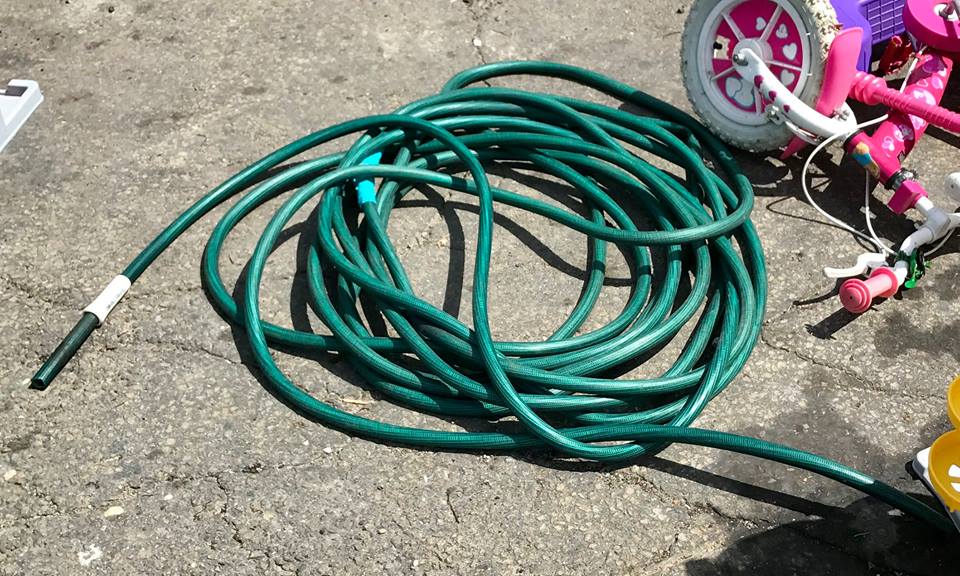
At material recovery facilities (MRFs), recycling gets sorted by machines with rotating shafts, screens, and conveyor belts. A long, flexible hose wraps around these moving parts like a snake, causing jams that require workers to shut down entire sorting lines. Industry workers call these items “tanglers,” and they rank among the most disruptive contaminants in the recycling stream. A single hose can cause thousands of dollars in downtime and pose a safety risk to staff who must manually remove them. For more on this, see our guide on how to recycle garden hose.
Composite Material Issues
Most garden hoses aren’t made from a single recyclable material. A typical hose contains:
- PVC or rubber — the main body
- Reinforcement mesh — usually nylon or polyester
- Brass or aluminum fittings — the couplings at each end
- Plastic connectors — on cheaper models
Separating these materials requires specialized processing that most municipal recycling programs don’t offer. Even hoses labeled “recyclable” usually require a dedicated drop-off program, not a blue bin.
Potential Contaminants
Many older hoses (pre-2010 especially) contain lead, phthalates, or other plasticizers that make them unsuitable for standard recycling. If your hose is over a decade old and you’re unsure of its composition, treat it as non-recyclable through curbside streams and explore the alternatives below.
Step 1: Assess Your Hose — Type, Condition, and Components
Before deciding how to dispose of your garden hose, take a few minutes to evaluate what you’re working with. The right disposal path depends entirely on the answers to these questions.
Identify the Material
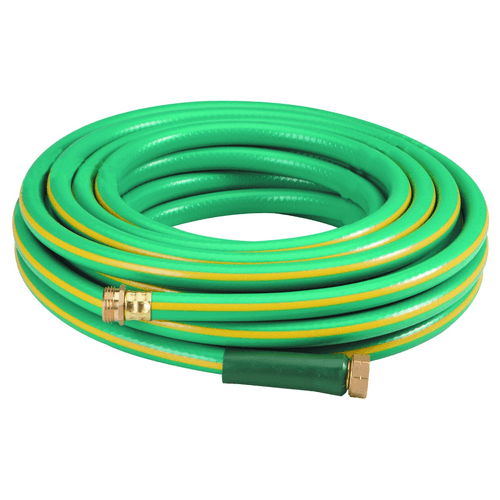
- Vinyl/PVC hoses — Lightweight, usually green or yellow, stiff when cold. These are the most common and the hardest to recycle.
- Rubber hoses — Heavier, more flexible, often black or red. Higher quality, but still composite-built.
- Polyurethane hoses — Lightweight, highly flexible, often used for professional applications.
- Soaker hoses — Porous, leak water along their length. Often made from recycled rubber tires.
Check the hose’s label or imprinting along the side for material identification. If there’s no label, the weight and flexibility will give you clues.
Evaluate the Condition
- Repairable — Small leaks, loose fittings, minor kinks
- Functional but retired — Still holds water, but you’re upgrading
- Beyond saving — Major cracks, splits, brittleness, or collapsed sections
Check the Fittings
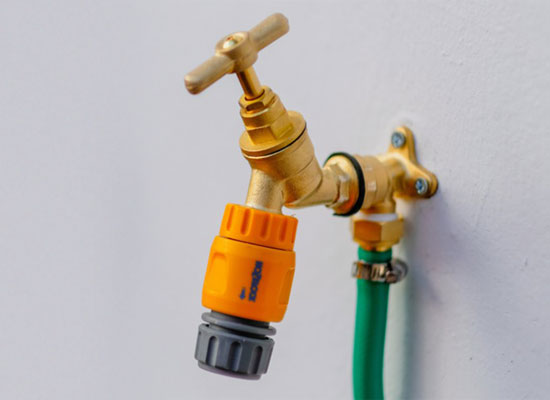
Brass ends are valuable for scrap metal recycling. Look for the hexagonal metal collars at each end of the hose. If you have a screwdriver or wrench, these are removable in under a minute.
Look for Safety Markings
Check whether your hose has a “drinking water safe” or “lead-free” label. This matters for donation purposes — recipients need to know if the hose is safe for potable use.

Image source: mydisposal.com
Step 2: Repair, Repurpose, or Donate First
The most eco-friendly disposal is no disposal at all. Before you write off that hose, consider whether it has a second life ahead of it.
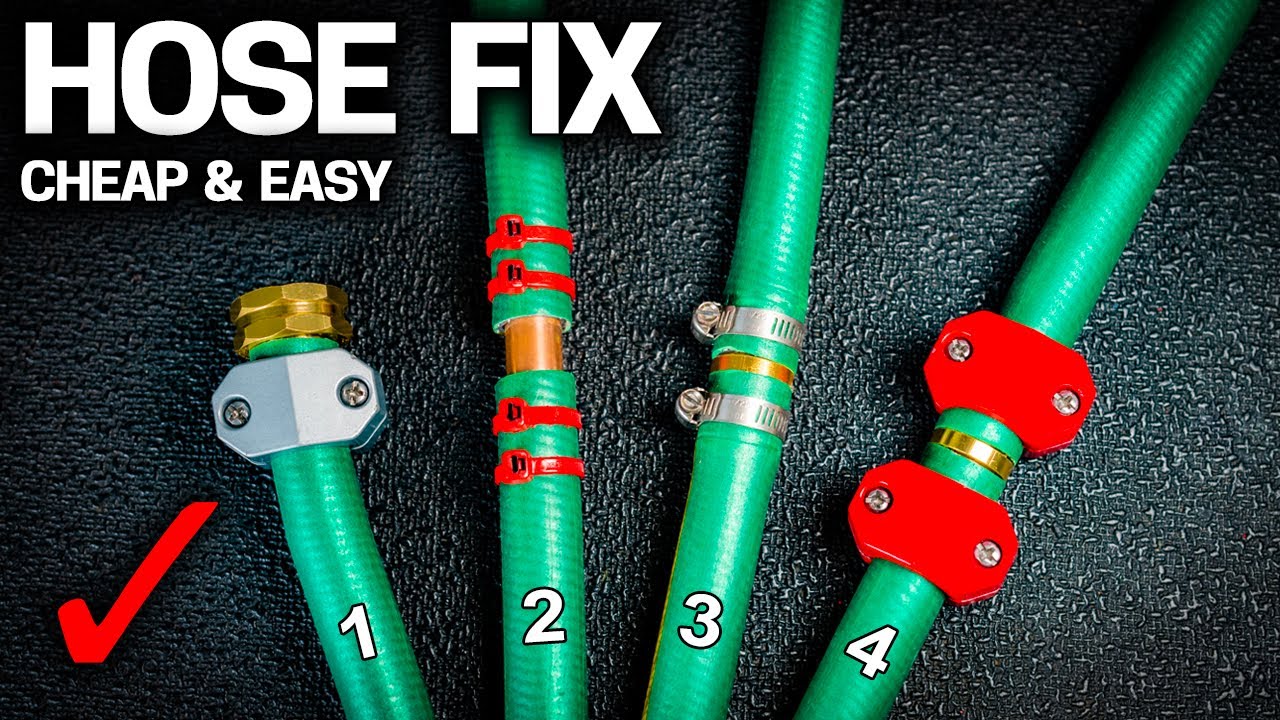
Quick Repairs Worth Trying
Years of emergency hose fixes have taught me that most leaks are fixable. A typical repair kit costs $6–12 at any hardware store and takes about 10 minutes.
| Repair Type | What You Need | Time |
|---|---|---|
| Small puncture | Hose repair connector or clamp | 5–10 minutes |
| Cracked fitting | New brass or plastic coupling | 10–15 minutes |
| Split near the end | Cut off damaged section, attach new fitting | 10–15 minutes |
| Multiple small leaks | Hose tape or sealant | 5 minutes |
A common mistake is trashing a hose with one small leak near the spray nozzle. Cutting off the last 6 inches and adding a new fitting gives you a perfectly functional hose for another season.
Repurposing Ideas That Actually Work
If the hose is beyond repair for watering, its structural strength still has value around the yard and home. These are uses I’ve personally tested and recommended to readers over the years:
- Tree trunk protectors — Cut a 12-inch sleeve, split it lengthwise, and wrap it around a young tree trunk before securing with wire or rope. The hose prevents girdling damage.
- Edge guards for tools — Slip a 6-inch section over rake tines, shovel blades, or chainsaw bars during storage (keeping tools in good shape starts with protecting them properly).
- Handle grips — Slice a 4-inch section lengthwise and slip it over bucket handles, wheelbarrow grips, or tool handles for added cushion.
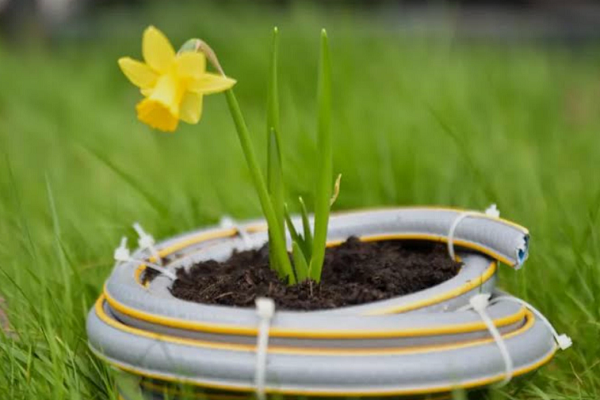
- Drip irrigation rings — Punch small holes along a circle of hose and connect it to a rain barrel outlet for slow, targeted watering around trees or large planters.
- Siphon hose — A 6-foot section works fine for transferring water from a rain barrel to a watering can.
- Protective sleeves for locks and chains — Thread the hose over bike chains, padlock shackles, or gate latches to prevent scratching.
Donation Options
If the hose is clean and functional, someone else may want it. Contact these places before scheduling a drop-off:
- Community gardens — They often maintain hoses for public use and appreciate working donations
- Schools with garden programs — Many elementary schools run student gardens on tight budgets
- Local animal shelters or rescues — Shelters use hoses for bathing animals and cleaning kennels
- Habitat for Humanity ReStores — Some locations accept garden supplies
- Neighborhood tool libraries — A growing trend where members borrow tools and equipment
Always call ahead to confirm they accept garden hoses. Donating a moldy, leaking hose creates more problems than it solves.

Image source: wanrooe.com
Step 3: Specialized Recycling and Take-Back Programs
Not all hope is lost for hoses that can’t be repaired or donated. Several 2026 recycling channels accept garden hoses — you just need to know where to look.
Local Options Worth Checking
Recycling drop-off centers — Some municipalities operate separate collection bins for “problem items” including tanglers. Call your local waste authority and ask directly: “Do you accept garden hoses in your drop-off program?” Be prepared to hear no, but also be ready for a pleasant surprise.
Scrap metal dealers — Remove those brass fittings first. Many scrap yards pay a small amount for brass, and even the aluminum couplings have value. Bring only the metal pieces — the hose body itself won’t be accepted.
Transfer stations — Some areas designate a separate bin for flexible plastics or bulky items. Garden hoses might qualify even when they’re excluded from curbside pickup.
Community swap events — Many towns host seasonal recycling or zero-waste events where unusual items find new homes or proper disposal channels.
Mail-In and Retail Programs
Multiple companies now offer mail-in recycling boxes for hard-to-recycle materials, and some garden hose manufacturers have started take-back initiatives. Search for “garden hose recycling program 2026” to find current options, as new programs launch regularly. Some hardware chains also sponsor periodic collection events for garden tools and accessories — call your local store and ask about their schedule.
What to Ask Before You Go
When you find a potential drop-off location, ask these three questions:
- Do you accept garden hoses specifically? — Don’t assume “flexible plastics” includes hoses unless they confirm.
- Do I need to remove the metal fittings? — Some sites want only the hose body; others can process everything.
- Is there a fee? — Rare, but some programs charge for unusual items.

Image source: sanjoserecycles.org
Step 4: The Responsible Trash Method (When Nothing Else Works)
Sometimes — despite your best efforts — there’s no viable alternative. If the hose is badly deteriorated, moldy, or no local program exists, you’ll need to use regular trash. Here’s how to do it responsibly, protecting sanitation workers and minimizing environmental impact.
How to Prepare a Hose for Trash Disposal
Cut it into manageable pieces. Aim for lengths of 12–24 inches. Short segments won’t wrap around garbage truck mechanisms the way full-length hoses do. Use sharp shears or a utility knife — a dull blade will frustrate you and make uneven cuts.
Bag everything. Place the cut pieces in a sturdy trash bag before putting them in your bin. This prevents tangling during collection and keeps the hose separate from anything that could be recycled.
Remove and recycle metal ends. If you have access to a scrap metal drop-off, remove the fittings before cutting up the hose. Pure metal ends have recycling value even when the hose body doesn’t.
What NOT to Do
- Don’t burn the hose — PVC and rubber release toxic fumes including dioxins and hydrochloric acid when burned, even in outdoor fires
- Don’t bury it — Hoses take decades to break down and can leach plasticizers and microplastics into soil and groundwater
- Don’t put it in anyone’s recycling bin — Not yours, not a neighbor’s, not a public bin. The damage it causes to sorting equipment affects your whole community

Image source: darienite.com
Environmental and Health Considerations
Garden hoses aren’t just inconvenient waste — they carry some genuine environmental and health concerns that deserve attention.
Lead and Chemical Concerns
Pre-2010 hoses often contained lead in the brass fittings or PVC compounds. Federal regulations have since restricted lead content in hoses intended for drinking water, but older units may still carry it. The U.S. Environmental Protection Agency provides guidance on lead in drinking water systems, and the same caution applies to older irrigation equipment.
If you’re disposing of a hose with a “lead-free” label or a safety warning, handle it like any other potentially contaminated material. Wash your hands after contact and keep it away from children and pets.
Microplastics and the Drive for Better Materials
PVC hoses shed microplastic particles as they age and crack. Sunlight accelerates this degradation — UV damage makes the plastic brittle, and every flex releases microscopic fragments. This is a significant concern because microplastics have been documented in soil, waterways, and even tap water across the country.
This is why proper disposal matters, and it’s also why buying a better hose upfront reduces the future waste problem. When you replace your old hose, look for:
- Drinking water safe certification (NSF/ANSI 61 or similar)
- Lead-free and BPA-free labeling
- Reinforced construction — better hoses last years longer than discount options
- UV-resistant materials — these withstand sun exposure better
Proper Storage to Delay Disposal
Your next hose will last longer with basic care. Store it on a reel or coil it loosely in a shaded spot, drain it completely after use to prevent freezing damage, and disconnect it from the spigot during winter. These habits can double the lifespan of a quality hose, pushing disposal years into the future.

Image source: recyclingpartnership.org
The Complete Disposal Checklist
Here’s your at-a-glance reference for the entire process, from garage to resolution:
- Assess — Identify material, condition, and fittings
- Repair — Fix small leaks with a $10 repair kit
- Repurpose — Transform sections into helpful household tools
- Donate — Contact local gardens, schools, or shelters
- Recycle fittings — Remove and scrap brass or aluminum ends
- Find a take-back program — Check local drop-offs and mail-in options
- Trash as last resort — Cut into 12–24 inch pieces and bag them securely
Image source: eugene-or.gov
Cost, Time, and Tools for the Job
Disposing of a garden hose properly doesn’t require a workshop or a big budget. Here’s what you’ll need and how long the whole process takes.
Required Tools
- Utility knife or sharp shears — For cutting the hose into segments
- Screwdriver or wrench — To remove metal fittings (usually a flathead and an adjustable wrench suffice)
- Sturdy trash bags — For secured disposal
- Tape and marker — If you’re labeling anything for donation or drop-off
Time Investment
- Inspection and cleaning: 5–10 minutes
- Repair attempt: 10–15 minutes if applicable
- Cutting and coiling: 10 minutes
- Removing fittings: 5 minutes per end
- Drop-off or donation trip: 20–40 minutes depending on distance
In practice, the whole process fits into a single lunch break, and most of the time goes to the drive to your chosen drop-off location. For related maintenance while you’re at it, check the correct fluid levels on your lawn equipment and keep seasonal tools ready — a weekend of upkeep prevents waste across the board.
Common Mistakes and What to Do Instead
After years of helping homeowners navigate disposal, I’ve seen the same errors repeated. Skip these lessons and get it right the first time.
The Biggest Mistakes
Tossing the hose in curbside recycling — This is the #1 error, and it causes real harm. A single hose can shut down an entire sorting line for hours. The National Recycling Coalition has documented the “tangler” problem in municipal programs nationwide.
Donating without calling first — Many people drive to a donation center only to find hoses aren’t accepted. Always call ahead, and ask about condition requirements.
Ignoring metal fittings — Brass ends have recycling value that’s wasted when they go to a landfill. A few minutes with a wrench saves this resource and possibly earns you a few dollars at a scrap yard.
Burning hoses in bonfires — The toxic fumes from burning PVC are harmful to anyone nearby and release lasting pollutants into the air.
Pro Tips for Next Time
Keep one repaired backup hose — The hose you fix today is the one that saves you on a Sunday when every store is closed.
Label hoses clearly — Write “non-potable” on hoses kept for fertilizer mixing or car washing so no one accidentally uses them for drinking water.
Store hoses in the shade — UV damage is the #1 killer of garden hoses. A reel in a sunny spot still exposes the outer wraps. A garage or shed hook is ideal.
Buy quality once — A $40 hose that lasts 8 years beats three $15 hoses in the same period. The math favors quality, and it keeps more waste out of the system.
Maintain your connections — Replacing worn washers and tightening loose fittings extends hose life and prevents burst failures.
Frequently Asked Questions
Can I put a garden hose in my recycling bin?
No. Garden hoses are classified as tanglers and can shut down sorting equipment at recycling facilities. They belong in reuse, specialized drop-off, or trash streams — never curbside recycling.
Where can I recycle a garden hose?
Check with local recycling drop-off centers, scrap metal dealers (for the fittings), community swap events, and mail-in recycling programs. Some garden hose manufacturers also offer take-back initiatives. Call your local waste authority for the most current options in your area.
Should I remove metal ends before disposal?
Yes, if you want to recycle them separately. Brass and aluminum fittings have scrap value, and many drop-off programs want only the hose body. Use a wrench to loosen the fitting, then pull it free.
Is it safe to burn an old garden hose?
No. Burning PVC or rubber hoses releases toxic fumes including dioxins and hydrochloric acid. Never burn hoses in bonfires, wood stoves, or open flames of any kind.
Can I donate a used garden hose?
Yes, if it’s clean, functional, and free of mold or damage. Contact community gardens, schools with garden programs, or local nonprofits directly to confirm they accept hoses before you drop one off.
How do I cut a hose for trash disposal?
Use sharp shears or a utility knife to cut the hose into 12–24 inch segments. Bag the pieces securely to prevent tangling during collection. Never place full-length hoses in trash bins.
Are old garden hoses safe for drinking water?
Most older hoses are not certified for drinking water. Check for a “drinking water safe” certification label. If the hose lacks this marking, use it only for irrigation, car washing, or other non-potable purposes.
The Bottom Line
Disposing of a garden hose responsibly comes down to a simple hierarchy: repair it, repurpose it, donate it, recycle what you can, and trash it only as a last resort.
The entire process takes under an hour and requires tools you likely already own. The payoff is meaningful: you keep a disruptive item out of the recycling stream, recover the value of brass fittings, and model responsible waste habits for your whole neighborhood.
Your next step is simple. Go look at that hose sitting in your garage, assess its condition honestly, and pick the path that fits. Whether it’s a 10-minute repair or a trip to a community drop-off, you now have everything you need to handle the job correctly.
Start with the assessment — and if the hose is beyond saving, understanding recycling pathways will guide you to the right local solution.