How To Remove Stuck Garden Hose Nozzle: Quick Fixes 2026
Few things derail a weekend gardening session faster than a seized sprayer nozzle. You twist, you pull, you curse under your breath—and the blasted thing refuses to budge. While this guide focuses on the nozzle removal itself, keeping your broader lawn and garden routine running smoothly means caring for the rest of your equipment too, from routine upkeep on your mower to proper storage for seasonal tools.
This isn't just a one-off frustration. It's a mechanical problem with a methodical solution. Drawing from years spent untangling seized fittings on residential spigots and commercial properties, I'll walk you through exactly how to remove stuck garden hose nozzle—from the gentlest first attempt to the last-resort methods—without wrecking the hose or its fitting. For more on this, see our guide on how to recycle a garden hose.
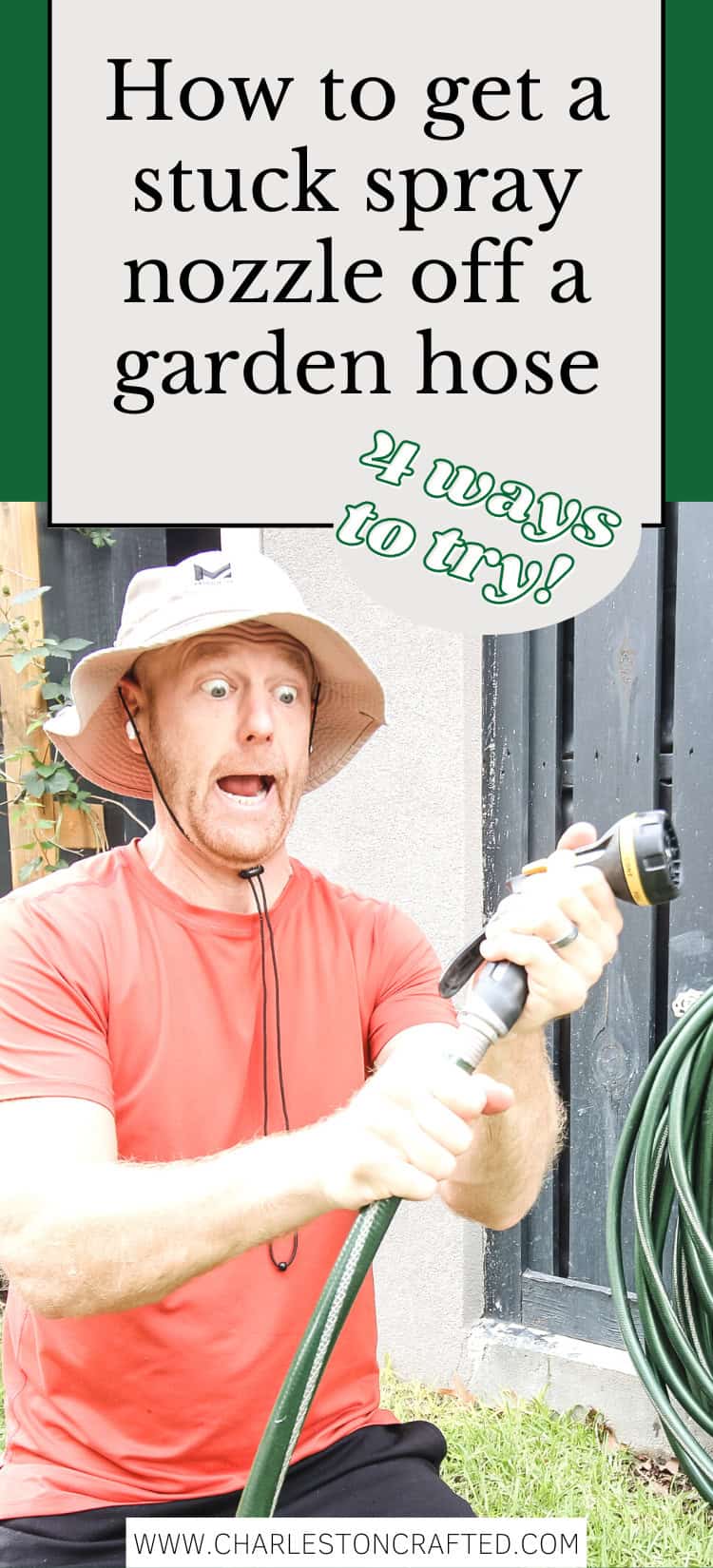
Source: charlestoncrafted.com
Why Garden Hose Nozzles Get Stuck
Understanding the enemy is half the battle. A nozzle that won't turn isn't just "tight." It's chemically or mechanically bonded to the hose fitting. The causes are specific, and identifying them tells you which fix will work fastest.
Hard Water Mineral Scale
If your region has hard water—water with high dissolved calcium and magnesium—every use leaves a microscopic film on the threads. Over a season, that film hardens into a chalky white crust that acts like glue. This is the single most common culprit I encounter. For more on this, see our guide on how to recycle garden hose.
Galvanic Corrosion
This is the nasty one. When you connect two dissimilar metals, like a brass nozzle to an aluminum hose fitting, the moisture between them creates a small electrical current. That current accelerates corrosion, producing a white, powdery or dark, flaky buildup that literally welds the parts together.
Overtightening and Cross-Threading
Cranking a nozzle down with channel-locks "just to be safe" compresses the rubber washer so hard it deforms into the thread gaps. Cross-threading is worse—it physically gouges the threads, locking the pieces together with damaged metal. For more on this, see our guide on 1 2 vs 5 8 garden hose reddit.
Environmental Factors
UV radiation from the sun degrades rubber and plastic over time. A swollen or melted washer can jam into the threads. Grit and sand from a dirty hose end can work into the joint and act like fine sandpaper, binding the threads. Even simple heat cycling—hot day, cool night—can cause subtle expansion and contraction that over months compresses everything into a tighter fit.
Tools and Supplies You'll Need
You don't need a professional workshop, but the right tools make this process dramatically easier. Here's exactly what I keep in my own kit for these jobs:
| Tool | Purpose |
|---|---|
| Penetrating oil (PB Blaster, Liquid Wrench, or WD-40) | Breaks down rust and corrosion |
| White vinegar | Dissolves mineral scale |
| Strap wrench (ideally two) | Grips without damaging finishes |
| Adjustable wrench or channel-lock pliers | Holds the hose fitting steady |
| Thick rubber gloves | Improves grip with bare hands |
| Old rag or rubber jar-opener pad | Extra friction layer |
| Nylon brush or old toothbrush | Cleans threads after removal |
| Hair dryer or heat gun (low setting) | Expands metal to break the seal |
| Zip-top bag and ice | Contracts metal for a thermal shock |
| PTFE tape and silicone grease | Reassembly and prevention |
| Safety glasses and work gloves | Protection |
Before you start, gather everything in one place. The moment you're mid-removal with oil-soaked hands is not the time to go hunting for a wrench. For more on this, see our guide on how to measure garden hose diameter.
Safety and Preparation
A seized fitting can release suddenly. When it does, you'll be glad you set things up properly.
Turn off the water at the spigot. Then, squeeze the trigger on the nozzle to release any residual pressure. This isn't just good practice—it prevents a spray of pressurized water when the seal finally breaks.
Protect your work surface. Lay down a rag or work on a flat, stable surface like a workbench. This gives you room to brace the hose and keeps the fitting from skittering across concrete.
Wear eye protection. Penetrating oil in the eye is a miserable experience. Soapy water or vinegar splash is no picnic either.
Never use open flame. I cannot stress this enough. A torch on a plastic nozzle or rubber washer will melt it into a permanent, unsalvageable bond. Heat, when used at all, comes from a hair dryer on low.
Step-by-Step: How to Remove Stuck Garden Hose Nozzle
Follow these steps in order. Start gentle, escalate only as needed, and never skip ahead.
Step 1: Try a Better Grip
Put on thick rubber gloves. Hold the metal hose fitting firmly with one hand. Twist the nozzle counterclockwise with the other. If it moves even a fraction, keep going with steady, even pressure. Many "stuck" nozzles are actually just overtightened and a good grip is all it takes.
Step 2: Apply Penetrating Oil
If bare grip fails, spray penetrating oil directly where the nozzle meets the fitting. The oil needs time to wick into the thread gap. Give it 10–15 minutes for light corrosion; up to an hour for heavy buildup. Reapply if the oil soaks in quickly. While waiting, tap lightly around the joint with a plastic screwdriver handle. The vibration helps the oil travel deeper into the threads.
Step 3: Use Two-Wrench Control
This is the method that solves most cases. Hold the hose's metal fitting with an adjustable wrench. Grip the nozzle with a strap wrench. Turn the nozzle counterclockwise while holding the fitting perfectly still. Using two tools prevents the hose from twisting and, more importantly, prevents you from crushing the fitting with one oversized pair of pliers.
Step 4: Dissolve Mineral Scale with Vinegar
If you see white, chalky crust, this is your fix. Soak a rag in white vinegar and wrap it around the joint. Let it sit for 20–30 minutes. The vinegar dissolves the mineral scale, turning it from a solid bond into a crumbly residue. Scrub with a nylon brush, reapply penetrating oil, and try the two-wrench method again.
Step 5: Apply Heat and Cold (Thermal Shock)
Metal expands when heated and contracts when cooled. If the nozzle and fitting are different metals, they respond to temperature changes at different rates. This differential can break the corrosion bond.
Warm the nozzle with a hair dryer on high for 60–90 seconds, keeping it moving. Then, immediately apply an ice pack to the hose fitting for about a minute. The rapid change can crack the bond. Try the two-wrench method immediately after.
Step 6: Gentle Shock
With the nozzle braced, tap around the collar with a small rubber mallet or the plastic handle of a screwdriver. These aren't heavy blows—they're micro-vibrations designed to break up the oxide layer holding the threads together. Tap around the full circumference, then try twisting again.
Step 7: Last-Resort Cut
If the nozzle is beyond saving and nothing else has worked, sacrifice it. Cut a slit lengthwise along the nozzle collar with a hacksaw or rotary tool. Stop before you reach the hose threads. Insert a flat screwdriver into the slit and twist gently to spread the collar. This relieves the pressure and releases the grip. Your hose fitting survives, and you buy a new nozzle.
A Pro Tip That Works: After any method succeeds, immediately work the nozzle clockwise a hair, then counterclockwise. This back-and-forth motion helps break any remaining corrosion without stripping threads.
Special Cases and Fixes
Not all stuck nozzles are the same situation. Match your fix to your specific problem.
Brass Nozzle on Aluminum Fitting
This combination is practically guaranteed to corrode. Expect galvanic corrosion and use the full arsenal: penetrating oil first, then extended vinegar soaks. Rinse thoroughly and dry completely before applying any heat.
Plastic Nozzle
Skip the heat entirely. Plastic can deform or melt, making the problem permanent. Use vinegar, a strap wrench, and slow, steady torque.
Quick-Connect Couplers
These have a spring-loaded sleeve and steel locking balls. Pull the sleeve back while twisting the nozzle off. If the coupler sticks, clean the balls with penetrating oil and brush out any grit with an old toothbrush.
Pressure Washer Gun Stuck to Hose
Pressure washer fittings see extreme stress. Release all pressure first—this is non-negotiable. Use two wrenches on the fitting flats. If you use heat, apply it only to the gun's metal fitting, never the hose itself.
Melted or Swollen Washer
A degraded rubber washer can swell and wedge itself into the thread gap. It feels exactly like cross-threading. Pry out the old washer with a pick or small screwdriver, remove the debris, then attempt removal.
What Not to Do
I've seen all of these mistakes ruin hoses and fittings.
Don't use a torch. Open flame on plastic, rubber, or even painted metal causes immediate, irreversible damage.
Don't crush the fitting. Locking pliers set to maximum grip will deform a brass or aluminum fitting faster than you can react. Once the fitting is round, you'll need a cutting tool anyway.
Don't twist the hose body. The hose will just absorb the torque and twist. Always grip the metal fitting directly.
Don't mix chemicals. Vinegar and bleach create toxic chlorine gas. Stick to one cleanser at a time, and never combine penetrating oil with any acid.
Don't over-torque. If it doesn't budge after two solid attempts, stop and change methods. Forcing it will strip threads and turn a 15-minute job into a trip to the hardware store.
After Removal: Clean, Repair, and Prevent Future Sticking
The nozzle is off. Don't just reattach it—take two minutes to fix the root cause, or you'll be back here next year.
Clean the threads. Use a nylon brush and vinegar on both the nozzle and the hose fitting. Rinse thoroughly and dry completely.
Inspect for damage. Check threads for burrs, gouges, or deformation. If the threads are badly chewed up, replace the fitting using a repair kit, or consider a fresh hose end.
Install a new washer. Always put a fresh rubber washer in the nozzle before reassembly. Old, compressed washers are a primary cause of sticking.
Apply thread treatment. Wrap 2–3 turns of PTFE tape on the hose threads, or use a dab of silicone grease. Both create a barrier that prevents corrosion and makes future removal effortless.
Tighten correctly. Hand-tighten the nozzle, then give it a quarter turn with a wrench. More torque is not better—it's the beginning of your next stuck nozzle.
Change your storage habits. Drain the hose after use. Keep it out of direct sunlight when possible. If you live in a hard-water area, consider a softener or a final rinse with distilled water.
Consider upgrading. A brass quick-connect set eliminates repeated thread wear and is substantially easier to disconnect.
Troubleshooting Quick Hits
Still struggling? Match your symptom to the fix.
| Symptom | Likely Fix |
|---|---|
| No movement at all | Longer penetrating oil soak, then heat-cool cycle, then two-wrench method |
| Moves a little, then locks | Reverse a hair clockwise, re-oil, work back and forth |
| Threads squeal or grind | Grit or scale present—vinegar wrap, brush, and rinse |
| Nozzle turns but fitting turns too | Clamp the fitting in a padded vise or use a second wrench |
| Collar crumbles | Cut-and-split method; the nozzle is a write-off |
Frequently Asked Questions
How long should I let penetrating oil sit?
For light corrosion, 10–15 minutes is sufficient. For heavy buildup or rust, allow up to an hour. Reapply if the oil appears to soak in completely before the time is up.
Can I use WD-40 instead of a specialty penetrant?
Yes. WD-40 is a versatile solvent that works well on light to moderate corrosion. Specialty penetrants like PB Blaster are formulated to break down rust more aggressively, which is helpful on severely seized connections.
Will heat damage my garden hose?
A hair dryer on high is generally safe if you keep it moving and aim it at the nozzle, not the hose body. Never use a heat gun on plastic components, and never use open flame.
Is PTFE tape or silicone grease better for reassembly?
Both are effective. PTFE tape seals the threads and reduces friction during future removal. Silicone grease provides water resistance and prevents galvanic corrosion between dissimilar metals. For the best results, use both.
What size are standard garden hose threads?
Nearly all residential garden hoses in the United States use 3/4-inch GHT (Garden Hose Thread), also known as NH (National Hose). This is different from standard plumbing pipe threads, so don't force mismatched parts together.
What if my nozzle is cross-threaded?
Stop immediately. Back the nozzle off gently, clean both sets of threads, and realign by hand. If the threads are already damaged, replace the nozzle or the hose end fitting.
How do I know if it's mineral scale or corrosion?
White, chalky, powdery buildup indicates mineral scale from hard water—vinegar dissolves it effectively. Dark, flaky, or gritty buildup suggests galvanic corrosion—use penetrating oil and mechanical cleaning.
Conclusion
A stuck garden hose nozzle is a nuisance, but it's rarely a disaster. The fix is methodical: start with grip, add penetrating oil, use two wrenches for control, introduce vinegar for scale, apply heat and cold for thermal shock, and only cut as a final resort. A quick clean, a fresh washer, and a smear of PTFE tape or silicone grease will keep it from ever happening again.
Ready to put this into action? Keep a strap wrench and a can of penetrating oil in your garage so you're prepared for the next seized fitting. And while you're at it, take two minutes to drain your hoses and store them out of the sun—your future self will appreciate it.