Is Husqvarna A Good Lawn Mower: Expert Verdict For 2026
When someone asks whether Husqvarna makes a good lawn mower, the honest answer is: it depends on what you're mowing, how much you want to spend, and how much maintenance you're willing to do. After years of working with these machines across small suburban lots, multi-acre properties, and everything in between, I can tell you this—Husqvarna earns its reputation in some areas and falls short in others.
This guide breaks down the brand's full lineup, real-world cutting performance, durability, support network, and how it stacks up against the competition. By the end, you'll know exactly which Husqvarna model (if any) belongs in your shed. For more on this, see our guide on is craftsman a good riding lawn mower.

Source: reddit.com
What Makes Husqvarna Stand Out As A Brand
Husqvarna has been building outdoor power equipment since 1689, which gives them centuries of engineering experience. That heritage matters—but what matters more for buyers is how it translates into today's mowers.
A Legacy of Swedish Engineering
The company started as a musket factory in Sweden and evolved into one of the world's largest manufacturers of forestry and lawn care equipment. That industrial background shows in their approach: Husqvarna tends to favor rugged, functional designs over flashy ones. Their mowers are built to work, not just to look good in a showroom. For more on this, see our guide on how long do electric lawn mower batteries last.
The Full-Line Advantage
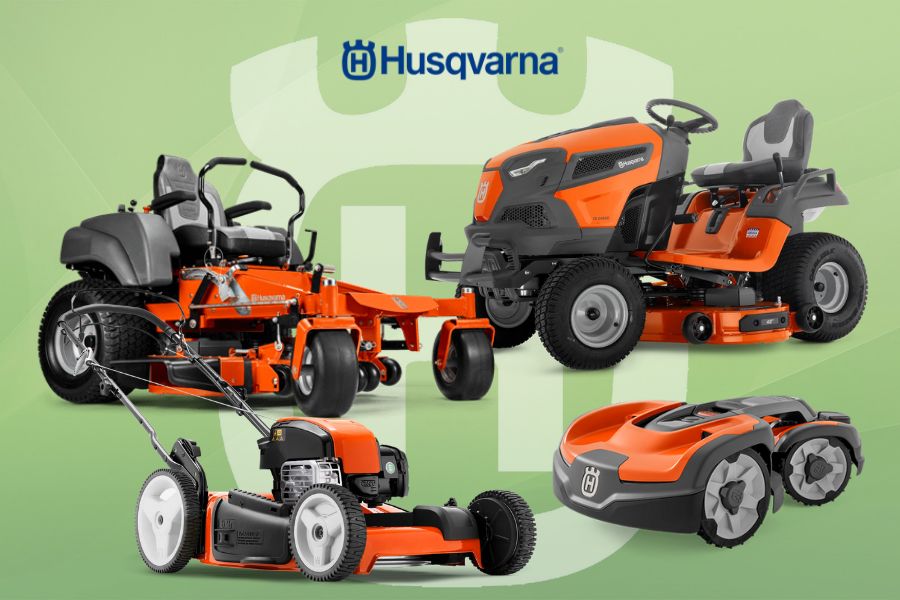
One of Husqvarna's biggest strengths is breadth. Unlike brands that focus on one segment, Husqvarna offers:
- Walk-behind gas mowers for small to medium lawns
- Battery-powered walk-behinds for quiet, low-maintenance cutting
- Lawn tractors for properties from half to two acres
- Zero-turn mowers for speed and maneuverability on larger properties
- Robotic mowers for hands-free weekly maintenance
This lineup means you can start with a Husqvarna push mower and upgrade to a zero-turn years later without switching brands—and the dealer relationship stays consistent.
Where the Brand Actually Wins
In practical terms, Husqvarna's strengths are clear:
- Deck design — their airflow engineering produces clean, even cuts in most conditions
- Dealer network — thousands of authorized dealers across North America carry parts and offer service
- Ergonomics — controls, seats, and handles are thoughtfully designed for long sessions
- Parts availability — you can find blades, belts, and filters at most outdoor power equipment dealers
A common mistake is assuming Husqvarna is a "premium only" brand. Their entry-level machines are genuinely budget-friendly, but they cut corners on things like deck thickness and transmission quality compared to higher trims. You get what you pay for—and knowing which corners are cut helps you choose wisely.
Source: businessedge.ca
The Husqvarna Lineup: Which Model Fits Your Yard
Husqvarna's range covers nearly every property type. Here's how to match the machine to your situation.
Gas Walk-Behind Mowers
Best for: Small to medium yards under 0.5 acre, uneven terrain, areas where battery runtime falls short.
These are straightforward, durable machines. Most feature:
- Briggs & Stratton or Honda engines depending on the model
- Steel decks that handle bumps and knocks
- High-lift blades for strong bagging performance
- Adjustable cutting heights from about 1 inch to 4 inches
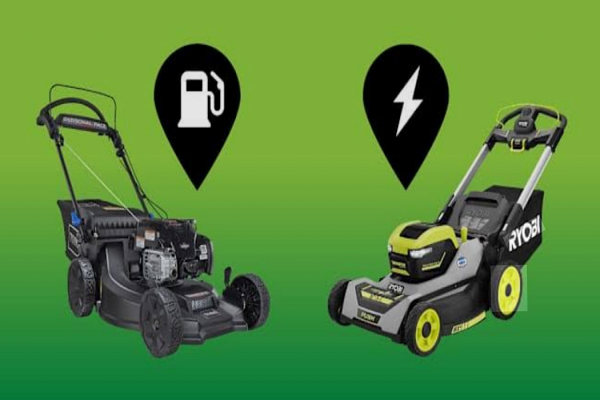
In practice, gas walk-behinds excel at tall, thick grass that taxes battery mowers. They're also cheaper to maintain long-term—a new blade and air filter cost far less than a replacement battery pack. The downsides are noise, fumes, and routine maintenance like oil changes and spark plug replacements.
Battery Walk-Behind Mowers
Best for: Small to medium yards, homeowners who want quiet operation, those tired of pull-start frustration.
Husqvarna's battery mowers have improved dramatically. Current models offer:
- Push-button start with no priming or pulling
- Runtime of 45 to 60 minutes on a single charge
- Swappable 36V batteries
- Foldable handles for compact storage
The honest trade-off: battery mowers struggle with very thick, wet, or tall grass compared to gas. If you mow weekly and keep grass at reasonable heights, they're excellent. If you let the lawn go for two weeks in spring, you'll wish you had gas power. Also, replacement batteries can cost $200 or more—a significant long-term expense.
Lawn Tractors
Best for: Properties from 0.5 to 2 acres with open areas and moderate obstacles.
Tractors are Husqvarna's bread and butter. Key features across the range:
- Hydrostatic transmissions for smooth, pedal-controlled speed
- Tight turning radii (15 to 18 inches) for navigating around trees and beds
- Deck sizes from 42 to 54 inches
- High-back seats on most models
- Compatible with baggers, mulch kits, and tow-behind carts
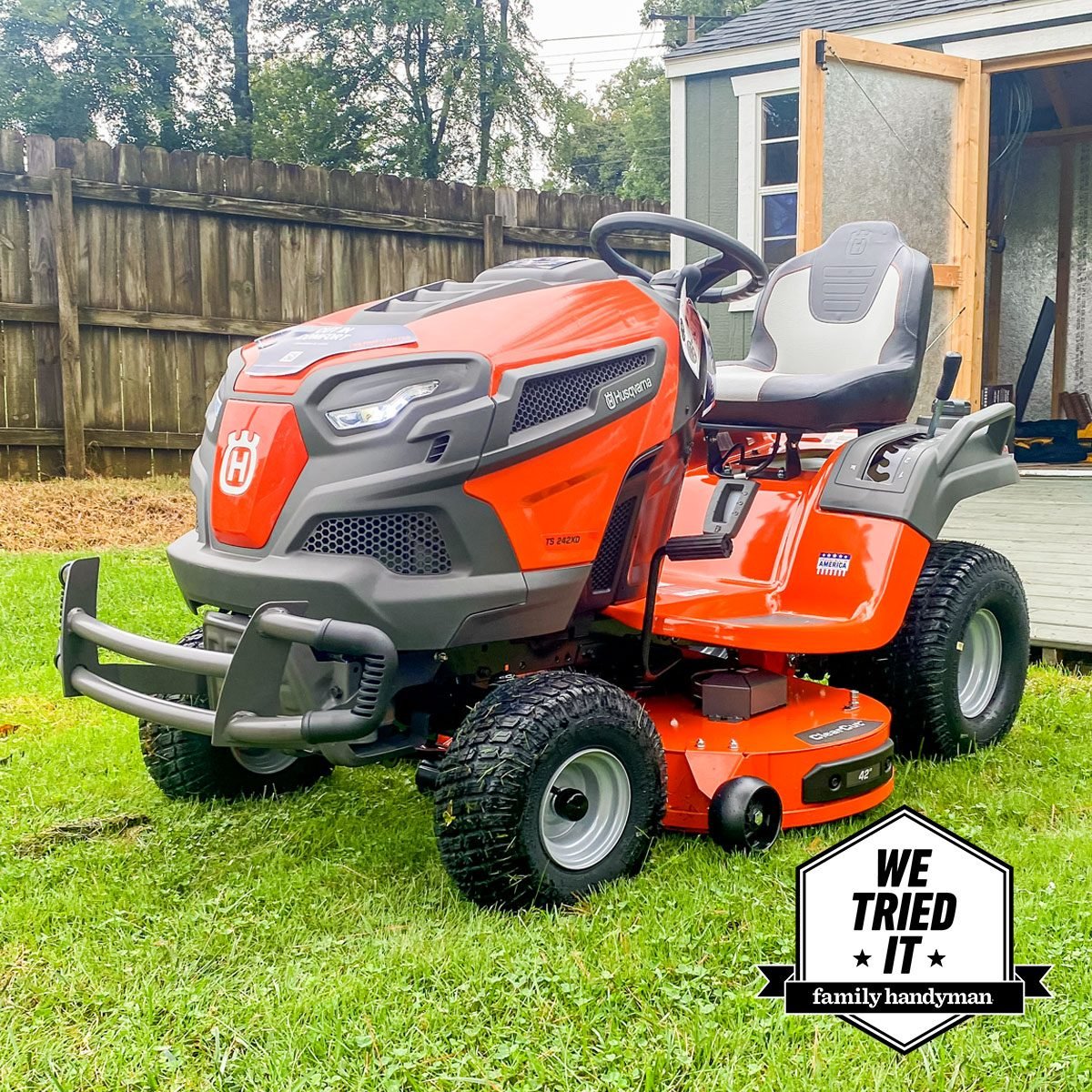
The TS series represents the sweet spot for value. These offer fabricated or stamped decks, dependable engines, and comfort features at prices well below premium brands. Higher-end models add features like LED headlights, larger fuel tanks, and heavier gauge steel.
Zero-Turn Mowers
Best for: Properties over 1 acre, heavy obstacle courses, anyone who wants to cut mowing time dramatically.
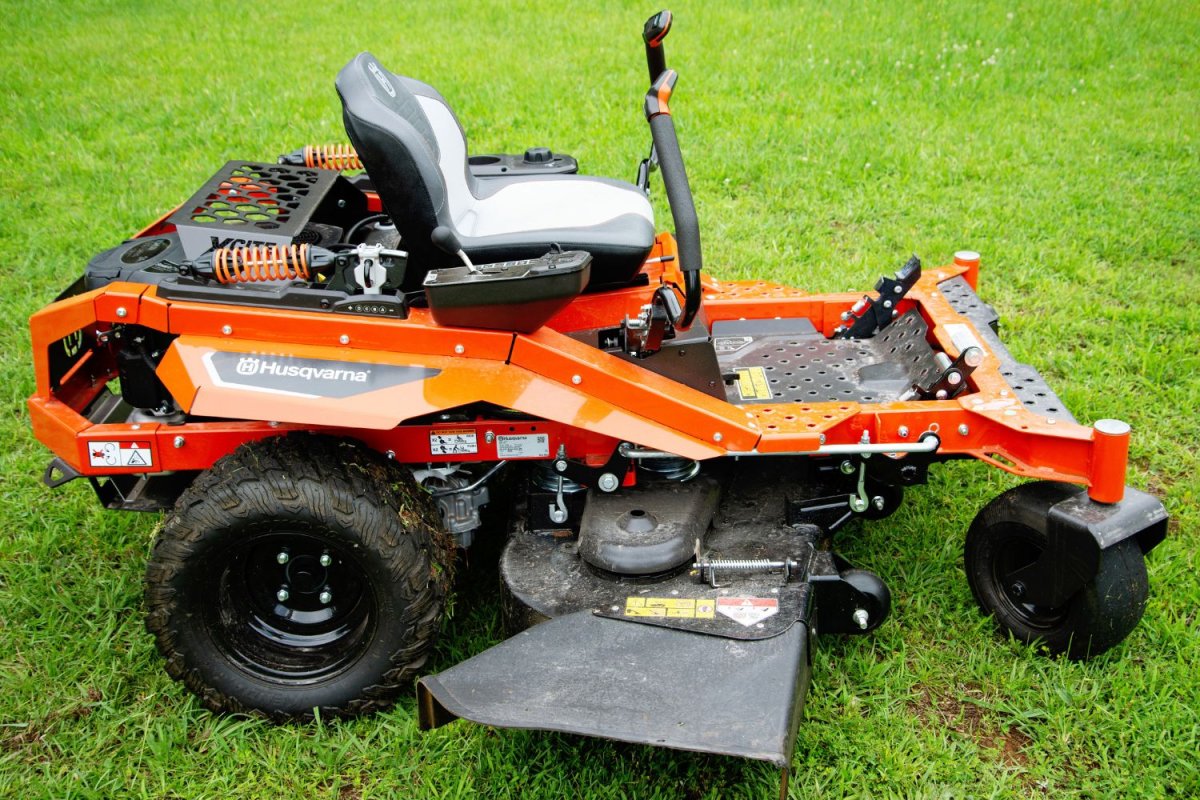
Zero-turns are where Husqvarna gets serious. The key advantage is speed—you can mow at 7 to 10 mph in open areas, and the zero-turn radius means no manual maneuvering around trees and flower beds.
The lineup breaks into three tiers:
- Entry-level consumer — stamped decks, 42 to 48 inches, air-cooled engines
- Mid-range prosumer — fabricated decks, 48 to 54 inches, improved suspension
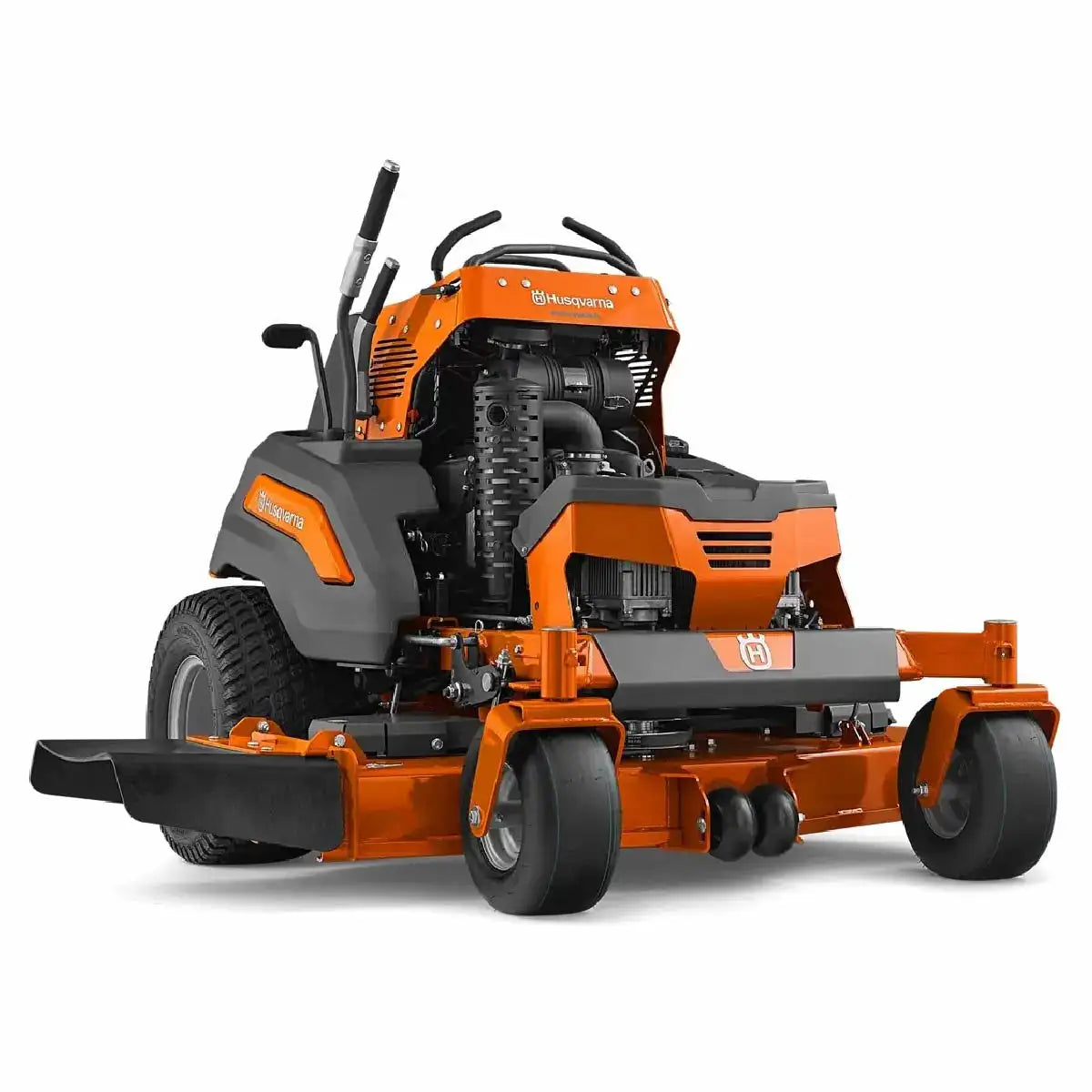
- Commercial-grade — heavy-duty fabricated decks, serviceable components, higher ground clearance
If you're mowing more than an acre, a zero-turn typically cuts mowing time in half compared to a tractor. The learning curve for the steering levers is real, though—expect a few awkward sessions before you're comfortable. This is one area where taking the time to understand the controls before you buy pays off.
Robotic Automower
Best for: Busy homeowners, small to medium yards under 0.75 acre, reduced noise needs.
Husqvarna pioneered the residential robot mower. These units:
- Mow daily in small increments, keeping grass consistently short
- Return to a charging station automatically
- Operate quietly enough for early morning or evening mowing
- Navigate around obstacles and lawn boundaries using a perimeter wire
Setup requires installing a boundary wire around the lawn perimeter—which takes a day in most yards. Once that's done, the mower handles everything. The trade-off is upfront cost: robotic mowers start around $1,200 and go much higher. For some owners, that's worth the complete elimination of weekend mowing.
This wide lineup is exactly why the question "is Husqvarna a good lawn mower" gets complicated. The brand makes everything from $299 push mowers to $6,000 commercial zero-turns—and they're not all equal.

Source: reddit.com
Cutting Performance: Does The Deck Deliver?
Cut quality is the most important job a mower has, and Husqvarna generally delivers—with some caveats.
Deck Design and Airflow
Husqvarna's "Air Lift" deck technology uses angled baffles and blade designs that create strong airflow. This does two things:
- Lifts grass blades upright before cutting for a more even finish
- Moves clippings efficiently toward the discharge chute or bagger
In practice, this means fewer stragglers and a cleaner appearance after mowing. I've seen Husqvarna decks produce results comparable to brands costing significantly more—especially with sharp blades.
Bagging Performance
With high-lift blades and a properly attached bagger, Husqvarna mowers collect clippings well. The key is matching the blade type to the task:
- High-lift blades for bagging and discharging
- Mulching blades for fine chopping and grass cycling
- Standard blades for general use
If you're seeing poor bagging performance, the first thing to check is whether you have the right blade installed. The second is deck cleanliness—a build-up of wet grass destroys airflow and causes clumping.
Mulching Considerations
Mulching is where Husqvarna is solid but not exceptional. The system works well if you follow two rules:
- Mow frequently — don't let grass get more than a third taller than your desired cut height
- Mow dry — wet grass clumps and leaves visible piles
When conditions are right, mulched clippings break down quickly and feed the lawn naturally. When they're wrong, you'll see clumps and patches. This is true of almost any brand, but Husqvarna's standard mulching kit requires removing the discharge chute and installing a plug—a minor annoyance compared to brands with tool-free systems.
Deck Size: Bigger Isn't Always Better
While wide decks (48 to 54 inches) cover ground fast, they have real drawbacks:
- Heavier — harder on turf and more difficult to maneuver
- Wider turning radius — impractical in tight, landscaped yards
- Gate clearance — many residential gates won't fit a mower wider than 42 inches
Measure your gates and obstacles before choosing. A 42-inch deck that fits through your gate beats a 54-inch deck you can't store properly. If you're still wondering whether Husqvarna mowers cut well, know that cut quality is one of the brand's strongest attributes—when you select the right deck size and blade type for your conditions.

Source: saffordequipment.com
Build Quality, Durability, and Maintenance Costs
A mower is an investment, and you want to know how long it'll last—and what it costs to keep running.
Deck Construction: Stamped vs. Fabricated
This is the single most important build quality factor. It's also the easiest way to tell if you're getting a value machine or a long-term investment.
Stamped decks are formed from a single sheet of steel. They're:
- Cheaper to manufacture and replace
- Lighter and easier to mount
- More prone to rust and cracking over time
- Common on entry-level Husqvarna tractors and walk-behinds
Fabricated decks are welded from multiple steel pieces. They're:
- Significantly stronger and more durable
- Better at resisting impact damage from rocks and roots
- Heavier, which can stress the mower frame
- Found on mid-range and premium Husqvarna zero-turns
If you're buying a mower intended to last 10 years, a fabricated deck is worth the extra cost. If you're on a tight budget and replace equipment frequently, a stamped deck will get the job done.
Frame and Chassis Strength
Husqvarna riders generally use steel frames with reinforced front axles. On heavier models, you'll find cast-iron front axle pivots that handle rough terrain well. The difference between models comes down to steel gauge and weld quality—premium models use thicker steel and more solid construction.
Component Quality
Husqvarna doesn't manufacture its own engines, which isn't a flaw—it means you get proven power plants:
- Briggs & Stratton on many entry and mid models
- Kawasaki on higher-end zero-turns
- Honda engines on select walk-behinds
Each has different maintenance requirements and lifespan. Kawasaki engines generally command a price premium for good reason—they're known for reliability and longer service intervals.
Real-World Maintenance Schedule
Based on normal residential use, plan for:
| Maintenance Task | Frequency |
|---|---|
| Blade sharpening | Every 20–25 hours in sandy soil; 40–50 hours in normal conditions |
| Oil change | Annually or every 50–100 hours, per engine guide |
| Air filter check | Every 10–15 hours in dusty conditions |
| Spark plug replacement | Annually |
| Belt inspection | Every season |
| Deck cleaning | After each use in wet grass |
These tasks are straightforward for most DIY owners. The beginner mistakes to avoid include:
- Skipping blade sharpening — a dull blade tears grass rather than cutting it, leaving brown tips and increasing disease risk
- Using old gas — ethanol-blended fuel degrades in weeks; stale fuel clogs carburetors
- Forgetting the correct oil level — check it before each season
Parts are generally easy to source and reasonably priced. A blade runs $15–30, an air filter $10–20, and a drive belt $20–40. Compare that to the cost of a new mower, and routine maintenance is clearly worth doing. For detailed guidance on keeping your equipment running, understanding the right fuel choice can prevent many common starting problems.
Expected Lifespan
With consistent maintenance, expect:
- Walk-behind mowers: 8–12 years
- Lawn tractors: 10–15 years
- Zero-turn mowers: 10–20 years depending on tier
- Battery mowers: 5–8 years before batteries need replacement
Deck rust and engine failure are the most common causes of early retirement. Keeping the mower under cover and cleaning the deck after each use extends life significantly. If you're comparing Husqvarna to other brands on durability, the honest assessment is that they're solidly mid-to-upper tier—not the absolute most rugged available, but far from flimsy.

Source: humphreysoutdoorpower.com
Comfort, Safety, and Ease of Use
Mowing isn't a five-minute chore—it's an hour-plus activity on larger properties. Comfort and safety features matter more than most buyers realize.
Seat Comfort and Ride Quality
Husqvarna doesn't cut corners on seats, at least in mid-range and above:
- High-back seats support your lower back on long sessions
- Adjustable positions accommodate different operator heights
- Armrests (on zero-turns) reduce shoulder fatigue
- Suspension seats on premium models absorb bumps from rough terrain
The ride quality also depends on tires and tire pressure. Check manufacturer recommendations and maintain proper inflation—under-inflated tires provide a mushy ride and reduce steering precision.
Controls and Ergonomics
Modern Husqvarna controls are intuitive:
- Hydrostatic pedals on tractors allow smooth, foot-controlled speed
- Steering levers on zero-turns respond predictably once you adjust the sensitivity
- Blade engagement is typically a simple lever or switch
- Height adjustment is usually a single lever per wheel on walk-behinds
One common complaint with zero-turn levers is the learning curve. In practice, most operators become comfortable within three to five mowing sessions. Start on flat ground with the levers in a slower setting and build up as you gain confidence.
Safety Features Worth Knowing
Husqvarna includes standard safety systems:
- Operator presence sensors — engine or blades stop if you leave the seat
- Blade brake clutches — stop blades independently of the engine
- Reverse mowing override — required on most models to permit backing with blades engaged
- Rollover protection structures (ROPS) — available on select zero-turns for slope work
These features add complexity, but they're non-negotiable for good reason. Mower accidents cause thousands of emergency room visits annually, according to the U.S. Consumer Product Safety Commission. If you're mowing slopes, take the time to understand your mower's stability limits. A rollover is the most dangerous accident possible on a riding mower.
Daily Usability
The small things matter when you mow weekly:
- Fuel fill location — how easy is it to fill without spilling?
- Deck cleaning port — a water hookup for rinsing the underside
- Headlights — useful for early morning or evening sessions
- Cup holders and storage — small touches that improve the experience
Most current Husqvarna models include practicality features like these, but they're not universal across the lineup. Check the spec sheet for the specific model you're considering.
Source: contractorsdirect.com
Technology and Battery Innovation
Husqvarna has invested heavily in smart features and battery technology. Here's what's legitimately useful and what's just marketing.
Battery Mowers: The Real Story
Battery walk-behind mowers have matured considerably. Current models offer:
- Runtime: 45–60 minutes under typical residential conditions
- Charge time: 1–2 hours for a full charge
- Power: sufficient for weekly mowing when grass isn't overgrown
- Noise: significantly quieter than gas—conversation-level volume
The biggest limitation remains thick, damp, or overgrown grass. If you fall behind on mowing, battery mowers bog down. You'll also notice runtime drops as batteries age. Expect to replace the battery every 3–5 years at a cost of $150–250.
For smaller lawns, having two batteries and rotating them eliminates the runtime concern. The quiet operation also means you can mow when neighbors are still asleep without complaints.
Robotic Mowers: Set-and-Forget
Husqvarna's Automower line has led the residential robot category for years. Current capabilities include:
- App control — schedule mowing, monitor status, adjust cutting height remotely
- GPS-assisted navigation on premium models
- Weather sensors — some models pause during rain
- Fine mulching — frequent, small clippings feed the lawn naturally
The real-world benefit is simple: you stop thinking about mowing. The robot goes out daily or every other day, keeps grass at a consistent height, and returns to its charger automatically. It's not cheap, but for busy professionals or families, it eliminates a weekly chore entirely.
Smart Features on Traditional Mowers
Even gas-powered Husqvarna mowers now include:
- LED headlights for visibility
- Hour meters to track maintenance intervals
- Deck wash ports for easier cleaning
- Electric blade engagement — no manual lever pulling
These features genuinely improve daily use, even if they're not revolutionary. The most useful by far is the hour meter—it takes the guesswork out of scheduling maintenance.
Connectivity Hype vs. Reality
Some premium Husqvarna models offer smartphone connectivity—but the practical application is limited. Checking battery status or mowing history is nice, but it doesn't change how the mower performs. Focus on cut quality and build quality first, and treat connectivity as a bonus rather than a deciding factor. When choosing between a gas and battery mower, weigh your priorities around noise, maintenance, and initial cost.

Source: tractorsupply.com
Price, Value, And How Husqvarna Compares To Competitors
Price is where the "is Husqvarna a good lawn mower" question gets nuanced. They're not the cheapest, but they're rarely the most expensive either—and value depends heavily on which slice of the lineup you're considering.
Where Husqvarna Sits in the Market
| Segment | Husqvarna Price Range | Key Competitors | Value Assessment |
|---|---|---|---|
| Entry walk-behind | $200–$350 | Toro, Craftsman | Competitive, feature-rich |
| Mid walk-behind | $350–$550 | Honda, Toro | Good value, fewer engine options |
| Battery walk-behind | $400–$600 | EGO, Ryobi, Milwaukee | Mid-tier, strong lineup |
| Entry tractor | $1,500–$2,200 | John Deere, Craftsman | Strong value, good features |
| Mid tractor | $2,200–$3,500 | John Deere, Cub Cadet | Competitive, good deck options |
| Entry zero-turn | $2,500–$3,500 | Troy-Bilt, Ariens | Excellent value, solid specs |
| Mid zero-turn | $3,500–$6,000 | John Deere, Kubota | Competitive pricing |
| Robotic | $1,200–$4,000 | Worx, Robomow | Market leader, premium pricing |
Husqvarna vs. John Deere
John Deere is Husqvarna's most direct competitor in tractors and zero-turns. The differences are subtle:
- John Deere tends to offer higher resale value and a wider accessory ecosystem
- Husqvarna typically provides more features for the same price
- Build quality is comparable in mid-to-high tiers
- Dealer networks are similarly extensive
If you're planning to keep a mower for 3–5 years, Husqvarna offers better value. If resale in 10 years matters, John Deere holds its value better—largely due to brand perception.
Husqvarna vs. Toro and Honda (Walk-Behinds)
In walk-behind mowers:
- Honda excels at engine refinement and cut quality—but costs more
- Toro offers excellent bagging and the Personal Pace self-propelled system
- Husqvarna provides strong performance at a slightly lower price point
For most homeowners, Husqvarna walk-behinds are the smarter value play—you get 90% of the performance for 75% of the price.
Husqvarna vs. Troy-Bilt and Ariens (Zone-Turns)
If you're considering an entry-level zero-turn, compare specifications carefully:
- Troy-Bilt offers aggressive pricing, but you often sacrifice deck thickness and comfort features
- Ariens produces excellent mid-range units, typically $500–1,000 more than equivalent Husqvarna
- Husqvarna sits in the middle—more machine than Troy-Bilt, less cost than Ariens
For many homeowners, Husqvarna represents the sweet spot between price and durability. If you're weighing budget brands, check how the build quality compares.
The Resale Question
Husqvarna holds decent resale value, though not elite. A well-maintained used Husqvarna from a private seller typically sells at 40–60% of original price after three years. The brand's market presence and parts availability keep demand stable—a strong consideration if you upgrade frequently.

Source: husqvarna.com
Warranty, Support, And Where To Buy
The warranty and support picture is one of Husqvarna's stronger arguments. Here's what you need to know.
Standard Warranty Coverage
Typical Husqvarna consumer mower coverage:
- Walk-behind mowers: 2-year limited warranty
- Lawn tractors: 3-year limited warranty (with some models offering extended deck protection)
- Zero-turn mowers: 3-year limited warranty on consumer models
- Battery mowers: 2-year warranty on the mower, with battery coverage varying by model
- Robotic mowers: 2-year warranty, with extended coverage available
Important caveats:
- Engines carry their own warranty from the engine manufacturer (Briggs & Stratton, Kawasaki, etc.)
- Batteries often have shorter coverage than the mower itself
- Commercial use typically reduces warranty coverage significantly
- Deck warranty may be longer than the rest of the mower on some models
Always read the specific warranty terms for the model you're buying. Dealer registration is usually required—keep your receipt and register promptly.
Buying From a Dealer vs. Big Box Store
Where you buy makes a real difference:
Independent dealers offer:
- Professional assembly and setup (deck leveling, tire pressure, fluid checks)
- Expert advice from people who service what they sell
- Priority service slots for customers who bought from them
- Knowledgeable support when something goes wrong
Big box stores offer:
- Lower prices, especially during seasonal sales
- Convenience and immediate availability
- Limited assembly expertise
- No ongoing service relationship
If you're buying a complex machine like a zero-turn, the dealer's setup is worth the extra cost. A mower that arrives properly adjusted performs better and lasts longer than one assembled by store employees primarily focused on moving units.
Parts and Service Availability
Husqvarna's dealer network is genuinely one of their advantages:
- Parts availability is excellent — most common replacement parts are in stock at local dealers
- Service turnaround at dealers is typically 1–2 weeks during peak season
- DIY options are extensive — parts diagrams and manuals are available online
- Third-party parts are widely available for common components
For older mowers, parts support is generally good through 10–15 years. After that, some components become harder to find—though engines and basic parts remain available.
What to Check at Delivery
Whether you buy from a dealer or big box store, inspect before accepting:
- Deck leveling — the deck should be parallel to the ground
- Tire pressure — set to manufacturer spec
- Fluid levels — oil and fuel present and correct
- Fasteners — check for loose bolts during the first few sessions
- Blade orientation — blades should be installed with the correct side facing the grass
These checks take ten minutes and prevent most early problems. If you're buying online or from a big box store, budget time to do this yourself—it's the most common adjustment needed after delivery.
Source: bobvila.com
Who Should Buy Husqvarna (And Who Shouldn't)
Not every mower fits every owner. Here's an honest breakdown.
Husqvarna Is A Great Choice If You…
- Want a broad dealer network — you value being able to get parts and service quickly
- Need versatility — you appreciate having a full lineup to choose from
- Mow 0.5 to 3 acres — tractors and zero-turns in this range are sweet spots
- Value performance per dollar — you're willing to compare specs across brands
- Plan to keep your mower 5–10 years — Husqvarna holds up well with routine maintenance
- Want both gas and battery options — the flexibility to match tool to task
Husqvarna May Not Be For You If You…
- Have under 0.15 acres — a smaller, inexpensive mower from any brand will do
- Want the absolute cheapest option — entry-level models from any major brand cost less
- Demand maximum battery performance — specialist battery brands offer longer runtime
- Need commercial-grade durability — you'll hit the limits of consumer models quickly
- Value handling above all — Toro's Personal Pace and specific premium models may suit you better
- Have very steep terrain — check stability ratings and consider dedicated slope mowers
The truth is that for most homeowners, Husqvarna checks the right boxes. The brand's weaknesses—heavier weight on some models, deck quality variance across the lineup, and higher prices than budget brands—only matter if they conflict with your specific priorities.
Real-World Tips, Setup, And Buying Checklist
Buying a mower is a commitment. Use this checklist to make the right choice and get the most from your machine.
Before You Buy
- Measure your lot. Walk the property and note total area, slope severity, and obstacle density.
- Identify access points. Measure every gate, doorway, and storage entry the mower must pass through.
- Match machine to terrain. Walk-behinds for flat, small yards; tractors for medium open areas; zero-turns for large or obstacle-heavy properties.
- Decide gas vs. battery. Consider fuel storage, noise tolerance, and maintenance willingness.
- Visit a dealer. Ask about setup included in the price, parts availability, and typical service turnaround.
- Test drive if possible. A 10-minute ride tells you more than hours of online research.
After You Buy
- Read the manual. Familiarize yourself with controls, safety interlocks, and maintenance schedules.
- Level the deck. This is the most important adjustment for cut quality.
- Check tire pressure. Correct pressure ensures even cuts and proper handling.
- Break in the engine. Follow the manufacturer's break-in procedure, which typically involves varying speed without heavy loads for the first few hours.
- Change the oil early. Many manufacturers recommend an early oil change to remove break-in debris.
- Set a maintenance schedule. Add a reminder for blade sharpening, oil changes, and air filter checks.
Maintaining Your Mower Through the Season
- Sharpen blades at least twice per season — or when cuts show ragged tips and brown edges
- Clean the deck after wet cuts — grass buildup restricts airflow and reduces quality
- Use fresh fuel with stabilizer — stale gas causes starting problems and carburetor issues
- Store batteries cool and half-charged off-season — heat and full discharge degrade batteries
- Clean up dog waste before mowing — it damages grass and leaves unsightly smear patterns
- Check belts and cables at season start — adjust or replace before they fail mid-mow
- Store the mower dry — a shed or covered area prevents rust and keeps electronics safe
Following these steps turns an average mower into a reliable machine that starts easily and cuts well season after season. For anyone wondering if Husqvarna is worth the investment, proper setup and maintenance are what make the difference between a great mowing experience and endless frustration.
Frequently Asked Questions
Is Husqvarna a good lawn mower for small yards?
Yes. Husqvarna battery walk-behind mowers are well-suited for small lawns under a quarter acre. They're quiet, easy to start, store compactly, and provide clean cut quality. A gas model is a better choice if fast spring growth becomes unmanageable or you prefer not to manage battery charging.
How long do Husqvarna mowers last?
With routine maintenance, gas walk-behinds typically last 8–12 years, tractors 10–15 years, and zero-turns 10–20 years depending on the tier. Battery mowers last 5–8 years before batteries need replacing—the mower itself can last longer with proper care. Deck rust is the most common premature cause of retirement.
Are Husqvarna zero-turn mowers worth it?
For properties over one acre, yes. Zero-turns mow significantly faster than tractors and navigate obstacles more easily. Husqvarna's entry-level zero-turns offer strong value, but move up the range if you have over two acres or rough terrain—the fabricated deck and heavier frame are worth the extra cost.
Are Husqvarna parts and service easy to get?
Yes. Husqvarna has thousands of authorized dealers across North America, and parts are widely stocked. Most common items—blades, filters, belts—are available immediately. Service turnaround at dealers typically runs 1–2 weeks during peak season. Many repairs are straightforward enough for capable DIY owners.
How does Husqvarna compare to Honda or Toro for walk-behinds?
Husqvarna offers strong value and a comprehensive feature set. Honda is renowned for engine refinement and premium build, but costs more. Toro excels at bagging performance and its Personal Pace self-propelled system. If value matters most, Husqvarna delivers solid performance for a lower price.
Is buying a used Husqvarna a good idea?
For gas-powered models, yes—if you inspect carefully. Look for deck rust, engine condition, and evidence of regular maintenance. A well-maintained used Husqvarna from a private seller can deliver years of service at a fraction of new cost. Ask for maintenance records and perform basic checks before committing.
What gas should I use in my Husqvarna lawn mower?
Husqvarna recommends regular unleaded gasoline with an octane rating of 87 or higher. Using the right fuel type prevents starting problems and keeps the engine running smoothly. Ethanol-free fuel is preferable if available, and a fuel stabilizer is recommended if you won't burn through a tank within 30 days.
Conclusion
So, is Husqvarna a good lawn mower? For the majority of homeowners, the answer is yes—with understanding of what you're buying.
Husqvarna's strengths are clear: reliable cutting performance, a genuinely broad lineup that fits most property types, a robust dealer and parts network, and strong value across most price points. Their zero-turn mowers and tractors are particularly competitive, offering features at prices below premium rivals. Battery and robotic models are solid, though specialist brands have advantages in those categories.
The brand isn't perfect. Entry-level models use stamped decks that won't last as long as fabricated versions. Battery mowers can't handle extreme conditions as well as gas. Prices aren't the lowest available. And commercial-grade durability requires stepping up the price ladder.
But here's the bottom line: if you match the right Husqvarna model to your property size, terrain, and maintenance willingness, you're buying a mower that performs well, lasts years, and stands behind a reliable support network. That's the definition of a good purchase for most lawns.
Your next step: Measure your yard, note the obstacles, and set a realistic budget. Then visit a local Husqvarna dealer to see the models in person, sit in the seat, and ask about setup and service terms. A few hours of comparison now saves years of frustration later.