The best backpack leaf blowers for home balance power, comfort, and low noise.
If your weekends turn into leaf-chasing marathons, a handheld blower may not cut it. That is where backpack blowers shine. They move more air with less effort and reduce arm fatigue. Whether you clear a long driveway, wet leaves, or pine needles, the right model saves time. In this guide, I break down the best backpack leaf blowers for home so you can buy with confidence and start enjoying a cleaner yard faster.
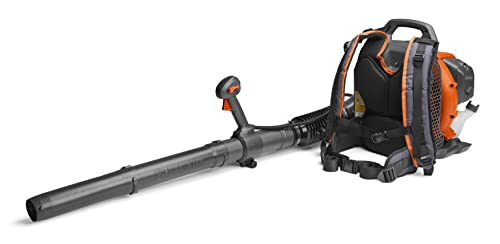
Husqvarna 150BT Backpack Blower

The Husqvarna 150BT is a proven favorite for homeowners who want pro power without the bulk. Its 51cc X-Torq engine delivers up to 765 CFM and 270 MPH, which is more than enough to push wet leaves and pine cones. The harness is well-padded and breathable, and the throttle sits on the tube for easy control. I also like the offset handle that helps resist arm rotation.
What stands out is the 22-newton blowing force, which feels strong in real-world use. The engine starts reliably when maintained and fueled correctly. Noise is well-managed for a gas unit, and vibration is low for its class. For most yards, this is the reliable workhorse that makes fall cleanup feel easy.
Pros:
- Powerful 22N output handles wet debris and heavy leaves
- Comfortable, ergonomic harness reduces back strain
- Tube-mounted throttle with cruise control is intuitive
- Good fuel efficiency for a 2-cycle engine
- Strong parts and dealer support across the US
Cons:
- Louder than battery models during early mornings
- Requires 2-stroke fuel mixing and routine maintenance
- No included flat nozzle in the base kit
My Recommendation
The Husqvarna 150BT is ideal for medium to large suburban lots, mixed debris, and seasonal heavy use. If you want one of the best backpack leaf blowers for home that balances power and comfort, this is a top pick. It is especially good if you often deal with wet leaves, acorns, or needles. The overall value and availability of parts make it an easy long-term choice.
| Best for | Why |
|---|---|
| Medium to large yards | High 765 CFM and 270 MPH clear big areas fast |
| Wet leaves and pine needles | Strong 22N force keeps debris moving |
| Comfort-focused users | Ergonomic harness and low vibration |
Thalorus 52cc Gas Backpack Blower
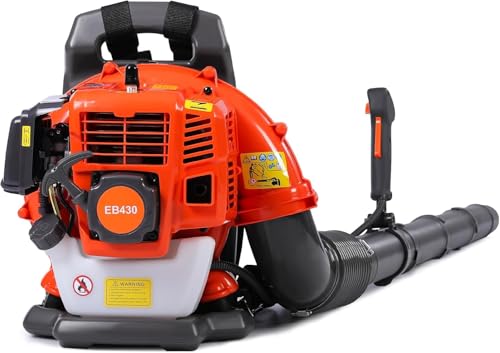
The Thalorus T692 Pro pairs a 52cc engine with a 550 CFM, 230 MPH airflow profile. It is a solid option for homeowners who want gas performance at a friendly price. The harness is designed to cut vibration, and the controls are simple to learn. It has enough punch for dry leaves, clippings, and light debris.
In daily use, the T692 Pro does well on driveways and lawns with moderate leaf load. It is not the strongest unit in this list, but it covers the basics well. For new homeowners or those moving up from a handheld, it is a nice step. It helps you finish chores fast without spending pro money.
Pros:
- Good value for a gas backpack blower
- 230 MPH nozzle speed targets stubborn debris
- Low-vibration harness for better comfort
- Simple controls with steady throttle feel
- Capable of light snow clearing on steps and decks
Cons:
- Lower CFM than premium models
- Not ideal for heavy wet leaves or large lots
- Build feels more “budget” than pro-grade units
My Recommendation
Pick the Thalorus T692 Pro if you have a smaller yard and want a low-cost entry into backpack power. It is one of the best backpack leaf blowers for home users who mainly clear dry leaves, walkways, and light debris. You will get dependable performance for common tasks. It offers strong value for seasonal cleanup.
| Best for | Why |
|---|---|
| Budget-conscious buyers | Good power per dollar |
| Small to mid-size yards | 550 CFM handles routine cleanup |
| New users | Simple controls and manageable power |
Getell 65CC 850 CFM Backpack Blower

Getell’s GT3672 ramps up to 850 CFM with a 65cc, 2-stroke engine. That airflow puts it in heavy-duty territory and makes it a contender for larger properties. It pushes wet leaves, mulch, and even light gravel off driveways. The padded straps and back support help with long sessions.
This unit favors raw airflow over extreme nozzle speed, which is great for moving big piles. It shines in the fall when leaf volume is high. The controls feel straightforward with a responsive trigger. If your yard sees serious debris cycles, this machine is up for it.
Pros:
- Massive 850 CFM for moving large piles quickly
- Strong performance on wet leaves and heavy debris
- Comfortable harness for extended use
- Good value compared to pro-branded alternatives
- Simple operation and fast clearing speed
Cons:
- Louder than smaller units
- May be overkill for small yards
- Higher fuel use due to big engine
My Recommendation
Choose the Getell GT3672 if you want power close to commercial levels without a premium price. It ranks among the best backpack leaf blowers for home with big lawns, trees, or frequent storms. It helps you clear heavy messes fast and reduces overall time outside. It offers strong value where airflow matters most.
| Best for | Why |
|---|---|
| Large properties | 850 CFM moves lots of leaves quickly |
| Wet, heavy debris | High volume keeps piles rolling |
| Time-saving | Faster clearing means shorter sessions |
HTK 63CC Backpack Blower (Orange)

The HTK 63CC blower offers 665 CFM and 205 MPH in a bright, easy-to-spot orange shell. It is built to handle yard debris, leaves, and even light snow. The throttle and cruise control help you set a steady pace. It has the punch that most suburban homes need with room to spare.
On concrete, it clears acorns and chips without fuss. On grass, it corrals scattered piles well. The airflow is balanced, so it does not kick up dust as much as ultra-high-speed tips. It strikes a friendly mix of power, price, and comfort.
Pros:
- Solid 665 CFM for most home jobs
- 205 MPH helps lift stuck debris
- Bright color improves visibility and storage safety
- Cruise control makes long jobs easier
- Capable of light snow removal on walks
Cons:
- Not as strong as 70+ cc units
- Fit and finish can feel basic
- Noise may be high for tight neighborhoods
My Recommendation
The HTK 63CC is a smart match for general home maintenance when you need more than a handheld. It is one of the best backpack leaf blowers for home use if you want power without going full commercial. It handles seasonal peaks and weekly tidy-ups well. It’s a balanced pick for value hunters.
| Best for | Why |
|---|---|
| General yard cleanup | Balanced CFM/MPH for mixed debris |
| Budget-minded power | Strong specs at a fair price |
| Casual snow clearing | Speed helps move powder and slush |
Getell 63CC Pro Backpack Blower

Getell’s GB657 PRO targets homeowners who want pro ergonomics and steady power. The 63cc engine and 665 CFM airflow deliver confident clearing on lawns and hardscapes. The comfort-focused design helps reduce shoulder pressure and hot spots. If you run a blower for longer periods, those touches matter.
It has a clean control layout. The machine offers dependable starting and steady idle once tuned. In the field, it pushes back against wet layers without bogging. It is a step-up choice for efficiency and comfort.
Pros:
- Pro-style harness improves long-session comfort
- 665 CFM clears a variety of debris
- Stable throttle and smooth response
- Good power-to-price balance
- Handles fall and spring cleanup well
Cons:
- Not the highest volume for very large lots
- Two-stroke upkeep required
- Accessories may be limited versus big brands
My Recommendation
This is a great pick if you want comfort without going to top-tier pricing. It belongs on any shortlist of the best backpack leaf blowers for home with frequent, longer cleanups. It suits users who notice strap quality and balance. It delivers steady, repeatable results each weekend.
| Best for | Why |
|---|---|
| Longer sessions | Comfort harness reduces fatigue |
| Mixed debris | 665 CFM handles leaves, needles, and clippings |
| Value seekers | Pro feel without pro cost |
WORX Nitro WG572 80V Backpack Blower

The WORX Nitro WG572 is a battery-powered backpack blower that makes gas-free cleanup easy. It pushes up to 800 CFM and 150 MPH, which is strong for a cordless unit. The kit includes four batteries and the Basecamp charger, so you can rotate packs and work longer. Variable air control lets you tailor airflow for leaves or dust.
For suburban neighborhoods, it keeps noise down and starts with a button. There is no fuel mixing and less routine maintenance. If you maintain your yard weekly, the speed of setup is a big win. It’s an eco-friendlier solution with serious performance.
Pros:
- Strong 800 CFM for a cordless backpack
- Includes four batteries and Basecamp charger
- Quieter operation than gas
- Instant start, no fumes, low maintenance
- Variable airflow for better control
Cons:
- Run time depends on speed and conditions
- Heavier with multiple batteries onboard
- Lower peak speed than big gas units
My Recommendation
If you want clean, quiet power without cords or fuel, get the WG572. It’s one of the best backpack leaf blowers for home in noise-sensitive areas and HOAs. It saves time with instant startup and minimal care. The included charging system adds real value for busy schedules.
| Best for | Why |
|---|---|
| Noise-sensitive neighborhoods | Quieter than gas units |
| Weekly maintenance | Instant start and low upkeep |
| Light to moderate debris | 800 CFM handles routine cleanup |
PROYAMA 72CC 880 CFM Backpack Blower

With a 72cc engine and up to 880 CFM, the PROYAMA is built for heavy lifting. It pairs high volume with a 275 MPH top speed in a 2-cycle design. The ergonomic frame and cruise control help during long pushes. It comes with two nozzle options for different tasks.
If you face thick piles in the fall, this unit plows through. It also aids in light snow removal and post-storm cleanup. While it is a big engine, the harness distributes weight well. It feels like commercial power at a homeowner price.
Pros:
- Huge 880 CFM and 275 MPH for tough jobs
- Two nozzle styles for targeted control
- Comfort features help during long sessions
- Strong value for high-power needs
- Suitable for light snow and storm debris
Cons:
- Loud and powerful—may be too much for small yards
- Higher fuel use and emissions than smaller units
- Requires careful handling at full power
My Recommendation
Pick the PROYAMA if you want near-commercial strength for a big property. It earns a spot among the best backpack leaf blowers for home owners with lots of trees and heavy fall layers. It is fast and forceful, ideal for weekend warriors. If power is your priority, this one delivers.
| Best for | Why |
|---|---|
| Heavy leaf loads | 880 CFM and 275 MPH cut through piles |
| Large properties | High volume reduces total work time |
| Post-storm cleanup | Moves sticks, cones, and wet debris |
Getell 80cc 900 CFM Backpack Blower

The Getell 853 EZ packs an 80cc engine and a massive 900 CFM airflow. It is designed for heavy-duty leaf and snow work and fits homes that need pro-level clearing. The 2-stroke engine moves serious air and keeps piles from reforming behind you. It is a beast for long driveways and tree-heavy lots.
Despite the power, the layout is user-friendly with clear controls. The chute and nozzle balance volume with manageable direction. If you want to reduce your total time outside by brute force, this is the ticket. It is a powerhouse that shrinks big tasks fast.
Pros:
- Massive 900 CFM for the toughest jobs
- Strong performance on wet leaves and light snow
- Simple controls for a big-engine unit
- Great for long driveways and acreage
- Fast clearing saves time and energy
Cons:
- Very loud; not ideal for close neighbors
- High fuel consumption
- Overkill for small to mid-size yards
My Recommendation
If you want maximum airflow, this is hard to beat. It stands tall among the best backpack leaf blowers for home users who need commercial muscle without hiring help. It is a top choice for acreage and heavy seasonal drops. Plan for ear protection and enjoy the speed.
| Best for | Why |
|---|---|
| Acreage and long drives | 900 CFM clears large areas fast |
| Heavy, wet leaves | High volume keeps piles moving |
| Time-critical cleanups | Reduces total work time |
Greenworks 80V 750 CFM Backpack Blower

This 80V Greenworks model delivers up to 750 CFM and 180 MPH with a brushless motor. It includes a 4.0Ah battery and charger, making it a strong entry kit. Variable speed helps you lift leaves without blowing out mulch beds. It is one of the friendliest cordless options for large properties.
With no gas or fumes, you can work at dawn without the smell or mess. It dislodges gravel from driveways and tackles packed snow on walkways when needed. The system also ties into the broader 80V tool family. If you already own Greenworks tools, this is a smart add-on.
Pros:
- Strong 750 CFM cordless performance
- Brushless motor for efficiency and longevity
- Variable speed for mulch and delicate areas
- Lower noise and no emissions on site
- Compatible with the 80V Greenworks platform
Cons:
- Run time varies with speed and battery size
- Not as forceful as big gas models
- Battery replacements can be costly
My Recommendation
If you want a cordless solution that can still handle larger spaces, go with this Greenworks 80V. It is among the best backpack leaf blowers for home where quiet operation and convenience matter. It plays well with mulch beds and landscape edges. It’s a smart, clean, and scalable option.
| Best for | Why |
|---|---|
| Quiet neighborhoods | Lower noise than gas models |
| Large yards with landscaping | Variable speed protects mulch |
| Battery ecosystems | Works with other 80V Greenworks tools |
Greenworks 80V 610 CFM Backpack Blower
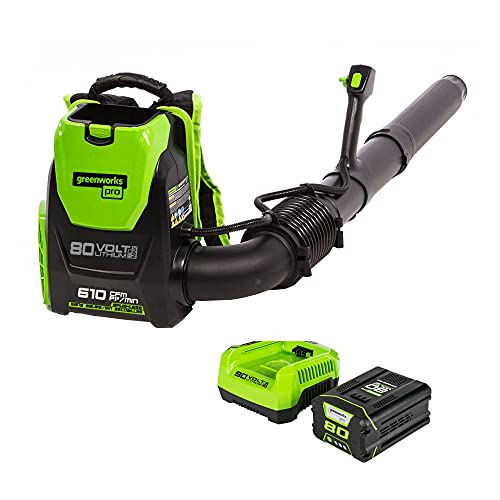
This Greenworks 80V backpack blower puts out 610 CFM at up to 180 MPH. It includes a 2.5Ah battery and a rapid charger, so you can get to work fast. The brushless motor is efficient and needs little maintenance. For weekly yard tasks, it has everything you need to ditch gas.
It is a lighter-duty option than the 750 CFM model, but it’s great for walkways, patios, and small lawns. It is also a good fit if you already have 80V batteries. The throttle is responsive, and the airflow is easy to control around garden beds. It gives you clean, quiet power in a tidy package.
Pros:
- Good 610 CFM performance for small to mid yards
- Rapid charger reduces downtime
- Brushless motor boosts reliability
- Low noise and zero on-site emissions
- Part of the Greenworks 80V lineup
Cons:
- Lower output than higher-tier models
- Run time drops at max power
- Not ideal for heavy wet leaf layers
My Recommendation
Go with this model if you want a lighter, quieter blower for weekly tasks. It is still one of the best backpack leaf blowers for home where convenience and low noise matter more than brute force. It suits patios, decks, and small yards well. It’s a smart starter kit for cordless users.
| Best for | Why |
|---|---|
| Small to medium yards | 610 CFM is ample for routine work |
| Quick cleanups | Rapid charger and easy start |
| Battery platform users | Shares 80V batteries with other tools |
FAQs Of best backpack leaf blowers for home
Do I need gas or battery for a home backpack blower?
If you need max power for big yards or wet leaves, go gas. For quiet, low-maintenance yard care, go battery. Many of the best backpack leaf blowers for home now include high-output cordless options.
What do CFM and MPH mean, and which matters more?
CFM measures air volume. MPH measures air speed. For big piles, CFM often matters more. For stuck debris, MPH helps. The best backpack leaf blowers for home balance both.
How loud are backpack leaf blowers?
Gas models are louder. Battery models run quieter. Always use hearing protection. Many of the best backpack leaf blowers for home meet neighborhood-friendly noise guidelines when used sensibly.
Can backpack blowers move wet leaves and light snow?
Yes, if power is adequate. Higher CFM and MPH help with wet leaves and powdery snow. The best backpack leaf blowers for home in this list can handle both within reason.
What maintenance do backpack blowers need?
Gas units need fuel mix, air filter checks, and plug changes. Battery units need battery care and fan cleaning. The best backpack leaf blowers for home are easy to maintain if you follow the manual.
Final Verdict: Which Should You Buy?
If you want the most balanced pick, the Husqvarna 150BT hits power, comfort, and reliability. For cordless convenience, the WORX Nitro WG572 or Greenworks 80V (750 CFM) are the best backpack leaf blowers for home with low noise.
Need raw power for big yards? The Getell 80cc or PROYAMA 72CC blast through heavy, wet leaves fast. Any of these choices will make yard work easier and faster.