Are Craftsman Riding Mowers Good: 2026 Buyer’s Guide
If a riding mower is on your shopping list this year, the red Craftsman lineup is hard to miss. It dominates the center aisle at Lowe's, carries a name with decades of household recognition, and usually undercuts the premium brands by a meaningful margin. The real question isn't whether Craftsman is popular. It's whether one of these machines is the right fit for your lawn, your experience level, and your budget.
The honest answer for most suburban homeowners is yes—provided you choose the right model, understand the warranty, and keep up with routine maintenance. The details are where the good buys and the bad buys separate. This guide walks through construction, cut quality, reliability, running costs, and brand comparisons so you can decide with confidence. You can also read our guide on how to care for lawn during dry season.
Where Craftsman Fits in the Riding Mower Market
Craftsman occupies the value-to-midrange tier of riding mowers. These are not commercial-grade machines, but they are not disposable bargain-bin specials either. They are built for the homeowner who wants consistent cutting performance without paying a dealer premium.
The brand's history can be confusing. Craftsman outdoor power equipment is now owned by Stanley Black & Decker, and Lowe's serves as the main retail partner. Since that transition, the mowers have been designed for big-box distribution rather than dealer showrooms. That means you get a consumer-grade product with easy access to parts and a straightforward warranty, but you do not get the white-glove dealership experience that John Deere or Kubota buyers often take for granted. You can also read our guide on how long do electric lawn mower batteries last.
Knowing that context changes expectations. You are buying a practical residential machine backed by a large retail ecosystem, not a boutique mower with hand-assembled components. For most lawns, that trade-off is reasonable.

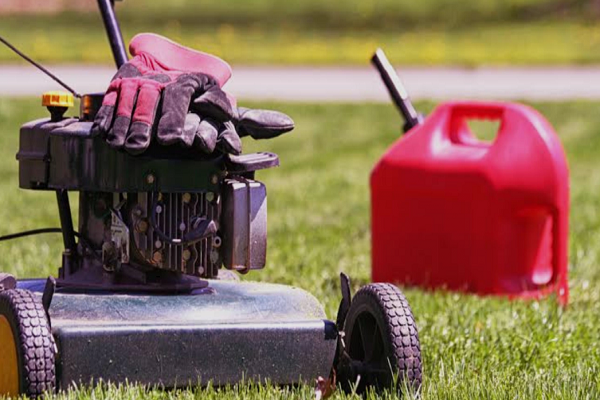
Craftsman riders are designed around typical residential cutting conditions.
Image source: allmachines.com
The Current Craftsman Lineup at a Glance
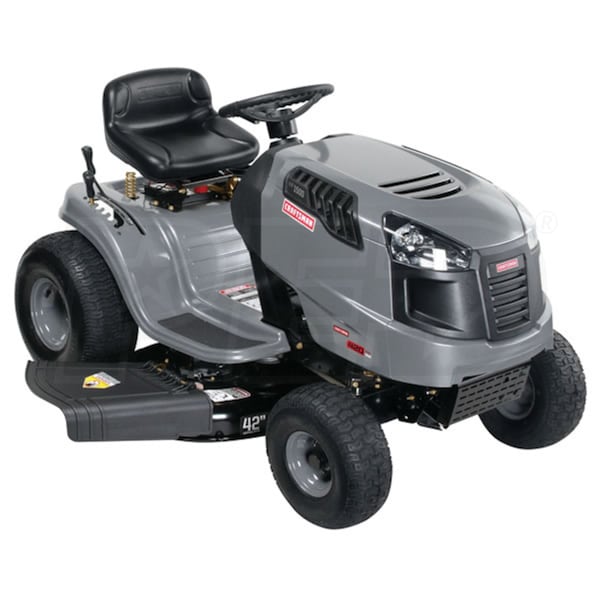
Exact model names change from season to season, but the categories stay consistent. You will find three main types of Craftsman riders:
| Mower type | Best for | Deck widths | Transmission |
|---|---|---|---|
| Lawn tractor | Half-acre to two-acre lawns, open areas, light towing | 42 to 54 inches | Manual gear on entry models, hydrostatic on mid-tier and above |
| Zero-turn mower | One to three or more acres, tight obstacles, speed | 42 to 54 inches | Hydrostatic with independent wheel drives |
| Rear-engine rider | Small lots, tight storage spaces, flat ground | Smaller decks | Compact hydrostatic or gear drive |
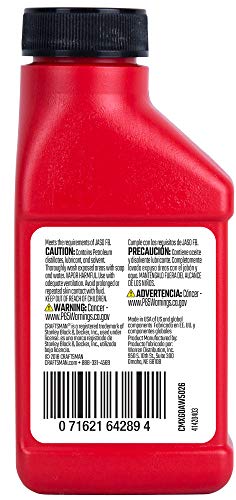
Most models use engines from Briggs & Stratton and Kohler. Both have long histories in residential outdoor power equipment, and both manufacturers provide their own warranty coverage. Transmissions range from simple manual gearboxes to smooth hydrostatic drives, which makes the transmission choice one of the most important decisions in the buying process. You can also read our guide on what gas is best for lawn mower.
Build Quality and Design: Honest Expectations
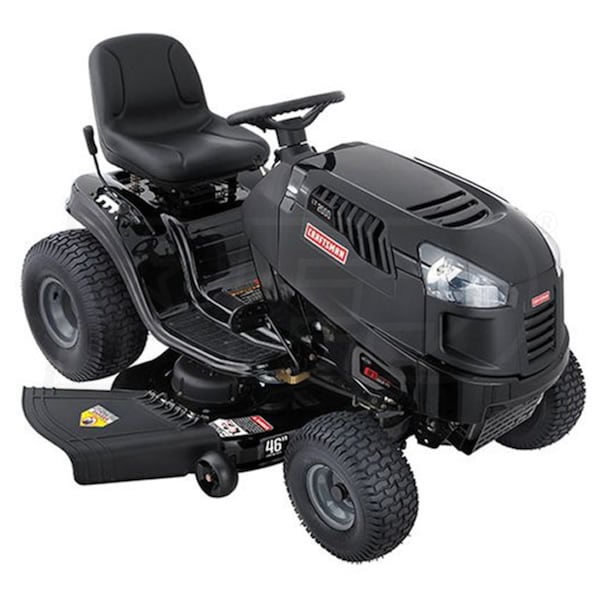
A common mistake is expecting farm-grade construction from a tractor priced below $4,000. Craftsman uses stamped steel decks and welded frames, and that combination is genuinely adequate for normal residential use. It handles weekly mowing, gentle slopes, and the occasional utility cart without flexing or premature fatigue.
What you will not get is the heavier fabricated deck and reinforced axle found on higher-priced brands. If your property has rocky ground, deep ruts, or you routinely mow rough fields, the lighter construction will show wear sooner. On a clean, well-drained suburban lawn, the difference is minor. You can also read our guide on are troy bilt lawn mowers good.
Fit and finish are consistent. Panels line up, controls are placed logically, and the paint holds up reasonably well when the mower is stored indoors. The real weak point is the stamped deck itself. Over a decade of use, it is more prone to denting and corrosion than a welded alternative. You can offset that by cleaning the underside regularly and storing the mower under cover whenever possible.
The stamped steel construction on most Craftsman models prioritizes affordability over extreme durability.
Image source: powerequipmentdirect.com
Performance: Cutting, Power, and Handling
Craftsman riders perform well when they are set up correctly. Deck level, blade sharpness, and mowing habits matter more than the brand name on the hood. You can also read our guide on best sharpener for garden tools.
Cut Quality
With sharp blades and a properly leveled deck, a Craftsman rider produces a clean, even cut. The airflow through the stamped deck is respectable for this class, though thick, damp grass can cause clumping if you let the lawn get too tall between cuts. The most common mistake is dropping the deck too low. Running at a moderate cutting height and mowing more frequently gives better results and puts less strain on the engine and drive system.
Engine and Power Delivery
Briggs & Stratton and Kohler engines in the 17 to 26 horsepower range provide ample power for residential conditions. Hydrostatic transmissions on mid-tier and upper models allow smooth, infinitely variable speed control, which is a real convenience when you are navigating around trees, flower beds, and tight corners. You can also read our guide on best fuel stabilizer for lawn mowers.
Entry models with manual gear transmissions work fine on flat, open yards. On slopes, however, they require more clutch work and can be tiring over longer sessions. If your property has any significant grade, make hydrostatic a priority.
Handling and Traction
Steering effort is light, and the turning radius on lawn tractors is acceptable for the category. Traction is fine on dry, level ground. On wet grass or moderate slopes, engage the differential lock if your model has one and take your time. You can also read our guide on trufuel for lawn mower.
Zero-turn models handle completely differently. They are dramatically faster and far more maneuverable around landscape obstacles. The twin levers take an hour or two to feel natural, but that learning curve pays off quickly on larger properties.
Bagging and Mulching
Bagging performance depends heavily on blade choice. The standard blades that ship with the mower are a compromise. Installing matched high-lift blades makes a noticeable difference in how well clippings move into the bagger, especially during heavy leaf pickup in the fall.
Mulching works consistently if you keep the blades sharp and slow down in tall growth. A dedicated mulching blade kit improves shredding action and returns finer clippings to the lawn.
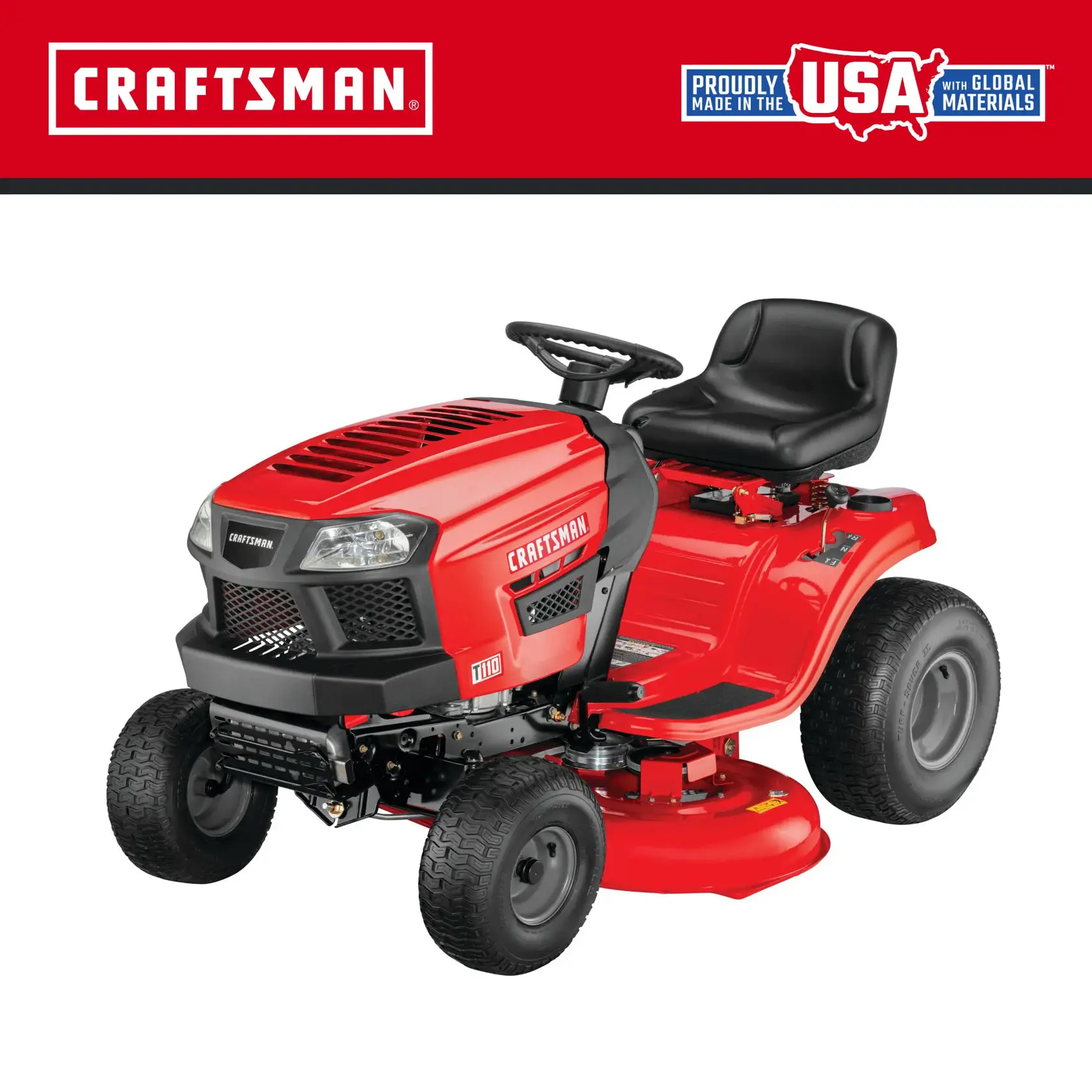
Hydrostatic transmissions provide smooth speed changes without shifting or clutch work.
Image source: craftsman.com
Reliability and Maintenance: What Owners Actually Experience
Reliability is where Craftsman earns much of its reputation. The engines are proven workhorses, and the rest of the machine is simple enough for most owners to maintain themselves.
The basic service routine is straightforward:
- Check the oil before each use during mowing season.
- Change the oil and filter annually or every 50 to 100 hours, whichever comes first.
- Sharpen or replace blades two to four times per season, depending on cutting frequency and debris.
- Clean the underside of the deck after every few mows to prevent rust and grass buildup.
- Use fresh fuel treated with a winter fuel treatment, and run the carburetor dry before off-season storage.
Use the right oil weight for your engine and climate, and you will avoid most cold-start complaints. Many hydrostatic transmissions on Craftsman riders are sealed units. They require no fluid changes, but they also cannot be serviced when problems occur. Avoid towing heavy trailers or using the mower as a utility vehicle beyond its rated capacity. That is the most common cause of premature transmission failure.
With basic care, a Craftsman rider commonly reaches seven to ten years before major repairs are needed. Neglected, they develop the same issues as any mower: gummed carburetors, worn belts, and seized spindles. The difference is that most repairs are DIY-friendly, with accessible parts diagrams and plenty of video guidance for common jobs.
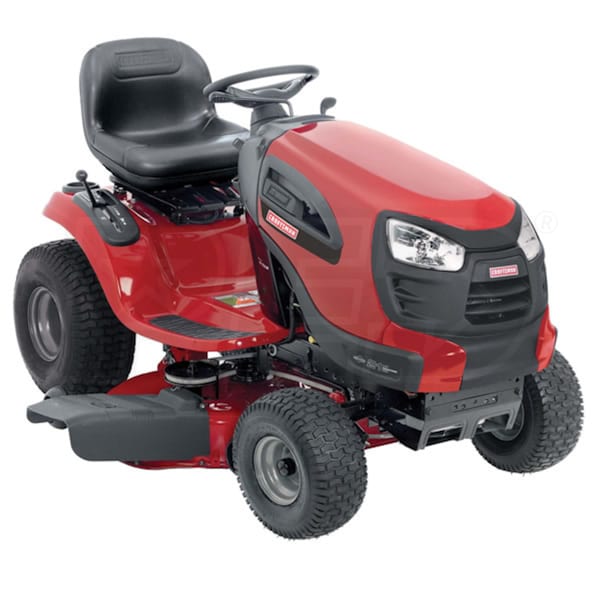
Accessible service points and common, affordable parts make at-home maintenance practical.
Image source: powerequipmentdirect.com
Comfort, Ergonomics, and Features
Craftsman has improved operator comfort across recent generations. High-back seats with armrests are standard on most mid-tier and upper models, and they are genuinely comfortable for sessions up to two hours. Suspension seats are available on some zero-turn models and are worth the upgrade if you mow for long stretches or have rough terrain.
Standard features across much of the current lineup include:
- LED headlights for low-light mowing
- Deck wash ports for quick cleanouts
- Cruise control on hydrostatic models to reduce fatigue
- Hour meters to track service intervals
- Puncture-resistant tires on select models
- Cup holders and storage pockets on many mid-tier and premium models
Noise and vibration are typical for the class: nothing offensive, but nothing luxury-grade. If you routinely mow more than two hours at a stretch, a zero-turn with a suspension seat is a meaningful upgrade. It costs more, but it reduces fatigue in a way that a standard tractor seat cannot match.

Comfort upgrades such as armrests and padded high-back seats are common on mid-tier Craftsman models.
Image source: lowes.com
Value for Money and Total Cost of Ownership
Price is where Craftsman shines most. Lawn tractors typically run from about $2,000 to $3,500, and zero-turns range from roughly $3,000 to $5,000 depending on deck size and features. That is several hundred to more than a thousand dollars less than comparable machines from John Deere or Kubota.
The lower purchase price is supported by affordable parts. Blades, belts, oil filters, and air filters are cheaper than equivalent parts for premium brands, and most are available in-store rather than requiring a dealer order.
| Expense | Typical range |
|---|---|
| Lawn tractor purchase price | $2,000 – $3,500 |
| Zero-turn purchase price | $3,000 – $5,000 |
| Yearly consumables (blades, oil, filters, belts) | $50 – $150 |
| Common repair parts (belts, spindles, pulleys) | $20 – $60 per item |
Resale value is respectable but not stellar. Craftsman holds its value better than off-brand machines, but it does not command the used-market premium that John Deere or Kubota achieves. If you keep the mower for seven to ten years, that is less of a concern than the purchase price and the parts savings you will enjoy along the way.
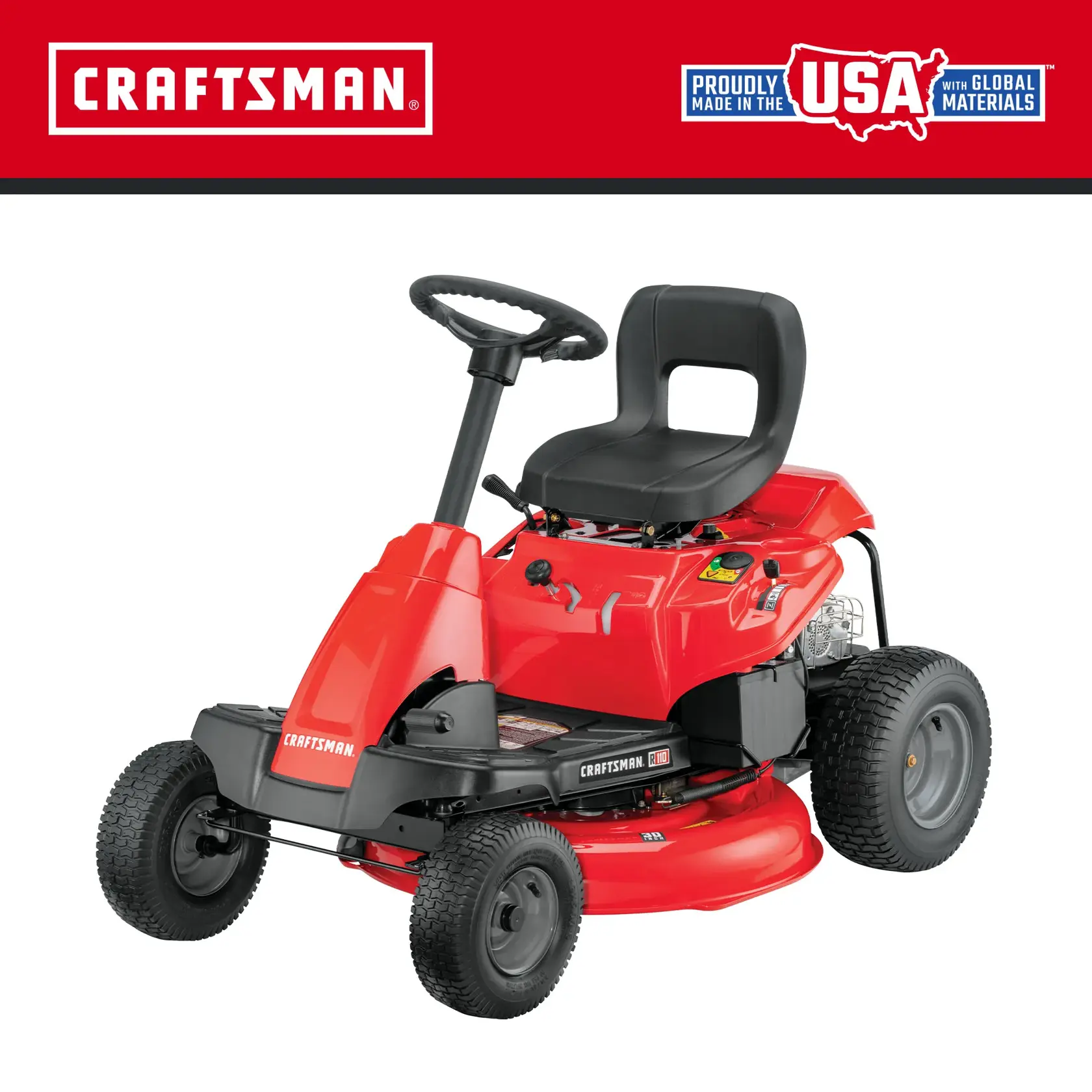
Reasonable pricing and low-cost parts make Craftsman a strong value for homeowners.
Image source: craftsman.com
Safety and Ease of Use
Craftsman builds standard safety features into every current model: operator presence switches, blade engagement interlocks, and automatic shutoffs when you leave the seat. These systems work as intended and should never be bypassed.
For beginners, these mowers are genuinely easy to learn. The controls are intuitive, the manuals are written in plain language, and the learning curve is gentle. New owners should practice in an open area before navigating around trees, fences, or flower beds.
Zero-turn models are the exception. The independent wheel controls feel unnatural at first, and most operators need a couple of sessions to feel confident. Start at low speed in an open space, and do not attempt tight maneuvers until you are comfortable with the levers.
Always mow across gentle slopes rather than straight up and down, and use extra caution on wet grass. Craftsman's safety systems help, but correct operating technique matters more.
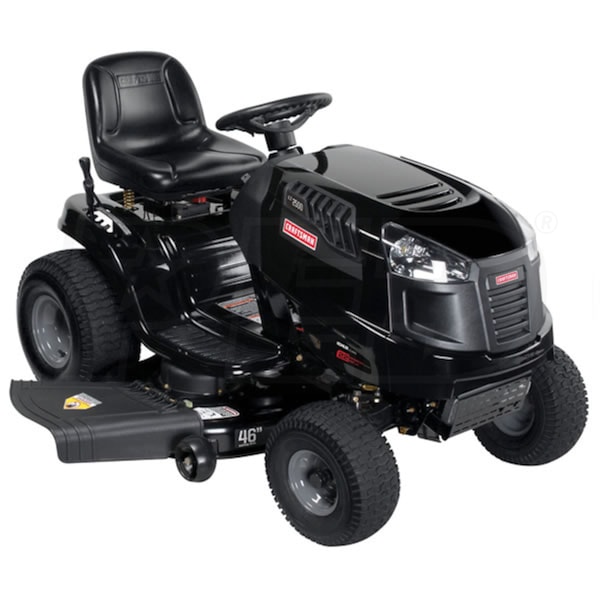
Straightforward controls and operator-presence safety features make Craftsman riders approachable.
Image source: powerequipmentdirect.com
How Craftsman Compares to Other Brands
The decision rarely comes down to Craftsman alone. Most shoppers compare it with John Deere, Husqvarna, Cub Cadet, or Troy-Bilt. Here is how the value story holds up.
Craftsman vs. John Deere
John Deere charges a premium for its dealer network, brand heritage, and fabricated deck options on higher models. The 100-series Deere tractors compete directly with Craftsman's mid-range, and Deere generally offers better suspension, smoother hydrostatic engagement, and stronger long-term resale. You will pay $300 to $800 more for comparable features, and servicing often requires a dealer for anything beyond basic maintenance.
Craftsman wins on upfront price, parts accessibility, and DIY-friendliness. If you are comfortable turning a wrench, that $500 difference stays in your pocket.
Craftsman vs. Husqvarna
Husqvarna competes closely on features and deck quality. Both brands use similar engine options and hydrostatic systems, often with Husqvarna priced slightly higher. Some Husqvarna models use cast-iron front axles, which are genuinely more durable than Craftsman's stamped steel options.
On hilly terrain or with heavier use, Husqvarna has a modest durability edge. Craftsman counters with wider retail availability and lower running costs.
Craftsman vs. Cub Cadet
Cub Cadet is Craftsman's most direct rival in the value-to-midrange segment. Both brands offer comparable engines, transmissions, and deck quality at similar prices. Cub Cadet's XT series tractors are well-reviewed, and Cub Cadet occasionally edges ahead with better deck fabrication on specific models.
The choice often comes down to brand preference, local availability, and which one feels more comfortable when you sit on it.
Craftsman vs. Troy-Bilt
Troy-Bilt is positioned slightly below Craftsman on price and typically uses smaller decks and simpler transmissions. For very small yards, Troy-Bilt offers good value. For anything approaching a full acre, Craftsman's stronger frame and larger deck options make it the better choice.
If you are also looking at the budget tier, a side-by-side comparison of low-cost riders can help you decide where the real savings are.
The bottom line: against premium brands, Craftsman trades some durability and dealer support for significant savings. Against budget brands, it delivers more capability and better build quality. For the value-focused buyer, that trade-off usually favors Craftsman.
Which Craftsman Model Should You Choose?
Match the mower to your property first. Deck width and transmission come second.
Match the Mower to the Property
- Flat lots under 1 acre: A 42-inch lawn tractor is nimble and affordable. Look for hydrostatic transmission so you are not constantly working a clutch.
- 1 to 2 acres with trees and beds: A 46- to 50-inch tractor balances cutting speed and agility. The wider deck reduces mowing time, and the longer wheelbase improves ride quality.
- Over 2 acres or tight obstacle courses: A Craftsman zero-turn is the right call. The speed advantage is significant, and maneuverability around landscaping is dramatically better.
- Heavy leaf pickup: Plan for a compatible bagger kit and install high-lift blades. A 54-inch deck paired with a twin-bagger setup covers ground efficiently in the fall.
- Rough or sloping terrain: Choose a model with larger rear tires for better traction and an engine with enough power for your steepest slopes.
Deck Size and Mowing Time
| Deck width | Best for | Approx. mowing time for 1 acre |
|---|---|---|
| 42 inches | Small lots, tight storage, maneuverability | 60–70 minutes |
| 46–50 inches | Medium yards, balanced speed and agility | 45–55 minutes |
| 54 inches | Large open lawns, maximum speed | 35–45 minutes |
Test Before You Buy
Before you commit, sit on the mower in the store. Check that your knees are not cramped, the steering wheel feels natural, and you can reach every control without stretching. Comfort is personal, and a spec sheet cannot tell you whether the seat fits your body. Set aside ten minutes to do this on the actual model—it is the easiest way to avoid a mower that feels wrong on day one.
Common Issues and How to Avoid Them
Every mower line has predictable trouble spots. Preventative attention resolves most of them before they become expensive repairs.
Deck Belt Wear
This is the most common repair on Craftsman riders. Check pulleys for debris, keep the deck clean, and replace idler arms if they feel rough when spun. A worn belt slips and squeals before breaking, so replace it at the first sign of trouble.
Uneven Cuts
Uneven cutting is usually caused by an unleveled deck or dull blades. Level the deck twice per season, once at the start and once mid-summer. Mowing slower in thick grass also prevents scalping.
Hard Starting
Ethanol-blended fuel is the culprit in most hard-starting cases. If your local station offers non-ethanol fuel options, switch to those for the mower. A fuel-system cleaner can help remove deposits before they harden into varnish.
If the carburetor is already gummed, the process for cleaning a gummed carburetor is straightforward and well-documented for small engines.
Battery Drain
If the mower sits for weeks, a parasitic drain can flatten the battery. Use a battery maintainer during winter storage and clean the terminals regularly to prevent corrosion.
Vibration
A bent or unbalanced blade is the usual cause. Inspect blades after striking any obstacle, and replace damaged blades rather than trying to straighten them.
Deck Corrosion
Leaving wet grass clippings caked under the deck accelerates rust. Use the deck wash port after each mowing session, especially in humid climates.
Buying Tips, Warranty, and Support
When to Buy
End-of-season clearance, typically September through November, yields the best discounts—often 15 to 25 percent off spring pricing. New model-year inventory arrives in late winter, so you can also find aggressive pricing on outgoing models in December and January.
Warranty Reality
Craftsman offers limited warranties that vary by component: typically three years on the mower frame and deck, with separate coverage terms on the engine from Briggs & Stratton or Kohler. Check the current warranty terms on the Craftsman site before you compare prices. The engine warranty is handled by the engine manufacturer, which is an established process, but commercial use, lack of maintenance, and aftermarket modifications can void coverage.
Service Network
Service happens through authorized centers rather than a deep dealer network. In practice, most owners either perform their own maintenance or take the mower to a local small-engine shop. That works well for routine service. Complex repairs may have longer wait times than at a dedicated brand dealership, so factor that in if you have no interest in DIY work.
What to Verify Before Buying
- Engine brand and displacement, to make sure it suits your yard size
- Transmission type, with hydrostatic preferred for anything beyond flat open ground
- Deck construction, stamped steel for most lawns and fabricated steel for rough use
- Attachment availability, to confirm the bagger, mulching kit, and tow-behind options exist for your model
Frequently Asked Questions
Are Craftsman riding mowers reliable over time?
With routine maintenance, most Craftsman riders run well for 7 to 10 years before major repairs are needed. The Briggs & Stratton and Kohler engines are proven for residential duty, and the deck, frame, and transmission are adequately built for typical lawn conditions. The key variable is consistent maintenance.
Do Craftsman riding mowers cut as well as premium brands?
Cut quality is comparable when the blades are sharp and the deck is leveled. Premium brands may hold a slight edge in thick, wet grass because of better deck airflow, but the practical difference on a typical home lawn is minimal.
Are Craftsman zero-turn mowers worth the extra cost?
For yards over two acres or properties with many trees and flower beds, yes. The speed and maneuverability reduce mowing time dramatically. For smaller, open lawns, a standard tractor is more economical and easier to store.
How often should I service a Craftsman riding mower?
Change the oil and filter at least once per season or every 50 to 100 hours, whichever comes first. Sharpen blades two to four times per season, check tire pressure monthly, and inspect belts at the start of each season.
Can I bag and mulch with Craftsman riders?
Yes. Bagging kits are available for most models, and adding high-lift blades improves collection significantly. For mulching, a dedicated mulching blade set produces finer clippings and better nutrient return. Switching blades takes about fifteen minutes.
Are Craftsman parts easy to find?
Yes. Belts, blades, filters, and batteries are stocked at Lowe's, many hardware stores, and online retailers. You rarely wait days for common parts, which is a genuine advantage over brands with limited dealer networks.
Verdict: Are Craftsman Riding Mowers Worth It in 2026?
Craftsman riding mowers deliver strong value, simple operation, and accessible parts for homeowners who want dependable performance without a premium price tag. They shine on small to mid-size lawns, handle weekly cutting well, and manage light utility duties like pulling a yard cart without complaint.
They are not commercial-grade machines. If you need dealer-level support, heavy-duty durability for rough terrain, or plan to log serious hours year-round, a premium brand like John Deere or Kubota justifies its higher cost. For the majority of homeowners with a flat-to-gentle acre or two and a sensible maintenance habit, a Craftsman rider is a genuinely good investment.
Choose by yard size and terrain first, then deck width and transmission type. Keep the blades sharp, use fresh fuel, and follow the service schedule. Do that, and your Craftsman will deliver years of reliable, low-stress mowing.