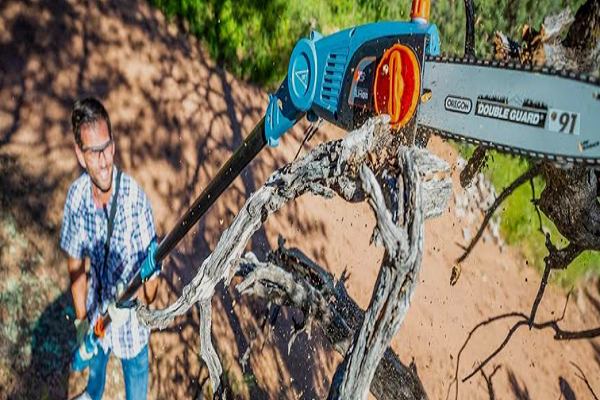
How Does A Chainsaw Work: Clear Guide For Beginners

The complete chainsaw system: engine, bar, chain, and safety components working together to cut wood.
A chainsaw looks intimidating—a screaming engine wrapped around a blade made of moving teeth. But once you understand the basic system, it's remarkably straightforward. Every chainsaw, whether it burns fuel or runs on a battery, does the same thing: it converts engine power into rapid chain movement around a steel guide bar. Sharp cutters on that chain shave away wood fibers one tiny bite at a time.
This guide breaks down exactly how a chainsaw works, piece by piece. You'll learn the parts, the physics of cutting, how to maintain it properly, and how to stay safe. By the end, you'll not only know how your saw operates—you'll know why it behaves the way it does in the cut. You can also read our guide on how to start a chainsaw safely.
The Core Principle: Power Becomes Chain Speed
At its most basic level, a chainsaw works through a simple chain of events:
- Power source (gas engine or electric motor) creates rotational force.
- Centrifugal clutch connects that power to the drive system when you press the throttle.
- Drive sprocket pulls the chain around the guide bar.
- Guide bar supports and directs the chain in a fixed cutting plane.
- Chain cutters bite into wood as they travel around the bar at high speed.
The genius of this design is that it creates a continuous cutting loop. Unlike a handsaw that only cuts on the push stroke, a chainsaw cuts on every part of its rotation. That's why it's so much faster—dozens of cutting teeth pass through the wood every second.
The chain can travel at speeds exceeding 60 feet per second in professional saws. Even a homeowner model moves fast enough to make short work of logs that would take a hand saw half an hour to cut.
Chainsaw Parts and What They Do
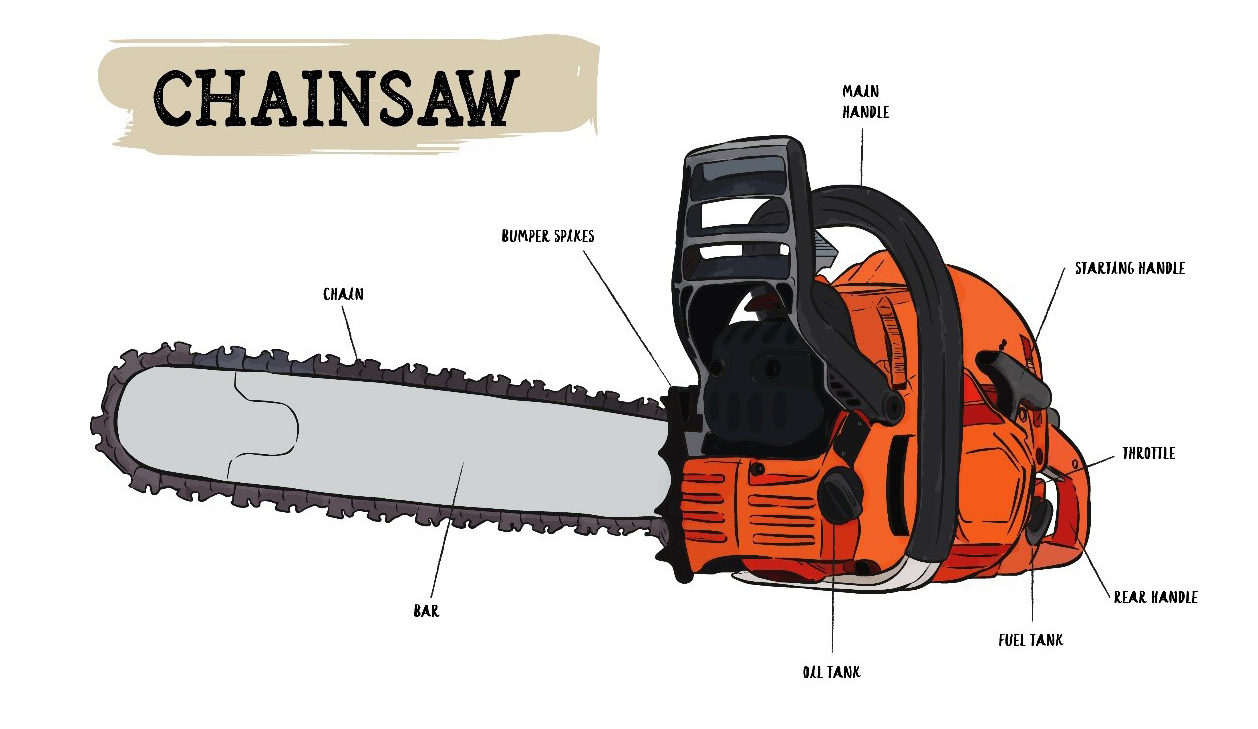
Every chainsaw, regardless of brand or power source, shares the same core anatomy. Here's what each part does:
| Part | Function |
|---|---|
| Powerhead | The main housing that holds the engine or motor and all controls |
| Engine/Motor | Gas saws use two-stroke engines; electric and battery saws use brushless motors |
| Centrifugal clutch | Disengages the chain at idle, engages as RPMs rise |
| Drive sprocket | Toothed wheel that pulls the chain around the bar |
| Guide bar | Steel bar with a grooved rail that supports the chain |
| Saw chain | Loop of cutters, tie straps, and drive links |
| Chain brake | Safety mechanism that stops the chain in under a second |
| Throttle trigger + lockout | Controls engine speed; the lockout prevents accidental acceleration |
| Automatic oiler | Pumps bar oil to lubricate chain and bar |
| Fuel system | Tank, carburetor, and lines (gas saws only) |
| Air filter | Keeps dust and debris out of the engine |
| Anti-vibration mounts | Springs or rubber bushings that reduce handle vibration |
| Muffler with spark arrester | Reduces noise and prevents hot sparks from escaping |

Every part has a specific job—from the clutch that lets the saw idle safely to the sprocket that drives the chain.
The chain itself is more complex than it looks. It's made of alternating link types:
- Drive links sit in the bar groove and engage with the sprocket to pull the chain along.
- Cutters have an L-shaped tooth with a sharp top plate and side plate.
- Depth gauges (rakers) sit just ahead of each cutter and control how deep the tooth bites.
- Tie straps hold everything together.
Understanding these parts makes maintenance and troubleshooting far easier. When something goes wrong, you'll know exactly where to look.
Power Sources: Gas, Corded, and Battery
The cutting system is the same across all chainsaws. What differs is how the sprocket gets its power.
Gas Chainsaws
Gas saws remain the top choice for heavy work—felling large trees, milling lumber, and all-day use. They offer the highest power-to-weight ratio and the longest run time. A typical 50cc saw produces around 3-4 horsepower and can run all day on a few tanks of fuel.
Fuel mix matters. Most modern gas saws run a 50:1 ratio of gasoline to two-stroke oil. Using fresh fuel and quality oil prevents hard starts and carbon buildup. If you're unsure about mixing, this fuel mixing guidance applies to chainsaws as well as leaf blowers.
Trade-offs: Gas saws need regular maintenance—air filter cleaning, spark plug replacement, carburetor tuning. They're loud, produce emissions, and require proper storage over winter. But nothing matches their raw cutting power.
Corded Electric Chainsaws
Corded electric saws offer consistent power without fuel mixing or battery anxiety. They're lightweight, quiet, and start instantly. For occasional use around the property—cutting firewood, trimming limbs, clearing storm damage—they're a practical choice.
The catch: Your range is limited by the extension cord. You'll need a heavy-duty outdoor cord, and you must be careful not to run it over with the saw. Corded saws also generally have less power than gas, though they're fine for bars up to 16 inches.
Battery Chainsaws
Battery technology has improved dramatically. Modern high-voltage saws—in the 36V to 80V range—handle most homeowner tasks easily. They're clean, quiet, and require almost no maintenance beyond chain care.
Run time depends on the battery capacity and how hard you push the saw. A 5Ah battery on a 16-inch bar might buck a cord of firewood on a single charge with reasonable cutting technique. For bigger jobs, you'll want spare batteries. Check how long battery-powered yard equipment lasts to set realistic expectations.
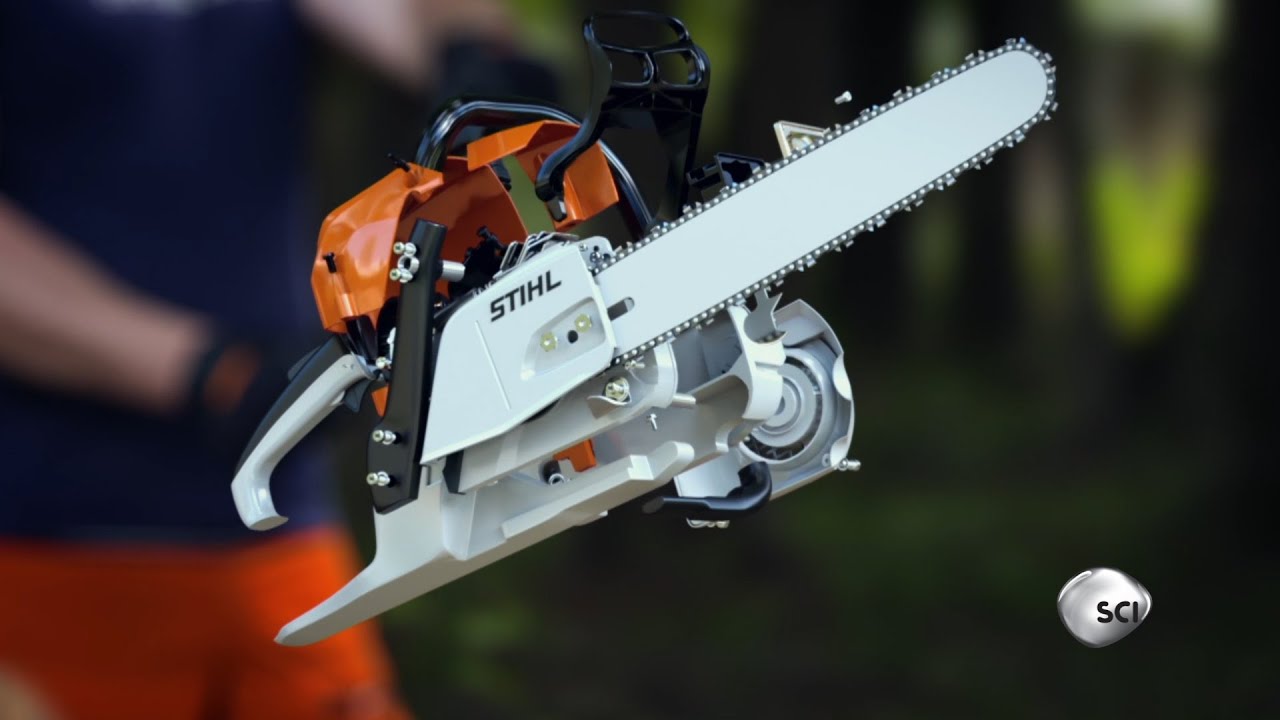
Your choice of power source affects weight, maintenance, and run time—but the cutting system stays the same.
Which should you choose? It depends on your workload. If you're felling a few trees a year, a battery saw is plenty. If you're heating your home with a wood stove, you'll want the endurance of gas. And if you have outlets within reach and light to moderate cutting, corded electric offers the best value.
The Cutting Action: Teeth, Speed, and Chips
The actual cutting happens at the microscopic level—each tooth takes a tiny shaving, but there are hundreds of teeth passing through the wood every second.
How a Cutter Works
Each cutter has three critical surfaces:
- Top plate — the top edge that shaves along the top of the cut.
- Side plate — the vertical edge that severs the wood fibers on the side.
- Depth gauge (raker) — a small leading edge that controls how deep the top plate bites.
The relationship between the depth gauge and the top plate determines cutting performance. If the depth gauge is too high, the cutter barely scratches the surface. If it's too low, the chain grabs aggressively and may stall the engine.
Chip Removal
As the chain moves through wood, each cutter scoops out a chip. The depth gauge creates the opening, the top plate lifts the chip, and the side plate severs the fiber. The chip rides briefly in the chain's pocket before being thrown out of the cut.
"If you're producing sawdust instead of chips, your chain is dull. Sharp chains throw big, defined shavings."
Chain speed is what makes this process so fast. Even a moderate saw spinning at 10,000 RPM moves the chain at dozens of feet per second. Multiply that by the number of cutters on the chain, and you have hundreds of cutting events every second.
The Role of Bar Oil
Fr iction generates heat—enough to warp the bar and destroy the chain. Bar oil is pumped to the chain as it exits the bar nose, coating the drive links and the bar groove. This reduces friction, cools the system, and extends component life.
A good rule of thumb: after a few seconds at full throttle off the wood, you should see a light oil line on the bar. If you don't, your oiler is blocked or you're out of oil.
Safety Systems and Kickback Control
There's no sugar-coating it: chainsaws are dangerous. Understanding how their safety systems work is as important as understanding how the saw cuts.
What Is Kickback?
Kickback happens when the upper quadrant of the bar tip contacts wood—or when the chain is pinched at the top of the bar nose. The chain bites, and the saw rotates violently upward and backward toward the operator. It happens in a fraction of a second.
Protective Systems
- Chain brake — A band that stops the chain in under a second. It engages two ways: by inertia during kickback, or by the operator pushing the front hand guard forward.
- Low-kickback chain — Guard links added ahead of each cutter reduce chain grab at the bar nose.
- Bar nose design — Smaller radius tips reduce the size of the kickback zone.
- Throttle lockout — Requires a conscious action to accelerate, preventing accidental full throttle.
Practical Kickback Prevention
Safety systems help, but technique matters more:
- Grip the saw properly. Wrap your thumb around the front handle. Loose grips give kickback more leverage.
- Avoid cutting with the bar tip. Especially the upper quadrant.
- Keep the chain sharp. A dull chain catches and grabs.
- Stand balanced. Feet shoulder-width apart, knees slightly bent, weight stable.
- Never cut above shoulder height. Overhead cutting removes control.
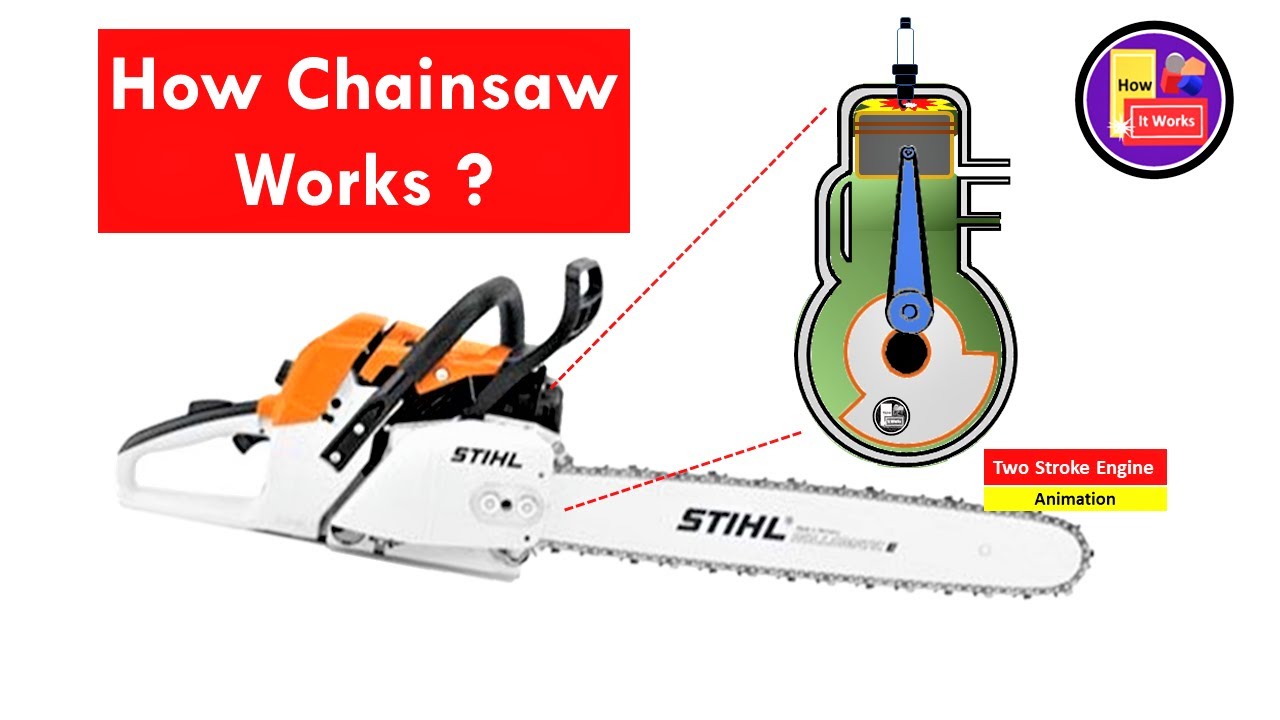
The chain brake is a mechanical life-saver—test it before every use according to the manufacturer's instructions.
A common mistake I've seen in the field: operators test the chain brake with the engine idle and the chain turning slowly. The brake engages, they assume it works, then a real kickback happens at speed and the brake either doesn't trip or the operator's grip wasn't secure. Test the brake with the saw at full throttle off the wood—that's the scenario where it needs to work.
Lubrication, Tension, and Sharpening
These three maintenance basics determine 90% of your saw's performance. Get them right, and your saw will cut straight, fast, and reliably.
Bar Oil: The Lifeblood
Your saw's oiler is a simple pump driven either mechanically by the clutch or electronically on some battery models. Here's what to check:
- Oil level — Refill every time you fill the fuel tank on gas saws.
- Flow rate — Adjust the oiler for hardwoods (more oil) vs. softwoods (less).
- Oil hole — Clear any sawdust packed into the bar's oil port.
Chain Tension: The Goldilocks Zone
Too loose and the chain whips, derails, or throws. Too tight and it binds, overheats, and wears the bar rails.
The proper test: pull the chain at the midpoint of the bar's underside. It should lift about 1/8 inch and snap back when released, with the drive links still seated in the bar groove. Recheck tension after the first 5 minutes of cutting—new chains stretch as they warm up.
Sharpening: Skill You Need
A sharp chain is fast, safe, and gentle on the engine. A dull chain produces sawdust, requires force to feed, and increases kickback risk.
Signs your chain is dull:
- Production of fine sawdust instead of crisp chips
- The saw consistently pulls to one side (one cutter is duller than the others)
- You have to push hard to make progress
- The chain smokes and the bar gets hot
Sharpening basics:
- Use the correct round file size for your chain pitch (typically 3/16" or 5/32")
- Match the file angle to the chain's specifications (usually 30°)
- File all cutters to the same length
- Check depth gauges every 3-5 sharpenings
Interestingly, chain maintenance is one of the most common questions new owners search for. The answer to how long a chainsaw chain lasts is directly related to how well you maintain the cutting edge.

Each cutter combines a sharp top plate, side plate, and depth gauge that controls bite depth.
From Start to Cut: Controls and Steps
Operating a chainsaw involves a sequence of steps that become second nature with practice.
Cold Start (Gas Saws)
- Engage the chain brake — Pull it back toward you until it clicks.
- Set the choke — On most saws, this is a lever near the air filter.
- Pump the primer bulb — Until fuel is visible in the clear line.
- Pull the starter cord — Several times until the engine sputters.
- Unchoke and pull again — The engine should fire and run.
- Let it warm up — A minute at fast idle before revving out.
Starting Battery and Corded Saws
These are far simpler:
- Engage the chain brake.
- Press the power switch or depress the safety trigger.
- Squeeze the throttle to confirm chain movement.
- Verify oil flow before cutting.
Making the Cut
- Plan the cut path — Where will the kerf close? Where will the log fall?
- Set your stance — Balanced, feet shoulder-width, no tripping hazards.
- Grip properly — Right hand on the rear handle, left hand on the front, thumb wrapped around.
- Rev to full speed — The chain must be moving at full speed before it touches wood.
- Let the saw work — Apply light pressure. Sharp chains cut on their own.
A common beginner error is forcing the saw forward. If you have to push, the chain is dull or the depth gauges are set too deep.
Proper grip—thumbs wrapped, elbows locked, balanced stance—gives you control over the saw at all times.
Maintenance and Tuning Basics
A well-maintained chainsaw starts easily, runs reliably, and cuts safely. Here's the routine:
After Every Use
- Brush sawdust off the saw, especially around the air filter.
- Clean the bar groove and oil hole with a spike or flat-bladed screwdriver.
- Loosen the chain tension slightly for storage.
- Empty the fuel tank or run the saw dry on gas models.
Weekly (Heavy Use)
- Flip the bar to even out grove wear.
- Dress the bar rails with a flat file if there are burrs.
- Inspect the sprocket for wear—replace it before the teeth get hook-shaped.
- Check anti-vibration mounts for cracks.
- Clean or replace the air filter.
Tuning Your Gas Saw
Modern saws with adjustable carburetors have three screws: idle speed, low-speed mixture, and high-speed mixture. A saw tuned too lean runs hot and risks engine damage. A saw tuned rich is safer but wastes fuel.
The general rule: adjust the high-speed screw until the engine four-strokes (sputters) at full throttle off the wood, then clean up slightly. When the saw is in the cut, that slightly-rich mixture becomes perfect.
Fuel matters. Using treated fuel for small engines can eliminate starting problems and fuel system corrosion. Whether you use canned fuel or stabilized pump gas, fresh fuel is essential.
Battery Saw Care
- Store batteries at 40-60% charge for long periods.
- Keep packs dry and out of direct sunlight.
- Charge partially before storage; don't leave them on a wall charger indefinitely.

The centrifugal clutch is what allows the chain to stand still at idle and engage smoothly when you open the throttle.
Troubleshooting Common Issues
When a chainsaw misbehaves, the cause is almost always simple.
| Problem | Likely Cause | Fix |
|---|---|---|
| Hard to start | Old fuel, dirty air filter, fouled plug | Fresh mix, clean filter, new plug |
| Starts then dies | Clogged fuel filter, air leak, stale fuel | Replace filter, check lines, fresh fuel |
| Chain won't move | Chain brake engaged, clutch stuck | Release the brake, inspect clutch |
| Cuts to one side | Uneven sharpening, worn bar rails | File all cutters equally, dress bar |
| Bogs in the cut | Dull chain, too much feed pressure | Sharpen the chain, ease off |
| Chain gets hot | Too tight, low oil, blocked oiler | Adjust tension, refill oil, clear ports |
| Excessive vibration | Loose bar nuts, worn mounts | Tighten, replace mounts |
One additional check worth making: measure the engine's compression if your saw keeps losing power. A simple compression test can tell you whether internal engine issues are behind poor performance.
Cutting Techniques for Speed and Control
The way you move the saw matters as much as the saw itself.
Limbing
Work from the base of the tree toward the top. Keep the body of the saw against the trunk where possible, cutting branches where they attach. Cut from the underside of branches that are under tension to prevent them from splitting up the trunk.
Bucking (Cutting Logs to Length)
The critical skill here is understanding compression and tension:
- Log supported at both ends — The top of the log is in compression; the bottom is under tension. Cut from the top first.
- Log supported at one end only — The top of the log is under tension; the bottom is in compression. Cut from the bottom first.
Getting this wrong means the log pinches the bar as it bends. Get it right and the cut closes cleanly behind the bar.
Felling
Felling trees safely requires training, proper saws, and practiced technique. There are three steps:
- Plan the escape route — At a 45° angle away from the falling direction.
- Cut the notch — About 1/3 of the way through the tree, facing the direction you want it to fall.
- Make the back cut — Slightly above the notch's hinge point. Leave a hinge to guide the tree down.
Leave a saw that's struggling to clear chips or get stuck in cuts, you might need to think about how much engine power and displacement the job requires. This is where dimensions matter.
Environmental, Noise, and Fuel Notes
Responsible saw use extends beyond your own safety.
Emissions and Air Quality
Gas chainsaw two-stroke engines produce hydrocarbons, carbon monoxide, and particulate matter. Keep the engine tuned properly—a rich-running saw produces more emissions. Clean filters and correct fuel ratios burn more completely.
The U.S. Environmental Protection Agency regulates small engine emissions, which is why modern saws run leaner than older ones. If you're concerned about environmental impact, battery saws eliminate point-of-use emissions entirely.
Noise Exposure
Chainsaws produce 110-120 decibels at the operator's ear—well above noise exposure limits. OSHA identifies hearing damage risks at exposure over 85 decibels for extended periods. Always wear proper hearing protection. Gas saws are the loudest; battery saws are measurably quieter.
Biodegradable Bar Oil
Standard petroleum bar oil drips into the soil and waterways. Biodegradable vegetable-based bar oils are widely available and work just as well while breaking down naturally. For woodland work, they're the responsible choice.
These habits keep the saw working well and keep you as the operator working well, too.
Frequently Asked Questions
What makes the chain cut wood so fast?
The chain moves at up to 60+ feet per second, and each cutter takes only a tiny bite. Hundreds of cutters passing through the wood every second add up to a very efficient cutting action.
Why does my chainsaw cut to one side?
Usually, one side of the chain is sharper than the other. Sharpen all cutters to equal length with the correct angle. An unevenly worn bar rail can cause the same symptom.
How often should I sharpen the chain?
Touch up the chain with a file every time you refuel, or whenever you notice chips turning to sawdust. For occasional users, that's roughly every 2-3 hours of cutting. For heavy users, make it a habit every tank.
What's the right chain tension?
The chain should lift about 1/8 inch (3mm) at the middle of the bar's underside and snap back when released. Drive links must remain seated in the bar groove. Always recheck after the first few cuts of a new chain.
Can a battery chainsaw fell trees?
Yes, within limits. A high-voltage saw with a sharp chain can handle trees up to 12-16 inches in diameter comfortably. For anything larger, or for extended felling work, you'll want gas power.
Why does my saw smoke and smell hot?
Your bar and chain aren't getting enough oil, or the chain is too tight. Check the oil level and flow, then verify chain tension. This is one issue that needs immediate attention—overheating destroys the bar.
Conclusion
A chainsaw is a straightforward machine once you understand the system: power spins a sprocket, the sprocket drives a chain around a bar, and sharp teeth on that chain shave wood fibers at tremendous speed. Every component—from the clutch to the depth gauges to the oiler—exists to keep that cutting loop moving fast, smooth, and under control.
The difference between a saw that frustrates and a saw that excels comes down to maintenance and technique:
- Keep the chain sharp — Chips mean sharp; dust means dull.
- Keep oil in the tank — A well-lubricated chain cuts cooler and lasts longer.
- Set the tension correctly — The chain should snap back from a slight pull at mid-bar.
- Respect kickback — Proper grip, low-kickback chain, and chain brake discipline.
- Match your saw to your task — Gas, battery, or corded, the right tool for the right job.
Take these fundamentals to the yard and put them to work. Master the maintenance basics first—sharpening, tensioning, and oiling—and your saw will reward you with years of reliable service. If you're still choosing between power sources, a careful look at gas versus battery options will help you pick the right first saw.