How To Increase Water Pressure On Garden Hose: Quick Fixes
A weak, sputtering garden hose turns a five-minute watering job into a frustrating chore. Before you blame your water supplier or shop for an expensive pump, know this: most low-pressure problems are simple, cheap, and fixable in under an hour.
In this guide, you'll learn exactly how to increase water pressure on your garden hose by diagnosing the real bottleneck—whether it's a kinked hose, a clogged screen, an undersized line, or a misadjusted home regulator. You'll get clear steps, honest trade-offs, and safety limits so you can fix the problem once and for all. For more on this, see our guide on how to increase water pressure in a garden.
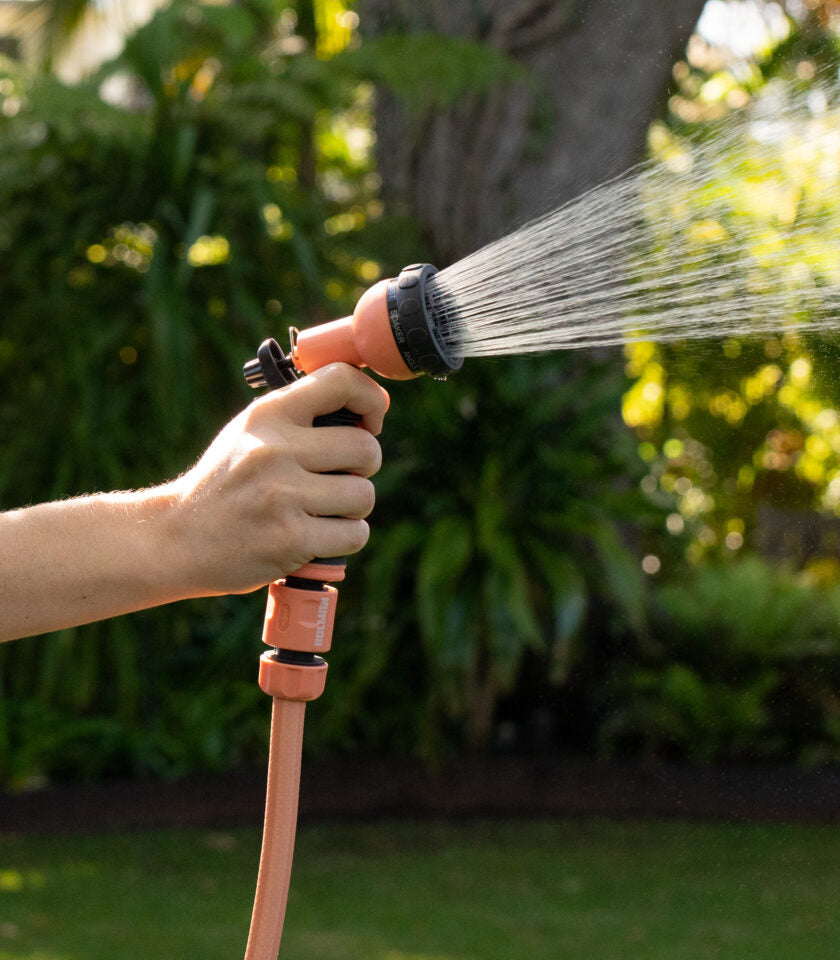
Check whether you're dealing with weak pressure or low flow—they need different fixes.
Pressure vs. Flow: Know the Difference First
Many people use "pressure" and "flow" interchangeably, but they're two different problems.
- Pressure is force, measured in pounds per square inch (psi). It's what pushes water out of the nozzle.
- Flow is volume, measured in gallons per minute (GPM). It's how much water actually moves through the hose.
A typical home supply runs at 40–60 psi. But by the time water travels through a long, narrow hose with several fittings, the flow can drop dramatically even if the pressure at the spigot is fine.
You should also understand static pressure (what you get with no water running) versus dynamic pressure (what remains while water flows). If static pressure reads fine but the stream collapses when you open the nozzle, friction or a blockage is your culprit. For more on this, see our guide on how to increase water pressure in garden hose.
Elevation plays a role too. Water loses roughly 0.43 psi for every foot it climbs. A hose running uphill to a raised garden bed or second-story balcony will naturally feel weak.
The bottom line: Diagnose before you spend. Measure both pressure and flow to target the actual bottleneck.
Quick Fixes to Try Right Now
These five checks take minutes and cost almost nothing. Try them in order before considering any upgrades.
1. Open the Spigot Fully
It sounds obvious, but many outdoor valves need a firm final turn to open completely. Partially open valves choke flow more than you'd think.
2. Straighten Kinks and Loops
A kink crushes the hose wall and can cut flow by more than half. Walk the entire length and straighten any sharp bends. If your hose tends to tangle, a hose reel or guide stakes keep the path smooth.
3. Clean the Nozzle and Hose Screen
Unscrew the nozzle and look inside. Grit, mineral scale, and debris collect in screens and jet openings. Rinse them under running water and use a toothpick to clear stubborn particles. This single step fixes more weak streams than any other.
4. Replace Cracked or Flattened Washers
A worn or cracked rubber washer leaks and steals pressure. New washers cost pennies at any hardware store. Match the size to your fitting and replace them at the first sign of wear.
5. Remove Flow Restrictors (Where Allowed)
Many nozzles and some hoses contain a small plastic restrictor ring designed to limit flow. If local regulations permit, pop it out for a stronger stream. Check your municipality's water bylaws first—some areas require restrictors.
6. Test the Spigot Alone
Disconnect the hose and run the faucet. If the flow is weak at the spigot itself, the problem is upstream, not in your hose. Skip straight to the plumbing-side fixes below.

Start with the simple checks: kinks, washers, and nozzle screens often solve the problem instantly.
Step-by-Step: Diagnose and Fix Low Hose Pressure
If the quick fixes didn't solve it, work through this systematic process.
Measure Pressure at the Spigot
Attach a threaded pressure gauge to the hose bib. First read the pressure with no water running (static), then open the tap fully and read it again (dynamic). The difference tells you where pressure is being lost.
Check Flow Rate with a Bucket
Fill a 5-gallon bucket and time how long it takes. Five gallons in 30 seconds equals 10 GPM. If you're getting less than 5–6 GPM at the spigot, even a perfect hose will feel weak at the nozzle.
Inspect Hose Size and Length
A 5/8-inch hose moves substantially more water than a 1/2-inch hose at the same pressure. Keep your hose as short as your yard allows. Every extra foot of length adds friction loss.
Upgrade Fittings and Remove Bottlenecks
Narrow quick-connects and cheap fittings are silent flow killers. Replace them with full-flow brass or heavy-duty plastic fittings that match the hose bore. If your nozzle contains a restrictor you're allowed to remove, do it.
Service the Hose Bib
If the spigot itself is the weak point, replace the stem washer and packing if it drips or sticks. Anti-siphon bibs can collect debris in the cap—clean it gently and check the vacuum breaker.
Adjust the Home Pressure Regulator (PRV)
Most homes have a pressure-reducing valve near the main shutoff. If your whole-house pressure reads below 50 psi, turn the adjustment nut a quarter turn and re-test. Aim for 60–65 psi—never more than 70 psi, as that can stress fixtures and hoses.
Fix Leaks and Clogged Screens
Check outdoor lines, backflow devices, and whole-house filters. Sediment clogs screens in softeners, filter housings, and vacuum breakers. Flush or replace them.
Choose the Right Nozzle
High-flow "fireman" nozzles blast more water with less restriction. Some pistol-grip nozzles have narrow throats that throttle the stream. A straight shutoff valve with a thumb-controlled flow is often the most flexible option.
Consider a Booster Pump if Supply Is Low
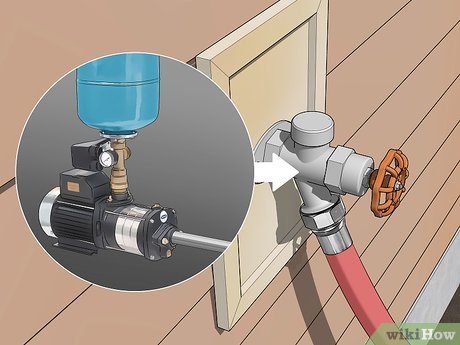
If you're on a well, a rural line, or an apartment with weak supply, a small booster pump with a pressure switch can raise output from 30–40 psi to a solid 60 psi. Use a pressure tank and relief valve for safe operation.
Split the System Smart
Y-splitters divide flow between two lines. If you need maximum pressure, run only one hose at a time. If you must split, buy a full-flow splitter with large bores.
Choose the Right Hardware: Hose, Nozzle, and Fittings
Your equipment choices matter more than any other factor.
Hose Diameter and Length
A 5/8-inch hose is the minimum for decent flow. For runs over 75 feet, step up to 3/4-inch. The difference is dramatic: a 1/2-inch hose at 50 feet can deliver less than half the flow of a 5/8-inch hose at the same length.
Nozzle Design
High-flow nozzles and brass shutoff valves keep the internal bore wide. Cheap plastic nozzles often have narrow throats that restrict water. Look for labels like "full flow" or "high GPM."
Fitting Quality
Fittings should match the hose bore, not bottleneck it. Narrow quick-connects, small backflow caps, and worn gaskets all add drag. Heavy brass fittings with smooth internal paths are the gold standard.
Plumbing-Side Fixes and Upgrades
If your spigot tests weak, the problem sits upstream of the hose.
Adjust the Pressure Regulator
Most PRVs are set to 50–55 psi from the factory. Bumping yours to 60–65 psi delivers noticeably stronger hose flow. Turn the adjustment screw in small increments and recheck with a gauge. Stay within your local code and your fixtures' ratings—a reliable machine like your lawn mower won't be affected, but aging pipes and water heaters might be.
Flush Filters and Sediment Traps
Over time, sediment builds up in whole-house filters, water softener screens, and the regulator's own inlet screen. Flush them seasonally. A clogged filter before your outdoor spigot is a common cause of weak hose pressure.
Check for Corroded Pipe
Older homes with galvanized steel pipe can suffer from internal corrosion that narrows the bore and strangles flow. If you have this plumbing and the pressure is weak everywhere, consider having a plumber assess the situation.
Special Cases: Slopes, Rain Barrels, and Irrigation Systems
Hoses Running Uphill
Every foot of elevation climb costs about 0.43 psi. A 20-foot rise to a hillside garden loses roughly 9 psi. Use a larger hose, keep the run short, or install a booster pump near the uphill end.
Rain Barrels and Tanks
Gravity-fed rain barrels rarely deliver enough pressure for spray nozzles or sprinklers. A submersible pump with a pressure switch and a hose-rated filter solves this. Aim for 40–60 psi at the outlet.
Irrigation Timers and Smart Valves
These devices often contain small internal orifices that restrict flow. Choose high-flow models or install them as close to the spigot as possible, with a large-diameter leader hose.
Check your home's pressure regulator and filters—upstream fixes often solve weak hose flow for good.
Safety Limits: When NOT to Increase Pressure
Pushing pressure too high is a common mistake. Here's what to watch for.
Know Your System's Ratings
Most garden hoses and nozzles are rated to 100–150 psi, but your home plumbing is not. Keep household pressure around 60 psi. Above 70–80 psi, you risk bursting hoses, stressing water heater valves, and damaging appliance solenoids.
Never Remove Backflow Prevention
Vacuum breakers and anti-siphon valves protect your drinking water from contamination. Never remove them to gain pressure. If one is clogged, clean it or replace it—don't bypass it.
Watch for Water Hammer
If you hear banging pipes when you shut off water, your pressure is too high or you need arrestors. Reduce the PRV setting or install water hammer arrestors. A stable, moderate pressure is far better than an unstable high one.
Troubleshooting Checklist
| Symptom | Likely Cause | Quick Fix |
|---|---|---|
| Strong at spigot, weak at hose end | Hose too long/narrow, kinks, clogged nozzle | Use shorter, wider hose; clean nozzle |
| Weak at spigot, fine inside house | Worn hose bib, blocked outdoor line | Service bib, check vacuum breaker |
| Weak everywhere in house | PRV set too low, clogged filter, leak | Adjust PRV, flush filters, repair leaks |
| Good pressure, weak sprinklers | Too many heads, undersized hose | Run fewer heads, use larger hose |
| Pressure starts strong, then drops | Clogged filter, softener cycling, pump failure | Clean filters, service pump |
Frequently Asked Questions
How do I know if pressure or flow is the real problem?
Use a pressure gauge and a bucket timer. If pressure is normal but flow is weak, you need larger hoses and fittings. If pressure is low, fix the supply side.
Will a longer hose always reduce pressure?
Longer hoses add friction, which reduces flow under use. Keep hoses short and wide—that's the single biggest factor in maintaining strong output.
Can I adjust my home's pressure regulator myself?
Yes, in most cases. Use a wrench to turn the adjustment nut a quarter turn at a time, testing with a gauge after each change. Stay between 55 and 65 psi to protect fixtures.
Do high-pressure nozzles increase actual pressure?
No. They shape the stream but don't increase supply pressure. High-flow nozzles and wider hoses improve real performance by reducing restriction.
Is a booster pump worth it for rain barrels?
If you want to run sprinklers or use a spray nozzle with consistent force, a small pump with a pressure switch is the only reliable solution. Gravity alone is rarely enough.
Why does pressure drop when I use a splitter?
Splitters divide flow between two outlets. Run one hose at a time, or buy a full-flow splitter with wide bores.
Are 1/2-inch hoses ever good enough?
For short, light watering tasks, yes. For anything else—especially long runs or sprinklers—step up to 5/8-inch or larger.
Final Thoughts
You now have a complete toolkit to increase water pressure on your garden hose. Start with the cheap fixes: open valves fully, straighten kinks, clean nozzles, and swap washers. Then move up to hardware upgrades like a shorter, wider hose and full-flow fittings. If the spigot itself is weak, adjust your home's pressure regulator and clean upstream filters.
Use this approach and you'll fix the root cause, not just mask the symptom. And if you're ever wondering whether a whole new hose is worth the investment, check the basics first—you'll be surprised how often a 50-cent washer solves a frustrating problem.
One quick action for today: Pick up a 5/8-inch hose and a brass full-flow nozzle, then clean your spigot screen. That combination solves the majority of weak-hose complaints without any plumbing work. For keeping your outdoor tools in top shape year-round, proper storage and routine upkeep go a long way.