
Best Fuel System Cleaner For Lawn Mower: Top Picks 2026
A lawn mower that sputters at idle, stalls when you engage the blade, or takes a dozen pulls to start is almost always suffering from the same problem: degraded fuel and the gummy residue it leaves behind. Ethanol-blended gasoline attracts moisture, evaporates unevenly, and coats carburetor jets with varnish that slowly starves the engine of fuel.
The good news is that the right fuel system cleaner can often dissolve that buildup and restore normal operation without removing the carburetor. This guide covers the warning signs, the chemistry that actually matters, how to dose a cleaner correctly, and the best fuel system cleaner for lawn mower use in 2026. You can also read our guide on how to care for lawn during dry season.
Signs Your Mower’s Fuel System Needs Attention
You do not need to wait for a full breakdown. A cleaner is usually worth trying when you notice any of these symptoms:
- The mower is hard to start after sitting for two weeks or more.
- The engine idles unevenly or hunts between high and low rpm.
- The mower surges or stumbles when you engage the blades.
- Power drops off under tall, thick grass.
- The engine dies at low speed but restarts easily.
- The fuel smells sour, or you can see dark residue around the carburetor.
These symptoms point to blocked jets, sticky check valves, or contaminated fuel. In many cases, a concentrated PEA cleaner can fix the problem in one tank.
Why Fuel Systems Clog: Ethanol, Gum, and Carbon
Understanding the enemy helps you choose the right product.
Ethanol and Moisture
Ethanol is hygroscopic, meaning it actively pulls water vapor out of the air. Over time, that water separates from the gasoline and settles at the bottom of the fuel tank. From there, it finds its way into the carburetor bowl, where it causes corrosion and creates the orange-brown sludge that plugs tiny passages. You can also read our guide on best fuel injector cleaner for lawn mower.
This is why many small-engine mechanics recommend ethanol-free fuel whenever it is available. Federal fuel regulations allow a range of ethanol blends at the pump, but small engines were not designed for years of exposure to alcohol-heavy gasoline.
Gum and Varnish
As gasoline evaporates, the lighter hydrocarbons escape and leave behind heavier compounds — sticky, shellac-like deposits commonly called gum and varnish. A mower that sits for three to six months with untreated fuel in the tank is the classic scenario. The carburetor jets, which are tiny brass tubes with openings measured in thousandths of an inch, become coated and eventually plugged. You can also read our guide on best fuel stabilizer for riding lawn mower.
Carbon on Valves and Pistons
Over hundreds of operating hours, combustion byproducts bake onto intake valves and piston crowns. This reduces airflow, disrupts compression, and makes the engine run hotter. A strong PEA cleaner is specifically engineered to attack these high-temperature deposits.
How Fuel System Cleaners Actually Work
Not all additives are created equal. The chemistry matters more than the marketing.
PEA Is the Ingredient That Matters
PEA, or polyether amine, is the gold standard in fuel system cleaning. It is a high-molecular-weight detergent that survives the heat of combustion, travels along intake passages, and breaks down carbon bonds. It is the same chemistry used in top-tier gasoline and is the most effective agent for removing carbon in both carbureted and fuel-injected engines. You can also read our guide on how long do electric lawn mower batteries last.
Older detergent chemistries work fine on light intake deposits, but PEA is the one that can genuinely restore a neglected engine.
Solvent Carriers and Corrosion Inhibitors
The active detergent is dissolved in a solvent carrier that helps it mix with fuel and reach deposit surfaces. Many modern formulas also include corrosion inhibitors that neutralize the acids formed as ethanol breaks down. Some products combine cleaning with light fuel stabilization, giving you two benefits in one dose. You can also read our guide on what gas is best for lawn mower.
What To Look For On the Label
A good small-engine cleaner should list PEA or polyether amine as the active ingredient. It should also state a treatment rate, usually something like “treats 5 gallons” or “one ounce treats 10 gallons.” If the label only says “fuel additive” without identifying the detergent chemistry, it is probably too weak for real deposit removal.
Avoid products marketed primarily as “dry gas.” Methanol-based additives remove water but do not clean carbon and varnish.
How To Use a Fuel System Cleaner Correctly
Proper application matters more than the brand. One common mistake is pouring an entire bottle into a small mower tank, which creates an over-concentrated mixture that can actually cause running problems. Here is the correct process:
- Work outdoors with a cold engine.
- Check your tank capacity. Most push mowers hold 0.5 to 1.5 gallons. Riding mowers typically hold 1.5 to 3 gallons.
- Read the label for the “treats X gallons” rate.
- Measure the dose with a small syringe or graduated cup. Do not guess from the bottle cap.
- Add the cleaner to the tank first.
- Fill the tank with fresh gasoline to ensure proper mixing.
- Run the mower for at least 15–20 minutes. The engine needs to reach operating temperature for the cleaner to activate fully.
- Finish the entire tank before judging the result.
For heavily fouled systems, plan on running two consecutive tanks. Idle quality often improves noticeably by the second run.
Example Dosing Table
The table below assumes a product whose label says 1 fluid ounce treats 5 gallons. Always check your specific label before measuring.
| Fuel Tank Size | Dose for a 1 oz-per-5-gal Product | Approx. Metric Equivalent |
|---|---|---|
| 0.5 gallons | 0.1 oz | 3 ml |
| 1.0 gallon | 0.2 oz | 6 ml |
| 1.5 gallons | 0.3 oz | 9 ml |
| 3.0 gallons | 0.6 oz | 18 ml |
More cleaner does not mean a cleaner engine. Overdosing can leave residue behind and, in extreme cases, cause the engine to run poorly until the fuel is diluted.
What Fuel Should You Use With a Cleaner?
The cleaner works alongside your fuel, so the quality of your gasoline matters.
Use fresh fuel whenever possible. Gasoline begins to degrade within about 30 days, especially when ethanol is present. If you can buy ethanol-free fuel for your mower, it will reduce moisture absorption and slow the formation of gum and varnish.
If your only option is ethanol-blended E10, use a fuel stabilizer for any storage longer than a few weeks, and run the mower often enough to keep the fuel moving through the system. Never use E15, E30, or E85 in a lawn mower. These fuels are not approved for small engines and can cause serious fuel system damage.
Best Fuel System Cleaner for Lawn Mowers: Top Picks 2026
Each product below was chosen based on formula quality, real-world small-engine results, value, and how well it matches common mower symptoms. There is no single universal winner — only the right product for the problem you are facing.
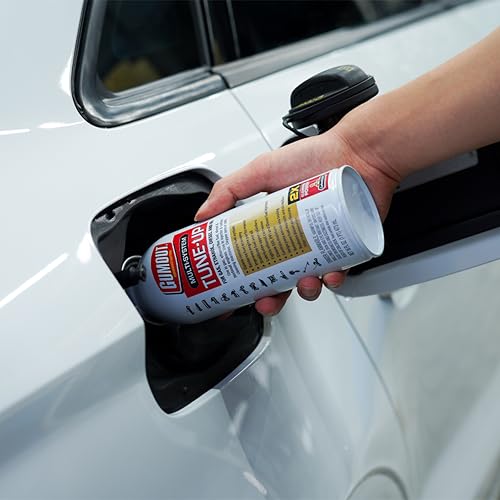
Gumout Multi-System Tune-Up — Best All-Rounder

Image source: Amazon.com
Gumout’s cleaning and stabilizing formula suits mowers that sit between cuts.
Gumout Multi-System Tune-Up is a workhorse additive with a solid dose of PEA detergent. Its formula targets varnish, gum, and carbon in carburetors, injectors, and valves. It also acts as a light fuel stabilizer, which is a genuine advantage if your mower sits for weeks between cuts during the active season.
In practice, this is a sensible first recommendation for mowers that surge at idle or stumble when the blade is engaged. The PEA concentration is enough to break down the film that forms inside carburetor jets during normal use, and the corrosion inhibitors provide some protection against ethanol damage.
Pros:
- Cleans gum, varnish, and carbon in one treatment
- Adds light fuel stabilization for short-term sitting
- Works in both carbureted and fuel-injected engines
- Helps smooth rough idle and reduce stalling
Cons:
- Overkill for a perfectly clean, well-maintained system
- Not a dedicated storage stabilizer
- Requires measuring for a small mower tank
Best for mowers that run rough after sitting for a few weeks and owners who want a single bottle that cleans and stabilizes in one step.
Red Line SI-1 — Best for Heavy Deposits

Image source: Amazon.com
Red Line SI-1 is concentrated, so measure every dose carefully.
Red Line SI-1 is a concentrated, high-strength PEA formula that sits near the top of the cleaning hierarchy. It is not a maintenance product — it is a rescue product. When a mower has sat through a full season with old fuel, or when the idle hunts wildly and the engine bogs under load, this is the product to reach for first.
The concentration difference matters. SI-1 carries one of the highest PEA loads available to consumers, which means it works faster and cuts through thicker deposits than standard maintenance formulas. It does not contain fuel stabilizer, so storage preparation still requires a separate product.
Pros:
- Exceptionally high PEA concentration for serious deposit removal
- Effective against cold-start issues and rough idle
- Contains corrosion inhibitors for ethanol compatibility
- Works in mowers, generators, and even automobiles
Cons:
- More expensive per ounce than maintenance cleaners
- Strong solvent odor during pouring
- Not a fuel stabilizer
Best for mowers with severe gumming, hard carbon buildup, or stubborn cold-start problems. This is the “last chance before a carburetor teardown” option.
Techron Concentrate Plus 12 oz — Best for Routine Maintenance

Image source: Amazon.com
Techron is a proven PEA cleaner that works well as a preventive treatment.
Techron Concentrate Plus is one of the most trusted PEA cleaners on the market, with decades of automotive and small-engine use behind it. The 12-ounce bottle is sized well for mower owners because one bottle treats many tanks when dosed correctly.
The formula is slightly less aggressive than Red Line SI-1, which makes it a better routine product. It clears light varnish, keeps jets clean, and smooths out mild surging without being overpowering. For a mower that runs “okay but not great,” this is the right starting point.
Pros:
- Proven PEA chemistry with consistent results
- Economical when used in small doses
- Effective at preventing deposit formation
- Easy to find at retail and online
Cons:
- Not a fuel stabilizer
- May not fully resolve severe or long-ignored deposits
- Small bottle can be overdosed easily without measuring
Best for seasonal upkeep and clearing mild surging. Excellent for building a preventive cleaning habit without spending much.
Techron Concentrate Plus 20 oz — Best for Multi-Engine Fleets

Image source: Amazon.com
The 20-ounce bottle is a practical choice if you maintain several machines.
This is the same reliable Techron formula, but in a larger 20-ounce bottle that makes sense when you maintain more than one piece of equipment. If you own a push mower, a riding mower, a generator, and a string trimmer, a single bottle can cover everything for the season.
The cost per ounce drops significantly compared with the 12-ounce size. The trade-off is the need for careful measuring — pouring straight from a large bottle into a 1-gallon mower tank is a recipe for overdosing.
Pros:
- Better value per ounce than the smaller bottle
- One purchase covers several engines for months
- Same proven PEA-based cleaning effectiveness
- Good for restoring throttle response after off-season storage
Cons:
- Awkward for precise dosing into small tanks
- Not a fuel stabilizer
- Requires a separate measuring tool
Best for households with multiple gas-powered tools. If you also run other outdoor equipment, home-use leaf blower picks can help you build a complete, well-maintained fleet.
Techron High Mileage — Best for Older Mowers

Image source: Amazon.com
Older mowers benefit from the seal conditioners in this formula.
High Mileage Techron is formulated for engines with significant accumulated operating time. Many push mowers last a decade or more, and internal deposits harden with age. This formula is designed to dissolve stubborn, baked-on deposits while being gentler on aging seals and gaskets.
The distinction from standard Techron centers on the additive package. High Mileage includes seal conditioners that help soften hardened rubber components in older carburetors, reducing the chance of leaks developing after cleaning.
Pros:
- Tailored for high-hour, high-age engines
- Includes seal conditioners for older fuel system components
- Strong PEA base for carbon removal
- Helps regain lost throttle response and idle stability
Cons:
- Not necessary for mowers less than a few years old
- Smaller bottle means less value per ounce
- Still requires careful manual dosing
Best for a trusted older mower that struggles after long winters or shows signs of diminished performance from accumulated deposits.
Red Line SI-1 Two-Pack — Best for a Full Cleaning Program

Image source: Amazon.com
A two-bottle program handles rescue cleaning and seasonal upkeep.
The two-pack of Red Line SI-1 is designed around a simple workflow: one bottle for the deep, heavy-lifting clean, and a second bottle for a follow-up maintenance dose later in the season. Because SI-1 is so concentrated, each bottle goes further than the label’s maximum treatment rate might suggest.
If you rescued a mower from years of neglect, running one bottle through two tanks handles the initial deposit removal. Then a small dose from the second bottle every few weeks keeps the system clean through the season.
Pros:
- Two bottles cover a complete clean-and-maintain cycle
- High concentration means each bottle treats many tanks
- Excellent value for serious deposit removal
- Serves multiple mowers or an additional vehicle
Cons:
- Still lacks fuel stabilization properties
- Requires measuring for small-engine doses
- Potent solvent smell during handling
Best for a spring rescue followed by in-season maintenance, or for owners maintaining multiple machines.
STA-BIL In-Season Treatment — Best for Convenience

Image source: Amazon.com
STA-BIL In-Season is a preventive product, not a rescue cleaner.
STA-BIL In-Season Treatment is a specialized product for a specific use case: keeping a clean system clean throughout the active mowing season. It provides mild detergent cleaning alongside corrosion protection, targeting the problems ethanol fuel promotes during hot summer months.
The 4-ounce bottle is sized for small engines without excess. It is not intended as a heavy-duty cleaner, so do not reach for it when your mower is already coughing and stalling. Instead, use it as a simple dose-and-go product when you want to reduce the attention your fuel system needs.
Pros:
- Convenient small bottle matches single-mower needs
- Provides corrosion protection from ethanol blends
- Requires no special measuring for most mower tanks
- Easy to pack, store, or transport
Cons:
- Light-duty cleaner that will not resolve heavy deposits
- Limited number of treatments per bottle
- Does not replace a dedicated storage fuel stabilizer
Best for running a low-maintenance preventive program during the active mowing season.
Royal Purple Max Atomizer — Best for EFI and Fuel-Injected Mowers

Image source: Amazon.com
EFI-equipped mowers need a cleaner that targets spray patterns.
As fuel-injected small engines become more common on premium mowers, the cleaning requirements shift from carburetor jet passages to injector spray patterns. Royal Purple Max Atomizer specifically targets fuel atomization quality, which directly affects combustion efficiency and throttle response.
The product name reflects its core function: restoring a fine, even fuel spray pattern. In carbureted engines, it still cleans intake passages effectively, but it truly shines in EFI-equipped mowers and other modern small power equipment.
Pros:
- Specifically formulated for fuel-injected small engines
- Improves fuel atomization and combustion efficiency
- Helps eliminate stumbling under load
- Compact 6-ounce bottle is easy to store
Cons:
- Less effective on heavy deposits than targeted carburetor cleaners
- Higher cost per ounce than comparable products
- Better suited to newer engines than classic mowers
Best for owners of modern EFI mowers who want to preserve precise fuel delivery and smooth power output.
STA-BIL In-Season Treatment 32 oz — Best for Commercial Users

Image source: Amazon.com
Commercial users save per dose with the large jug.
For lawn care professionals or property owners managing several gas-powered machines, the 32-ounce jug of STA-BIL In-Season Treatment delivers the same simple protection at a much better price per dose. A commercial operator running mowers daily benefits from having a bulk supply on hand.
The wide mouth accepts a measuring cup easily, which is important since a single dose for a push mower tank is often only about half an ounce. This is not a deep cleaner — it is an ongoing protective treatment that prevents problems before they start.
Pros:
- Bulk size reduces cost per treatment significantly
- Simple, quick dosing for busy users
- Corrosion protection across mixed equipment types
- Suitable for riding mowers with larger fuel tanks
Cons:
- Ineffective for cleaning existing heavy deposits
- Needs careful sealing and proper storage
- Separate product still required for winter storage
Best for commercial landscapers or homeowners who maintain a fleet of gas-powered tools.
Techron Concentrate Plus 32 oz — Best Overall Value

Image source: Amazon.com
The 32-ounce Techron bottle delivers the lowest cost per dose on this list.
The 32-ounce Techron bottle offers the lowest cost per ounce on this list while maintaining the proven PEA cleaning chemistry that makes Techron a trusted name in fuel system care. For anyone serious about maintaining multiple engines over several seasons, this is the most economical path.
Because the concentration is high, this bottle can easily last two full seasons for a typical homeowner with one mower. A set of graduated measuring tools will pay for itself in the first month through accurate dosing.
Pros:
- Best cost per ounce of any product reviewed
- Proven PEA chemistry with dependable results
- Excellent for multi-engine households
- Supports flexible dosing from push mowers to large riders
Cons:
- Large bottle is awkward for tight storage spaces
- Not a fuel stabilizer
- Requires a measuring syringe or cup for accurate doses
Best for a long-term, cost-effective cleaning program across multiple small engines.
Which Cleaner Should You Buy? Match the Product to Your Symptom
Brand name matters less than matching the cleaner to the mower’s condition. This applies to every gas mower. A well-reviewed Husqvarna mower will stumble on old fuel just like an inexpensive push mower once varnish coats the jets. The same logic applies to larger machines; older Craftsman riding models often sit long enough between mows that ethanol damage sets in.
| Mower Condition | Best Product Choice | Why It Works |
|---|---|---|
| Runs rough after 2–4 weeks of sitting | Gumout Multi-System Tune-Up | Balanced cleaning plus light stabilization |
| Severe surging, hard starting, or bogs under load | Red Line SI-1 | Highest PEA concentration for serious deposits |
| Runs okay but idles unevenly | Techron Concentrate Plus | Moderate cleaning strength at low cost |
| Mower is 8+ years old | Techron High Mileage | Includes seal conditioners for aging components |
| EFI engine or newer premium mower | Royal Purple Max Atomizer | Targets injector spray quality and atomization |
| Prevention during active season | STA-BIL In-Season | Light cleaning with corrosion protection |
For general maintenance, plan a cleaning treatment every two to three tanks. For a mower that sat with untreated fuel, run two consecutive tanks with a strong cleaner before judging the results.
Seasonal Fuel Care: A Preventive Schedule
The most effective strategy is prevention. A structured fuel care routine stops deposits from forming in the first place, which means you will rarely need aggressive cleaning products.
Before Spring Start-Up
- Drain old fuel into a properly labeled container.
- Add a maintenance dose of PEA cleaner to the first fresh tank.
- Run the mower for at least 20 minutes to circulate the treatment.
- Check the air filter and change it if it looks dirty.
During Mowing Season
- Use an in-season treatment or a small maintenance dose of Techron every few tanks.
- Never let fuel sit for more than a month without running the mower.
- Store the mower with an empty tank if you expect a gap of two weeks or longer.
- If you use the mower for mulching leaves in fall, give the fuel system one final clean before that higher-load job.
At Season’s End
- Run the mower until the tank is empty.
- Either drain the carburetor bowl or run stabilized fuel through the system.
- Consider a final dose of cleaner through the last tank so internal surfaces are clean during storage.
When a Fuel System Cleaner Is Not Enough
Fuel system cleaners have clear limits. If a mower ran dry and died, or if it sat for multiple seasons, the jets in the carburetor may be completely blocked with hardened varnish. In that case, the cleaner cannot reach the deposit surface because no fuel is flowing.
Similarly, if you have verified fuel flow, replaced the fuel filter, cleaned the tank, and run two tanks of PEA cleaner with no improvement, the problem may be mechanical — a faulty needle valve, a worn diaphragm, or a failed gasket. At that point, a manual carburetor disassembly and cleaning is the appropriate step.
Listen for the difference: a mower that runs poorly but does run will often respond to chemical cleaning. A mower that will not start at all usually needs physical intervention. If you are not comfortable working on the carburetor, university extension troubleshooting guides are a sensible next stop before paying for a repair.
Fuel System Mistakes To Avoid
- Pouring a whole bottle into a small tank. This is the most common mistake and can make the engine run worse.
- Judging results after five minutes. The cleaner needs time and heat to work.
- Using cleaner as a replacement for fresh fuel. Bad gas cannot be fully “cleaned” back to life.
- Ignoring a dirty air filter. A restricted air filter can cause similar symptoms and will not be fixed by a fuel additive.
- Expecting a light in-season product to rescue a badly gummed carburetor. It will not.
Frequently Asked Questions
How much fuel system cleaner should I put in a lawn mower?
The correct dose depends on your tank size and the product’s concentration. Most mower tanks hold 0.5 to 1.5 gallons. Check the label for the “treats X gallons” rate, then divide accordingly. For a typical push mower, the dose is often less than one ounce. Always use a measuring instrument rather than guessing from the bottle cap.
How often should I use fuel system cleaner in a mower?
For light maintenance, treating every two to three tanks of fuel during the mowing season is sufficient. If you suspect heavy deposits, run two consecutive tanks with a strong cleaner, then drop back to a maintenance schedule.
Can automotive fuel system cleaner be used in a lawn mower?
Yes, with caution. The chemistry is identical, but automotive products are dosed for much larger fuel tanks. You must carefully calculate the correct small-engine dose to avoid over-concentration. Products like Techron and Red Line SI-1 are explicitly compatible with both automotive and small-engine applications.
Will a fuel system cleaner fix a completely clogged carburetor?
No. If the jets are completely blocked and no fuel flows, the cleaner never reaches the deposit surface. It is effective only when some fuel is passing through the system. Fully blocked carburetors require physical disassembly and cleaning.
Is fuel stabilizer the same as a fuel system cleaner?
No. Stabilizers prevent fuel degradation during storage by stopping chemical breakdown and moisture absorption. Cleaners remove existing deposits. Some products combine mild cleaning with stabilization, but dedicated heavy-duty cleaners and dedicated stabilizers serve different purposes.
Can I use the same cleaner in other small engines?
Yes. The same maintenance dose works in generators, string trimmers, and chainsaws. If you are also shopping for equipment, gas chainsaw options for homeowners can give you a sense of what to look for in a fuel-powered saw.
Final Verdict
Your choice should reflect your mower’s current condition.
- For heavy, stubborn deposits, Red Line SI-1 is the most powerful option available and offers a genuine chance to avoid carburetor disassembly.
- For standard maintenance value, Techron Concentrate Plus in the 32-ounce bottle provides proven cleaning at the lowest cost per treatment.
- For simple convenience during the season, Gumout Multi-System Tune-Up bundles cleaning with light stabilization for an easy one-bottle routine.
Whichever you choose, proper dosing and running the mower long enough to circulate the treatment matter more than the brand. Start with the product that matches your symptom, measure the dose, and run the engine for a full 20 minutes before deciding whether it worked.
If you are tired of fuel-related repairs entirely, a battery mower sidesteps this whole category. Ego mower performance has impressed many owners who switched. Just set realistic expectations about battery-life expectations for a large lawn — and if you stay with gas, a little fuel care each season will keep the worst problems away.
Once the engine starts on the first pull, turn some attention to the ground beneath it. Soil quality work below the surface is often what separates an average yard from a thick, healthy lawn.


